This day

January 24, 2028

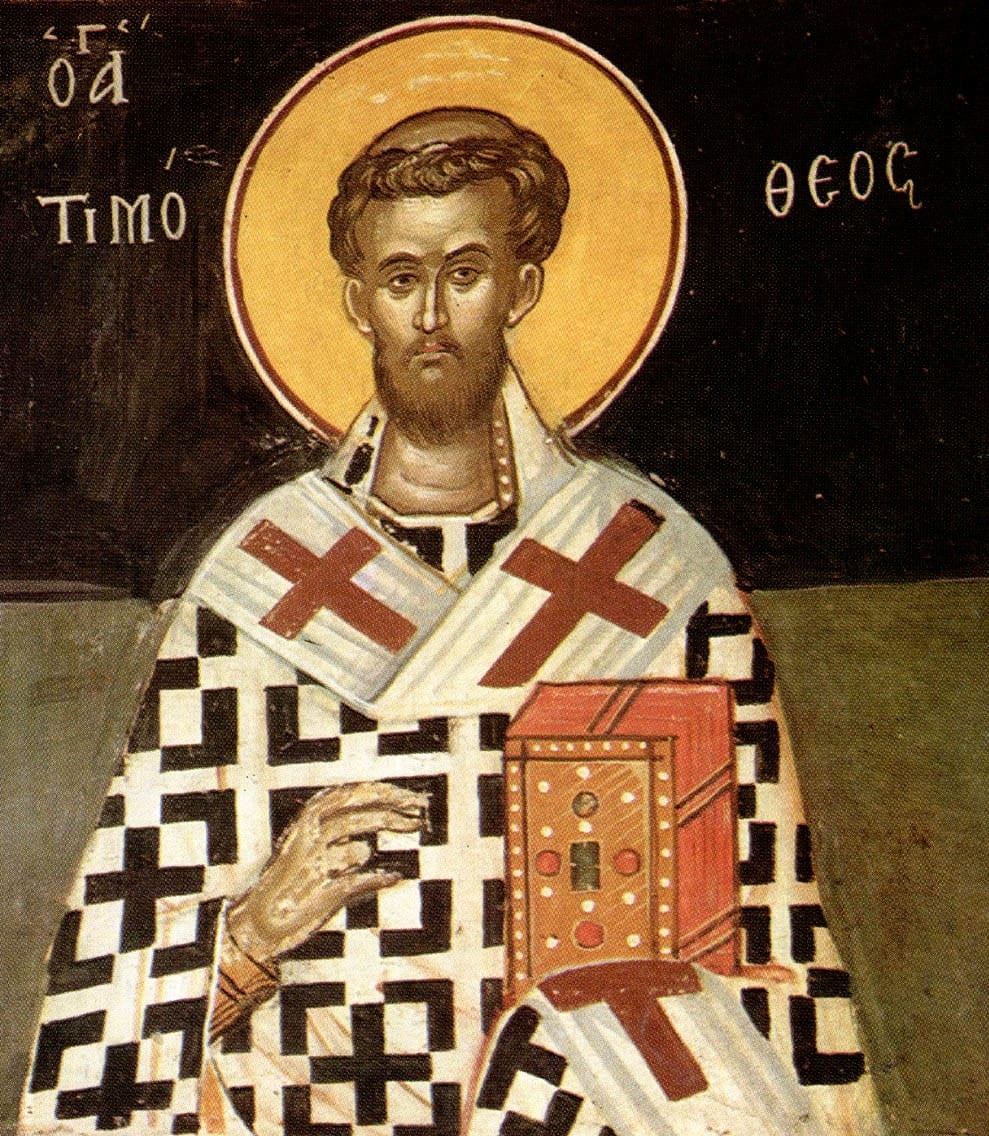
St Timothy as bishop blessing, holding Gospel book, gold halo
Fresco of St Timothy, Stavronikita Monastery, Mount Athos (Commons Agios Timotheos Stavronikita). Credits

Epiphanytide

January 24, 2028

January 24: St. Timothy, Bishop and Martyr

From Dom Guéranger’s The Liturgical Year.

BEFORE giving thanks to God for the miraculous Conversion of the Apostle of the Gentiles, the Church assembles us together for the feast of his favourite disciple. Timothy—the indefatigable companion of St Paul—the friend to whom the great Apostle, a few days before shedding his blood for Christ, wrote his last Epistle—comes now to await his master's arrival at the Crib of the Emmanuel. He there meets John the Beloved Disciple, together with whom he bore the anxieties attendant on the government of the Church of Ephesus; Stephen too, and the other martyrs, welcome him, for he also bears a martyr's palm in his hand. He presents to the august Mother of the Divine Babe the respectful homage of the Church of Ephesus, which Mary had sanctified by her presence, and which shares with the Church of Jerusalem the honour of having had her as one of its number, who was not only, like the Apostles, the witness, but moreover, in her quality of Mother of God, the ineffable instrument of the salvation of mankind.

Let us now read, in the Office of the Church, the abridged account of the actions of this zealous disciple of the Apostles.

This week's Sunday: The Third Sunday after Epiphany

From Dom Guéranger’s The Liturgical Year.

THE variation of Easter Sunday necessitates almost every year a different arrangement of the Sundays after the Epiphany from that in which they stand in the Missal. Septuagesima often comes in January and the Feast of the Purification is occasionally later than Quinquagesima Sunday; hence the office of these four last Sundays may have to be transferred to another season of the liturgical cycle. We were obliged then to provide for these changes and simplify them for the Faithful by adopting our present plan. We have inserted here the third and fourth Sundays as usually falling in Christmastide, while the office of the fifth and sixth Sundays will be found in the volumes of Septuagesima and the second after Pentecost, this latter season being the one in which they are most frequently kept.

The Introit represents the Angels of God adoring him on his entrance into this world, as St Paul explains this passage of the Psalms. The Church celebrates with David the gladness of Sion, and the joy of the daughters of Juda.

Adore God, all ye his Angels: Sion heard and was glad, and the daughters of Juda rejoiced.

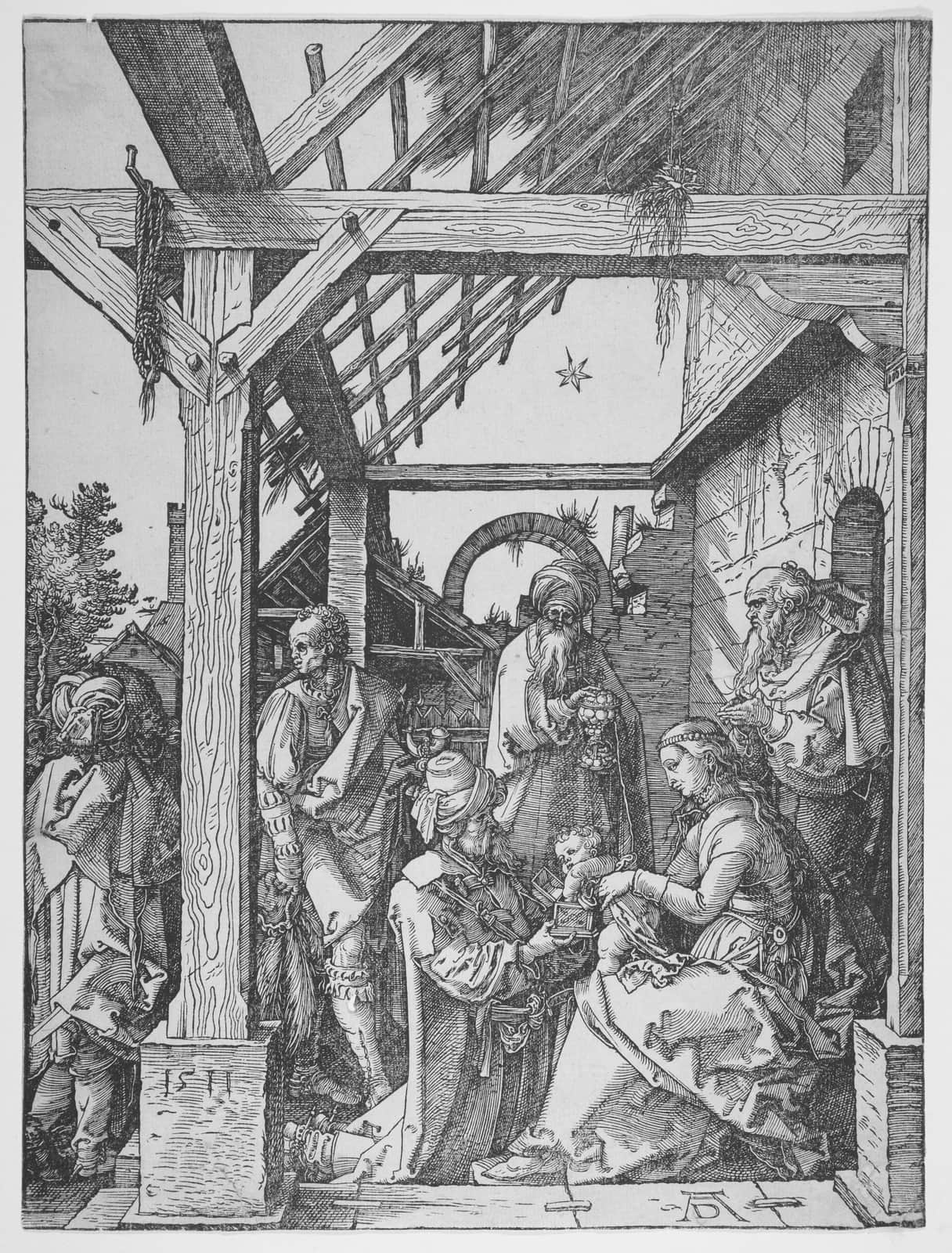
The Adoration of the Magi: the three kings offer gifts to the clothed Christ Child
Albrecht Dürer (1471–1528), The Adoration of the Magi, 1511. Credits

Email view of this day