This day

March 23, 2028

Lent

March 23, 2028

Thursday of the Third Week of Lent

From Dom Guéranger’s The Liturgical Year.

This day brings us to the middle of Lent, and is called mid-Lent Thursday. It is the twentieth of the forty fasts imposed upon us, at this holy season, by the Church. The Greeks call the Wednesday of this week Mesonestios, that is, the mid-fast. They give this name to the entire week, which, in their liturgy, is the fourth of the seven that form their Lent. But the Wednesday is, with them, a solemn feast, and a day of rejoicing, whereby they animate themselves to courage during the rest of the season. The Catholic nations of the west, though they do not look on this day as a feast, have always kept it with some degree of festivity and joy. The Church of Rome has countenanced the custom by her own observance of it; but, in order not to give a pretext to dissipation, which might interfere with the spirit of fasting, she postpones to the following Sunday the formal expression of this innocent joy, as we shall see further on. Yet, it is not against the spirit of the Church that this mid-day of Lent should be marked by some demonstration of gladness; for example, by sending invitations to friends, as our Catholic forefathers used to do; and serving up to table choicer and more abundant food than on other days of Lent, taking care, however, that the laws of the Church are strictly observed.


This week's Sunday: The Third Sunday of Lent

From Dom Guéranger’s The Liturgical Year.

The holy Church gave us as the subject of our meditation for the first Sunday of Lent, the temptation which our Lord Jesus Christ deigned to suffer in the desert. Her object was to enlighten us with regard to our own temptations, and teach us how to conquer them. To-day, she wishes to complete her instruction on the power and stratagems of our invisible enemies; and for this she reads to us a passage from the Gospel of St. Luke. During Lent the Christian ought to repair the past and provide for the future; but he can neither understand how it was he fell, nor defend himself against a relapse, unless he have correct ideas as to the nature of the dangers which have hitherto proved fatal, and which are again threatening him. Hence, the ancient liturgists would have us consider it as a proof of the maternal watchfulness of the Church, that she should have again proposed such a subject to us. As we shall find, it is the basis of all to-day’s instructions.

Assuredly we should be the blindest and most unhappy of men if, surrounded as we are by enemies who unceasingly seek to destroy us, and are so superior to us both in power and knowledge, we were seldom or never to think of the existence of these wicked spirits.

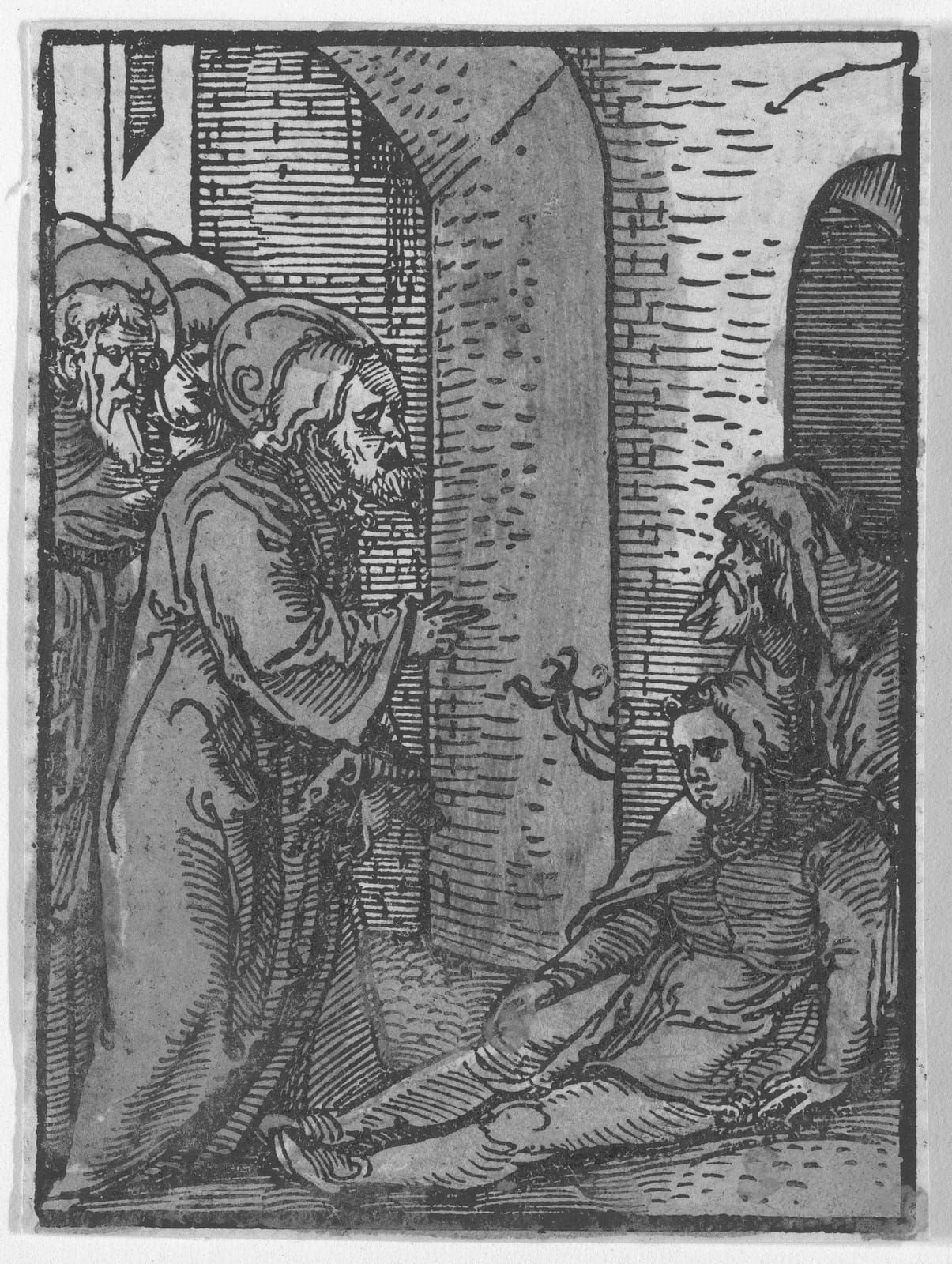
Christ healing a possessed man as a demon flees
Hans Schäufelein (1480–1540), Christ Healing the Possessed, from Das Plenarium, 1517. Credits

Email view of this day