This day

July 21, 2028

After Pentecost

July 21, 2028

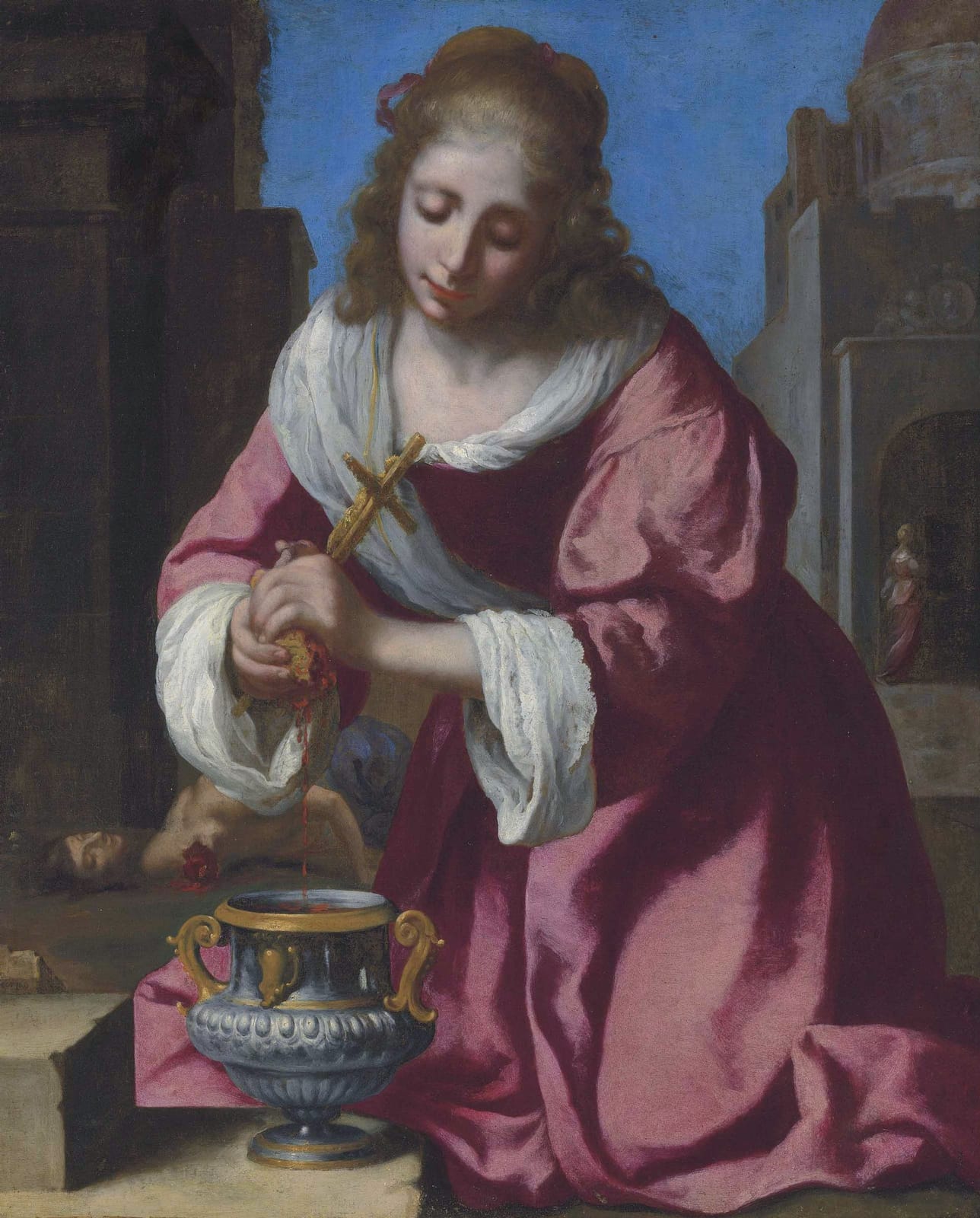
July 21: St. Praxedes, Virgin

From Dom Guéranger’s The Liturgical Year.

ON this day Pudentiana's angelic sister at length obtained from her Spouse release from bondage, and from the burden of exile that weighed so heavily on this last scion of a holy and illustrious stock. New races, unknown to her fathers when they laid the world at the feet of Rome, now governed the Eternal City. Nero and Domitian had been actuated by a tyrannical spirit; but the philosophical Cæsars showed how absolutely they misconceived the destinies of the great city. The salvation of Rome lay in the hands of a different dynasty: a century back Praxedes' grandfather, more legitimate inheritor of the traditions of the Capitol than all the emperors present or to come, hailed in his guest, Simon Bar-Jona, the ruler of the future. Host of the prince of the apostles was a title handed down by Pudens to his posterity: for in the time of Pius I, as in that of St. Peter, his house was still the shelter of the Vicar of Christ. Left the sole heiress of such traditions, Praxedes, after the death of her beloved sister, converted her palaces into churches, which resounded day and night with divine praises, and where pagans hastened in crowds to be baptized.


This week's Sunday: The Sixth Sunday after Pentecost

From Dom Guéranger’s The Liturgical Year.

The Office for the sixth Sunday after Pentecost, which began yesterday evening, reminded us, in its Magnificat antiphon, of a repentance which has never had an equal. David, the royal prophet, the conqueror of Goliath, himself conquered by sensuality, and from adulterer become a murderer, at last felt the crushing weight of his double crime, and exclaimed: 'I do beseech thee, O Lord, take away the iniquity of thy servant, for I have done foolishly!'

Sin is always a folly and a weakness, no matter of what kind it may be, or who he be that commits it. The rebel angel, and fallen man, may, in their pride, make efforts to persuade themselves that, when they sinned, they did not act as fools, and were not weak; but all their efforts are vain; sin must ever have this disgrace upon it, that it is folly and weakness, for it is a revolt against God, a contempt for His law, a mad act or the creature, who, being made by his. Creator to attain infinite happiness and glory, prefers to debase himself by turning towards nothingness, and then falls even lower than the nothingness from which he was taken.

Christ calming the storm on the lake
Hans Schäufelein (1480–1540), Christ Calming the Storm on Lake Tiberias, from Das Plenarium, 1517. Credits

Email view of this day