After Pentecost
August 1, 2028
A Greater Double leads; the Seven Brothers Machabees are commemorated.Rubric
From Dom Guéranger’s The Liturgical Year.
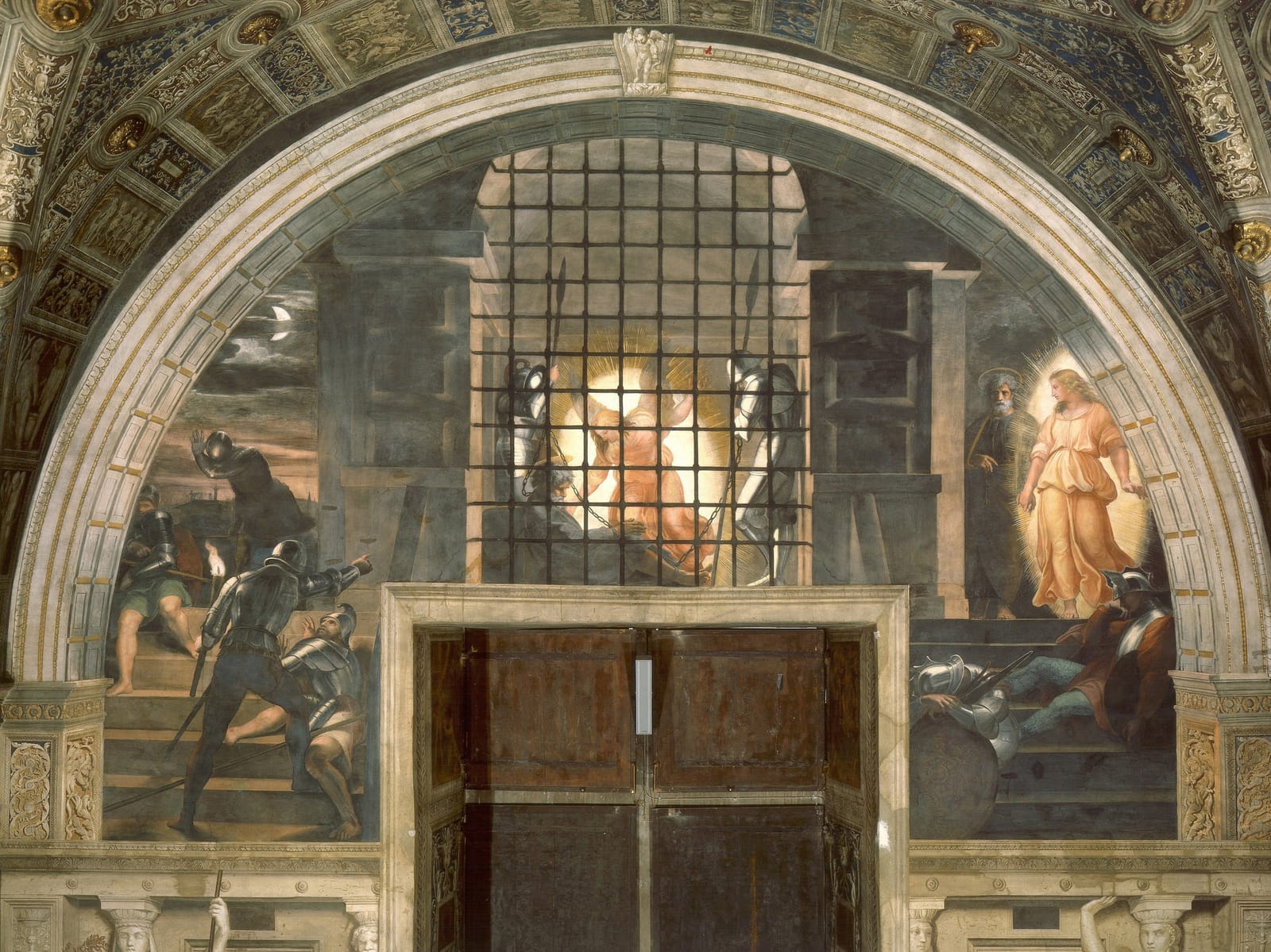
ROME, making a god of the man who had subjugated her, consecrated the month of August to Cæsar Augustus. When Christ had delivered her, she placed at the head of this same month, as a trophy of her regained liberty, the feast of the chains wherewith, in order to break hers, Peter the Vicar of Christ had once been bound. O divine Wisdom, who hast a better claim to reign over this month than had the adopted son of Cæsar, Thou couldst not have more authentically inaugurated Thy empire. Strength and sweetness are the attributes of Thy works, and it is in the weakness of Thy chosen ones that Thou triumphest over the powerful. Thou Thyself, in order to give us life, didst swallow death; Simon, son of John, became a captive, to set free the world entrusted to him. First Herod, and then Nero, showed him the cost of the promise he had once received, of binding and loosing on earth as in heaven: he had to share the love of the supreme Shepherd, even to allowing himself, like Him, to be bound with chains for the sake of the flock, and led where he would not.