This day

September 13, 2028

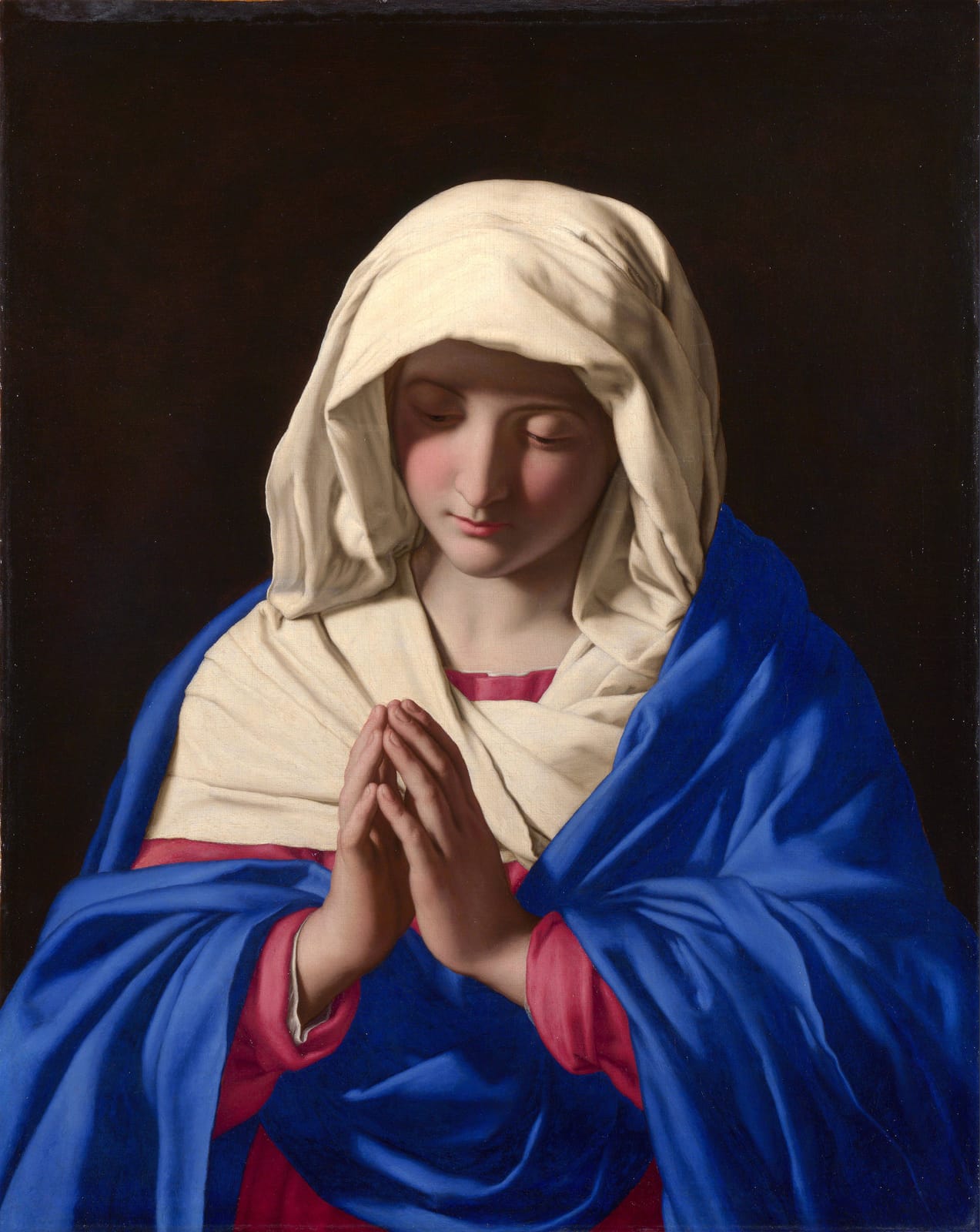
The Virgin in Prayer
The Virgin in Prayer, Sassoferrato (1609–1685), 1640–1650. Credits

After Pentecost

September 13, 2028

Sunday within the Octave of the Nativity: Feast of the Most Holy Name of Mary

From Dom Guéranger’s The Liturgical Year.

[This feast day, previously kept on the Sunday following the Nativity of the Blessed Virgin, was moved to Sept. 12 in the 1911 reforms of Pope St. Pius X. We provide this on both days, to understand the calendar in the time of Dom Guéranger's writing, and as it is celebrated today according to the traditional rite.]

'And the Virgin’s name was Mary.' Let us speak a little about this name, which signifies star of the sea, and which so well befits the Virgin Mother. Rightly is she likened to a star: for as a star emits its ray without being dimmed so the Virgin brought forth her Son without receiving any injury; the ray takes nought from the brightness of the star, nor the Son from His Mother’s integrity. This is the noble star risen out of Jacob, whose ray illumines the whole world, whose splendour shines in the heavens, penetrates the abyss, and, traversing the whole earth, gives warmth rather to souls than to bodies, cherishing virtues, withering vices. Mary, I say, is that bright and incomparable star, whom we need to see raised above this vast sea, shining by her merits, and giving us light by her example.
Chapter 4: Morning and Night Prayers for the Time after Pentecost

From Dom Guéranger’s The Liturgical Year.

During this second part of the year, the Christian, on waking in the morning, will unite himself with holy Church, who, every day in her Office of Lauds, hails the return of light, making use of these words of the royal prophet: Deus, Deus meus, ad te de luce vigilo.

He will profoundly adore the divine Majesty; and, thanking his sovereign Lord, who has protected him while involved in the darkness of night, he will proffer Him his service for the whole day which is now commencing; he will wish to spend it in love and obedience, as behoves one whom Christ has united to Himself by His mysteries, and whom the Holy Ghost is willing to guide and govern. The time for morning prayer being come, he may give expression to the sentiments which should then animate his soul, by using these formulas of the Church: First, praise and adoration of the most holy Trinity:
℣. Benedicamus Patrem et Filium cum Sancto Spiritu.
℟. Laudemus et superexaltemus eum in sæcula.

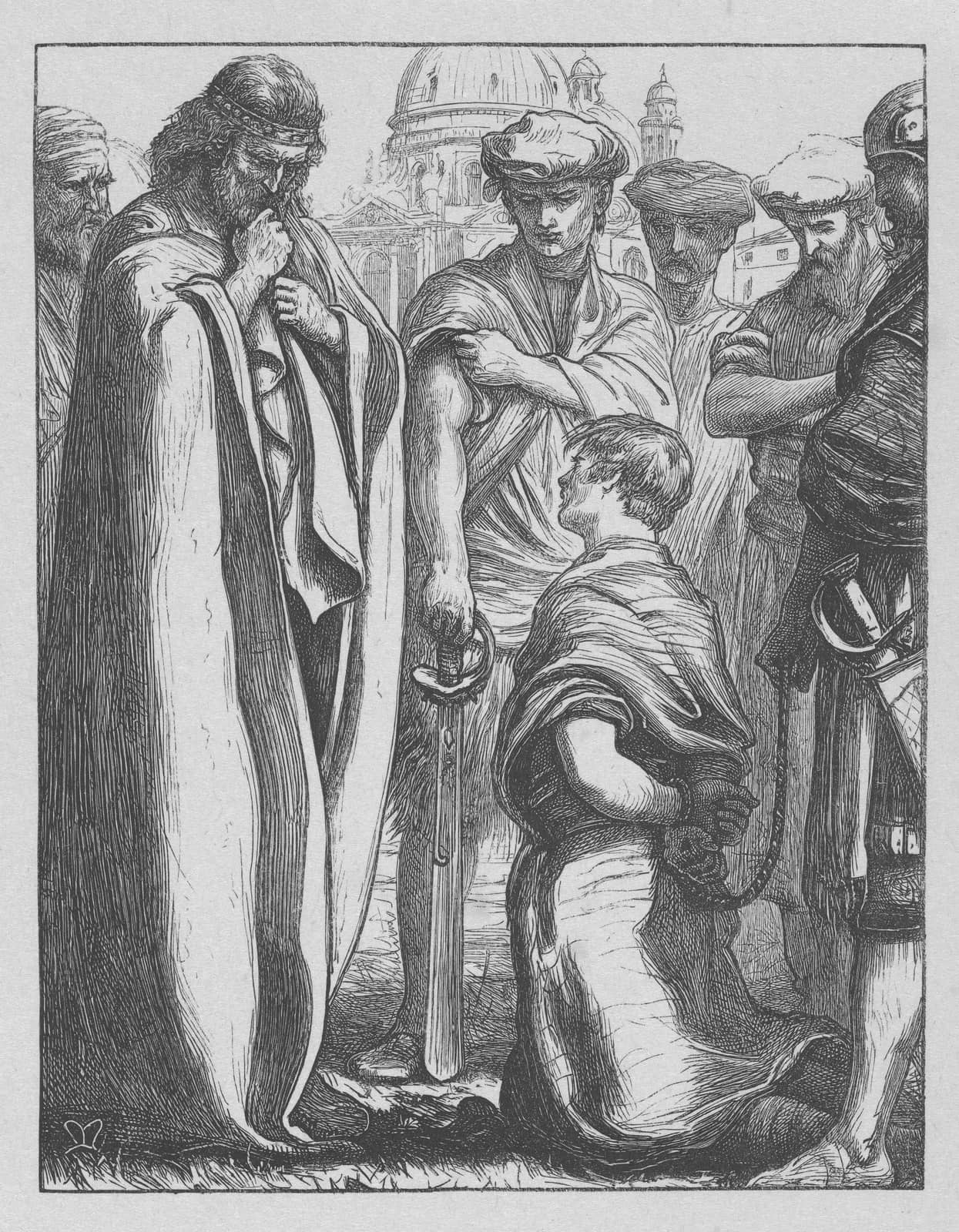
The parable of the unmerciful servant
Sir John Everett Millais (1829–1896), The Unmerciful Servant, from The Parables of Our Lord and Saviour Jesus Christ, 1864. Credits

Email view of this day