This day

September 30, 2028

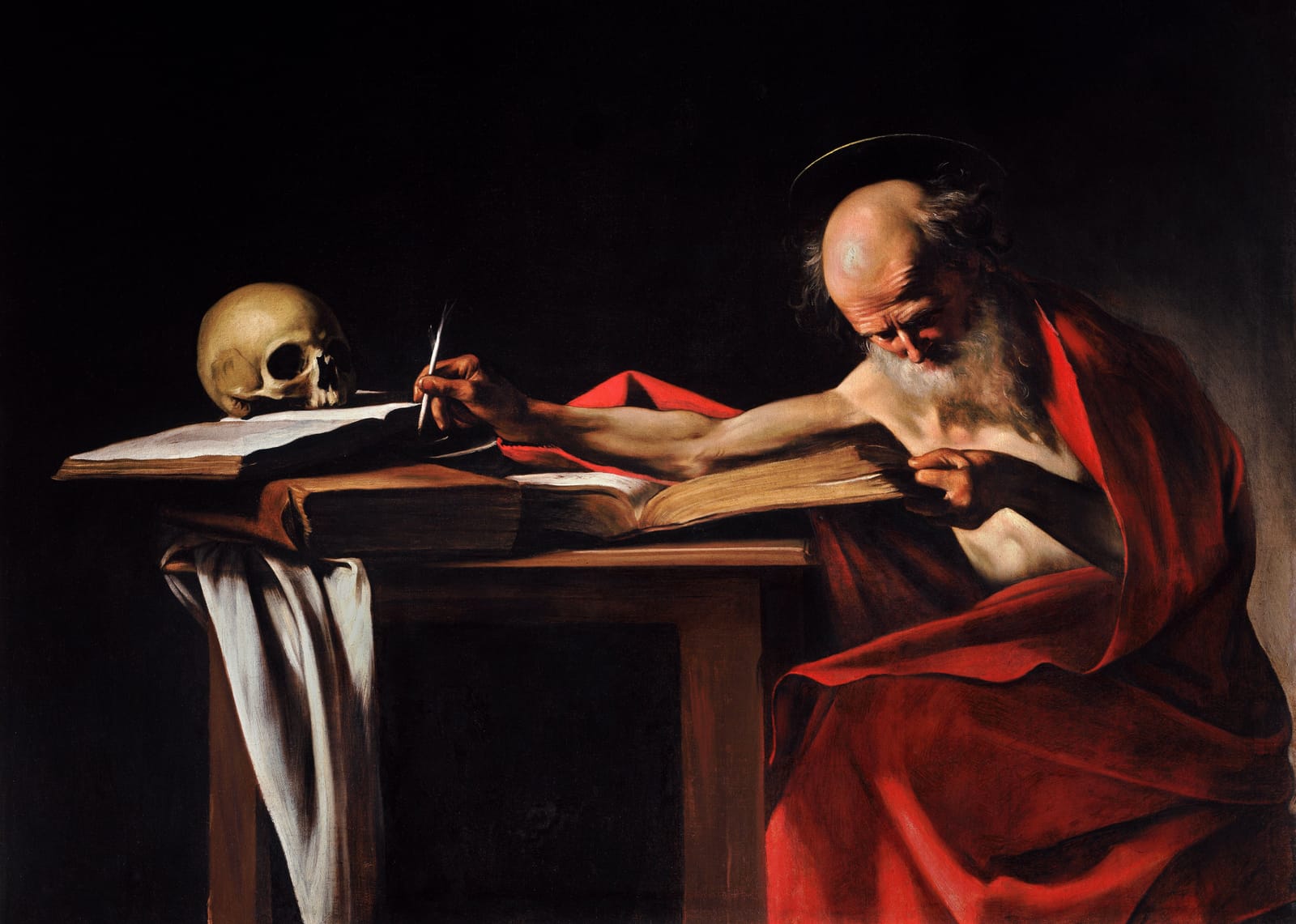
Saint Jerome Writing
Saint Jerome Writing, Caravaggio (1571–1610), 1605–1606. Credits

After Pentecost

September 30, 2028

September 30: St. Jerome, Priest, Confessor and Doctor of the Church

From Dom Guéranger’s The Liturgical Year.

‘I know not Vitalis, I reject Meletius, I pass by Paulinus; he that cleaveth to the Chair of Peter, he is mine.’ Thus, about the year 376, when the whole east was disturbed by the competitions for the episcopal See of Antioch, wrote an unknown monk to Pope St. Damasus. It was St. Jerome, a native of Dalmatia, who implored ‘light for his soul redeemed by the Blood of our Lord.’

Far from Stridonium, his semi-barbarous native place, whose austerity and vigour he never lost; far from Rome, where the study of literature and philosophy had not had sufficient ascendency to withhold him from the seductions of pleasure; the fear of God’s judgments had led him into the desert of Chalcis. There, under a burning sky, in the company of wild beasts, he for four years tormented his body with fearful macerations; and then, as a yet more efficacious remedy, and certainly a more meritorious mortification for one passionately fond of classical beauties, he sacrificed his Ciceronian tastes to the study of the Hebrew language. Such an undertaking was far more laborious then than in our days of lexicons and grammars and scientific works of every description.

This week's Sunday: The Sixteenth Sunday after Pentecost

From Dom Guéranger’s The Liturgical Year.

The resuscitation of the son of the widow of Naim, on which our thoughts were fixed last Sunday, has reanimated the confidence of our beloved mother, the Church; her prayer goes up all the more earnestly to her Spouse, who leaves her on earth, for a time, that she may grow dearer to Him by sufferings and tears. Let us, of course, enter into the sentiments which guided her in the choice of to-day’s Introit.

Have mercy on me, O Lord, for I have cried unto thee all the day; for thou, Lord, art sweet and mild, and plenteous in mercy to all that call upon thee.
Ps. Incline thine ear unto me, O Lord, and hear me: for I am needy and poor. Glory, etc. Have mercy.

Such is our inability in the work of salvation, that, unless grace prevent, that is, anticipate, us, we cannot have so much as the thought of doing what is holy; and again, unless it follow up the inspirations it has given us, and lead them to a happy termination, we shall never be able to pass from the simple thought to the act of any virtue whatsoever.

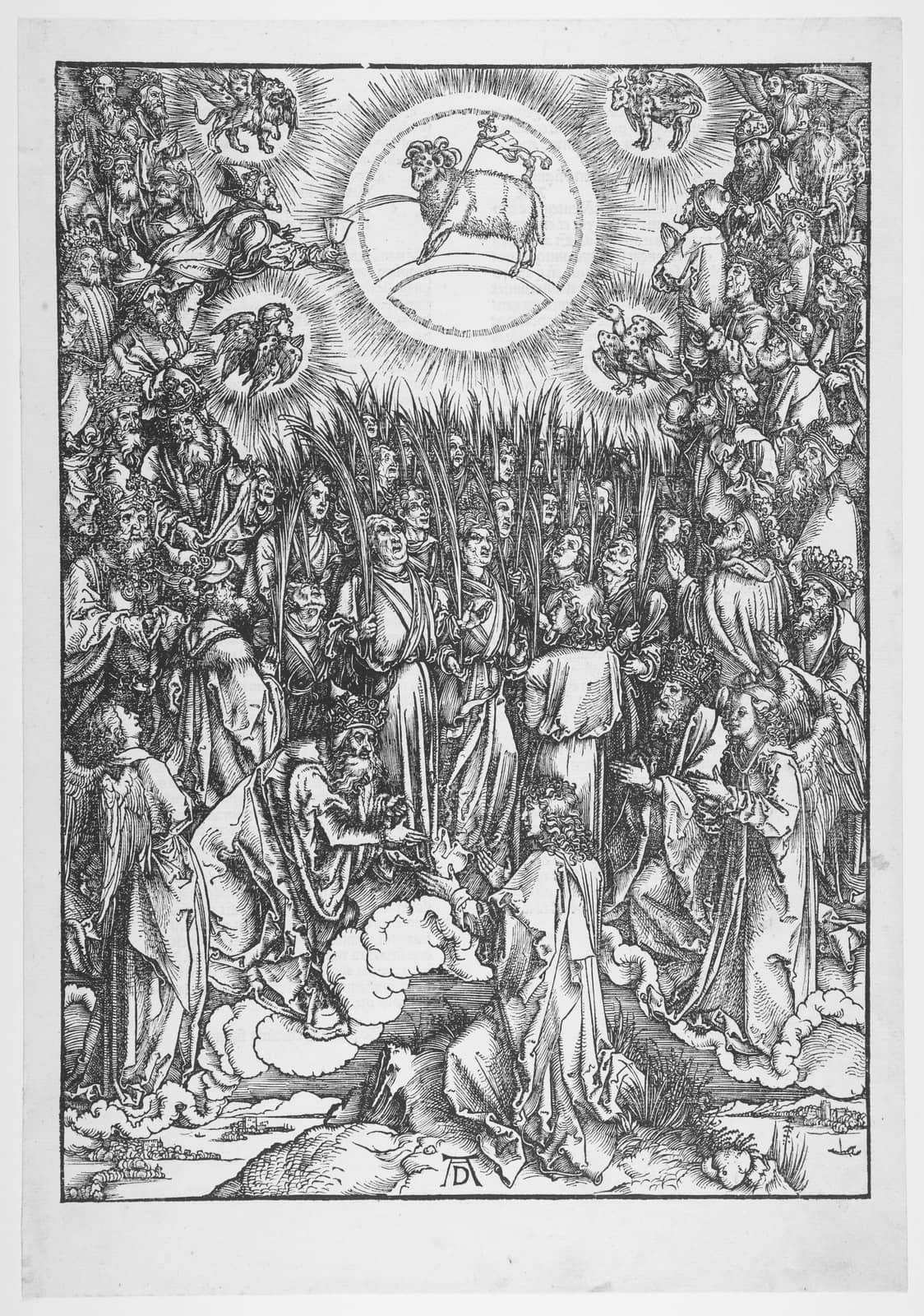
The elders and the saints adore the Lamb
Albrecht Dürer (1471–1528), The Adoration of the Lamb, from The Apocalypse, 1498. Credits

Email view of this day