This day

October 4, 2028

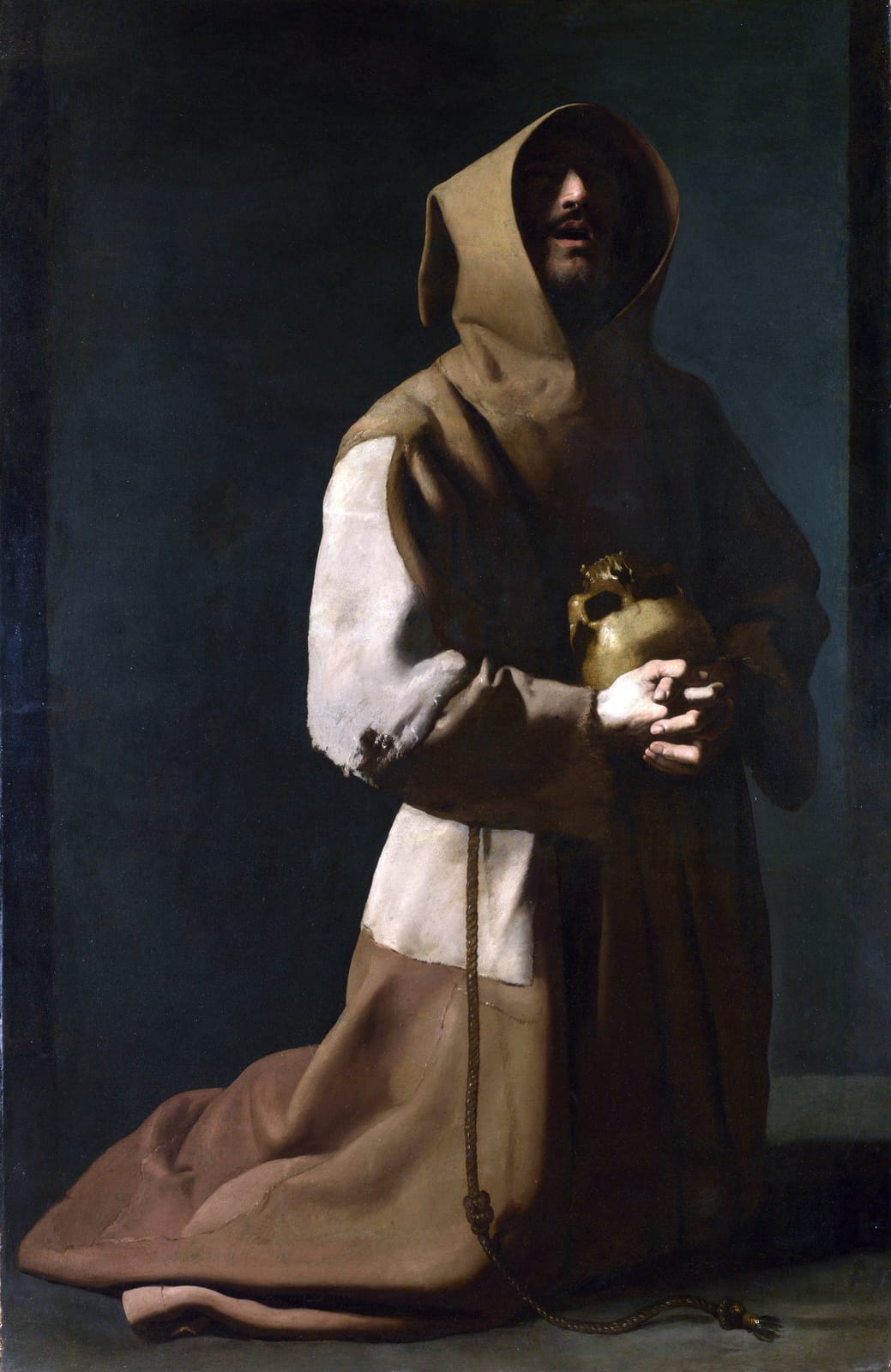
Saint Francis in Meditation
Saint Francis in Meditation, Francisco de Zurbarán (1598–1664), 1635–1639. Credits

After Pentecost

October 4, 2028

October 4: St. Francis, Confessor

From Dom Guéranger’s The Liturgical Year.

And I saw another angel ascending from the rising of the sun, having the sign of the living God; and he cried with a loud voice to the four angels to whom it was given to hurt the earth and the sea, saying: Hurt not the earth, nor the sea, nor the trees, till we sign the servants of our God in their foreheads.

The sixth seal of the Book of destinies had just been opened before the eyes of the prophet of Patmos. It was a time of anguish, the hour for the wicked to cry to the mountains: ‘Fall upon us!' The sun was darkened: an image of the Sun of justice eclipsed by the night of iniquity; the moon, the figure of the Church, appeared red as blood, through the evils that defiled the sanctuary; the stars fell from heaven, as the fig-tree casteth its green figs when it is shaken by a great wind. Who would appease the Lamb, and retard the day of wrath? At the invitation of the saints and of the apostolic See, let us recognize the angel who won for the world a delay of the judgment; the angel with the impress of God upon a mortal body; the seraph with his sacred stigmata, the sight of which once more disarmed the justice of God.

This week's Sunday: The Seventeenth Sunday after Pentecost

From Dom Guéranger’s The Liturgical Year.

The Gospel, which is now assigned to the Mass of the seventeenth Sunday, has given it the name of the Sunday of the love of God, dating, that is, from the time when the Gospel of the cure of the dropsy and of the invitation to the wedding-feast was anticipated by eight days. Previously even to that change, and from the very first, there used to be read, on this seventeenth Sunday, another passage from the new Testament, which is no longer found in this series of Sundays: it was the Gospel which mentions the difficulty regarding the resurrection of the dead, which the Sadducees proposed to our Lord.

The judgments of God are always just, whether it be, in His justice, humbling the proud, or, in His mercy, exalting the humble. This day last week we saw this sovereign disposer of all things, allotting to each his place at the divine banquet. Let us recall to mind the behaviour of the guests, and the respective treatment shown to the humble and the proud. Adoring these judgments of our Lord, let us sing our Introit; and, as far as regards ourselves, let us throw ourselves entirely upon His mercy.

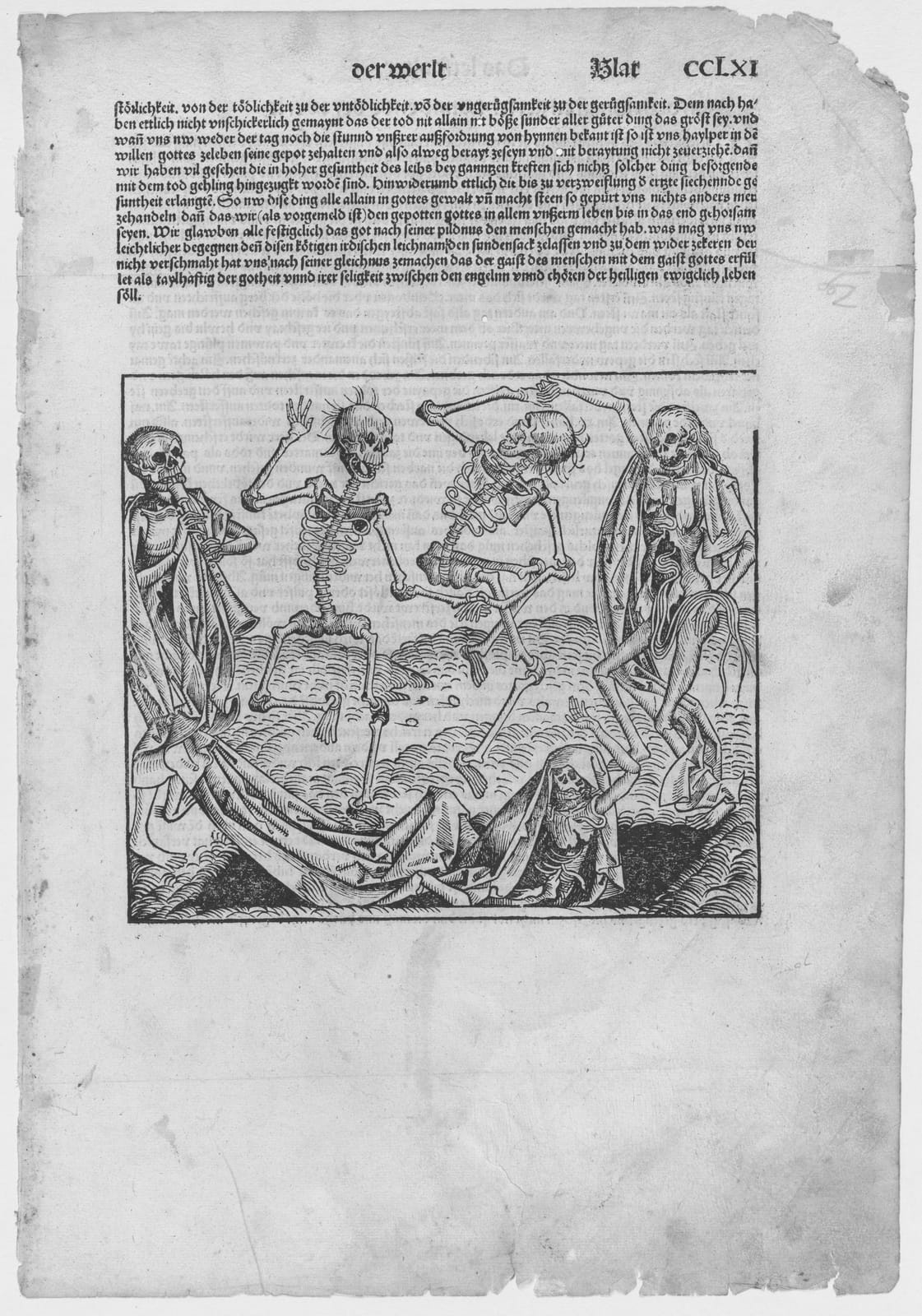
The dance of death, a leaf from the Nuremberg Chronicle
Michael Wolgemut (1434–1519), Dance of Death, from The Nuremberg Chronicle, 1493. Credits

Email view of this day