This day

December 20, 2028

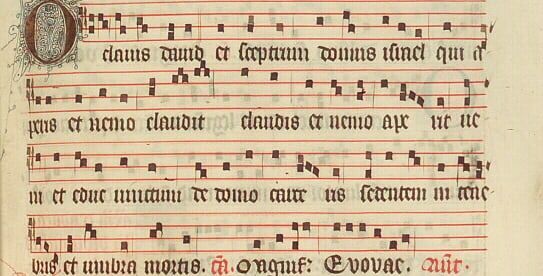
O Clavis David, the illuminated opening in the Poissy Antiphonal, folio 31r
Poissy Antiphonal, c. 1335–1345, fol. 31r. State Library Victoria.

Advent

December 20, 2028

December 20: The Fourth Antiphon

From Dom Guéranger’s The Liturgical Year.

O Key of David, and sceptre of the house of Israel! who openest, and no man shutteth: who shuttest, and no man openeth; come, and lead the captive from prison, sitting in darkness and in the shadow of death.

O Jesus, Son of David! heir to his throne and his power! Thou art now passing over, in Thy way to Bethlehem, the land that once was the kingdom of Thy ancestor, but now is tributary to the Gentiles. Scarce an inch of this ground which has not witnessed the miracles of the justice and mercy of Jehovah, Thy Father, to the people of the old Covenant, which is so soon to end. Before long, when Thou hast come from beneath the virginal cloud which now hides Thee, Thou wilt pass along this same road doing good, healing all manner of sickness and every infirmity, and yet having not where to lay Thy head. Now, at least, Thy Mother’s womb affords Thee the sweetest rest, and Thou receivest from her the profoundest adoration and the tenderest love. But, dear Jesus, it is Thine own blessed will that Thou leave this loved abode.


Wednesday in Ember Week of Advent

From Dom Guéranger’s The Liturgical Year.

Prope est jam Dominus; venite, adoremus.
The Lord is now nigh; come, let us adore.

To-day the Church begins the fast of Quatuor Tempora, or, as we call it, of Ember days: it includes also the Friday and Saturday of this same week. This observance is not peculiar to the Advent liturgy; it is one which has been fixed for each of the four seasons of the ecclesiastical year. We may consider it as one of those practices which the Church took from the Synagogue; for the prophet Zacharias speaks of the fasts of the fourth, fifth, seventh, and tenth months. Its introduction into the Christian Church would seem to have been made in the apostolic times; such, at least, is the opinion of St. Leo, of St. Isidore of Seville, of Rabanus Maurus, and of several other ancient Christian writers. It is remarkable, on the other hand, that the orientals do not observe this fast.

From the first ages the Quatuor Tempora were kept, in the Roman Church, at the same time of the year as at present.

Email view of this day