This day

December 29, 2028

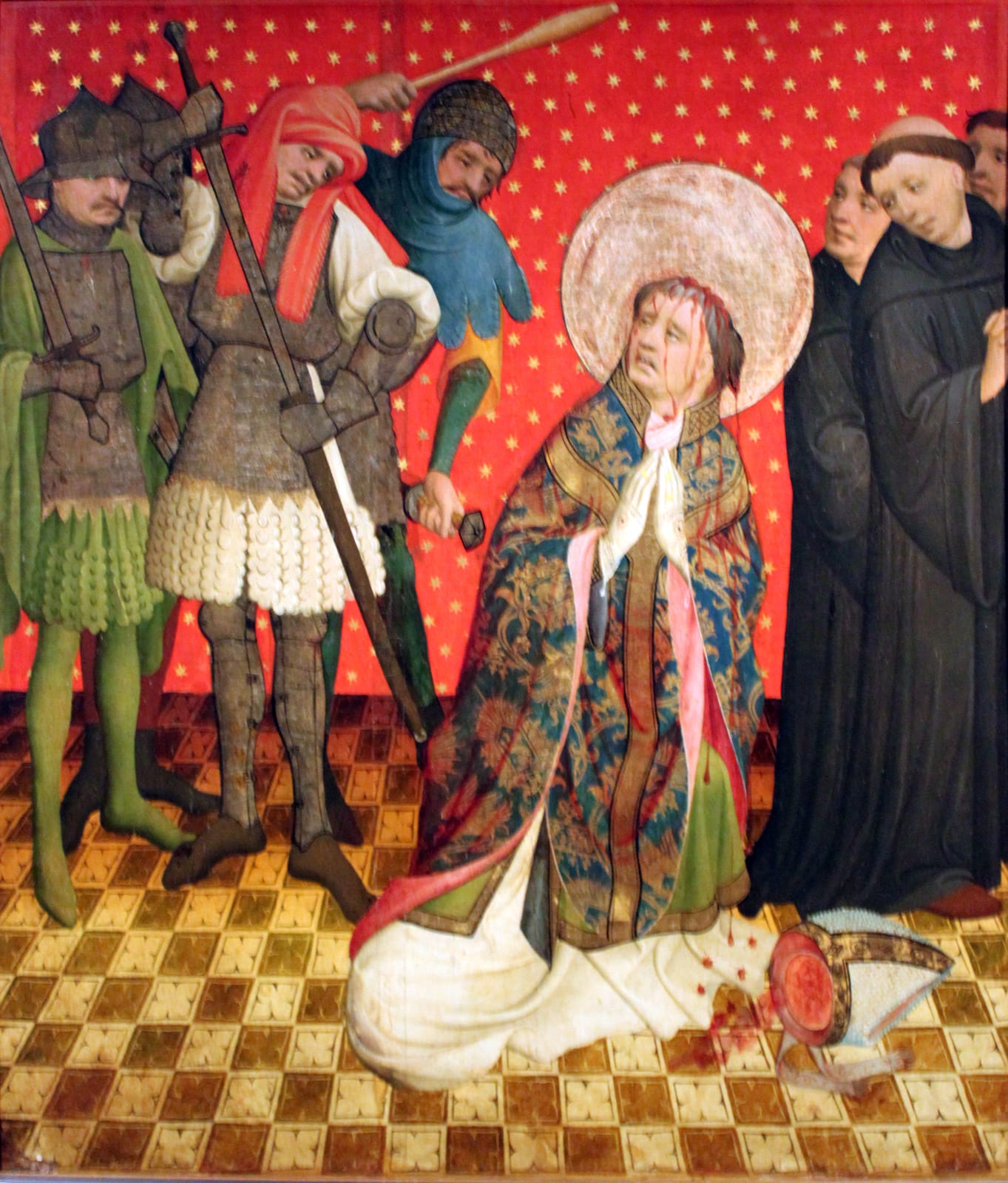
Armed knights strike Saint Thomas of Canterbury as monks look on
The Martyrdom of Saint Thomas of Canterbury, Master Francke (c. 1380–c. 1435), c. 1426. Credits

Christmas

December 29, 2028

December 29: St. Thomas, Archbishop of Canterbury and Martyr

From Dom Guéranger’s The Liturgical Year.

ANOTHER Martyr comes to-day to take his place round the Crib of our Jesus. He does not belong to the first ages of the Church: his name is not written in the Books of the New Testament, like those of Stephen, John and the Innocents of Bethlehem. Yet does he stand most prominent in the ranks of that Martyr Host which has been receiving fresh recruits in every age, and is one of those visible abiding proofs of the vitality of the Church, and of the undecaying energy infused into her by her divine Founder. This glorious Martyr did not shed his blood for the faith; he was not dragged before the tribunals of pagans or heretics, there to confess the truths revealed by Christ and taught by the Church. He was slain by Christian hands; it was a Catholic King that condemned him to death; it was by the majority of his own brethren, and they his countrymen, that he was abandoned and blamed. How, then, could he be a Martyr? How did he gain a Palm like Stephen's? He was the Martyr for the liberty of the Church.
Chapter 1: The History of Christmas

From Dom Guéranger’s The Liturgical Year.

We apply the name of Christmas to the forty days which begin with the Nativity of our Lord, December 25, and end with the Purification of the Blessed Virgin, February 2. It is a period which forms a distinct portion of the Liturgical Year, as distinct, by its own special spirit, from every other, as are Advent, Lent, Easter, or Pentecost. One same Mystery is celebrated and kept in view during the whole forty days. Neither the Feasts of the Saints, which so abound during this Season; nor the time of Septuagesima, with its mournful Purple, which often begins before Christmastide is over, seem able to distract our Holy Mother the Church from the immense joy of which she received the good tidings from the Angels on that glorious Night for which the world had been longing four thousand years. The Faithful will remember that the Liturgy commemorates this long expectation by the four penitential weeks of Advent.

The Presentation of Christ in the Temple
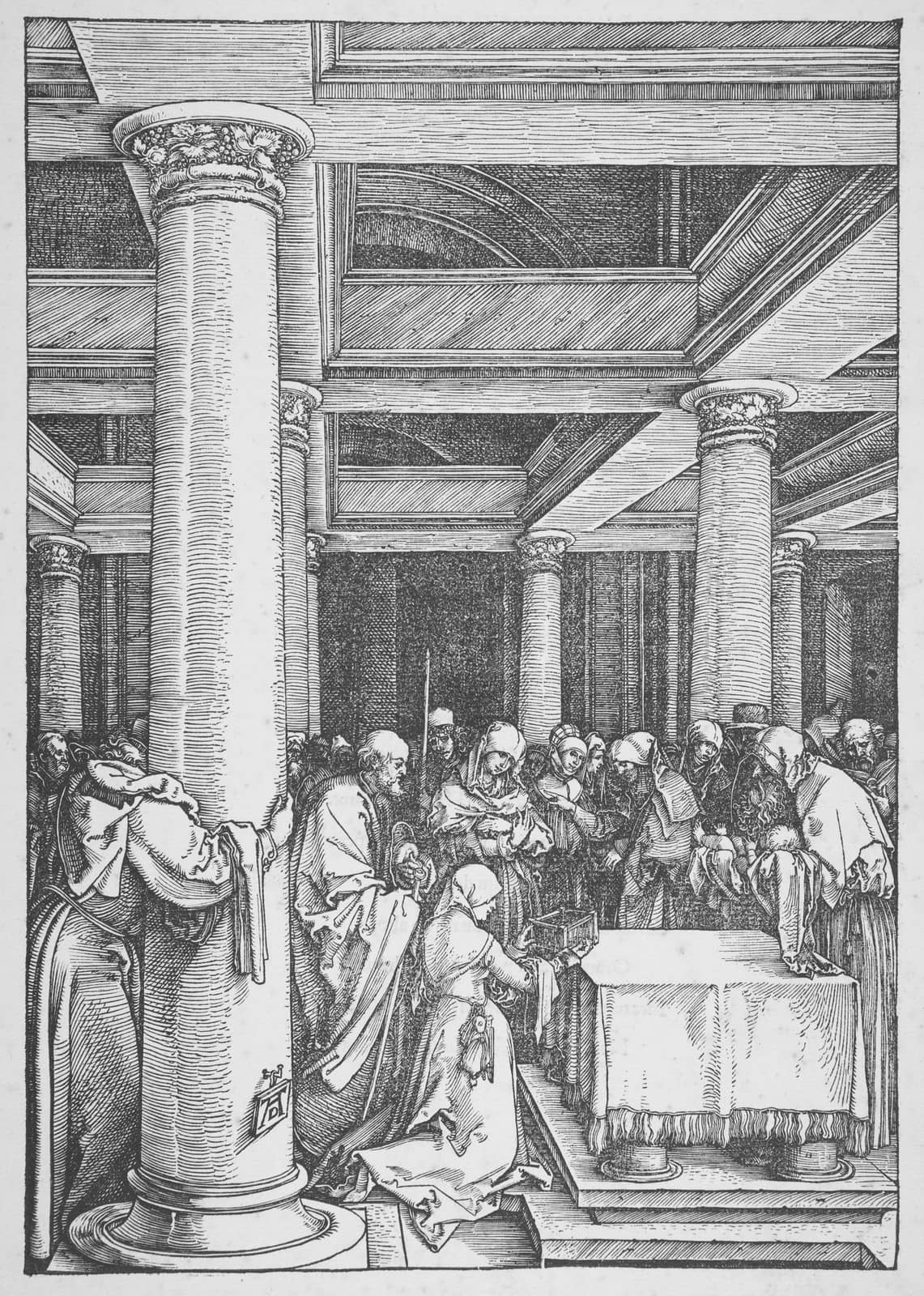
Albrecht Dürer (1471–1528), The Presentation in the Temple, from The Life of the Virgin, ca. 1505. Credits

Email view of this day