
This day

July 23, 2029

Saint Peter Sends Saint Apollinaris to Ravenna
Saint Peter Sends Saint Apollinaris to Ravenna, Filippo Pasquali (1651–1697). Photo: José Luiz Bernardes Ribeiro. Credits

After Pentecost

July 23, 2029

A Double leads; St. Liborius is commemorated.Rubric

July 23: St. Apollinaris, Bishop and Martyr

From Dom Guéranger’s The Liturgical Year.

RAVENNA, the mother of cities, invites us to-day to honour the martyr bishop, whose labours did more for her lasting renown than did the favour of emperors and kings. From the midst of her ancient monuments, the rival of Rome, though now fallen, points proudly to her unbroken chain of Pontiffs, which she can trace back to the Vicar of the Man-God through Apollinaris. This great saint has been praised by Fathers and Doctors of the Universal Church, his sons and successors. Would to God that the noble city had remembered what she owed to St. Peter!

Apollinaris had left family and fatherland and all he possessed to follow the Prince of the apostles. One day the master said to the disciple: ‘Why stayest thou here with us? Behold thou art instructed in all that Jesus did; rise up, receive the Holy Ghost, and go to that city which knows Him not.' And blessing him, he kissed him and sent him away. Such sublime scenes of separation, often witnessed in those early days, and many a time since repeated, show by their heroic simplicity the grandeur of the Church.
Chapter 8: Of the Office of Compline for Sundays and Feasts during the Time after Pentecost

From Dom Guéranger’s The Liturgical Year.

This Office, which concludes the day, commences by a warning of the dangers of the night; then immediately follows the public confession of our sine, as a powerful means of propitiating the divine justice, and of obtaining God’s help, now that we are going to spend so many hours in the unconscious, and therefore dangerous, state of sleep, which is also such an image of death.

May the almighty Lord grant us a quiet night, and a perfect end.
℟. Amen.

The lector then reads these words, from the first Epistle of St. Peter: Fratres: Sobrii estote et vigilate: quia adversarius vester diabolus tamquam leo rugiens circuit, quærens quem devoret: cui resistite fortes in fide. Tu autem, Domine, miserere nobis.

Brethren, be sober and watch: because your adversary the devil, as a roaring lion, goeth about seeking whom he may devour: whom resist ye, strong in faith. But thou, O Lord, have mercy on us.

Then the Lord’s Prayer is recited in secret; after which the priest says the Confiteor, and when he has finished, the choir repeats it. The priest, having pronounced the general form of absolution, says:

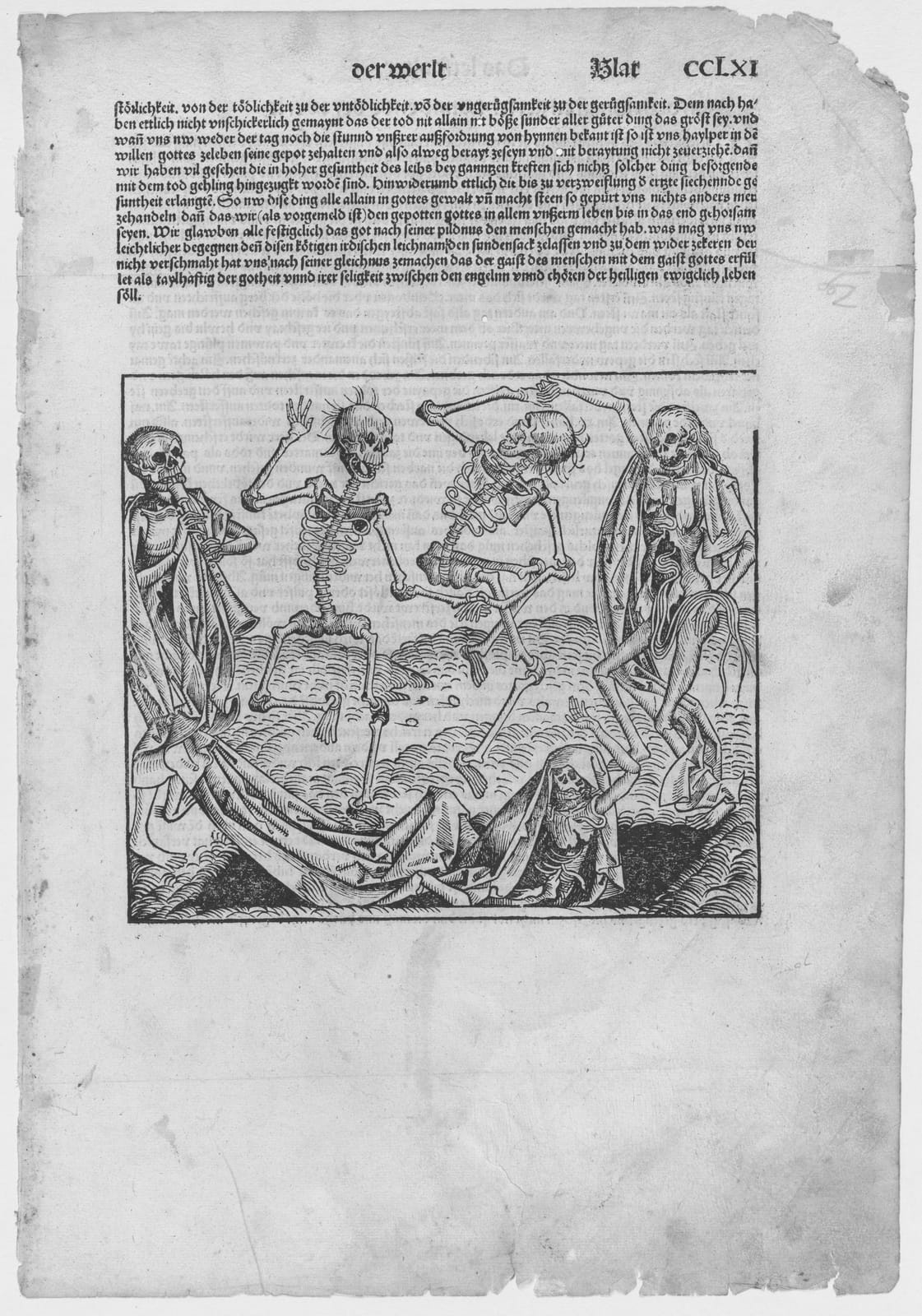
The dance of death, a leaf from the Nuremberg Chronicle
Michael Wolgemut (1434–1519), Dance of Death, from The Nuremberg Chronicle, 1493. Credits

Email view of this day