This day

August 9, 2029

After Pentecost

August 9, 2029

August 9: Vigil of St. Laurence (and St. Romanus, Martyr)

From Dom Guéranger’s The Liturgical Year.

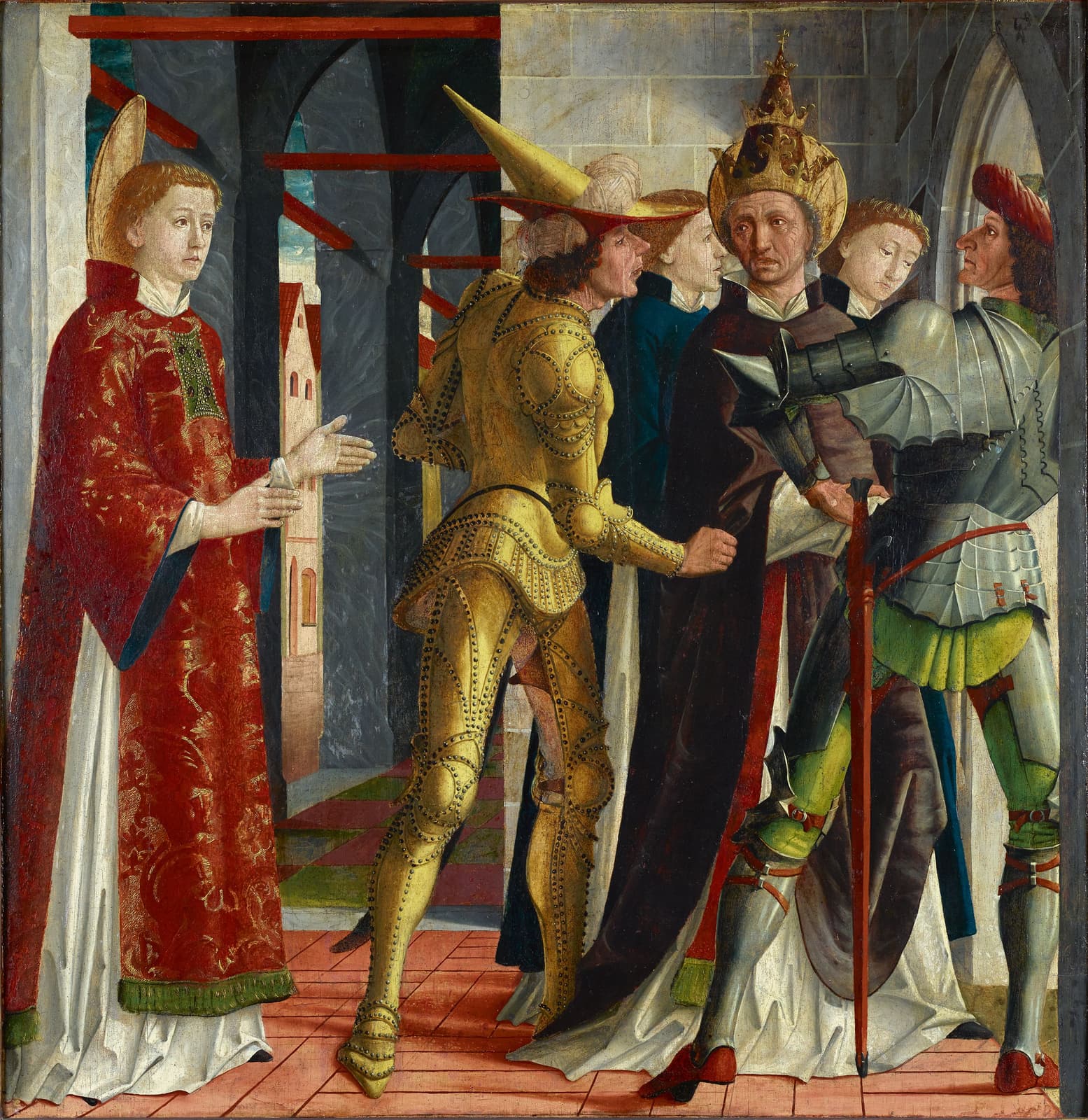
'FEAR not, My servant, for I am with thee, saith the Lord. If thou pass through fire, the flame shall not hurt thee, and the odour of fire shall not be in thee. I will deliver thee out of the hand of the wicked, and I will redeem thee out of the hand of the mighty.' It was the hour of combat; and Wisdom, more powerful than flame, was calling upon Laurence to win the laurels of victory presaged by his very name. The three days since the death of Sixtus had passed at length, and the deacon’s exile was about to close: he was soon to stand beside his pontiff at the altar in heaven, and never more to be separated from him. But before going to perform his office as deacon in the eternal sacrifice, he must on this earth, where the seeds of eternity are sown, give proof of the brave faithfulness which becomes a Levite of the law of love. Laurence was ready. He had said to Sixtus: ' Try the fidelity of the minister to whom thou didst intrust the dispensation of the Blood of our Lord.’


This week's Sunday: The Eleventh Sunday after Pentecost

From Dom Guéranger’s The Liturgical Year.

With the Greeks, this Sunday—their eleventh of Saint Matthew—is called the Parable of the King, who calls his servants to account. In the western Church, it has gone under the name of Sunday of the deaf and dumb, ever since the Gospel of the pharisee and the publican has been assigned to the tenth. To-day's Mass, as we now have it, still gives evidence as to what was its ancient arrangement. Our commentary on to-day's liturgy will show us this very plainly.

In the years when Easter falls nearest to March 21 the Books of Kings are continued as lessons of Matins up to, but never beyond, this Sunday. The sickness of the good king Ezechias, and the miraculous cure he obtained by his prayers and tears, are then the subject of the first lessons of the night-Office.

The learned and pious Abbot Rupert, writing on this Sunday's Mass previous to the change made in the order of the Gospel lessons, thus explains the Church's reason for selecting the following Introit: ‘The publican in the Gospel accuses himself, saying: “I am not worthy to lift up mine eyes to heaven.”

Christ warning the disciples against false prophets
Hans Schäufelein (1480–1540), Christ Warning the Disciples of False Prophets, from Das Plenarium, 1517. Credits

Email view of this day