This day

October 8, 2029

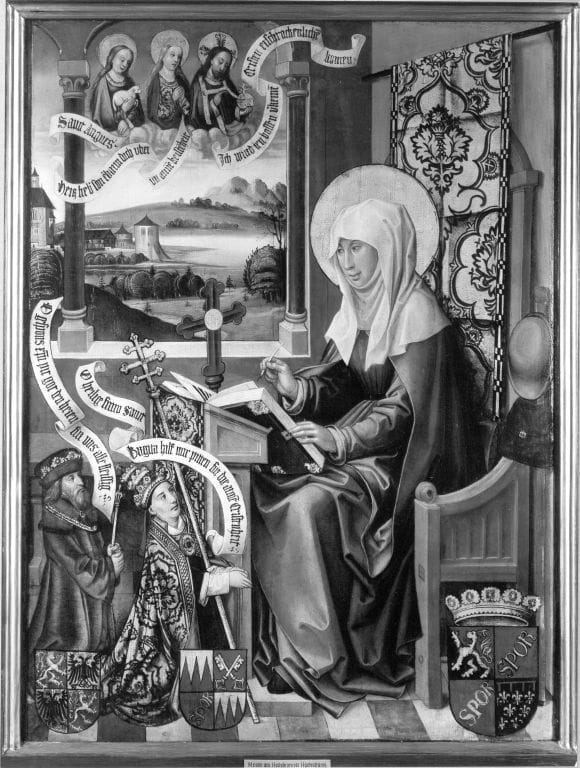
Saint Bridget Writing her Revelations
Saint Bridget Writing her Revelations, Hans Traut (1487–1516), 1505. Credits

After Pentecost

October 8, 2029

A Double leads; Sts. Sergius, Bacchus, Marcellus and Apuleius are commemorated.Rubric

October 8: St. Bridget, Widow

From Dom Guéranger’s The Liturgical Year.

‘Who, O Lord, has treated Thee thus?’ ‘They that despise Me and forget My love.’ This was the first revelation of the Son of God to Bridget of Sweden. Francis of Assisi, raising before the world the standard of the cross, had announced that Christ was about to recommence the dolorous way; not now in His own Person, but in the Church, who is flesh of His flesh. The truth of this declaration Bridget experienced from the very opening of that fatal fourteenth century, during which such innumerable disasters, the results of crime, fell at once upon the west.

Born in the year when Sciarra Colonna, a new Pilate’s servant, dared to strike the Vicar of Christ, Bridget’s childhood was contemporaneous with those sad falls, which caused the Church to be despised by her enemies. There were no saints in Christendom comparable to the great ones of old; in the preceding age the Latin races had exhausted their vitality in producing flowers; but where were the promised fruits? Ancient Europe had nought but affronts for the Word of God; this feast, this apparition of Jesus in cold Scandinavia, seems to point to His flight from the habitual centre of His predilection.
Chapter 5: On Hearing Mass during the Time after Pentecost

From Dom Guéranger’s The Liturgical Year.

Of all the good acts wherewith a Christian can sanctify his day, there is not one which bears comparison with that of assisting at the holy sacrifice of the Mass. It is in that sacrifice, the supreme act of religion, that is centred all the homage due from man to his Creator; and it is also from the same sacrifice that God pours out profusely upon his creature man every sort of blessing. The very Son of God is really present there; there He is offered up to His Father, and the offering is always well-pleasing; and they who assist at this divine immolation with faith and love receive into their souls graces of a far richer kind than are given by ordinary means.

The assistance at Mass, if completed by the real participation of the divine victim, unites man to God in an ineffable way by the renovation of his whole being, for it produces an intimate communion between him and the Word Incarnate.

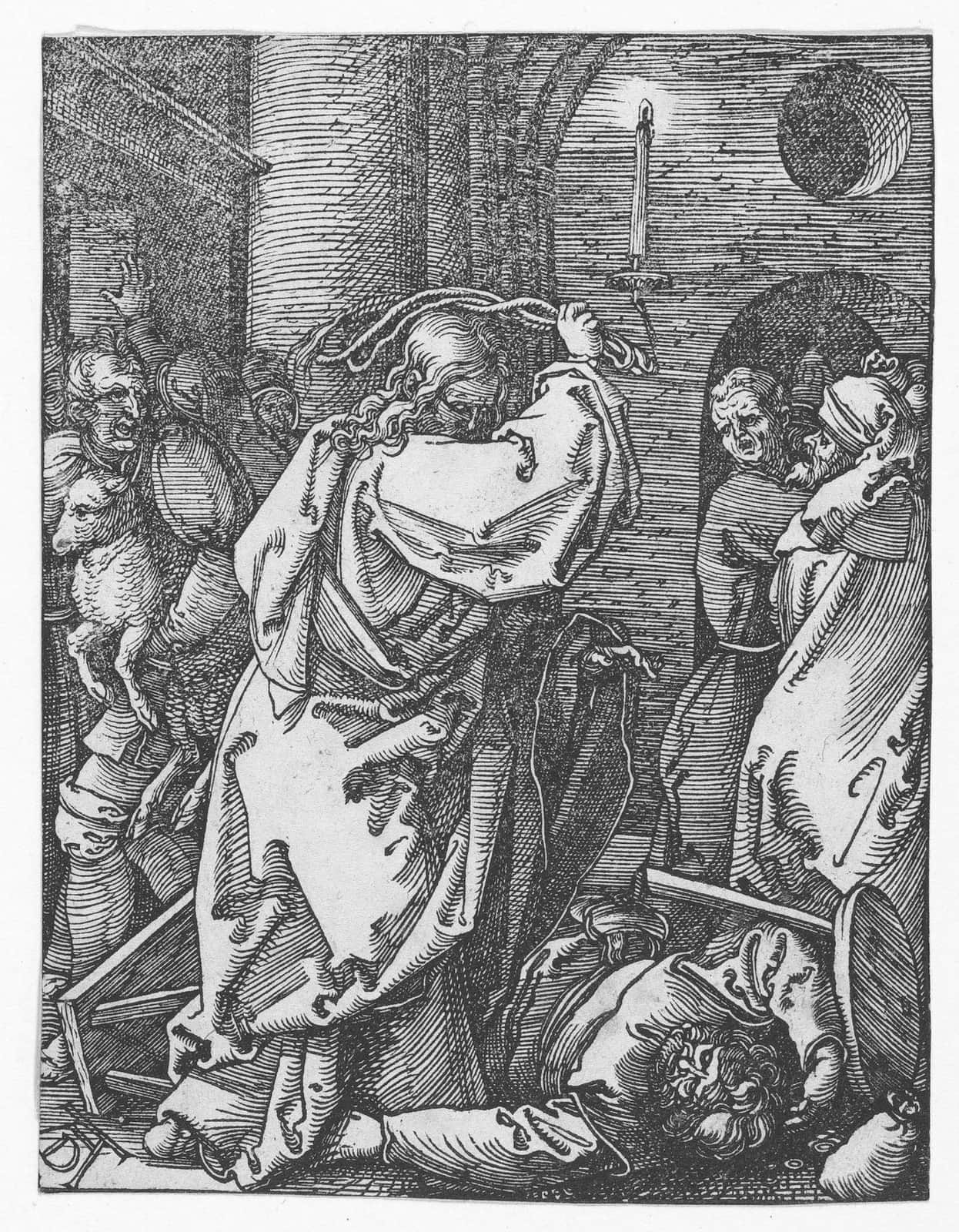
Christ driving the money-changers from the Temple
Albrecht Dürer (1471–1528), Christ Expelling the Money Lenders, from The Small Passion, ca. 1508. Credits

Email view of this day