This day

December 1, 2029

After Pentecost

December 1, 2029

December 1

From Dom Guéranger’s The Liturgical Year.

The Church of Rome does not keep this day as a feast of any saint; she simply recites the Office of the feria, unless it happen that the first Sunday of Advent fall on this first day of the month, in which case the Office of that Sunday is celebrated, as given above in the Proper of the Time.

But should this first day of December be a simple feria of Advent, we shall do well to begin at once our considerations upon the preparations which were made for the merciful coming of the Saviour of the world.

Four thousand years of expectation preceded that coming, and they are expressed by the four weeks of Advent, which we must spend before we come to the glorious festivity of our Lord’s Nativity. Let us reflect upon the holy impatience of the saints of the old Testament, and how they handed down, from age to age, the grand hope, which was to be but hope to them, since they were not to see it realized. Let us follow, in thought, the long succession of the witnesses of the promise: Adam, and the first patriarchs, who lived before the deluge; then, Noah, Abraham, Isaac, Jacob, and the twelve patriarchs of the Hebrew people; then Moses, Samuel, David, and Solomon; then, the prophets and the Machabees; and, at last, John the Baptist and his disciples.


This week's Sunday: The Twenty-Fourth Sunday after Pentecost

From Dom Guéranger’s The Liturgical Year.

The number of the Sundays after Pentecost may exceed twenty-four, and go as far as twenty-eight, according as Easter is each year more or less near to the vernal equinox. But the Mass here given is always reserved for the last; and the intervening ones, be their number what it may, are taken from the Sundays after the Epiphany, which, in that case, were not used at the beginning of the year. This, however, does not apply to the Introit, Gradual, Offertory, and Communion, which, as we have already said, are repeated from the twenty-third Sunday.

We have seen how that Mass of the twenty-third Sunday was regarded, by our forefathers, as really the last of the cycle. Abbot Rupert has given us the profound meaning of its several parts. According to the teaching we have already pondered over, the reconciliation of Juda was shown us as being, in time, the term intended by God: the last notes of the sacred liturgy blended with the last scene of the world’s history, as seen and known by God. The end proposed by eternal Wisdom in the world’s creation, and mercifully continued, after the fall, by the mystery of Redemption, has now (we speak of the Church’s year and God’s workings) been fully carried out.

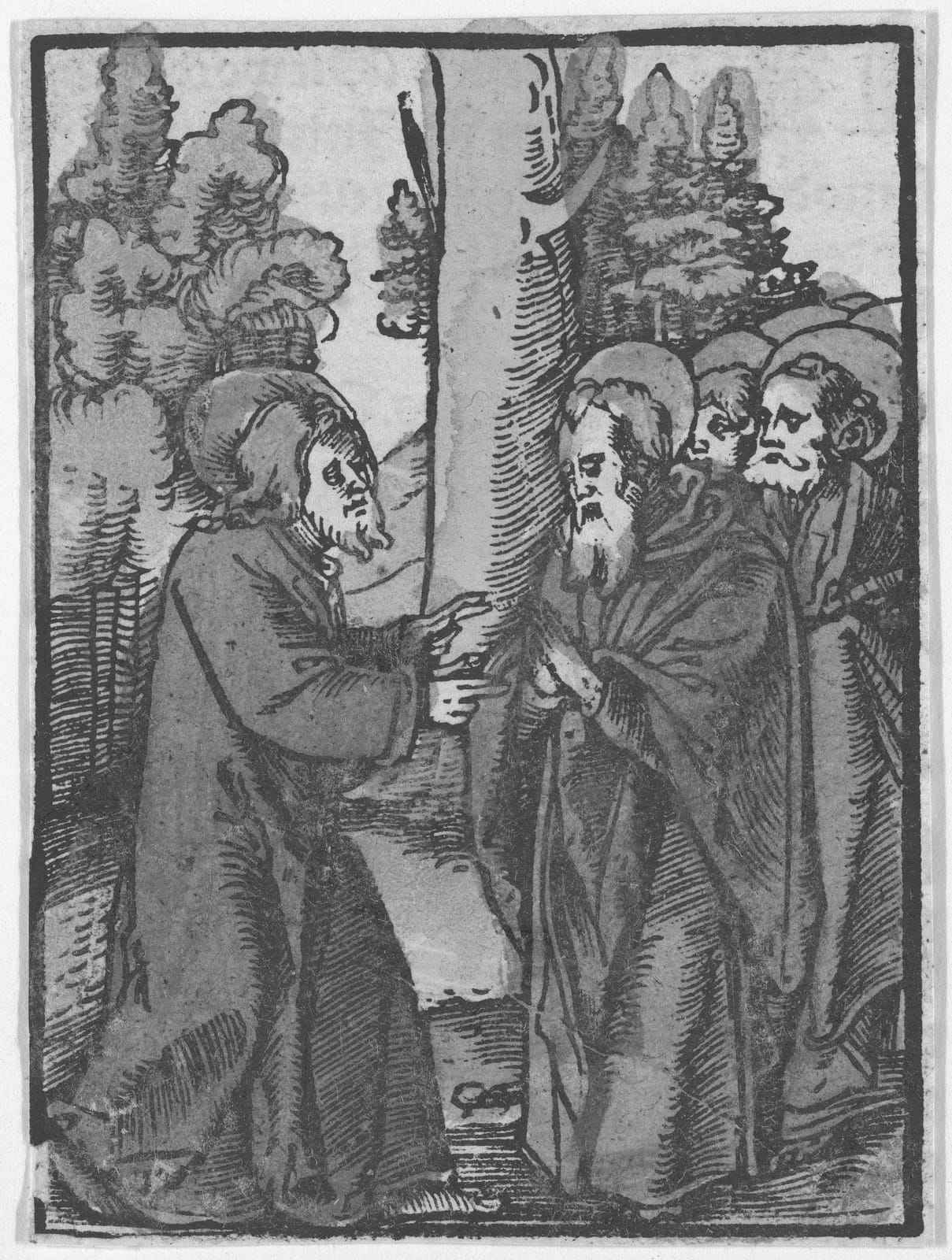
Christ teaching the disciples
Hans Schäufelein (1480–1540), Christ Teaching the Disciples, from Das Plenarium, 1517. Credits

Email view of this day