This day

December 7, 2029

Advent

December 7, 2029

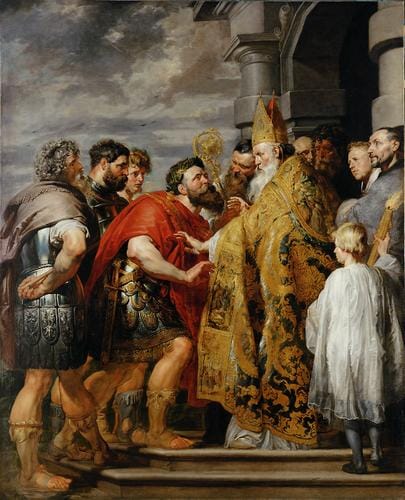
December 7: St. Ambrose, Bishop and Doctor of the Church

From Dom Guéranger’s The Liturgical Year.

This illustrious pontiff was deservedly placed in the calendar of the Church side by side with the glorious bishop of Myra. Nicholas confessed, at Nicæa, the divinity of the Redeemer; Ambrose, in his pity of Milan, was the object of the hatred of the Arians, and, by his invincible courage, triumphed over the enemies of Christ. Let Ambrose, then, unite his voice, as doctor of the Church, with that of St. Peter Chrysologus, and preach to the world the glories and the humiliations of the Messias. But, as doctor of the Church, he has a special claim to our veneration: it is, that among the bright luminaries of the Latin Church, four great masters head the list of sacred interpreters of the faith: Gregory, Augustine, Jerome; and then our glorious Ambrose, bishop of Milan, makes up the mystic number.

Ambrose owes his noble position in the calendar to the ancient custom of the Church, whereby, in the early ages, no saint’s feast was allowed to be kept in Lent. The day of his departure from this world and of his entrance into heaven was the fourth of April, which, more frequently than not, comes during Lent; so that it was requisite that the memory of his sacred death should be solemnized on some other day, and the seventh of December naturally presented itself for such a feast, inasmuch as it was the anniversary-day of Ambrose’s consecration as bishop.

Friday of the First Week of Advent

From Dom Guéranger’s The Liturgical Year.

Regem venturum Dominum, venite, adoremus.De Isaia Propheta.
Cap. vi.

In anno, quo mortuus est rex Ozias, vidi Dominum sedentem super solium excelsum et elevatum: et ea quæ sub ipso erant, replebant templum. Seraphim stabant super illud: sex alæ uni, et sex alæ alteri: duabus velabant faciem ejus, et duabus velabant pedes ejus, et duabus volabant. Et clamabant alter ad alterum, et dicebant: Sanctus, sanctus, sanctus Dominus Deus exercituum: plena est omnis terra gloria ejus.

Come, let us adore the King our Lord, who is to come.From the Prophet Isaias.
Ch. vi.

In the year that king Ozias died, I saw the Lord sitting upon a throne high and elevated: and his train filled the temple. Upon it stood the Seraphim: the one had six wings, and the other had six wings: with two they covered his face, and with two they covered his feet, and with two they flew. And they cried one to another and said: Holy, holy, holy the Lord God of hosts: all the earth is full of his glory.

Such is the glory of the Lord in the highest heavens: who could see it and live? But now, contemplate this same Lord upon our earth, during the days which have dawned upon us. The womb of a Virgin contains Him, whom heaven cannot contain. To angels His beauty is visible, but it dazzles them not; to men, it is not even visible.

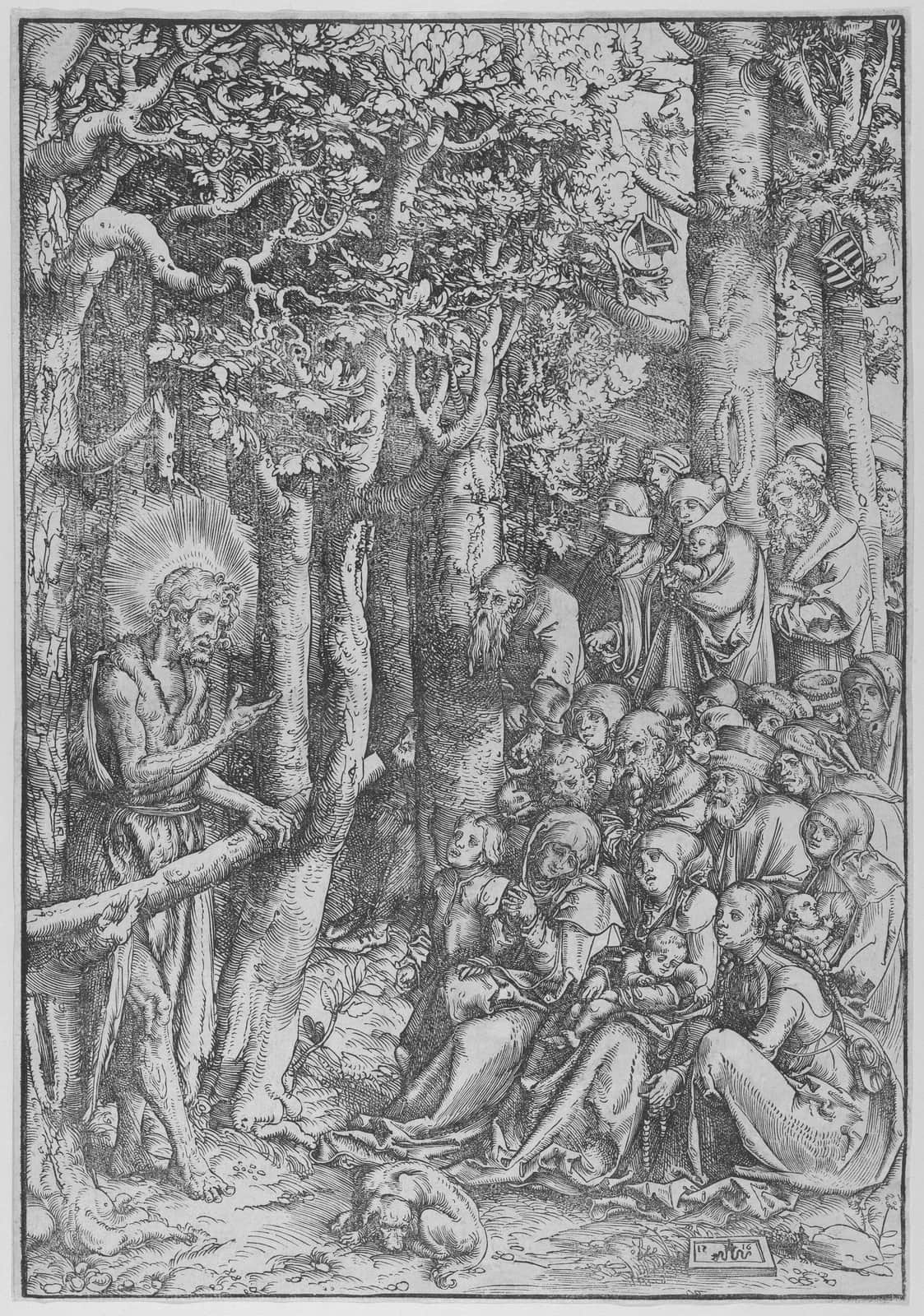
St John the Baptist preaching to a crowd in the wilderness
Lucas Cranach the Elder (1472–1553), The Sermon of St. John the Baptist, 1516. Credits

Email view of this day