This day

December 29, 2029

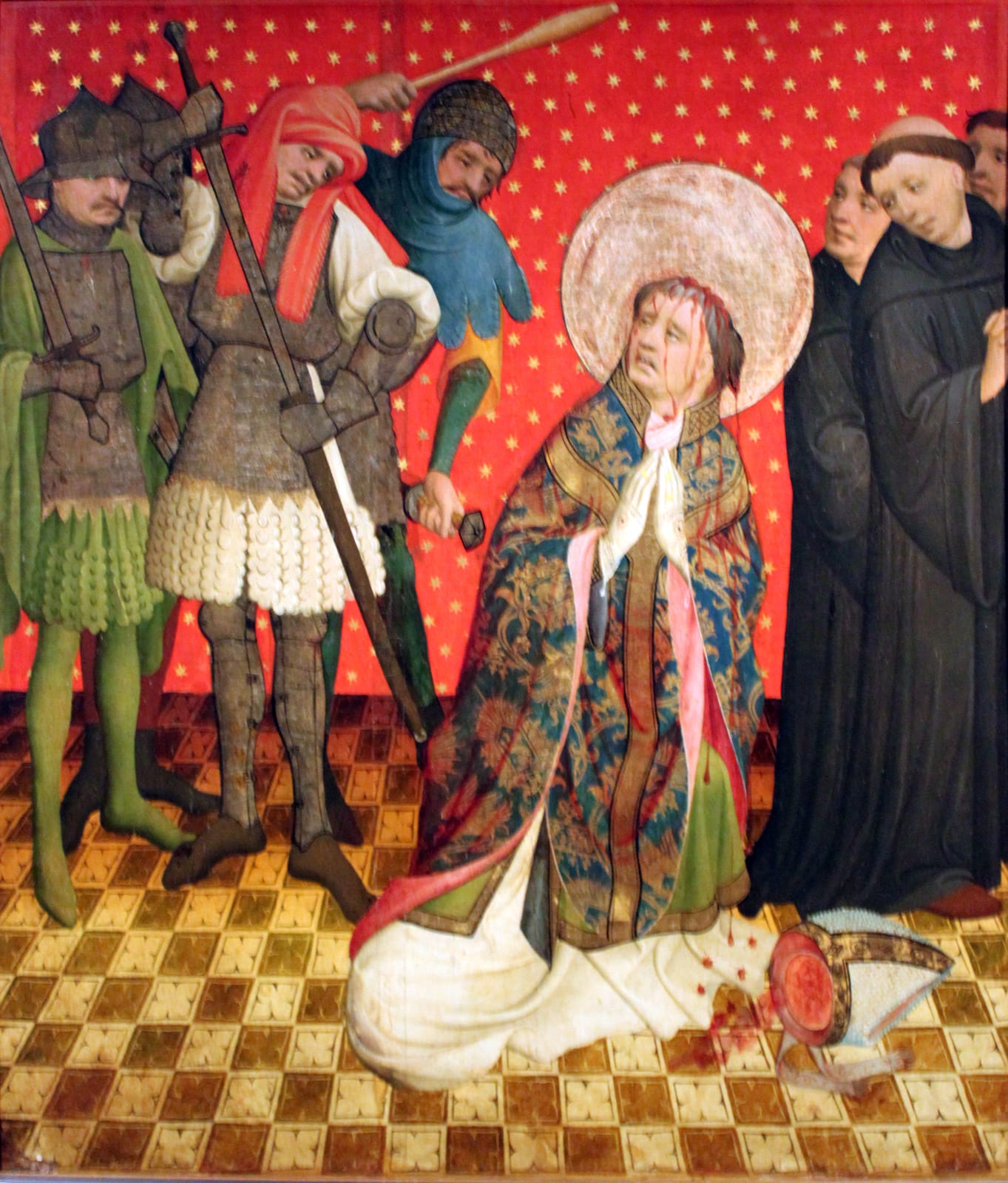
Armed knights strike Saint Thomas of Canterbury as monks look on
The Martyrdom of Saint Thomas of Canterbury, Master Francke (c. 1380–c. 1435), c. 1426. Credits

Christmas

December 29, 2029

December 29: St. Thomas, Archbishop of Canterbury and Martyr

From Dom Guéranger’s The Liturgical Year.

ANOTHER Martyr comes to-day to take his place round the Crib of our Jesus. He does not belong to the first ages of the Church: his name is not written in the Books of the New Testament, like those of Stephen, John and the Innocents of Bethlehem. Yet does he stand most prominent in the ranks of that Martyr Host which has been receiving fresh recruits in every age, and is one of those visible abiding proofs of the vitality of the Church, and of the undecaying energy infused into her by her divine Founder. This glorious Martyr did not shed his blood for the faith; he was not dragged before the tribunals of pagans or heretics, there to confess the truths revealed by Christ and taught by the Church. He was slain by Christian hands; it was a Catholic King that condemned him to death; it was by the majority of his own brethren, and they his countrymen, that he was abandoned and blamed. How, then, could he be a Martyr? How did he gain a Palm like Stephen's? He was the Martyr for the liberty of the Church.
Chapter 2: The Mystery of Christmas

From Dom Guéranger’s The Liturgical Year.

Everything is Mystery in this holy season. The Word of God, whose generation is before the day-star, is born in time—a Child is God—a Virgin becomes a Mother, and remains a Virgin—things divine are commingled with those that are human—and the sublime, the ineffable antithesis, expressed by the Beloved Disciple in those words of his Gospel, The Word was made flesh, is repeated in a thousand different ways in all the prayers of the Church;—and rightly, for it admirably embodies the whole of the great portent which unites in one Person the nature of Man and the nature of God.

The splendour of this Mystery dazzles the understanding, but it inundates the heart with joy. It is the consummation of the designs of God in time. It is the endless subject of admiration and wonder to the Angels and Saints; nay, is the source and cause of their beatitude. Let us see how the Church offers this Mystery to her children, veiled under the symbolism of her Liturgy.

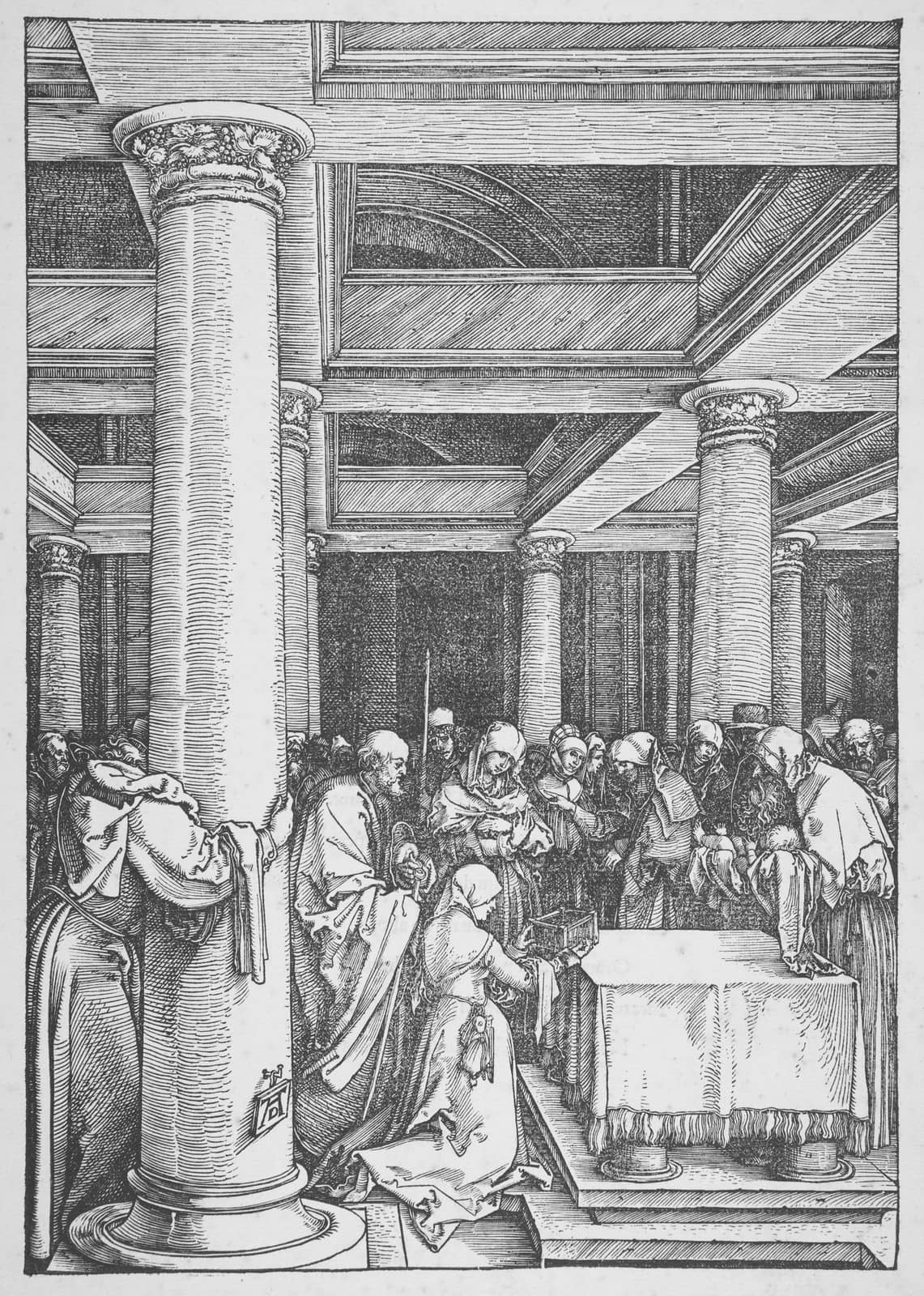
The Presentation of Christ in the Temple
Albrecht Dürer (1471–1528), The Presentation in the Temple, from The Life of the Virgin, ca. 1505. Credits

Email view of this day