Daily reading
Epiphanytide
Double · February 7 · Sanctoral
February 7: St. Romuald, Abbot
From Dom Guéranger’s The Liturgical Year.
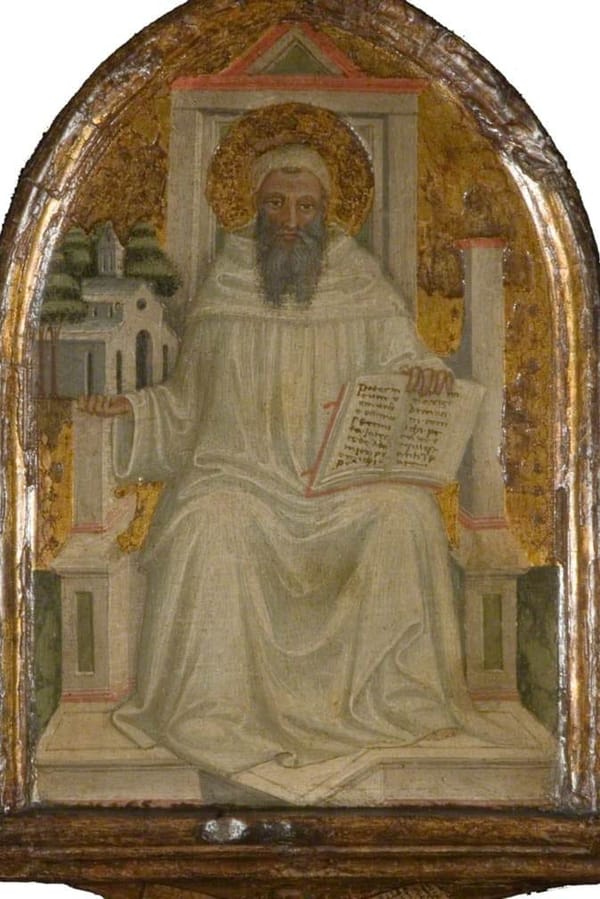 |
The calendar’s list of martyrs is interrupted for two days; the first of these is the feast of Romuald, the hero of penance, the saint of the forests of Camaldoli. He is a son of the great patriarch St. Benedict, and, like him, is the father of many children. The Benedictine family has a direct line from the commencement, even to this present time; but, from the trunk of this venerable tree there have issued four vigorous branches, to each of which the Holy Spirit has imparted the life and fruitfulness of the parent stem. These collateral branches of the Benedictine Order are: Camaldoli, founded by Romuald; Cluny, by Odo; Vallombrosa, by John Gualbert; and Citeaux, by Robert of Molesmes.
The saint of this seventh day of February is Romuald. The martyrs whom we meet with on our way to Lent, give us an important lesson by the contempt they had for this short life. But the teaching offered us by such holy penitents as the great abbot of Camaldoli is even more practical than that of the martyrs. ‘They that are Christ’s,’ says the apostle, 'have crucified their flesh, with its vices and concupiscences’;* and in these words he tells us what is the distinguishing character of every true Christian. We repeat it: what a powerful encouragement we have in these models of mortification, who have sanctified the deserts by their lives of heroic penance! How they make us ashamed of our own cowardice, which can scarcely bring itself to do the little that must be done to satisfy God’s justice and merit His grace! Let us take the lesson to heart, cheerfully offer our offended Lord the tribute of our repentance, and purify our souls by works of mortification.
The Office for St. Romuald’s feast gives us the following sketch of his life.
Faithful servant and friend of God! how different was thy life from ours! We love the world and its distractions. We think we do wonders if we give, each day, a passing thought to our Creator, and make Him, at long intervals, the sole end of some one of our occupations. Yet we know how each hour is bringing us nearer to that moment, when we must stand before the divine tribunal, with our good and our evil works, to receive the irrevocable sentence we shall have merited. Thou, Romuald, didst not thus waste life away. It seemed to thee as though there were but one thought and one interest worth living for: how best to serve thy God. Lest anything should distract thee from this infinitely dear object, thou didst flee into the desert. There, under the rule of the great patriarch, St. Benedict, thou wagedst war against the flesh and the devil; thy tears washed away thy sins, though so light if compared with what we have committed; thy soul, invigorated by penance, was inflamed with the love of Jesus, for whose sake thou wouldst fain have shed thy blood. We love to recount these thy merits, for they belong to us in virtue of that communion which our Lord has so mercifully established between saints and sinners. Assist us, therefore, during the penitential season, which is soon to be upon us. The justice of God will not despise our feeble efforts, for He will see them beautified by the union He allows them to have with such glorious works as thine. When thou wast living in the Eden of Camaldoli, thy amiable and sweet charity for men was such, that all who came near thee were filled with joy and consolation: what may we not expect from thee, now that thou art face to face with the God of love? Remember, too, the Order thou hast founded; protect it, give it increase, and make it ever, to those who become its children, a ladder to lead them up to heaven.
* Gal v. 24. ↩︎
| Previous February 6 (the Same Day): St. Dorothy, Virgin and Martyr | Next February 8: St. John of Matha, Confessor |