Daily reading
Simple · February 18 · Sanctoral
February 18, 2019
From Dom Guéranger’s The Liturgical Year.
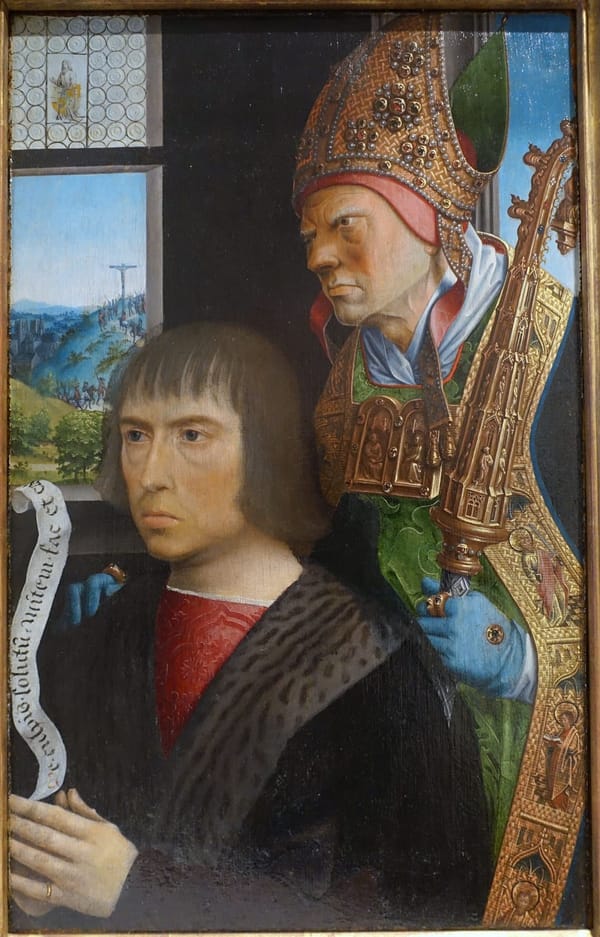
February 18: St. Simeon, Bishop and Martyr
How venerable our saint of to-day, with his hundred and twenty years, and his episcopal dignity, and his martyr-crown! He succeeded the apostle St. James in the see of Jerusalem; he had known Jesus, and had been His disciple; he was related to Jesus, for he was of the house of David; his father was Cleophas, and his mother that Mary, whom the tie of kindred united so closely to the blessed Mother of God that she has been called her sister. What grand titles these of Simeon who comes with all our other martyrs of Septuagesima, to inspirit us to penance! Such a veteran, who had been a contemporary of the Saviour of the world, and was a pastor who could repeat to his flock the very lessons Jesus had given him, could never rejoin his divine Master save by the path of martyrdom, and that martyrdom must be the cross. Like Jesus, then, he dies on a cross; and his death, which happened in the year 106, closes the first period of the Christian era, or, as it is called, the apostolic age. Let us honour this venerable pontiff, whose name awakens within us the recollection of all that is dear to our faith. Let us ask him to extend to us that fatherly love, which nursed the Church of Jerusalem for so many long years. He will bless us from that throne which he won by the cross, and will obtain for us the grace we so much need, the grace of conversion.
The following is the lesson given on St. Simeon:
Receive, most venerable saint, the humble homage of our devotion. What is all human glory compared with thine? Thou wast of the family of Christ; thy teaching was that which His divine lips had given thee; thy charity for men was formed on the model of His sacred Heart; and thy death was the closest representation of His. We may not claim the honour thou hadst, of calling ourselves brothers of the Lord Jesus: but pray for us, that we may be of those of whom He thus speaks: ‘Whosoever shall do the will of My Father that is in heaven, he is My brother, and sister, and mother.’* We have not, like thee, received the doctrine of salvation from the very lips of Jesus; but we have it in all its purity, by means of holy tradition, of which thou art one of the earliest links; oh, obtain for us a docility to this word of God, and pardon for our past disobedience. We have not to be nailed to a cross, as thou wast; but the world is thickly set with trials, to which our Lord Himself gives the name of the cross. These we must bear with patience, if we would have part with Jesus in His glory. Pray for us, O Simeon, that henceforth we may be more faithful; that we may never more become rebels to our duty; and that we may repair the faults we have so often committed by infringing the law of our God.
* St. Matt. xii. 50. ↩︎
Monday of Septuagesima Week
The serpent said to the woman: 'Why hath God commanded you, that you should not eat of every tree of paradise?'1 Thus opened the conversation, which our mother Eve so rashly consents to hold with God’s enemy. She ought to refuse all intercourse with Satan; she does not; and thereby she imperils the salvation of the whole human race.
Let us recall to mind the events that have happened up to this fatal hour. God, in His omnipotence and love, has created two beings, upon whom He has lavished all the riches of His goodness. He has destined them for immortality; and this undying life is to have everything that can make it perfectly happy. The whole of nature is made subject to them. A countless posterity is to come from them, and love them with all the tenderness of grateful children. Nay, this God of goodness who has created them, deigns to be on terms of intimacy with them; and such is their simple innocence, that this adorable condescension does not seem strange to them. But there is something far beyond all this. He, whom they have hitherto known by favours of an inferior order, prepares for them a happiness which surpasses all they could picture with every effort of thought. They must first go through a trial; and if faithful, they will receive the great gift as a recompense they have merited. And this is the gift: God will give them to know Him in Himself, make them partakers of His own glory, and make their happiness infinite and eternal. Yes, this is what God has done, and is preparing to do for these two beings, who but a while ago were nothing.
In return for all these gratuitous and magnificent gifts, God asks of them but one thing: that they acknowledge His dominion over them. Nothing, surely, can be sweeter to them than to make such a return; nothing could be more just All they are, and all they have, and all the lovely creation around them, has been produced out of nothing by the lavish munificence of this God; they must, then, live for Him, faithful, loving, and grateful. He asks them to give Him one only proof of this fidelity, love, and gratitude: He bids them not to eat of the fruit of one single tree. The only return He asks for all the favours He has bestowed upon them, is the observance of this easy commandment. His sovereign justice will be satisfied by this act of obedience. They ought to accept such terms with hearty readiness, and comply with them with a holy pride, as being not only the tie which will unite them with their God, but the sole means in their power of paying Him what He asks of them.
But there comes another voice, the voice of a creature, and it speaks to the woman: 'Why hath God commanded you, that you should not eat of every tree?’ And Eve dares, and has the heart, to listen to him that asks why her divine Benefactor has put a command upon her! She can bear to hear the justice of God’s will called in question! Instead of protesting against the sacrilegious words, she tamely answers them! Her God is blasphemed, and she is not indignant! How dearly we shall have to pay for this ungrateful indifference, this indiscretion! 'And the woman answered him, saying: Of the fruit of the trees that are in paradise we do eat; but of the fruit of the tree which is in the midst of paradise, God hath commanded us that we should not eat, and that we should not touch it, lest perhaps we die.’2 Thus Eve not only listens to the serpent’s question, she answers him; she converses with the wicked spirit that tempts her. She exposes herself to danger; her fidelity to her Maker is compromised. True, the words she uses show that she has not forgotten His command; but they imply a certain hesitation, which savours of pride and ingratitude.
The spirit of evil finds that he has excited, in this heart, a love of independence; and that, if he can but persuade her that she will not suffer from her disobedience, she is his victim. He, therefore, further addresses her with these blasphemous and lying words: 'No, you shall not die the death; for God knoweth, that in what day soever you shall eat thereof, your eyes shall be opened, and you shall be as gods, knowing good and evil.'3 What he proposes to Eve is open rebellion. He has enkindled within her that perfidious love of self which is man’s worst evil, and which, if it be indulged, breaks the tie between him and his Creator. Thus the blessings God has bestowed, the obligation of gratitude, personal interest, all are to be disregarded and forgotten. Ungrateful man would become a god; he would imitate the rebel angels: he shall fall as they did.
In Dominica Tyrophagi
| Previous Septuagesima Sunday | Next Monday of Septuagesima Week |