lyp.network

Daily reading

Lent

Major feria · Movable from Easter · Temporal

March 6, 2019

From Dom Guéranger’s The Liturgical Year.

Gold cross ornament
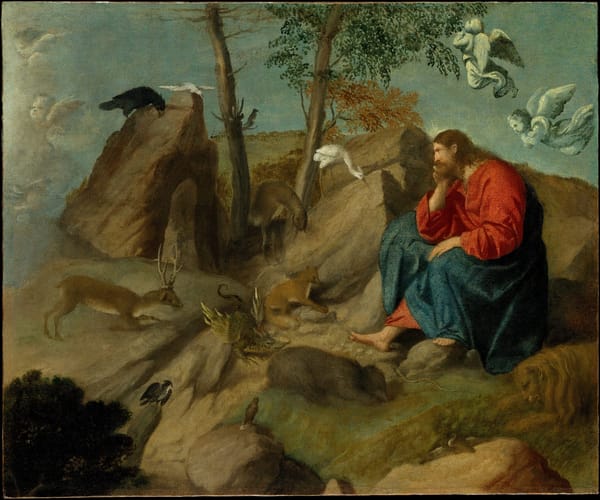
Christ seated on a rock in the wilderness in red tunic and blue mantle, animals around him, small angels in the clouds
Gold cross ornament
Christ in the Wilderness, Moretto da Brescia (1498–1554), c. 1515–20. Credits

Ash Wednesday

Including:

Yesterday, the world was busy in its pleasures, and the very children of God were taking a joyous farewell to mirth: but this morning, all is changed. The solemn announcement, spoken of by the prophet, has been proclaimed in Sion:1 the solemn fast of Lent, the season of expiation, the approach of the great anniversaries of our Redemption. Let us, then, rouse ourselves, and prepare for the spiritual combat.

But in this battling of the spirit against the flesh we need good armour. Our holy mother the Church knows how much we need it; and therefore does she summon us to enter into the house of God, that she may arm us for the holy contest. What this armour is we know from St. Paul, who thus describes it: ‘Have your loins girt about with truth, and having on the breastplate of justice. And your feet shod with the preparation of the Gospel of peace. In all things, taking the shield of faith. Take unto you the helmet of salvation, and the sword of the Spirit, which is the word of God.’2 The very prince of the apostles, too, addresses these solemn words to us: ‘Christ having suffered in the flesh, be ye also armed with the same thought.’3 We are entering, to-day, upon a long campaign of the warfare spoken of by the apostles: forty days of battle, forty days of penance. We shall not turn cowards, if our souls can but be impressed with the conviction, that the battle and the penance must be gone through. Let us listen to the eloquence of the solemn rite which opens our Lent. Let us go whither our mother leads us, that is, to the scene of the fall.

The enemies we have to fight with, are of two kinds: internal, and external. The first are our passions; the second are the devils. Both were brought on us by pride, and man’s pride began when he refused to obey his God. God forgave him his sin, but He punished him. The punishment was death, and this was the form of the divine sentence: ‘Thou art dust, and into dust thou shalt return.’4 Oh that we had remembered this! The recollection of what we are and what we are to be, would have checked that haughty rebellion, which has so often led us to break the law of God. And if, for the time to come, we would persevere in loyalty to Him, we must humble ourselves, accept the sentence, and look on this present life as a path to the grave. The path may be long or short; but to the tomb it must lead us. Remembering this, we shall see all things in their true light. We shall love that God, who has deigned to set His heart on us notwithstanding our being creatures of death: we shall hate, with deepest contrition, the insolence and ingratitude, wherewith we have spent so many of our few days of life, that is, in sinning against our heavenly Father: and we shall be not only willing, but eager, to go through these days of penance, which He so mercifully gives us for making reparation to His offended justice.

This was the motive the Church had in enriching her liturgy with the solemn rite, at which we are to assist this morning. When, upwards of a thousand years ago, she decreed the anticipation of the lenten fast by the last four days of Quinquagesima week, she instituted this impressive ceremony of signing the forehead of her children with ashes, while saying to them those awful words, wherewith God sentenced us to death: ‘Remember, O man, that thou art dust, and into dust thou shalt return!’ But the making use of aBhes as a symbol of humiliation and penance, is of a much earlier date than the institution to which we allude. We find frequent mention of it in the Old Testament. Job, though a Gentile, sprinkled his flesh with ashes, that, thus humbled, he might propitiate the divine mercy:5 and this was two thousand years before the coming of our Saviour. The royal prophet tells us of himself, that he mingled ashes with his bread, because of the divine anger and indignation.6 Many such examples are to be met with in the sacred Scriptures; but so obvious is the analogy between the sinner who thus signifies his grief, and the object whereby he signifies it, that we read such instances without surprise. When fallen man would humble himself before the divine justice, which has sentenced his body to return to dust, how could he more aptly express his contrite acceptance of the sentence, than by sprinkling himself, or his food, with ashes, which is the dust of wood consumed by fire? This earnest acknowledgment of his being himself but dust and ashes, is an act of humility, and humility ever gives him confidence in that God, who resists the proud and pardons the humble.

It is probable that, when this ceremony of the Wednesday in Quinquagesima week was first instituted, it was not intended for all the faithful, but only for such as had committed any of those crimes for which the Church inflicted a public penance. Before the Mass of the day began, they presented themselves at the church, where the people were all assembled. The priests received the confession of their sins, and then clothed them in sackcloth, and sprinkled ashes on their heads. After this ceremony, the clergy and the faithful prostrated, and recited aloud the seven Penitential Psalms. A procession, in which the penitents walked bare-footed, then followed; and on its return, the bishop addressed these words to the penitents: ‘Behold, we drive you from the doors of the church by reason of your sins and crimes, as Adam, the first man, was driven out of paradise because of his transgression.’ The clergy then sang several responsories, taken from the Book of Genesis, in which mention was made of the sentence pronounced by God when He condemned man to eat his bread in the sweat of his brow, for that the earth was cursed on account of sin. The doors were then shut, and the penitents were not to pass the threshold until Maundy Thursday, when they were to come and receive absolution.

Dating from the eleventh century, the discipline of public penance began to fall into disuse, and the holy rite of putting ashes on the heads of all the faithful indiscriminately became so general that, at length, it was considered as forming an essential part of the Roman liturgy. Formerly, it was the practice to approach bare-footed to receive this solemn memento of our nothingness; and in the twelfth century, even the Pope himself, when passing from the church of St. Anastasia to that of St. Sabina, at which the station was held, went the whole distance bare-footed, as also did the Cardinals who accompanied him. The Church no longer requires this exterior penance; but she is as anxious as ever that the holy ceremony, at which we are about to assist, should produce in us the sentiments she intended to convey by it, when she first instituted it.

As we have just mentioned, the station in Rome is at St. Sabina, on the Aventine Hill. It is under the patronage of this holy martyr that we open the penitential season of Lent.


THE BLESSING OF THE ASHES

The function begins with the blessing of the ashes, which are to be put on our foreheads. These ashes are made from the palms, which were blessed the previous Palm Sunday. The blessing they are now to receive in this their new form, is given in order that they may be made more worthy of that mystery of contrition and humility which they are intended to symbolize.

The choir begins by chanting this antiphon, which is a prayer for mercy.

Antiphon

Exaudi nos, Domine, quoniam benigna est misericordia tua: secundum multitudinem miserationum tuarum, respice nos, Domine.
Ps. Salvum me fac, Deus: quoniam intraverunt aquæ usque ad animam meam. ℣. Gloria Patri. Exaudi nos.
Hear us, O Lord, for thy mercy is kind: look on us, O Lord, according to the multitude of thy mercies.
Ps. Save me, O God: for the waters have reached my soul. ℣. Glory, etc. Hear us, etc.

The priest, standing at the altar, and having the ashes near him, begs of God, by the following prayers, that He would make them an instrument of our sanctification.

℣. Dominus vobiscum.℟. Et cum spiritu tuo.
Oremus
Omnipotens sempiterne Deus, parce pœnitentibus; propitiare supplicantibus: et mittere digneris sanctum angelum tuum de cœlis, qui benedicat, et sanctificet hos cinerea, ut sint remedium salubre omnibus nomen sanctum tuum humiliter implorantibua, ac semetipsos pro conscientia delictorum suorum accusantibus, ante conspectum divinæ clementiæ tuæ facinora sua deplorantibus, vel serenissimam pietatem tuam suppliciter obnixeque flagitantibus: et præsta, per invocationem sanctissimi nominis tui: ut quicumque per eos aspersi fuerint, pro redemptione peccatorum suorum, corporis sanitatem et animæ tutelam percipiant. Per Christum Dominum nostrum. ℟. Amen.
Oremus
Deus, qui non mortem sed pœnitentiam desideras peccatorum: fragilitatem conditionis humanæ benignissime respice: et hos cineres, quos causa proferendæhumilitatis, atque promerendæ veniæ, capitibus nostris imponi decernimus, benedicere prò tua pietate dignare: ut, qui nos cinerem esse, et ob pravitatis nostrædemeritum in pulverem reversuros cognoscimus, peccatorum omnium veniam, et præmia pœnitentibus repromissa, misericorditer consequi mereamur. Per Christum Dominum nostrum. ℟. Amen.

Oremus
Deus qui humiliatione flecteris et satisfactione placaris: aurem tuæ pietatis inclina precibua nostris: et capitibus servorum tuorum, horum cinerum aspersione contactis, effunde propitius gratiam tuæ benedictionis: ut eos et spiritu compunctionis repleas, et quæ juste postulaverint, efficaciter tribuas; et concessa perpetuo stabilita et intacta manere decernas. Per Christum Dominum nostrum, ℟. Amen.
Oremus
Omnipotens sempiterne Deus, qui Ninivitis in cinere et cilicio pœnitentibus indulgentiæ tuæ remedia pr©stitisti: concede propitius, ut sic eos imitemur habitu, quatenus veniæ prosequamur obtentu. Per Dominum. R. Amen.
℣. The Lord be with you.℟. And with thy spirit.
Let us pray
O almighty and eternal God, spare those that repent, show mercy to those that humbly entreat thee; and vouchsafe to send from heaven thy holy angel, to bless, and sanctify these ashes, that they may be a wholesome remedy to all who humbly call upon thy holy name, and conscious of their sins, accuse themselves, and deplore their crimes in sight of thy divine Majesty, or humbly and earnestly have recourse to thy sovereign bounty; and grant, by our calling on thy most holy name, that whoever shall be touched by these ashes for the remission of their sins, may receive health of body and defence of soul. Through Christ our Lord. ℟. Amen.
Let us pray
O God, who desirest the conversion, and not the death of sinners, graciously consider the weakness of human nature, and mercifully vouchsafe to bless these ashes, which we design to receive on our heads, in token of our humiliation, and to obtain forgiveness; that we, who know that we are but ashes, and must return to dust because of our wickedness, may obtain through thy mercy, pardon of all our sins, and the recompense promised to penitents. Through Christ our Lord. ℟. Amen.
Let us pray
O God, who art appeased by humiliation, and pacified by satisfaction, incline to our prayers the ears of thy mercy; and pour upon the heads of thy servants, covered with these ashes, the grace of thy blessing, so as both to fill them with the spirit of compunction, and to grant them the effects of their just desires; and, when granted, to remain stable and untouched for ever. Through Christ our Lord. ℟. Amen.
Let us Pray
O almighty and eternal God, who forgavest the Ninivites, when they did penance in sackcloth and ashes; mercifully grant us so to imitate their penance, that we may obtain pardon of our sins. Through, etc. ℟. Amen.

Having said the last of these prayers, the priest sprinkles the ashes with holy water, and censes them. The first in order of the priests who are present, marks the celebrant’s forehead with them. Then the ministers at the altar and the clergy receive them from the celebrant, who finally gives them to the faithful, saying:

Memento homo, quia pulvis es, et in pulverem reverteris.
Remember man, that thou art dust, and into dust thou shalt return.

When the priest puts the holy emblem of penance upon you, accept in a spirit of submission, the sentence of death, which God Himself pronounces against you: ‘Remember, O man, that thou art dust, and into dust thou shalt return!’ Humble yourself, and remember what it was that brought the punishment of death upon us: man wished to be as a god, and preferred his own will to that of his sovereign Master. Reflect, too, on that long list of sins, which you have added to the sin of your first parents, and adore the mercy of your God, who asks only one death for all these your transgressions.

During the time the priest is giving the ashes, the choir sings the following antiphons and responsory.

Anthem

Immutemur habitu, in cinere et cilicio: jejunemus et ploremus ante Dominum, quia multum miscricors est dimittere peccata nostra Deus noster.
Let us change our dress for ashes and sackcloth; let us fast and weep in the presence of the Lord; for our God is very merciful to forgive us our sins.

Anthem

Inter vestibulum et altare plorabunt sacerdotes ministri Domini, et dicent: Parco, Domine, parce populo tuo: et ne claudas ora canentium te, Domine.
The priests, the ministers of the Lord, shall weep between the porch and the altar, and say; Spare, O Lord, spare thy people, and shut not the mouths of those who praise thee, O Lord.

Responsory

Emendemus in melius quæ ignoranter peccavimus: ne subito præoccupati die mortis, quæramus spatium pœnitentiæ, et invenire non possimus. * Attende, Domine, et miserere, quia peccavimus tibi.
Ps. Adjuva nos Deus salutaris noster: et propter honorem nominis tui Domine, libera nos. * Attende. ℣. Gloria Patri. * Attende.
Let us amend the sins we have committed through ignorance: lest suddenly overtaken by the day of our death, we seek for time to do penance, and be not able to find it. * Look down on us, O Lord, and take pity; for we have sinned against thee.
Ps. Help us, O God our Saviour: and deliver us for the glory of thy name, O Lord. * Look down, etc. ℣. Glory, etc. Look down, etc.

As soon as all the faithful have received the ashes, the priest sings the following prayer:

℣. Dominus vobiscum.℟. Et cum spiritu tuo.
Oremus
Concede nobis, Domine, præsidia militiæ Christianæ sanctis inchoare jejuniis: nt contra spirituales nequitias pugnaturi, continentiæ muniamur auxiliis. Per Christum Dominum nostrum. ℟. Amen.
℣. The Lord be with you.℟. And with thy spirit.
Let us prayGrant us, O Lord, to begin with holy fasting our Christian warfare; that being to fight against spiritual wickedness, we may be aided therein by temperance. Through Christ our Lord. JR. Amen.

Mass

The soul has regained her confidence by the act of humility she has performed. She approaches the God of mercy, and reminds Him of the tender love He bears to His creature man, and of the patience wherewith He waits for his repentance. These are the sentiments expressed in the Introit, which is taken from the Book of Wisdom.

Introit

Misereris omnium, Domine, et nihil odisti eorum quæ fecisti, dissimulans peccata hominum propter pœnitentiam, et parcens illis: quia tu es Dominus Deus noster.
Ps. Miserere mei Deus, miserere mei; quoniam in te confidit anima mea. ℣. Gloria Patri. Misereris.
Thou, O Lord, hast mercy on all, and hatest none of those things which thou hast created; thou overlookest the sins of men, to draw them to repentance, and thou pardonest them; because thou art the Lord our God.
Ps. Have mercy on me, O God, have mercy on me; for my soul trusteth in thee. ℣. Glory, etc. Thou, O Lord, etc.

In the Collect, the Church prays that her children may have the two-fold grace of a fervent commencement and steady perseverance in the salutary fast of Lent.

Collect

Præsta, Domine, fidelibus tuis, ut jejuniorum veneranda solemnia, et congrua pietate suscipiant, et secura devotione percurrant. Per Dominum.
Grant, O Lord, that thy faithful may enter on this solemn and venerable fast with suitable piety, and go through it with unmolested devotion. Through, etc.

Second Collect

A cunctis nos, quæsumus, Domine, mentis et corporis defende periculis: et intercedente beata et gloriosa semperque Virgine Dei Genitrice Maria, cum beato Joseph, beatis apostolis tuis Petro et Paulo, atque beato N. et omnibus sanctis, salutem nobis tribue benignus et pacem: ut, destructis adversitatibus et erroribus universis, Ecclesia tua secura tibi serviat libertate.
Preserve us, O Lord, we beseech thee, from all dangers of soul and body: and by the intercession of the glorious and blessed Mary, the ever Virgin Mother of God, of blessed Joseph, of thy blessed apostles Peter and Paul, of blessed N. (here is mentioned the titular saint of the church), and of all the saints, grant us, in thy mercy, health and peace; that all adversities and errors being removed, thy Church may serve thee with undisturbed liberty.

Third Collect

Omnipotens sempiterne Deus, qui vivorum dominaris simul et mortuorum, omniumque misereris, quos tuoa fide et opere futuros esse prænoscis: te supplices exoramus; ut pro quibus effundere preces decrevimus quosque vel præsens sæculum adhuc in carne retinet, vel futurum jam exutos corpore suscepit, intercedentibus omnibus sanctis tuis, pietatis tuæ clementia, omnium delictorum suorum veniam consequantur. Per Dominum.
O almighty and eternal God, who hast dominion over the living and the dead, and art merciful to all whom thou knowest will be thine by faith and good works: we humbly beseech thee, that they, for whom we have proposed to offer our prayers, whether this world still retains them in the flesh, or the next world hath already received them divested of their bodies, may, by the clemency of thine own goodness, and the intercession of thy saints, obtain pardon and full remission of their sins. Through, etc.

Lectio Joelis Prophetæ.
Cap. ii.
Hæc dicit Dominus: Convertimini ad me in toto corde vestro, in jojunio, et in fletu, et in planctu. Et scindite corda vestra, et non vestimentavestra, et convcrtimini ad Dominum Deum vcstrum: quia benignus et misericors est, patiens et multæ misericordiæ, et præstabilis super malitia. Quis seit si convertatur et ignoscat, et relinquat post se benedictionem, sacrificium et libamen Domino Deo vestro? Canito tuba in Sion, santificate jejunium, vocate cœtum, congregate populum, santificate Ecclesiam, coadunate senes, congregate parvulos et sugentes ubera: egrediatur sponsus de cubili suo, et sponsa de thalamo suo. Inter vestibulum et altare plorabunt sacerdotes ministri Domini, et dicent: Parce, Domine, parce populo tuo: et ne des hæreditatem tuam in opprobrium, ut dominentur eis nationes. Quare dicunt in populis: Ubi est Deus eorum? Zelatus est Dominus terram suam, et pepercit populo suo. Et respond it Dominus, et dixit populo suo: Ecce ego mittam vobis frumentum, et vinum, et oleum, et replebimini eis: et non dabo vos ultra opprobrium in gentibus: dicit Dominus omnipotens.
Lesson from the Prophet Joel.
Ch. ii.
Thus saith the Lord: Be converted to me with all your heart, in fasting, and in weeping, and in mourning. And rend your hearts, and not your garments, and turn to the Lord your God: for he is gracious and merciful, patient and rich in mercy, and ready to repent of the evil. Who knoweth but he will return, and forgive, and leave a blessing behind him; sacrifice and libation to the Lord your God? Blow the trumpet in Sion, sanctify a fast, call a solemn assembly, gather together the people, sanctify the Church, assemble the ancients, gather together the little ones, and them that suck at the breasts: let the bridegroom go forth from his bed, and the bride out of the bridechamber. Between the porch and the altar the priests, the Lord’s ministers, shall weep, and shall say: Spare, O Lord, spare thy people; and give not thine inheritance to reproach, that the heathens should rule over them. Why should they say among the nations: Where is their God? The Lord hath been zealous for his land, and hath spared his people. And the Lord answered, and said to his people: Behold, I will send you corn, and wine, and oil; you shall be filled with them, and I will no more make you a reproach among the nations, saith the Lord almighty.

We learn from this magnificent passage of the prophet Joel how acceptable to God is the expiation of fasting. When the penitent sinner inflicts corporal penance upon himself, God’s justice is appeased. We have a proof of it in the Ninivites. If the Almighty pardoned an infidel city, as Ninive was, solely because its inhabitants sought for mercy under the garb of penance; what will He not do in favour of His own people, who offer Him the twofold sacrifice, exterior works of mortification, and true contrition of heart? Let us, then, courageously enter on the path of penance. We are living in an age when, through want of faith and of fear of God, those practices which are as ancient as Christianity itself, and on which we might almost say it was founded, are falling into disuse; it behoves us to be on our guard, lest we, too, should imbibe the false principles, which have so fearfully weakened the Christian spirit. Let us never forget our own personal debt to the divine justice, which will remit neither our sins nor the punishment due to them, except inasmuch as we are ready to make satisfaction. We have just been told that these bodies, which we are so inclined to pamper, are but dust; and as to our souls, which we are so often tempted to sacrifice by indulging the flesh, they have claims upon the body, claims of both restitution and obedience.

In the Gradual, the Church again pours forth the expressions of her confidence in the God of all goodness, for she counts upon her children being faithful to the means she gives them of propitiating His justice.

The Tract is that beautiful prayer of the psalmist, which she repeats thrice during each week of Lent, and which she always uses in times of public calamity, in order to appease the anger of God.

Gradual

Miserere mei Deus, miserere mei: quoniam in te confidit anima mea.℣. Misit de cœlo, et liberavit me: dedit in opprobrium conculcantes me.
Have mercy on me, O God, have mercy on me; for my soul hath trusted in thee.℣. He hath sent from heaven, and delivered me; he hath made them a reproach that trod upon me.

Tract

℣. Domine non secundum peccata nostra, quæ fecimus nos, neque secundum iniquitates nostras retribuas nobis.℣. Domine, ne memineris iniquitatum nostrarum antiquarum: cito anticipent nos misericordiæ tuæ, quia pauperes facti sumus nimis.
℣. Deal not with us, O Lord, according to our sins, which we have committed nor punish us according to our iniquities.℣. Remember not, O Lord, our former iniquities; let thy mercies speedily prevent us, for we are become exceeding poor.

Gospel

Sequentia sancti Evangelii secundum Matthæum.
Cap. vi.
In illo tempore: Dixit Jesus discipulis suis: Cum jejunatis, nolite fieri sicut hypocritæ tristes. Exterminant enim facies suas, ut appareant hominibus jejunantes. Amen dico vobis, quia receperunt mercedem suam. Tu autem cum jejunas, unge caput tuum, et faciem tuam lava, ne videaris hominibus jejunans, sed Patri tuo, qui est in abscondito: et Pater tuus qui videt in abscondito, reddet tibi. Nolite thesaurizare vobis thesauros in terra, ubi ærugo et tinea demolitur, et ubi fures effodiunt, et furantur. Thesaurizate autem vobis thesauros in cœlo: ubi neque ærugo, neque tinea demolitur; et ubi fures non effodiunt, nec furantur. Ubi enim est thesaurus tuus, ibi est et cor tuum.
Sequel of the holy Gospel according to Matthew.
Ch. vi.
At that time, Jesus said to his disciples: When you fast, be not as the hypocrites, sad. For they disfigure their faces, that they may appear unto men to fast. Amen, I say to you, they have received their reward. But thou, when thou fastest, anoint thy head, and wash thy face, that thou appear not to men to fast, but to thy Father, who is in secret: and thy Father, who seeth in secret, will repay thee. Lay not up to yourselves treasures on earth, where the rust and moth consume, and where thieves break through and steal. But lay up to yourselves treasures in heaven, where neither rust nor moth doth consume, and where thieves do not break through, nor steal. For where thy treasure is, there is thy heart also.

Our Redeemer would not have us receive the announcement of the great fast as one of sadness and melancholy. The Christian who understands what a dangerous thing it is to be behindhand with divine justice, welcomes the season of Lent with joy; it consoles him. He knows that if he be faithful in observing what the Church prescribes, his debt will be less heavy upon him. These penances, these satisfactions (which the indulgence of the Church has rendered so easy), being offered to God unitedly with those of our Saviour Himself, and being rendered fruitful by that holy fellowship which blends into one common propitiatory sacrifice the good works of all the members of the Church militant, will purify our souls, and make them worthy to partake in the grand Easter joy. Let us not, then, be sad because we are to fast; let us be sad only because we have sinned and made fasting a necessity. In this same Gospel, our Redeemer gives us a second counsel, which the Church will often bring before us during the whole course of Lent: it is that of joining almsdeeds with our fasting. He bids us to lay up treasures in heaven. For this, we need intercessors; let us seek them amidst the poor.

In the Offertory, the Church rejoices in her children being set free; she foresees that the wounds of our souls will be healed, for she has confidence in us that we shall persevere, and this fills her with gladness.

Offertory

Exaltabo te, Domine quoniam suscepisti me, nec delectasti inimicos meos super me; Domine, clamavi ad te, et sanasti me.
I will extol thee, O Lord, for thou hast upholden me, and hast not made my enemies to rejoice over me. O Lord, I have cried to thee, and thou hast healed me.

Secret

Fac nos, quæsumus, Domine, his muneribus offerendis convenienter aptari; quibus ipsius venerabilis sacramenti celebramus. exordium. Per Dominum.
Grant, O Lord, that we may be duly prepared to present these our offerings, by which we celebrate the institution of this venerable mystery. Through, etc.

Second Secret

Exaudi nos, Deus Salutaris noster: ut per hujus Sacramenti virtutem, a cunctis nos mentis et corporis hostibus tuearis, gratiam tribuens in præsenti, et gloriam in futuro.
Graciously grant us, O God our Saviour, that by virtue of this Sacrament, thou mayst defend us from all enemies, both of soul and body; giving us grace in this life, and glory in the next.

Third Secret

Deus, cui soli cognitus est numerus electorum in superna felicitate locandus; tribue quæsumus, ut intercedentibus omnibus sanctis tuis, universorum, quos in oratione commendatos suscepimus, et omnium fidelium nomina, beatæ prædestinationis liber adscripta retineat. Per Dominum.
O God, to whom alone is known the number of thine elect to be placed in eternal bliss: grant, we beseech thee, by the intercession of all thy saints, that the book of predestination may contain the names of all those for whom we have undertaken to pray, as well as those of all the faithful. Through, etc.

The Preface

Vere dignum et justum est, æequum et salutare, nos tibi semper, et ubique gratias agere, Domine sancte, Pater omnipotens, æterne Deus. Qui corporali jejunio vitia comprimis, mentem elevas, virtutem largiris et præmia, per Christum Dominum nostrum. Per quem majestatem tuam laudant Angeli, adorant Dominationes, tremunt Potestates: Cœli, cœlorumque Virtutes, ac beata Seraphim, socia exsultatione concelebrant. Cum quibus et nostras voces, ut admitti jubeas deprecamur, supplici confessione, dicentes: Sanctus, Sanctus, Sanctus.
It is truly meet and just right and available to salvation, that we should always and in all places give thanks to thee, O holy Lord, Father almighty, eternal God. Who by this bodily fast extinguishest our vices, elevatest our understanding, bestowest on us virtue and its rewards, through Christ our Lord. By whom the Angels praise thy majesty, the Dominations adore it, the Powers tremble before it; the Heavens and the heavenly Virtues, and the blessed Seraphim, with common jubilee, glorify it. Together with whom, we beseech thee that we may be admitted to join our humble voices, saying: Holy! Holy! Holy!

The words of the Church in the Communion antiphon contain an instruction of great importance to us. During this long career of penance, we shall stand in need of something to keep up our courage: let us meditate on the law and the mysteries of our Lord. If we relish the word of God as it is offered us by the Church on each day of this holy season, our hearts will receive an increase of light and love, and when our Lord shall rise from His tomb, the brightness of His Resurrection will shine upon us.

Communion

Qui meditabitur in lege Domini die ac nocte, dabit fructum suumin tempore suo.
He that meditateth day and night on the law of the Lord, shall yield his fruit in due season.

Postcommunion

Percepta nobis, Domine præbeant Sacramenta subsidium: ut tibi grata sint nostra jejunia, et nobis proficiant ad medelam. Per Dominum.
May the mysteries we have received, O Lord, afford us help, that our fasting may be acceptable to thee, and become a remedy to us. Through, etc.

Second Postcommunion

Mundet et muniat nos, quæsumus, Domine, divini Sacramentimunus oblatum: et intercedente beata Virgine Dei Genitrice Maria, cum beato Joseph, beatis apostolis tuis Petro et Paulo, atque beato N. et omnibus sanctis, a cunctis nos reddat et perversitatibus expiatos, et adversitatibus expeditos.
May the oblation of this divine Sacrament, we beseech thee, O Lord, both cleanse and defend us: and by the intercession of blessed Mary, the Virgin Mother of God, of blessed Joseph, of thy blessed apostles, Peter and Paul, of blessed N., and of all the saints, free us from all sin, and deliver us from all adversity.

Third Postcommunion

Purificent nos, quæsumus; omnipotens et misericors Deus, Sacramenta quæ sumpsimus: et intercedentibus omnibus sanctis tuis, præsta ut hoc tuum Sacramentum non sit nobis reatus ad pœnam, sed intercessio salutaris ad veniam: sit ablutio scelerum, sit fortitude fragilium, sit contra omnia mundi pericula firmamentum: sit vivorum atque mortuorum fidelium remissio omnium delictorum. Per Dominum.
May the mysteries we have received, purify us, we beseech thee, O almighty and merciful God; and grant by the intercession of all thy saints, that this thy Sacrament may not increase our guilt to punishment, but be a means of obtaining pardon in order to salvation. May it wash away sin, strengthen our frailty, secure us against the dangers of the world; and procure forgiveness for all the faithful, both living and dead. Through, etc.

Every day during Lent, Sundays excepted, the priest, before dismissing the faithful, here adds a special prayer, which is preceded by these words of admonition:

Prayer

OremusHumiliate capita vestra Deo.Inclinantes se, Domine, majestati tuæ, propitiatus intende: ut qui divino munere sunt refecti, cœlestibus semper nutriantur auxiliis. Per Dominum.
Let us prayBow down your heads to God.Mercifully look down upon us, O Lord, bowing down before thy divine Majesty, that they who have been refreshed with thy divine mysteries, may always be supported by thy heavenly aid. Through, etc.

  1. See the Epistle of to-day’s Mass. ↩︎
  2. Eph. vi. 14-17. ↩︎
  3. 1 St. Pet. iv. 1. ↩︎
  4. Gen. iii. 19. ↩︎
  5. Job xvi. 16. ↩︎
  6. Ps. ci. 10, 11. ↩︎

March 6: Sts. Felicitas and Perpetua, Martyrs

The real feast of these two illustrious heroines of the faith is to-morrow, which is the anniversary of their martyrdom and triumph; but the memory of the angel of the schools, St. Thomas of Aquin, shines so brightly on the seventh of March, that it almost eclipses the two glorious stars of Africa. In consequence of this, the Holy See orders the Church to anticipate their feast, and keep it to-day. We at once offer to the Christian reader the glorious spectacle of which Carthage was the scene in the year 203. Nothing could give us a clearer idea of that spirit of the Gospel, according to which we are now studying to conform our whole life. Here are two women, two mothers; God asks great sacrifices from them; He asks them to give Him their lives, nay, more than their lives; and they obey with that simplicity and devotedness which made Abraham merit to be the father of believers.

Their two names, as St. Augustine observes, are a presage of what awaits them in heaven: a perpetual felicity. The example they set of Christian fortitude, is, of itself, a victory, which secures to the true faith a triumph in the land of Africa. St. Cyprian will soon follow them, with his bold and eloquent appeal to the African Christians, inspiring them to die for their faith: but his words, grand as they are, are less touching than the few pages written by the hand of the brave Perpetua, who, though only twenty-two years of age, relates, with all the self-possession of an angel, the trials she had to go through for God; and when she has to hurry off to the amphitheatre, she puts her pen into another’s hand, bidding him go on where she leaves off, and write the rest of the battle. As we read these charming pages, we seem to be in the company of the martyrs; the power of divine grace, which could produce such heroism amidst a people demoralized by paganism, appears so great that even we grow courageous; and the very fact that the instruments employed by God for the destruction of the pagan world were frequently women, induces us to say with St. John Chrysostom: ‘I feel an indescribable pleasure in reading the “Acts of the Martyrs”; but when the martyr is a woman, my enthusiasm is doubled. For the frailer the instrument, the greater is the grace, the brighter the trophy, the grander the victory; and this, not because of her weakness, but because the devil is conquered by her, by whom he once conquered us. He conquered by a woman, and now a woman conquers him. She that was once his weapon, is now his destroyer, brave and invincible. That first one sinned, and died; this one died that she might not sin. Eve was flushed by a lying promise, and broke the law of God; our heroine disdained to live, when her living was to depend on her breaking her faith to Him who was her dearest Lord. What excuse, after this, for men, if they be soft and cowards? Can they hope for pardon, when women fought the holy battle with such brave, and manly, and generous hearts?’1

The lessons appointed to be read on this feast will be found in the Supplement. The following passage from the account written by Perpetua herself, which used to be read at Matins, will make some readers long to read the whole of what she has left us. They will find it in our first volume of the ‘Acts of the Martyrs.’

Severo imperatore, apprehensi sunt in Africa adolescentes catechumeni, Revocatils et Felicitas conserva ejus, Saturninus et Secundulus: inter quos et Vivia Perpetua, honeste nata, liberaliter instituta, matronaliter nupta, habens filium ad ubera. Erat autem ipsa annorum circiter viginti duorum. Hæc ordinem martyrii sui conscriptum manu sua reliquit. Quum adhuc, inquit, cum persecutoribus essemus, et me pater avertere, pro sua affectione, perseveraret: Pater, inquio, aliud me dicere non possum, nisi quod sum Christiana. Tunc pater, motus in hoc verbo, misit se in me, ut oculos mihi erueret. Sed vexavit tantum; et profecfcus est victus cum argumentis diaboli. In spatio paucorum dierum baptizati sumus: mihi autem Spiritus dictavit nihil aliud petendum in aqua, nisi sufferentiam carnis. Post paucos dies, recipimur in carcerem: et expavi, quia nunquam experta eram talea tenebras. Mox rumor cucurrit ut audiremur. Supervenit autem et de chvitate pater meus, consumptus tædio; et ascendit ad me, ut me dejiceret, dicens: Miserere, filia, canis meis; miserere patri, si dignus sum a te pater vocari. Aspice ad fratres tuos, aspice ad matrem tuam: aspice ad filium tuum, qui post te vivere non poterit. Depone animos, ne universos nos extermines. Hæc dicebat pater pro sua pietate: se ad pedes meos jactans, et lacrymis non filiam, sed dominam me vocabat. Et ego dolebam canos patris mei: quod solus de passione mea gavisurus non esset de toto genere meo. Et confortavi eum, dicens: Hoc fiet quod Deus voluerit. Scito enim nos non in nostra potestate esse constitutos, sed in Dei. Et recessit a me contristatus.
Alio die, quum prande remus, subito rapti sumus ut audiremur: et perveninius ad forum. Ascendimus in catasta. Interrogati cæteri confessi sunt. Ventum est et ad me. Et apparuit pater illico cum filio meo: et extraxit me de gradu, et dixit supplicans: Miserere infanti. Et Hilarianus procurator: Parce, inquit, canis patris tui, parce infantiæ pueri: fac sacrum pro salute imperatorum. Et ego respondi: Non facio: Christiana sum. Tunc nos universos pronuntiat et damnat ad bestias: et hilares descendimus ad carcerem. Sed quia consueverat a me infans mammas accipere, et mecum in carcere manere, statim mitto ad patrem, postulans infantem. Sed pater dare noluit: et, quomodo Deus voluit, neque ille amplius mammas desideravit neque mihi fervorem fecerunt. Atque hoc scripsit beata Perpetua usque in pridie certaminis. Felicitas vero, quæ prægnans octo jam mensium fuerat apprehensa, instante spectaculi die, in magno erat luctu, ne propter ventrem differretur. Sed et commartyres ejus graviter contristabantur, ne tam bonam sociam in via ejusdem spei relinquerent. Conjuncto itaque gemitu, ad Dominum orationem fuderunt ante tertium diem muneris. Statim post orationem dolores eam invaserunt. Et quum in partu laborans doleret, ait illi quidam ex ministris: Quæ sic modo doles, quid facies objecta bestiis, quas contempsisti quum sacrificare noluisti? Et illa respondit: Modo ego patior quod patior: illic autem alius erit in me qui patietur pro me; quia et ego pro illo passura sum. Ita enixa est puellam, quam sibi quædam soror in filiain educavit.
Illuxit dies victoriæ iliorum: et processerunt de carcere in amphitheatrum, quasi in cœlum, hilares, vultu decori: si forte, gaudio paventes, non timore. Sequebatur Perpetua placido vultu, et pedum incessu ut matrona Christi dilecta: vigorem oculorum suorum dejiciens ab omnium conspectu. Item Felicitas, salvam se peperisse gaudens, ut ad bestias pugnaret. Illis ferocissimam vaccam diabolus præparavit. Itaque reticulis in dutæ producuntur. Inducitur prior Perpetua. Jactata est et concidit in lumbos: et ut conspexit tunicam a latere discissam ad velamentum femorum adduxit, pudoris potius memor quam doloris. Dehinc requisita et dispersos capillos infibulavit. Non enim decebat martyrem dispcrsis capillis pati: ne in sua gloria plangere videretur. Ita surrexit; et elisam Felicitatem quum vidisset, accessit et manum ei tradidit, et sublevavit illam. Et ambæ pariter steterunt: et populi duritia devicta, revocatæ sunt in portam Sanavivariam. Illic Perpetua, quasi a somno expergita, adeo in spiritu et extasi fuerat, circumspicere cœpit: et stupentibus omnibus, ait: Quando producimur ad vaccam illam, nescio. Et quum audisset quod jam evenerat; non prius credidit, nisi quasdam notas vexationis in corpore et habitu suo recognovisset. Exinde accersitum fratrem suum, et catechumenum Rusticum nomine, allocuta est eos, dicens: In fide state, et invicem omnes diligite; et passionibus nostris ne scandalizemini. Secundulum Deus maturiore exitu de sæculo adhuc in carcere evocaverat. Saturninus et Revocatus leopardum experti, etiam ab urso vexati sunt. Saturus apro oblatus est; deinde ad ursum tractus, qui de cavea prodire noluit: itaque bis illæsus revocatur. In fine spectaculi, leopardo objectus. de uno morsu ejus tanto perfusus est sanguine, ut populus revertenti illi secundi Baptismatis testimonium rcclamaverit: Salvum lotum, salvum lotum. Exinde jam exanimis, prosternitur cum cæteris ad jugulationem solito loco. Et quum populus illos in medium postularet, ut gladio penetrante in eorem corpore, oculos suos comites homicidii adjungeret; ultro surrexerunt, et se quo volebat populus transtulerunt: ante jam osculati invicem, ut martyrium per solemnia pacis consummarent. Cæteri quidem immobiles et cum silentio ferrum receperunt: multo magis Saturus, qui prior reddidit spiritum. Perpetua autem, ut aliquid doloris gustaret, inter costas puncta exululavit; et errantem dexteram tirunculi gladiatoris ipsa in jugulum suum posuit. Fortasse tanta fernina aliter non potuisset occidi, quia ab immundo spiritu timcbatur, nisi ipsa voluisset.
During the reign of the Emperor Severus, several catechumens were apprehended at Carthage, in Africa. Among these were Revocatus and his fellow-servant Felicitas, Saturninus and Secundulus, and Vivia Perpetua, a lady by birth and education, who was married to a man of wealth. Perpetua was about twentytwo years of age, and was suckling an infant. She has left us the following particulars of her martyrdom. ‘As soon as our persecutors had apprehended us, my father came to me, and out of his great love for me, he tried to make me change my resolution. I said to him: “Father, I cannot consent to call myself other than what I am, a Christian.”At these words, he rushed at me threatening to tear out my eyes. But he only struck me, and then he left me, when he found that the arguments suggested to him by the devil, were of no avail. A few days after this, we were baptized; and the Holy Ghost inspired me to look on this Baptism as a preparation for bodily suffering. A few more days elapsed, and we were sent to prison. I was terrified, for I was not accustomed to such darkness. The report soon spread that we were to be brought to trial. 'My father left the city, for he was heartbroken, and he came to me, hoping to shake my purpose. These were his words to me: “My child, have pity on my old age. Have pity on thy father, if I deserve to be called father. Think of thy brothers, think of thy mother, think of thy son, who cannot live when thou art gone. Give up this mad purpose, or thou wilt bring misery upon thy family.” Whilst saying this, which he did out of love for me, he threw himself at my feet, and wept bitterly, and said he besought this of me not as his child, but as his lady. I was moved to tears to see my aged parent in this grief, for I knew that he was the only one of my family that would not rejoice at my being a martyr. I tried to console him, and said: “I will do whatsoever God shall ordain. Thou knowest that we belong to God, and not to ourselves.” He then left me, and was very sad.
‘On the following day, as we were taking our repast, they came upon us suddenly, and summoned us to trial. We reached the forum. We were made to mount a platform. My companions were questioned, and they confessed the faith. My turn came next, and I immediately saw my father approaching towards me, holding my infant son. He drew me from the platform, and besought me, saying: “Have pity on thy babe!” Hilarian, too, the governor, said to me: “Have pity on thy aged father, have pity on thy babe! Offer up sacrifice for the emperors.” I answered him: “I cannot; I am a Christian.” Whereupon, he sentences all of us to be devoured by the wild beasts; and we, full of joy, return to our prison. But as I had hitherto always had my child with me in prison, and fed him at my breasts, I immediately sent word to my father, beseeching him to let him come to me. He refused; and from that moment, neither the babe asked for the breast, nor did I suffer inconvenience; for God thus willed it.’ All this is taken from the written account left us by the blessed Perpetua, and it brings us to the day before she was put to death. As regards Felicitas, she was in the eighth month of her pregnancy, when she was apprehended. The day of the public shows was near at hand, and the fear that her martyrdom would be deferred on account of her being with child, made her very sad. Her fellowmartya, too, felt much for her, for they could not bear the thought of seeing so worthy a companion disappointed in the hope, she had in common with themselves, of so soon reaching heaven. Uniting, therefore, in prayer, they with tears besought God in her behalf. It was but three days before the public shows. No sooner was their prayer ended, than Felicitas was seized with pain. One of the gaolers, who overheard her moaning, cried out: 'If this pain seem to thee so great, what wilt thou do when thou art being devoured by the wild beasts, which thou pretendedst to heed not when thou wast told to offer sacrifice.’ She answered: ‘What I am suffering now, it is indeed I that suffer; but there, there will be another in me, who will suffer for me, because I shall be suffering for him.’ She was delivered of a daughter, and one of our sisters adopted the infant as her own.
The day of their victory dawned. They left their prison for the amphitheatre, cheerful, and with faces beaming with joy, as though they were going to heaven. They were excited, but it was from delight, not from fear. The last in the group was Perpetua. Her placid look, her noble gait, betrayed the Christian matron. She passed through the crowd and saw no one, for her beautiful eyes were fixed upon the ground. By her side was Felicitas, rejoicing that her safe delivery enabled her to encounter the wild beasts. The devil had prepared a savage cow for them. They were put into a net. Perpetua was brought forward the first. She was tossed into the air, and fell upon her back. Observing that one side of her dress was torn, she adjusted it, heedless of her pain, because thoughtful for modesty. Having recovered from the fall, she put up her hair which was dishevelled by the shock, for it was not seemly that a martyr should win her palm and have the appearance of one distracted by grief. This done, she stood up. Seeing Felicitas thrown down she went to her, and giving her hand to her, raised her from the ground. Both were now ready for a fresh attack; but the people were moved to pity, and the martyrs were led to the gate called Sana Vivaria. There Perpetua, like one that is roused from sleep, awoke from the deep ecstasy of her spirit. She looked around her, and said to the astonished multitude: ‘When will the cow attack us?’ They told her that it had already attacked them. She could not believe it, until her wounds and torn dress reminded her of what had happened. Then beckoning to her brother, and to a catechumen named Rusticus, she thus spoke to them: ‘Be stanch in the faith, and love one another, and be not shocked at our sufferings.’God had already taken Secundulus from this world; for he died while he was in the prison. Saturninus and Revocatus were exposed first to a leopard, and then to a bear. Saturus was exposed to a boar, and then to a bear, which would not come out of its den; thus was he twice left uninjured; but at the close of the games, he was thrown to a leopard, which bit him so severely, that he was all covered with blood, and as he was taken from the amphitheatre, the people jeered at him for this second Baptism, and said: ‘Saved, washed I Saved, washed!’ He was then carried off, dying as he was, to the appointed place, there to be dispatched by the sword, with the rest. But the people demanded that they should be led back to the middle of the amphitheatre, that their eyes might feast on the sight, and watch the sword as it pierced them. The martyrs hearing their request, cheerfully stood up, and marched to the place where the people would have them go; but first they embraced one another, that the sacrifice of their martyrdom might be consummated with the solemn kiss of peace. They all received the fatal stroke without a movement or a moan; Saturus being the first to expire. Perpetua was permitted to feel more than the rest. Her executioner, who was a novice in his work, thrust his sword through her ribs: she slightly moaned, then took his right hand, and pointing his sword towards her throat, told him that that was the place to strike. Perhaps it was that such a woman could not be otherwise slain than by her own consent, for the unclean spirit feared her.

The Holy See has approved of the three following hymns composed in honour of our two martyrs. We unite them under one conclusion.

Hymn

Christi sponsa piis laudibus efferat
Binas impavido pectore feminas:
In sexu fragili corda virilia
Hymnis pangat ovantibus.
Ad lucem genitæ sole sub Africo,
Nunc ambæ pugiles actibus inclytis
In toto radiant orbe: micantibus
Fulgent tempora laureis.
Exornat generis Perpetuam decus;
Sponso connubiis juncta recentibus
Clarescit; sed honor hanc trahit altior:
Christi fœdera prætulit.
Se Regia famulam libera profitens,
Dum servile jugum Felicitas subit;
Ad luctam properans gressibus æmulis,
Palmas ad similes volat.
Frustra Perpetuam fletibus et minis
Impugnai genitor: quæ simul angitur,
Errantem miserans. Oscula filio
Lactenti dedit ultima.
Terris Eva parens quæ mala contulit,
Horum sentit onus Felicitas grave;
Nunc et passa sibi parturiens gemit,
Mox passura Deo libens.
Cœli Perpetuæ pan ditur ostium;
Inspectare datur: jam sibi prælia
Exortura videt; sed requiem Deus
Post certamina conferet.
Tangit scala domos aurea cœlitum:
Ast utrumque latus cuspidibus riget;
Lapsos terribilis faucibus excipit
Hanc infra recubans draco.
Ascendas, mulier, nec draco terreat;
Contritumque caput sit tibi pro gradu,
Per quem sidereos incipias pede
Orbes scandere concito.
Hortus deliciis jam patet affluens,
In quo mulget oves pastor amabilis:
Huc optata venis, filia: sic ait,
Hanc dulci recreans cibo.
In circum rapitur: fœdus et horrida
Occurrit specie vir gladium vibrans:
Dejectus teritur femineo pede.
Victrix, suscipe præmia.
Luxit clara dies, vincere qua datur
Athletis Domini. Pergite martyres:
Omnis Perpetuam curia cœlitum,
Et te, Felicitas, cupit.
Quassat Perpetuæ membra tenerrima,
Elidit sociam bellua. Te soror
Stans, o Felicitas, ad nova prælia
Erectam reparat manu.
E cœlo pugilum respiciens Deus
Certamen, geminas ad bravium vocat.
Effuso properet sanguine spiritus,
In Christi remeans sinum.
Optatus penetrat corpora martyrum
Lictoris gladius: sed trepidam manum
Fortis Perpetuæ dextera dirigit,
Præbens guttura cuspidi.
Nunc, o magnanimæ, gaudia quæ manent
In Sponsi thalamo carpite jugiter.
Vos exempla dedit: præsidium potens
Vestris ferte clientibus.
Laus æterna Patri, laus quoque Filio;
Par individuo gloria Flamini;
In cunctis resonet Christiadum choris
Virtus martyribus data.
Amen.
Let the Church, the bride of Christ,
celebrate in holy praise, the two dauntless women;
and sing, in joyous hymns,
how the weaker sex had here two manly hearts.
Both were born in Africa’s sunny land;
and now both shine throughout the whole world
as the two glorious combatants,
wearing bright laurels on their brows.
Perpetua is honoured by her fellow-citizens
as being of high birth, and had but recently contracted
an honourable marriage. But there was an honour
far higher, in her eyes, the love and service of Christ.
Felicitas, though she served an earthly master,
was free in this, that she was a servant of the great King.
Like Perpetua, she thirsts for battle;
and like her, she culls a palm.
In vain did Perpetua’s father strive, by tears and threats,
to make her deny her faith. She, on her side was full of grief,
and pity at seeing him a victim of error. Her babe was taken from her;
she kissed him and was content.
Felicitas begins her sufferings by those cruel pangs which Eve,
our mother, brought upon the earth.
Now, in child-birth, she suffers for herself, and she moans;
but, in her martyrdom, she suffers for her God, and she rejoices.
The gate of heaven is thrown open to Perpetua,
and she is permitted to look within.
She there learns that a contest awaits her,
but that, after the battle, God will grant her repose.
She sees a golden ladder reaching to the palace of heaven;
but both its sides are armed with spikes,
and at its foot lies an angry dragon,
which devours them that fall.
Ascend, Perpetua! fear not the dragon.
Trample on his head, and make it a steppingstone,
whereby thou mayst quickly mount
to the starry land above.
There shalt thou find a paradise of delights, where the loving
shepherd caresses his sheep. 'Thou art welcome here, my daughter!’
Thus did he address the martyr,
and then gave her to eat of sweetest food.
In another vision, she thought she was hurried to the amphitheatre.
There she was met by a man, whose face was swarth and terrible to look at.
He brandished his sword. She encountered him, threw him on the ground, and trampled
on his head. A cry was heard: 'Thou hast conquered! Come, take the prize!’
But at length came the glorious day
of victory for the soldiers of Christ.
On, martyrs, to the field! Perpetua and Felicitas!
the court of heaven is longing to receive you!
The wild beast rushes upon them, tossing,
tearing, and wounding their tender limbs.
See, Felicitas! thy sister’s hand
emboldens thee to renew the fight.
God looks down from heaven on the two brave combatants,
and calls them to the prize.
Their blood streams from the wounds,
and their spirits speed their way to the bosom of Christ.
The sword, the welcome sword, is thrust;
the martyrs die, all save Perpetua;
bravely she takes the trembling lictor’s hand,
and offering him her neck, tells him his surest aim is there.
Go now, brave-hearted ones, to him who is your Spouse,
and there eternally enjoy the bliss he has in store for you.
He gave you to us as models;
Oh, show your power, and help us your clients.
Eternal glory be to the Father, and to the Son,
and to the coequal Spirit!
And let every choir in Christian lands sound forth its praise
to the grace bestowed on the martyrs.
Amen.

Perpetua! Felicitas! O glorious and prophetic names, which come like two bright stars of March, pouring out upon us your rays of light and life! You are heard in the songs of the angels; and we poor sinners, as we echo them on earth, are told to love and hope. You remind us of that brave woman, who, as the Scripture says, kept up the battle begun by men: The valiant men ceased: who will follow them? A mother in Israel.2 Glory be to that almighty power, which loves to choose the weak things of the world that it may confound the strong!3 Glory to the Church of Africa, the daughter of the Church of Rome; and glory to the Church of Carthage, which had not then heard the preachings of her Cyprian, and yet could produce two such noble hearts!

As to thee, Perpetua, thou art held in veneration by the whole Christian world. Thy name is mentioned by God's priests in the holy Mass, and thus thy memory is associated with the sacrifice of the Man-God, for love of whom thou didst lay down thy life. And those pages written by thine own hand, how they reveal to us the generous character of thy soul! How they comment those words of the Canticle: Love is strong as death!4 It was thy love of God that made thee suffer, and die, and conquer. Even before the water of Baptism had touched thee, thou wast enrolled among the martyrs. When the hard trial came of resisting a father, who wished thee to lay down the palm of martyrdom, how bravely didst thou triumph over thy filial affection, in order to save that which is due to our Father who is in heaven! Nay, when the hardest test came, when the babe that fed at thy breast was taken from thee in thy prison, even then thy love was strong enough for the sacrifice, as was Abraham’s, when he had to immolate his Isaac.

Thy fellow-martyrs deserve our admiration; they are so grand in their courage; but thou, dear saint, surpassest them all. Thy love makes thee more than brave in thy sufferings, it makes thee forget them. ‘Where wast thou,’ we would ask thee in the words of St. Augustine, ‘where wast thou, that thou didst not feel the goading of that furious beast, asking when it was to be, as though it had not been? Where wast thou? What didst thou see, that made thee see not this? On what wast thou feasting, that made thee dead to sense? What was the love that absorbed, what was the sight that distracted, what was the chalice that inebriated thee? And yet the ties of flesh were still holding thee, the claims of death were still upon thee, the corruptible body was still weighing thee down!’5 But our Lord had prepared thee for the final struggle, by asking sacrifice at thy hands. This made thy life wholly spiritual, and gave thy soul to dwell, by love, with Him, who had asked thee for all and received it; and thus living in union with Jesus, thy spirit was all but a stranger to the body it animated.

It was impatient to be wholly with its sovereign Good. Thy eager hand directs the sword that is to set thee free; and as the executioner severs the last tie that holds thee, how voluntary was thy sacrifice, how hearty thy welcome of death! Truly, thou wast the valiant, the strong woman,6 that conqueredst the wicked serpent! Thy greatness of soul has merited for thee a high place among the heroines of our holy faith, and for sixteen hundred years thou hast been honoured by the enthusiastic devotion and love of the servants of God.

And thou, too, Felicitas! receive the homage of our veneration, for thou wast found worthy to be a fellow-martyr with Perpetua. Though she was a rich matron of Carthage, and thou a servant, yet Baptism and martyrdom made you companions and sisters. The lady and the slave embraced, for martyrdom made you equal; and as the spectators saw you hand in hand together, they must have felt that there was a power in the religion they persecuted, which would put an end to slavery. The power and grace of Jesus triumphed in thee, as it did in Perpetua; and thus was fulfilled thy sublime answer to the pagan, who dared to jeer thee: that when the hour of trial came, it would not be thou that wouldst suffer, but Christ who would suffer in thee. Heaven is now the reward of thy sacrifice; well didst thou merit it. And that babe, that was born in thy prison, what a happy child to have for its mother a martyr in heaven! How wouldst thou bless both it and the mother who adopted it! Oh, what fitness, in such a soul as thine, for the kingdom of God!7 Not once looking back, but ever bravely speeding onwards to Him that called thee. Thy felicity is perpetual in heaven; thy glory on earth shall never cease.

And now, dear saints, Perpetua and Felicitas, intercede for us during this season of grace. Go, with your palms in your hands, to the throne of God, and beseech Him to pour down His mercy upon us. It is true, the days of paganism are gone by; and there are no persecutors clamouring for our blood. You, and countless other martyrs, have won victory for faith; and that faith is now ours; we are Christians. But there is a second paganism, which has taken deep root among us. It is the source of that corruption which now pervades every rank of society, and its own two sources are indifference, which chills the heart, and sensuality, which induces cowardice. Holy martyrs! pray for us that we may profit by the example of your virtues, and that the thought of your heroic devotedness may urge us to be courageous in the sacrifices which God claims at our hands. Pray, too, for the Churches which are now being established on that very spot of Africa, which was the scene of your glorious martyrdom: bless them, and obtain for them, by your powerful intercession, firmness of faith and purity of morals.

Appendix

At the recent revision of the Breviary the office of this feast was changed, and the following lessons were appointed to be read at Matins:

Perpetua et Felicitas, in persecutione Severi imperatoris, in Africa, una cum Revocato, Saturnino et Se cundulo comprehensæ sunt, et in tenebricosum carcerem detrusæ, quibus ultra adjunctus est Satyrus. Erant adhuc catechumenæ, sed paulo post baptizatæ sunt. Paucis diebus interjectis, e carcere ad forum deductæ cum sociis, post gloriosam confessionem, ab Hilarione procuratore damnantur ad bestias. Inde hilares descendunt ad carcerem, ubi variis visionibus recreantur, et ad martyrii palmam accenduntur. Perpetuam, nec patris senio pene confecti iteratæ preces et lacrymæ, nec erga filium infantem pendentemad ubera maternus amor, nec supplicii atrocitas, a Christi fide dimovere unqaam potuerunt.
Felicitas vero, instante spectaculi die, cum octo jam menses prægnans esset in magno erat luctu, ne differetur; leges quippe vetebant prægnantes supplicio affici. At precibus commartyrum acœlerato partu, enixa est filiam. Cumque in partu laborans doleret, ait illi quidam de custodibus: Quæ sic modo doles, quid facies, objecta bestiis? Cui illa: Modo ego patior, illic autem alius erit in me, qui patietur pro me, quia et ego prò illo passura sum.
In amphitheatrum, toto inspectante populo, producuntur tandem generosæ mulieres, Nonis Martii, ac primum flagellis cæduntur. Tunc a ferocissima vacca aliquamdiu jactatæ, plagis concisæ et in terram elisæ sunt: demum cum sociis, qui a variis bestiis vexati fuerant, gladiorum ictibus conficiuntur. Harum sanctarum Martyrum festum Pius Decimus Pontifex Maximus ad ritum duplicem pro universa Ecclesia evexit, ac diei sextæ Hartii adsignari mandavit.
Perpetua and Felicitas were arrested during the persecution of the Emperor Severus, in Africa, together with Revocatus, Saturninus, and Secundulus, and were cast into a darksome dungeon, where Satyrus was added to their company. They were as yet catechumens, but a short while after they were baptized. After a few days, they, with their companions, were led forth from their prison to the court, and, after a glorious confession, were condemned by the procurator Hilarion to be thrown to the beasts. Thereupon they went down to their prison rejoicing, and while there were refreshed with divers visions, and fired with a longing for the martyrs palm. Neither the repeated prayers and tears of Perpetua's father, a man almost decrepit with old age, nor her motherly love for her baby son, still at the breast, nor the horror of the penalty, could avail at all to shake her faith in Christ.
But Felicitas, when the day of the spectacle drew nigh, was in great grief lest it should be put off, seeing that she was eight months with child: for the law ordained that no woman with child should be put to the torture. But at the prayer of her fellow-martyrs her delivery was hastened, and she gave birth to a daughter. While she was groaning amid the pains of childbirth, one of the gaolers said to her: 'What wilt thou do when thou art thrown to the beasts, if thou groanest thus now?' She replied: 'Now it is I who suffer, but then Another will be within me who will suffer on my behalf, seeing that it is for Him that I am to suffer.’
At length the noble-hearted women were brought into the amphitheatre, in the sight of all the people, on the Nones of March (March 7). They were first beaten with scourges. Then they were tossed for some time by a ferocious cow, torn with wounds, and dragged on the ground; and lastly, together with their companions, who had been attacked by divers wild beasts, they were slain by the sword. Pope Pius X. raised the feast of these holy martyrs to the rank of a double for the Universal Church, and ordered it to be kept on March 6.

  1. Homil. de diversis novi Testamenti locis. ↩︎
  2. Judges v. 7. ↩︎
  3. 1 Cor. i. 27. ↩︎
  4. Cant. viii. 6. ↩︎
  5. Sermon for the feast of Ss. Perpetua and Felicitas. ↩︎
  6. Prov. xxxi. 10. ↩︎
  7. St. Luke ix. 62. ↩︎
Previous
Tuesday of Quinquagesima Week (Fat Tuesday)
Next
March 6: Sts. Felicitas and Perpetua, Martyrs