Daily reading
Lent
Double · Movable from Easter · Temporal
March 7, 2019
From Dom Guéranger’s The Liturgical Year.
 |
Thursday after Ash Wednesday
Although the law of fasting began yesterday, yet Lent, properly so called, does not begin till the Vespers of Saturday next. In order to distinguish the rest of Lent from these four days which have been added to it, the Church continues to chant Vespers at the usual hour, and allows her ministers to break their fast before having said that Office. But, beginning with Saturday, the Vespers will be anticipated; every day (Sundays excepted, which always exclude fasting), they will be said at such an early hour, that when the faithful take their full meal, the evening Office will be over. It is a remnant of the discipline of the primitive Church, which forbade the faithful to break their fast before sunset, in other words, before Vespers or Evensong.
The Church has given to these three days after Ash Wednesday a resemblance to the other ferias of her lenten season, by assigning to each of them a lesson from the Old Testament, and a Gospel, for Mass. We, of course, insert them, adding a few reflections to each. We also give the Collects of these three days.
The station, in Rome, for the Thursday after Ash Wednesday, is in the church of St. George in Velabro (the veil of gold).
Collect
Epistle
Cap. xxxviii.In diebus illis, ægrotavit Ezechias usque ad mortem: et introivit ad eum Isaias filius Araos propheta, et dixit ei: Hæc dicit Dominus: Dispone domui tuæ, quia morieris tu, et non vives. Et convertit Ezechias faciem suam ad parietem, et oravit ad Dominum, et dixit: Obsecro, Domine, memento, quæso, quomodo ambulaverim coram te in veritate, et in corde perfecto, et quod bonum est in oculis tuis fecerim. Et flevit Ezechias fletu magno. Et factum est verbum Domini ad Isaiam dicens: Vade, et dic Ezechiæ: Hæc dicit Dominus Deus David patris tui: Audivi orationem tuam, et vidi lacrymas tuas: ecce ego adjiciam super dies tuos quindecim annos: et de manu regis Assyriorum eruam te, et civitatem istam, et protegam eam, ait Dominus omnipotens.
Ch. xxxviii.In those days, Ezechias was sick even to death, and Isaias the son of Amos the prophet came unto him, and said to him: Thus saith the Lord: Take order with thy house, for thou shalt die, and not live. And Ezechias turned his face towards the wall, and prayed to the Lord, and said: I beseech thee, O Lord, remember how I have walked before thee in truth, and with a perfect heart, and have done that which is good in thy sight. And Ezechias wept with great weeping. And the word of the Lord came to Isaias, saying: Go and say to Ezechias: Thus saith the Lord the God of David thy father: I have heard thy prayer, and I have seen thy tears: behold I will add to thy days fifteen years: and I will deliver thee and this city out of the hands of the king of the Assyrians, and I will protect it, saith the Lord almighty.
Yesterday, the Church spoke to us upon the certainty of death. Die we must: we have not only God’s infallible word for it, but no reasonable man could ever entertain the thought that he was to be an exception to the rule. But if the fact of our death be certain, the day on which we are to die is also fixed. God, in His wisdom, has concealed the day from us; it becomes our duty not to be taken by surprise. This very night, it might be said to us, as it was to Ezechias: Take order with thy house, for thou shalt die. We ought to spend each day, as though it were to be our last. Were God even to grant us, as He did to the holy king of Juda, a prolongation of life, we must come, sooner or later, to that last hour, beyond which there is no time, and eternity begins. The Church’s intention in thus reminding us of our mortality, is to put us on our guard against the allurements of this short life, and urge us to earnestness in the great work of regeneration, for which she has been preparing us during these last three weeks. How many there are of those who yesterday received the ashes, who will never see the joys of Easter, at least in this world! To them, the ceremony has been a prediction of what is to happen to them, perhaps before the month is out. And yet the very same words that were pronounced over them, were said to us. May not we ourselves be of the number of those who are thus soon to be victims of death? In this uncertainty, let us gratefully accept the warning, which our Jesus came down from heaven to give us: ‘Do penance; for the kingdom of God is at hand.’*
Gospel
Cap. viii.In illo tempore: Cum introisset Jesus Capharnaum, accessit ad eum centurio, rogans eum et dicens: Domine, puer meus jacet in domo paralyticus, et male torquetur. Et ait illi Jesus: Ego veniam, et curabo eum. Et respondens centuno, ait: Domine, non sum dignus ut intres sub tectum meum; sed tantum dic verbo, et sanabitur puer meus. Nam et ego homo sum sub potestate constitutus, habens sub mo milites, et dico huic: Vado, et vadit; et alii: Veni, et venit; et servo meo: Fac hoc, et facit. Audiens autcm Jesus miratus est, et sequentibus se dixit: Amen dico vobis, non inveni tantam fidem in Israel: Dico autem vobis, quod multi ab oriente et occidente venient, et recumbent cum Abraham, et Isaac, et Jacob in regno cœlorum; filii autem regni ejicientur in tenebras exteriores: ibi erit fletus et stridor dentium. Et dixit Jesus centurioni: Vade, et sicut credidisti, fiat tibi. Et sanatus est puer in illa hora.
Ch. viii.At that time: When Jesus had entered into Capharnaum, there came to him a centurion, beseeching him, and saying: Lord, my servant lieth at home sick of the palsy, and is grievously tormented. And Jesus saith to him: I will come and heal him. And the centurion making answer said: Lord, I am not worthy that thou shouldst enter under my roof; but only say the word, and my servant shall be healed. For I also am a man under authority, having under me soldiers; and I say to this, Go, and he goeth; and to another, Come, and he cometh; and to my servant, Do this, and he doth it. And Jesus hearing this, marvelled, and said to them that followed him: Amen, I say to you, I have not found so great faith in Israel. And I say to you, that many shall come from the east and the west, and shall sit down with Abraham, and Isaac, and Jacob, in the kingdom of heaven; but the children of the kingdom shall be cast out into exterior darkness: there shall be weeping and gnashing of teeth. And Jesus said to the centurion; Go, and as thou hast believed, so be it done to thee. And the servant was healed at the same hour.
The sacred Scriptures, the fathers, and theologians, tell us that there are three eminent good works which are, at the same time, works of penance: prayer, fasting, and almsdeeds. In the lessons she gives us on these three days, which form as it were the threshold of Lent, the Church instructs us upon these works. To-day it is prayer she recommends to us. Look at this centurion, who comes to our Saviour, beseeching Him to heal his servant. His prayer is humble; in all the sincerity of his heart, he deems himself unworthy to receive Jesus under his roof. His prayer is full of faith; he doubts not for an instant that Jesus is able to grant him what he asks. And with what ardour he prays! The faith of this Gentile is greater than that of the children of Israel, and elicits praise from the Son of God. Such ought to be our prayer, when we solicit the cure of our souls. Let us acknowledge that we are not worthy to speak to God, and yet, let us have an unshaken confidence in the power and goodness of Him, who only commands us to pray that He may pour out His mercies upon us. The season we are now in is one of prayer; the Church redoubles her supplications; it is for us that she makes them; we must take our share in them. Let us, during this season of grace, cast off that languor which fastens on the soul at other times; let us remember that it is prayer which repairs the faults we have already committed, and preserves us from sin for the future.
* St. Matt. iv. 17. ↩︎
March 7: St. Thomas of Aquin, Doctor of the Church
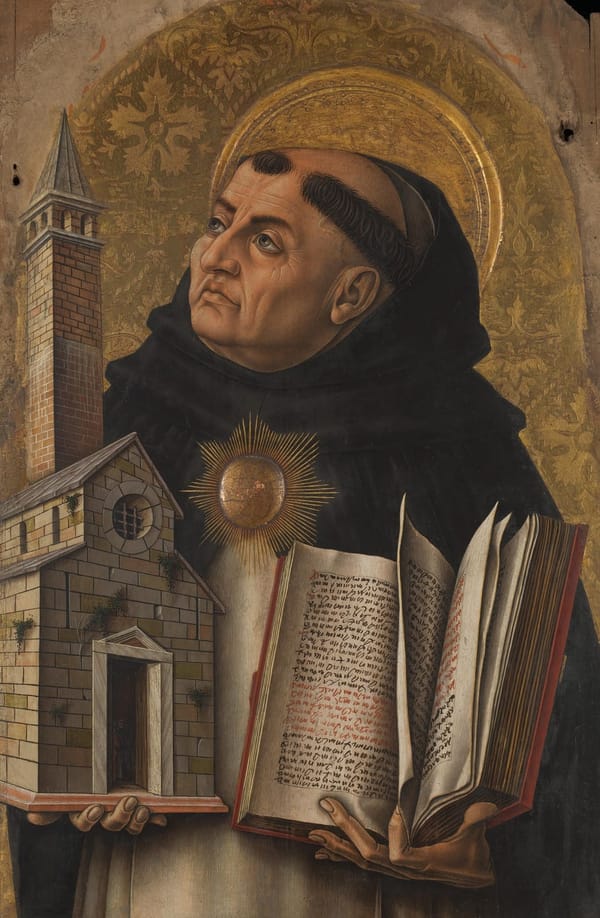 |
The saint we are to honour to-day is one of the sublimest and most lucid interpreters of divine truth. He rose up in the Church many centuries after the apostolic age, nay, long after the four great Latin doctors, Ambrose, Augustine, Jerome, and Gregory. The Church, the ever young and joyful mother, is justly proud of her Thomas, and has honoured him with the splendid title of the angelical doctor, on account of the extraordinary gift of understanding wherewith God had blessed him; just as his contemporary and friend, St. Bonaventure, has been called the seraphic doctor, on account of the wonderful unction which abounds in the writings of this worthy disciple of St. Francis. Thomas of Aquin is an honour to mankind, for perhaps there never existed a man whose intellect surpassed his. He is one of the brightest ornaments of the Church, for not one of her doctors has equalled him in the clearness and precision wherewith he has explained her doctrines. He received the thanks of Christ Himself, for having well written of Him and His mysteries. How welcome ought this feast of such a saint to be to us during this season of the year, when our main study is our return and conversion to God! What greater blessing could we have than to come to the knowledge of God? Has not our ignorance of God, of His claims, and of His perfections, been the greatest misery of our past lives? Here we have a saint whose prayers are most efficacious in procuring for us that knowledge, which is unspotted, and converteth souls, and giveth wisdom to little ones, and gladdeneth the heart, and enlighteneth the eyes.1 Happy we if this spiritual wisdom be granted us! We shall then see the vanity of everything that is not eternal, the righteousness of the divine commandments, the malice of Bin, and the infinite goodness wherewith God treats us when we repent.
Let us learn from the Church the claims of the angelical doctor to our admiration and confidence.
The Dominican Order, of which St. Thomas is one of the greatest ornaments, has inserted the three following hymns in its liturgy of his feast:
Hymn
Laudans turba fidelium,
Errorum pulso nubilo
Per novi solis radium.
Fudit thesauros gratiæ:
Donis pienus ex æthere
Morum et sapientiæ.
Verbi coruscant faculæ,
Scripturæ sacræ Numinis,
Et veritatis regulæ.
Clarus vitæ munditia,
Splendens miris prodigiis,
Dat toti mundo gaudia.
Simulque sancto Flamini,
Qui sancti Thomæ merito
Nos cœli jungat agmini.
and give praise to God,
who has made a new sun to shine in our world,
and disperse the clouds of error.
that Thomas shed his treasures of heavenly light.
Heaven had enriched him
with gifts of virtue and wisdom:
we have derived a brighter knowledge of the Word,
the understanding of the divine Scriptures
and the rules of truth.
the light of his spotless life,
and the splendour of his miracles,
have filled the universe with joy.
and to the Holy Ghost.
And may our God, by the intercession and merits of his saint,
admit us into the choir of the blessed in heaven.
Hymn
Claram ducens originem,
Subit ætatis teneræ
Prædicatorum Ordinem.
Splendens in cœtu nubium,
Plusquam doctores cæteri
Purgans dogma Gentilium.
In lucem pandit abdita,
Dum supra sensus hominum
Obscura facit cognita.
Quadripartite pervius;
Fit Gedeonis gladius,
Tuba, lagena, radius.
Simulque sancto Flamini,
Qui sancti Thomæ merito,
Nos cœli jungat agmini.
Thomas, while in the bloom
of youth, embraced
the Order of Preachers.
brightly does he shine amidst the luminaries of earth,
and, more than any doctor of the Church,
refutes the doctrines of the Gentiles.
and brings to light the hidden gems of truth,
for he teaches us what the mind of man
had else never understood.
like to that four-branched river of paradise.
He made him to be her Gedeon’s sword,
her trumpet, her vase, her torch.
and to the Holy Ghost.
And may our God, by the intercession and merits of his saint,
admit us into the choir of the blessed in heaven.
Hymn
Thomæ felicem exitum,
Qui pervenit ad gaudia
Per Verbi vitæ meritum.
Thecam thesauri gratiæ,
Cum Christus Thomam efficit
Hæredem regni gloriæ.
Et funeris integritas,
Mira fragrans suavitas,
Ægris collata sanitas.
Terræ, ponto, et superis;
Nos juvet suis precibus,
Deo commendet meritis.
Simulque sancto Flamini,
Qui sancti Thomæ merito
Nos cœli jungat agmini.
the happy death of thy Thomas deserves a hymn of praise.
By the merits of him that is the Word of life,
he is now in endless joy.
of grace was welcomed as a guest.
It was there that he received from Christ
the inheritance of eternal glory.
he has loft us his glorious relics
which breathe forth a heavenly fragrance,
and work cures for the suffering sick.
earth, and sea, and heaven, all may give him praise.
May his prayers and merits
intercede for us with God.
and to the Holy Ghost.
And may our God, by the intercession and merits of his saint,
admit us into the choir of the blessed in heaven.
How shall we worthily praise thee, most holy Doctor! How shall we thank thee for what thou hast taught us? The rays of the divine Sun of justice beamed strongly upon thee, and thou hast reflected them upon us. When we picture thee contemplating truth, we think of those words of our Lord: 'Blessed are the clean of heart, for they shall see God.’2 Thy victory over the concupiscence of the flesh merited for thee the highest spiritual delights; and our Redeemer chose thee, because of the purity of thy angelic soul, to compose for His Church the Office whereby she should celebrate the divine Sacrament of His love. Learning did not impair thy humility. Prayer was ever thy guide in thy search after truth; and there was but one reward for which, after all thy labours, thou wast ambitious, the possession of God.
Thy life, alas! was short. The very masterpiece of thy angelical writings was left unfinished. But thou hast not lost thy power of working for the Church. Aid her in her combats against error. She holds thy teachings in the highest estimation, because she feels that none of her saints has ever known so well as thou, the secrets and mysteries of her divine Spouse. Now, perhaps more than in any other age, truths are decayed among the children of men;3 strengthen us in our faith, procure us light. Check the conceit of those shallow self-constituted philosophers, who dare to sit in judgment on the actions and decisions of the Church, and to force their contemptible theories upon a generation that is too ill-instructed to detect their fallacies. The atmosphere around us is gloomy with ignorance; loose principles, and truths spoilt by cowardly compromise, are the fashion of our times; pray for us; bring us back to that bold and simple acceptance of truth, which gives life to the intellect and joy to the heart.
Pray, too, for the grand Order which loves thee so devoutly, and honours thee as one of the most illustrious of its many glorious children. Draw down upon the family of thy patriarch St. Dominic the choicest blessings, for it is one of the most powerful auxiliaries of God’s Church.
We are on the eve of the holy season of Lent, preparing for the great work of earnest conversion of our lives. Thy prayers must gain for us the knowledge both of the God we have offended by our sins, and of the wretched state of a soul that is at enmity with its Maker. Knowing this, we shall hate our sins; we shall desire to purify our souls in the Blood of the spotless Lamb; we shall generously atone for our faults by works of penance
| Previous March 6: Sts. Felicitas and Perpetua, Martyrs | Next March 7: St. Thomas of Aquin, Doctor of the Church |