Daily reading
Lent
Double · April 5 · Sanctoral
April 5, 2019
From Dom Guéranger’s The Liturgical Year.
A Double leads the weekday.Rubric
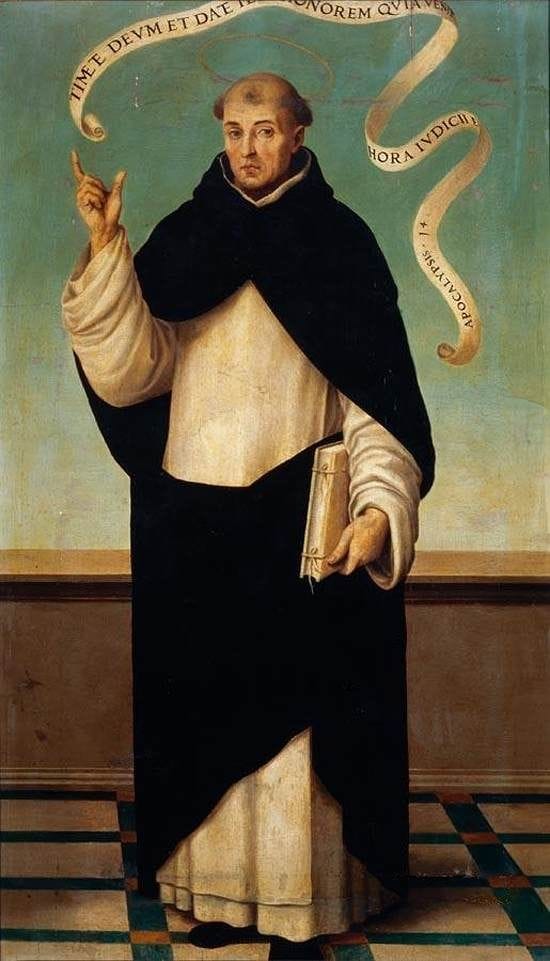 |
April 5: St. Vincent Ferrer, Confessor
To-day, again, it is Catholic Spain that offers one of her sons to the Church, that she may present him to the Christian world as a model and a patron. Vincent Ferrer, or, as he was called, the angel of the judgment, comes to us proclaiming the near approach of the Judge of the living and the dead. During his lifetime, he traversed almost every country of Europe, preaching this terrible truth; and the people of those times went from his sermons striking their breasts, crying out to God to have mercy upon them—in a word, converted. In these our days, the thought of that awful day, when Jesus Christ will appear in the clouds of heaven to judge mankind, has not the same effect upon Christians. They believe in the last judgment, because it is an article of faith; but, we repeat, the thought produces little impression. After long years of a sinful life, a special grace touches the heart, and we witness a conversion; there are thousands thus converted, but the majority of them continue to lead an easy, comfortable life, seldom thinking on hell, and still less on the judgment wherewith God is to bring time to an end.
It was not thus in the Christian ages; neither is it so now with those whose conversion is solid. Love is stronger in them than fear; and yet the fear of God’s judgment is ever living within them, and gives stability to the new life they have begun. Those Christians who have heavy debts towards divine justice, because of the sins of their past lives, and who, notwithstanding, make the time of Lent a season for evincing their cowardice and tepidity, surely such Christians as these must very rarely ask themselves what will become of them on that day, when the sign of the Son of Man shall appear in the heavens, and when Jesus, not as Saviour, but as Judge, shall separate the goats from the sheep. One would suppose that they have received a revelation from God, that, on the day of judgment, all will be well with them. Let us be more prudent; let us stand on our guard against the illusions of a proud, self-satisfied indifference; let us secure to ourselves, by sincere repentance, the well-founded hope, that on the terrible day, which has made the very saints tremble, we shall hear these words of the divine Judge addressed to us: ‘Come, ye blessed of My Father, possess the kingdom prepared for you from the foundation of the world!’1 Vincent Ferrer leaves the peaceful cell of his monastery, that he may go and rouse men to the great truth they had forgotten —the day of God’s inexorable justice; we have not heard his preachings, but, have we not the Gospel? Have we not the Church, who, at the commencement of this season of penance, preached to us the terrible truth, which St. Vincent took as the subject of his instructions? Let us, therefore, prepare ourselves to appear before Him, who will demand of us a strict account of those graces which He so profusely poured out upon us, and which were purchased by His Blood. Happy they that spend their Lents well, for they may hope for a favourable judgment!
The liturgy gives us, in the Matins of to-day, the following abridged account of the life of this holy servant of God:
The Dominican breviary contains the following responsories and antiphon in honour of this illustrious preacher:
How grand must have been thine eloquence, O Vincent, that could rouse men from their lethargy, and give them to feel all the terrors of that awful judgment. Our forefathers heard thy preaching, and returned to God, and were pardoned. We, too, were drowsy of spirit when, at the commencement of this holy season, the Church awakened us to the work of our salvation, by sprinkling our heads with ashes, and pronouncing over us the sentence of our God, whereby we are condemned to die. Yes, we are to die; we are to die soon; and a judgment is to be held upon us, deciding our eternal lot. Then, at the moment fixed in the divine decrees, we shall rise again, in order that we may assist at the solemn and terrible judgment. Our consciences will be laid open, our good and bad actions will be weighed, before the whole of mankind; after which, the sentence already pronounced upon us in our particular judgment will be made public. Sinners as we are, how shall we be able to bear the eye of our Redeemer, who will then be our inexorable Judge? How shall we endure even the gaze of our fellow-creatures, who will then behold every sin we have committed? But above all, which of the two sentences will be ours? Were the Judge to pronounce it at this very moment, would He place us among the blessed of His Father, or among the cursed? on His right, or on His left?
Our fathers were seized with fear when thou, O Vincent, didst put these questions to them. They did penance for their sins, and, after receiving pardon from God, their fears abated, and holy joy filled their souls. Angel of God's judgment! pray for us, that we may be moved to salutary fear. A few days hence we shall behold our Redeemer ascending the hill of Calvary, with the heavy weight of His cross upon Him; we shall hear Him thus speaking to the daughters of Jerusalem: ‘Weep not over Me, but weep for yourselves and for your children: for if in the green wood they do these things, what shall be done in the dry?’2 Help us, O Vincent, to profit by these words of warning. Our sins have reduced us to the condition of dry dead branches, that are good for nought but to bum in the fire of divine vengeance; help us, by thy intercession, to be once more united to Him who will give us life. Thy zeal for souls was extreme; take ours under thy care, and procure for them the grace of perfect reconciliation with our offended Judge. Pray, too, for Spain, the country that gave thee life and faith, thy religious profession and thy priesthood. The dangers that are now threatening her require all thy zeal and love; exercise them in her favour, and be her faithful protector.
Friday of the Fourth Week of Lent
The Station is in the church of Saint Eusebius, priest of Rome, who suffered for the faith, in the Arian persecution, under the emperor Constantius.
Collect
Epistle
3. Cap. xvii.
Again it is a mother that comes, with tears in her eyes, praying for the resurrection of her child. This mother is the widow of Sarephta, whom we have already had as the type of the Gentile Church. She was once a sinner, and an idolatress, and the remembrance of the past afflicts her soul; but the God that has cleansed her from her sins, and called her to be His bride, comforts her by restoring her child to life. The charity of Elias is a figure of that of the Son of God. Observe how this great prophet stretches himself upon the body of the boy, fitting himself to his littleness, as did also Eliseus. Here again, we recognize the divine mystery of the Incarnation. Elias thrice touches the corpse; thrice, also, will our catechumens be immersed in the baptismal font, whilst the minister of God invokes the three Persons of the adorable Trinity. On the solemn night of Easter, Jesus, too, will say to the Church, His bride: Behold, thy son liveth; and she, transported with joy, will acknowledge the truth of God’s promises. Nay, the very pagans bore witness to this truth; for when they saw the virtuous lives of this new people, which came forth regenerated from the waters of Baptism, they acknowledged that God alone could produce such virtue in man. There suddenly arose from the midst of the Roman empire, demoralized as it was and corrupt beyond imagination, a race of men of angelic purity; and these very men had, but a short time before their Baptism, wallowed in all the abominations of paganism. Whence had they derived this sublime virtue? From the Christian teaching, and from the supernatural remedies it provides for man’s spiritual miseries. Then it was that unbelievers sought for the true faith, though they knew it was at the risk of martyrdom; they ran to the Church, asking her to become their mother, and saying to her: We know that thou art of God, and the word of the Lord in thy mouth is true.
Gospel
Cap. xi.In illo tempore: Erat quidam languens Lazarus a Bethania, de castello Mariae et Marthae eororis ejus. (Maria autem erat, quæ unxit Dominum ungüento, et extersit pedes ejus capillis suis: cujus frater Lazarus infirmabatur.) Miserunt ergo sor ores ejus ad eum, dicentes: Domine, ecce quern amas, infirmatur. Audiens autem Jesus, dixit eis: Infirmitas hæc non est ad mortem, sed pro gloria Dei, ut glorificetur Filius Dei per eam. Diligebat autem Jesus Martham, et sororem ejus Mariam, et Lazarum. Ut ergo audivit quia infirmabatur, tunc quidem mansit in eodem loco duobus diebus. Deinde post hæc dixit discipulie suis: Eamus in Judæam iterum. Dicunt ei discipuli: Rabbi, nunc quærebant te Judæi lapidare, et iterum vadis illuc? Respondit Jesus: Nonne duodecim sunt horæ diei? Si quis ambulaverit in die, non offendit, quia lucem hujus mundi videt: si autem ambulaverit in nocte, offendit, quia lux non est in eo. Hæc ait, et post hæc dixit eis: Lazarus amicus noster dormit: sed vado ut a somno excitem eum. Dixerunt ergo discipuli ejus: Domine, si dormit salvus erit. Dixerat autem Jesus de morteejus: illi autem putaverunt quia de dormitione somni diceret. Tunc ergo Jesus dixit eis manifeste: Lazarus mortuus est; et gaudeo propter vos, ut credatis, quoniam non eram ibi. Sed eamus ad eum. Dixit ergo Thomas, qui dicitur Didymus, ad condiscipulos: Eamus et nos, ut moriamur cum eo. Venit itaque Jesus; et invenit eum quatuor dies jam in monumento habentem. (Erat autem Bethania juxta Jerosolymam quasi stadiis quindecim.) Multi autem ex Judæis vener ant ad Martham et Mariam, ut consolarentur eas de fratre suo. Martha ergo ut audivit quia Jesus venit, occurrit illi: Maria autem domi sedebat. Dixit ergo Martha ad Jesum: Domine, si fuisses hie, frater meus non fuisset mortuus. Sed et nunc scio quia quæcumque poposceris a Deo, dabit tibi Deus. Dicit illi Jesus: Resurget frater tuus. Dicit ei Martha: Scio quia resurget in resurrections in novissimo die. Dixit ei Jesus:’ Ego sum resurrectio et vita: qui credit in me, etiamsi mortuus fuerit, vivet: et omnis qui vivit et credit in me, non morietur in æternum. Credis hoc? Ait illi: Utique, Domine, ego credidi, quia tu es Christus Filius Dei vivi, qui in huno mundum venisti. Et cum hæc dixisset, abiit, et vocavit Mariam sororem suam silentio, dicens: Magister adest, et vocat te. Hla, ut audivit, surgit cito, et venit ad eum; nondum enim venerat Jesus in castellum, sed erat adhuc in illo loco, ubi occurrerat ei Martha. Judaei ergo, qui erant cum ea in domo, et consolabantur eam, cum vidissent Mariam, quia cito surrexit et exiit, Becuti sunt eam, dicentes: Quia vadit ad monumentum, ut ploret ibi. Maria ergo, cum venisset ubi erat Jesus, videns eum, cecidit ad pedes ejus, et dicit ei: Domine, si fuisses hie, non esset mortuus frater meus. Jesus ergo, ut vidit eam ploran tern, et Judaeos qui venerant cum ea plorantes, infremuit spiritu, et turbavit seipsum, et dixit: Ubi posuistis eum? Dicunt ei: Domine, veni et vide. Et lacrymatue est Jesus. Dixerunt ergo Judaei: Ecce quomodo amabat eum! Quidam autem ex ipsis dixerunt: Non poterat hie, qui aperuit oculos cæci nati, facere ut hic non moreretur? Jesus ergo rursum fremens in semetipso, venit ad monumentum. Erat autem spelunca: et lapis superpositus erat ei. Ait Jesus: Tollite lapidem. Dicit ei Martha, soror ejus qui mortuus fuerat: Domine, jam foetet, quatriduanus est enim. Dicit ei Jesus: Nonne dixi tibi, quoniam si credideris, vide bis gloriam Dei? Tulerunt ergo lapidem: Jesus autem, elevatis sursum oculis, dixit: Pater, gratias ago tibi, quoniam audisti me. Ego autem sciebam quia semper me audis, sed propter populum qui circumstat, dixi: ut credant quia tu me misisti. Hæc cum dixisset, voce magna clama vit: Lazare, veni foras. Et statim prodiit, qui fuerat mortuus, ligatus pedes et manus institis, et facies illius sudario erat ligata. Dixit eis Jesus: Solvite eum, et sinite abire. Multi ergo ex Judæis, qui venerant ad Mariam et Martham, et viderant quæ fecit Jesus, crediderunt in eum.
Ch. xi.At that time: There was a certain man sick named Lazarus, of Bethania, of the town of Mary, and of Martha her sister. And Mary was she that anointed the Lord with ointment, and wiped his feet with her hair, whose brother Lazarus was sick. His sisters therefore sent to him, saying: Lord, behold, he whom thou lovest is sick. And Jesus hearing it said to them: This sickness is not unto death, but for the glory of God, that the Son of God may be glorified by it. Now Jesus loved Martha, and her sister Mary, and Lazarus. When he had heard therefore that he was sick, he still remained in the same place two days. Then after that, he said to his disciples: Let us go into Judea again. The disciples say to him: Rabbi, the Jews but now sought to stone thee, and goest thou thither again? Jesus answered: Are there not twelve hours of the day? If a man walk in the day, he stumbleth not, because he seeth the light of this world; but if he walk in the night he stumbleth, because the light is not in him. These things he said, and after that he said to them: Lafcarus our friend sleepeth: but I go that I may awake him out of sleep. His disciples therefore said: Lord, if he sleep, he shall do well. But Jesus spoke of his death; and they thought that he spoke of the repose of sleep. Then therefore Jesus said to them plainly: Lazarus is dead, and I am glad for your sakes, that I was not there, that you may believe; but let us go to him. Thomas therefore, who is called Didymus, said to his fellow disciples: Let us also go, that we may die with him. Jesus therefore came, and found that he had been four days already in the grave. (Now Bethania was near Jerusalem, about fifteen furlongs off.) And many of the Jews were come to Martha and Mary, to comfort them concerning their brother. Martha, therefore, as soon as she heard that Jesus was come, went to meet him; but Mary sat at home. Martha therefore said to Jesus: Lord, if thou hadst been here, my brother had not died; but now also I know, that whatsoever thou wilt ask of God, God will give it thee. Jesus saith to her: Thy brother shall rise again. Martha saith to him: I know that he shall rise again in the resurrection at the last day. Jesus said to her: I am the resurrection and the life; he that believeth in me, although he be dead, shall live; and every one that liveth, and believeth in me, shall not die for ever. Believest thou this? She saith to him: Yea, Lord, I have believed that thou art Christ, the Son of the living God, who art come into this world. And when she had said these things, she went, and called her sister Mary secretly, saying: The Master is come, and calleth for thee. She, as soon as she heard this, riseth quickly, and cometh to him; for Jesus was not yet come into the town, but he was still in that place where Martha had met him. The Jews therefore, who were with her in the house, and comforted her, when they saw Mary that she rose up speedily, and went out, followed her saying: She goeth to the grave, to weep there. When Mary therefore was come where Jesus was, seeing him, she fell down at his feet, and saith to him: Lord, if thou hadst been here, my brother had not died. Jesus therefore, when he saw her weeping, and the Jews, that were come with her, weeping, groaned in the spirit, and troubled himself, and said: Where have you laid him? They say to him: Lord, come and see. And Jesus wept. The Jews therefore said: Behold how he loved him l But some of them said: Could not he, that opened the eyes of the man bom blind, have caused that this man should not die? Jesus therefore again groaning in himself, cometh to the sepulchre: now it was a cave and a stone was laid over it. Jesus saith: Take away the stone. Martha, the sister of him that was dead, saith to him: Lord, by this time he etinketh, for he is now of four days. Jesus saith to her: Did I not say to thee that if thou believe, thou shalt see the glory of God? They took therefore the stone away; and Jesus, lifting up his eyes, said: Father, I give thee thanks that thou hast heard me; and I knew that thou hearest me always, but because of the people who stand about have I said it, that they may believe that thou hast sent me. When he had said these things, he cried with a loud voice: Lazarus, come forth! And presently he that had been dead came forth, bound feet and hands with winding bands, and his face was bound about with a napkin. Jesus said to them: Loose him, and let him go. Many therefore of the Jews, who were come to Mary and Martha, and had seen the things that Jesus did, believed in him.
Let us meditate upon this admirable history; and as we meditate, let us hope; for it not only shows us what Jesus does for the souls of others, but what He has done for ours. Let us, also, renew our prayers for the penitents, who now, throughout the world, are preparing for the great reconciliation. It is not a mother that is here represented as praying for the resurrection of her child; it is two sisters asking this grace for a brother. The example must not be lost on us: we must pray for one another. But let us take our Gospel in the order of its truths.
First, Lazarus was sick; and then, he died. The sinner begins by being tepid and careless; and then he receives the mortal wound. Jesus could have cured Lazarus of his sickness; but He permitted it to be fatal. He intends to work such a miracle, and that within sight of Jerusalem, that His enemies shall have no excuse for refusing to receive Him as the Messias. He would also prove that He is the sovereign Master of life, in order that He might hereby teach His apostles and disciples not to be scandalized at the death He Himself was soon to suffer. In the moral sense, God, in His wisdom, sometimes leaves an ungrateful soul to itself, although He foresees that it will fall into sin. It will rise again; and the confusion it will feel for having sinned will lead it to that great preservative against a future fall—humility.
The two sisters, Martha and Mary, are full of grief, yet full of confidence in Jesus. Let us observe how their two distinct characters are shown on this occasion. Jesus tells Martha that He is the resurrection and the life, and that they who believe in Him shall not die—that is, shall not die the death of sin. But when Mary came to Him, and He saw her weeping, He groaned in the spirit, and troubled Himself, because He knew the greatness of her love. His divine Heart was touched with compassion as He beheld these, who were so dear to Him, smarting under that chastisement of death which sin had brought into the world. Having reached the sepulchre where Lazarus was buried, He wept, for He loved Lazarus. Thus did our Redeemer, by His own weeping, sanctify the tears which Christian affection sheds over the grave of a relative or friend. Lazarus has been in the sepulchre four days; it is the image of the sinner buried in his sins. To see him now makes even his sister shudder: but Jesus rebukes her, and bids them take away the stone. Then with that voice which commands all nature and makes hell tremble, He cries out: Lazarus, come forth! He that had been dead rises up in the sepulchre; but his feet and hands are tied, his face is covered with a napkin; he lives, but he can neither walk nor see. Jesus orders him to be set free; and then, by the hands of the men that are present, he recovers the use of his limbs and eyes. So is it with the sinner that receives pardon. There is no voice but that of Jesus which can call him to conversion, and touch his heart, and bring him to confess his sins; but Jesus has put into the hands of priests the power to loose, enlighten, and give movement. This miracle, which was wrought by our Saviour at this very season of the year, filled up the measure of His enemies’ rage, and set them thinking how they could soonest put Him to death. The few days He has still to live, are all to be spent at Bethania, where the miracle has taken place, and which is but a short distance from Jerusalem. In nine days from this, He will make His triumphant entry into the faithless city, after which He will return to Bethania, and after three or four days, will once more enter Jerusalem, there to consummate the Sacrifice, whose infinite merits are to purchase resurrection for sinners.
The early Christians loved to see this history of our Lord’s raising Lazarus to life painted on the walls of the catacombs. We also find it carved on the sarcophagi of the fourth and fifth centuries; and later on, it was not unfrequently chosen as a subject for the painted windows of our cathedrals. This symbol of spiritual resurrection was formerly honoured by a most solemn ceremony, in the great monastery of holy Trinity, at Vendóme, in France. Every year, on this day, a criminal who had been sentenced to death, was led to the church of the monastery. He had a rope round his neck, and held in his hand a torch weighing thirty-three pounds, in memory of the years spent on earth by our Saviour. The monks made a procession, in which the criminal joined; after which, a sermon was preached, at which he also assisted. He was then taken to the foot of the altar, where the abbot, after exhorting him to repentance, imposed on him, as a penance, the pilgrimage to St. Martin’s church at Tours. The abbot loosened the rope from his neck, and declared him to be free. The origin of this ceremony was, that when Louis of Bourbon, Count of Vendóme, was prisoner in England, in the year 1426, he made a vow that, if God restored him to liberty, he would establish this custom in the church of holy Trinity, as a return of gratitude, and as a homage to Christ, who raised up Lazarus from the tomb. God accepted the vow, and the prince soon recovered his freedom.
Let us pray to-day for the conversion of sinners, using this devout formula given by the Roman pontifical in the reconciliation of penitents:
Prayer
| Previous Thursday of the Fourth Week of Lent | Next Friday of the Fourth Week of Lent |