Daily reading
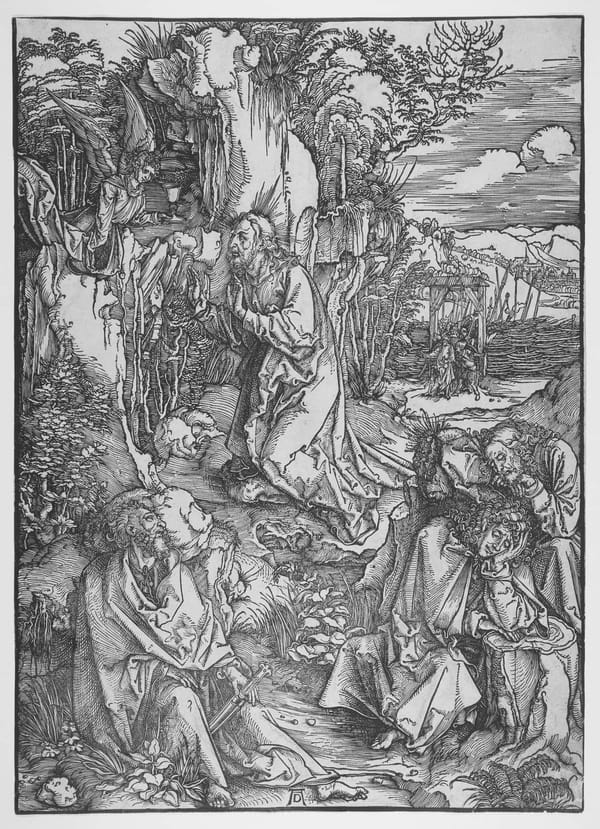
The Station in Rome was formerly the church of the martyr St. Cyriacus, and as such it is still given in the Roman missal; but this holy sanctuary having been destroyed, and the relics of the holy deacon translated to the church of St. Mary in Via lata, it is here that the Station is now held.
Collect
Epistle
Cap. xiv.In diebus illis: Congregati sunt Babylonii ad regem, et dixerunt ei: Trade nobis Danielem, qui Bel destruxit, et draconem interfecit; alioquin interficiemus te et domum tuam. Vidit ergo rex quod irruerent in eum vehementer: ut necessitate compulsus tradidit eis Danielem. Qui miserunt eum in lacum leonum, et erat ibi diebus sex. Porro in lacu erant leones septem, et dabantur eis duo corpora quotidie, et duæ oves: et tunc non data sunt eis, ut devorarent Danielem. Erat autem Habacuc propheta in Judæa, et ipse coxerat pulmentum, et intriverat panes in alveolo: et ibat in campum ut ferret messoribus. Dixitque angelus Domini ad Habacuc: Fer prandium quod habes in Babylonem Danieli, qui est in lacu leonum. Et dixit Habacuc: Domine, Babylonem non vidi, et lacum nescio. Et apprehendit eum angelus Domini in vertice ejus, et portavit eum capillo capitis sui, posuitque eum in Babylone supra lacum in impetu spiritus sui. Et clamavit Habacuc, dicens: Daniel, serve Dei, tolle prandium quod misit tibi Deus. Et ait Daniel: Recordatus es mei Deus, et non dereliquisti diligentes te. Surgensque Daniel comedit. Porro angelus Domini restituit Habacuc confestim in loco suo. Venit ergo rex die septimo, ut lugeret Danielem: et venit ad lacum, et introspexit, et ecce Daniel sedens in medio leonum. Et exclamavit voce magna rex, dicens: Magnus es, Domine Deus Danielis! Et extraxit eum de lacu leonum. Porro illos qui perditionis ejus causa fuerant, intromisit in lacum, et devorati sunt in momento coram eo. Tunc rex ait: Paveant omnes habitantes in universa terra Deum Danielis; quia ipse est Salvator, faciens signa et mirabilia in terra: qui liberavit Danielem de lacu leonum.
Ch. xiv.In those days: The people of Babylon gathered together against the king: and said to him: Deliver up to us Daniel, who hath destroyed Bel, and killed the dragon, otherwise we will destroy thee and thy house. And the king saw that they pressed upon him violently; and being constrained by necessity, he delivered Daniel to them. And they cast him into the den of lions, and he was there six days. And in the den there were seven lions, and they had given to them two carcasses every day, and two sheep: but then they were not given unto them, to the intent that they might devour Daniel. Now there was in Judea a prophet called Habacuc, and he had boiled pottage, and had broken bread in a bowl; and was going into the field to carry it to the reapers. And the angel of the Lord said to Habacuc: Carry the dinner which thou hast, into Babylon, to Daniel, who is in the lions’ den. And Habacuc said: Lord, I never saw Babylon, nor do I know the den. And the angel of the Lord took him by the top of his head, and carried him by the hair of his head, and set him in Babylon, over the den, in the force of his spirit. And Habacuc cried, saying: O Daniel, thou servant of God, take the dinner that God hath sent thee. And Daniel said: Thou hast remembered me, O God, and thou hast not forsaken them that love thee. And Daniel arose and ate. And the angel of the Lord presently set Habacuc again in his own place. And upon the seventh day the king came to bewail Daniel: and he came to the den, and looked in, and behold Daniel was sitting in the midst of the lions. And the king cried out with a loud voice, saying: Great art thou, O Lord, the God of Daniel. And he drew him out of the lions’ den. But those that had been the cause of his destruction, he cast into the den, and they were devoured in a moment before him. Then the king said: Let all the inhabitants of the whole earth fear the God of Daniel: for he is the Saviour, working signs and wonders in the earth; who hath delivered Daniel out of the lions den.
This lesson was intended, in an especial manner, as an instruction to the catechumens. They were preparing to enroll themselves as Christians; it was, therefore, necessary that they should have examples put before them, which they might study and imitate, Daniel, oast into the lions’ den for having despised and destroyed the idol Bel, was the type of a martyr. This prophet had confessed the true God in Babylon; he had put to death a dragon, to which the people, after Bel had been destroyed, had given their idolatrous worship; nothing less than Daniel’s death could appease their indignation. The holy man full of confidence in God, allowed himself to be thrown into the lions’ den, thus setting an example of courageous faith to the future Christians: they would imitate him, and for three centuries would nobly shed their blood for the establishment of the Church of Christ. In the Roman catacombs we continually meet with the representation of Daniel surrounded by lions, and many of these paintings date from the ages of persecution. Thus the eyes of the catechumens could see what their ears heard; both told them to be ready for trial and sacrifice. It is true, the history of Daniel showed them the power of God interfering and delivering him from death; but they were fully aware that, in order to merit a like deliverance, they would have to show a like constancy, and be ready to suffer death rather than deny their faith. From time to time, a Christian was led to the amphitheatre, and the wild beasts would fawn at his feet: but such miracles only put off the martyr’s sacrifice, and perhaps won others to the faith.
It was the prophet’s courage, and not his victory over the lions, that the Church proposed to her catechumens. The great thing for them to bear in mind was this maxim of our Lord: Fear not them that kill the body, and are not able to kill the soul; but rather fear Him that can destroy both soul and body into hell.* We are the descendants of these early Christians; but our faith has not cost us what it cost them. And yet we have a tyrant to try even ours: we have to confess our faith, not indeed before pro consuls and emperors, but before the world. Let the example of the brave martyrs send us forth from our Lent with a courageous determination to withstand this tyrant, with his maxims, his pomps, and his works. There has been a truce between him and us, during these days of retirement and penance; but the battle will soon be renewed, and then we must stand the brunt, and show that we are Christians.
Gospel
Cap. vii.In illo tempore: Ambulabat Jesus in Galilæam, non enim volebat in Judæam ambulare, quia quærebant eum interficere. Erat autem in proximo dies festus Judæorum, Scenopegia. Dixerunt autem ad eum fratres ejus: Transi hinc, et vade in Judæam, ut et discipuli tui videant opera tua quæ facis. Nemo quippe in occulto quid facit, et quærit ipse in palam esse: si hæc facis, manifesta teipsum mundo. Neque enim fratres ejus credebant in eum. Dicit ergo eis Jesus: Tempus meum nondum advenit: tempus autem vestrum semper est paratum. Non potest mundus odisse vos; me autem odit: quia ego testimonium perhibeo de illo, quod opera ejus mala sunt. Vos ascendite ad diem festum hunc, ego autem non ascendo ad diem festum istum: quia meum tempus nondum impletum est. Hæc cum dixisset, ipse mansit in Galilæa. Ut autem ascenderunt fratres ejus, tunc et ipse ascendit ad diem festum non manifeste, sed quasi in occulto. Judæi ergo quærebant eum in die festo, et dicebant: Ubi est ille? et murmur multum erat in turba de eo. Quidam enim dicebant: Quia bonus est. Alii autem dicebant: Non, sed seducit turbas. Nemo tamen palam loquebatur de illo, propter metum Judæorum
Ch. vii.At that time: Jesus walked in Galilee: for he would not walk in Judea, because the Jews sought to kill him. Now the Jews’ feast of tabernacles was at hand. And his brethren said to him: Depart from hence, and go into Judea, that thy disciples also may see thy works which thou dost. For there is no man that doth anything in secret, and he himself seeketh to be known openly; if thou do these things, manifest thyself to the world. For neither did his brethren believe in him. Then Jesus said to them: My time is not yet come: but your time is always ready. The world cannot hate you; but me it hateth: because I give testimony of it, that the works thereof are evil. Go you up to this festival day, but I go not up to this festival day; because my time is not accomplished. When he had said these things, he himself staid in Galilee. But after his brethren were gone up, then he also went up to the feast, not openly, but as it were in secret. The Jews therefore sought him on the festival day, and said: Where is he? And there was much murmuring among the multitude concerning him. For some said: He is a good man. And others said: No, but he seduceth the people. Yet no man spoke openly of him, for fear of the Jews.
The facts here related refer to an earlier part of our Lord’s life; but the Church proposes them to our consideration to-day, on account of their connexion with those given us in the Gospels read to us during the last few days. We learn from these words of St. John, that the Jews were plotting the death of Jesus, not only when this the last Pasch for the Synagogue was approaching, but even so far back as the feast of tabernacles, which was kept in September. The Son of God was reduced to the necessity of going from place to place as it were in secret; if He would go to Jerusalem, He must take precautions! Let us adore these humiliations of the Man-God, who has deigned to sanctify every position of life, even that of the just man persecuted and obliged to hide himself from his enemies. It would have been an easy matter for Him to confound His adversaries by working miracles, such as those which Herod’s curiosity sought for; He could have compelled them to treat Him with the reverence that was due to Him. But this is not God’s way: He does not force man to duty; He acts, and then leaves man to recognize his Creator’s claims. In order to do this, man must be attentive and humble, he must impose silence on his passions. The divine light shows itself to the soul that thus comports herself. First, she sees the actions, the works, of God; then, she believes, and wishes to believe: her happiness, as well as her merit, lies in faith, and faith will be recompensed in eternity with light, with the vision.
Flesh and blood cannot understand this; they love show and noise. The Son of God, having come down upon this earth, could not subject Himself to such an abasement as that of making a parade of His infinite power before men. He had to work miracles, in order to give a guarantee of His mission; but, as Man, not everything He did was to be a miracle. By far the longest period of His life was devoted to the humble duties of a creature; had it not been so, how should we have learned from Him what we so much needed to know? His brethren (the Jews gave the name of brothers to all who were collaterally related) wished Jesus to make a display of His miraculous power, for some of the glory would have accrued to them. This their ambition caused our Lord to address them in these strong words, upon which we should meditate during this holy season, for, later on, we shall stand in need of the teaching: 'The world cannot hate you; but Me it hateth.’ Let us, therefore, for the time to come, not please the world; its friendship would separate us from Jesus Christ.
The following devout hymn, taken from the ancient Roman-French missals, may serve us as an expression of the sentiments we entertain towards our loving Redeemer.
Hymn
Redemptor et credentium:
Placare votis supplicum
Te laudibus colentium.
Crucis per alma vulnera,
Virtute solvit ardua
Primi parentis vincula.
Tegmen subisti carneum:
Dignatus es vilissimam
Pati doloris formulam.
Mundi mentis complices:
Per probra tergens crimina
Quæ mundus auxit plurima.
Terram sed omnem concutis:
Tradis potentem spiritum,
Nigrescit atque sæculum.
Victor resplendens culmine;
Cum Spiritus munimine
Defende nos, Rex optime.
Redeemer, too, of believers,
be appeased by the prayer
and praise of thy humble suppliants.
by the dear wounds of the cross,
broke so powerfully the fetters
forged by our first parents.
didst deign to assume
a body of flesh, and endure
the most humiliating sufferings.
accomplices of a world condemned:
thou didst suffer shame, so to cleanse away
the manifold sins of the world.
but thou movest the whole earth:
thou breathest forth thy mighty Spirit,
and the world is buried in darkness.
triumphantly on the high throne of thy Father’s glory:
do thou, O best of kings,
defend us by the protection of the holy Spirit.
Let us pay our homage to the holy cross, in these words of the Greek liturgy.
Hymn (Feria IV mediæ Septimanæ)
* St. Matt. X. 28. ↩︎
| Previous Monday in Passion Week | Next Wednesday in Passion Week |