Daily reading
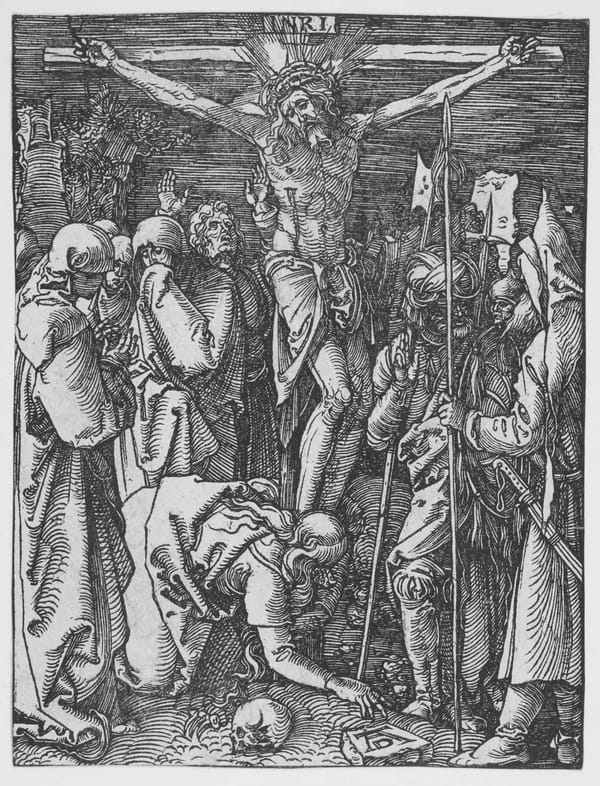
This morning, also, Jesus goes with His disciples to Jerusalem. He is fasting, for the Gospel tells us that He was hungry,1 He approaches a fig-tree, which is by the way-side; but finds nothing on it, save leaves only. Jesus, wishing to give us an instruction, curses the fig-tree, which immediately withers away. He would hereby teach us what they are to expect, who have nothing but good desires, and never produce in themselves the fruit of a real conversion. Nor is the allusion to Jerusalem less evident. This city is zealous for the exterior of divine worship; but her heart is hard and obstinate, and she is plotting, at this very hour, the death of the Son of God.
The greater portion of the day is spent in the temple, where Jesus holds long conversations with the chief priests and ancients of the people. His language to them is stronger than ever, and triumphs over all their captious questions. It is principally in the Gospel of St. Matthew2 that we shall find these answers of our Redeemer, which so energetically accuse the Jews of their sin of rejecting the Messias, and so plainly foretell the punishment their sin is to bring after it.
At length, Jesus leaves the temple, and takes the road that leads to Bethania. Having come as far as Mount Olivet, which commands a view of Jerusalem, He sits down and rests awhile. The disciples take this opportunity of asking Him how soon the chastisements He has been speaking of in the temple will come upon the city. His answer comprises two events: the destruction of Jerusalem, and the final destruction of the world. He thus teaches them that the first is the figure of the second. The time when each is to happen, is to be when the measure of iniquity is filled up. But, with regard to the chas tisement that is to befall Jerusalem, He gives this more definite answer: ‘Amen I say to you: this generation shall not pass till all these things be done.’3 History tells us how this prophecy of Jesus was fulfilled: forty years had scarcely elapsed after His Ascension, when the Roman army encamped on this very place where He is now speaking to His disciples, and laid siege to the ungrateful and wicked city. After giving a prophetic description of that last judgment, which is to rectify all the unjust judgments of men, He leaves Mount Olivet, returns to Bethania, and consoles the anxious heart of His most holy Mother.
The Station, at Rome, is in the church of Saint Praxedes. It is in this church that Pope Paschal I, in the ninth century, placed two thousand three hundred bodies of holy martyrs, which he had ordered to be taken out of the catacombs. The pillar to which our Saviour was tied during His scourging is also here.
Mass
The Introit is taken from Psalm xxxiv. Jesus, by these words of the royal prophet, prays to His eternal Father to defend Him against His enemies.
Introit
Recording of the Introit:
https://www.youtube.com/watch?v=ISlyIMtsdn4
In the Collect, the Church teaches us to have recourse to the merits of our Saviour’s Passion, in order that we may obtain from God the help we stand in need of amidst our many miseries.
Collect
Then is added one of the Collects given on p. 108.
Epistle
Cap. l.In diebus illis: Dixit Isaias: Dominus Deus aperuit mihi aurem: ego autem non contradico: retrorsum non abii. Corpus meum dedi percutientibus, et genas meas vellentibus; faciem meam non averti ab increpantibus et conspuentibus in me. Dominus Deus auxiliator meus, ideo non sum confusus. Ideo posui faciem meam ut petram durissimam: et scio quoniam non confundar. Juxta est qui justificat me: quis contradicet mihi? Stemus simul: quis est adversarius meus? Accedat ad me. Ecce Dominus Deus, auxiliator meus: quis est qui condemnet me? Ecce, omnes quasi vestimentum conterentur: tinea comedet eos. Quis ex vobis timens Dominum, audiens vocem servi sui? Qui ambulavit in tenebris, et non est lumen ei, speret in nomine Domini, et innitatur super Deum suum.
Ch. l.In those days, Isaias said: The Lord God hath opened my ear, making known his will to mey and I do not resist: I have not gone back. I have given my body to the strikers, and my cheeks to them that plucked them: I have not turned away my face from them that rebuked me, and spit upon me. The Lord God is my helper, therefore am I not confounded. Therefore have I set my face as a most hard rock, and I know that I shall not be confounded. He is near that justifieth me, who will contend with me? let us stand together. Who is my adversary? let him come near to me. Behold the Lord God is my helper: who is he that shall condemn me? Lo, they shall all be destroyed as a garment, the moth shall eat them up. Who is there among you that feareth the Lord, that heareth the voice of his servant, that hath walked in darkness and hath no light? Let him hope in the name of the Lord, and lean upon his God.
The sufferings of our Redeemer, and the patience wherewith He is to bear them, are thus prophesied by Isaias, who is always so explicit on the Passion. Jesus has accepted the office of victim for the world’s salvation; He shrinks from no pain or humiliation: He turns not His Face from them that strike Him and spit upon Him. What reparation can we make to this infinite Majesty, who, that He might save us, submitted to such outrages as these P Observe these vile and cruel enemies of our divine Lord: now that they have Him in their power, they fear Him not. When they came to seize Him in the garden, He had but to speak, and they fell back upon the ground; but He has now permitted them to bind His hands and lead Him to the high priest. They accuse Him; they cry out against Him; and He answers but a few words. Jesus of Nazareth, the great teacher, the wonder-worker, has seemingly lost all His influence; they can do what they will with Him. It is thus with the sinner; when the thunder-storm is over, and the lightning has not struck him, he regains his courage. The holy angels look on with amazement at the treatment shown by the Jews to Jesus, and falling down, they adore the holy Face, which they see thus bruised and defiled: let us, also, prostrate and ask pardon, for our sins have outraged that same Face.
But let us hearken to the last words of our Epistle: He that hath walked in darkness, and hath no light, let him hope in the name of the Lord and lean upon his God. Who is this but the Gentile, abandoned to sin and idolatry? He knows not what is happening at this very hour in Jerusalem; he knows not that the earth possesses its Saviour, and that this Saviour is being trampled beneath the feet of His own chosen people: but, in a very short time, the light of the Gospel will shine upon this poor Gentile; he will believe; he will obey; he will love his Redeemer, even to laying down his life for Him. Then will be fulfilled the prophecy of the unworthy pontiff, who prophesied against his will that the death of Jesus would bring salvation to the Gentiles, by gathering into one family the children of God, that hitherto had been dispersed.4
In the Gradual, the royal prophet again calls down on the executioners of our Lord the chastisements they have deserved by their ingratitude and their obstinacy in sin.
The Tract is the one used by the Church on every Monday, Wednesday, and Friday, during Lent. It is a prayer, begging God to bless the works of penance done during this holy season.
Gradual
Recording of the gradual:
https://www.youtube.com/watch?v=zUvdmyS_c2c
Tract
Recording of the antiphon:
https://www.youtube.com/watch?v=txxd2As5K5A
Gospel
Cap. xii.Ante sex dies Paschæ venit Jesus Bethaniam, ubi Lazarus fuerat mortuus, quem suscitavit Jesus. Fecerunt autem ei cœnam ibi: et Martha ministrabat; Lazarus vero unus erat ex discumbentibus cum eo. Maria ergo accepit libram unguenti nardi pistici pretiosi: et unxit pedes Jesu, et extersit pedes ejus capillis suis; et domus impleta est ex odore unguenti. Dixit ergo unus ex discipulis ejus, Judas Iscariotes, qui erat eum traditurus: Quare hoc unguentum non væniit trecentis denariis, et datum est egenis? Dixit autem hoc non quia de egenis pertinebat ad eum: sed quia fur erat, et loculos habens, ea quæ mittebantur, portabat. Dixit ergo Jesus: Sinite illam, ut in diem sepulturæ meæ servet illud. Pauperes enim semper habetis vobiscum: me autem non semper habetis. Cognovit ergo turba multa ex Judæis, quia illic est: et venerunt, non propter Jesum tantum, sed ut Lazarum viderent, quem suscitavit a mortuis.
Ch. xii.Jesus, six days before the Pasch, came to Bethania, where Lazarus had been dead, whom Jesus raised to life. And they made him a supper there; and Martha served, but Lazarus was one of them that were at table with him. Mary therefore took a pound of ointment of right spikenard, of great price, and anointed the feet of Jesus, and wiped his feet with her hair: and the house was filled with the odour of the ointment. Then one of his disciples, Judas Iscariot, he that was about to betray him, said: Why was not this ointment sold for three hundred pence, and given to the poor? Now he said this, not because he cared for the poor, but because he was a thief, and, having the purse, carried the things that were put therein. Jesus therefore said: Let her alone, that she may keep it against the day of my burial; for the poor you have always with you, but me you have not always. A great multitude therefore of the Jews knew that he was there; and they came not for Jesus’ sake only, but that they might see Lazarus, whom he had raised from the dead.
As we have already said, the event related in this passage of the Gospel took place on Saturday, the eve of Palm Sunday; but, as formerly there was no Station for that day, the reading of this Gospel was deferred till the following Monday. The Church brings this episode of the last days of our Saviour before us, because it enables us to have a clearer understanding of the history of the Passion.
Mary Magdalene, whose conversion was the subject of our meditation a few days ago, is a prominent figure in the Passion and Resurrection of her divine Master. She is the type of a soul that has been purified by grace, and then admitted to the enjoyment of God’s choicest favours. It is important that we should study her in each of the several phases through which divine grace led her. We have already seen how she keeps close to her Saviour and supplies His sacred wants; elsewhere, we shall find Jesus giving the preference to her over her sister Martha, and this because Mary chose a better part than Martha; but now during these days of Passiontide, it is her tender love of Jesus that makes her dear to us. She knows that the Jews are plotting Jesus’ death; the Holy Ghost, who guides her through the different degrees of perfection, inspires her, on the occasion mentioned in to-day’s Gospel, with the performance of an action which prophesies what she most dreads.
One of the three gifts offered by the Magi to the divine Infant, was myrrh; it is an emblem of death, and the Gospel tells us that it was used at the burial of our Lord. Magdalene, on the day of her conversion, testified the earnestness of her change of heart by pouring on the feet of Jesus the most precious of her perfumes. She gives Him to-day the same proof of her love. Her divine Master is invited by Simon the leper to a feast: His blessed Mother and His disciples are among the guests: Martha is busy, looking after the service. Outwardly, there is no disturbance; but inwardly there are sad forebodings. During the repast, Magdalene is seen entering the room, holding in her hand a vase of precious spikenard. She advances towards Jesus, kneels at His feet, anoints them with the perfume, and wipes them with her hair, as on the previous occasion.
Jesus lay on one of those couches, which were used by the eastern people during their repasts. Magdalene, therefore, could easily take her favourite place at His feet, and give Him the same proof of her love as she had already done in the pharisee’s house. The evangelist does not say that this time she shed tears. St. Matthew5 and St. Mark6 add that she poured the ointment on His head also. Whether or no Magdalene herself understood the full import of what the Holy Ghost inspired her to do, the Gospel does not say; but Jesus Himself revealed the mystery to His disciples, and we gather from His words that this action of Magdalene was, in a certain manner, the commencement of His Passion: 'She, in pouring this ointment upon My body, hath done it for My burial.’7 The fragrance of the ointment fills the whole house. One of the disciples, Judas Iscariot, dares to protest against this waste, as he calls it. His base avarice deprives him of feeling and respect for his divine Master. His opinion is shared in by several of the other disciples, for they are still carnal-minded. For several reasons Jesus permits Magdalene’s generosity to be thus blamed. And firstly, He wishes to announce His approaching death, which is mystically expressed by the pouring of this ointment upon His body. Then, too, He would glorify Magdalene; and He therefore tells those who are present, that her tender and ardent love shall be rewarded, and that her name shall be celebrated in every country, wheresoever the Gospel shall be preached.8 And lastly, He would console those whose generous love prompts them to be liberal in their gifts to His altars; for what He here says of Magdalene is, in reality, a defence for them, when they are accused of spending too much over the beauty of God’s house.
Let us prize each of these divine teachings. Let us love to honour Jesus, both in His own person, and in His poor. Let us honour Magdalene, and imitate her devotion to the Passion and death of our Lord. In fine, let us prepare our perfumes for our divine Master: there must be the myrrh of the Magi, which signifies penance, and the precious spikenard of Magdalene, which is the emblem of generous and compassionating love.
In the Offertory, our Redeemer implores His eternal Father to deliver Him from His enemies, and to fulfil the decrees regarding the salvation of mankind.
Offertory
Recording of the antiphon:
https://www.youtube.com/watch?v=_stiX7mxVyQ
The Secret tells us the wonderful power of the sacred mysteries. Not only does this Sacrifice purify our souls; it also raises them to perfect union with Him who is their Creator.
Secret
Then is added one of the Secrets given on p. 116.
After the faithful have partaken of the divine mystery, there is read, in the Communion-anthem, a malediction against the enemies of our Saviour. Thus does God act in His government of the world: they that refuse His mercy, cannot escape His justice.
Communion
Recording of the antiphon:
https://www.youtube.com/watch?v=fHlvlYJUiso
The Church concludes her prayers of this morning’s Sacrifice, by begging that her children may persevere in the holy fervour, which they have received at its very source.
Postcommunion
Then is added one of the Postcommunions given on page 117.
As an appropriate conclusion to this day, we may use the following beautiful prayer, taken from the ancient Gallican liturgy:
Prayer (Oratio ad Sextam)
| Previous April 14 (the Same Day): Sts. Tiburtius, Valerian and Maximus, Martyrs | Next Tuesday in Holy Week |