Daily reading
After Pentecost
Greater Double · Movable from Easter · Temporal
June 30, 2019
From Dom Guéranger’s The Liturgical Year.

|
The Third Sunday after Pentecost
The faithful soul has now witnessed in the holy liturgy the close of the mysteries of our redemption. The Holy Ghost has come down to support her during this second portion of her career, by forming and developing within her the fullness of the Christian life as taught by her divine Saviour when on earth. He begins by teaching her how to pray. Prayer, said our Lord, must be continual: we ought always to pray, and not to faint.1 We know not what we should pray for as we ought; but the holy Spirit helpeth our infirmity, and Himself asketh for us with unspeakable groanings.2
In the Introit and the whole Mass for this Sunday, we are taught that prayer must have, amongst its other requisite qualities, that of humble repentance for our past sins, and of confidence in God’s infinite mercy.
This is the Third Sunday after Pentecost; it is the first that has no rubrical connexion with the great feasts we have been solemnizing; it is a Sunday with all the simplicity of the Office of the Time.
Introit
Ps. Ad te, Domine, levavi animam meam: Deus meus, in te confido, non erubescam.
Gloria Patri. Respice.
Ps. To thee, O Lord, have I lifted up my soul: in thee, O my God, I place my trust, let me not be ashamed.
Glory, etc. Look thou.
Collect
Second Collect
The third Collect is left to the priest’s own choice.
Epistle
I. Cap. v.Carissimi, humiliamini sub potenti manu Dei, ut vos exaltet in tempore visitationis: omnem sollicitudinem vestram projicientes in eum, quoniam ipsi cura est de vobis. Sobrii estote, et vigilate: quia adversarius vester diabolus tanquam leo rugiens circuit, quærens quem devoret: cui resistite fortes in fide; scientes eamdem passionem ei, quæ in mundo est, vestræ fraternitati fieri. Deus autem omnis gratiae, qui vocavit nos in aeternam suam gloriam in Christo Jesu, modicum passos ipse perficiet, confirmabit, solidabitque. Ipsi gloria, et imperium in saecula sæculorum. Amen.
I. Ch. v.Dearly beloved: be ye humbled under the mighty hand of God, that he may exalt you in the time of visitation. Casting all your care upon him, for he hath care of you. Be sober and watch: because your adversary the devil, as a roaring lion, goeth about, seeking whom he may devour: whom resist ye, strong in faith; knowing that the same affliction befalls your brethren who are in the world. But the God of all grace, who hath called us unto his eternal glory in Christ Jesus, after you have suffered a little, will himself perfect you, and confirm you, and establish you. To him be glory and empire for ever and ever. Amen.
The miseries of this present life are the test to which God puts His soldiers; He passes judgment upon them, and classifies them, according to the degree of courage they have shown. Therefore is it, that we all have our share of suffering. The combat has commenced. God is looking on, watching how each of us comports himself. The day is not far off, when the Judge will pass sentence on the merits of each combatant, and award to each one the recompense he has won. Combat now; peace and rest and a crown, then. Happy they who, during these days of probation, have recognized the mighty hand of God in all the trials they have had, and have humbled themselves under its pressure, lovingly and confidingly! Against such Christians, who have been strong in faith, the roaring lion has not been able to prevail. They were sober, they were watchful, during this their pilgrimage. They were fully convinced of this, that every one has to suffer in the present life; they therefore never sighed and moaned, as though they were the only sufferers; they did not assume the attitude of victims, and call it resignation; but they took each trial as it came, and, without talking to every one about it, they quietly and joyously united it with the sufferings of Christ. O true Christians! you will be joyous for all eternity, when there will be made the manifestation of that eternal glory in Christ Jesus, which He will pass on to you, that you may share it with Him for ever!
The Gradual keeps up the same strain: it encourages the faithful soul to confidence. Let her cast all her care upon her heavenly Father; has He not always graciously heard her in all her troubles and necessities? As to enemies, let her cast away the thought; God will think of that, and, if it so please Him, will avenge the soul they persecuted.
Gradual
Gospel
Cap. xv.In illo tempore, erant appropinquantes ad Jesum publicani et peccatores, ut audirent illum. Et murmurabant pharisæi, et scribae, dicentes: Quia hic peccatores recipit, et manducat cum illis. Et ait ad illos parabolam istam, dicens: Quis ex vobis homo, qui habet centum oves: et si perdiderit unum ex illis, nonne dimittit nonaginta novem in deserto, et vadit ad illam, quae perierat, donec inveniat eam? Et cum invenerit eam, imponit in humeros suos gaudens: et veniens domum, convocat amicos, et vicinos, dicens illis: Congratulamini mihi quia inveni ovem meam quae perierat! Dico vobis quod ita gaudium erit in coelo super uno peccatore poenitentiam agente, quam super nonaginta novem justis, qui non indigent poenitentia. Aut quae mulier habens drachmas decem, si perdiderit drachmam unam, nonne accendit lucernam, et everrit domum, et quaerit diligenter donec inveniat? Et cum invenerit, convocat amicas et vicinas, dicens: Congratulamini mihi quia inveni drachmam, quam perdideram? Ita dico vobis, gaudium erit coram angelis Dei super uno peccatore pœnitentiam agente.
Ch. xv.At that time: the publicans and sinners drew near unto him to hear him. And the pharisees and scribes murmured, saying: This man receiveth sinners and eateth with them. And he spoke to them this parable, saying: What man of you that hath a hundred sheep, and if he shall lose one of them, doth he not leave the ninety-nine in the desert, and go after that which was lost until he find it? And when he hath found it, lay it upon his shoulders rejoicing: and coming home call together his friends and neighbours, saying to them: Rejoice with me, because I have found my sheep that was lost? I say to you, that even so there shall be joy in heaven upon one sinner that doth penance, more than upon ninety-nine just who need not penance. Or what woman having ten groats: if she lose one groat, doth not light a candle, and sweep the house, and seek diligently until she find it? And when she hath found it, call together her friends and neighbours, saying: Rejoice with me, because I have found the groat which I had lost? So I say to you there shall be joy before the angels of God upon one sinner doing penance.
The parable of the sheep that is carried back to the fold on the shepherd’s shoulders was a favourite one with the early Christians; and they made representations of it at almost every turn. The same is put before us in to-day’s Gospel, that our confidence may be strengthened in God’s infinite mercy. It reminds us, in its own beautiful way, of our Lord Jesus; whom we contemplated, a few weeks back, ascending triumphantly into heaven, carrying thither, in His arms, the lost human family, which He had won back from satan and death and sin. For, as St. Ambrose says, ‘who is the Shepherd of our parable? It is Christ, who carries thee, poor man, in His own Body, and has taken all thy sins upon Himself. The sheep is one, not by number, but by its kind. Rich Shepherd this, of whose flock all we human beings form but the hundredth part! for He has the Angels, and Archangels, and Dominations, and Powers, and Thrones, and all the rest; all those other countless flocks, whom He has left yonder up the mountain, that He might run after the one sheep He had lost.’3
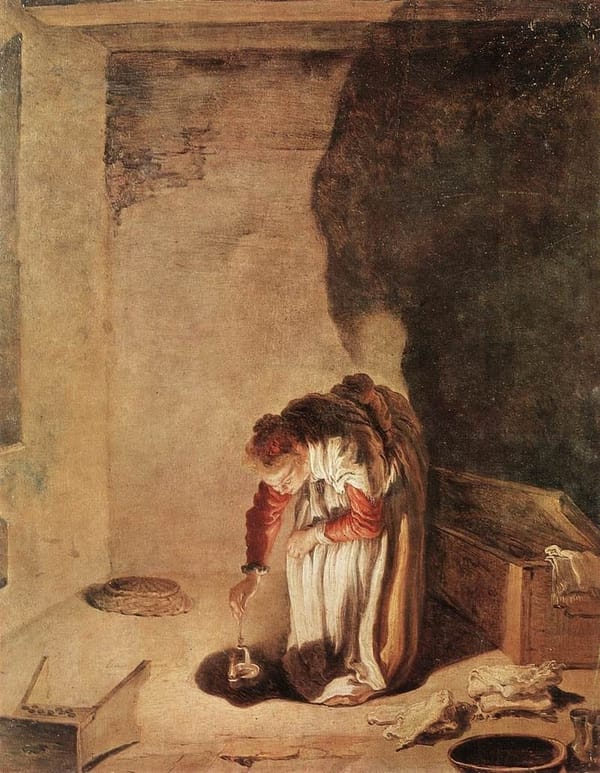
But it is from St. Gregory the Great that the Church, in her Matins of this Sunday, took the commentary on this Gospel. And in the sequel of his homily, the holy doctor gives us the explanation of the parable of the woman and the ten groats. ‘He,’ says St. Gregory, ‘that is signified by the shepherd is also meant by the woman. Jesus is God; He is the Wisdom of God. And because good coin must bear the image of the king upon it, therefore was it that the woman lost her groat, when man, who had been created after God’s image, strayed from that image by committing sin. But the woman lights a lamp; the Wisdom of God hath appeared in human flesh. A lamp is a light which burns in a vessel of clay; and Light in a vessel of clay, is the Divinity in our flesh. It is of the vessel of His Body, that this Wisdom says: My strength is dried up like a potsherd.4 For, just as day is made hard by the fire, so His strength was dried up like a potsherd, because it has strengthened unto the glory of His resurrection, in the crucible of sufferings, the Flesh which He (Wisdom) had assumed. . . . Having found the groat she had lost, the woman calleth together her friends and neighbours, saying: Rejoice until me! because I have found the groat which I had lost. Who are these friends and neighbours, if not the heavenly spirits, who are so near to divine Wisdom by the favours they enjoy of the ceaseless vision? But we must not, meanwhile, neglect to examine why this woman, who represents divine Wisdom, is described as having ten groats, one of which she loses, then looks for, and again finds. We must know, then, that God made both angels and men, that they might know Him; and that having made both immortal, He made both to the image of God. The woman, then, had ten groats, because there are nine orders of angels, and man, who is to fill up the number of the elect, is the tenth groat; he waslost by his sin, but was found again, because eternal Wisdom restored him, by lighting the lamp, that is, by assuming his flesh, and through that working wonderful works, which led to his recovery.’5
The Offertory is an outpouring of gratitude and love for the God who dwelleth in Sion; He does not abandon them that seek Him; He does not forget the poor man's prayer.
Offertory
Secret
Second Secret
The third Secret is left to the priest’s own choice.
The Preface is that appointed for all Sundays during the year, page 45; unless a feast is being kept which has a proper one assigned to it.
The Communion-anthem recalls to our minds, and with much appropriateness, the merciful teaching of to-day’s Gospel, now that eternal Wisdom has regained full possession of the lost groat, by means of the sacred Banquet, which He Himself had given to the repentant prodigal.
Communion
Postcommunion
Second Postcommunion
The third Postcommunion is left to the priest’s own choice.
Vespers
The psalms, capitulum, hymn, and vesicle, as above, pages 71-79.
Antiphon of the Magnificat
June 30: The Commemoration of St. Paul
|
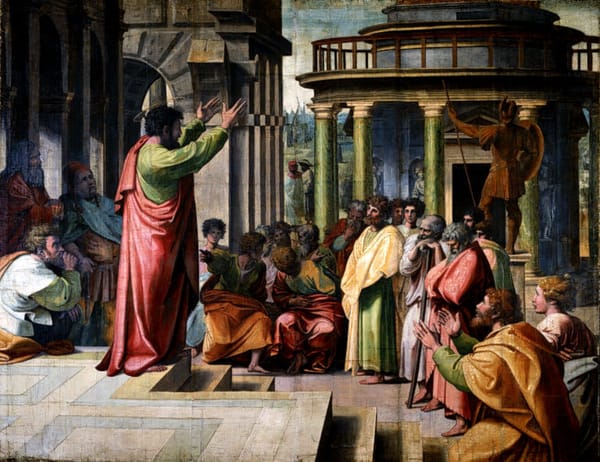
WHEREAS the Greeks on this day are uniting in one solemnity the memory, as they express it, ‘of the illustrious saints, the twelve apostles, worthy of all praise,’1 let us follow in spirit the Roman populace, who are gathered around the successor of Peter, and are making the splendid basilica of the Ostian Way re-echo with songs of victory, while he is offering to the Doctor of the Gentiles the grateful homage of the city and of the world.
On the twenty-fifth of January we beheld Stephen leading to Christ’s crib the once ravenous wolf of Benjamin,2 tamed at last, but who in the morning of his impetuous youth had filled the Church of God with tears and bloodshed. His evening did indeed come when, as Jacob had foreseen, Saul, the persecutor, would outstrip all his predecessors among Christ’s disciples in giving increase to the fold, and in feeding the flock with the choicest food of his heavenly doctrine.3
By an unexampled privilege, our Lord, though already seated at the right hand of his Father, vouchsafed not only to call, but personally to instruct this new disciple, so that he might one day be numbered amongst his apostles. The ways of God can never be contradictory one to another; hence, this creation of a new apostle may not be accomplished in a manner derogatory to the divine constitution already delivered to the Christian Church by the Son of God. Therefore, as soon as the illustrious convert emerged from those sublime contemplations during which the Christian dogma had been poured into his soul, he went to Jerusalem to see Peter, as he himself relates to his disciples in Galatia. 'It behoved him,' says Bossuet, 'to collate his own Gospel with that of the prince of the apostles.'4 From that moment, aggregated as a co-operator in the preaching of the Gospel, the Acts of the Apostles describes him at Antioch accompanied by Barnabas, presenting himself to the work of opening the Church to the Gentiles, the conversion of Cornelius having been already effected by Peter himself. He passes a whole year in this city, reaping an abundant harvest. After Peter's imprisonment in Jerusalem, at his subsequent departure for Rome, a warning from on high makes known to those who preside over the Church at Antioch, that the moment has come for them to impose hands on the two missionaries, and confer on them the sacred character of Ordination.
From that hour Paul attains the full power of an apostle, and it is clear that the mission for which he had been preparing is now opened. At the same time, in St Luke's narrative, Barnabas almost disappears, retaining but a very secondary position. The new apostle has his own disciples, and he henceforth takes the lead in a long series of peregrinations marked by as many conquests. His first is to Cyprus, where he seals an alliance with ancient Rome, analogous to that which Peter contracted at Cesarea.
In the year 43, when Paul landed in Cyprus, its proconsul was Sergius Paulus, illustrious for his ancestry, but still more so for the wisdom of his government. He wished to hear Paul and Barnabas: a miracle worked by Paul, under his very eyes, convinced him of the truth of his teaching; and the Christian Church counted that day among her sons one who was heir to the proudest name among the noble families of Rome. Touching was the mutual exchange that took place on this occasion. The Roman patrician had just been freed by the Jew from the yoke of the Gentiles; in return, the Jew hitherto called Saul received and thenceforth adopted the name of Paul, as a trophy worthy of the apostle of the Gentiles.
From Cyprus Paul travelled successively to Cilicia, Pamphylia, Pisidia, and Lycaonia, everywhere preaching the Gospel and founding Churches. He then returned to Antioch in the year 47, and found the Church there in a state of violent agitation. A party of Jews, who had come over to Christianity from the ranks of the Pharisees, whilst consenting indeed to the admission of Gentiles into the Church, were maintaining that this could only be on condition of their being likewise subjected to Mosaic practices, such as circumcision and distinction of meats. The Christians who had been received from among the Gentiles were disgusted at this servitude to which Peter had not subjected them; and the controversy became so hot that Paul deemed it necessary to undertake a journey to Jerusalem where Peter had lately arrived, a fugitive from Rome, and where the apostolic college was at that moment further represented by John, as well as by James the bishop of the city. These being assembled to deliberate on the question, it was decreed, in the name and under the influence of the Holy Ghost, that to exact any observance relative to Jewish rites should be utterly forbidden in the case of Gentile converts. It was on this occasion, too, that Paul received from these pillars, as he styles them, the confirmation of his apostolate superadded to that of the twelve, and to be specially exercised in favour of the Gentiles. By this extraordinary ministry deputed to the nations, the Christian Church definitively asserted her independence of Judaism, and the Gentiles could now freely come flocking into her bosom.
Paul then resumed his course of apostolic journeys over all the provinces he had already evangelized, in order to confirm the Churches. Thence, passing through Phrygia, he came to Macedonia, stayed a while at Athens, and then on to Corinth, where he remained a year and a half. At his departure he left in this city a flourishing Church, whereby he excited against himself the fury of the Jews. From Corinth Paul went to Ephesus, where he stayed two years. So great was his success with the Gentiles there, that the worship of Diana was materially weakened; whereupon a tumult ensuing, Paul thought the moment come for his departure from Ephesus. During his abode there he made known to his disciples a thought that had long haunted him: ‘ I must needs see Rome.’ The capital of the Gentile world was indeed calling the apostle of the Gentiles.
The rapid growth of Christianity in the capital of the empire had brought face to face, in a manner more striking than elsewhere, the two heterogeneous elements which formed the Church of that day: the unity of faith held together in one fold those that had formerly been Jews, and those that had been pagans. It so happened that some of both of these classes, too easily forgetting the gratuity of their common vocation to the faith, began to go so far as to despise their brethren of the opposite class, deeming them less worthy than themselves of that Baptism which had made them all equal in Christ. On the one side, certain Jews disdained the Gentiles, remembering the polytheism which had sullied their past life with all those vices which come in its train. On the other side, certain Gentiles contemned the Jews, as coming from an ungrateful and blinded people, who had so abused the favours lavished upon them by God as to crucify the Messias.
In the year 53, Paul, already aware of these debates, profited by a second journey to Corinth to write to the faithful of the Church in Rome that famous Epistle in which he emphatically sets forth how gratuitous is the gift of faith; and maintains how Jew and Gentile alike being quite unworthy of the divine adoption, have been called solely by an act of pure mercy. He likewise shows how Jew and Gentile, forgetting the past, have but to embrace one another in the fraternity of the same faith, thus testifying their gratitude to God through whom both of them have been alike prevented by grace. His apostolic dignity, so fully recognized, authorized Paul to interfere in this matter, though touching a Christian centre not founded by him.
While awaiting the day when he could behold with his own eyes the queen of all Churches, lately fixed by Peter on the seven hills, the apostle was anxious once again to make a pilgrimage to the city of David. Jewish rage was just at that moment rampant in Jerusalem against him; national pride being more specially piqued that he, the former disciple of Gamaliel, the accomplice of Stephen's murder, should now invite the Gentiles to be coupled with the sons of Abraham, under the one same Law of Jesus of Nazareth. The tribune Lysias was scarcely able to snatch him from the hands of these bloodthirsty men, ready to tear him to pieces. The following night Christ appeared to Paul, saying to him; ‘Be constant, for as thou hast testified of me in Jerusalem, so must thou bear witness also at Rome.’
It was not, however, till after two years of captivity, that Paul, having appealed to Cæsar, landed in Italy at the beginning of the year 56. Then at last the apostle of the Gentiles made his entry into Rome: not with the trappings of a victor; he was but a humble Jewish prisoner led to the place where all appellants to Cæsar were mustered; yet he was that Jew whom Christ himself had conquered on the way to Damascus. No longer Saul the Benjamite, he now presented himself under the Roman name of Paul; nor was this a robbery on his part, for after Peter he was to be the second glory of Rome, the second pledge of her immortality. He did not bring the Primacy with him, indeed, as Peter had done, for that had been committed by Christ to one alone; but he came to assert, in the very centre of the Gentile world, the divine delegation which he had received in favour of the nations, just as a tributary flows into the main stream, which, mingling its waters with its own, at last empties them unitedly into the ocean. Paul was to have no successor in his extraordinary mission; but the element which he had deposited in the mistress and mother Church was of such value, that in course of ages the Roman Pontiffs, heirs to Peter's monarchical power, have ever appealed to Paul's memory as well, pronouncing their mandates in the united names of the 'blessed apostles Peter and Paul.’
Instead of having to await in prison the day whereon his cause was to be heard, Paul was at liberty to choose a lodging-place in the city. He was obliged, however, to be accompanied day and night by a soldier to whom, according to the usual custom, he was chained, but only in such a way as to prevent his escape: all his movements being otherwise left perfectly free, he could easily continue to preach the Word of God. Towards the close of the year 57, in virtue of his appeal to Cæsar, the apostle was at last summoned before the prætorium, and the successful pleading in his cause resulted in his acquittal.
Being now free, Paul revisited the East, confirming on his evangelical course the Churches he had previously founded. Thus Ephesus and Crete once more enjoyed his presence; in the one he left his disciple Timothy as bishop, and in the other Titus. But Paul had not quitted Rome for ever: marvellously enlightened as she had been by his preaching, the Roman Church was yet to be gilded by his parting rays and empurpled by his blood. A heavenly warning, as in Peter’s case, bade him also return to Rome where martyrdom was awaiting him. This fact is attested by St Athanasius:5 we learn the same also from St Asterius of Ameseus, who hereupon remarks that the apostle entered Rome once more, 'in order to teach the very masters of the world; to turn them into his disciples; and by their means to wrestle with the whole human race. There Paul finds Peter engaged in the same work; he at once yokes himself to the same divine chariot with him, and sets about instructing the children of the Law within the synagogues, and the Gentiles outside.’6
At last Rome possesses her two princes conjointly: the one seated on the eternal chair, holding in his hands the keys of the kingdom of heaven; the other surrounded by the sheaves he has garnered from the fields of the Gentile world. They shall now part no more; even in death, as the Church sings, they shall not be separated. The period of their being together was necessarily short, for they must render to their Master the testimony of blood before the Roman world should be freed from the odious tyranny under which it was groaning. Their death was to be Nero’s last crime; after that he was to fade from sight, leaving the world horror-stricken at his end, as shameful as it was tragic.
It was in the year 65 that Paul returned to Rome; once more signalizing his presence there by the manifold works of his apostolate. From the time of his first labours there, he had made converts even in the palace of the Caesars: having returned to this former theatre of his zeal, he again found entrance into the imperial abode. A woman who was living in criminal intercourse with Nero, and also a cup-bearer of his, were both caught in the apostolic net, for it were hard indeed to resist the power of that mighty word. Nero, enraged at ' this foreigner’s ’ influence in his household, was bent on Paul’s destruction. He was cast into prison, but such was his zeal that he persisted the more in preaching Jesus Christ. The two converts of the imperial palace having abjured, together with paganism, the manner of life they had been leading, their twofold conversion hastened Paul’s martyrdom. He was well aware that it would be so, as can be seen in these lines addressed to Timothy: ‘I labour even unto bands, as an evildoer; but the word of God is not bound. Therefore I endure all things for the sake of the elect. For I am even now ready to be sacrificed, like a victim already sprinkled with the lustral water, and the time of my dissolution is at hand. I have fought the good fight, I have finished my course, I have kept the faith. As to the rest, there is laid up for me a crown of justice which the Lord, the just Judge, will render to me in that day.'7
On the twenty-ninth of June, in the year 67, whilst Peter, having crossed the Tiber by the triumphal bridge, was drawing nigh to the cross prepared for him on the Vatican plain, another martyrdom was being consummated on the left bank of the same river. Paul, as he was led along the Ostian Way, was also followed by a group of the faithful who mingled with the escort of the condemned. His sentence was that he should be beheaded at the Salvian waters. A two miles' march brought the soldiers to a path leading eastwards, by which they led their prisoner to the place fixed upon for his martyrdom. Paul fell on his knees, addressing his last prayer to God; then having bandaged his eyes, he awaited the death-stroke. A soldier brandished his sword, and the apostle's head, as it was severed from the trunk, made three bounds along the ground; three fountains immediately sprang up on these several spots. Such is the local tradition; and to this day three fountains are to be seen on the site of his martyrdom, over each of which an altar is raised.
Let us unite our voice of homage to that of preceding ages in honour of this vessel of election, whence salvation flows so abundantly over our earth. Let us first borrow the following responsories from the Roman Office, the formulas of which for to-day's feast present such a fair collection of graceful beauty.
On the feast of the conversion of the great apostle, Adam of St Victor furnished a theme for our songs in an admirable sequence. The Missal of Liège of the year 1527 offers us the following, the simplicity of which is wanting neither in gracefulness nor depth:
Sequence
Gentes applaudite:
Votaque mentium
Voce depromite.
Curam impendere:
Pastorem ovibus
Incumbit colere.
Honoris ferculum
Tumoris vacuum
Jure percolitis
Qui veri quæritis
Fontis irriguum.
Laudis materiam
In hoc exilio
Confert et gaudium,
Doctoris gentium
Sacra conversio.
Sero munificus:
Non inane
Benjamin typicus
Tulit auspicium.
Doloris filium:
Vocat pater
Dextræ suffragium,
Doctus mysterium.
Paulus distribuit:
Divisit spolia
Legis in gratia.
Ducem malitiæ,
Christus exhibuit
Ministrum gratiæ.
Cæcutus corruit:
Lapsa de nubibus
Vox eum arguit.
Saule, nec sequeris:
Cur in aculeum
Vertis calcaneum?
Præstare crederis
Mihi obsequium:
In meis fratribus
Cruentis manibus
Versando gladium.
Cesserunt vetera:
Præconem gratiæ
Te nunc constituo:
Surge continuo,
Locum do veniæ.
De cujus cumulo
Arenti copia
Redundat sæculo.
Non propter meritum:
Larga donatio,
Sed præter debitum.
Per ignem Spiritus,
Ad refrigerium
Transit divinitus.
Mutatur moribus:
Secundus ordine,
Primus laboribus.
Vocatis primitus:
Præest epistolis,
Vocatus cœlitus.
Semel lapidibus:
Ter mari mergitur,
Nec perit fluctibus.
Raptus in spiritu,
Dei mysterium,
Mentis intuitu
Intuetur, nece loquitur,
Quia nec loqui sinitur.
Pastorum gloria,
Felici tramite
Tua ovilia Deduc,
Perduc, constitue
Perennis loco pascuæ,
clap your applauding hands,
O ye Gentiles: and with voice
proclaim your soul’s wishes.
appertaineth the care of the flock:
unto the sheep
it behoveth to revere the shepherd.
vessel of honour
without flaw,
rightfully treasured by such as seek
indeed pastures watered
by the true fountain.
of the doctor of the Gentiles
confers gladness
in this our exile,
subject of praise,
and a worthy example.
at eve, munificent:
not vainly
did the type of Benjamin
give omen.
a son of pain:
the father called him
the son of the right hand,
for he knew the mystery.
Paul distributed:
he divided the spoils
of the Law in grace.
to be the leader of wickedness,
Christ showed
to be the minister of grace.
he falls down blind:
a voice from the clouds
reproves him.
O Saul, wherefore followest me not?
Wherefore kickest thou
against the goad?
thou thinkest
to do me service
brandishing the sword
with bloody hands
against my brethren.
the old things are done away with:
thee do I now constitute
preacher of grace:
at once arise,
I give place to pardon.’
from out whose copious
stream the arid world
is inundated.
not on account of merits:
O copious donation,
beyond all measure due!
through the fire of the Spirit,
he passes
to divine refreshment.
changed are his manners:
in order he is second,
in labours he is first.
he is peer:
he excels in his epistles,
he is called directly by heaven.
once stoned:
thrice submerged in the sea,
yet perished not in the waves.
to the third heaven,
he beheld with mental gaze
the mystery of God,
nor spoke it again,
for speak it he could not.
glory of shepherds,
by a safe pathway
lead, conduct,
establish thy sheep
in the place of perennial pasture.
St Peter Damian has consecrated a hymn to the doctor of the Gentiles in strains of energetic piety.
Hymn
Tuba clangens Ecclesiæ,
Nubes volans ac tonitrum
Per amplum mundi circulum.
Ruraque cordis irriga:
Cœlestis imbre gratiæ
Mentes virescant aridæ.
Cœlum conscendit tertium,
Audit verba mysterii
Quæ nullis audet eloqui.
Seges surgit uberrima:
Sic cœli replent horreum
Bonorum fruges operum.
Perfundit orbem radiis:
Fugat errorum tenebras,
Ut sola regnet veritas.
Sit decus Unigenito,
Sit utriusque parili
Majestas summa Flamini.
O resounding trumpet of the Church,
O fleeting cloud swift
carrying the thunder all round earth's circuit:
and irrigate the fields of our hearts:
may our arid souls wax green,
beneath the sweet showers of heavenly graces.
he scales the third heaven,
he hears words of mystery,
which he dares not repeat to anyone.
a rich harvest springs up:
thus are heaven’s granaries filled
with the fruits of good works.
he sheds his rays over the world:
the darkness of error he puts to flight,
and truth reigns alone.
glory be to the Only-Begotten,
supreme majesty be to the Spirit,
equal of both.
In conclusion, conformably with liturgical tradition which never celebrates one of these two apostles without making a commemoration of the other, we give below, despoiled of all later touches, the entire poem of Elpis, whence yesterday’s Vesper hymn culled but two strophes. The third strophe is used by the Church on the other feasts of St Peter, the fourth on those of St Paul; the two unitedly formed the Lauds hymn of yesterday’s feast.
Hymn
Lux lucis, omne perfudisti sæculum:
Decorans cœlos inclyto martyrio.
Hac sacra die quæ dat reis veniam.
Judices sæcli, vera mundi lumina:
Per crucem alter, alter ense triumphans,
Vitæ senatum laureati possident.
Vota precantum, et peccati vincula
Resolve, tibi potestate tradita,
Qua cunctis cœlum verbo claudis, aperis.
Et mente polum nos transferre satage:
Donec perfectum largiatur plenius,
Evacuato quod ex parte gerimus.
Fide devotos, spe robustos, maxime
Fonte repletos charitatis geminæ,
Post mortem carnis impetrate vivere.
Honor, potestas, atque jubilatio,
In unitate cui manet imperium,
Ex tunc, et modo, per æterna sæcula.
with a golden light and with a ruddy beauty,
adorning the heavens with a glorious martyrdom,
on this sacred day, which gives pardon to the guilty.
the judges of the world, the true lights of the earth,
the one conquering by the cross, the other by the sword,
crowned with laurel, both take their seats in the senate of Life.
and loose the fetters of sin,
by the power given to thee,
whence, by thy word, thou shuttest or openest heaven to all.
regulate our way of living, and do thou carefully bear us up in spirit to heaven;
until that which we now have but in part being brought to an end,
that which is perfect may be given to us in its plenitude.
grant that devoted in faith, strong in hope, and above all,
filled from the fount of twofold charity,
we may come to live for ever after the death of this flesh.
to which there is ever due supreme dominion,
both in time past, and now through everlasting ages,
may there be eternal glory, honour, power, and jubilation!
To thee, O Paul, we turn this day! Happily founded on Peter, the rock that supports the Church, could we possibly forget thee, by whose labours our forefathers, the Gentiles, became part of the city of God? Sion, once the well-beloved, rejected the Stone and stumbled against it: what is the mystery of this other Jerusalem come down from heaven, the materials whereof were nevertheless drawn up from the abyss? Compacted together in admirable masonry, they proclaim the glory of the skilful architect who laid them on the Corner-Stone; and they are precious stones of such surpassing brilliancy as to outshine all the gems of the daughter of Sion. To whom is this new-comer indebted for all her beauty, for all these her bridal honours? How have the sons of the forsaken one come out from the unclean dens where their mother dwelt, a companion of dragons and of leopards?8 It is because the voice of the Spouse was heard saying: ‘ Come, my bride, come from Libanus; from the top of Amana, from the top of Sanir and Hermon!'9 Nevertheless, the Spouse in his own sacred Person, while he lived here below, never quitted the ancient land of promise, and his mortal accents never once fell on the ear of her who dwelt beyond the confines of Jacob. But, O Paul, didst thou not exclaim: 'How shall they call upon him? how believe him of whom they have not heard?'10 Yet whosoever knows thy love of the Spouse has naught to fear, mindful that thou thyself, O holy apostle, hast proposed the problem and canst solve it.
This is the answer; we sang it on the day of Christ's triumphant Ascension: ‘ When the beauty of the Lord shall arise above the heavens, he shall be mounted on a cloud, and the wing of the wind shall be his swift steed; and, clad in light, he shall dart from pole to pole across the heavens, giving his gifts to the children of men.'11 Thou thyself, O Paul, art this cloud, this wing of the wind bearing the Bridegroom's message unto the nations; yea, thou wast expressly chosen from on high to teach the Gentiles, as those pillars of the Church, Peter, James, and John, have attested.12 How beautiful were thy feet when, having quitted Sion, thou didst appear on our mountains and didst cry out to the Gentiles: ‘ Thy God shall reign!'13 How sweet thy voice when it murmured in the ear of the poor forsaken one the heavenly call: ‘Hearken, O daughter, and see, and incline the ear of thy heart'!14 How tender the pity thou didst evince towards her who had long lived a stranger to the Covenant, without promise, without a God in this world!15
But afar off was she who was to be brought so near to the Lord Jesus, that he and she should form but one body! Thou didst experience, in this immense labour, both the pains of childbirth and the cares of a mother giving the breast to her new-born babe; thou hadst to bear the tedious delay of the growth of the bride, to guard her from every defilement, to inure her gradually to the dazzling light of the Spouse; until at last, rooted and founded in charity, and having reached unto the measure of the age of the fullness of Christ, she might indeed be his glory, and be filled by him unto all the plenitude of God. But what a toil to bring up this new creation from the original slime, to the throne of the heavenly Adam, at the right hand of the Father! Oftentimes repulsed, betrayed, put in chains, misunderstood in the most delicate sentiments of thine apostolic heart, thou hadst naught for thy salary save untold anguish and suffering. Yet fatigue, watchings, hunger, cold, nakedness, abandonment, open violence, perfidious attacks, perils of all kinds, far from abating, only excited thy zeal: joy superabounded in thee; for these sufferings were the filling up of those which Jesus had endured to purchase that alliance so long desired by eternal Wisdom. After his example, thou too hadst but one end, whither tended all thy strength and all thy gentleness: along the dusty Roman roads, or tempest-tossed in the depth of the sea; in the city or the desert; borne aloft on ecstatic wing into the third heavens, or bowed beneath the whips of the Jews and the sword of Nero; everywhere bearing the embassy of Christ, thou didst boldly defy alike life and death, powers of earth and powers of heaven, to stay the might of the Lord or his love, whereby thou wast upheld in thy vast enterprise. Then, as if aware by anticipation of the amazement that would be excited by these enthusiastic outpourings of thy great soul, thou didst utter this sublime cry: 'Would to God that you could bear with some little of my folly: but do bear with me, for I am jealous of you with the jealousy of God. For I have espoused you to one husband, that I may present you as a chaste virgin to Christ!'16
Yesterday, O Paul, thy work was ended. Having given all, thou at length gavest thyself. The sword that struck off thy head accomplished Christ's triumph, as thou hadst predicted. Peter's death fixes the throne of the Spouse in its predestined place. But to thee is the bride, the Gentile world, indebted for being now able, as she sits at the right hand of the Spouse, to turn to the rival Synagogue, exclaiming: 'I am black, but beautiful, daughters of Jerusalem; therefore hath the King loved me and chosen me to be his queen!'17
Praise be to thee, O apostle, now and for ever! Eternity itself will not suffice to exhaust the gratitude of the nations. Accomplish thy work in each one of us during all ages. Do not allow this mystical body to suffer loss in any of her members. Uphold and brace against despondency the preachers of the sacred Word, all those who by the pen, or by any title whatsoever, are continuing thy work of light. Multiply those valiant apostles who are ever narrowing upon our globe the boundaries of darkness. Thou didst promise to remain with us, to be ever watchful of faith's progress in souls, and to cause the pure delights of divine union to be ever developing there. Keep thy promise; because of thy going away to Jesus, thy word is none the less plighted to those who, like ourselves, could not know thee here below. For to those who have not seen thy face in the flesh thou hast left, in one of thine immortal Epistles, the assurance that thou wilt take care that their hearts be comforted, being instructed in charity, and unto all riches of fullness of understanding, unto the knowledge of the mystery of God the Father and of Jesus Christ, in whom are hid all the treasures of wisdom and knowledge.18
During this season of the sacred cycle, the reign of the Holy Spirit who formeth saints,19 grant that Christians of goodwill may be brought to understand how, by their Baptism, they are put in possession of that sublime vocation which is often imagined to be the happy lot of but a chosen few. Would that they could seize this grand yet very simple idea, which thou hast given, of the mystery wherein is contained the absolute and universal principle of Christian life:20 that, having been buried with Jesus under the waters, and thereby incorporated with him, they are necessarily bound by every right and title to become saints, to aim at union with Jesus in his life since they have been granted union with him in his death. Ye are dead, and your life is hidden with Christ in God!21 these were the words addressed by thee to our forefathers. Repeat them to us likewise, for thou didst give them as a truth intended for all without distinction! Suffer not, O Doctor of the Gentiles, that the light grow dim among us, to the great detriment of the Lord and of his bride.
- Menæa, June 30. ↩︎
- Gen. xlix 27. ↩︎
- The following is mainly borrowed from Dom Guéranger in his work: Sainte Cécile et la société romaine aux deux premiers siècles, as was likewise the passage concerning St Peter, see pp. 348-355 ↩︎
- Sermon sur l’units. ↩︎
- De fuga sua, xviii. ↩︎
- Homil. viii. ↩︎
- 2 Tim. ↩︎
- Cant. iv 8. ↩︎
- Ibid. ↩︎
- Rom. x 14. ↩︎
- Resp. of Matins Ascen. ↩︎
- Gal. ii 7-9. ↩︎
- Isa. lii 7. ↩︎
- Ps. xliv ii. ↩︎
- Eph. ii 12. The sequel is strung together freely, from this and his other Epistles. ↩︎
- 2 Cor. xi 1, 2. ↩︎
- Cant. i 4; iv 8. ↩︎
- Col. ii 2, 3. ↩︎
- Rom. viii. ↩︎
- Ibid. vi. ↩︎
- Col. iii 3. ↩︎
| Previous June 29: Sts. Peter and Paul, Apostles | Next June 30: The Commemoration of St. Paul |