Daily reading
After Pentecost
Double of the II Class · August 6 · Sanctoral
August 6, 2019
From Dom Guéranger’s The Liturgical Year.
A Double of the II Class leads; St. Sixtus II, and Ss. Felicissimus and Agapitus is commemorated.Rubric

|
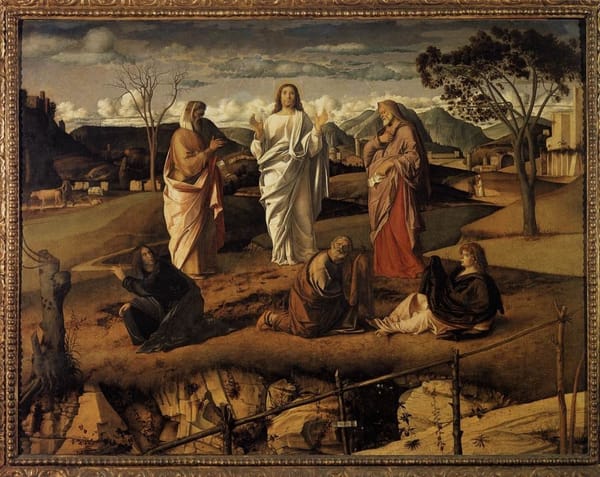
August 6: Transfiguration of Our Lord
O GOD, who in the glorious Transfiguration of Thine only-begotten Son, didst confirm the mysteries of the faith by the testimony of the fathers: and who, in the voice which came from the bright cloud, didst in a wonderful manner fore-signify our adoption as sons: mercifully vouchsafe to make us fellow-heirs of that King of glory, and the sharers of His bliss.' Such is the formula which sums up the prayer of the Church and shows us her thoughts on this day of attestation and of hope.
We must first notice that the glorious Transfiguration has already been twice brought before us on the sacred cycle—viz., on the second Sunday of Lent, and on the preceding Saturday. What does this mean, but that the object of the present solemnity is not so much the historical fact already known, as the permanent mystery attached to it; not so much the personal favour bestowed on Simon Peter and the sons of Zebedee, as the accomplishment of the great message then entrusted to them for the Church? Tell the vision to no man, till the Son of Man be risen from the dead.1 The Church, born from the open side of the Man-God on the Cross, was not to behold Him face to face on earth; after His Resurrection, when He had sealed His alliance with her in the Holy Ghost sent down from heaven, it is on faith alone that her love was to be fed. But by the testimony which takes the place of sight, her lawful desires to know Him were to be satisfied. Wherefore, for her sake, giving truce, one day of His mortal life, to the ordinary law of suffering and obscurity He had taken upon Him for the world’s salvation, He allowed the glory which filled His blessed soul to transpire. The King of Jews and Gentiles revealed Himself upon the mountain, where His calm splendour eclipsed for evermore the lightnings of Sinai; the covenant of the eternal alliance was declared, not by the promulgation of a law of servitude engraven upon stone, but by the manifestation of the Lawgiver Himself, coming as Bridegroom to reign in grace and beauty over hearts. Elias and Moses, representing the prophets and the Law whereby His coming was prepared, from their different starting-points, met beside Him like faithful messengers reaching their destination; they did homage to the Master of their now finished mission, and effaced themselves before Him at the voice of the Father: This is My beloved Son! Three witnesses the most trustworthy of all assisted at this solemn scene: the disciple of faith, the disciple of love, and that other son of thunder who was to be the first to seal with His blood both the faith and the love of an apostle. By His order they kept religiously, as beseemed them, the secret of the King, until the day when the Church could be the first to receive it from their predestined lips.
But did this precious mystery take place on August 6? More than one doctor of sacred rites affirms that it did.2 At any rate, it was fitting to celebrate it in the month dedicated to Eternal Wisdom. It is she, the brightness of eternal light, the unspotted mirror and image of God's goodness,3 who, shedding grace upon the Son of man, made Him on this day the most beautiful amongst all His brethren, and dictated more melodiously than ever to the inspired singer the accents of the Epithalamium: My heart hath uttered a good word: I speak my works to the king.4
Seven months ago the mystery was first announced by the gentle light of the Epiphany; but by the virtue of the mystical seven here revealed once more, the ‘beginnings of blessed hope’5 which we then celebrated as children with the Child Jesus, have grown together with Him and the Church; and the latter, established in unspeakable peace by the full growth which gives her to her Spouse, calls upon all her children to grow like her by the contemplation of the Son of God, even to the measure of the perfect age of Christ. We understand, then, why the liturgy of to-day repeats the formulas and chants of the glorious Theophany: Arise, be enlightened, O Jerusalem: for thy light is come, and the glory of the Lord is risen upon thee:6 it is because on the mountain together with our Lord the Bride also is glorified, having the glory of God.
While the face of Jesus shone as the sun, His garments became white as snow.7 Now these garments so snowwhite, as St. Mark observes, that no fuller on earth could have bleached them so, are the just men, the royal ornament inseparable from the Man-God, the Church, the seamless robe woven by our sweet Queen for her Son out of the purest wool and most beautiful linen that the valiant woman could find. Although our Lord personally has now passed the torrent of suffering and entered for ever into His glory, nevertheless the bright mystery of the Transfiguration will not be complete until the last of the elect, having passed through the laborious preparation at the hands of the Divine Fuller and tasted death, has joined in the Resurrection of our adorable Head. O Face of our Saviour that dost ravish the heavens, then will all glory, all beauty, all love shine forth from Thee. Expressing God by the perfect resemblance of true Son by nature, Thou wilt extend the good pleasure of the Father to that reflection of His Word which constitutes the sons of adoption, and reaches in the Holy Ghost even to the lowest fringes of His garment which fills the temple below Him. According to the doctrine of the Angel of the schools, the adoption of sons of God, which consists in being conformable to the image of the Son of God by nature, is wrought in a double manner: first by grace in this life, and this is imperfect conformity; and then by glory in patria, and this is perfect conformity, according to the words of St. John: We are now the sons of God; and it hath not yet appeared what we shall be. We know that when He shall appear, we shall be like to Him: because we shall see Him as He is.8 The word of eternity, Thou art My Son, this day have I begotten Thee, has had two echoes in time, at the Jordan and on Thabor; and God, who never repeats Himself, did not herein make an exception to the rule of saying but once what He says. For although the terms used on the two occasions are identical, they do not tend, as St. Thomas says, to the same end, but show the different ways in which man participates in the resemblance of the eternal filiation. At the baptism of our Lord, where the mystery of the first regeneration was declared, as at the Transfiguration which manifested the second, the whole Trinity appeared: the Father in the voice, the Son in His Humanity, the Holy Ghost under the form, first of a dove, and afterwards of a bright cloud; for if in baptism this Holy Spirit confers innocence symbolized by the simplicity of the dove, in the Resurrection he will give to the elect the brightness of glory and the refreshment after suffering which are signified by the luminous cloud.
But without waiting for the day when our Saviour will renew our very bodies conformable to the bright glory of His own divine Body, the mystery of the Transfiguration is wrought in our souls already here on earth. It is of the present life that St. Paul says and the Church sings to-day: God, who commanded the light to shine out of darkness, hath shined in our hearts, to give the light of the knowledge of the glory of God, in the face of Christ Jesus.9 Thabor, holy and divine mountain rivalling heaven,10 how can we help saying with Peter: ‘It is good for us to dwell on thy summit P For thy summit is love; it is charity which towers above the other virtues, as thou towerest in gracefulness, and loftiness, and fragrance over the other mountains of Galilee, which saw Jesus passing, speaking, praying, working prodigies, but did not know Him in the intimacy of the perfect. It is after six days, as the Gospel observes, and therefore in the repose of the seventh which leads to the eighth of the resurrection, that Jesus reveals Himself to the privileged souls who correspond to His love. The Kingdom of God is within us; when, leaving all impressions of the senses as it were asleep, we raise ourselves above the works and cares of the world by prayer, it is given us to enter with the Man-God into the cloud: there beholding the glory of the Lord with open face, as far as is compatible with our exile, we are transformed into the same image from glory to glory, as by the Spirit of the Lord.11
‘Let us then,' cries St. Ambrose, ‘ ascend the mountain; let us beseech the Word of God to show Himself to us in His splendour, in His beauty; to grow strong and proceed prosperously, and reign in our souls. For behold a deep mystery! According to thy measure, the Word diminishes or grows within thee. If thou reach not that summit, high above all human thought, Wisdom will not appear to thee; the Word shows Himself to thee as in a body without brightness and without glory’12
If the vocation revealed to thee this day be so great and so holy, ‘reverence the call of God,’ says St. Andrew of Crete:13‘do not ignore thyself, despise not a gift so great, show not thyself unworthy of the grace, be not so slothful in thy life as to lose this treasure of heaven. Leave earth to the earth, and let the dead bury their dead; disdaining all that passes away, all that dies with the world and the flesh, follow even to heaven, without turning aside, Christ who leads the way through this world for thee. Take to thine assistance fear and desire, lest thou faint or lose thy love. Give thyself up wholly; be supple to the Word in the Holy Ghost, in order to attain this pure and blessed end: thy deification, together with the enjoyment of unspeakable goods. By zeal for the virtues, by contemplation of the truth, by wisdom, attain to Wisdom, who is the principle of all, and in whom all things subsist.'
The feast of the Transfiguration has been kept in the East from the earliest times. With the Greeks, it is preceded by a vigil and followed by an octave, and on it they abstain from servile work, from commerce, and from law-suits. Under the graceful name of Rose-flame, rosœ coruscatio, we find it in Armenia at the beginning of the fourth century supplanting Diana and her feast of flowers, by the remembrance of the day when the divine Rose unfolded for a moment on earth its brilliant corolla. It is preceded by a whole week of fasting, and counts among the five principal feasts of the Armenian cycle, where it gives its name to one of the eight divisions of the year. Although the Menology of this Church marks it on the sixth of August like that of the Greeks and the Roman Martyrology, it is nevertheless always celebrated there on the seventh Sunday after Pentecost; and by a coincidence full of meaning, they honour on the preceding Saturday the Ark of the Covenant of the Lord, a figure of the Church.
The origin of to-day's feast in the West is not so easy to determine. But the authors who place its introduction into our countries as late as 1457, when Callixtus III promulgated by precept a new Office enriched with indulgences, overlook the fact that the pontiff speaks of the feast as already widespread and ‘commonly called of the Saviour.’14 It is true that in Rome especially the celebrity of the more ancient feast of St. Sixtus II, with its double Station at the two cemeteries which received respectively the relics of the pontiff-martyr and those of his companions, was for a long time an obstacle to the acceptance of another feast on the same day. Some churches, to avoid the difficulty, chose another day in the year to honour the mystery. As the feast of our Lady of the Snow, so that of the Transfiguration had to spread more or less privately, with various offices and masses,15 until the supreme authority should intervene to sanction and bring to unity the expressions of the devotion of different Churches. Callixtus III considered that the hour had come to consecrate the work of centuries; he made the solemn and definitive insertion of this feast of triumph on the universal Calendar the memorial of the victory which arrested, under the walls of Belgrade in 1456, the onward march of Mahomet II, conqueror of Byzantium, against Christendom.
Already in the ninth century, if not even earlier, martyrologies and other liturgical documents16 furnish proofs that the mystery was celebrated with more or less solemnity, or at least with some sort of commemoration, in divers places. In the twelfth century Peter the Venerable, under whose government Cluny took possession of Thabor, ordained that ‘in all the monasteries or churches belonging to his order, the Transfiguration should be celebrated with the same degree of solemnity as the Purification of our Lady'; and he gave for his reason, besides the dignity of the mystery, the 'custom, ancient or recent, of many churches throughout the world, which celebrate the memory of the said Transfiguration with no less honour than the Epiphany and the Ascension of our Lord.’17
On the other hand at Bologna, in 1233, in the juridical instruction preliminary to the canonization of St. Dominic, the death of the saint is declared to have taken place on the feast of St. Sixtus, without mention of any other.18 It is true, and we believe this detail is not void of meaning, that a few years earlier, Sicardus of Cremona thus expressed himself in his Mitrale: 'We celebrate the Transfiguration of our Lord on the day of St. Sixtus.’19 Is not this sufficient indication that while the feast of the latter continued to give its traditional name to the eighth of the Ides of August, it did not prevent a new and greater solemnity from taking its place beside it, preparatory to absorbing it altogether? For he adds: ‘Therefore on this same day, as the Transfiguration refers to the state in which the faithful will be after the resurrection, we consecrate the Blood of our Lord from new wine, if it is possible to obtain it, in order to signify what is said in the Gospel: I will not drink from henceforth of this fruit of the vine, until that day when I shall drink it with you new in the kingdom of My Father.20 But if it cannot be procured, then at least a few ripe grapes are pressed over the chalice, or else grapes are blessed and distributed to the people.’21
The author of the Mitrale died in 1215; yet he was only repeating the explanation already given in the second half of the preceding century by John Beleth, Rector of the Paris University.22 We must admit that the very ancient benedictio uvœfound in the Sacramentaries on the day of St. Sixtus has nothing corresponding to it in the life of the great pope which could justify our referring to him. The Greeks, who have also this blessing of grapes fixed for August 6,23 celebrate on this day the Transfiguration alone, without any commemoration of Sixtus II. Be it as it may, the words of the Bishop of Cremona and of the Rector of Paris prove that Durandus of Mende, giving at the end of the thirteenth century the same symbolical interpretation,24 did but echo a tradition more ancient than his own time.
St. Pius V did not alter the ancient office of the feast, except the lessons of the first and second Nocturns, which were taken from Origen,25 and the three hymns for Vespers, Matins, and Lauds, which resembled somewhat in structure the corresponding hymns of the Blessed Sacrament.26 The hymn now used for Vespers and Matins, which we here give, is borrowed from the beautiful canticle of Prudentius on the Epiphany in his Cathemerinon:
Hymn
Oculos in aitimi tollite:
Illic licebit visere
Signum perennis gloriæ.
Quod nesciat finem pati,
Sublime, celsum, interminum,
Antiquius cœlo et chao.
Populique Rex Judaici,
Promissus Abrahæ patri,
Ejusque in ævum semini.
Iisdemque signatoribus
Testator et Pater jubet
Audire nos et credere.
Qui te revelas parvulis,
Cum Patre et almo Spiritu
In sempiterna sæcula.
lift up your eyes to heaven;
there ye may behold
the token of His eternal glory.
that knows no ending,
sublime, noble, interminable,
older than heaven and chaos.
and King of the Jewish people,
who was promised to Abraham our father,
and to his seed for ever.
and the Father, who testifies with them
for His witnesses, bids us
hear and believe Him.
who revealest Thyself to little ones,
with the Father and with the Holy Spirit,
through everlasting ages.
Adam of St. Victor has also sung of this glorious mystery:
Sequence
Ac devote celebremus hæc sacra solemnia;
Ad honorem summi Dei
Hujus laudes nunc diei personet Ecclesia.
Suæ dedit manifesta gloriæ indicia;
Ut hoc possit enarrali
Hic nos suos salutari Repleat et gratia!
Vitæ dator, victor mortis, verus sol justitiæ,
Quam assumpsit carnem de Virgine,
Transformatus in Thabor culmine, glorificat hodie.
Talis enim beatorum erit resurrectio.
Sicut fulget sol pleni luminis,
Fulsit Dei vultus et hominis, Teste Evangelio.
Deitatis fuit testis et futuræ gloriæ.
Mirus honor et sublimis:
Mira, Deus, tuæ nimis virtus est potentiæ.
Petro, natis Zebedæi majestatis gloriam
Demonstraret manifeste,
Ecce vident, Luca teste, Moysen et Eliam.
Quod loquentes erant Deo Dei Patris Filio:
Vere sanctum, vere dignum
Loqui Deo et benignum, plenum omni gaudio.
Quæ sacratur voce Dei, honor est eximius;
Nubes illos obumbravit,
Et vox Patris proclamavit: Hic est meus Filius.
Habet enim verba vitæ, Verbo potens omnia.
Hic est Christus, rex cunctorum.
Mundi salus, lux sanctorum, Lux illustrans omnia.
Per quem perdit jus acerbum quod in nobis habuit
Hostis nequam, serpens dirus,
Qui, fundendo suum virus Evæ, nobis nocuit.
Qui surgendo reparavit
Vitam Christus et damnavit Mortis magisterium.
Hic est Christus, pax æterna,
Ima regens et superna,
Cui de cœlis vox paterna confert testimonium.
Patres illi tres præfati
Et in terram sunt prostrati quando vox emittitur.
Surgunt tandem, annuente
Sibi Christo, sed intente
Circumspectant, cum repente Solus Jesus cernitur.
Non permisit enarrari,
Donec, vitæ reparator,
Hostis vitæ triumphator. Morte victa, surgeret.
Hæc est dies laude digna
Qua tot sancta fiunt signa;
Christus, splendor Dei
Patris Prece sancta suæ matris nos a morte liberet.
Sit cum summa potestate Laus et honor debitus!
and devoutly celebrate these sacred solemnities;
let the Church resound with the praises of this day
to the honour of the most high God.
give manifest signs of His great glory;
that we may recount the same,
may He give us His aid and fill us with His grace.
the giver of life, and conqueror of death, the true Sun of justice,
to-day transfigured on Thabor’s height,
did glorify the flesh He had taken of the Virgin.
For such will be the resurrection of the blessed.
As shines the sun in fulness of his light, so shone
the countenance of God and Man, as the Gospel testifieth.
gave testimony of His Godhead and of the glory to come.
Wondrous the honour and sublime;
wondrous exceedingly, O God, is the power of Thine almightiness.
to Peter and the sons of Zebedee did clearly show
the glory of His majesty, lo!
they beheld, as Luke doth testify, Moses and Elias.
that they were seen speaking with God, the Son of God the Father.
Oh! how noble and how holy,
how good and full of all joy, to speak to God!
consecrated by the voice of God, and exceeding is its honour;
a cloud did overshadow them,
and the Father’s voice proclaimed: 'This is my Son.'
for the words of life hath He, Who can do all things by His word.
This is Christ, the King of all,
the world’s salvation and the light of saints, the light enlightening all things.
by whom He destroys the bitter law set in us
by the wicked enemy, the cruel serpent,
who, pouring out his poison upon Eve, did work our ruin.
who by rising restored
our life and condemned the tyranny of death.
This is Christ, the eternal peace,
ruling both depths and height;
to whom from heaven the Father’s voice bore testimony.
those three aforesaid fathers
were afraid, and prostrated on the earth when the word was uttered.
At length they rise,
Christ bidding them;
they gaze around intently, but at once see none but Jesus.
suffers them not to be uttered,
until the restorer of life
and conqueror of life’s enemy should rise triumphant over death.
This is the day so worthy of praise,
whereon are wrought so many holy signs;
may Christ, the splendour of God the Father,
by the prayer of His holy Mother, deliver us from death.
be, together with highest power, the praise and honour due!
The Menæa of the Greeks offers us these stanzas from St. John Damascene:
Mensis Augusti Die VI
(In Matutino)
It will be well to borrow also from the Church of Armenia, which celebrates this feast with so much solemnity:
In Transfiguratione Domini
Let us conclude by addressing to God this prayer of the Ambrosian Missal:
Oratio Super Sindonem
- St. Matt. xvii. 9. ↩︎
- Sicard. Cremon. Mitrale, ix. 38; Beleth. Rationale, cxliv.; Durand, vii., xxii., etc. ↩︎
- Alleluia verse fr. Wisd. vii. 26. ↩︎
- Gradual fr. Ps. xliv. 2, 3. ↩︎
- Leon. in Epiph., Sermo ii. 4. ↩︎
- 1st Responsory of Matins from Isaias lx. 1. ↩︎
- St. Matt xvii. 2. ↩︎
- 1 John iii. 2. ↩︎
- 8th Responsory of Matins fr. 2 Cor. iv. 6. ↩︎
- Joan. Damasc. Orat. in Transfig. iii. ↩︎
- Capit of Sext, fr. 2 Cor. iii. 18. ↩︎
- Ambr. in Luc., lib. vii., 12. ↩︎
- Andr. Hibrosolymitani, Archiepisc. Cretensis, Oratio in Transfig. ↩︎
- Callixt. III Const. Inter Divinæ dispensationis arcana. ↩︎
- Schulting, on this date; Tommasi, Antiphoner. ↩︎
- Wandalbert; Eldefons. ↩︎
- Statuta Cluniac. V. ↩︎
- Deposition of the Prior of St Nicholas. ↩︎
- Sicard. Mitrale, ix., xxxviii. ↩︎
- St. Matt. xxvi. 29. ↩︎
- Sicard. Ibid ↩︎
- Beleth. Rationale, cxliv. ↩︎
- Eucholog. ↩︎
- Durand. Rationale, vii., xxii. ↩︎
- Homil. xii. in Exod. De vultu Moysi gloriflcato et velamine quod ponebat in facie sua. ↩︎
- Gaude, mater pietatis. Exultet laudibus sacrata concio. Novum sidus exoritur. ↩︎
August 6 (the Same Day): St. Sixtus II, Pope and Martyr; and Ss. Felicissimus and Agapitus, Martyrs
|
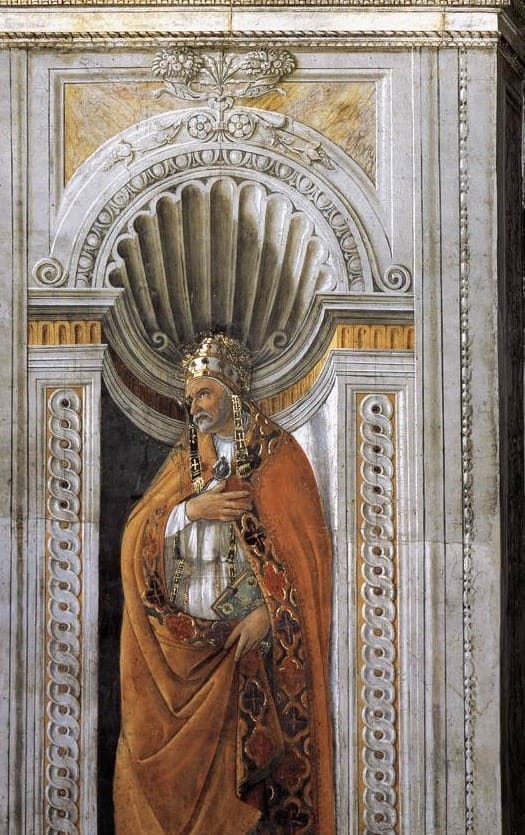
XISTUM in cimiterio animadversum sciatis octavo iduum augustarum die. Know that Sixtus has been beheaded in the cemetery on the eighth of the Ides of August.1
These words of St. Cyprian mark the opening of a glorious period, both for the cycle and for history. From this day to the feast of St. Cyprian himself, taking in that of the deacon Laurence, how many holocausts in a few weeks does the earth offer to the most high God! One would think that the Church, on the feast of our Lord’s Transfiguration, was impatient to join her testimony as Bride to that of the prophets, of the apostles, and of God Himself. Heaven proclaims Him well-beloved, the earth also declares its love for Him: the testimony of blood and of every sort of heroism is the sublime echo awakened by the Father’s voice through all the valleys of our lowly earth, to be prolonged throughout all ages.
Let us, then, to-day salute this noble pontiff, the first to go down into the arena opened wide by Valerian to all the soldiers of Christ. Among the brave leaders who, from Peter down to Melchiades, have headed the struggle whereby Rome was both vanquished and saved, none is more illustrious as a martyr. He was seized in the catacomb lying to the left of the Appian Way, in the very chair wherein, in spite of the recent edicts, he was presiding over the assembly of the brethren; and after the sentence had been pronounced by the judge, he was brought back to the sacred crypt. There in that same chair, in the midst of the martyrs sleeping in the surrounding tombs their sleep of peace, the good and peaceful pontiff2 received the stroke of death. Of the seven deacons of the Roman Church six died with him;3 Laurence alone was left, inconsolable at having this time missed the palm, but trusting in the invitation given him to be at the heavenly altar in three days’ time.
Two of the pontiff’s deacons were buried in the cemetery of Prætextatus, where the sublime scene had taken place. Sixtus and his blood-stained chair were carried to the other side of the Appian Way into the crypt of the Popes, where they remained for long centuries an object of veneration to pilgrims. When Damasus, in the days of peace, adorned the tombs of the saints with his beautiful inscriptions, the entire cemetery of Callixtus, which includes the burial-place of the Popes, received the title ‘of Cæcilia and of Sixtus,’ two glorious names inscribed by Rome upon the venerable diptychs of the Mass. Twice over on this day did the holy Sacrifice summon the Christians to honour, at each side of the principal way to the Eternal City, the triumphant victims of the eighth of the Ides of August.4
The following Preface from the Leonine Sacramentary breathes the freshness of the Church's triumph over persecution:
Preface
The Prayer now in use is that found in the Gregorian Sacramentary for Saints Felicissimus and Agapitus, the name of Saint Sixtus having been placed before theirs:
Prayer
| Previous August 5: Our Lady of the Snow | Next August 6 (the Same Day): St. Sixtus II, Pope and Martyr; and Ss. Felicissimus and Agapitus, Martyrs |