Daily reading
After Pentecost
Double of the II Class · Movable from Easter · Temporal
September 8, 2019
From Dom Guéranger’s The Liturgical Year.

|
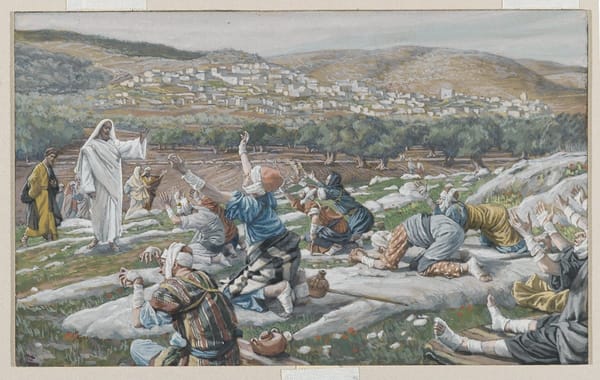
The Thirteenth Sunday after Pentecost
The dominical series—which formerly counted from the feast of Saint Peter, or of the apostles—never went beyond this Sunday. The feast of Saint Laurence gave its name to those which follow; though that name began with even the ninth Sunday, for the years when Easter was further from the Spring equinox. And when that solemnity was kept at its latest date, the weeks began from to-day to be counted as the weeks of the seventh month (September).
The Ember-days of the autumn quarter sometimes occur even this week; whilst, other years, they may be as late as the eighteenth. We will speak of them when we come to the seventeenth Sunday, for it is in the week following that, that the Roman missal inserts them.
In the western Church, the thirteenth Sunday takes its name from the Gospel of the ten lepers, which is read in the Mass; the Greeks, who count it as the thirteenth of Saint Matthew, read on it the parable of the vineyard, whose labourers, though called at different hours of the day, all receive the same pay.1
Mass
Now that she is in possession of the promises so long waited for by the world, the Church loves to repeat the words wherewith the just men of the old law used to express their sentiments. Those just men were living during the gloomy period, when the human race was seated in the shadow of death. We are under incomparably happier circumstances; we are blessed with graces in abundance : eternal Wisdom has spared us the trials our forefathers had to contend with, by giving us to live in the period which has been enriched by all the mysteries of salvation. There is a danger, however, and our mother the Church does her utmost to avert us from falling into it; it is the danger of forgetting all these blessings. Ingratitude is the necessary outcome of forgetfulness, and to-day’s Gospel justly condemns it. On this account, the Epistle, and here our Introit, remind us of the time when man had nothing to cheer him but hope: a promise had, indeed, been made to him of a sublime covenant which was, at some distant future, to be realized; but, meanwhile, he was very poor, was a prey to the wiles of satan, his cause was to be tried by divine justice, and yet he prayed for loving mercy.
Introit
This day last week we were considering how important are faith and charity to a Christian who is living under the Law of grace. There is another virtue of equal necessity: it is hope; for, although he already have the substantial possession of the good things which will constitute his future happiness, the Christian is prevented by the gloom of this land of exile from seeing them. Moreover, this mortal life being essentially a period of trial, wherein each one is to win his crown,2 the struggle makes even the very best feel, and that right to the end, the weight of incertitude and anguish. Let us, therefore, pray with the Church, in her Collect, for an increase of the three fundamental virtues of faith, hope, and charity; and, that we may deserve to reach the perfection of the good which is promised us in heaven, let us sue for the grace of devotedness to the commandments of God, which lead us to our eternal home. Let us remember how the Gospel of Sunday last included them all in love.
Collect
The other Collects, as on page 120.
Epistle
Cap. iii.Fratres, Abrahæ dictæ sunt promissiones, et semini ejus. Non dicit : Et seminibus, quasi in multis, sed quasi in uno : Et semini tuo, qui est Christus. Hoc autem dico, testamentum confirmatum a Deo : quæ post quadringentos et triginta annos facta est lex, non irritum facit ad evacuandam promissionem. Nam si ex lege hæreditas, jam non ex promissione. Abrahæ autem per repromissionem donavit Deus. Quid igitur lex? Propter transgressiones posita est, donec veniret semen, cui promiserat, ordinata per angelos in manu mediatoris. Mediator autem unius non est : Deus autem unus est. Lex ergo adversus promissa Dei? Absit. Si enim data esset lex, quæ posset vivificare, vere ex lege esset justitia. Sed conclusit Scriptura omnia sub peccato, ut promissio ex fide Jesu Christi daretur credentibus.
Ch. iii.Brethren: To Abraham were the promises made and to his seed. He saith not, and to his seeds as of many: but as of one, and to thy seed which is Christ. Now this I say, that the testament which was confirmed by God, the law which was made after four hundred and thirty years, doth not disannul, or make the promise of no effect. For if the inheritance be of the law, it is no more of promise, But God gave it to Abraham by promise. Why then was the law? It was set because of transgressions, until the seed should come, to whom he made the promise, being ordained by angels in the hand of a mediator. Now a mediator is not of one : but God is one. Was the law then against the promises of God? God forbid! For if there had been a law given which could give life, verily justice should have been by the law. But the Scripture hath concluded all under sin, that the promise by the faith of Jesus Christ might be given to them that believe.
‘Look up to heaven, and number the stars, if thou canst! So shall thy seed be!’3 Abraham was almost a hundred years old,4 and Sara’s barrenness deprived him of all natural hope of posterity, when these words were spoken to him by God, Abraham, nevertheless, believed God, says the Scripture, and it was reputed to him unto justice.5 And when, later on, that same faith6 would have led him to sacrifice, on the mount, that son of the promise, his one only hope, God renewed His promise, and added: ‘In thy seed shall all the nations of the earth be blessed.’7
It is now that the promise is fulfilled; the event justifies Abraham’s faith. He believed against all hope, trusting to that God who quickeneth the dead, and calleth those things that are not, as those that are;8 and, according to the expression of John the Baptist, from the very stones of the gentile world there rise up, in all places, children to Abraham.9
His faith, firm and, at the same time, so simple, gave to God the glory10 which He looks for from His creatures. Man can add nothing to the divine perfections; but—agreeably to God’s own words— though he sees them not directly here below, he acknowledges those perfections by adoring and loving them; he makes his faith tell upon his whole life; and this use which he freely makes of his faculties—this voluntary devotedness of an intelligent being—magnifies God, by adding to His extrinsic glory.
Following in Abraham’s steps,11 there have come those multitudes, born for heaven, the children of his faith. They live by faith;12 and thereby in all their acts they give to God the homage of confession and praise, through His Son Christ Jesus; and, like Abraham, they receive in return the blessing of an ever-increasing justice.13 The magnificent development of the Church, which gives this new posterity to Abraham, is greater and more visible since the fall of Israel. In countries the remotest, in the midst of cities that once were all pagan, we see crowds of men, women, and children imitating Abraham,14 that is, leaving at heaven’s call, if not their country, at least everything that once made earth dear to them; and like him, trusting in the fidelity and power of God to fulfil His promises,15 they live as strangers amidst their neighbours, yea, and in their very homes, using this world as though they did not use it. In the tumult of cities as in the desert, in the midst of the vain pleasures of the world, whose fashion and figure passeth away,16 they have no other thought than that of the unseen realities,17 no other care than that of pleasing God.18 They take to themselves the word that was spoken to their father: ‘Walk before me, and be perfect!’19 In truth, it was spoken to all of them; it was the condition in the alliance, concluded by God with those His faithful servants of all ages, in the person of the grand patriarch, who was not only their progenitor, but their model too. And God responds also to their faith, either by private manifestations, or by the still surer voice of His Scriptures,20 saying: ‘Fear not! I am thy protector, and thy reward exceeding great!'21
Truly, then, the benediction of Abraham has been poured forth on the Gentiles.22 Christ Jesus, the true Son of the promise, the only seed of salvation, has, by faith in His Rsurrection,23 assembled from every nation24 them that are of a good will,25 making them all one in Him, making them, like Himself, children of Abraham,26 and, what is better still, children of God.27 For the benediction that was promised, at the beginning of the alliance, was the Holy Ghost Himself,28 the Spirit of adoption of children that came down into our hearts, to make us all heirs of God and joint-heirs of Christ.29 O mighty power of faith, which breaks down the former walls of division, unites nations together,30 and substitutes the love and freedom of children of the Most High for the law of bondage and fear!31
And yet, grand as was this spectacle of the Gentiles becoming incorporated into the chosen race, and being made sharers, in Christ, of the holy promises,32 it did not please all people. The carnal Jew, who boasts of having Abraham for his father, though he cares little about imitating his works33—the circumcised who vaunts the bearing in his flesh the sign of a faith which dwells not in his heart34— these men who have rejected Christ now reject His members, and would fain destroy His Church, or, at least, trammel it. They are enraged at seeing crowding in, from every portion of the globe,35 that immense concourse, which their vile jealousy has vainly sought to keep back. Whilst their wounded pride kept them from going in,36 the Gentiles were sitting down with Abraham, Isaac, Jacob, and all the prophets, at the banquet of God’s kingdom;37 the last became the first.38 Even to the end of time, Israel—who, by his own obstinacy, has forfeited his ancient glory—will continue to be the enemy of this spiritual posterity of Abraham, which has supplanted him39; but his persecutions against the children of the promise and of the lawful Bride will but result in showing that he is, as St. Paul says, the son of Agar, the son of the bondwoman, who, together with her child, is excluded from the inheritance and from the kingdom.40
He prefers to refuse the liberty offered him by the Lord, rather than acknowledge the definitive abrogation of his now dead Law. Be it so! His hatred will not induce the children of the Church (who are prefigured by Sara, the freewoman) to reject the grace of their God, for the sake of pleasing their enemy; it will not induce them to abandon the justice of faith, and the riches of the Spirit, and the life in Christ, in order to go back again to the yoke of slavery,41 which, let the Jew do what he will, was broken into pieces by the cross he himself set up on Calvary.42 Up to the last, the true Jerusalem, the free city, our mother—she that was once the barren woman, but now is so glad a bride with her children around her—will meet the superannuated, yet ever busy, pretensions of the Synagogue by reading to her assembled sons and daughters the Epistle we are having to-day. Up to the last St. Paul, in her name—speaking of the law of Sinai, which was made known to its subjects through the mediation of Moses and the angels—will prove its inferiority as compared to the covenant made by Abraham directly with God; each year, as emphatically as on the day he wrote his Epistle, Paul will declare the transient character of that legislation, which came four hundred and thirty years after a promise which could not be changed; neither was such legislation to continue, when the time should come for that Son of Abraham to appear, from whom the world was waiting to receive the promised benediction.
But what is to be said of the incapability of the Mosaic ministration to give man strength, and enable him to rise up from his fall? The Gospel on which we were meditating eight days back, and which formerly was assigned to this present Sunday, gave a symbolical and striking commentary on the uselessness of the old Law in regard to this; at the same time, it showed us the remedial power which resided in Christ, and was by Him transmitted to the ministers of the new Law. ‘Every portion of the Office of the thirteenth Sunday,' says Abbot Rupert, 'bears on the history of that Samaritan, whose name signifies keeper; it is our Lord Jesus Christ who, by His Incarnation, comes to the rescue of man, whom the old Law was not able to keep from harm; and when Jesus leaves the world, He consigns the poor sufferer to the care of the apostles and apostolic men, in the house of the Church. The intentional selection of this Gospel for to-day throws a great light on our Epistle, as also on the whole letter to the Galatians, from which it is taken. Thus, the priest and the levite of the parable are a figure of the Law; and their passing by the half-dead man, seeing him, indeed, but without making an attempt to heal him, is expressive of what that Law did. True, it did not go counter to God’s promises; but, of itself, it could justify no man. A physician who does not himself intend to visit a patient will sometimes send a servant who is expert in the knowledge of the causes of the malady, yet who has not the skill needed for mixing the remedy required, but can merely tell the sick man what diet and what drinks he must avoid, if he would prevent his ailment from causing death. Such was the law, set, as the Epistle tells us, because of transgressions, as a simple safeguard, until such time as there should come the good Samaritan, the heavenly physician. Having, from his very first coming into this world, fallen among robbers, man is stripped of his supernatural goods, and is covered with the wounds inflicted on him by original sin; if he did not abstain from actual sins, from those transgressions against which the law was set as a monitor, he runs the risk of dying altogether.’43
It is on this account that the Gradual repeats the supplication of the Introit: Respice Domine, in testamentum tuum; for, as Rupert observes, it was the cry of the ancient people, who, sighing at the weakness of the powerless Law of Sinaï, besought God to fulfil the covenant He had promised to Abraham's faith. They cried out to Christ, as the poor creature might have done to the good Samaritan, after he had seen the priest and the levite pass him by, without an effort made to save him.
Gradual
Gospel
Cap. xvii.In illo tempore : Dum iret Jesus in Jerusalem, transibat per mediam Samariam et Galilæam. Et cum ingrederetur quoddam castellum, occurrerunt ei decem viri leprosi, qui steterunt a longe : et levaverunt vocem, dicentes : Jesu præceptor, miserere nostri. Quos ut vidit, dixit : Ite, ostendite vos sacerdotibus. Et factum est dum irent, mundati sunt. Unus autem ex illis, ut vidit quia mundatus est, regressus est, cum magna voce magnificans Deum, et cecidit in faciem ante pedes ejus, gratias agens : et hic erat Samaritanus. Respondens autem Jesus, dixit : Nonne decem mundati sunt? et novem ubi sunt? Non est inventus qui redir et, et daret gloriam Deo, nisi hic alienigena. Et ait illi : Surge, vade : quia fides tua te salvum fecit.
Ch. xvii.At that time: As Jesus was going to Jerusalem, he passed through the midst of Samaria and Galilee. And as he entered into a certain town, there met him ten men that were lepers, who stood afar off; and lifted up their voice, saying: Jesus, Master, have mercy on us. Whom when he saw, he said; Go, show yourselves to the priests. And it came to pass, that as they went they were made clean. And one of them, when he saw that he was made clean, went back, with a loud voice glorifying God. And he fell on his face, before his feet, giving thanks: and this was a Samaritan. And Jesus answering, said: Were not ten made clean, and where are the nine? There is no one found to return and give glory to God, but this stranger. And he said to him: Arise, go thy way; for thy faith hath made thee whole.
The Samaritan leper, cured of that hideous malady which is an apt figure of sin, in company with nine lepers of Jewish nationality, represents the despised race of Gentiles, who were at first admitted, by stealth, so to say, and by extraordinary privilege, into a share of the graces belonging to the lost sheep of the house of Israel.44 The conduct of these ten men, on occasion of their miraculous cure, is in keeping with the attitude assumed by the two peoples they typify, regarding the salvation offered to the world by the Son of God. It is a fresh demonstration of what the apostle says: ‘All are not Israelites that are of Israel; neither are all they who are the seed of Abraham, children; “but,” says the Scripture,45 “ in Isaac shall thy seed be called ”; that is to say, not they who are the children of the flesh are the children of God : but they that are the children of the promise are counted for the seed;'46 they are born of the faith of Abraham, and are, in the eyes of the Lord, His true progeny.
Our holy mother the Church is never tired of this subject, the comparison of the two Testaments, and the contrast there is between the two peoples. We deem it our duty, before proceeding further, to explain how this is; for there are many persons who cannot understand what benefit can come to us Christians from hearing this subject preached to us. The kind of spirituality which, with many of us, has nowadays been substituted for the liturgical life so thoroughly lived by, and so precious to, our Catholic ancestors, gives a certain disrelish for the ideas which the Church perseveringly brings before them during so many of her Sundays. They have become habituated to live in an atmosphere of very limited truth; it is all subjective, as well as little; and they consider it a very excellent thing, to forget all other teaching, except what they happen to possess, and beyond which it is a trouble to go. It is not surprising that Christians of this class feel puzzled at finding the Church continually urging them to take an interest in a long past, which they consider of ho practical utility to them! But the interior life, truly worthy of the name, is not what these good people imagine. No school of spirituality either now makes, or ever made, the ideal of virtue consist in indifference for those great historic facts which are evidently so precious in the eyes of the Church, and of God Himself. And what is the usual result of thus isolating themselves from their mother’s most cherished appreciations? It is, that by thus determinedly shutting themselves up in their own private prayers, they, by a just punishment, lose sight of the true end of prayer, which is union with, and love of, God. Their meditation is deprived of that element of intimate and fruitful converse with God, which is assigned it by all the masters of the spiritual life; it soon becomes an unproductive exercise of analysis and reasoning, in which there is nothing but abstract conclusions.
Now, when God mercifully invited men to the divine nuptials by manifesting to them His Word, it was not by abstraction that He gave to our earth this the Son of His own eternal Substance. As to His Divinity, men could not, in their present state, see it in a direct way. Had God shown us, in this pretended abstract way, that eternal Son of His, in whom are found all beauty, and warmth, and life, the revelation would have been imperfect and cold. This He did not do; but, as St. Paul tells us, He manifested the great mystery of godliness in the flesh;47 the Word became a living soul;48 eternal Truth assumed to Himself a Body, that so He might converse with men,49 and grow up like one of themselves.50 And when that Body, which eternal Truth was to hold as His own for ever, was taken up in glory,51 the Church, the bride of this Man-God, continued in the world this manifestation of God, by the members of Christ; she continued that historic development52 of the Word, which is only to cease when time is no more. This manifestation, this development, surpasses all human calculations, and reveals fresh aspects of the Wisdom of God even to the angels themselves.53 Let due respect be paid to the axioms of learned men, who have arranged the principles of science in logical order, independently of history and of facts: but this lifeless reasoning has nothing in common with substantial truth which is ever fruitful and necessarily active. In the Church, as in God, truth is life and light,54 not a mere collection of formulæ. If our Credo rings out so triumphantly through the aisles of our churches, and seems to force the very gates of heaven, it is because each of its articles is presented before God steeped in the blood of martyrs; from age to age it has gathered ever fresh lustre from the labours and struggles of so many holy confessors, chosen out of the human race to complete the body of Christ on earth.55
The subject is too full to be treated of here; but this we must say: after the master-fact of the Incarnation of the Word, who came upon our earth to manifest God, through the ages of time, by Christ and His members,56 there is not one which is more important, not one which has been and still is so dear to God, as the vocation of the two peoples whom He successively called to the blessing of an alliance with Him. The gifts and vocations of God are, as the apostle expresses it, without repentance or regret on His part. Those Jews, who are now His enemies because they reject the Gospel, are still called charissimi; they are still the beloved and dearly beloved, because of their fathers.57 For the same reason, a time will come —and the whole world is waiting for it—when the denial of Juda being revoked and his iniquities blotted out, the promises made to Abraham, Isaac, and Jacob, will be literally fulfilled.58 Then the divine unity of the two Testaments will be made evident; and the two peoples themselves will be made one, under their one Head, Christ Jesus.59 The covenant of God with man being then fully realized, such as He had designed it in His eternal wisdom—the earth having yielded its fruit,60 the world having done its work, the sepulchres will give back their dead,61 and history will cease here on earth, leaving glorified human nature to bloom in unreserved fullness of life, under God's complacent eye.
The truths, then, which are again brought before our notice by to-day’s Gospel, are anything but dry or old-fashioned; nothing is so grand; and, we must add—though superficial minds will wonder at it—there is nothing more practical in this season of the year, for it is the season consecrated to the mysteries of the unitive life. After all, in what, primarily, does union between God and man consist, but in unanimity of the divine and the human minds? Now, we know that the divine mind has manifested all its designs in the respective histories of the two Testaments and the two peoples; and that the final result which is to bring these two histories to their close, is the one only end which infinite love was in the beginning, and is now, and will for ever be, proposing to fulfil. The Church, therefore, far from showing herself to be behind the age by recurring continually to truths such as these, is but clearly proving herself to be the most intelligent bride of Jesus, and evincing the changeless lovely youthfulness of a heart, which ever beats in unison with that of her Spouse.
Let us now resume the literal explanation of our Gospel. As we were observing on a previous Sunday, our Jesus here, again, wishes rather to give us a useful teaching, than to manifest His divine power. It is for this purpose that He does not cure at once these ten lepers who beseech Him to have mercy on them, as, on another occasion, He cured one who was suffering from the same misery. To this latter, who besought Him, He restored cleanliness by a few words. He said: 'Be thou made clean!' and forthwith the leprosy was cleansed.62 This was at the beginning of His public life. But the event of our Gospel took place in the latter portion of our Lord’s sojourn amongst men. The lepers are made clean only while on their way to show themselves to the priests. Jesus sends them to the priests, just as He had done in the previous case; and thus, from the beginning to the close of His mortal life, He gave an example of the respect which was to be paid to the old Law, so long as it was not abrogated. That Law gave to the sons of Aaron the power, not of curing, but of discerning leprosy, and passing judgment on its being cured or not.63
The time, however, has now come for a Law far above that of Sinai. It has a priesthood, whose judgments are not to concern the state of the body, but, by pronouncing the sentence of absolution, are to effectually remove the leprosy of souls. The cure which the ten lepers felt coming upon them before they had reached the priests, ought to have sufficed to show them, in Jesus, the power of the new priesthood, which had been foretold by the prophets;64 the power which thus forestalls and surpasses the authority of the ancient ministration is sufficient evidence of the superior dignity of Him who exercises it. If only they were in suitable dispositions for the sacred rites, which are going to be used in the ceremony of their purification,65 the Holy Ghost, who heretofore had inspired the prophetic details of the mysterious function, would enable them to understand the signification of the expiatory sparrow, whose blood, being sprinkled upon the living water, sets free, by the wood, its fellow sparrow. That first bird typifies our Lord Jesus Christ, who likens Himself, in the psalm, to the lonely sparrow;66 His immolation on the cross, which gives to water the power of cleansing souls, communicates to the other sparrows, His brethren,67 the purity of the divine Blood.
But the Jew is far from being ready to understand these great mysteries. And yet the Law had. been given to him that it might serve him as a hand leading him to Christ, and without exposing him to err.68 It was a signal favour granted him, not from any merits of his own, but because of his fathers.69 The favour was all the more precious, inasmuch as it was bestowed at a time when the tradition regarding a future Redeemer was almost entirely lost by the bulk of mankind. Gratitude should have been uppermost in the heart of Juda; but pride took its place. He was so taken up with the honour that had been put on him, that it made him lose all desire for the Messiah. He could not endure the thought that a time would come, when the Sun of justice having risen for the whole earth, the limited advantage which was given to a few during the hours of night was to be eclipsed by the bright noon of a light which all might enjoy. He, therefore, proclaimed that the old Law was definitive, though the Law declared itself to be but transitory; he, therefore, insisted on the perpetuity of the reign of types and shadows. He laid it down as a dogma that no divine intervention can ever equal that made on Sinai; that every future prophet, everyone sent by God, must be inferior to Moses; that all possible salvation is in the Law, and that from it alone flows every grace.
This explains to us how it was, that of the ten men cured of leprosy by Jesus, nine have not even the remotest thought of coming to their Deliverer to thank Him: these nine are Jews. Jesus, to their minds, is a mere disciple of Moses, a bare instrument of favours, holding His commission from Sinaï, and as soon as they have gone through the legal formality of their purification they take it that all their obligations to God are paid. The Samaritan, the despised Gentile, whose sufferings have given him that humility which makes the sinner clear-sighted, is the only one who recognizes God by His divine works, and gives Him thanks for His favours. How many ages of apparent abandonment, of humiliation and suffering, must pass over Juda too, before he will recognize and adore His God, and confess to Him his sins, and give Him his devoted love, and, like this stranger, hear Jesus pronounce his pardon, and say: Arise! Go thy way! thy faith hath made thee whole and saved thee!
Let us, by our fervent prayers, hasten the time which will be so glorious for the two peoples, when, united in the same faith by the consciousness of the same hopes then realized, they will cry out to our Redeemer these words of our Offertory:
Offertory
It is the oblation now on the altar that is to obtain for us from God the pardon of our past offences, and the graces we hope for, for the time to come. Let us, in the Secret, beseech Him to accept for the sacrifice these gifts which the Church, in the name of us all, has presented to Him.
Secret
The other Secrets, as on page 180.
Oh! when will the children of Juda come and experience for themselves the superiority of the Bread of the new Testament over the manna of the old? Let us Gentiles, the last-comers, but who have preceded our elder brethren at the banquet of love, sing all the more fervently in our Communion-anthem the divine sweetness of this true Bread of heaven.
Communion
As the Postcommunion expresses it, the work of our redemption by Jesus our Lord is confirmed and grows within us as often as we assist at these sacred mysteries. The Church prays that her children may be blessed with the grace of this fruitful frequentation of the mysteries of salvation.
Postcommunion
The other Postcommunions, as on page 131.
Vespers
The psalms, capitulum, hymn, and versicle, as above, pages 71-81.
Antiphon of the Magnificat
O almighty and eternal God, grant unto us an increase of faith, hope, and charity: and, that we may deserve what thou promisest, make us to love what thou commandest. Through, etc.
- Matt. xx. ↩︎
- 1 Cor. ix. 25. ↩︎
- Gen. xv. 5. ↩︎
- Rom. iv. 19. ↩︎
- Gen. xv. 6. ↩︎
- Heb. xi. 17-19. ↩︎
- Gen. xxii. 18. ↩︎
- Rom. iv. 17, 18. ↩︎
- S. Matt. iii. 9. ↩︎
- Rom. iv. 20. ↩︎
- Rom. iv. 12. ↩︎
- Ibid. i. 17. ↩︎
- Ibid. iv. 23, 24; Gal. iii. 9. ↩︎
- Gen. xii. 1. ↩︎
- Rom. iv. 20, 21. ↩︎
- 1 Cor. vii. 31. ↩︎
- Heb. xi. 1. ↩︎
- 1 Cor. vii. 32. ↩︎
- Gen. xvii. 1. ↩︎
- 2 St. Pet. i. 19. ↩︎
- Gen. xv. 1. ↩︎
- Gal. iii. 14. ↩︎
- Rom. iv. 24. ↩︎
- Gal. iii. 28. ↩︎
- St. Luke ii. 14. ↩︎
- Gal. iii. 29. ↩︎
- Ibid. iv. 5-7. ↩︎
- Ibid. iii. 14. ↩︎
- Rom. viii. 15-17. ↩︎
- Eph. ii. 14-18. ↩︎
- Rom. viii. 2. ↩︎
- Eph. iii. 6. ↩︎
- St. John viii. 39. ↩︎
- Rom. iv. 11. ↩︎
- St. Luke xiii. 29. ↩︎
- St. Luke xv. 28. ↩︎
- Ibid. xiii. 28. ↩︎
- Ibid. 30. ↩︎
- Gen. xxvii. 36. ↩︎
- Gal. iv. 22-31. ↩︎
- Ibid. v. 1. ↩︎
- Ibid. ii. 19-21. ↩︎
- Rup., De Div. Off., xii. 13. ↩︎
- St. Matt. xv. 24. ↩︎
- Gen. xxi. 12. ↩︎
- Rom. ix. 6-8. ↩︎
- 1 Tim. iii. 16. ↩︎
- Gen. ii. 7. ↩︎
- Baruch iii. 38. ↩︎
- St Luke ii. 52. ↩︎
- 1 Tim. iii 16. ↩︎
- Eph. i. 23. ↩︎
- Ibid. iii. 10. ↩︎
- St. John i. 4. ↩︎
- Col. i. 24, ii. 19. ↩︎
- 2 Cor. iv. 10, 11. ↩︎
- Rom. xi. 28, 20. ↩︎
- Ibid. 25-27. ↩︎
- Eph. ii. 14. ↩︎
- Ps. lxvi. 7. ↩︎
- Rom. xi. 15. ↩︎
- St Matt. viii. 3. ↩︎
- Lev. xiii. ↩︎
- Isa. lxvi. 21-23. ↩︎
- Lev. xiv. 1-32. ↩︎
- Ps. ci. 8. ↩︎
- Ps. lxxxiii. 4. ↩︎
- Gal. iii. 24. ↩︎
- Deut. iv. 37, ix. 4-6. ↩︎
September 8: The Nativity of the Blessed Virgin Mary
|
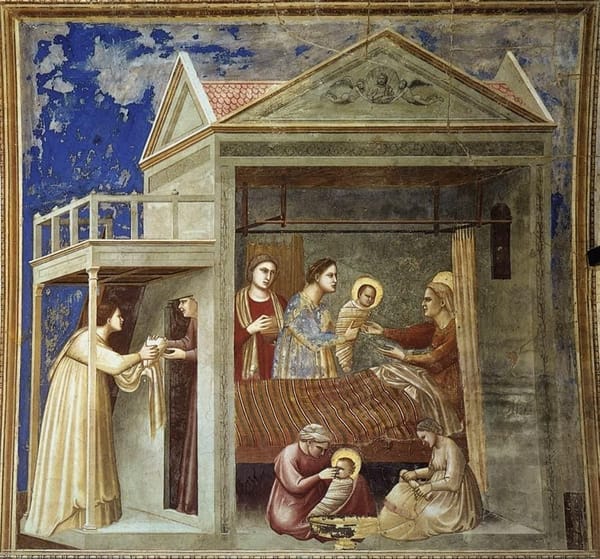
‘Let us celebrate the Nativity of the Virgin Mary; let us adore her Son, Christ our Lord.’1 Such is the invitation addressed to us to-day by the Church. Let us hearken to her call; let us enter into her overflowing joy. The Bridegroom is at hand, for His throne is now set up on earth; yet a little while, and He will appear in the diadem of our human nature, wherewith His Mother is to crown Him on the day of the joy of His heart, and of ours. To-day, as on the glorious Assumption, the sacred Canticle is heard;2 but this time it belongs more to earth than to heaven.
Truly a better paradise than the first is given us at this hour. Eden, fear no more that man will endeavour to enter thee; thy Cherubim may leave the gates and return to heaven. What are thy beautiful fruits to us, since we cannot touch them without dying? Death is now for those who will not eat of the fruit so soon to appear amid the flowers of the virgin earth to which our God has led us.
Hail, new world, far surpassing in magnificence the first creation! Hail blessed haven, where we find a calm after so many storms! Aurora dawns; the rainbow glitters in the heavens; the dove comes forth; the ark rests upon the earth, offering new destinies to the world. The haven, the aurora, the rainbow, the dove, the ark of salvation, the paradise of the heavenly Adam, the creation whereof the fomer was but a shadow: all this art thou, sweet infant, in whom already dwell all grace, all truth, all life.
Thou art the little cloud, which the father of prophets in the suppliant anguish of his soul awaited; and thou bringest refreshment to the parched earth. Under the weakness of thy fragile form, appears the Mother of fair love and of holy hope. Thou art that other light cloud of exquisite fragrance, which our desert sends up to heaven. In the incomparable humility of thy soul, which knows not itself, the angels, standing like armed warriors around thy cradle, recognize their Queen.
O Tower of the true David; citadel withstanding the first shock of satan’s attack, and breaking all his power; true Sion, founded on the holy mountains, the highest summits of virtue; temple and palace, feebly foreshadowed by those of Solomon; house built by eternal Wisdom for herself: the faultless lines of thy fair architecture were planned from all eternity. Together with Emmanuel, who predestined thee for His home of delights, thou art thyself, O blessed child, the crowning point of creation, the divine ideal fully realized on earth.
Let us, then, understand the Church, when, even on this day, she proclaims thy divine maternity, and unites in her chants of praise the birth of Emmanuel and thine own. He who, being Son of God by essence, willed to be also Son of man, had, before all other designs, decreed that He would have a Mother. Such, consequently, was the primordial, absolute character of that title of mother, that, in the eternal decree, it was one with the very being of the chosen creature, the motive and cause of her existence, as well as the source of all her perfections natural and supernatural. We too, then, must recognize thee as Mother, even from thy very cradle, and must celebrate thy birthday by adoring thy Son our Lord.
Inasmuch as it embraces all the brethren of the Man-God, thy blessed maternity sheds its rays upon all time, both before and after this happy day. 'God is our king before ages: He hath wrought salvation in the midst of the earth.’3 ‘The midst of the earth,’ says the Abbot of Clairvaux, 'admirably represents Mary. Mary is the centre of the universe, the ark of God, the cause of creation, the business of ages. Towards her turn the inhabitants of heaven and the dwellers in the place of expiation, the men that have gone before us, and we that are now living, those who are to follow us, our children’s children and their descendants. Those in heaven look to her to have their ranks filled up; those in purgatory look for their deliverance; the men of the first ages, that they may be found faithful prophets; those who come after, that they may obtain eternal happiness. Mother of God, Queen of heaven, Sovereign of the world, all generations shall call thee blessed, for thou hast brought forth life and glory for all. In thee the angels ever find their joy, the just find grace, sinners pardon; in thee, and by thee, and from thee, the merciful hand of the Almighty has reformed the first creation.’4
Andrew of Crete calls this day a solemnity of entrance, a feast of beginning, whose end is the union of the Word with our flesh; a virginal feast, full of joy and confidence for all.5 ‘All ye nations, come hither,’ cries St. John Damascene; 'come every race and every tongue, every age and every dignity, let us joyfully celebrate the birthday of the world’s gladness.’6 ‘It is the beginning of salvation, the origin of every feast,' says St. Peter Damian; ‘for behold! the Mother of the Bridegroom is born. With good reason does the whole world rejoice to-day; and the Church, beside herself, bids her choirs sing wedding songs.’7
Not only do the Doctors of east and west use similar language in praise of Mary’s birth, but moreover the Latin and Greek Churches sing, each in its own tongue, the same beautiful formula, to close the office of the feast: ‘Thy birth O Virgin Mother of God, brought joy to the whole world: for out of thee arose the Sun of justice, Christ our God: who, taking off the curse, hath bestowed blessing; and defeating death, hath given us life everlasting.’8
This union of Rome and Byzantium in the celebration of to-day’s festival, dates back as far as the seventh century at least;9 beyond that we cannot speak with anything like certitude, nor is it known when the feast was first instituted. It is supposed to have originated at Angers, towards the year 430, by an apparition of our Lady to the holy bishop Maurillus in the fields of Marillais; and hence the name of Notre Dame Angevine often given to the feast. In the eleventh century Chartres, the city of Mary, claims for its own Fulbert, together with Robert the Pious, a principal share in the spreading of the glorious solemnity throughout France. It is well known how intimate the bishop was with the king; and how the latter himself set to music the three admirable responsories composed by Fulbert, wherein he celebrates the rising of the mysterious star that was to give birth to the Sun; the branch springing from the rod of Jesse, and producing the divine Flower whereon the holy Spirit was to rest; and the merciful power which caused Mary to blossom in Judæa like the rose on the thorn.10
In the year 1245, in the third session of the first Council of Lyons, (the same session which deposed Frederick II. from the empire), Innocent IV. established for the whole Church, not the feast which was already kept everywhere, but the Octave of the Nativity of the blessed Virgin Mary.11 It was the accomplishment of a vow made by him and the other Cardinals during the Church’s widowhood, which through the intrigues of the crafty emperor, lasted nineteen months after the death of Celestine IV., and which was brought to a close by the election of Sinibaldo Fieschi under the name of Innocent.
In 1377, the great Pope Gregory XI., who broke the chains of captivity in Avignon, wished to add a vigil to the solemnity of our Lady’s birthday. But whether he merely expressed a desire to this effect, as did his successor Urban VI. with regard to a fast on the eve of the Visitation, or whether for some other reason, the intentions of the holy Pope were carried out for only a very short time during the years of trouble that followed his death.
Together with the Church, let us ask, as the fruit of this sweet feast, for that peace which seems to flee ever farther and farther from our unhappy times. Our Lady was born during the second of the three periods of universal peace wherewith the reign of Augustus was blest, the last of which ushered in the Prince of peace Himself.
The temple of Janus is closed; in the eternal city a mysterious fountain of oil has sprung up from the spot where the first sanctuary of the Mother of God is one day to be built; signs and portents are multiplied; the whole world is in expectation; the poet has sung: ‘Behold the last age, foretold by the Sybil, is at hand; behold the great series of new worlds is beginning; behold the Virgin!’12
In Judæa, the sceptre has been taken away from Juda; but the usurper of his power, Herod the Idumæan, is hastening to complete the splendid restoration, which will enable the second temple worthily to receive within its walls the Ark of the new Covenant.
It is the sabbatical month, the first of the civil year, the seventh of the sacred cycle; the month of Tisri which begins the repose of each seventh year, and in which is announced the holy year of Jubilee; the most joyous of months, with its solemn Neomeniacelebrated with trumpets and singing, its feast of tabernacles, and the commemoration of the completion of Solomon’s temple.
In the heavens, the sun, in his passage through the zodiac, has left the sign of Leo and entered that of Virgo. On earth, two obscure descendants of David, Joachim and Anne, are thanking God for having blessed their long-barren union.
First Vespers
The psalms, capitulum, and hymn, are the same as on the other feasts of our Lady. The antiphons and versicle celebrate the birth of the noblest of Eve’s daughters, which brings honour to our race, gives to God a Mother, and to us an advocate whose prayers are never rejected.
Ps. Dixit Dominus, page 38.
Ps. Laudate pueri, page 41.
Psalm 121
Stantes erant pedes nostri: in atriis tuis, Jerusalem.
Jerusalem quæ ædificatur ut civitas: cujus participatio ejus in idipsum.
Illuc enim ascenderunt tribus, tribus Domini: testimonium Isræl ad confitendum nomini Domini.
Quia illic sederunt sedes in judicio: sedes super domum David.
Rogate quæ ad pacem sunt Jerusalem: et abundantia diligentibus te.
Propter fratres meos et proximos meos: loquebar pacem de te.
Propter domum Domini Dei nostri: quæsivi bona tibi.
4. ANT. Corde et animo Christo canamus gloriam, in hac sacra solemnitate præcelsæ Genitricis Dei Mariæ.
Our feet were standing in thy courts, O Jerusalem! Our heart loves and confides in thee, O Mary.
Mary is like to Jerusalem, that is built as a city: which is compact together.
For thither did the tribes go up, the tribes of the Lord: the testimony of Israel, to praise the name of the Lord.
Because seats sat there in judgment: seats upon the house of David, and Mary is of a kingly race.
Pray ye, through Mary, for the things that are for the peace of Jerusalem: and may abundance be on them that love thee, O Church of our God!
I. a daughter of Israel, for the sake of my brethren and of my neighbours, spoke peace of thee.
Because of the house of the Lord our God, I have sought good things for thee.
4. ANT. With heart and mind let us sing glory to Christ, on this sacred solemnity of Mary, the most high Mother of God.
Psalm 126
Nisi Dominus custodierit civitatem: frustra vigilat qui custodit eam.
Vanum est vobis ante lucem surgere: surgite postquam sederitis, qui manducatis panem doloris.
Cum dederit dilectis suis somnum: ecce hæreditas Domini, filii, merces, fructus ventris.
Sicut sagittæ in manu potentis: ita filii excussorum.
Beatus vir, qui implevit desiderium suum ex ipsis: non confundetur cum loquetur inimicis suis in porta.
Unless the Lord keep the city, he watcheth in vain that keepeth it.
It is vain for you to rise before light; rise ye after ye have sitten, you that eat of the bread of sorrow.
When he shall give sleep to his beloved: behold the inheritance of the Lord are children; the reward the fruit of the womb.
As arrows in the hand of the mighty, so the children of them that have been shaken.
Blessed is the man that hath filled his desire with them; ho shall not be confounded when he shall speak to his enemies at the gate.
Psalm 147
Quoniam confortavit seras portarum tuarum: benedixit filiis tuis in te.
Qui posuit fines tuos pacem: et adipe frumenti satiat te.
Qui emittit eloquium suum terræ: velociter currit sermo ejus.
Qui dat nivem sicut lanam: nebulam sicut cinerem spargit.
Mittitcrystallum suam sicut buccellas: ante faciem frigoris ejus quis sustinebit?
Emittet Verbum suum et liquefaciet ea: flabit Spiritus ejus, et fluent aquæ.
Qui annuntiat Verbum suum Jacob: justitias, et judicia sua Israel.
Non fecit taliter omni natio ai: et judicia sua non manifestavit eia.
Because he hath strengthened against sin the bolts of thy gates: he hath blessed thy children within thee.
Who hath placed peace in thy borders, and filleth thee with the fat of corn, with Jesus, who is the Bread of life.
Who sendeth forth, by thee, his Word to the earth; his Word runneth swiftly.
Who giveth snow like wool; scattereth mists like ashes.
He sendeth his crystal like morsels: who shall stand before the face of his cold?
He shall send forth his Word by Mary, and shall melt them: his Spirit shall breathe, and the waters shall run.
Who declareth his Word to Jacob: his justices and his judgments to Israel.
Until these our days, he hath not done in like manner to every nation; and his judgments he hath not made manifest to them.
Capitulum
Ecclus. xxvi.
Hymn
Dei Mater alma,
Atque semper Virgo,
Felix cœli porta.
Gabrielis ore,
Funda nos in pace,
Mutans Evæ nomen.
Profer lumen cæcis,
Mala nostra pelle,
Bona cuncta posce.
Sumat per te preces,
Qui, pro nobis natus,
Tulit esse tuus.
Inter omnes mitis,
Nos culpis solutos,
Mites fac et castos.
Iter para tutum,
Ut videntes Jesum,
Semper collætemur.
Summo Christo decus,
Spiritui Sancto,
Tribus honor unus.
Blessed Mother of God,
yet ever a Virgin!
O happy gate of heaven!
the Ave from Gabriel’s lips,
confirm us in peace,
and so let Eva be changed into an Ave of blessing for us.
bring light to the blind,
drive from us our evils,
and ask all good things for us.
and offer our prayers to Him
who would be born of thee
when born for us.
and meekest of the meek,
obtain us the forgiveness of our sins,
and make us meek and chaste.
and a safe pilgrimage;
that we may be united
with thee in the blissful vision of Jesus.
and to the Lord Jesus,
and to the Holy Ghost:
to the Three one self-same praise.
Antiphon of the Magnificat
The Prayer is the Collect of the Mass, page 158.
An illustrious martyr watches with the angels over the cradle of the Mother of God. On earth, he was an officer of the guards in the court of an emperor: in heaven he holds the same title under the Queen of the universe. Nicomedia was the scene of Adrian’s combat; but his body was taken thence first to Byzantium, and afterwards to the eternal city. Having on this day received the precious relics, Rome knew how to unite with her homage to Mary the honour due to the heroic soldier. In the seventh century,13 St. Adrian’s church was appointed as the starting-place for the solemn litany or procession, which went from the Forum to St. Mary Major, on this feast of the Nativity, and afterwards on those of the Annunciation and Assumption.
The Acts of St. Adrian’s martyrdom are now recognized as incontestable. The part played therein by his young wife Natalia, lends them a charm of heroic sweetness. Unknown to her pagan husband, she had been a Christian from infancy. When she heard that Adrian had been converted by witnessing the constancy of the confessors, and in the fervour of his generosity had asked to share their captivity, she hastened to him in a transport of joy, and, kissing his chains, cried out: ‘Blessed art thou, my lord Adrian.’ During the days which followed, such admirable scenes took place between the two spouses, as the greatest geniuses of antiquity never invented in their fictions Though she was left free by the gaolers, Natalia would not quit her husband’s side, now that he was far more glorious in her eyes than he had ever been in fighting under Cæsar’s standard. Sitting at his feet in the prison, or accompanying him to the pretorium, she had no thought but to keep up the neophyte, under the pressure of the tortures, to the height of his vocation to martyrdom; bidding him have no solicitude about earthly things. Upon herself, about to be left alone though scarcely more than a child, she made no reflection; except that, on the eve of the sacrifice, she let fall these words: ‘Remember thy co-operatrix in martyrdom; pray that I may die with thee, that other women may learn how to behave towards their husbands, on seeing thy love for me.’ At length the hour had come. Maintaining, in the simplicity of her pure heart, a fidelity whose heroism did not destroy its exquisite tenderness, she herself placed upon the anvil, whereon they were to be crushed, the feet of him she loved alone in this world. And as after this awful torture the martyr was still breathing, he stretched out his hand to Natalia, that she might offer it to the executioner to be cut off. Then he died; and remembering the prayer of his faithful companion, he soon called her after him to heaven.
Our Emmanuel, on the night of His birth, gave a share in His honours to the holy widow Anastasia; so now, with sweet motherly thoughtfulness, the Virgin of virgins inspired the Church to associate with the joys of this happy birthday the glorification of the heroic spouse of St. Natalia.
Mass
The Church intones the beautiful song of Prudentius to the Mother of God; for, like the Most High, she looks upon Mary as already Mother, since such she has been by predestination from all eternity. Our Lady answers the Church’s greeting, by the song of the bride, the psalm of the epithalamium, which no one else could ever sing as she can even from this her first day.
Introit
The liturgy here leaves the historical order of events, to follow that of the annual cycle, which began with the weeks of Advent. Thus, in the Collect we pray that the mystery of to-day may develop in us the work of sanctification and peace begun at Bethlehem.
Collect
In private Masses, after the Collect, Secret, and Postcommunion of the feast, a commemoration is made of St. Adrian.
Prayer
Epistle
Prov. cap. viii.Dominus possedit me in initio viarum suarum, antequam quidquam faceret a principio. Ab æterno ordinata sum, et ex antiquis, antequam terra fieret. Nondum erant abyssi, et ego jam concepta eram: necdum fontes aquarum eruperant: necdum montes gravi mole constiterant: ante colles ego parturiebar. Adhuc terram non fecerat, et flumina et cardines orbis terræ. Quando præparabat cœlos, aderam: quando certa lege, et gyro vallabatabyssos: quando æthera firmabat sursum, et librabat fontes aquarum: quando circumdabat mari terminum suum, et legem ponebat aquis ne transirent fines suos: quando appendebat fundamenta terræ. Cum eo eram cuncta componens: et dilectabar per singulos dies, ludens coram eo omni tempore, ludens in orbe terrarum: et deliciæ meæ esse cum filiis hominum. Nunc ergo, filii, audite me: Beati qui custodiunt vias meas. Audite disciplinam, et estote sapientes, et nolite abjicere eam. Beatus homo qui audit me, et qui vigilat ad fores meas quotidie, et observat ad postes ostii mei. Qui me invenerit, inveniet vitam, et hauriet salutem a Domino.
Prov. ch. viii.The Lord possessed me in the beginning of his ways, before he made anything from the beginning. I was set up from eternity, and of old before the earth was made. The depths were not as yet, and I was already conceived: neither had the fountains of waters as yet sprung out; the mountains with their huge bulk had not as yet been established: before the hills I was brought forth. He had not yet made the earth, nor the rivers, nor the poles of the world. When he prepared the heavens, I was present; when with a certain law and compass he enclosed the deep: when he established the sky above, and poised the fountains of waters: when he compassed the sea with its bounds, and set a law to the waters, that they should not pass their limits: when he balanced the foundations of the earth: I was with him forming all things: and was delighted every day, playing before him at ail times, playing in the world: and my delights were to be with the children of men. Now, therefore, ye children, hear me. Blessed are they that keep my ways. Hear instruction and be wise, and refuse it not. Blessed is the man that heareth me, and that watcheth daily at my gates, and waiteth at the posts of my doors. He that shall find me, shall find life, and shall have salvation from the Lord.
When princes are born, we prognosticate their future greatness by recalling the glory of their ancestors. The Church does in like manner to-day. The Gospel will recount the temporal genealogy of Messias, which is also the genealogy of her, who was born for the very purpose of giving birth to Him. But first, this passage from the Book of Proverbs sets before us the divine origin of the Son and of the Mother. It is of both that eternal Wisdom says: ‘Before the hills I was brought forth: when He prepared the heavens, I was present.’
Our weak human nature, subject to time, can conceive of things only according to the series of their progressive evolutions; but God sees them independently of time, which He rules with His eternity; He sees them in the order of mutual dependence in which He has placed them with a view to the manifestation of His glory. With God, the beginning and the principle of every work is the purpose for which it is done. Now the Most High acts outside Himself solely to reveal Himself, by His Word made Flesh and become the Son of a created Mother as He is the Son of the Creator. The God-Man as end, Mary as the means: such is the object of the eternal decrees, the purpose of the world’s existence, the fundamental conception, with regard to which all else is but accessory and dependent.
O Lady, who dost deign to call us also thy children, it is well for us that thy goodness is equal to thy greatness! Happy is the human race for having waited and watched for thee during so many long ages, and for having found thee at length; for with thee is salvation and life.
In the Gradual the Church again sings of Mary’s virginal and divine maternity; for this is the day which gave us the Mother of God.
Gradual
Gospel
Cap. i.Liber generationis Jesu Christi filii David, filii Abraham. Abraham genuit Isaac. Isaac autem genuit Jacob. Jacob autem genuit Judam et fratres ejus. Judas autem genuit Phares, et Zaram de Thamar. Phares autem genuit Esron. Esron autem genuit Aram. Aram autem genuit Aminadab. Aminadab autem genuit Naasson. Naasson autem genuit Salmon. Salmon autem genuit Booz de Rahab. Booz autem genuit Obed ex Ruth. Obed autem genuit Jesse. Jesse autem genuit David regem. David autem rex genuit Salomonem, ex ea quæ fuit Uriæ .Salomon autem genuit Roboam. Roboam autem genuit Abiam. Abias autem genuit Asa. Asa autem genuit Josaphat. Josaphat autem genuit Joram. Joram autem genuit Oziam. Ozias autem genuit Joatham. Joatham autem genuit Achaz. Acbaz autem genuit Ezechiam. Ezechias autem genuit Manassen. Manasses autem genuit Amon. Amon autem genuit Josiam. Josias autem genuit Jechoniam, et fratres ejus in transmigratione Babylonis. Et post transmigrationem Babylonis: Jechonias genuit Salathiel. Salathiel autem genuit Zororabel. Zorobabel autem genuit Abiud. Abiud autem genuit Eliacim. Eliacim autem genuit Azor. Azor autem genuit Sadoc. Sadoc autem genuit Achim. Achim autem genuit Eliud. Eliud autem genuit Eleazar. Eleazar autem genuit Mathan. Mathan autem genuit Jacob. Jacob autem genuit Joseph, virum Mariæ, de qua natus est Jesus, qui vocatur Christus.
Ch. i.The book of the generation of Jesus Christ, the Sonof David, the sou of Abraham. Abraham begot Isaac; and Isaac begot Jacob; and Jacob begot Judas and his brethren; and Judas begot Phares and Zara of Thamar; and Phares begot Esron; and Esron begot Aram; and Aram begot Aminadab; and Aminadab begot Naasson; and Naasson begot Salmon; and Salmon begot Booz of Rahab; and Booz begot Obed of Ruth; and Obed begot Jesse; and Jesse begot David the king. And David the king begot Solomon, of her who had been the wife of Urias; and Solomon begot Roboam; and Roboam begot Abia; and Abia begot Asa; and Asa begot Josaphat; and Josaphat begot Joram; and Joram begot Ozias; and Ozias begot Joatham; and Joatham begot Achaz; and Achaz begot Ezechias; and Ezechias begot Manasses; and Manasses begot Amon; and Amon begot Josias; and Josias begot Jechonias and his brethren in the transmigration of Babylon. And after the transmigration of Babylon Jechonias begot Salathiel; and Salathiel begot Zorobabel; and Zorobabel begot Abiud; and Abiud begot Eliacim; and Eliacim begot Azor; and Azor begot Sadoc; and Sadoc begot Achira; and Achim begot Eliud; and Eliud begot Eleazar; and Eleazar begot Mathan; and Mathan bogot Jacob; and Jacob begot Joseph, the husband of Mary, of whom was born Jesus, who is called Christ.
Mary of whom was born Jesus: these words contain the whole mystery of our Lady, the title which expresses her whole being according to both nature and grace; for, Jesus, who was to be born of Mary, to be made of a woman,14 was from the beginning the hidden reason of all creation, to be manifested in the fulness of time. This was God’s great work, of which the prophet said in ecstasy: ‘O Lord, Thy work, ... in the midst of the years Thou shalt make it known; . . . the holy One shall come from the shady mountain.15. . . The hills of the world were bowed down by the journeys of His eternity.’16 This mountain, from whence the holy One, the Eternal, the Ruler of the world, is to come, is the blessed Virgin Mary,17 whom the power of the Most High will overshadow, and who, at her very birth, is set far above all the heights of earth and of heaven.18
The days, then, are accomplished. Ever since the hour when the eternal Trinity came forth from their repose to create heaven and earth, all the generations of heaven and earth have been in labour to bring forth the day which is to give a Mother to the Son of God. Parallel with the direct line from Abraham and David to the Messias, all human genealogies have been preparing for Mary the generation of adoptive sons whom Jesus is to make His brethren.
With the Church, let us congratulate our Lady on this her sublime maternity, which embraces all creatures together with the Creator.
Offertory
May this maternity, and the virginity which it sealed, draw us ever nearer to the Son of Mary and the Son of God; may they unite us in greater purity to the Sacrifice prepared on the altar.
Secret
Commemoration of St. Adrian
Preface
When we receive our Lord in holy Communion, let us not forget that we owe His coming to the blessed child who was horn on this day nineteen centuries ago.
Communion
May the annual return of the beautiful feast never be without fruit in our souls; and may the adorable mysteries it has led us to receive, deliver us from evils both temporal and eternal. This is what we ask for in the Postcommunion.
Postcommunion
Commemoration of St. Adrian
Second Vespers
The antiphons, psalms, capitulum, hymn, and versicle are the same as at First Vespers, page 152.
Antiphon of the Magnificat
In honour of our sweet Lady’s birth, let us sing the beautiful responsories composed by Fulbert of Chartres and Robert the Pious. France first adopted them, and the whole of Europe soon followed her example.
Responsories
At length, O Mary, our earth possesses thee! Thy birth reveals to it the secret of its destiny, the secret of that love which called it from nothingness, that it might become the palace of the God who dwelt above the heavens. But what a mystery, that poor, weak humanity, inferior to the angels by nature, should be chosen to give to the angels their King and their Queen! Their King they will soon adore, a new-born Babe in thine arms; their Queen they reverence to-day, admiring thee in thy cradle as only angels can admire. In the beginning these morning stars, these noble spirits, contemplated the manifestations of almighty power, and praised the Most High; yet never did their eager gaze discover such a marvel as that which delights their eyes at this hour: God, more purely imaged under a corporeal veil, under the fragile form of an infant one day old, than in all the strength and all the beauty of their nine angelic choirs; God, so captivated by such weakness united, by His grace, to such love, that He made it the culminating point of His work by determining to manifest His Son therein!
Queen of angels, thou art our Queen also; accept us as thy liegemen. On this day, when the first movement of thy holy soul was towards God, and the first smile of thy lovely eyes was for thy happy parents, may holy Anne allow us to kneel and kiss thy little hand, already filled with the divine bounties of which thou art the predestined dispenser. And now, grow up, sweet little one! Let thy feet be strengthened to crush the serpent, and thy arms to carry the treasure of the world! Angels and men, the whole of nature, God the Father, Son, and Holy Ghost, all are awaiting the solemn moment, when Gabriel may fly down from heaven to hail thee full of grace, and bring thee the message of eternal love.
- Invitatory of the feast. ↩︎
- Lessens of the 1st Nocturn. ↩︎
- Psalm lxxiii. 12. ↩︎
- Bern. In festo Pentecost. Sermon ii. 4. ↩︎
- Oratio i, in Nativit. Deiparæ. i. ↩︎
- In Natal. B. M. Homilia l. ↩︎
- Sermon xlv, in Nativit. B. M. V. ↩︎
- Trope of the dismissal in utroque Vespertine; Magnificat Ant. of 2nd Vespers. ↩︎
- Liber Pontific. in Sergio I. ↩︎
- ℟.℟. Solem justitiæ, Stirps Jesse virgam produxit, Ad nutum Domini. ↩︎
- Mansi, xxiii, 612. ↩︎
- Virg. Eclog. iv. Pollio. ↩︎
- Liber pontif. in Seryio I. ↩︎
- Gal. iv. 4. ↩︎
- Jurta lxx. ↩︎
- Habacuc iii. 2-6. ↩︎
- Andr. Cret. Oratio in Annunt. Deiparæ. ↩︎
- Joan. Damasc. in Natal. B. M. Homilia i. ↩︎
| Previous September 5: St. Laurence Justinian, Bishop and Confessor | Next September 8: The Nativity of the Blessed Virgin Mary |