lyp.network

Daily reading

Advent

Movable from Advent · Temporal

December 1, 2019

From Dom Guéranger’s The Liturgical Year.

Gold cross ornament
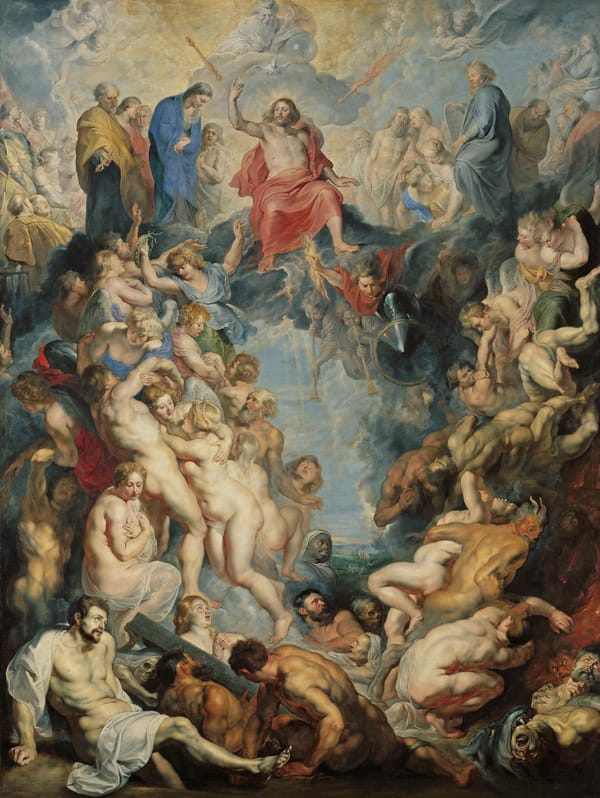
Peter Paul Rubens, The Great Last Judgement
Gold cross ornament
The Great Last Judgement, Peter Paul Rubens (1577–1640), c. 1617. Credits

The First Sunday of Advent

This Sunday, the first of the ecclesiastical year, is called, in the chronicles and charts of the middle ages, Ad te levavi Sunday, from the first words of the Introit; or, Aspiciens a longe, from the first words of one of the responsories of Matins.

The Station* is at St. Mary Major’s. It is under the auspices of Mary—in the splendid basilica which possesses the crib of Bethlehem, and is therefore called, in ancient documents, St. Mary’s ad Præsepe—that the Roman Church recommences, each year, the sacred cycle. It would have been impossible to select a place more suitable than this for saluting the approach of the divine birth, which is to gladden heaven and earth, and manifest the sublime portent of a Virgin Mother. Let us go in spirit to this august temple, and unite in the prayers which are there being offered up: they are the very ones we also use, and which we will now explain.

In the night Office, the Church commences the reading of the Book of Isaias, who, of all the Prophets, has the most distinctly and explicitly foretold the Messias; and she continues this same Book until Christmas day inclusively. Let us strive to enter into the teaching of the holy prophet, and let the eye of our faith affectionately recognize the promised Saviour in the descriptions, sometimes consoling and sometimes terrifying, under which Isaias depicts Him.

The first words of the Church, in the still midnight, are these:

Regem venturum Dominum, venite, adoremus.
Come, let us adore the King our Lord, who is to come.

This first duty of adoration complied with, let us listen to the oracle of the prophet Isaias, delivered to us by the holy Church.

Incipit liber Isaiæ Prophetæ.
Cap. i
Visio Isaiæ filii Amos, quam vidit super Judam et Jerusalem, in diebus Oziæ, Joathan, Achaz, et Ezechiæ regum Juda. Audite, cœli, et auribus percipe, terra; quoniam Dominus locutus est: Filios enutrivi et exaltavi: ipsi autem spreverunt me. Cognovit bos possessorem suum, et asinus præsepe Domini sui: Israel autem me non cognovit, et populus meus non intellexit. Væ genti peccatrici, populo gravi iniquitate, semini nequam, filiis sceleratis. Dereliquerunt Dominum, blasphemaverunt Sanctum Israel, abalienati sunt retrorsum. Super quo percutiam vos ultra, addentes praevaricationem? Omne caput languidum, et omne cor mærens. A planta pedis usque ad verticem non est in eo sanitas: vulnus, et livor et plaga tumens, non est circumligata, nec curata medicamine, neque fota oleo.
Beginning of the Book of the Prophet Isaias.
Ch. i.
The vision of Isaias, the son of Amos, which he saw concerning Juda and Jerusalem, in the days of Ozias, Joathan, Achaz, and Ezechias, kings of Juda. Hear, O ye heavens, and give ear, O earth, for the Lord hath spoken: I have brought up children, and exalted them: but they have despised me. The ox knoweth his owner, and the ass his master’s crib: but Israel hath not known me, and my people hath not understood. Woe to the sinful nation, a people laden with iniquity, a wicked seed, ungracious children. They have forsaken the Lord, they have blasphemed the holy One of Israel, they are gone away backwards. For what shall I strike you any more, you that increase transgression? The whole head is sick, and the whole heart is sad. From the sole of the foot unto the top of the head, there is no soundness therein; wounds, and bruises, and swelling sores; they are not bound up, nor dressed, nor fomented with oil.

These words of the holy prophet, or rather of God who speaks to us by the prophet, should make a deep impression on the children of the Church, at this opening of the holy period of Advent. Who could hear without trembling this voice of our Lord, who is despised and unknown even at the very time when He is coming to visit His people? Lest men should be terrified at the splendour of His majesty, He divested Himself of it; and far from acknowledging the divine power of Him who thus humbled Himself out of love to them, these men have refused even to know Him; and the crib where He lay after His birth, had, at first, but two dumb animals to honour or notice it. Do you feel, Christians, how just are the complaints which your God here makes? And how your indifference for all His love is an insult? He calls heaven and earth to witness; He utters anathema against the sinful nation, His ungrateful children. Let us honestly confess that we, too, have not known the value of our Jesus’ visit to us, and that we have but too faithfully imitated the obduracy of the Jews, who heeded not the bright light when it burst upon their darkness. In vain did the angels sing on that December night; in vain did shepherds receive and welcome the invitation to adore the Babe and know Him; in vain did the Magi come from the east, asking where they were to find the crib of the King that was born. At this last example, the city of Jerusalem was somewhat moved; but the astonishment was only for a moment, and the old indifference soon stifled the good tidings.

Thus it is, O Jesus, that Thou comest unto darkness, and darkness does not comprehend Thee. We beseech Thee, let our darkness comprehend the light, and desire it. The day will come when Thou wilt disperse the spiritual and voluntary darkness of men by the awful light of Thy justice. Thy glory, O sovereign Judge, will be magnificent on that day, and we love to think upon Thy having it: but during these days of our life on earth, deliver us from Thy wrath. We are one great wound from the sole of the foot unto the top of the head; Thou knowest not where to strike: be, then, a Saviour, O Jesus, in this coming, for which we are now preparing. The whole head is sick, and the whole heart is sad: come, and raise up this head which shame and vile passions bow down to the earth. Come, and comfort this heart oppressed with sin and fear. We confess it, our wounds are deep and sore; come, thou good Samaritan, pour in Thy soothing oil and heal them.

The whole world is in expectation of its Redeemer; come, dear Jesus, show Thyself to it by granting it salvation. The Church, Thy bride, is now commencing another year, and her first word is to Thee, a word which she speaks in the anxious solicitude of a mother for the safety of her children; she cries out to Thee, saying: ‘Come!’ No, we will go no farther in our journey through the desert of this life without Thee, O Jesus! Time is passing quickly away from us; our day is perhaps far spent, and the shades of our life’s night are fast coming on; arise, O divine Sun of justice. Come! guide our steps and save us from eternal death.


The Mass

Introit

While the priest is approaching the altar, there to offer up the holy sacrifice, the Church opens her chants by this beautiful one, which so well expresses her confidence as the beloved bride of Jesus. Let us repeat it together with her, and let the heart be in harmony with our voice, for the Saviour comes to each of us in proportion to the earnestness of our longing for Him.

Ad te levavi animam meam: Deus meus, in te confido, non erubescam; neque irrideant me inimici mei, etenim universi qui te exspectant non confundentur.
Ps. Vias tuas, Domine, demonstra mihi: et semitas tuas edoce me.℣. Gloria Patri, et Filio, et Spiritui sancto. Sicut erat in principio, et nunc, et semper, et in saecula saeculorum. Amen.
Repeat: Ad te levavi.
To thee have I lifted up my soul: in thee, O my God, I put my trust, let me not be ashamed: neither let my enemies laugh at me: for none of them that wait on thee shall be confounded.
Ps. Show, O Lord, thy ways to me, and teach me thy paths.℣. Glory be to the Father, and to the Son, and to the Holy Ghost. As it was in the beginning, is now, and ever shall be, world without end. Amen.
Repeat: To thee.

Collect

After the Kyrie eleison, the priest embodies in the following prayers, called on that account the Collects, all the desires and petitions of the Church for this first Sunday:

Excita, quæsumus, Domine, potentiam tuam et veni; ut ab imminentibus peccatorum nostrorum periculis, te mereamur protegente eripi, te liberante salvari. Qui vivis et regnas, Deus, per omnia saecula sæculorum.
Exert, we beseech thee, O Lord, thy power and come; that by thy protection we may be freed from the imminent dangers of our sins, and be saved by thy mercy; who livest and reignest God, world without end.

In honor of the Blessed Virgin Mary

It is right that we should also beg, during this holy season, the all-powerful mediation of her who, at first, was the sole depositary of the great secret which was to give life to the world. Let us then say with the priest:

Deus, qui de beatæ Mariæ Virginis utero, Verbum tuum, angelo nuntiante, carnem suscipere voluisti; præsta supplicibus tuis, ut qui vere eam Genitricem Dei credimus, ejus apud te intercessionibus adjuvemur.
O God, who wast pleased that thy Word, when the angel delivered his message, should take flesh in the womb of the blessed Virgin Mary; give ear to our humble petitions, and grant that we who believe her to be truly the Mother of God, may be helped by her prayers.

To this is immediately added one of the following prayers:

Against the persecutors of the Church

Ecclesiae tuæ, quæsumus, Domine, preces placatus admitte: ut, destructis adversitatibus et erroribus universis, secura tibi serviat libertate. Per Dominum.
Mercifully hear, we beseech thee, O Lord, the prayers of the Church: that, all oppositions and errors being removed, she may serve thee with a secure liberty. Through, &c.

For the Pope

Deus, omnium fidelium Pastor et Rector, famulum tuum Leonem quem pastorem Ecclesiæ tuæ præesse voluisti, propitius respice: da ei, quæsumus, verbo et exemplo, quibus præest, proficere: ut ad vitam, una cum grege sibi credito, perveniat sompiternam. Per Dominum.
O God, the Pastor and Ruler of all the faithful, look down, in thy mercy, on thy servant Leo, whom thou hast appointed Pastor over thy Church; and grant, we beseech thee, that both by word and example, he may edify all those that are under his charge; and with the flock entrusted to him, arrive at length at eternal happiness. Through, &c.

Epistle

Lectio Epistolæ beati Pauli Apostoli ad Romanos.
Cap. xiii.
Fratres, scientes quia hora est jam nos de somno surgere. Nunc enim propior est nostra salus, quam cum credidimus. Nox præcessit, dies autem appropinquavit. Abjiciamus ergo opera tenebrarum, et induamur arma lucis. Sicut in die honeste ambulemus: non in comessationibus et ebrietatibus, non in cubilibus et impudicitiis, non in contentione et æmulatione: sed induimini Dominum Jesum Christum.
Lesson of the Epistle of St. Paul the Apostle to the Romans.
Ch. xiii.
Brethren, know that it is now the hour for us to rise from sleep. For now our salvation is nearer than when we believed. The night is passed, and the day is at hand. Let us therefore east off the works of darkness, and put on the armour of light. Let us walk honestly, as in the day: not in rioting and drunkenness, not in chambering and impurities, not in contention and envy: but put ye on the Lord Jesus Christ.

The Saviour, then, who is coming to us is the clothing which we are to put on over our spiritual nakedness. Here let us admire the goodness of our God, who, remembering that man hid himself after his sin, because he was naked, vouchsafes Himself to become man’s clothing, and to cover with the robe of His Divinity the misery of human nature. Let us, therefore, be on the watch for the day and the hour when He will come to us, and take precautions against the drowsiness which comes of custom and self-indulgence. The light will soon appear; may its first rays be witness of our innocence, or at least of our repentance. If our Saviour is coming to put over our sins a covering which is to hide them for ever, the least that we, on our part, can do, is to retain no further affection for those sins, else it will be said of us that we refused our salvation. The last words of this Epistle are those which caught the eye of St. Augustine, when, after a long resistance to the grace which pressed him to give himself to God, he resolved to obey the voice which said to him: ‘Tolle lege; take and read.’ They decided his conversion; he immediately resolved to abandon the worldly life he had hitherto led, and to put on Christ Jesus. Let us begin this very day, and imitate this saint. Let us long for that dear and glorious clothing with which the mercy of our heavenly Father is so soon to cover us; and let us say with the Church these touching words, which we cannot repeat too often during this time of the year:

Gradual

Universi qui te exspectant, non confundentur, Domine.℣. Vias tuas, Domine, notas fac mihi: et semitas tuas edoce me. Alleluia, alleluia.℣. Ostende nobis, Domine, misericordiam tuam: et salutare tuum da nobis. Alleluia.
None of them that wait on thee shall be confounded, O Lord.℣. Show, O Lord, thy ways to me: and teach me thy paths. Alleluia, alleluia.℣. Show us, O Lord, thy mercy: and grant us thy salvation. Alleluia.

Gospel

Sequentia sancti Evangelii secundum Lucam.
Cap. xxi.
In illo tempore: Dixit Jesus discipulis suis: Erunt signa in sole, et luna, et stellis; et in terris pressura gentium præ confusione sonitus maris et fluctuum: arescentibus hominibus præ timore et exspectatione, quæ supervenient universo orbi: nam virtutes cœlorum movebuntur; et tunc videbunt Filium hominis venientem in nube cum potestate magna et majestate. His autem fieri incipientibus, respicite et levate capita vestra; quoniam appropinquat redemptio vestra. Et dixit illis similitudinem: Videte ficulneam, et omnes arbores: cum producunt jam ex se fructum, scitis quoniam prope est aestas. Ita et vos cum videritis hæc fleri, scitote quoniam prope est regnum Dei. Amen dico vobis: quia non praeteribit generatio hæc, donec omnia fiant. Cœlum et terra transibunt: verba autem mea non transibunt.
Sequel of the holy Gospel according to Luke.
Ch. xxi.
At that time: Jesus said to his disciples: There shall be signs in the sun, and in the moon, and in the stars; and upon the earth distress of nations, by reason of the confusion of the roaring of the sea, and of the waves; men withering away for fear, and expectation of what shall come upon the whole world: for the powers of the heavens shall be moved; and then they shall see the Son of Man coming in a cloud with great power and majesty. But when these things begin to come to pass look up, and lift up your heads; because your redemption is at hand. And he spoke to them a similitude: See the fig-tree and all the trees; when they now shoot forth their fruit, you know that summer is nigh. So you also, when you shall see these things come to pass, know that the kingdom of God is at hand. Amen, I say to you, this generation shall not pass away till all things be fulfilled. Heaven and earth shall pass away; but my words shall not pass away.

Thou art to come, then, O Jesus, in all the terror of the last judgement, and when men least expect Thee. In a few days Thou art coming to us to clothe our misery with the garment of Thy mercy; a garment of glory and immortality to us; but Thou art to come again on a future day, and in such dread majesty that men will wither away with fear. O my Saviour! condemn me not on that day of the world’s destruction. Visit me now in Thy love and mercy; I am resolved to prepare my soul. I desire that Thou shouldst come and be born within me, so that when the convulsions of nature warn me of Thy coming to judge me, I may lift up my head as Thou biddest Thy faithful disciples do, who, when the rest of men shall tremble at the thunder of Thy judgement, will have confidence in Thee, because they have Thee in their hearts.

Offertory

During the offering of the bread and wine, the Church, with her look steadfastly fixed on Him who is to come, keeps to her sweet canticle:

Ad te levavi animam meam: Deus meus, in te confido, non erubescam; neque irrideant me inimici mei: etenim universi, qui te exspectant, non confundentur.
To thee, O Lord, have I lifted up my soul: in thee, O my God, I put my trust, let me not be ashamed; neither let my enemies laugh at me: for none of them that wait on thee shall be confounded.

Secret

After the oblation, she silently presents to God the petitions of all her children by the following prayers:

Hæc sacra nos, Domine, potenti virtute mundatos, ad suum faciant puriores venire principium. Per Dominum.
Grant, O Lord, that these sacred mysteries may cleanse us by their powerful virtue, and bring us with greater purity to him, who was the author and institutor of them. Through, &c.

In honor of the Blessed Virgin

In mentibus nostris, quæsumus, Domine, veræ fidei sacramenta confirma; ut qui conceptum de Virgine Deum verum et hominem confitemur, per ejus salutiferae Resurrectionis potentiam, ad æternam mercamur pervenire lætitiam.
Strengthen, we beseech thee, O Lord, in our souls the mysteries of the true faith: that we who confess him that was conceived of a Virgin, to be true God and true man, may, by the power of his saving Resurrection, deserve to come to eternal joys.

Against the Persecutors of the Church

Protege nos, Domine, tuis mysteriis servientes; ut divinis rebus inhærentcs, et corpore tibi famulemur et mente. Per Dominum.
Protect us, O Lord, while we assist at thy sacred mysteries: that being employed in acts of religion, we may serve thee both in body and mind. Through, &c.

For the Pope

Oblatis, quæsumus, Domine, placare muneribus: et famulum tuum Leonem quem Pastorem Ecclesiæ tuæ præesse voluisti, assidua protectione guberna. Per Dominum.
Be appeased, O Lord, with the offering we have made: and cease not to protect thy servant Leo, whom thou hast been pleased to appoint Pastor over thy Church. Through, &c.

Communion

After the Communion of the priest and people, the choir sings these beautiful words of David in praise of the sweetness of the divine Fruit, whom our earth is going to bring forth, and who has just given Himself, by anticipation, to His faithful servants. This earth, which is ours, and which, as the prophet Isaias says, opens and buds forth the Saviour, is the blessed Virgin Mary made fruitful by the dew of heaven.

Dominus dabit benignitatem: et terra nostra dabit fructum suum.
The Lord will give his goodness: and our earth shall yield her fruit.

Postcommunion

Then follow the concluding prayers of thanksgiving.

Suscipiamus, Domine, misericordiam tuam in medio templi tui: ut reparationis nostræ ventura solemnia congruis honoribus præcedamus. Per Dominum.
May we receive, O Lord, thy mercy in the midst of thy temple: that with due honour we may prepare for the approaching solemnity of our reparation. Through, &c.

In honor of the Blessed Virgin

Gratiam tuam, quæsumus, Domine, mentibus nostris infunde, ut qui, angelo nuntiante, Christi Filii tui Incarnationem cognovimus, per Passionem ejus et crucem ad Resurrectionis gloriam perducamur.

Pour forth, we beseech thee, O Lord, thy grace into our hearts, that we to whom the Incarnation of Christ thy Son was made known by the message of an angel, may, by his Passion and cross, be brought to the glory of his Resurrection.

Against the Persecutors of the Church

Quæsumus, Domine Deus noster: ut quos divina tribuis participatione gaudere, humanis non sinas subjacere periculis.
We beseech thee, O Lord our God, not to leave exposed to the dangers of human life those whom thou hast permitted to partake of these.

For the Pope

Hæc nos, quæsumus Domine, divini sacramenti perceptio protegat: et famulum tuum Leonem quem Pastorem Ecclesiæ tuæ præesse voluisti, una cum commisso sibi grege salvet semper et muniat. Per Dominum.
May the participation of this divine Sacrament protect us, we beseech thee, O Lord; and always procure safety and defence to thy servant Leo, whom thou hast appointed Pastor over thy Church, together with the flock committed to his charge. Through, &c.

Vespers

The psalms of the Sunday are given above, page 101. The choir chants, with each psalm, one of the five following antiphons:

1. Ant. In illa die stillabunt montes dulcedinem, et colles fluent lac et mel, alleluia.
2. Ant. Jucundare filia Sion, et exsulta satis, filia Jerusalem, alleluia.
3. Ant. Ecce Dominus veniet, et omnes sancti ejus eum eo: et erit in die illa lux magna, alleluia.
4. Ant. Omnes sitientes, venite ad aquas: quaerite Dominum, dum inveniri potest, alleluia.
5. Ant. Ecce veniet Propheta magnus, et ipse renovabit Jerusalem, alleluia.
1. Ant. On that day the mountains shall drop sweetness, and the hills shall flow with milk and honey, alleluia.
2. Ant. Be glad, O daughter of Sion; and rejoice exceedingly, O daughter of Jerusalem, alleluia.
3. Ant. Behold the Lord will come, and all his saints with him: and there shall be a great light on that day, alleluia.
4. Ant. O all you that thirst, come to the waters: seek the Lord, while he may be found, alleluia.
5. Ant. Behold the great Prophet will come, and he himself will renew Jerusalem, alleluia.

Chapter

Rom. xiii. 11.

Fratres, hora est jam nos de somno surgere. Nunc enim propior est nostra salus, quam cum credidimus.
Brethren, it is now the hour for us to rise from sleep. For now our salvation is nearer than when we believed.

The hymn, Creator alme siderum, the verse Rorate and the canticle Magnificat, are given on pages 107 and 109.


Antiphon of the Magnificat

Ne timeas, Maria; invenisti enim gratiam apud Dominum: ecce concipies, et paries Filium, alleluia.
Fear not, Mary; for thou hast found favour with the Lord: behold thou shalt conceive, and bring forth a Son, alleluia.

Collect

Excita, quæsumus, Domine, potentiam tuam et veni: ut ab imminentibus peccatorum nostrorum periculis, te mereamur protegente eripi, te liberante salvari. Qui vivis et regnas cum Deo Patre in unitate Spiritus sancti Deus, per omnia sæcula sæculorum. ℟. Amen.
Exert, we beseech thee, O Lord, thy power and come; that by thy protection we may be freed from the imminent dangers of our sins, and be saved by thy mercy. Who livest and reignest with God the Father, in the unity of the Holy Ghost, God, world without end. ℟. Amen.

* The Stations marked in the Roman missal for certain days in the year, were formerly processions, in which the whole clergy and people went to some given church, and there celebrated the Office and Mass. This usage, which dates from the earliest period of the Roman Church, and of which St. Gregory the Great was but the restorer, still exists, at least in a measure; for the Stations are still observed, though with less solemnity and concourse of people, on all the days specified in the missal. ↩︎


December 1

The Church of Rome does not keep this day as a feast of any saint; she simply recites the Office of the feria, unless it happen that the first Sunday of Advent fall on this first day of the month, in which case the Office of that Sunday is celebrated, as given above in the Proper of the Time.

But should this first day of December be a simple feria of Advent, we shall do well to begin at once our considerations upon the preparations which were made for the merciful coming of the Saviour of the world.

Four thousand years of expectation preceded that coming, and they are expressed by the four weeks of Advent, which we must spend before we come to the glorious festivity of our Lord’s Nativity. Let us reflect upon the holy impatience of the saints of the old Testament, and how they handed down, from age to age, the grand hope, which was to be but hope to them, since they were not to see it realized. Let us follow, in thought, the long succession of the witnesses of the promise: Adam, and the first patriarchs, who lived before the deluge; then, Noah, Abraham, Isaac, Jacob, and the twelve patriarchs of the Hebrew people; then Moses, Samuel, David, and Solomon; then, the prophets and the Machabees; and, at last, John the Baptist and his disciples. These are the holy ancestors, of whom the Book of Ecclesiasticus speaks, where it says: ‘Let us praise men of renown, and our fathers in their generation’:1 and of whom the apostle thus speaks to the Hebrews: ‘All these being approved by the testimony of faith, received not the promise; God providing some better thing for us, that they should not be perfected without us their faith was tried and approved, and yet they received not the object of the promises made to them. It is for us that God had reserved the stupendous gift, and therefore He did not permit them to attain the object of their desires.2

Let us honour them for their faith; let us honour them as our veritable fathers, since it is in reward of their faith, that our Lord remembered and fulfilled His merciful promise; let us honour them, too, as the ancestors of the Messias in the flesh. We may imagine each of them saying, as he lay on his dying bed, this solemn prayer to Him who alone could conquer death: ‘I will look for Thy Salvation, O Lord!’ It was the exclamation of Jacob, at his last hour, when he was pronouncing his prophetic blessings on his children: ‘and then,’ says the Scripture, ‘he drew up his feet upon his bed, and died, and he was gathered unto his people.’3

Thus did all these holy men, on quitting this life, go to await, far from the abode of eternal fight, Him who was to come in due time and reopen the gate of heaven. Let us contemplate them in this place of expectation, and give our grateful thanks to God, who has brought us to His admirable light, without requiring us to pass through a limbo of darkness. It is our duty to pray ardently for the coming of the Deliverer, who will break down, by His cross, the gates of the prison, and will fill it with the brightness of His glory. During this holy season, the Church is continually borrowing the fervent expressions of these fathers of the Christian people, making them her own prayer for the Messias to come. Let us turn to those great saints, and beg of them to pray, that our work of preparation for Jesus’ coming to our hearts may be blessed by God.

We will make use, for this end, of the beautiful hymn wherein the Greek Church celebrates the memory of all the saints of the old Testament, on the Sunday immediately preceding the feast of Christmas.

Hymn for the Feast of the Holy Fathers
(Taken from the Menæa of the Greeks)

Avorum hodie, fideles, perficientes memorias, rehymnificemus Christum Redemptorem, qui illos magnificavit in omnibus gentibus, et qui incredibilia in eis per fidem operatus est; Dominum, utpote fortem et potentem; et ex illis manifestavit virgam potentiae nobis, unicam virum nescientem et Deiparam, Mariam castam, ex qua flos prodiit, Christus germinans omnibus vitam, et salutem aeternam.
Tu es qui sanctos pueros ex igne liberasti, Domine, et ex ore leonum Daniel; qui Abraham benedixisti, et Isaac servum tuum, et filium ejus Jacob; qui dignatus es ex illorum semine nasci apud nos, ut prius lapsos salvares proavos nostros, crucifigi autem et sepeliri; et rupisti mortis vincula, et consurgere facis omnes qui a saeculo inter mortuos erant, adorantes tuum, Christe, regnum aeternum.
Adam primum veneremur, manu honoratum Creatoris et omnium nostrum proavum, jam nunc habitantem in cœlestibus tabernaculis, inter sanctos electos quiescentem.
Abel dona proferentem mente generosa, admisit omnium Deus et Dominus; eumque homicida olim manu peremptum, in altum recepit ad lumen, ut divinum martyrem.
Canitur in mundo Seth pro suo erga Creatorem ardore: nam in irreprehensibili vitæ ratione et animæ dispositione illum vere sanavit; et in regione vivorum clamat: Sanctus es, Domine.
Ore et lingua et corde Enos admirabilis cognominatus prophetice, in omnium Dominum speravit in spiritu, et optime vita in terris acta, gloriosus decessit.
Sacris eloquiis et orationibus Henoch beatum prædicemus; qui, cum Deo placuisset, translatus est in gloriam, visus, ut fertur, mortem superasse, sicut Dei servus fidelissimus.
Laudem proferamus Deo, honorantes melodiis Noe, qui fuit justus: in omnibus enim divinis mandatis ornatus, visus est Christo beneplacitus; cui canamus cum fide: Gloria virtuti tuæ, Domine.
Videns tuam Deus nobilem indolem et mentis tuæ sinceritatem, et te in omnibus, Noe, perfectum, secundi mundi ducem te signat, salvantem ex omni genere contra diluvium, sensibile semen, ut ipse mandaverat.
Noe, Dei legem incorruptam servantem, justum que inventum in generatione sua, et qui lignea salvavit olim in arca irrationabilia genera, ordinatione omnimoda, beatum piis prædicemus hymnis.
Vinum compunctionis nobis scaturire facit honorantibus te, Noe beate, memoria tua, lætificans et animas et corda undique beatificantium sincere mores tuos honestos, et divinam agendi rationem.
Laudibus honoretur Sem, qui fructificare fecit paternam benedictionem, et ante Deum placidus demonstratus, et proavorum choris adscriptus, et in regione vivorum laetantissime requiescens.
Videre meruit, tamquam Dei amicus, Abraham diem Creatoris sui, plenus factus lætitiæ paternæ; hunc ergo recto corde honorantes, beatum dicamus omnes, ut Dei fidelem servum.
Vidisti, ut homini videre fas est, Trinitatem, et illam hospitatus es: unde mercedem recepisti hospitalitatis, factus immensarum gentium in fide pater.
Typus Christi passionis factus es sapienter, Isaac beatissime, patris bona fide ad immolandum adducte: ideoque beatus effectus es et amicus Dei visus es fidelissimus, et cum omnibus justis sedem consecutus es.
Visus est Jacob omnium Dei servorum fidelissimus: ideoque pugnavit cum angelo, in mente videns Deum, et nomen mutavit, dormiensque divinam contemplatus est scalam, cui insidebat Deus, carni in bonitate sua adhærens.
Patris obedientiam cum amore amplectens Joseph in puteum demissus, tamquam illius prototypus venditur qui immolatus est, et in puteum demissus est Christus; et Ægypto frumenta distribuens monstratus est, sapiens et justus effectus, rexque concupiscentiarum verissimus.
Legitime incessantium certamini tentationum luctatus, celebratus est Job Dei servus verissimus, mitis, vir sine malitia, rectus, perfectus, irreprehensibilis, clamans: Benedictus es, Deus.
In fide Moysen Aaronque et Hor honoremus, adhuc celebrantes Josue et Levi sanctissimum, Gedeonque et Samson, et clamemus: Deus patrum, benedictus es.
Phalangem Deo gratam divinorum patrum celebremus, Baruch et Nathan, et Eleazarum, Josiam et David, Jephte, Samuel qui anteacta videbat, et clamabat: Benedicat omnis creatura Dominum.
Laudem melodiæ Dei prophetis feramus, celebrantes Osee, Michæam, Sophoniam et Habacuc, Zachariam, Jonam, Aggæum et Amos, et cum Abdia, Malachia, Nahum, Isaiam, et Jeremiam, et Ezechiel, et simul Daniel, Eliam et Elisæum.
Fortitudine tua, Domine, virtutes operatæ sunt sorores nostrae Anna, Judith et Debbora, Olda, Jahelque, et Esther, Sara, Maria Moysis, et Rachel, et Rebecca, et Ruth, magnanimes.
Venite omnes, cum fide panegyrim dicamus patribus ante Legem: Abrahæ, et eorum qui cum illo sunt festivam memoriam celebremus; Judæ tribum digne honoremus; juvenes in Babylone qui flammam in camino exstinxerunt, ut Trinitatis typum, cum Daniele celebremus; prophetarum vaticinia tuto servantes, cum Isaia magna voce clamemus: Ecce Virgo in utero concipiet et pariet Filium, Emmanuel, quod est, Nobiscum Deus.
Celebrating, O ye faithful, on this day, the memory of the ancient fathers, let us sing a new hymn to our Redeemer Christ, who magnified them in all nations, and worked incredible things in them by faith, for he is the strong and mighty Lord. By them did he manifest to us the sceptre of his power, the unparalleled Virgin-Mother of God, the chaste Mary, from whom came Christ, the Flower that buds forth life and eternal salvation to all.
It is thou, O Lord, that didst deliver the holy children from the furnace, and Daniel from the mouth of the lions; that didst bless Abraham, and Isaac thy servant, and Jacob his son: that didst vouchsafe to be born among us from their seed, so to save our first parents who had fallen, and to be crucified and buried; that didst break the bonds of death, and gavest resurrection to all them who had died from the beginning, and who adored, O Christ, thy eternal kingdom.
And first let us venerate Adam, who was honoured by the Creator’s hand, and was the first father of us all: who now dwells in the heavenly tabernacles, and rests amidst the holy elect.
The God and the Lord of all things received Abel, who offered his gifts with a generous heart; and took him into the heavenly light as a divine martyr, when he was slain by the murderer’s hand.
Seth is celebrated throughout the world for his ardour towards the Creator: who saved him for his irreproachable life and this holy disposition of mind; and now, in the region of the living, he sings: Holy art thou, O Lord!
Enos, prophetically called the admirable, for his words and voice and heart, hoped in spirit in the Lord of all, and after a life spent on earth in exceeding goodness, he departed full of glory.
Let us praise, in our sacred canticles and prayers, the blessed Henoch; who, when he had pleased God, was translated to glory, and, as became so faithful a servant of God, without being overcome by death, as it is written of him.
Let us give praise to God by celebrating, with our hymns, Noah, who was just: in all things, God honoured him with his divine commands, and he was well pleasing to Christ, to whom let us sing with faith: Glory be to thy power, O Lord!
God, seeing thy noble heart, and the sincerity of thy mind, and how in all things thou wast perfect, O Noah, makes thee the father of the second world, and bids thee save from the deluge a remnant of every species of animal.
Let us in our holy hymns praise Noah, who kept the law of God without reproof, and was found just in his generation, and who, by an admirable arrangement, saved, in the wooden ark, all the brute creation.
Thy memory, O blessed Noah, fills us with the wine of compunction, which gladdens our souls and hearts, whilst we devoutly extol thy holy life and thy divine manner of acting.
Sem is worthy of our praise, who brought forth plentiful fruit from his father’s blessing, and by his meekness found favour with God, and was numbered in the choir of the fathers, and now rests in perfect joy in the land of the living.
Abraham merited, as the friend of God, to see the day of his Creator, and was filled with the joy promised to the fathers: him, therefore, let us honour with sincere devotion, and let us all proclaim him the blessed Abraham, God’s faithful servant.
Thou didst see, as far as it is permitted man to see, the Trinity, and thou didst make it thy guest: wherefore thou receivedst the reward of thy hospitality, and wast made the father, in the faith, of countless nations.
Most blessed Isaac, the divine wisdom made thee the type of Jesus in his Passion, when thy father’s sublime faith led thee to the sacrifice: therefore art thou blest, and loved of God as a most faithful friend, and seated on a throne with all the just.
Of all the servants of God Jacob was the most faithful: therefore is it that he wrestled with the angel, seeing God in spirit, and his name was changed; and as he slept, he beheld the divine ladder, on which God was leaning; it was God, assuming to himself, in his mercy, human flesh.
Joseph, when he lovingly obeyed his father, was let down into a well and sold, and was the prototype of him that was sacrificed, and thrown down into a pit. He gave corn to Egypt and saved it; he was wise and just, and a most true king over his passions.
Job lawfully endured the combat of ceaseless temptations, and deserves to be praised; he was God’s most true servant, he was meek, and a man without guile, upright, perfect, without reproof, ever saying: Blessed art thou, O God!
Let us faithfully honour Moses, and Aaron, and Hor: let us commemorate Josue, and the most holy Levi, and Gedeon, and Samson; and let us sing: Blessed art thou, O God of our fathers!
Let us celebrate the memory of that group of fathers so loved of God, Baruch and Nathan and Eleazar; Josias, David, Jephte, and Samuel who had the vision of what had passed, and cried out: Let every creature bless the Lord!
Let our melodies praise God’s prophets, celebrating Osee, Micheas, Sophonias, Habacuc, Zacharias, Jonas, Aggeus, Amos, Abdias, Malachias, Nahum, Isaias, Jeremias, Ezechiel, Daniel, Elias, Eliseus.
By thy power, O Lord, virtuous exploits were achieved by those magnanimous women, our sisters, Anna, Judith, Debbora, Olda, Jahel, Esther, Sara, Mary, sister of Moses, Rachel, Rebecca and Ruth.
Come, all ye people, let us, with faith, give praise to the fathers who were before the Law; let us celebrate the festive memory of Abraham and them that are with him; let us give due honour to the tribe of Juda; let us celebrate the children who quenched the fiery furnace in Babylon, the blessed three, the type of the Trinity, and with them Daniel; let us hold fast to the oracles of the prophets, and with Isaias sing with a loud voice: Lo! a Virgin shall conceive in her womb and shall bring forth a Son, Emmanuel, that is, God with us.

A responsory for Advent
(The Roman breviary, first Sunday of Advent, at Matins)

℟. Adspiciens a longe, ecco video potentiam Dei venientem et nebulam totam terram tegentem: * Ite obviam ei, et dicite: * Nuncia nobis si tu es ipse, * Qui regnaturus es in populo Israel.℣. Quique terrigenæ et filii hominum, simul in unum dives et pauper,* Ite obviam ei et dicite,℣. Qui regis Israel intende, qui deducis velut ovem Joseph,* Nuncia nobis si tu es ipse.℣. Tollite portas, principes, vestras, et elevamini, portæ ætern ales, et introibit Rex gloriæ.* Qui regnaturus es in populo Israel.
℟. Looking afar off, lo! I see the power of God coming and a cloud that covereth the whole earth: * Go ye out to meet him and say: Tell us, if thou be he, * Who art to rule over the people of Israel.℣. All ye that are earthborn and children of men, both rich and poor together,* Go ye out to meet him, and say:℣. Give ear, O thou that rulest Israel, thou that leadest Joseph like a sheep,* Tell us if thou be he.℣. Lift up your gates, O ye princes; and be ye lifted up, O eternal gates: and the King of glory shall enter in.* Who art to rule over the people of Israel.

  1. Ecclus. xliv. 1. ↩︎
  2. Heb. xi. 39, 40. ↩︎
  3. Gen. xlix. 32. ↩︎
Previous
November 30: St. Andrew, Apostle (at the end of the year)
Next
December 1