lyp.network

Daily reading

Semidouble · December 11 · Sanctoral

December 11, 2019

From Dom Guéranger’s The Liturgical Year.

A Semidouble leads the weekday.Rubric

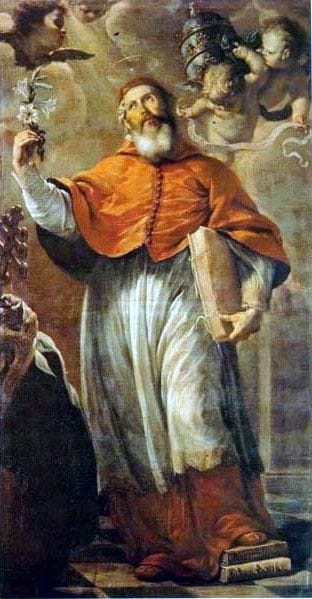
December 11: Saint Damasus, Pope and Confessor

This great Pontiff comes before us in the liturgical year, not to bring us tidings of peace as St. Melchiades did, but as one of the most illustrious defenders of the great mystery of the Incarnation. He defends the faith of the universal Church in the divinity of the Word, by condemning, as his predecessor Liberius had done, the acts and the authors of the celebrated Council of Rimini. With his sovereign authority, he bore witness to the teaching of the Church regarding the Humanity of Jesus Christ, and condemned the heretic Apollinaris, who taught that Jesus Christ had assumed only the flesh and not the soul of man. He commissioned St. Jerome to make a new translation of the new Testament from the Greek, for the use of the Church of Rome; here, again, giving a further proof of the faith and love which he bore to the Incarnate Word. Let us honour this great Pontiff, whom the Council of Chalcedon calls ‘the ornament and support of Rome by his piety.’ St. Jerome, too, who looked upon St. Damasus as his friend and patron, calls him ‘a man of the greatest worth; a man whose equal could not be found, well versed in the holy Scriptures, and a virgin doctor of the virgin Church.’ The legend of the breviary gives us a brief account of his life.

Prose
(Taken from the Cluny missal of 1523)

Damasus Hispanus, vir egregius et eruditus in Scripturis, indicto primo Constantinopolitano Concilio, nefariam Eunomii et Macedonii hæresim exstinxit. Idem Ariminensem conventum a Liberio jam ante rejectum, iterum condemnavit: in quo, ut scribit Sanctus Hieronymus, Valentis potissimum et Ursacii fraudibus damnatio Nicenæ fidei conclamata fuit, et ingemiscens orbis terrarum, se Arianum esse miratus est.
Basilicas duas ædificavit; alteram Sancti Laurentii nomine ad theatrum Pompeii, quam maximis muneribus auxit, eique domos, et prædia attribuit: alteram via Ardeatina ad Catacumbas. Platoniam etiam, ubi corpora sanctorum Petri et Pauli aliquandiu jacuerunt, dedicavit, et exornavit elegantibus versibus. Idemque prosa, et versu scripsit de virginitate, multaque alia metro edidit.
Pœnam talionis constituit iis, qui alterum falsi criminis accusassent. Statuit, ut quod pluribus jam locis erat in usu, psalmi per omnes ecclesias die noctuque ab alternis canerentur; et in fine cujusque psalmi diceretur: Gloria Patri, et Filio, et Spiritui sancto. Ejus jussu sanctus Hieronymus novum Testamentum Græcæ fidei reddidit. Quum Ecclesiam rexisset annos decem et septem, menses duos, dies viginti sex, et habuisset ordinationes quinque mense Decembri, quibus creavit presbyteros triginta unum, diaconos undecim, episcopos per diversa loca sexaginta duos; virtute, doctrina, ac prudentia clarus, prope octogenarius, Theodosio seniore imperante, obdormivit in Domino, et via Ardeatina una cum matre et sorore sepultus est in basilica, quam ipse ædificaverat. Illius reliquiae postea translatae sunt in ecclesiam sancti Laurentii, ab ejus nomine in Damaso vocatam.
Damasus was a Spaniard, a man of highest worth, and learned in the Scriptures. He called the first Council of Constantinople, in which he condemned the impious heresy of Eunomius and Macedonius. He also condemned the Council of Rimini, which had already been rejected by Liberius, inasmuch as it was in this assembly of Rimini, as St. Jerome tells us, that mainly by the craft of Valens and Ursacius, was published a condemnation of the faith which had been taught by the Nicene Council, and thus the whole world grieved to find itself made Arian.
He built two basilicas; one dedicated to St. Laurence, near Pompey’s theatre, and this he endowed with magnificent presents, with houses and with lands: the other, on the Ardeatine Way, at the Catacombs. The bodies of SS. Peter and Paul lay for some time in a place richly adorned with marbles; this place he dedicated, and composed for it several inscriptions in beautiful verses. He also wrote on virginity, both in prose and verse, and several other poems.
He established the law of retaliation for cases of false accusation. He decreed that, as was the custom in many places, the psalms should be sung in all churches in alternate choirs, day and night; and that at the end of each psalm, there should be added: ‘Glory be to the Father, and to the Son, and to the Holy Ghost.’ It was by his order that St. Jerome translated the new Testament from the Greek text. He governed the Church seventeen years, two months, and twenty-six days; and five times during this period, he gave ordinations, in the month of December, to thirty-one priests, eleven deacons, and sixty two bishops, for divers places. Conspicuous for his virtue, learning, and prudence, and having lived little short of eighty years, he slept in the Lord, during the reign of Theodosius the Great. He was buried in the basilica which he had built on the Ardeatine Way, where also lay his mother and sister. His relics were afterwards translated to the church of Saint Laurence, called after him St. Laurence’s in Damaso.

Holy Pontiff Damasus! during thy life on earth, thou wast the light, which guided the children of the Church; for thou didst teach them the mystery of the Incarnation, and didst guard them against those perfidious doctrines, wherewith hell ever strives to corrupt that glorious symbol of our faith, which tells us of God’s infinite mercy towards us, and of the sublime dignity of man thus mercifully redeemed. Seated on the Chair of Peter, thou didst confirm thy brethren, and thy faith failed not; for Jesus had prayed to His Father for thee. We rejoice at the infinite recompense with which this divine Prince of pastors has rewarded the unsullied purity of thy faith, O thou ‘virgin doctor of the virgin Church!’ Oh that we could have a ray of that light which now enables thee to see Jesus in His glory! Pray for us, that we may have light to see Him, and know Him, and love Him, under the humble guise in which He is so soon to appear to us. Obtain for us the science of the sacred Scriptures, in which thou wast so great a master; and docility to the teachings of the Bishop of Rome, to whom, in the person of St. Peter, Christ has said: ‘Launch out into the deep!’*

Obtain also for all Christians, O thou the successor of this prince of the apostles, that they be animated with those sentiments, which St. Jerome thus describes in one of his letters addressed to thee: ‘It is the Chair of Peter that I will consult, for from it do I derive that faith which is the food of my soul. I will search for this precious pearl, heeding not the vast expanse of sea and land which I must pass over. Where the body is, there shall the eagles be gathered together. It is now in the west that the Sun of justice rises. I ask the Victim of salvation from the priest, and from the shepherd the protection of the sheep. On that rock I know the Church is built. He that eats the Lamb in any house but this, is profane. He that is not in Noah’s ark, shall perish in the waters of the deluge. I know not Vitalis, I reject Meletius, I pass by Paulinus. He that gathers not with thee, Damasus, scatters; for he that is not of Christ, is of Antichrist.’

Let us contemplate our divine Saviour in the womb of His most holy Mother Mary. Let us, together with the holy angels, adore Him in this state of profound humiliation, to which His love for us has brought Him. See Him there offering Himself to His Father for the redemption of mankind, and commencing at once to fulfil the office of our Mediator, which He has taken upon Himself. What an excess of love is this of our Jesus, that He is not satisfied with having humbled Himself in assuming our nature,though that alone would have sufficed to redeem a million worlds! The eternal Son of God wills to remain, as other children, nine months in His Mother’s womb: after that, to be born in poverty, to live a life of labour and suffering, and to be obedient to death, even to the death of the cross. O Jesus! mayst Thou be praised and loved by all creatures for this Thy immense love of us! Thou hast come down from heaven the Victim that art to take the place of all those which were hitherto offered, but which could not efface man’s sin. At length, the earth possesses its Saviour, though as yet unseen. God will not curse the earth, which, though covered with crime, is rich in such a treasure as this. Still repose, O Jesus, in the chaste womb of Mary, that living ark which contains the true manna sent for the food of man. But the time is approaching for Thee to leave this loved sanctuary. The tender love which Thou hast received from Mary, must be changed for the malice wherewith men will treat Thee; yet it must needs be that Thou be born on the day which Thou Thyself hast decreed: it is the will of Thy eternal Father, it is the expectation of the world, it is the salvation of all who shall love Thee.

Prose in Honor of the Blessed Virgin
(Taken from the Cluny missal of 1523)

Ave, mundi gloria, Virgo Mater Maria, Ave, benignissima.
Ave, plena gratia, Angelorum domina, Ave, praeclarissima.
Ave, decus virginum, Ave, salus hominum, Ave, potentissima.
Ave, Mater Domini, Genitrix Altissimi, Ave, prudentissima.
Ave, mater gloriæ, Mater indulgentiæ, Ave, beatissima.
Ave, vena veniæ, Fons misericordiæ, Ave, clementissima.
Ave, mater luminis, Ave, honor ætheris, Ave, porta cœlica, Ave, serenissima.
Ave, candens lilium, Ave, opobalsamum, Ave, fumi virgula, Ave, splendidissima.
Ave, mitis, Ave, dulcis, Ave, pia, Ave, læta, Ave, lucidissima.
Ave, porta, Ave, virga, Ave, rubus, Ave, vellus, Ave, felicissima.
Ave, clara cœli gemma, Ave, alma Christi cella, Ave, venustissima.
Ave, virga Jesse data, Ave, scala cœli facta, Ave, nobilissima.
Ave, stirpe generosa, Ave, prole gloriosa, Ave, fætu gaudiosa, Ave, excellentissima.
Ave, Virgo singularis, Ave, dulce salutaris, Ave, digna admirari, Ave, admirandissima.
Ave, turtur, tu quæ munda Castitate, sed fœcunda Charitate, tu columba, Ave, pudicissima.
Ave, mundi imperatrix, Ave, nostra mediatrix, Ave, mundi sublevatrix, Ave, nostrum gaudium. Amen.
Hail, thou glory of the world; hail, Virgin Mother; hail, most merciful Mary!
Hail, full of grace; hail, Queen of the angels; hail, most glorious Mary!
Hail, Virgin of virgins; hail, protectress of men; hail, most powerful Mary!
Hail, Mother of the Lord; hail, parent of the Most High; hail, most prudent Mary!
Hail, mother of glory; hail, mother of mercy; hail, most blessed Mary!
Hail, source of pardon; hail, fount of pity; hail, most clement Mary!
Hail, mother of light; hail, honour of the firmament; hail, gate of heaven; hail, most gentle Mary!
Hail, fair lily; hail, precious fragrance; hail, sweet incense; hail, most resplendent Mary!
Hail, O meek; hail, O sweet; hail, O merciful; hail, O joyous; hail, O most beautiful Mary!
Hail, gate of heaven; hail, branch prophetic; hail, flaming bush; hail, mystic fleece; hail, most happy Mary!
Hail, beautiful pearl of heaven; hail, fruitful abode of Christ; hail, most comely Mary!
Hail, branch of Jesse; hail, mystic ladder that reaches to heaven; hail, most noble Mary!
Hail, daughter of a kingly race; hail, Mother of a Son who is God; hail, full of joy at the birth of this Son; hail, unrivalled Mary!
Hail, peerless Virgin; hail, lovely source of our happiness; hail, wonderful in thy graces; hail, most admirable Mary!
Hail, spotless dove, pure in thy chastity, yet fruitful in charity; hail, immaculate Mary!
Hail, empress of the world; hail, mediatrix of men; hail, protectrix of the world; hail, joy of our hearts! Amen.

Prayer for the Time of Advent
(The Mozarabic breviary, Monday of the first week of Advent)

Nunciatum ecce vocem jucunditatis et lætitiæ, quam do tua, Christe, Incarnatione audivimus; ut in nobis dulciori efficiamus charitate fruentiores, imploramus tuae magnitudinis exspectantes potentiam; ut ita in nobis vocis hujus effectus usquequaque praepolleat, ut non confundamur in ea, quum manifestata nobis fuerit gloria tua. Amen.
The tidings we have heard of thy Incarnation, O Jesus, have filled us with gladness and joy. We beseech thee, grant that we, who are expecting the manifestation of thy power, may enjoy the abundant sweetness of charity; that thus corresponding to the grace of the mystery announced to us, we may not be confounded when thy glory shall appear to us. Amen.

* St. Luke v. 4. ↩︎


Wednesday of the Second Week of Advent

Regem venturum Dominum, venite, adoremus.De Isaia Propheta.
Cap. xvi.
Emitte Agnum Domine, dominatorem terræ, de petra deserti ad montem filiæ Sion. Et erit: sicut avis fugiens, et pulli de nido avolantes, sic erunt filiae Moab in transcensu Arnon. Ini consilium, coge concilium, pone quasi noctem umbram tuam in meridie: absconde fugientes, et vagos ne prodas. Habitabunt apud te profugi mei: Moab, esto latibulum eorum a facie vastatoris. Finitus est enim pulvis, consummatus est miser, defecit qui conculcabat terram. Et praeparabitur in misericordia solium, et sedebit super illud in veritate, in tabernaculo David, judicans et quaerens judicium, et velociter reddens quod justum est.
Come, let us adore the King our Lord, who is to come.From the Prophet Isaias.
Ch. xvi.
Send forth, O Lord, the Lamb, the ruler of the earth, from Petra of the desert to the mount of the daughter of Sion. And it shall come to pass, that as a bird fleeing away, and as young ones flying out of the nest, so shall the daughters of Moab be in the passage of Arnon. Take counsel, gather a council, make thy shadow as the night in the midday: hide them that flee, and betray not them that wander about. My fugitives shall dwell with thee: O Moab, be thou a covert to them from the face of the destroyer. For the dust is at an end, the wretch is consumed, he hath failed that trod the earth under foot. And a throne shall be prepared in mercy, and one shall sit upon it in truth in the tabernacle of David, judging and seeking judgement, and quickly rendering that which is just.

Send forth to us, O Lord, the Lamb: 'It is the Lamb,’ says Peter of Celles,' it is the Lamb we need, and not the Lion; the Lamb that knows no anger, and whose meekness is never ruffled; the Lamb that will give us His snow-white wool to warm our coldness, and cover our nakedness; the Lamb that will give us His flesh to eat, lest we faint with hunger on the way. Send Him full of wisdom, for in His divine prudence He will vanquish the spirit of pride; send full of strength, for it is written that the Lord is strong and mighty in battle; send Him full of meekness, for He is to come down as dew that falls on the fleece; send Him as a victim, for He is to be sold and immolated for our ransom; send Him the pardoner of sinners, for He is to come to call them, and not the just; send Him to receive power and divinity, for He is worthy to loose the seven seals of the sealed book, the unspeakable mystery of the Incarnation.’* Thou art King, then, O divine Lamb! Thou art even now, in thy Mother’s womb, the sovereign Ruler. This virginal womb is a throne of mercy whereon Thou art seated in humility, ready to avenge our rights and confound our cruel enemy. O most dear King! our eyes cannot yet behold Thee, but our hearts tell us Thou art near us. We know that it is for our sake that Thou hast put on this strange royalty. Suffer us to approach Thee, and offer Thee our homage and loyalty, even now that a cloud hides Thee from our sight. . A few days more, and Thou wilt be seated on another throne, Thy Mother’s arms, and then all the earth will see the salvation that is sent unto it.

Hymn taken from the Anthology of the Greeks

(December 20)

Spelunca, parare; Agna enim venit fœtum gerens Christum: recipe, præsepium, illum qui nos terrigenas verbo solvit ineffabili modo: pastores de nocte vigilantes, prodigiosum confitemini miraculum; magique e Perside aurum, thus et myrrham Regi afferte: quia visus est e Virgine matre Dominus, quem et ipsa prona servili modo, mater adoravit et ei quem in brachiis suis tenebat dixit: Quomodo in me inseminatus es: vel quomodo in me ingeneratus es, Salvator meus et Deus?
Audi cœlum, et intellige terra; ecce enim Filius Verbumque Dei Patris progreditur ad nascendum ex Virgine, inexperta virum, sine dolore illum pariente et virtute Spiritus sancti. Bethlehem parare: aperi januam, Eden, nam qui Est fit qui non erat, et plasturgus omnis creaturæ plasmatur ipse, afferens mundo magnam misericordiam.
Natura immense, Christe Rex, quomodo parva te recipiet spelunca? Quomodo præsepe te poterit continere, Jesu, ex Matre nesciente virum, advena factus in propria, ut hospites ipse salves?
Novum facta cœlum, Domina, e vulva tua, sicut e nebula Christum solem gloriae oriri facere festines in spelunca carnaliter, omnes terrae fines suis splendoribus fulgentissime irradiaturum, per incommensurabilem misericordiam.
Noscis nostrum dolorem et miseriam, misericors Christe, et nos non despicis; sed exinanis temctipsum, non adhuc egressus ex tua genitrice; tabernaculumque figens in matrice nuptinescia, quæ sine dolore te pariet in spelunca caro factum.
Montes et colles, valles et campi, populi et tribus, gentes ac omnis spiritus, alalagmum agite; lætitiæ divinæ venit plenitudo, omnium advenit redemptio, Verbum Dei tempora nesciens per misericordiam factum sub tempore.
Vitis divina incorruptam maturitate nigrescere faciens uvam, appropinquat: paritura venit lætitiæ vinum scaturiens et nos bibere faciens ipsi canentes: Deus noster, benedictus es!
Myrotheca divina, intus myrum ferens graditur, ut in spelunca Bethlehem effundat illud a quo mystico replentur odore canentes: Deus patrum, benedictus es!
Forceps quam olim vidit Isaias propheta, divinum carbonem Christum in utero geris omnem materiam peccati comburentem, fideliumque animas illuminantem.
Finem habuerunt prophetarum præconia; quem enim praenuntiarunt in temporis plenitudine venturum, adest, apparet casta ex Virgine corporatus; illum puris mentibus excipiamus.
Cave of Bethlehem, be ready, for here comes the Mother bearing Christ, her Lamb, in her womb; and thou, O crib, receive him who delivers us mortals by his word ineffably; ye shepherds, keeping your nightwatch, tell the wondrous miracle; ye Magi, from Persia, bring to the King gold, incense, and myrrh; for the Lord hath appeared, born of a Virgin Mother; before him she herself falls down, and though his Mother, yet adores him as his lowly handmaid, and then taking him into her arms, she says unto him: O my Saviour, my God, how is it that thou camest unto me, and wast produced in me?
Hear, O ye heavens, and thou, O earth, attend: the Son and Word of God the Father is to be born of a Virgin that knows not man, and travails not when giving him birth, for all is by the power of the Holy Ghost. Bethlehem, be ready! Eden, open thy gates! for he that Is is made what he was not, and he that formed all creatures receives himself a created form, bringing to the world plentiful mercy.
O thou that art immense by Nature, O Christ our Ring, how shall a little cave receive thee? How shall a crib contain thee, O Jesus, Son of a spotless Virgin, making thyself a stranger in thine own house, that thou mayst give salvation to them that harbour thee?
Thou art a new heaven, O Lady! Hasten to make arise from thy womb, as from a cloud, Christ, the Sun of glory; may he appear in the flesh, in the cave, shedding thence to the ends of the world his dazzling splendour by his immense mercy.
Thou knowest, O merciful Jesus, our pains and misery, and thou despisest us not; but emptiest thyself even before leaving thy Mother’s virginal womb, where thou hast set thy tabernacle; this thy Mother will not travail in giving thee birth in the cave, thee who art made flesh.
Mountains and hills, valleys and plains, peoples and tribes, nations and every spirit, sing the song of victory! the fullness of a divine joy is coming, and all are to be redeemed, for the Word of God, who is beyond all time, is now made in time.
Now is coming towards us the heavenly vine, on which has ripened the immortal fruit; she comes to produco for us the wine of Joy, of which she will give us to drink: we will then sing to him, Blessed art thou our God!
There is advancing the vessel bearing the divine perfume, and she will place it in the cave of Bethlehem, and we, filled with the mystic fragrance, will sing, Blessed art thou, O God of our fathers!
Thou, O Mary, art like that instrument which Isaias saw of old, holding in thy womb the Christ, who, like a burning coal, will consume all the dross of sin, and will enlighten the minds of the faithful.
The songs of the prophets are hushed; for he, whom they announced as having to come in the fullness of time, is present and appears to us, having assumed a body from the chaste Virgin; let us receive him with pure hearts.

Prayer from the Mozarabic Missal
(Second Sunday of Advent)

Jucundatur, Domine, et tripudiat terra; quia Verbum caro factum habitat in sacrae Virginis membra. In cujus adventu omnis de captivitate redimitur terra; quae detinebatur per transgressionem Adæ in obscurata gehenna. Nunc moveatur mare, et omnia quae in eo sunt; montes exsultent et omnia ligna silvarum; quia Deus homo dignatur, per uterum beatae Virginis Mariae, de cœlo in mundum venire. Per ipsius igitur adventum te deprecamur, omnipotens Deus, ut nostræ camis fragilitatem a vinoulis peccatorum absolvas, et praesenti familiae tuæ misericordia plenus occurras.
The earth is glad, O Lord, and leaps with joy, for that the Word made flesh dwells in the womb of the holy Virgin. At his coming, the whole earth is ransomed from captivity, after having been kept, by Adam’s sin, in a dark prison. Now let the sea be moved, and all things that are therein; let the mountains leap with joy, and all the trees of the forests; because God, having become man, has deigned to come, through the womb of the blessed Virgin Mary, from heaven into this world. By this his coming, therefore, we beseech thee, O almighty God, that thou loose the weakness of our flesh from the bonds of sin, and come, in thy overflowing mercy, to the assistance of this thy family here present before thee.

* Third Sermon for Advent. ↩︎

Previous
Tuesday of the Second Week of Advent
Next
Wednesday of the Second Week of Advent