Daily reading
Advent
Double · Movable from Advent · Temporal
December 15, 2019
From Dom Guéranger’s The Liturgical Year.

|
The Third Sunday of Advent
To-day, again, the Church is full of joy, and the joy is greater than it was. It is true that her Lord has not come; but she feels that He is nearer than before, and therefore she thinks it just to lessen somewhat the austerity of this penitential season by the innocent cheerfulness of her sacred rites. And first, this Sunday has had the name of Gaudete given to it, from the first word of the Introit; it also is honoured with those impressive exceptions which belong to the fourth Sunday of Lent, called Lœtare. The organ is played at the Mass; the vestments are rose-colour; the deacon resumes the dalmatic, and the subdeacon the tunic; and in cathedral churches the bishop assists with the precious mitre. How touching are all these usages, and how admirable this condescension of the Church, wherewith she so beautifully blends together the unalterable strictness of the dogmas of faith and the graceful poetry of the formulæ of her liturgy! Let us enter into her spirit, and be glad on this third Sunday of her Advent, because our Lord is now so near unto us. To-morrow we will resume our attitude of servants mourning for the absence of their Lord and waiting for Him; for every delay, however short, is painful and makes love sad.
The Station is kept in the basilica of St. Peter, at the Vatican. This august temple, which contains the tomb of the prince of the apostles, is the home and refuge of all the faithful of the world; it is but natural that it should be chosen to witness both the joy and the sadness of the Church.
The night Office commences with a new Invitatory. The voice of the Church no longer invites the faithful to come and adore in fear and trembling the King, our Lord„ who is to come. Her language assumes another character; her tone is one of gladness; and now, every day, until the vigil of Christmas, she begins her nocturns with these grand words:
Now let us take the book of the Prophet, and read with the Church:
Cap. xxvi.In die illa cantabitur canticum istud in terra Juda: Urbs fortitudinis nostræ Sion; Salvator ponetur in ea murus et antemurale. Aperite portas, et ingrediatur gens justa, custodiens veritatem. Vetus error abiit, servabis pacem; pacem, quia in te speravimus. Sperastis in Domino in saeculis æternis: in Domino Deo forti in perpetuum. Quia incurvabit habitantes in excelso, civitatem sublimem humiliabit. Humiliabit eam usque ad terram, detrahet eam usque ad pulverem. Conculcabit eam pes; pedes pauperis, gressus egenorum. Semita justi recta est, rectus callis justi ad ambulandum. Et in semita judiciorum tuorum, Domine, sustinuimus te: nomen tuum, et memoriale tuum in desiderio animæ. Anima mea desideravit te in nocte: sed et spiritu meo in præcordiis meis, de mane vigilabo ad te.
Ch. xxvi.In that day shall this canticle be sung in the land of Juda. Sion the city of our strength: a Saviour, a wall, and a bulwark shall be set therein. Open ye the gates and lot the just nation, that keepeth the truth, enter in. The old error is passed away, thou wilt keep peace: peace, because we have hoped in thee. You have hoped in the Lord for evermore: in the Lord God mighty for ever. For he shall bring down them that dwell on high, the high city he shall lay low. He shall bring it down even to the ground, he shall pull it down even to the dust. The foot shall tread it down; the feet of the poor, the steps of the needy. The way of the just is right, the path of the just is right to walk in. And in the way of thy judgements, O Lord, we have patiently waited for thee: thy name and thy remembrance are the desire of the soul. My soul hath desired thee in the night: yea, and with my spirit within me in the morning early I will watch to thee.
O holy Roman Church, city of our strength! behold us thy children assembled within thy walls, around the tomb of the fisherman, the prince of the apostles, whose sacred relics protect thee from their earthly shrine, and whose unchanging teaching enlightens thee from heaven. Yet, O city of strength: it is by the Saviour, who is coming, that thou art strong. He is thy wall, for it is He that encircles, with His tender mercy, all thy children; He is thy bulwark, for it is by Him that thou art invincible, and that all the powers of hell are powerless to prevail against thee. Open wide thy gates, that all nations may enter thee; for thou art mistress of holiness and the guardian of truth. May the old error, which sets itself against the faith, soon disappear, and peace reign over the whole fold! O holy Roman Church! thou hast for ever put thy trust in the Lord; and He, faithful to His promise, has humbled before thee the haughty ones that defied thee, and the proud cities that were against thee. Where now are the Cæsars, who boasted that they had drowned thee in thine own blood? where the emperors, who would ravish the inviolate virginity of thy faith? where the heretics, who, during the past centuries of thine existence, have assailed every article of thy teaching, and denied what they listed? where the ungrateful princes, who would fain make a slave of thee, who hadst made them what they were? where that empire of Mahomet, which has so many times raged against thee, for that thou, the defenceless State, didst arrest the pride of its conquests? where the reformers, who were bent on giving the world a Christianity, in which thou wast to have no part? where the more modern sophists, in whose philosophy thou wast set down as a system that had been tried, and was a failure, and is now a ruin? and those kings who are acting the tyrant over thee, and those people that will have liberty independently and at the risk of truth, where will they be in another hundred years? Gone and forgotten as the noisy anger of a torrent; whilst thou, O holy Church of Rome, built on the immovable rock, wilt be as calm, as young, as unwrinkled as ever. Thy path through all the ages of this world’s duration, will be right as that of the just man; thou wilt ever be the same unchanging Church, as thou hast been during the eighteen hundred years past, whilst everything else under the sun has been but change. Whence this thy stability, but from Him who is very truth and justice? Glory be to Him in thee! Each year, He visits thee; each year, He brings thee new gifts, wherewith thou mayst go happily through thy pilgrimage; and to the end of time, He will visit thee, and renew thee, not only with the power of that look wherewith Peter was renewed, but by filling thee with Himself, as He did the ever glorious Virgin, who is the object of thy most tender love, after that which thou bearest to Jesus Himself. We pray with thee, O Church, our mother, and here is our prayer: ‘Come, Lord Jesus! Thy name and Thy remembrance are the desire of our souls: they have desired Thee in the night, yea, and early in the morning have they watched for Thee.’
The Mass
The assembly of the faithful is attentive; the cantors intone the Gregorian melody, and the church echoes with these sweet words:
The Introit
Ps. O Lord thou hast blessed thy land: thou hast turned away the captivity of Jacob. ℣. Glory.
In the Collect, the Church asks for the grace of that divine visit, which dispels darkness and brings light. Darkness produces fear in the soul; whereas, light gives courage and joy to the heart.
Collect
The other Collects of the blessed Virgin, against the persecutors of the Church, and for the Pope, are the same as on the first Sunday in Advent, page 128.
Epistle
Cap. iv.Fratres, gaudete in Domino semper: iterum dico, gaudete. Modestia vestra nota sit omnibus hominibus: Dominus prope est. Nihil solliciti sitis; sed in omni oratione, et obsecratione, cum gratiarum actione, petitiones vestræ innotescant apud Deum. Et pax Dei, quae exsuperat omnem sensum, custodiat corda vestra, et intelligentias vestras, in Christo Jesu Domino nostro.
Ch. iv.Brethren, rejoice in the Lord always: again I say, rejoice. Let your modesty be known to all men: the Lord is nigh. Be nothing solicitous: but in everything, by prayer and supplication with thanksgiving, let your petitions be made known to God. And the peace of God, which surpasseth all understanding, keep your hearts and minds in Christ Jesus our Lord.
Nothing is more just than that we rejoice in the Lord. Both the prophet and the apostle excite us to desire the Saviour, both of them promise us peace. Therefore, let us not be solicitous: the Lord is nigh; nigh to His Church, and nigh to each of our souls. Who can be near so burning a fire, and yet be cold? Do we not feel that He is coming to us, in spite of all obstacles? He will let nothing be a barrier between Himself and us, neither His own infinite high majesty, nor our exceeding lowliness, nor our many sins. Yet a little while, and He will be with us. Let us go out to meet Him by these prayers and supplications, and thanksgiving which the apostle recommends to us. Let our zeal to unite ourselves with our holy mother the Church become more than ever fervent: now every day her prayers will increase in intense earnestness, and her longings after Him, who is her light and her love, will grow more ardent. First let us say together with her:
Gradual
Qui sedes, Domine, super Cherubim, excita potentiam tuam et veni.℣. Qui regis Israel, intende: Qui deducis velut ovem Joseph.Alleluia, alleluia.℣. Excita Domine potentiam tuam, et veni, ut salvos facias nos. Alleluia.
O Lord, who sittest on the Cherubim, exert thy power and come.℣. Thou who rulest Israel, hearken. Thou who leadest Joseph as a sheep.Alleluia, alleluia.℣. Exert, O Lord, thy power, and come to save us. Alleluia.
Gospel
Cap. i.In illo tempore: Miserunt Judæi ab Jerosolymis sacerdotes et levitas ad Joannem ut interrogarent eum: Tu quis es? Et confessus est, et non negavit, et confessus est: Quia non sum ego Christus. Et interrogaverunt eum: Quid ergo? Elias es tu? Et dixit: Non sum. Propheta es tu? Et respondit: Non. Dixerunt ergo ei: Quis es, ut responsum domus his qui miserunt nos? Quid dicis de te ipso? Ait: Ego vox clamantis in deserto: Dirigite viam Domini, sicut dixit Isaias propheta. Et qui missi fuerant erant ex Pharisæis. Et interrogaverunt eum, et dixerunt ei: Quid ergo baptizas, si tu non es Christus, neque Elias, neque propheta? Respondit eis Joannes, dicens: Ego baptizo in aqua: medius autem vestrum stetit, quem vos nescitis. Ipse est, qui post me venturus est, qui ante me factus est: cujus ego non sum dignus ut solvam ejus corrigiam calceamenti. Hæc in Bethania facta sunt trans Jordanem, ubi erat Joannes baptizans
Ch. i.At that time: the Jews sent from Jerusalem priests and levites to John, to ask him: Who art thou? And he confessed, and did not deny, and he confessed: I am not the Christ. And they asked him: What then? Art thou Elias? And he said: I am not. Art thou a prophet? And he answered: No. They said therefore unto him: Who art thou, that we may give an answer to them that sent us? What sayest thou of thyself? Ho said: I am the voice of one crying in the wilderness: Make straight the way of the Lord, as said the prophet Isaias. And they that were sent were of the Pharisees. And they asked him and said to him: Why then dost thou baptize, if thou be not Christ, nor Elias, nor a prophet? John answered them saying: I baptize with water; but there hath stood one in the midst of you, whom you know not. The same is he that shall come after me, who is preferred before me: the latchet of whose shoe I am not worthy to loose. These things were done in Bethania, beyond the Jordan, where John was baptizing.
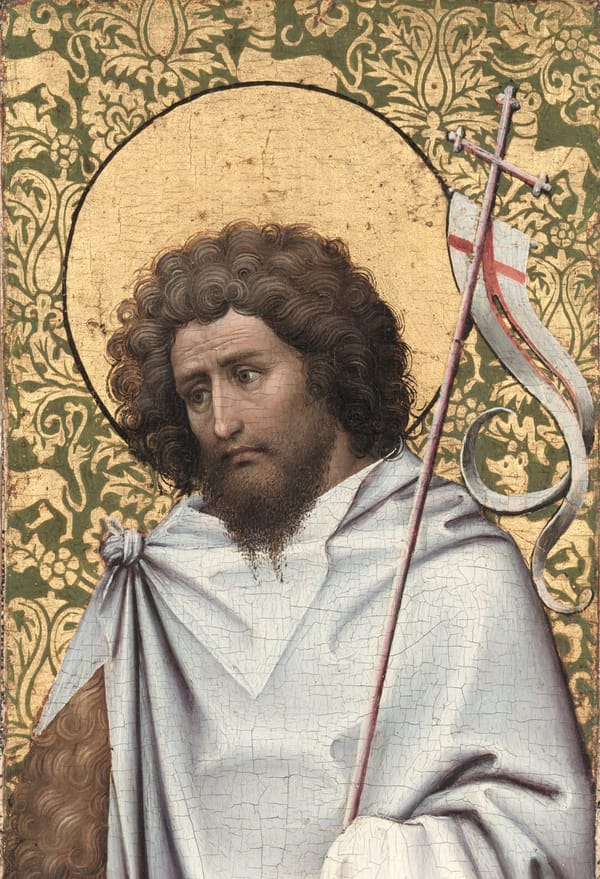
There hath stood One in the midst of you, whom you know not, says Saint John the Baptist to them that were sent by the Jews. So that our Lord may be near, He may even have come, and yet by some be not known! This Lamb of God is the holy Precursor’s consolation: he considers it a singular privilege to be but the voice, which cries out to men to prepare the way of the Redeemer. In this, St. John is the type of the Church, and of all such as seek Jesus. St. John is full of joy because the Saviour has come: but the men around him are as indifferent as though they neither expected nor wanted a Saviour. This is the third week of Advent; and are all hearts excited by the great tidings told them by the Church, that the Messias is near at hand? They that love Him not as their Saviour, do they fear Him as their Judge? Are the crooked ways being made straight, and the hills being brought low? Are Christians seriously engaged in removing from their hearts the love of riches and the love of sensual pleasures? There is no time to lose: the Lord is nigh! If these lines should come under the eye of any of those Christians who are in this state of sinful indifference, we would conjure them to shake off their lethargy, and render themselves worthy of the visit of the divine Infant: such a visit will bring them the greatest consolation here, and give them confidence hereafter, when our Lord will come to judge all mankind. Send Thy grace, O Jesus, still more plentifully into their hearts; 'compel them to go in,’ and permit not that it be said of the children of the Church, as St. John said of the Synagogue: There standeth in the midst of you One, whom you know not.
During the Offertory the faithful should unite in the prayer of the Church, and beg that the captivity in which our sins hold us may be brought to an end, and that the divine Deliverer may come.
Offertory
Secret
The other Secrets are given on page 132.
During the Communion, the Church chants the words of the prophet Isaias, which bid the heart of the sinner take courage. Fear not, Christian people! He that is coming is God; but He comes to save His creatures, and to give Himself to them.
Communion
The Church asks of God, in the following prayer, that the secret visit which she has just been receiving from her divine Spouse, may fit her for that solemn one which she is preparing to receive at the feast of Christmas.
Postcommunion
The other Postcommunions as on the first Sunday, page 134.
Vespers
Listen: recording
Capitulum
Phil. iv. 4.
The hymn Creator alme siderum, and the canticle Magnificat, are given on pages 107 and 109.
Antiphon of the Magnificat
But if the third Sunday of Advent fall on December 17, then, instead of the above, is said the first of the Great Antiphons (O Sapientia), which will be found, with the other six, in the proper of saints, from December 17 to 23 (page 484).
Prayer
December 15: Octave of the Immaculate Conception of the Most Blessed Virgin
|
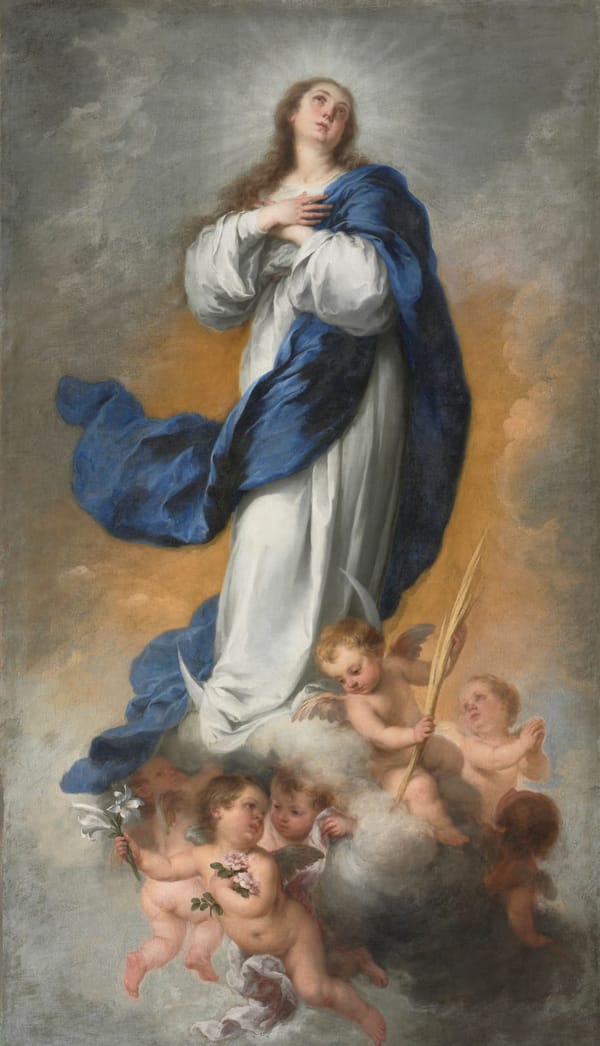
This, the eighth day from that on which we kept the feast of the Immaculate Conception, is the octave properly so called; whereas the other days were simply called days within the octave. The custom of keeping up the principal feasts for a whole week is one of those which the Christian Church adopted from the Synagogue. God had thus spoken in the Book of Leviticus: 'The first day shall be called most solemn and most holy, you shall do no servile work therein. . . . The eighth day also shall be most solemn and most holy, and you shall offer holocausts to the Lord, for it is the day of assembly and congregation: you shall do no servile work therein.'1 We also read in the Book of Kings, that Solomon, having called all Israel to Jerusalem for the dedication of the temple, suffered not the people to return home until the eighth day.
We learn from the Books of the new Testament that this custom was observed in our Saviour’s time, and we find Him authorizing, by His own example, this solemnity of the octave. Thus, we read in Saint John, that Jesus once took part in one of the Jewish festivals, about the midst of the feast;2 and the same Evangelist relating how our Lord cried out to the people: 'If any man thirst, let him come to Me, and drink’: observes, that it was on the last and great day of the festivity.3
In the Christian Church there are three kinds of octaves. Some feasts are celebrated with a privileged octave—that is, one of which the Office is said daily, or at least a commemoration is always made. Other feasts have a common octave, or one whose commemoration may, on greater feasts, be sometimes omitted. And, lastly, some have a simple octave, of which only the Octave Day itself is kept or commemorated. Privileged octaves, whose office is said or commemorated every day, are divided into three Orders. The octaves of the First Order are those of Easter and Pentecost. Those of the Second Order, of which days within the octave exclude all feasts except doubles of the First Class, are the octaves of the Epiphany and of Corpus Christi. The octaves of the Third Order, which must always be commemorated, although days within the octave exclude only the same feasts as do common octaves, are those of Christmas and of the Ascension of Our Lord. The octave of the Immaculate Conception, the first that occurs in the ecclesiastical year, is a common octave.
Let us once more devoutly reverence the mystery of Mary’s Immaculate Conception: our Emmanuel loves to see His Mother honoured. After all, is it not for Him and for His sake that this bright star was prepared from all eternity, and created when the happy time fixed by the divine decree came? When we honour the Immaculate Conception of Mary, it is really to the divine mystery of the Incarnation that we are paying our just homage. Jesus and Mary cannot be separated, for Isaias tells us that she is the branch and He the Flower.4
We give Thee thanks, O Jesus our Emmanuel, because Thou hast granted us to live during the time that the privilege of Thy blessed Mother was proclaimed on this earth; the glorious privilege wherewith Thou didst enrich the first instant of the life of the happy creature, from whom Thou didst take upon Thyself our human nature! This definition of Thy Church has given us a clearer knowledge of Thine infinite holiness. It has taught us to see more distinctly the harmony there is in all Thy divine mysteries. But it has also impressed upon us the great truth that we ourselves, being destined to the most intimate union with Thee here, and to the face to-face vision of Thy infinite Majesty hereafter, must labour without ceasing to purify ourselves from the smallest stains of sin. Thou hast said: 'Blessed are the clean of heart, for they shall see God';5 and Thou showest us, by the dogma of Thy blessed Mother’s Immaculate Conception, what is the purity which Thy sovereign sanctity demands of us. Ah! by the love, which led Thee to preserve her from every stain of sin, have mercy on us who are her devoted children. Thou art so soon to be among us! Before many days are past we shall have yielded to Thy invitations, and have presumed to approach Thy sacred crib. We are not yet ready, dear Jesus! The effects of original sin are still so plainly upon us, and, what is worse, there are so many of our own sins, which we have added to this of our first parent. Oh! prepare our hearts and our senses, for we will not approach to Bethlehem unworthily. The sinless purity of Thy Mother is not for us; we ask not for that; but we ask for forgiveness of our countless sins, for conversion, for hatred of the world and the world’s maxims, and for perseverance in Thy holy love.
O Mary! created mirror of divine justice, and purer than the Cherubim and Seraphim, in return for the homage paid thee by this our generation, on that blissful day when the glory of thy Immaculate Conception was proclaimed throughout the world, give us that abundant richness of thy protecting love, which thou didst reserve till now. The world is shaken to its very foundations: thy hand can help it to rest again. Hell has let loose upon mankind the most terrible of its spirits of wickedness, who breathe but blasphemy and destruction; but, at the same time, the Church of thy Jesus feels that her youth has been renewed within her, and that the seed of the divine word is broadcast and healthy in a thousand fresh portions of the earth. Never was the battle more fierce on both sides: so that we need all our hope to make us feel that hell will not prevail. Is this the great struggle, which is to be followed by the day of judgement?
O blessed Mother of Jesus! O Queen of the universe! can it be that the star of thy Immaculate Conception has shone in the heavens only to light up the ruin and wreck of this earth? The sign foretold by the beloved disciple St. John, of the woman that appeared in the heavens clad with the sun, bearing on her head a crown of twelve stars, and crushing the crescent beneath her feet6—has it not more brightness and power than that other, which appeared in the heavens telling men that God’s anger was appeased, and that the deluge was over? The light which shines upon us is from a Mother. It is our Mother that comes to console and heal us. It is heaven that smiles upon poor guilty earth. We have deserved the chastisement we have received, and more than we have received: but the anger of God will give way, and He will spare us.
The graces which God poured out upon the world on that great day of the Church’s definition of Mary’s Immaculate Conception, were not to be without their effect; a new period then commenced. Mary, on whom heresy had heaped its blasphemies for three hundred years, will again reign in the love of those whom her Son redeemed; countries will abandon those errors which have made them slaves and dupes of men’s doctrines; the old serpent will again writhe under that crushing pressure which God set up from the beginning; and the divine Sun of justice will pour out on the regenerated world the floods of a light more than ever dazzling and resplendent. We may not live to see that time; but we have signs of ite near approach.
It was in the last century that thy devout servant whom the Church has placed upon her altars, Leonard of Porto-Maurizio, predicted that when this dogma of thy Immaculate Conception should be defined, the world would enjoy a long period of peace. The troubles of the present time in which we are living are, we doubt not, a prelude to that happy peace, during which the divine word will traverse the whole world unimpeded, and the Church militant will reap her harvest for the Church in heaven. Sweet Mother of our Jesus! the world was also in agitation in those times which preceded the birth of thy divine Son; but peace reigned throughout the whole earth, when thou didst give it its Saviour in Bethlehem. Until that grand time come when thou wilt show to the world the magnificence of the power which God has given to thee, assist us, each year, to prepare for the glorious solemnity of Christmas: oh! pray for us, that we may be cleansed from all our sins when that splendid night comes, during which will be born of thee Jesus Christ, the Son of God, the light eternal.
Prose in Honour of the Holy Mother of God
(Taken from the ancient Roman-French missals)
Ut devote celebretur
Virginis Conceptio.
Mens amore inflammetur
Et amori copuletur
Laus et jubilatio.
Haec concepta miro more
Est ut rosa cum nitore,
Est ut candens lilium.
Ut fructus exit a flore,
Est producta cum pudore,
Praeventa per Filium.
Sicut ros non corrumpitur,
Quando in terra gignitur,
Elementi rubigine;
Sic Virgo non inficitur.
Quum in matre concipitur,
Originali crimine.
Nos ergo dulci carmine,
Laudemus in hac Virgine
Conceptum Bine nubilo.
Hanc conceptam ex semine,
Et mundam ab origine,
Laudet chorus cum jubilo.
Ut mota dulci modulo,
Nos servet in hoc saeculo
Mundos ab omni crimine.
Et in mortis articulo,
Liberet a periculo
Et inferni voragine.
Amen.
and devoutly celebrate the Conception
of the Virgin ever blessed.
Let the mind be inflamed with love;
and let praise and jubilee
unite with the love.
In her admirable Conception,
she is a rose in its beauty,
she is a lily in its whiteness.
As fruit that comes from the flower,
so was Mary brought forth in her purity,
for her Son had possession of her from the first.
As a dew-drop contracts not a stain
from the earth
whereon ’tis formed,
when she was conceived
in her mother’s womb.
in praise of a cloudless brightness,
the Immaculate Conception.
Put on all your joy, ye choirs of earth,
and sing of her, that was a daughter of Adam,
but not of his sin.
May she be pleased with our hymns,
and defend us from all sin
in this our present life.
And when our last hour comes,
deliver us by her prayers from the abyss of hell,
into which the devil will seek to drag us.
Amen.
A Prayer for the Time of Advent
(The Mozarabic breviary, fourth Sunday of Advent, Oratio)
| Previous Saturday of the Second Week of Advent | Next December 15: Octave of the Immaculate Conception of the Most Blessed Virgin |