Daily reading
Septuagesima
Double · Movable from Easter · Temporal
February 9, 2020
From Dom Guéranger’s The Liturgical Year.

|
Septuagesima Sunday
The holy Church calls us together to-day in order that we may hear from her lips the sad history of the fall of our first parents. This awful event implies the Passion and cruel Death of the Son of God made Man, who has mercifully taken upon Himself to expiate this and every subsequent sin committed by Adam and us his children. It is of the utmost importance that we should understand the greatness of the remedy; we must, therefore, consider the grievousness of the wound inflicted. For this purpose, we will spend the present week in meditating on the nature and consequences of the sin of our first parents.
Formerly, the Church used to read in her Matins of to-day that passage of the Book of Genesis, where Moses relates to all future generations, but in words of most impressive and sublime simplicity, how the first sin was brought into the world. In the present form of the liturgy, the reading of this history of the fall is deferred till Wednesday, and the preceding days give us the account of the six days of creation. We will anticipate the great instruction, and begin it at once, inasmuch as it forms the basis of the whole week’s teaching.
Cap. iii.Sed et serpens erat callidior cunctis animantibus terræ, quæ fecerat Dominus Deus. Qui dixit ad mulierem: Cur præcepit vobis Deus ut non comederetis de omni ligno paradisi? Cui respondit mulier: De fructu lignorum quæ sunt in paradiso vescimur: de fructu vero ligni, quod est in medio paradisi, præcepit nobis Deus ne comederemus, et ne tangeremus illud, ne forte moriamur. Dixit autem serpens ad mulierem: Nequaquam morte moriemini; seit enim Deus quod in quocumque die comederitis ex eo, aperientur oculi vestri, et critis sicut dii, scientes bonum et malum. Vidit igitur mulier, quod bonum esset lignum ad vescendum, et pulchrum oculis, aspectuque delectabile: et tulit de fructu illius, et comedit: deditque viro suo, qui comedit. Et aperti sunt oculi amborum.
Ch. iii.Now the serpent was more subtle than any of the beasts of the earth, which the Lord God had made. And he said to the woman: Why hath God commanded you, that you should not eat of every tree of paradise? And the woman answered him, saying: Of the fruit of the trees that are in paradise we do eat; but of the fruit of the tree which is in the midst of paradise, God hath commanded us that we should not eat, and that we should not touch it, lest perhaps we die. And the serpent said to the woman: No, you shall not die the death; for God doth know, that in what day soever you shall eat thereof, your eyes shall be opened, and you shall be as gods, knowing good and evil. And the woman saw that the tree was good to eat, and fair to the eyes, and delightful to behold: and she took of the fruit thereof, and did eat: and gave to her husband, who did eat. And the eyes of them both were opened.
Oh! terrible page of man’s history! It alone explains to us our present position on the earth. It tells us what we are in the eyes of God, and how humbly we should comport ourselves before His divine Majesty. We will make it the subject of this week’s meditation. And now, let us prepare to profit by the liturgy of this Sunday, which we call Septuagesima.
In the Greek Church, it is called Prophoné (Proclamation), because on this day they announce to the people the coming fast of Lent, and the precise day of Easter. It is also called the Sunday of the prodigal son, because that parable is read in their liturgy for this Sunday, as an invitation to sinners to draw nigh to the God of mercy. But it is the last day of the week Prophoné, which, by a strange custom, begins with the preceding Monday, as do also the two following weeks.
Mass
The Station, at Rome, is in the church of Saint Lawrence outside the walls. The ancient liturgists observe the relation between the just Abel (whose being murdered by Cain is the subject of one of the responsories of to-day’s Matins), and the courageous martyr, over whose tomb the Church of Rome commences her Septuagesima.
The Introit describes the fears of death, wherewith Adam and his whole posterity are tormented, in consequence of sin. But in the midst of all this misery there is heard a cry of hope, for man is still permitted to ask mercy from his God. God gave man a promise, on the very day of his condemnation: the sinner needs but to confess his miseries, and the very Lord against whom he sinned will become his deliverer.
Introit
In the Collect, the Church acknowledges that her children justly suffer the chastisements which are the consequences of sin; but she beseeches her divine Lord to send them that mercy which will deliver them.
Collect
Second Collect
The priest adds a third Collect, which is left to his own choice.
Epistle
Cap. ix., x.Fratres, nescitis quod ii qui in stadio currunt, omnes quidem currunt, sed unus accipit bravium? Sic currite, ut comprehendatis. Omnis autem, qui in agone contendit, ab omnibus se abstinet: et illi quidem ut corruptibilem coronam accipiant, nos autem incorruptam. Ego igitur sic curro, non quasi in incertum: sic pugno, non quasi aerem verberans: sed castigo corpus meum et in servitutem redigo: ne forte cum aliis prædicaverim, ipse reprobus efficiar. Nolo enim vos ignorare, fratres, quoniam patres nostri omnes sub nube fuerunt, et omnes mare transierunt, et omnes in Moyse baptizati sunt, in nube et in mari; et omnes eamdem escam spiritalem manducaverunt, et omnes eumdem potum spiritalem biberunt (bibebant autem de spiritali, consequenteeos petra; petra autem erat Christus). Sed non in pluribus eorum beneplacitum est Deo.
Ch. ix., x.Brethren, know you not that they that run in the race, all run indeed, but one receiveth the prize? So run that you may obtain. And every one that striveth for the mastery, refraineth himself from all things; and they indeed that they may receive a corruptible crown, but we an incorruptible one. I therefore so run, not as at an uncertainty: I so fight, not as one beating the air: but I chastise my body and bring it into subjection: lest, perhaps, when I have preached to others, I myself should become a castaway. For I would not have you ignorant, brethren, that our fathers were all under the cloud, and all passed through the sea, and all in Moses were baptized in the cloud, and in the sea: and did all eat the same spiritual food; and all drank the same spiritual drink (and they drank of the spiritual rock that followed them, and the rock was Christ). But with the most of them God was not well pleased.
These stirring words of the apostle deepen the sentiments already produced in us by the sad recollections of which we are this day reminded. He tells us that this world is a race, wherein all must run; but that they alone win the prize, who run well. Let us, therefore, rid ourselves of everything that could impede us, and make us lose our crown. Let us not deceive ourselves: we are never sure, until we reach the goal. Is our conversion more solid than was St. Paul's? Are our good works better done, or more meritorious, than were his? Yet he assures us that he was not without the fear that he might perhaps be lost; for which cause he chastised his body, and kept it in subjection to the spirit. Man, in his present state, has not the same will for all that is right and just, which Adam had before he sinned, and which, notwithstanding, he abused to his own ruin. We have a bias which inclines us to evil; so that our only means of keeping our ground is to sacrifice the flesh to the spirit. To many this is very harsh doctrine; hence, they are sure to fail; they never can win the prize. Like the Israelites spoken of by our apostle, they will be left behind to die in the desert, and so lose the promised land. Yet they saw the same miracles that Josue and Caleb saw! So true is it that nothing can make a salutary impression on a heart which is obstinately bent on fixing all its happiness in the things of this present life; and though it is forced, each day, to own that they are vain, yet each day it returns to them, vainly but determinedly loving them.
The heart, on the contrary, that puts its trust in God, and mans itself to energy by the thought of the divine assistance being abundantly given to him that asks it, will not flag or faint in the race, and will win the heavenly prize. God’s eye is unceasingly on all them that toil and suffer. These are the truths expressed in the Gradual.
Gradual
The Tract sends forth our cry to God, and the cry is from the very depths of our misery. Man is humbled exceedingly by the fall; but he knows that God is full of mercy, and that, in His goodness, He punishes our iniquities less than they deserve: were it not so, none of us could hope for pardon.
Tract
Gospel
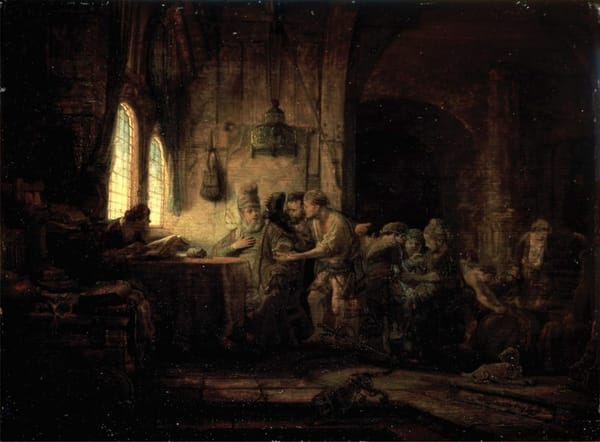
Cap. xx.In illo tempore, dixit Jesus discipulis suis parabolani hanc: Simile est regnum cælorum homini patrifamilias, qui exiit primo mane Conducere operarios in vineam suam. Conventione autcm facta cum operariis ex denario diurno, misit eos in vineam suam. Et egressus circa horam tertiam, vidit aliosstantes in foro otiosos, et dixit illis: Ite et vos in vineam meam, et quod justum fuerit, dabo vobis. Illi autem abierunt. Iterum autem exiit circa sextam et nonam horam, et fecit similiter. Circa undecimam vero exiit; et invenit alios stantes, et dicit illis: Quid hic statis tota die otiosi? Dicunt ei: Quia nemo nos conduxit. Dicit illis: Ite et vos in vineam meam. Cum sero autem factum esset, dicit dominus vineæ procuratori suo: Voca operarios, et redde illis mercedem, incipiens a novissimis usque ad primos. Cum venissent ergo qui circa undecimam horam venerant, acceperunt singulos denarios. Venientes autem et primi, arbitrati sunt quod plus essent accepturi: acceperunt autem et ipsi singulos denarios. Et accipientes murmurabant adversus patremfamilias, dicentes: Hi novissimi una hora fecerunt, et pares illos nobis fecisti qui portavimus pondus diei et æstus? At ille respondens uni eorum, dixit: Amice, non facio tibi injuriam; nonne ex denario convenisti mecum? Tolle quod tuum est, et vade: volo autem et huic novissimo dare sicut et tibi. Aut non licet mihi quod volo facere? An oculus tuus nequam est, quia ego bonus sum? Sic erunt novissimi primi, et primi novissimi. Multi enim sunt vocati, pauci vero electi.
Ch. xx.At that time, Jesus spoke to his disciples this parable; The kingdom of heaven is like to a householder who went out early in the morning to hire labourers into his vineyard. And having agreed with the labourers for a penny a day, he sent them into his vineyard. And going out about the third hour, he saw others standing in the market place idle. And he said to them: Go you also into my vineyard, and I will give you what shall be just. And they went their way. And again he went out about the sixth and the ninth hour, and did in like manner. But about the eleventh hour he went out and found others standing, and he saith to them: Why stand you here all the day idle? They say to him: Because no man hath hired us. He saith to them: Go you also into my vineyard. And when evening was come, the lord of the vineyard saith to his steward: Call the labourers and pay them their hire, beginning from the last even to the first. When, therefore, they were come that came about the eleventh hour, they received every man a penny. But when the first also came, they thought that they should receive more: and they also received every man a penny. And receiving it they murmured against the master of the house, saying: These last have worked but one hour, and thou hast made them equal to us that have borne the burden of the day, and the heats. But he answering said to one of them: Friend, I do thee no wrong: Didst thou not agree with me for a penny? Take what is thine, and go thy way: I will also give to this last even as to thee. Or, is it not lawful for me to do what I will? Is thy eye evil, because I am good? So shall the last be first, and the first last. For many are called, but few chosen.
It is of importance that we should well understand this parable of the Gospel, and why the Church inserts it in to-day’s liturgy. Firstly, then, let us recall to mind on what occasion our Saviour spoke this parable, and what instruction He intended to convey by it to the Jews. He wishes to warn them of the fast approach of the day when their Law is to give way to the Christian Law; and He would prepare their minds against the jealousy and prejudice which might arise in them, at the thought that God was about to form a Covenant with the Gentiles. The vineyard is the Church in its several periods, from the beginning of the world to the time when God Himself dwelt among men, and formed all true believers into one visible and permanent society. The morning is the time from Adam to Noah; the third hour begins with Noah and ends with Abraham; the sixth hour includes the period which elapsed between Abraham and Moses; and lastly, the ninth hour opens with the age of the prophets, and closes with the birth of the Saviour. The Messias came at the eleventh hour, when the world seemed to be at the decline of its day. Mercies unprecedented were reserved for this last period, during which salvation was to be given to the Gentiles by the preaching of the apostles. It is by this mystery of mercy that our Saviour rebukes the Jewish pride. By the selfish murmurings made against the master of the house by the early labourers, our Lord signifies the indignation which the scribes and pharisees would show at the Gentiles being adopted as God’s children. Then He shows them how their jealousy would be chastised: Israel, that had laboured before us, shall be rejected for their obduracy of heart, and we Gentiles, the last comers, shall be made for we shall be made members of that Catholic Church, which is the bride of the Son of God.
This is the interpretation of our parable given by St. Augustine and St. Gregory the Great, and by the generality of the holy fathers. But it conveys a second instruction, as we are assured by the two holy doctors just named. It signifies the calling given by God to each of us individually, pressing us to labour, during this life, for the kingdom prepared for us. The morning is our childhood. The third hour, according to the division used by the ancients in counting their day, is sunrise; it is our youth. The sixth hour, by which name they called our midday, is manhood. The eleventh hour, which immediately preceded sunset, is old age. The Master of the house calls His labourers at all these various hours. They must go that very hour. They that are called in the morning may not put off their starting for the vineyard, under pretext of going afterwards, when the Master shall call them later on. Who has told them that they shall live to the eleventh hour? They that are called at the third hour may be dead at the sixth. God will call to the labours of the last hour such as shall be living when that hour comes; but, if we should die at midday, that last call will not avail us. Besides, God has not promised us a second call, if we excuse ourselves from the first.
At the Offertory, the Church invites us to celebrate the praises of God. God has mercifully granted us, that the hymns we sing to the glory of His name should be our consolation in this vale of tears.
Offertory
Secret
Second Secret
The third Secret is left to the priest’s own choice.
In the Communion antiphon, the Church prays that man, having now been regenerated by the Bread of heaven, may regain that likeness to his God which Adam received at his creation. The greater our misery, the stronger should be our hope in Him, who descended to us that we might ascend to Him.
Communion
Postcommunion
Second Postcommunion
The third Postcommunion is left to the priest’s own choice.
Vespers
The psalms and antiphons as on page 72.
Capitulum (1 Cor. ix.)
The hymn and versicle, page 79.
Antiphon of the Magnificat
Mercifully hear, we beseech thee, O Lord, the prayers of thy people; that we who are justly afflicted for our sins, may be mercifully delivered for the glory of thy name. Through, etc.
For each day of this week we select a few stanzas from the hymn, which the Greek liturgy uses in the Office for the Sunday preceding the fast of Lent. It is a lamentation over Adam's fall.
In Dominica Tyrophagi
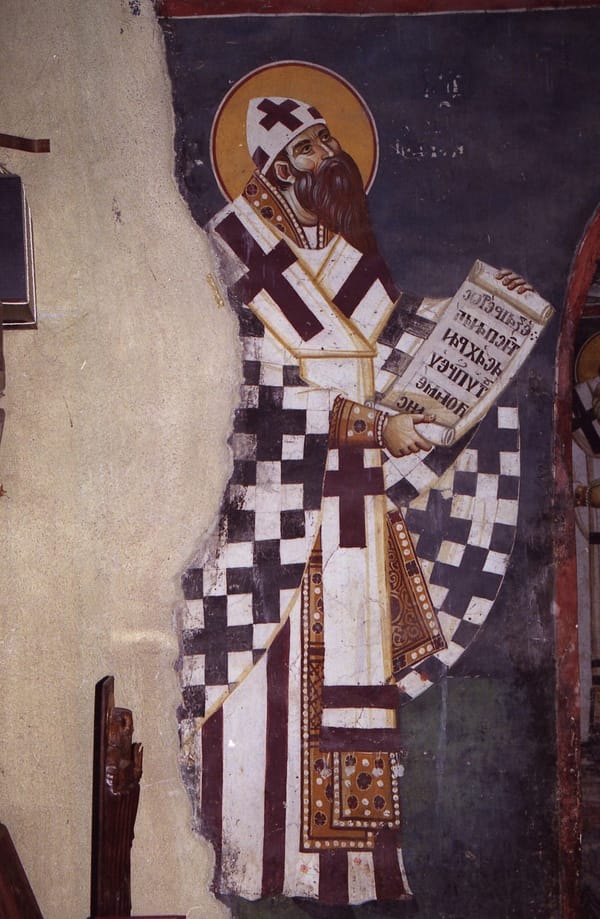
February 9: St. Cyril of Alexandria, Bishop and Doctor of the Church
 |
I will put enmities between thee and the woman, and thy seed and her seed: she shall crush thy head, and thou shalt lie in wait for her heel.:1
These words, addressed to the serpent in the days which the Church now seeks to bring before the minds of her children, have dominated the world’s history. The woman, who was the first to fall victim to Satan’s deceits, was, in Mary, the first to rise. In her Immaculate Conception, in her virginal motherhood, in her offering of the new Adam to God on the mount of expiation, the new Eve made the enemy of mankind feel the power of her victorious foot; and so the rebel angel, who by man’s complicity has become the prince of this world, has never ceased to direct against the woman who has triumphed over him the united forces of his double empire, over the legions of hell and the children of darkness. Mary in heaven continues the conflict she began on earth. As queen of the blessed spirits and of the children of light she leads to battle as one army the heavenly hosts and the battalions of the Church Militant. The triumph of these faithful soldiers is that of their sovereign lady—it is a continual crushing of the head of the father of lies by the defeat of error and the exaltation of truth, the victory of the Divine Word, who is both Son of Mary and Son of God.
But the connection between the victory of the Divine Word and the triumph of his glorious Mother has never been more manifest than in the combats sustained by the Pontiff whom we are to honour today. Cyril of Alexandria is the Doctor of the Divine Maternity as his predecessor Athanasius was that of the Consubstantiality of the Word. The dogma of the Incarnation is founded upon these two ineffable mysteries, which they confessed and defended in two succeeding centuries. As Son of God Christ must be consubstantial with the Father, for the infinite simplicity of the divine essence excludes all idea of division. To deny the unity of substance and principle in Jesus, the Divine Word, was to deny His divinity. As Son of Man, as well as true God of true God, Jesus was to be born on earth of a daughter of Adam, and yet in His humanity be still one Person with the Word which is consubstantial with the Father. To deny the personal union of the two natures in Christ was again equivalent to denying His divinity; it was also equivalent to declaring that the Blessed Virgin, who until then had been honoured as having given birth to God in the nature which He assumed for our salvation, was only the mother of a man.
Three centuries of persecution had not been able to wring from the Church a denial of the divinity of her Spouse. But hardly had the world witnessed the triumph of the Incarnate Word, when the enemy turned the victory to his own advantage. Profiting by the new position of Christianity and its security from public violence, he sought to win in the domain of false science the denial which had been refused him on the field of martyrdom. Apostasy did less to serve the hostile influence of the serpent and foster the growth of his accursed race than the bitter zeal of heretics for the reform of the Church’s faith.
Arius was the first of these teachers of the doctrines of hell—a worthy first in his pride. He carried his questionings into the very depths of the divine essence, and rejected consubstantiality on the evidence of texts which he misunderstood. Upheld principally by the powers of this world, Arianism fell at the end of a century, having no root but in recently converted nations who had not had to shed their blood for the divinity of the Son of God.
It was then that Satan produced Nestorius, crowned with a fictitious halo of sanctity and knowledge. This man, who was to give the clearest expression to the hatred of the serpent for the woman, was enthroned in the Chair of Constantinople amid the applause of the whole East, which hoped to see in him a second Chrysostom. The joy of the good was of short duration. In the very year of his exaltation, on Christmas Day 428, Nestorius, taking advantage of the immense concourse which had assembled in honour of the Virgin Mother and her Child, pronounced from the episcopal pulpit the blasphemous words: ‘Mary did not bring forth God; her Son was only a man, the instrument of the Divinity.’ The multitude shuddered with horror. Eusebius, a simple layman, rose to give expression to the general indignation, and protested against this impiety. Soon a more explicit protest was drawn up and disseminated in the name of the members of this grief-stricken Church, launching an anathema against anyone who should dare to say: 'The Only-begotten Son of the Father and the Son of Mary are different persons.' This generous attitude was the safeguard of Byzantium, and won the praise of Popes and Councils. When the shepherd becomes a wolf, the first duty of the flock is to defend itself. It is usual and regular, no doubt, for doctrine to descend from the bishops to the faithful, and those who are subject in the faith are not to judge their superiors. But in the treasure of revelation there are essential doctrines which all Christians, by the very fact of their title as such, are bound to know and defend. The principle is the same whether it be a question of belief or conduct, dogma or morals. Treachery like that of Nestorius is rare in the Church, but it may happen that some pastors keep silence for one reason or another in circumstances when religion itself is at stake. The true children of Holy Church at such times are those who walk by the light of their baptism, not the cowardly souls who, under the specious pretext of submission to the powers that be, delay their opposition to the enemy in the hope of receiving instructions which are neither necessary nor desirable.
The emotion produced by the blasphemy of Nestorius spread through the East and soon reached Alexandria. Cyril was then ruling the see which had been founded by Mark in the name of Peter and raised to the second place by the Head of the Church. The union of Athanasius and the Roman Pontiffs had overcome Arianism in the previous century, and now Rome and Alexandria were once more to unite in crushing heresy. But the enemy had learnt by experience and acted with infernal foresight. When the future champion of the Mother of God was raised to the Chair of St. Athanasius, this formidable alliance was a thing of the past. Theophilus, the late Patriarch, who was the principal author of the condemnation of St. John Chrysostom at the Pseudo-council 'of the Oak,’ had refused to subscribe to the rehabilitation of his victim by the Holy See, and Rome had been obliged to break with her eldest daughter. Cyril was the nephew of Theophilus. He knew nothing of the secret motives by which his uncle had been governed. He had been brought up to honour him as his superior, his benefactor, and his master in sacred science, and when, in his turn, he became Patriarch, he had no thought of reversing the decisions of one whom he had always regarded as a father. Alexandria remained separated from the Church of Rome. Like the serpent, whose venom poisons all that it touches, Satan turned the most noble sentiments against the cause of God, but our Lady, who loves an upright heart, did not abandon her champion. After a few years of mishaps, which taught him to know men, the young Patriarch had his eyes opened to the truth by a holy monk named Isidore of Pelusium. Once convinced, he did not hesitate to restore the name of John Chrysostom to the sacred diptychs. The schemes of hell came to naught. Rome found a new Athanasius on the banks of the Nile to assist her in her new combats for the faith.
Cyril, restored to Christian unity by a monk, showed as great a devotion to the holy solitaries as his predecessor had done. He confided to them his grief at the first news of Nestorius’ impiety. The letter in which he appeals to their faith and warns them of the danger which threatens the Church has become celebrated. ‘Those,’ he says, ‘who have embraced in Christ the noble and enviable lot which is yours, ought to shine most brilliantly with the light of a perfect and unhesitating faith, and add to this light the special radiance of virtue. Then they ought to employ their wealth in increasing in themselves the knowledge of the mysteries of Christ, and striving to understand them perfectly. This,’ says the holy Doctor, ‘is what I think St. Paul means when he speaks of the development of the perfect man,2 the way to arrive at the measure and the fullness of Christ.’3
The Patriarch of Alexandria could not rest content with opening his heart to those of whose sympathy he was assured. He strove to win back Nestorius by letters, in which his personal meekness is only rivalled by the vigour and breadth of his doctrine. But Nestorius was obdurate. Having no arguments at his command, he complained of the Patriarch’s interference. As it always happens, there were pacifists who, though not sharing Nestorius’ errors, thought it would be best not to answer him for fear of embittering him, increasing the scandal, and wounding charity. Cyril thus answers that singular virtue which fears the affirmations of the Christian faith more than the audacity of heresy: 'What! Nestorius dares to suffer men to say in public and in his presence that he who calls Mary the Mother of God is to be anathema! He hurls his anathema, through his partisans, at us, at the other Bishops of the Universal Church and the ancient Fathers, who in all ages and all places with one accord have acknowledged and honoured the holy Mother of God! And have we not the right to repay him in his own coin and say, “If anyone denies that Mary is the Mother of God let him be anathema”? Nevertheless, out of regard for him, I have not yet uttered these words.’4
Men of another type, also represented in all ages, revealed the true motive of their hesitation when, after insisting on the advantages of peace and their ancient friendship with Nestorius, they suggested timidly that it would be dangerous to oppose so powerful an adversary. ‘Could I but satisfy the Bishop of Constantinople and heal the wounded spirit of my brother by suffering the loss of all my possessions!’ was Cyril’s reply. ‘But the faith is at stake. The scandal has spread through the Church, and all men are inquiring about the new doctrine. If we, who have received from God the office of teacher, fail to remedy such great evils, will there be flames enough for us at the Day of Judgment? I have already been struck by insult and calumny—let it pass. If only the faith be safe, I will yield to none in my love of Nestorius. But if the faith suffers through the deeds of some —let there be no doubt about it—I will not risk my soul even if instant death threaten me. If the fear of some disturbance is stronger than our zeal for God’s glory and prevents us from speaking the truth, how shall we dare in the presence of the Christian people to celebrate the holy martyrs, whose glory lies in the very fact that they carried out in their lives the words5 “Even unto death fight for justice”?’6
When the combat became inevitable, he organized the forces of the Church, and summoned monks and Bishops to his side. He did not attempt to conceal the holy enthusiasm which filled his heart. 'As far as I am concerned,’ he writes to the clerics who represent him in the imperial city, ‘my greatest desire is to suffer, live and die for the faith of Jesus Christ. As it is written: “If I shall give sleep to my eyes, or slumber to my eyelids, or rest to my temples”7 until I have fought the battle which is necessary for the well-being of all. Therefore let your hearts be full of the same spirit and do manfully. Watch the enemy and inform us of his slightest movements. As soon as I can, I will send you some Bishops and monks, pious and prudent men, chosen out of many. I am already preparing my letters. I have resolved to labour without truce for the faith of Christ and to suffer all torments, yea death itself, which in such a cause would be sweet to me.'8
Informed of these troubles by the Patriarch of Alexandria, Pope St. Celestine I. condemned the new heresy, and commissioned Cyril to depose the Bishop of Constantinople in the name of the Roman Pontiff. But Nestorius prolonged the contest by his intrigues. At this point there appears at the side of Cyril the figure of a saintly woman who for forty years was the terror of hell, and who twice crushed the head of the hateful serpent in the name of the Queen of heaven. Pulcheria had assumed the reins of government at the age of fifteen. It was a time of disasters, but she arrested interior disturbances by her prudence and energy, and in union with her sisters, virgins like herself, held back the barbarian hordes by the might of divine Psalmody. While the West was in its last agony, the East, thanks to its gifted empress, was enjoying once more the prosperity of its best days. The sight of a granddaughter of Theodosius the Great, who employed her private wealth in multiplying churches in honour of our Lady, taught Byzantium that devotion to Mary which was her safeguard in evil days, and which obtained for her from Mary’s Son a thousand years of mercy and incomprehensible patience. General Councils have hailed St. Pulcheria as the guardian of faith and the bulwark of unity.9 St. Leo says that the greatest share in the defence of divine truth was hers.10 ‘A double palm is in her hands,’ says this great Pope, ‘a double crown on her head, for the Church owes to her a double victory over impiety in the persons of Nestorius and Eutyches, who from different sides tended towards the same point—the denial of the Incarnation of the Son of God and of the share of the Virgin Mother in the salvation of mankind.’11
But we must not overstep our limits. The summary of the life of this great Pontiff read by the Church at Matins will give us some idea of those glorious combats witnessed by the city of Ephesus when Cyril, supported by Rome and upheld by Pulcheria, established for ever our Lady’s title to the most noble diadem that a mere creature can ever wear:
O holy Pontiff, the heavens rejoice and the earth is glad at the thought of that conflict in which the Queen of heaven and earth chose thee as the instrument of her triumph. The East has ever honoured thee as her light; the West has long hailed thee as champion of the Mother of God, and now seeks to give stronger expression to her gratitude. A new flower has appeared in our day in Mary’s crown, and it springs from the very soil cultivated by thee. When thou didst proclaim the divine maternity in the name of Peter and Celestine thou wast preparing for our Lady another triumph, which was to be the consequence of the first. The Mother of God must be immaculate. The definition of Pius IX. completes the work done by Celestine and thee. The two days—June 22, 431, and December 8, 1854—are equally glorious in heaven, and were celebrated with like manifestations of joy and love on earth. And so, O Cyril, the whole Church turns to thee after fourteen centuries and proclaims thee Doctor. She sees that thy work is complete, and will have nothing lacking in the homage rendered to thee on earth. Devotion to thee has found its fullest expression at the same time as devotion to the Mother of God. Thy glory is an extension of her glory.
We understand that the greatest honour we can pay to thee is to sing the praises of thy sovereign Lady. We therefore repeat the burning words which the Holy Ghost put upon thy lips on that day of triumph at Ephesus: ‘We hail thee, O Mary, Mother of God, as the bright gem of the whole creation; the lamp whose light shall never be put out, the crown of virginity, the sceptre of orthodox faith, the indestructible temple and shrine of the Infinite, through whom we have received Him whom the Gospels call Blessed, Him who comes in the name of the Lord. Hail Mary, whose spotless and virginal womb bore that Infinite One, by whom the Trinity is glorified and the precious Cross honoured and adored throughout the earth. Hail Mary, joy of heaven, peace of angels and archangels, terror of demons. Through thee the tempter fell from heaven, through thee the fallen are raised up to heaven. The world was held captive in idolatrous folly, and thou hast opened its eyes to the truth. To thee the faithful owe their baptism, to thee they owe the oil of gladness. Throughout all the earth thou foundest churches and leadest the nations to penance. What shall I say more? It was through thee that the only-begotten Son of God shone forth as the light of those who sat in darkness and in the shadow of death; through thee that the prophets foretold things to come; through thee that the Apostles preached salvation to the nations; through thee that the dead rise again; through thee that kings reign by the grace of the Holy Trinity. What man could ever adequately praise Mary, who is worthy of all praise?'12
If then, O Cyril, the dignity of the Mother of God surpasses all praise, beseech her to raise up among us men capable of praising her as thou didst. May the power with which she armed thee against her foes descend to those who in our days have to carry on the age-long combat between the woman and the serpent. The adversary has grown bolder. This age has surpassed in its denial of Jesus not only Nestorius, but also the apostate Emperor Julian, against whom thou didst defend the divinity of the Son of the Virgin Mother. Thou didst rain terrible blows upon error. Teach our Doctors how to conquer; teach them to lean upon Peter, to interest themselves in all that concerns the Church, to look upon her foes as their personal enemies, and the only real enemies they have. Our pastors will draw from thy sublime writings that true knowledge of sacred Scripture without which their zeal would be powerless. Christians will learn from thee that they cannot grow in virtue without first increasing their faith and their knowledge of the mysteries of the Incarnate Word. Many souls in these times content themselves with vague ideas. Let them learn from thee that it is the love of truth which leads us to life.13 The approach of Lent reminds us of these Paschal Letters which at this season carried to all the announcement of the Feast of Feasts and an exhortation to penance. Our souls have grown soft. Obtain for us a sense of the seriousness of the Christian life, so that we may enter valiantly upon the holy campaign which is to win back our peace with God through the triumph of the spirit over the flesh.
- Gen. iii. 15. ↩︎
- Eph. iv. 13. ↩︎
- Cyr. Al. Ep. 1 ad monach. ↩︎
- Ep viii. al. vi. ↩︎
- Ecclus. iv. 33. ↩︎
- Cyr. Al. Ep. ix. al. vii. ↩︎
- Ps. cxxxi. 4, 5. ↩︎
- Cyr. Al. Ep. x. al. viii. ↩︎
- Labbe, Conc. iv. 464. ↩︎
- Leo. Ep. xxxi. al. xxvii. ↩︎
- Leo. Ep. xxxi. al. xxvii. and Ep. lxxix. al. lix. ↩︎
- Cyr. al. Hom. iv. Ephesi habita ad St. Mariam. ↩︎
- Cyr. Al. Hom., div. 1. ↩︎
February 9 (the Same Day): St. Apollonia, Virgin and Martyr
The holy virgin who this day claims the homage of our devotion and praise, is offered to us by the Church of Alexandria. Apollonia is a martyr of Christ; her name is celebrated and honoured throughout the whole world; and she comes to us on this ninth day of February, to add her own example to that which we have so recently had from her sister saints, Agatha and Dorothy; like them, she bids us fight courageously for heaven. To her this present life was a thing of little value, and no sooner did she receive God’s inspiration to sacrifice it, than she did what her would-be executioners intended doing: she threw herself into the flames prepared for her. It is no unusual thing, nowadays, for men that are wearied of the trials, or afraid of the humiliations, of this world, to take away their own lives, and prefer suicide to the courageous performance of duty: but Apollonia’s motive for hastening her death by a moment’s anticipation, was to testify her horror of the apostasy that was proposed to her. This is not the only instance we meet with, during times of persecution, of the holy Spirit’s inspiring this lavish sacrifice to saintly virgins, who trembled for their faith or their virtue. It is true, such examples are rare; but they teach us, among other things, that our lives belong to God alone, and that we should be in readiness of mind to give them to Him, when and as He pleases to demand them of us.
There is one very striking circumstance in the martyrdom of St. Apollonia. Her executioners, to punish the boldness wherewith she confessed our Lord Jesus Christ, beat out her teeth. This has suggested to the faithful, when suffering the cruel pain of toothache, to have recourse to St. Apollonia; and their confidence is often rewarded, for God would have us seek the protection of His saints, not only in our spiritual, but even in our bodily sufferings and necessities.
The liturgy thus speaks the praises of our saint.
What energy was thine, Apollonia! Thy persecutors threaten thee with fire; but far from fearing it, thou art impatient for it, as though it were a throne, and thou ambitious to be queen. Thy dread of sin took away the fear of death, nor didst thou wait for man to be thy executioner. This thy courage surprises our cowardice; and yet, the burning pile into which thou didst throw thyself when asked to apostatize, and which was a momentary pain leading thy soul to eternal bliss, was nothing when we compare it with that everlasting fire, to which the sinner condemns himself almost every day of his life. He heeds not the flames of hell, and deems it no madness to purchase them at the price of some vile passing pleasure. And with all this, worldlings can be scandalized at the saints, and call them exaggerated, extravagant, imprudent; because they believed that there is but one thing necessary! Awaken in our hearts, Apollonia, the fear of sin; for sin gnaws eternally the souls of them who die with its guilt upon them. If the fire, which had a charm for thee, seems to us the most frightful of tortures, let us turn our fear of suffering and death into a preservative against sin, which plunges men into that abyss, whence the smoke of their torments shall ascend for ever and ever,* as St. John tells us in his Revelation. Have pity on us, most brave and prudent martyr. Pray for sinners. Open their eyes to see the evils that threaten them. Procure for us the fear of God, that so we may merit His mercies, and may begin in good earnest to love Him.
* Apoc. xiv. 11. ↩︎
| Previous Saturday before Septuagesima Sunday | Next February 9: St. Cyril of Alexandria, Bishop and Doctor of the Church |