Daily reading
Simple · February 18 · Sanctoral
February 18, 2020
From Dom Guéranger’s The Liturgical Year.
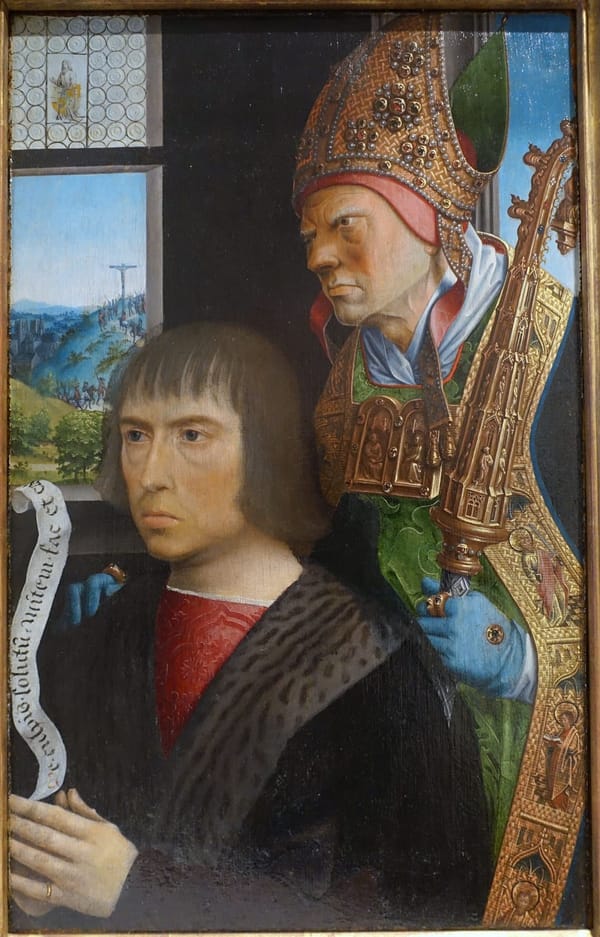
February 18: St. Simeon, Bishop and Martyr
How venerable our saint of to-day, with his hundred and twenty years, and his episcopal dignity, and his martyr-crown! He succeeded the apostle St. James in the see of Jerusalem; he had known Jesus, and had been His disciple; he was related to Jesus, for he was of the house of David; his father was Cleophas, and his mother that Mary, whom the tie of kindred united so closely to the blessed Mother of God that she has been called her sister. What grand titles these of Simeon who comes with all our other martyrs of Septuagesima, to inspirit us to penance! Such a veteran, who had been a contemporary of the Saviour of the world, and was a pastor who could repeat to his flock the very lessons Jesus had given him, could never rejoin his divine Master save by the path of martyrdom, and that martyrdom must be the cross. Like Jesus, then, he dies on a cross; and his death, which happened in the year 106, closes the first period of the Christian era, or, as it is called, the apostolic age. Let us honour this venerable pontiff, whose name awakens within us the recollection of all that is dear to our faith. Let us ask him to extend to us that fatherly love, which nursed the Church of Jerusalem for so many long years. He will bless us from that throne which he won by the cross, and will obtain for us the grace we so much need, the grace of conversion.
The following is the lesson given on St. Simeon:
Receive, most venerable saint, the humble homage of our devotion. What is all human glory compared with thine? Thou wast of the family of Christ; thy teaching was that which His divine lips had given thee; thy charity for men was formed on the model of His sacred Heart; and thy death was the closest representation of His. We may not claim the honour thou hadst, of calling ourselves brothers of the Lord Jesus: but pray for us, that we may be of those of whom He thus speaks: ‘Whosoever shall do the will of My Father that is in heaven, he is My brother, and sister, and mother.’* We have not, like thee, received the doctrine of salvation from the very lips of Jesus; but we have it in all its purity, by means of holy tradition, of which thou art one of the earliest links; oh, obtain for us a docility to this word of God, and pardon for our past disobedience. We have not to be nailed to a cross, as thou wast; but the world is thickly set with trials, to which our Lord Himself gives the name of the cross. These we must bear with patience, if we would have part with Jesus in His glory. Pray for us, O Simeon, that henceforth we may be more faithful; that we may never more become rebels to our duty; and that we may repair the faults we have so often committed by infringing the law of our God.
* St. Matt. xii. 50. ↩︎
Tuesday of Sexagesima Week
When we reflect upon the terrible events which happened in the first age of the world, we are lost in astonishment at the wickedness of man, and at the effrontery wherewith he sins against his God. How was it that the dread words of God, which were spoken against our first parents in Eden, could be so soon forgotten? How could the children of Adam see their father suffering and doing such endless penance, without humbling themselves and imitating this model of repentance? How was it that the promise of a Mediator, who was to reopen the gate of heaven for them, could be believed, and yet not awaken in their souls the desire of making themselves worthy to be His ancestors, and partakers of that grand regeneration, which He was to bring to mankind? And yet, the years which followed the death of Adam were years of crime and scandal; nay, he himself lived to see one of his own children become the murderer of a brother. But why be thus surprised at the wickedness of these our first brethren? The earth is now six thousand years old in the continued reception of divine blessings and chastisements; and are men less dull of heart, less ungrateful, less rebellious towards their Maker? For the generality of men—we mean, of those who deign to believe in the fall and chastisement of our first parents, and in the destruction of the world by the deluge—what are these great truths? Mere historical facts, which have never once inspired them with a fear of God’s justice. More favoured than these early generations of the human race, they know that the Messias has been sent, that God has come down upon the earth, that He has been made Man, that He has broken Satan’s rule, that the way to heaven has been made easy by the graces embodied by the Redeemer in the Sacraments: and yet, sin reigns and triumphs in the midst of Christianity. Undoubtedly, the just are more numerous than they were in the days of Noah; but then, what riches of grace has our Redeemer poured out on our degenerate race by the ministry of His bride the Church! Yes, there are faithful Christians to be found upon the earth, and the number of the elect is every day being added to; but the multitude are living at enmity with God, and their actions are in contradiction to their faith.
When, therefore, the holy Church reminds us of those times, wherein all flesh had corrupted its way, she is urging us to think about our own conversion. Her motive in relating to us the history of the sins committed at the beginning of the world, is to induce us to examine our own consciences. Why, too, does she read to us those pages of sacred Writ, which so vividly describe the flood-gates of heaven opening and deluging the guilty earth, if not that she would warn us against mocking that great God, who thus chastised the sins of His rebellious creatures? Last week we were called upon to consider the sad consequences of Adam’s sin, a sin which we ourselves did not commit, but the effects of which lie so heavy upon us. This week we must reflect upon the sins we ourselves have committed. Though God has loaded us with favours, guided us by His light, redeemed us with His Blood, and strengthened us against all our enemies by His grace, yet have we corrupted our way, and caused our God to repent of having created us. Let us confess our wickedness, and humbly acknowledge that we owe it to the mercies of the Lord, that we have not been consumed.*
The Ambrosian missal contains the following exhortation for this season of the year.
Transitorium
(Dominica in Septuagesima.)
* Lam. iii. 22. ↩︎
| Previous Monday of Sexagesima Week | Next Tuesday of Sexagesima Week |