lyp.network

Daily reading

Lent

Double · March 17 · Sanctoral

March 17, 2020

From Dom Guéranger’s The Liturgical Year.

A Double leads the weekday.Rubric
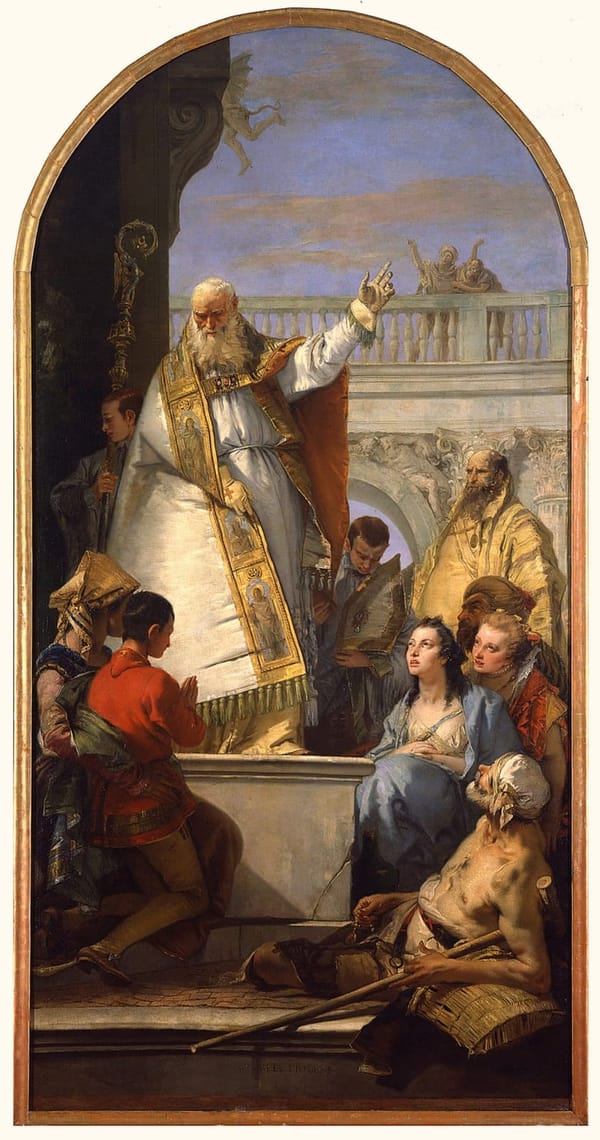
Saint Patrick, Bishop of Ireland
Saint Patrick, Bishop of Ireland, Giovanni Battista Tiepolo (1696–1770), 1746. Credits

March 17: St. Patrick, Apostle of Ireland, Bishop and Confessor

The saint we have to honour to-day is the apostle of that faithful people, whose martyrdom has lasted three hundred years: it is the great St. Patrick, he that gave Erin the faith. There shone most brightly in this saint that gift of the apostolate, which Christ has left to His Church, and which is to remain with her to the end of time. The ambassadors or missioners, sent by our Lord to preach His Gospel, are of two classes. There are some who have been entrusted with a small tract of the Gentile world; they had to sow the divine seed there, and it yielded fruit more or less according to the dispositions of the people that received it: there are others, again, whose mission is like a rapid conquest, that subdues a whole nation, and brings it into subjection to the Gospel. St. Patrick belongs to this second class; and in him we recognize one of the most successful instruments of God's mercy to mankind.

And then, what solidity there is in this great saint’s work! When is it that Ireland received the faith? In the fifth century, when Britain was almost wholly buried in paganism; when the race of the Franks had not as yet heard the name of the true God; when Germany had no knowledge of Christ’s having come upon the earth; when the countries of northern Europe deeply slumbered in infidelity: yes, it was before these several nations had awakened to the Gospel, that Ireland was converted. The faith, brought to her by her glorious apostle, took deep root and flourished and fructified in this isle, more lovely even by grace than she ifl by nature. Her saints are scarcely to be numbered, and went about doing good in almost every country of Europe; her children gave, and are still giving, to other countries, the faith that she herself received from her beloved patron. And when the sixteenth century came with its protestantism; when the apostasy of Germany was imitated by England, Scotland, and the whole north of Europe, Ireland stood firm and staunch; no persecution, however cleverly or however cruelly carried on against her, has been able to detach her from the faith taught her by Saint Patrick.

Let us honour the admirable apostle, chosen by God to sow the seed of His word in this privileged land; and let us listen to the simple account of his labours and virtues, thus given in the lessons of his feast:

Patritius, Hiberniæ dictus apostolus, Calphurnio patre, matre Conchessa, sancti Martini Turonensis episcopi, ut perhibent, consanguInea, majori in Britannia natus, puer in barbarorum sæpius incidit captivitatem. Eo in statu pascendis gregibus præpositus, jam tum futuræ sanctitatis specimen præbuit. Fidei namque, divinique timoris, et amoris spiritu repletus, antelucano tempore per nivea, gelu, ac pluvias ad preces Deo fundendas impiger consurgebat; solitus centies interdiu, centiesque noctu Deum orare. A servitute tertio exemptus, et inter clericos relatus, in divinis lectionibus longo se tempore exercuit. Galliis, Italia, insulisque Tyrrheni maris labore summo peragratis, divino tandem monitu ad Hibernorum salutem advocatur; et facta a beato Cœlestino Papa Evangelii nunciandi potestate, coneecratusque episcopus, in Hibemiam perrexit.
Eo in munere mirum quot vir apostoiicus mala, quot ærumnas, et labores, quot pertulerit adversarios. Verum Dei afilante benignitate, terra illa, idolorum antea cultrix, eum mox prædicante Patritio fructum dedit, ut sanctorum insula deinde fuerit appellata. Frequentissimi ab eo populi sacro sunt regenerati lavacro: episcopi, clericique plurimi ordinati; virginea ac viduæ ad continentiæ leges institutæ. Armachanam Sedem, Romani Pontificis auctoritate, totius insulæ principem metropolim constituit, sanctorumque reliquiis ab Urbe relatis decoravit. Supernis visionibus, prophetiæ dono, ingentibusque signis, et prodigiis a Deo exornatus adeo refulsit, ut longe, lateque celebrior Patritii se fama diffuderit.
Præter quotidianam Ecclesiarum sollicitudinem, invietum ab oratione spiritum nunquam relaxabat. Aiunt enim, integrum quotidie psalterium, una cum canticis et hymnis, ducentisque orationibus consuevisse recitare: ter centies per dies singulos flexis genibus Deum adorare, ac in qualibet hora diei canónica centies se crucis signo munire. Noctem tria in spatia distribuens, primum in centum psalmis percurrendis, et bis centies genuflectendo, alterum in reliquis quinquaginta psalmis, algidis aquis immersus, ac corde, oculis manibusque ad ccelum erectus, absolvendis insumebat; tertium vero super nudum lapidem stratus tenui dabat quieti. Humilitatis eximius cultor, apostólico more a manuum suarum labore non abstinuit. Assiduis tandem curis pro Ecclesia consumptus, verbo et opere clarus, in extrema senectute, divinis mysteriis refectus, obdormivit in Domino; sepultusque est apud Dunum in Ultonia, a Christiana salute sæculo quinto.
Patrick, called the apostle of Ireland, was born in Great Britain. His father’s name was Calphumius. Conchessa, his mother, is said to have been a relation of St. Martin, bishop of Tours. He was several times taken captive by the barbarians, when he was a boy, and was put to tend their flocks. Even in that tender age, he gave signs of the great sanctity he was afterwards to attain. Full of the spirit of faith, and of the fear and love of God, he used to rise at the earliest dawn of day, and, in spite of snow, frost, or rain, go to offer up his prayers to God. It was his custom to pray a hundred times during the day, and a hundred during the night. After his third deliverance from slavery, he entered the ecclesiastical state and applied himself, for a considerable time, to the study of the sacred Scriptures. Having made several most fatiguing journeys through Gaul, Italy, and the islands of the Mediterranean, he was called by God to labour for the salvation of the people of Ireland. Pope Saint Celestine gave him power to preach the Gospel, and consecrated him bishop. Whereupon, he set out for Ireland.
It would be difficult to relate how much this apostolic man had to suffer in the mission thus entrusted to him: he had to bear with extraordinary trials, fatigues, and adversaries. But, by the mercy of God, that land, which heretofore had worshipped idols, so well repaid the labour wherewith Patrick had preached the Gospel, that it was afterwards called the island of saints. He administered holy Baptism to many thousands: he ordained several bishops, and frequently conferred Holy Orders in their several degrees; he drew up rules for virgins and widows, who wished to lead a life of continency. By the authority of the Roman Pontiff, he appointed Armagh the metropolitan See of the whole island, and enriched that church with the saints’ relics, which he had brought from Rome. God honoured him with heavenly visions, with the gift of prophecy and miracles; all which caused the name of the saint to be held in veneration in almost every part of the world.
Besides his daily solicitude for the churches, his vigorous spirit kept up an uninterrupted prayer. For it h said, that he was wont to recite every day the whole psalter, together with the canticles and the hymns, and two hundred prayers: that he every day knelt down thrco hundred times to adore God; and that at each canonical hour of the day, he signed himself a hundred times with the sign of the cross. He divided the night into three parts: the first was spent in the recitation of a hundred psalms, during which he genuflected two hundred times: the second was spent in reciting the remaining fifty psalms, which he did standing in cold water, and his heart, eyes, and hands lifted up to heaven; the third he gave to a little sleep, which he took laid upon a bare stone. Being a man of extraordinary humility, he imitated the apostles, and practised manual labour. At length, being worn out by his incessant fatigues in the cause of the Church, powerful in word and work, having reached an extreme old age he slept in the Lord, after being refreshed with the holy mysteries. He was buried at Down, in Ulster, in the fifth century of the Christian era.

The following sequence, in honour of our saint, is taken from an ancient manuscript missal, published by Messingham, in his Florilegiam Insulœ Sanctorum, Paris, 1624:

Sequence

Læta lux est hodierna,
Qua conscendit ad superna
Vir Dei Patricius.
Qui prælatus in hanc lucem
Puer bonus Christi crucem
Veneratur ocyus.
Humo pressit signum crucis,
Fons erupit, donum lucis
Cæco nato præbuit.
In mel aquam convertebat,
Quo nutrici, quæ languebat,
Sanitatem tribuit.
A piratis venditur,
Fit cuetos porcorum:
Aurum quo redimitur
Reperit decorum.
Opprimens per triduum
Satan hunc vexavit:
Sed Helias artuum
Robur reparavit.
Deprimit a vitiis,
Moribus imbutus,
Corpus abstinentiis,
Moysen secutus;
In montis cacumina
Scandit et jejunat;
Glacierum fragmina
Succendens adunat.
Sub Germani disciplina,
Documentis et doctrina
Studet evangelicis.
His a Papa Cœlestino
Doctor est, nutu divino,
Transmissus Hibemicis.
Balat hircus ventre furis,
Fur punitur plagie duris,
Et ejus successio.
Fugiens mortem sago tectus
Obiit ante, post revectus
Orante Patricio.
Virosa reptilia
Prece congregata
Pellit ab Hibernia,
Mari liberata.
Cœlos aliquoties
Apertos aspexit;
Et Jesum suspiciens
Dominum conspexit.
Transit pater ab hac luce
Signis plenus,
Christo duce,
Lucie ad palatium.
Ubi nobis, prece sua,
Confer, bone Jesu, tua
Pietate gaudium.
Amen.
Joyful is the light of this day's feast,
whereon Patrick, the man of God,
ascended to heaven!
When yet in the early dawn of life,
the holy youth devoutly venerated
the cross of Christ.
He made the sign of the cross on the ground:
a fount gushed forth upon the spot,
and with its waters he gave sight to one born blind.
He turned water into honey,
and by it restored
his nurse to health.
He was led captive by pirates,
and was made keeper of swine:
but the saint found a piece of glittering gold,
and with it bought his freedom.
For three days did satan harass him
with bodily injuries;
but Elias healed him,
and gave him back his strength.
His soul was vigorous in grace,
and, like Moses,
he restrained his body
from vices by fasting.
He ascends a high mountain,
and there he fasts.
He throws ice upon a fire,
and it burns as though it were wood.
He puts himself under the care
and teaching of Germanus,
and studies under him the maxims of the Gospel.
Pope Celestino, by a divine inspiration,
sends him to teach salvation
to the people of Hibernia.
The thief, that had stolen a goat,
was discovered by its bleating;
and he and his family were punished with a severe scourge.
A man had covered himself with a cloth,
and asked to be restored to health. He was first punished with real death,
and was then restored to life by Patrick’s prayer.
He drew together, by his prayer,
all venomous reptiles,
and drove them from Hibernia’s shore.
At times, he saw
the heavens opened;
and as he gazed above,
he saw the Lord Jesus.
Our father passed out of this world,
under the guidance of Christ;
and, glorious by his miracles,
he was taken to the courts
of heavenly light.
Mercifully grant unto us, O good Jesus!
by his intercession,
that we may enter into joy.
Amen.

The following antiphons and prayers are taken from the Officium Sancti Patricii, Paris, 1622:

ANT. Veneranda imminentis diei solemnia, læta mente, concelebrat fidelium turma; quo beatus præsul Patricius, deposita corporali gleba, felix migravit ad regna cælestia.
ANT. Ave præsul egregio, pastor gregis Hiberniæ! O Patrici, præsul pie, nostræ cuetos familiæ, funde preces quotidie, pro nobis, Regi glorias.
ANT. Benedictus sit Dominus universorum, qui suam visitavit plebem per beatum Patricium, cujus prece absoivamur a vinculis criminum, et requie perfruamur cum illo beatorum.
ANT. The faithful people, with glad souls, celebrate the venerable solemnity of this day’s feast; whereon the blessed pontiff Patrick laid aside the burden of mortality, and joyfully took his flight to the heavenly kingdom.
ANT. Haü illustrious pontiff, pastor of Hibernia’s flock! O Patrick! holy bishop! the guardian of our people! pray for us daily to the Kin of glory.
ANT. Blessed be the Lord of all, who hath visited his people by blessed Patrick; by whose prayers may we be loosed from the bonds of our sins, and come to the enjoyment of rest of the blessed, together with him.


Another favourite antiphon, used in the ancient Proper Office of St. Patrick, was composed of the words spoken to him by the angel:

ANT. Hibernenses omnes clamant ad te pueri: Veni, sancte Patrici, salvos nos facere.
ANT. All the children of Ireland cry out to thee: Come, O holy Patrick, and save us!

We conclude these liturgical extracts with a prayer from an ancient manuscript breviary of Armagh.

Prayer

Deus qui beatum Patricium Scotorum apostolum tua providentia elegisti, ut Hibernenses gentes, in tenebris et in errore gentilitatis errantes, per lavacra regenerationis filios Dei excelsi efficeres: tribue nobis quæsumus, ut ejus intercessionibus ad ea quæ recta sunt quantocyus festinemus. Per Dominum.
O God, by whose providence the blessed Patrick was chosen to be the apostle of the Irish; that thus the people of Hibernia, who had gone astray in darkness and in the errors of the Gentiles, might be made children of the Most High by the laver of regeneration: grant, we beseech thee, that by his intercession, we may hasten without delay to the paths of justice. Through, etc.

Thy life, great saint, was spent in the arduous toils of an apostle; but how rich was the harvest thou didst reap! Every fatigue seemed to thee light, if only thou couldst give to men the precious gift of faith; and the people to whom thou didst leave it have kept it with a constancy which is one of thy greatest glories. Pray for us, that this faith, without which it is impossible to please God,1 may take possession of our hearts and minds. It is by faith that the just man liveth,2 says the prophet, and it is faith that, during this holy season of Lent, is showing us the justice and mercy of God, in order that we may be converted, and offer to our offended Lord the tribute of our penance. We are afraid of what the Church imposes on us, simply because our faith is weak. If our principles were those of faith, we should soon be mortified men. Thy life, though so innocent, and so rich in good works, was one of extraordinary penance: gain for us thy spirit, and help us to follow thee, at least at a humble distance. Pray for Erin, that dear country of thine, which loves and honours thee so fervently. She is threatened with danger even now, and many of her children have left the faith thou didst teach. An odious system of proselytism has disturbed thy flock; protect it, and suffer not the children of martyrs to be apostates. Let thy fatherly care follow them that have been driven by suffering to emigrate from their native land: may they keep true to the faith, be witnesses of the true religion in the countries to which they have fled, and ever show themselves to be the obedient children of the Church. May their misfortunes thus serve to advance the kingdom of God. Holy pontiff! intercede for England; pardon her the injustice she has shown to thy children; and, by thy powerful prayers, hasten the happy day of her return to Catholic unity. Pray, too, for the whole Church; thy prayer, being that of an apostle, easily finds access to Him that sent thee.


  1. Heb. xi. 6. ↩︎
  2. Hab. ii. 4. ↩︎

Tuesday of the Third Week of Lent

The Station is in the church of St. Pudentiana, daughter of Pudens the senator. This holy virgin of Rome lived in the second century. She was remarkable for her charity, and for the zeal wherewith she sought for and buried the bodies of the martyrs. Her church is built on the very spot where stood the house in which she lived with her father and her sister St. Praxedes. St. Peter the Apostle had honoured this house with his presence, during the lifetime of Pudentiana’s grandfather.

Collect

Exaudi nos, omnipotens et misericors Deus: et continentiæ salu taris propitius nobis dona concede. Per Christum Dominum nostrum. Amen.
Graciously hear us, O almighty and merciful God, and grant us the gift of salutary continence. Through Christ our Lord. Amen.

Epistle

Lectio libri Regum.

IV. Cap. iv.
In diebus illis: Mulier quædam clamabat ad Elieæum prophetam, dicens: Semis tuus vir meus mortuus est: efc tu nosti quia semis tuus fuit timens Dominum: et ecce creditor venit ut tollat duos filios meos ad serviendum sibi. Cui dixit Elisæus: Quid vis ut faciam tibi? Die mihi quid habes in domo tua? At ilia respondit: Non habeo ancilla tua quidquam in domo mea, nisi pa rum olei, quo ungar. Cui ait: Vade, pete mutuo ab omnibus vicinis tuis vasa vacua non pauca. Et ingredere, et claude ostium tuum, cum intrinsecus fueris tu et filii tui: et mitte inde in omnia vasa hæc: et cum plena fuerint, tolles. Ivit itaque mulier, et clausit ostium super se, et super filios suos: illi offerebant vasa, et ilia infundebat. Cumque plena fuissent vasa, dixit ad filium suum: Affer mihi adhuc vas. Et ille respondit: Non habeo. Stetitque oleum. Venit au tern illa, et indicavit homini Dei. Et ille: Vade, inquit, vende oleum, et redde creditori tuo: tu autem et filii tui vivite de reliquo.
Lesson from the Book of Kings.
IV. Ch. iv.
In those days: A certain woman cried to Eliseus, saying: Thy servant my husband is dead, and thou knowest that thy servant was one that feared God, and behold the creditor is come to take away my two sons to servo him. And Eliseus said to her: What wilt thou have me do for thee? Tell me, what hast thou in thy house? And she answered: I thy handmaid have nothing in my house but a little oil, to anoint me. And he said to her: Go, borrow of all thy neighbours empty vessels not a few. And go in, and shut thy door, when thou art within, with thy sons, and pour out thereof into all those vessels; and when they are full take them away. So the woman went, and shut the door upon her, and upon her sons; they brought her the vessels and she poured in. And when the vessels were full, she said to her son: Bring me yet a vessel. And he answered: I have no more. And the oil stood; and she came and told the man of God. And he said: Go, sell the oil, and pay thy creditor; and thou and thy sons live of the rest.

It is not difficult to unravel the mystery of this day’s lesson. Man’s creditor is satan; our sins have made him such. ‘Go,’says the prophet, ‘and pay the creditor’But how is this to be done? We shall obtain the pardon of our sins by works of mercy, of which oil is the symbol. Blessed are the merciful, for they shall obtain mercy.1 Let us, then, during these 1days of salvation, secure our reconciliation and forgiveness by doing all we can to assist our brethren who are in want; let us join almsdeeds to our fasting, and practise works of mercy. Thus shall we touch the Heart of our heavenly Father. Putting our debts into His hands, we shall take away from satan all the claims he had upon us. Let us learn a lesson from this woman. She lets no one see her as she fills the vessels with oil: let us, also, shut the door, when we do good, so that our left hand shall not know what our right hand doth.2 Take notice, too, that the woman goes on pouring out the oil as long as she has vessels to hold it. So our mercy towards our neighbour must be proportionate to our means. The extent of these means is known to God, and He will not have us fall short of the power He has given us for doing good. Let us, then, be liberal in our alms during this holy season; let us make the resolution to be so at all times. When our material resources are exhausted, let us be merciful in desire, by interceding with those who are able to give, and by praying to God to help the suffering and the poor.

Gospel

Sequentia sancti Evangelii secundum Matthæum.
Cap. xviii.
In illo tempore: Dixit Jesus discipulis suis: Si peccaverit in te frater tuus, vade, et corripe eum inter te et ipsum solum. Si te audierit, lucratue eris fratrem tuum. Si autem te non audierit, adhibe tecum adhuc unum vel duos, ut in ore duorum vel trium testium etet omne verbum. Quod si non audierit eos, die Ecclesiae. Si autem Ecclesiam non audierit, sit tibi sicut ethnicus et publicanus. Amen dico vobis: quæcumque alligaveritis super terrain, erunt ligata et in cælo; et quæcumque solveritis super terram, erunt soluta, et in cælo. Iterum dico vobis, quia si duo ex vobis consenserint super terram, de omni re quamcumque petierint, fiet illis a Patre meo, qui in oælis est. Ubi enim sunt duo vel tres congregati in nomine meo, ibi sum in medio eorum. Tunc accedens Petrus ad eum, dixit: Domine, quoties peccabit in me frater meus, et dimittam ei? Usque septies? Dicit illi Jesus: Non dico tibi usque septies; sed usque septuagies septies.
Sequel of the holy Gospel according to Matthew.
Ch. xviii.
At that time: Jesus said to his disciples: If thy brother shall offend against thee, go and rebuke him between thee and him alone. If he shallhear thee, thou shalt gain thy brother. But if he will not hear thee, take with thee one or two more; that in the mouth of two or three witnesses every word may stand. And if he will not hear them, tell the Church; and if he will not hear the Church, let him be to thee as the heathen and publican. Amen I say to you, whatsoever you shall bind upon earth, shall be bound also in heaven: and whatsoever you shall loose upon earth, shall be loosed also in heaven. Again, I say to you, that if two of you shall consent upon earth, concerning anything whatsoever they shall ask, it shall be done to them by my Father, who is in heaven; for where there are two or three gathered together in my name, there am I in the midst of them. Then came Peter unto him, and said: Lord, how often shall my brother offend against me, and I forgive him? till seven times? Jesus saith to him: I say not to thee, till seven times, but till seventy times seven times.

The mercy which God commands us to show to our fellow-creatures, does not consist only in corporal and spiritual almsdeeds to the poor and the suffering; it includes, moreover, the pardon and forgetfulness of injuries. This is the test whereby God proves the sincerity of our conversion. With the same measure that you shall mete withal, it shall be measured to you again.3 If we, from our hearts, pardon our enemies, our heavenly Father will unreservedly pardon us. These are the days when we are hoping to be reconciled with our God; let us do all we can to gain our brother; and for this end, pardon him, if needs be, seventy times seven times. Surely, we are not going to allow the miserable quarrels of our earthly pilgrimage to make us lose heaven! Therefore, let us forgive insults and injuries, and thus imitate our God Himself, who is ever forgiving us.

But how grand are these other words of our Gospel: Whatsoever you shall loose upon earth, shall be loosed, also in heaven! Oh, the hope and joy they bring to our hearts! How countless is the number of sinners, who are soon to feel the truth of this consoling promise! They will confess their sins, and offer to God the homage of a contrite and humble heart; and, at the very moment that the hand of the priest shall loose them upon earth, the hand of God will loose them from the bonds which held them as victims to eternal punishment.

And lastly, let us not pass by unnoticed this other sentence, which has a close relation with the one we have just alluded to: If a man hear not the Church, let him be to thee as a heathen and publican. What is this Church? Men, to whom Jesus Christ said: ‘He that heareth you, heareth Me; and he that despiseth you, despiseth Me.’4 Men, from whose lips comes to the world the truth, without which there is no salvation: men, who alone on earth have power to reconcile the sinner with his God, save him from the hell he has deserved, and open to him the gates of heaven. Can we be surprised, after this, that our Saviour—who would have these men to be His instruments, and as it were, the communication between Himself and mankind—should treat as a heathen, as one that has never received Baptism, him that refuses to acknowledge their authority? There is no revealed truth, except through their teaching; there is no salvation, except through the Sacraments which they administer; there is no hoping in Christ Jesus, except where there is submission to the spiritual laws which they promulgate.

Humiliate capita vestra Deo.Tua nos, Domine, protection defende: et ab omni semper iniquitate custodi. Per Christum Dominum nostrum. Amen.
Bow down your heads to God.Defend us, O Lord, by thy protection, and ever preserve us from all iniquity. Through Christ our Lord. Amen.

Let us address ourselves to God in these words of a hymn composed by St. Andrew of Crete. We take it from the Greek liturgy.

Hymn (In V. Feria V. Hebdomadœ)

Audivit propheta adventum tuum, Domine, et timuit: quod esses nasciturus ex Virgine et mundo exhibendue; dixitque: Audi vi auditum tuum et timui. Sit gloria, Domine, tuæ potentiæ.
Ne despexeris tua opera, ac tuum figmentum, juste Judex, neglexeris: quamquam peccavi solus, tu o demens, qua Homo supra hominem omnem potestatem tamen dimittendi peccata, qua es Dominus universorum, habes.
Prope est finis, o anima, prope est, nec es sollicita? non te præparas? tempus urget, exsurge: prope est judex in januis: velut somaium, velut flos, vita decurrit; ut quid vero frustra conturbamur?
Resipisce, O anima mea! actus quos es operata, recogita, eosque ob oculos statue, atque ab oculis lacrymarum stillas funde. Dic palam Christo actiones tuas et cogitationes, et justificare.
Non fuerit in vita peccatum, actiove, aut malitia, quam ego, Salvator, intellectu et cogitatione atque proposito non peccaverim, affectu, mentis judicio, et aotione, et nemo unquam gravius peccaverit.
Inde etiam damnationis incurri reatum; inde, miser ego, conscientia propria judice, qua nihil .mundus violentius håbet, causa cecidi: tu judex et redemptor, cognitorque meus, parce et libera, salvumque fac servum tuum.
Tempus vitæ meæ exiguum est, laboribusque et molestia plenum: verum peenitentem suscipe et revoca agnoscentem Ne fiam aheni possessio et esca: tu ipse Salvator, mei miserere.
Jam grandiloquum ago, et corde temere audacem. Ne me condemnes cum pharisæo: imo publicani, qui solus misericors sis, humilitatem concede: tu me, justejudex, huic adcense.
Ipse mihi factus sum idolum, vitiie corrumpens animara: verum poenitentem suseipe, et revoca agnoscentem. No efficiar alieno in possessionem et escam: tu ipse Salvator, mei miserere.
The prophet trembled when he heard that thou, O Lord, wast to come: that thou wast to be bom of a Virgin, and be made visible to the world. He said: I heard thy hearing, and was afraid. Glory be to thy power, O Lord!
Despise not, O just Judge, thy works: turn not away from the creature thou hast formed. My sins are indeed all my own work; but thou, O merciful Jesus, as Man above all men, hast power to forgive sin, for thou art the Lord of the universe.
Thy end is near, O my soul! How comes it thou art heedless? How is it, that thou art making no preparation? Time presses; arise! The Judge is near, even at thevery gate. Life is passing away, as a dream, and as a flower. Why trouble we ourselves with vain things?
Recover thyself, O my soul! Recall to mind the acts of thy life; bring them before thee, and let thine eyes shed tears over them. Openly confess thy deeds and thoughts to Christ, and be justified.
There is no sin, or evil action, or wickedness which I, O Jesus! have not committed in mind and thought and intention. None ever sinned more grievously than I, in desire, in judgment, and in deed.
Therefore, have I incurred damnation; therefore is sentence given against me, a wretched sinner, whose own conscience is my judge, and whose crimes surpass all that this world has seen. Do thou, my Judge, my Redeemer, and my Witness, spare and deliver and save thy servant.
My life is short, and filled with labour and trouble: but do thou receive mo, for I repent; call me back unto thee, for I acknowledge thee to be my Lord. Let me not become the property and prey of any but thee. Thou art my Saviour; hav£ mercy on me.
My words are haughty, and my heart presumptuous. Condemn me not with the pharisee, but give me, O thou the one only merciful God, the humility of the publican, and number me with him, O my just Judge!
I have made myself my idol, and my sins have corrupted my soul: but do thou receive me, for I repent; call me back unto thee, for I acknowledge thee to be my Lord. Let me not become the property and prey of any but thee. Thou art my Saviour: have mercy on me.

  1. St. Matt. v. 7. ↩︎
  2. Ibid. vi, 3. ↩︎
  3. St. Luke vi. 38. ↩︎
  4. St. Luke x. 16. ↩︎
Previous
Monday of the Third Week of Lent
Next
Tuesday of the Third Week of Lent