Daily reading
After Pentecost
Double of the II Class · Movable from Easter · Temporal
September 20, 2020
From Dom Guéranger’s The Liturgical Year.

|
The Sixteenth Sunday after Pentecost
The resuscitation of the son of the widow of Naim, on which our thoughts were fixed last Sunday, has reanimated the confidence of our beloved mother, the Church; her prayer goes up all the more earnestly to her Spouse, who leaves her on earth, for a time, that she may grow dearer to Him by sufferings and tears. Let us, of course, enter into the sentiments which guided her in the choice of to-day’s Introit.
Introit
Ps. Inclina, Domine, aurem tuam mihi, et exaudi me : quoniam inops et pauper sum ego. Gloria Patri. Miserere.
Ps. Incline thine ear unto me, O Lord, and hear me : for I am needy and poor. Glory, etc. Have mercy.
Such is our inability in the work of salvation, that, unless grace prevent, that is, anticipate, us, we cannot have so much as the thought of doing what is holy; and again, unless it follow up the inspirations it has given us, and lead them to a happy termination, we shall never be able to pass from the simple thought to the act of any virtue whatsoever. If, on the other hand, we be faithful to grace, our life will be one uninterrupted tissue of good works. Let us, in our Collect, ask, both for ourselves and for all our neighbours, the persevering continuity of this most precious aid.
Collect
The other Collects, as on page 120.
Epistle
Cap. iii.Fratres, Obsecro vos, ne deficiatis in tribulationibus meis pro vobis, quæ est gloria vostra. Hujus rei gratia flecto genua mea ad Patrem Domini nostri Jesu Christi, ex quo omnis patemitas in cœlis, et in terra nominatur, ut det vobis secundum divitias gloria sua, virtute corroborali per Spiritum ejus in interiorem hominem, Christum habitare per fidem in cordibus vestris : in charitate radicati, et fundati, ut possitis comprehendere cum omnibus sanctis, quæ sit latitudo, et longitudo, et sublimitas, et profundum: scire etiam supereminentem scientiæ charitatem Christi, ut impleamini in omnem plenitudinem Dei. Ei autem, qui potens est omnia facere superabundanter quam petimus, aut intelligimus, secundum virtutem, quæ operatur in nobis : ipsi gloria in Ecclesia, et in Christo Jesu in omnes generationes sæculi sæculorum. Amen.
Ch. iii.Brethren: I pray you not to faint at my tribulations for you, which is your glory. For this cause I bow my knees to the Father of our Lord Jesus Christ, of whom all paternity in heaven and earth is named, that he would grant you, according to the riches of his glory, to be strengthened by his Spirit with might unto the inward man. That Christ may dwell by faith in your hearts: that being rooted and founded in charity, you may be able to comprehend, with all the saints, what is the breadth, and length, and height, and depth: to know also the charity of Christ, which surpasseth all knowledge, that you may be filled unto all the fullness of God. Now to him who is able to do all things more abundantly than we desire or understand, according to the power that worketh in us : to him be glory in the church, and in Christ Jesus, unto all generations, world without end. Amen.
‘My heart hath uttered a good word: I speak my works to the King.’1 The enthusiasm of the royal psalmist, when singing the glorious nuptial song, has taken possession of our apostle’s whole soul, and inspires him with this marvellous Epistle, which seems to put into music, into a song of love, the sublime teachings of all his other letters. When he wrote this to his Ephesians he was Nero’s prisoner; but it shows that the word of God is anything but hampered by the chains that make an apostle a captive.2
Although the Epistle to the Ephesians is far from being the longest of his letters, yet it is from it that the Church borrows most during these Sundays after Pentecost; and we may argue from such choice that it gives, more than any other of St. Paul’s Epistles, that leading subject, upon which the Church is particularly anxious to direct her children’s thoughts during this season of the liturgical year. Let us, therefore, thoroughly master the mystery of the Gospel,3 by hearkening to the herald who received it as his special mission to make known to the Gentiles the treasure that had been hidden from eternity in God.4 It is as ambassador that he comes to us;5 and the chains which bind him, far from weakening the authority of his message, are but the glorious badges which accredit him with the disciples of the Christ who died on Calvary.
For, God alone, as he tells us in the music we have just heard, can strengthen in us the inward man enough to make us understand, as the saints do, the dimensions (breadth, length, height, and depth) of the great mystery of Christ dwelling in man, and dwelling in him for the purpose of filling him with the plenitude of God. Therefore is it, that falling on his knees before Him from whom flows every perfect gift, and who has begotten us in the truth by His love,6 our apostle asks God to open, by faith and charity, the eyes of our heart, that so we may be able to understand the splendid riches of the inheritance He reserves to His children, and the exceeding greatness of the divine power used in our favour, even in this life.7
But, if holiness is requisite in order to obtain the full development of the divine life spoken of by the apostle, let us also take notice how the desire and the prayer of St. Paul are for all men; and how, therefore, no one is excluded from that divine vocation. Indeed, as St. John Chrysostom observes,8 the Christians, to whom he sends his Epistle, are people living in the world, married, having children and servants, for he gives them rules of conduct with regard to each point.9 The saints of Ephesus, as of all other places, are no others than the faithful of Christ Jesus,10 that is to say, they are those who faithfully follow the divine precepts, in the condition of life proper to each. Now, it depends on us to follow God's grace; nothing else but our own resistance prevents the Holy Ghost from making saints of us. Those sublime heights, to which the progressive movement of the sacred liturgy has, since Pentecost, been leading the Church, are open to all of us. If the new order of ideas introduced by this movement strike us, at times, as being beyond our practical attainment, the probable reason of such cowardice is—and a short examination of conscience will bear witness against us—that we have neglected, ever since Advent and Christmas, to profit, as we should have done, by the teachings and graces of every kind, which were given us as means for advancing in light and in Christian virtue. The Church, at the commencement of the cycle, offered her aid to every one of us, and that aid she adapted to each one’s capabilities; but she could never remain stationary, because some of us were too lazy to move onwards; she could never consent, out of a regard for our laggings and sluggishness, to neglect leading men of good will to that divine union, which they were told ‘crowns both the year of the Church, and the faithful soul that has spent the year under the Church’s guidance.’11 But on no account must we lose courage. The cycle of the liturgy runs its full course in the heavens of the Church each year. It will soon be starting afresh, again adapting the power of its graces to each one’s necessities and weaknesses. If, with that new year of grace, we learn a lesson from our past deficiencies; if we do not content ourselves with a mere theoretical admiration of the exquisite poetry, and loveliness, and charms of its opening seasons; if we seriously set ourselves to grow with the growth of that light which is no other than Christ Himself,12—if, that is, we profit by the graces of progress which that light will again infuse into our souls—then the work of our sanctification, having been this time prepared, has a cheering and 'a new chance of receiving that completeness, which had been retarded by the weakness of human nature.’13
Even now, though our dispositions may not be all they should be, yet the Holy Ghost, that Spirit of loving mercy who reigns over this portion of the cycle, will not refuse the humble prayer we make to Him, and will supply, at least in some measure, our sad shortcomings. Great, after all, has been our gain in this, that the eye of our faith has had new supernatural horizons opened out to it, and that it has reached those peaceful regions which the dull vision of the animal man14 fails to discover. It is there that divine Wisdom reveals to the perfect that great secret of love, which is not known by the wise and the princes of this world— secret which the eye had not before seen, nor the ear heard, nor the heart even suspected as possible.15 From this time forward, we shall better understand the divine realities, which fill up the life of the servants of God; they will seem to us, as they truly are, a thousand times preferable, both in importance and in greatness, to those vain frivolities and occupations, in the midst of which is spent the existence of so-called practical men. Let us take delight in thinking upon that divine choice, which, before time was, selected us for the fullness of all spiritual benedictions,16 of which the temporal blessings of the people of old17 were but a shadow. The world was not as yet existing, and already God saw us in His Word;18 to each one among us, He assigned the place he was to hold in the body of His Christ;19 already, His fatherly eye beheld us clad with that grace20 which made Him well pleased with the Man-God; and He predestinated us,21 as being members of this His beloved Son, to sit with Him, on His right hand, in the highest heavens.22
Oh! how immense are our obligations to the eternal Father, whose good pleasure23 has decreed to grant such wondrous gifts to our earth! His will is His counsel,24 it is the one rule of all His acts; and His will is all love. It is from the voluntary and culpable death of sin25 that He calls us to that life which is His own life. It is from the deep disgrace of every vice that, after having cleansed us in the Blood of His Son,26 He has exalted us to a glory, which is the astonishment of the angels, and makes them tremble with adoring admiration.27 Let us then be holy for the sake of giving praise to the glory of such grace.28 Christ, in His Divinity, is the substantial brightness and eternal glory of His Father;29 if He has taken to Himself a Body, if He has made Himself our Head, it was for no other purpose than that He might sing the heavenly canticle in a new way. Not satisfied with presenting in His sacred Humanity, a sight most pleasing to His Father— that is, the sight of the created reflex of divine, and therefore infinite, perfections — He wished, moreover, that the whole of creation should give back to the adorable Trinity an echo of the divine harmonies. It is on this account that He, in His own Flesh, broke down the old enmities existing between Gentile and Jew;30 and then, bringing together these that were once enemies, He made of them all one spirit and one body, so that their countless human voices might, through Him, blend in unison of love with the angelic choirs, and thus, standing around God’s throne, might attune the one universal song of their praise to that of the infinite Word Himself. Thus shall we become for ever to God, like this divine Word, the praise of His glory, as the apostle thrice loves to express himself in the beginning of this his Epistle to the Ephesians.31 Thus, too, is to be wrought that mystery which, from all eternity, was the object of God’s eternal designs: the mystery, that is, of divine union, realized by our Lord Jesus uniting, in His own Person, in infinite love, both earth and heaven.32
The Church, which is showing herself in the midst of the Gentiles, bears on herself the mark of her divine Architect; God shows Himself, in her, in all majesty; and, by her, the kings of the earth are made to fear Him.
Gradual
Gospel
Cap. xiv.In illo tempore : Cum intraret Jesus in domum cujusdam principis pharisæorum sabbato manducare panem, et ipsi observabant eum. Et ecce homo quidam hydropicus erat ante illum. Et respondens Jesus, dixit ad legisperitos, et pharisæos, dicens : Si licet sabbato curare? At illi tacuerunt. Ipse vero apprehensum sanavit eum, ac dimisit. Et respondens ad illos, dixit : Cujus vestrum asinus, aut bos in puteum cadet, et non continuo extrahet illum die sabbati? Et non poterant ad hæc respondere illi. Dicebat autem et ad invitatos parabolani, intendens quomodo primos accubitus eligerent, dicens ad illos : Cum invitatus fueris ad nuptias, non discumbas in primo loco, ne forte honoratior te sit invitatus ab illo, et veniens is, qui te et illum vocavit, dicat tibi : Da huic locum : et tunc incipias cum rubore novissimum locum tenere. Sed cum vocatus fueris, vade, recumbe in novissimo loco : ut, cum venerit qui te invitavit, dicat tibi : Amice, ascende superius. Tune erit tibi gloria coram simul discumbentibus : quia omnis qui se exaltat, humiliabitur: et qui se humiliat, exaltabitur.
Ch. xiv.At that time : When Jesus went into the house of one of the chief of the pharisees on the Sabbath-day to eat bread, they watched him. And behold there was a certain man before him that had the dropsy. And Jesus answering, spoke to the lawyers and pharisees saying: Is it lawful to heal on the Sabbath-day? But they held their peace. But he taking him, healed him, and sent him away. And answering them, he said: Which of you shall have an ass or an ox fall into a pit; and will not immediately draw him out on the Sabbathday? And they could not answer him to these things. And he spoke a parable also to them that were invited, marking how they chose the first seats at the table, saying to them: When thou art invited to a wedding, sit not down in the first place, lest perhaps one more honourable than thou be invited by him: and he that invited thee and him, come and say to thee: Give this man place; and then thou begin with shame to take the lowest place. But when thou art invited, go, sit down in the lowest place, that when he who invited thee cometh, he may say to thee : Friend, go up higher. Then shalt thou have glory before them that sit at table with thee; because every one that exalteth himself shall be humbled; and he that humbleth himself shall be exalted.
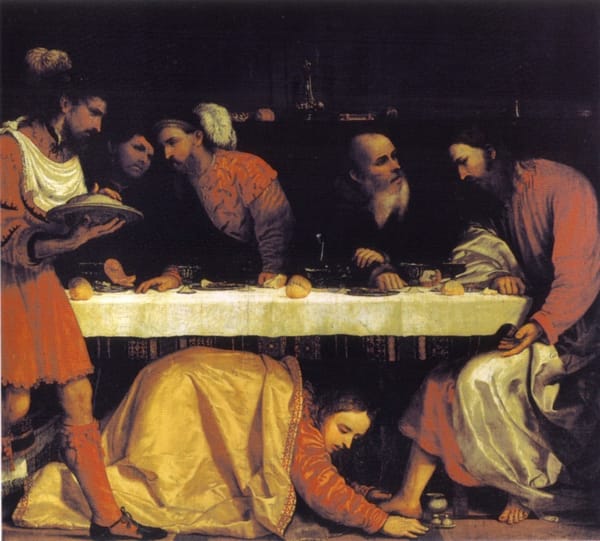
Holy Church here tells us, and in a most unmistakable way, what has been her chief aim for her children ever since the feast of Pentecost. The wedding spoken of in to-day’s Gospel is that of heaven, of which there is a prelude given here below, by the union effected in the sacred banquet of holy Communion. The divine invitation is made to all; and the invitation is not like that which is given on occasion of earthly weddings, to which the bridegroom and bride invite their friends and relatives as simple witnesses to the union contracted between two individuals. In the Gospel wedding, Christ is the Bridegroom, and the Church is the bride.33 These nuptials are ours, inasmuch as we are members of the Church; and the banquet-hall, in this case, is something far superior to that of a commonplace marriage.
But, that this union be as fruitful as it ought to be, the soul, in the sanctuary of her own conscience, must bring with her a fidelity which is to be an enduring one, and a love which is to be active, even when the feast of the sacred mysteries is past. Divine union, when it is genuine, masters one’s entire being. It fixes one in the untiring contemplation of the beloved Object, in the earnest attention to His interests, in the continual aspiration of the heart towards Him, even when He seems to have absented Himself from the soul. The bride of the divine nuptials should be no less intent on her God, than those of earth are on their earthly spouse.34 It is on this condition alone, that the Christian soul can be said to have entered on the unitive life, or can yield its precious fruits.
But, for the attainment of all this—that is, that our Lord Jesus Christ may have that full control over the soul and its powers which makes her to be truly His, and subjects her to Him as the bride to her Spouse35—it is necessary that all alien competition be entirely and definitively put aside. Now, there is one sad fact, which everyone knows : the divinely noble Son of the eternal Father, the Incarnate Word whose beauty enraptures the heavenly citizens,36 the immortal King, whose exploits and power and riches are beyond all that the children of men can imagine37—has rivals, human rivals, who pretend to have stronger claims than He to creatures whom He has redeemed from slavery, and invited to share with Him the honours of His throne. Even in the case of those whom His loving mercy succeeds in winning over wholly to Himself, is He not frequently kept waiting, for perhaps years, before they can make up their minds to be wise enough to take Him? During that long period of unworthy wavering, He loses not His patience, He does not turn elsewhere as He might in all justice do, but He keeps on asking them to be wholly His,38 mercifully waiting for some secret touch of one of His graces, joined with the unwearied labour of the Holy Ghost, to get the better of all this inconceivable resistance.
Let us not be surprised at the Church bringing the whole influence of her liturgy to bear on the winning of souls to Christ; for every such conquest she makes for Him is a fresh and closer bond of union between herself and her Lord. This explains how, on some of these previous Sundays, she has given us such admirable instructions regarding the efforts of the triple concupiscence. Earthly pleasures, pride, and covetousness, are really the treacherous advisers, who excite within us, against God’s claims, those impertinent rivals of whom we were just now speaking. Having now reached the sixteenth week of this season of the reign of the Holy Ghost, and taking it for granted that her sons and daughters are in right good earnest about their Christian perfection, the Church hopes that they have fairly unmasked the enemy. To-day, therefore, hoping that her teaching will not fail to impress us, and that we shall no longer put off our most loving Jesus, she proposes to us, in the allegory of our Gospel, the great mystery of love of which He Himself has said : ‘The kingdom of heaven is likened to a King, who made a marriage for His Son.’39 But, after all, her anxiety as mother and bride never allows her to make quite sure of even her best and dearest children, so long as they are in this world. In order to keep them on their guard against falling into sin, she bids them listen to St. Ambrose, whom she has selected as her homilist for this Sunday. He addresses himself to the Christian who has become a veteran in the spiritual combat, and tells him that concupiscence has snares without end, even for him! Alas! he may trip, any day; he has gone far, perhaps very far, on the road to the kingdom of God, but, even so, he may go wrong, and be for ever shut out from the marriage feast, together with heretics, pagans, and Jews. Let him be on the watch, then, or he may become tainted with those sins, from which, hitherto, thanks to God’s grace, he has kept clear. Let him take heed, or he may become like the man mentioned in to-day’s Gospel, who had the dropsy; and dropsy, says our saintly preacher of Milan, is a morbid exuberance of humours, which stupefy the soul, and induce a total extinction of spiritual ardour. And yet, even if he were to have such a fall as that, let him not forget that the heavenly physician is ever ready to cure him. The saint, in this short homily, condenses the whole of St. Luke’s fourteenth chapter, of which we have been reading but a portion; and he shows, a little farther on, that attachment to the goods of this life is opposed to the ardour which should carry us on the wings of the spirit, towards the heaven where lives and reigns our loved One.’40 But, above all, it is to the constant attitude and exercise of humility that he must especially direct his attention who would secure a prominent place in the divine feast of the nuptials. All saints are ambitious for future glory of this best kind; but they are well aware that, in order to win it, they must go low down, during the present life, into their own nothingness; the higher in the world to come, the lower in this. Until the great day dawn, when each one is to receive according to his works,41 we shall lose nothing by putting ourselves, meanwhile, below everybody. The position reserved for us in the kingdom of heaven depends not, in the least, either upon our own thoughts about ourselves, or upon the judgment passed on us by other people; it depends solely on the will of God, who exalteth the humble, and bringeth down the mighty from their seat.42 Let us hearken to Ecclesiasticus. ‘The greater thou art, the more humble thyself in all things, and thou shalt find grace before God; for great is the power of God alone, and He is honoured by the humble.'43 Were it only, then, from a motive of self-interest, let us follow the advice of the Gospel, and, in all things, claim, as our own, the last place. Humility is not sterling, and cannot please God, unless, to the lowly estimation we have of ourselves, we join an esteem for others, preventing everyone with honour,44 gladly yielding to all in matters which do not affect our conscience; and all this, from a deep-rooted conviction of our own misery and worthlessness in the sight of Him who searches the reins and heart.45 The surest test of our humility before God, is that practical charity for our neighbour, which, in the several circumstances of everyday life, induces us, and without affectation, to give him the precedence over ourselves.
On the contrary, one of the most unequivocal proofs of the falseness of certain so-called spiritual ways, into which the enemy sometimes leads incautious souls, is the lurking contempt wherewith he inspires them for one or more of their acquaintance; it is dormant, perhaps, habitually, but when occasion offers—and it frequently offers—they allow it to influence their thoughts, and words, and actions. To a greater or less extent, and, it may be, with more or less unconsciousness, self-esteem is the basis of the structure of their virtues; but, as for the illuminations, and mystical sweetnesses, which these people sometimes tell their intimate friends they enjoy, they may be quite sure that such favours do not come to them from the holy Spirit. When the substantial light of the Sun of justice shall appear in the valley of the judgment, all counterfeits of this kind will be made evident,46 and they that trusted to them, and spent their lives in petting such phantoms, will find them all vanishing in smoke. Having then to take a much lower place than the one they dreamt of, they may reckon it a solace, that some place is still given them at the divine banquet. They will have to thank God that their chastisement goes no farther than the shame of seeing those very people passing high up in honour above them, for whom, during life, they had such utter contempt.
The greater the conquests made by the Church, the greater are the efforts of hell to destroy the souls of her dear children. This fearful danger calls for her fervent prayers; and our Offertory-anthem is one of these.
Offertory
The Secret reminds us, how the Sacrifice, at which we are present, and which is to be consummated, in a few moments, by the words of Consecration, is the most direct and efficacious of all the immediate preparations that we can make for the Communion of the Body and Blood, which that Sacrifice produces on the altar.
Secret
The other Secrets, as on page 180.
Now that the Church is filled, by the holy Communion just received, with the true substantial Wisdom of the Father, she promises God, as her thank-offering, that she will keep His justice, which is His law, and that she will labour to make His divine teaching produce its fruits.
Communion
In the Postcommunion, let us pray, with the Church, that we may be renewed by the purity, which these heavenly mysteries bring to us, who are well prepared for the gift: the effect of such a gift tells upon our bodies, both in this and in the next life.
Postcommunion
The other Postcommunions, as on page 131.
Vespers
The psalms, capitulum, hymn, and versicle, as above, pages 71-81.
Antiphon of the Magnificat
- Ps. xliv. 2. ↩︎
- 2 Tim. ii. 9. ↩︎
- Eph. vi. 19. ↩︎
- Eph. iii. 8, 9. ↩︎
- Ibid. vi. 20. ↩︎
- St. Jas. i. 17, 18. ↩︎
- Eph. i. 18, 19. ↩︎
- In ep. ad Eph., Hom. 1. ↩︎
- Eph. v. 22; vi. 1, 5. ↩︎
- Eph. i. 1. ↩︎
- Our Volume for Christmas, p. 23. ↩︎
- St. John i. 5. ↩︎
- See above, p. 11. ↩︎
- 1 Cor. ii. 14. ↩︎
- Ibid. 6-9. ↩︎
- Eph. i. 3. ↩︎
- Deut. xxviii. 1-14. ↩︎
- Eph. i. 4. ↩︎
- 1 Cor. xii. 12-31; Eph. iv. 12-16. ↩︎
- Ibid. i. 6. ↩︎
- Ibid 4, 5. ↩︎
- Ibid. i. 20, 23; ii. 6. ↩︎
- Ibid. i. 9. ↩︎
- Ibid. 11. ↩︎
- Ibid. 7; ii. 1-5. ↩︎
- Ibid. i. 7. ↩︎
- Hymn for the Ascension; Matins. ↩︎
- Eph. i. 4, 6. ↩︎
- Heb. i. 3. ↩︎
- Eph. ii. 14-18. ↩︎
- Ibid. i. 6, 12, 14. ↩︎
- Ibid. 9, 10. ↩︎
- Apoc. xix. 7. ↩︎
- 1 Cor. vii. 34. ↩︎
- 1 Cor. xi. 8-10. ↩︎
- Acta S. Agnetis. ↩︎
- Ps. xliv. ↩︎
- Apoc. iii. 20. ↩︎
- St. Matt. xxii. 2. ↩︎
- S. Amb., in Luc., vii., Homil. Diei. ↩︎
- St. Matt. xvi. 27. ↩︎
- St. Luke i. 52. ↩︎
- Ecclus. iii. 20, 21. ↩︎
- Rom. xii. 10. ↩︎
- Apoc. ii. 23. ↩︎
- 1 Cor. iv. 5. ↩︎
September 20: St. Eustace and His Companions, Martyrs
The twentieth of September marks one of the saddest events in history. At the height of her power, in the glorious days of Pepin and Charlemagne, the eldest daughter of the Church had crowned her mother; and the Church, in the person of her Head, reigned in reality, as well as by right, until, a thousand years later, satan took advantage of the fallen state of France to despoil Peter of the patrimony which ensured his independence. The holy cross is still shedding its rays upon us!
To-day a group of martyrs, and this time a whole family, father, mother, and sons, take up their position around the standard of salvation. While the antiquity of their cultus in both east and west rests on the best authority, the details of their life are extremely vague. Could Placid the tribune, whose exploits are recorded by Josephus in his Wars of the Jews,1 be the same as the Eustace we are celebrating to-day? Does the genealogy of our saint connect him with the Octavia family, from which Augustus sprang? Again are we to recognize as his direct descendant the noble Tertullus, who confided to St. Benedict his son Placid, the favourite child of the holy patriarch, and the proto-martyr of the Benedictine Order?2 Subiaco long possessed the mountain designated by ancient tradition as the site of the apparition of the mysterious stag; Tertullus may have bequeathed it to the monastery, as his son's patrimony. But we have not space enough to do more than record the fact that these questions have been raised.3
There could hardly be a more touching legend than that of our martyrs.
Our trials are light compared with yours, O blessed martyrs! Obtain for us the grace not to betray the confidence of our Lord, when He calls us to suffer for Him in this world. It is thus we must win the glory of heaven. How can we triumph with the God of armies, unless we have marched under His standard? Now, that standard is the cross. The Church knows it, and therefore she is not troubled even by the greatest calamities. She knows, too, that her Spouse is watching over her, even when He seems to sleep; and she looks to the protection of such of her sons as are already glorified. And yet, O martyrs, for how many years has the sorrowful shadow of a sacrilegious invasion hung over the day of your triumph! Rome honoured you with so much love! Take vengeance on the audacity of hell, and deliver the holy city!
September 15 (the Same Day): Feast of the Seven Dolours of the Blessed Virgin Mary
|
[This feast day, previously kept on the third Sunday of September, was moved to Sept. 15 in the reforms of Pope St. Pius X, and is also celebrated on the Friday before Palm Sunday. We provide this on both Sept. 15 and on the Friday before Palm Sunday.]
From Dom Guéranger's The Liturgical Year.
‘O all ye that pass by the way, attend, and see if there be any sorrow like to my sorrow!’1 Is this, then, the first cry of that sweet babe, whose coming brought such pure joy to our earth? Is the standard of suffering to be so soon unfurled over the cradle of such lovely innocence? Yet the heart of mother Church has not deceived her; this feast, coming at such a time, is ever the answer to that question of the expectant human race: What shall this child be?
The Saviour to come is not only the reason of Mary’s existence, He is also her exemplar in all things. It is as His Mother that the blessed Virgin came, and therefore as the ‘Mother of sorrows’; for the God, whose future birth was the very cause of her own birth, is to be in this world 'a Man of sorrows and acquainted with infirmity.’2 ‘To whom shall I compare thee?’ sings the prophet of lamentations: ‘O Virgin . . . great as the sea is thy destruction.’3 On the mountain of the sacrifice, as Mother she gave her Son, as bride she offered herself together with Him; by her sufferings both as bride and eus Mother, she was the co-redemptress of the human race. This teaching and these recollections were deeply engraved on our hearts on that other feast of our Lady’s dolours which immediately preceded Holy Week.
Christ dieth now no more: and our Lady’ sufferings are over. Nevertheless the Passion of Christ is continued in His elect, in His Church, against which hell vents the rage it cannot exercise against Himself. To this Passion of Christ’s mystical body, of which she is also Mother, Mary still contributes her compassion; how often have her venerated images attested the fact, by miraculously shedding tears! This explains the Church’s departure from liturgical custom, by celebrating two feasts, in different seasons, under one same title.
On perusing the register of the apostolic decrees concerning sacred rites, the reader is astonished to find a long and unusual interruption lasting from March 20, 1809 to September 18, 1814, at which latter date is entered the decree instituting on this present Sunday a second Commemoration of our Lady’s Dolours.4 1809-1814, five sorrowful years, during which the government of Christendom was suspended; years of blood which beheld the Man-God agonizing once more in the person of His captive Vicar. But the Mother of sorrows was still standing beneath the cross, offering to God the Church's sufferings; and when the trial was over, Pius VII, knowing well whence the mercy had come, dedicated this day to Mary as a fresh memorial of the day of Calvary.
Even in the seventeenth century, the Servites had the privilege of possessing this second feast, which they celebrated as a double of the second class, with a vigil and an octave. It is from them that the Church has borrowed the Office and Mass. This honour and privilege was due to the Order established by our Lady to honour her sufferings and to spread devotion to them. Philip Benizi, heir to the seven holy Founders, propagated the flame kindled by them on the heights of Monte Senario; thanks to the zeal of his sons and successors, the devotion to the Seven Dolours of the blessed Virgin Mary, once their family property, is now the treasure of the whole world.
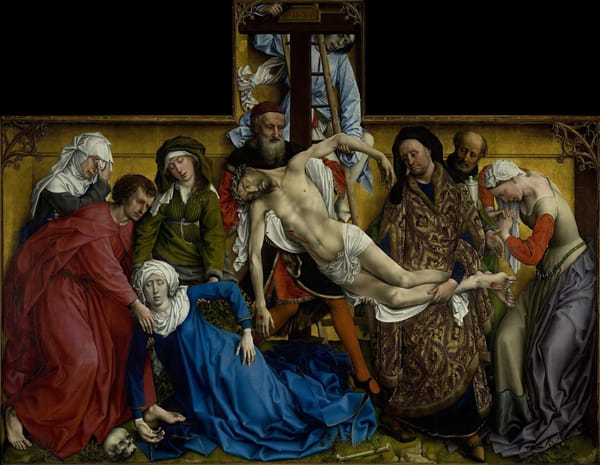
The prophecy of the aged Simeon, the flight into Egypt, the loss of the divine Child in Jerusalem, the carrying of the cross, the Crucifixion, the taking down from the cross, and the burial of Jesus: these are the seven mysteries into which are grouped the well-nigh infinite sufferings which made our Lady the Queen of martyrs, the first and loveliest rose in the garden of the Spouse. Let us take to heart the recommendation from the Book of Tobias which the Church reads during this week in the Office of the time: Thou shalt honour thy mother: for thou must be mindful what and how great perils she suffered in giving thee birth.5
Mass
The daily Sacrifice, though surrounded with all the pomps of the liturgy, is substantially the same as that of Calvary. But the only assistants at the foot of the cross were, as our Introit points out, one man, and a few women weeping around the Mother of sorrows. The Gospel will repeat this Introit, and even its verse which, contrary to custom, is not taken from the Psalms.
Introit
The honouring of our Lady’s Dolours does not distract our thoughts from the one Victim of salvation. On the contrary, its immediate result, as the Collect shows, is to cause the Passion of our Saviour to bear fruit in our souls.
Collect
Then is added the Collect of the occurring Sunday.
Epistle
Cap. xiii.Benedixit te Dominus in virtute sua, quia per te ad nihilum redegit inimicos nostros. Benedicta es tu, filia, a Domino Deo excelso, præ omnibus mulieribus super terram. Benedictus Dominus, qui creavit cœlum et terram: quia hodie nomen tuum ita magnificavit, ut non recedat laus tua de ore hominum, qui memores fuerint virtutis Domini in sternum, pro quibus non pepercisti animie tuæ propter angustias, et tribulationem generis tui, sed subvenisti ruinæ ante conspectum Dei nostri.
Ch. xiii.The Lord hath blessed thee by his power, because by thee he hath brought our enemies to nought. Blessed art thou, O daughter, by the Lord the most high God above all women upon the earth. Blessed be the Lord who made heaven and earth, because he hath so magnified thy name this day, thatthy praise shall not depart out of the mouth of men, who shall be mindful of the power of the Lord for ever; for that thou hast not spared thy life by reason of the distress and tribulation of thy people, but hast prevented our ruin in the presence of our God.
Oh the greatness of our Judith among all creatures! ‘God,’ says the pious and profound Father Faber, ‘vouchsafed to select the very things about Him which are most incommunicable, and in a most mysteriously real way communicate them to her. See how He had already mixed her up with the eternal designs of creation, making her almost a partial cause and partial model of it. Our Lady’s co-operation in the redemption of the world gives us a fresh view of her magnificence. Neither the Immaculate Conception nor the Assumption will give us a higher idea of Mary’s exaltation than the title of co-redemptress. Her dolours were not necessary for the redemption of the world, but in the counsels of God they were inseparable from it. They belong to the integrity of the divine plan. Are not Mary’s mysteries Jesus’ mysteries, and His mysteries hers? The truth appears to be, that all the mysteries of Jesus and Mary were in God’s design as one mystery. Jesus Himself was Mary’s sorrow, seven times repeated, aggravated sevenfold. During the hours of the Passion, the offering of Jesus and the offering of Mary were tied in one. They kept pace together; they were made of the same materials; they were perfumed with kindred fragrance; they were lighted with the same fire; they were offered with kindred dispositions. The two things were one simultaneous oblation, interwoven each momentthrough the thickly crowded mysteries of that dread time, unto the eternal Father, out of two sinless hearts, that were the hearts of Son and Mother, for the sins of a guilty world which fell on them contrary to their merits, but according to their own free will.’6 Let us mingle our tears with Mary’s, in union with the sufferings of the great Victim. In proportion as we do this during life we shall rejoice in heaven with the Son and the Mother; if our Lady is now, as we sing in the Alleluia verse, Queen of heaven and mistress of the world, is there one among all the elect who can recall sufferings comparable to hers?
After the Gradual follows the Stabat Mater, the touching Complaint attributed to the Franciscan, blessed Jacopone de Todi.
Gradual
Sequence
Juxta crucem lacrymosa,
Dum pendebat Filius.
Contristatam et dolentem,
Pertransivit gladius.
Fuit illa benedicta
Mater Unigeniti!
Pia Mater, dum videbat
Nati pænas inclyti.
Matrem Christi si videret
In tanto supplicio?
Christi Matrem contemplari
Dolentem cum Filio?
Vidit Jesum in tormentis,
Et flagellis subditum.
Moriendo desolatum,
Dum emisit spiritum.
Me sentire vim doloris
Fac ut tecum lugeam.
In amando Christum Deum,
Ut sibi complaceam.
Crucifixi fige plagas
Cordi meo valide.
Tam dignati pro me pati,
Pænas mecum divide.
Crucifixo condolere,
Donec ego vixero.
Et me tibi sociare
In planctu desidero.
Mihi jam non sis amara:
Fac me tecum plangere.
Passionis fac consortem,
Et plagas recolere.
Fac me cruce inebriari,
Et cruore Filii.
Per te, Virgo, sim defensus,
In die judicii.
Da per Matrem me venire
Ad palmam victoriæ.
Fac ut animæ donetur
Paradisi gloria.
hung her Son, the sorrowing
Mother stood and wept.
that sighed, and mourned,
and grieved.
was that blessed Mother
of an only Son!
and mourned at seeing
her divine Son suffer.
to see Jesus’ Mother
in such suffering?
the Mother and the Son in sorrow,
and not join his own with theirs?
tormented and scourged
for the sins of his people.
as he breathed forth
his soul and died.
make me feel the force of sorrow;
make me weep with thee!
with the love of Jesus my God,
that so I may content his heart.
deeply stamp the wounds
of the Crucified upon my heart.
for it is for me he graciously deigned
to be wounded and to suffer.
make me compassionate with thee our crucified Jesus,
as long as life shall last.
to stand nigh the cross with thee,
and be a sharer in thy grief.
be not displeased at my prayer:
make me weep with thee.
make me a partner of his Passion,
an adorer of his Wounds.
make me to be inebriated with the cross
and Blood of thy Son.
let me be defended by thee, O Virgin,
on the day of judgment!
let me, by thy Mother’s aid,
come to my crown of victory.
oh! give to my soul
the reward of heaven’s glory.
Gospel
Cap. xix.In illo tempore: Stabant juxta crucem Jesu Mater ejus, et soror Matris ejus Maria Cleophæ, et Maria Magdalene. Cum vidisset ergo Jesus Matrem, et discipulum stantem quem diligebat, dicit Matri suæ: Mulier, ecce filius tuus. Deinde dicit discipulo: Ecce mater tua. Et ex illa hora accepit eam discipulus in sua.
Ch. xix.At that time, there stood by the cross of Jesus, his Mother, and his Mother’s sister Mary of Cleophas, and Mary Magdalene. When Jesus therefore had seen his Mother and the disciple standing, whom he loved, he saith to his Mother, Woman, behold thy Son. After that he saith to the disciple, Behold thy Mother. And from that hour the disciple took her to his own.
‘Woman, behold thy son.—My God, My God, why hast Thou forsaken Me?’ Such are the words of Jesus on the cross. Has He, then, no longer a Father in heaven, a Mother on earth? Oh! mystery of justice, and still more of love! God so loved the world as to give His only-begotten Son for it, so far as to lay upon Him, instead of upon sinful men, the curse our sins deserved; and our Lady too, in her sublime union with the Father, did not spare, but offered in like manner for us all, this same Son of her virginity. If on this head we belong to the eternal Father, we belong henceforth to Mary also; each has bought us at a great price: the exchange of an only Son for sons of adoption.
It is at the foot of the cross that our Lady truly became the Queen of mercy. At the foot of the altar, where the renewal of the great Sacrifice is preparing, let us commend ourselves to her omnipotent influence over the Heart of her divine Son.
Offertory
Recordare, Virgo Mater Dei, dum steteris in conspectu Domini, ut loquaris pro nobis bona, et ut avertat indignationem suam a nobis.
Be mindful, O Virgin Mother of God, when thou standest in the sight of the Lord, to speak good things for us, that he may turn away his anger from us.
How many holy souls, in the course of ages, have come to keep faithful company with the Mother of sorrows! Their intercession united with Mary’s is a strength to the Church; and we hope to obtain thereby the effect of the merits of our Saviour’s death.
Secret
Offerimus tibi preces et hostias, Domine Jesu Christe, humiliter supplicantes: ut, qui transfixionem dulcissimi spiritus beatæ Mariæ Matris tuæ precibus recensemus; suo, suorumque sub cruce sanctorum consortium, multiplicato piissimo interventu, meritis mortis tuæ, meritum cum beatis habeamus. Qui vivis.
We offer to thee prayers and sacrifices, O Lord Jesus Christ, humbly beseeching, that we who pray in remembrance of the transfixion of the most sweet soul of blessed Mary thy Mother, by the multiplied and pious intercession of her and her holy companions under the cross, may have a reward with the blessed, by the merits of thy death. Who livest.
A commemoration is then made of the Sunday.
The Preface is the same as on September 8, page 165, except that for ‘in Nativitate, on the Nativity,’ is substituted ‘in Transfixione, on the Transfixion’ of the blessed Mary ever Virgin.
So great, it has been said, was Mary’s grief on Calvary, that, had it been divided among all creatures capable of suffering, it would have caused them all to die instantly.7 It was our Lady’s wonderful peace, maintained by perfect acquiescence and the total abandonment of her whole being to God, that alone was able to sustain in her the life which the Holy Ghost was preserving for the Church’s sake. May our participation in the sacred mysteries give us that peace of God which passeth all understanding, and which keepeth minds and hearts in Christ Jesus!
Communion
As the Postcommunion points out, the loving memory of our Mother’s sorrows will powerfully assist us to find all good things in the holy Sacrifice of the altar.
Postcommunion
The Postcommunion of the occurring Sunday is added, and the Gospel of the same is read at the end of the Mass instead of the usual passage from St. John.
Vespers
The first and fifth antiphons of Vespers are taken from the Canticle of canticles, the three intermediate ones from Isaias, and that of the Magnificat from Job; the capitulum is from Jeremias.
Ps. Dixit Dominus, page 38.
Ps. Laudate pueri, page 41.
Ps. Lætatus sum, page 152.
Ps. Nisi Dominus, page 153.
Ps. Lauda Jerusalem, page 154.
Capitulum
Thren. ii.
Hymn
Quo dolore volvitur,
Luctuosa de cruento
Dum, revulsum stipite,
Cernit ulnis incubantem
Virgo Mater Filium!
Et latus dulcissimum,
Dexteramque vulneratam,
Et sinistram sauciam,
Et rubras cruore plantas
Ægra tingit lacrymis.
Stringit arctis nexibus
Pectus illud, et lacertos,
Illa figit vulnera:
Sicque tota colliquescit
In doloris osculis.
Per tuas has lacrymas,
Filiique triste funus,
Vulnerumque purpuram,
Hunc tui cordis dolorem
Conde nostris cordibus.
Et coævo Flamini,
Esto summæ Trinitati
Sempiterna gloria,
Et perennis laus, honorque
Hoc, et omni sæculo.
in what an abyss of sorrow
is she whelmed, that Virgin Mother,
as mourning she beholds her Son
taken down from the blood-stained tree
and laid in her arms!
that side most sweet,
that right hand all pierced,
and the left hand wounded too,
those feet all rosy with his blood:
the desolate Mother bathes them with her tears.
she locks in loving embrace
that breast and those arms,
and kisses their wounds;
and thus she melts away
in sorrowful caresses.
by these thy tears,
by the cruel death of thy Son,
and by his empurpled wounds,
plant deep in our hearts
this anguish of thine own.
and to the coequal Spirit,
to the most high Trinity,
be everlasting glory,
unending praise and honour,
now and for evermore.
Antiphon of the Magnificat
The Prayer is the Collect of the Mass page 211.
Then is made a commemoration of the Sunday.
| Previous September 19: St. Januarius, Bishop and Martyr, and his Companions, Martyrs | Next September 20: St. Eustace and His Companions, Martyrs |