Daily reading
After Pentecost
Simple · Movable from Easter · Temporal
October 25, 2020
From Dom Guéranger’s The Liturgical Year.

|
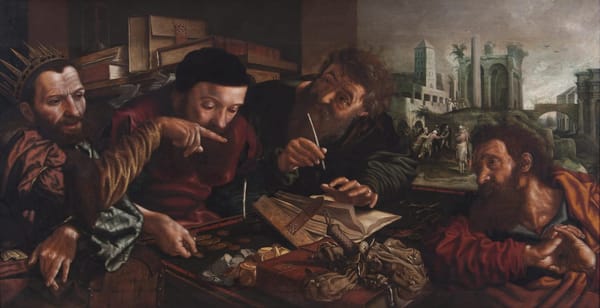
The Twenty-First Sunday after Pentecost
The remaining Sundays are the last of the Church’s cycle; but their proximity to its termination varies each year, according as Easter is early or late. This their movable character does away with anything like harmony between the composition of their Masses and the Lessons of the night Office, which, dating from August, have been appointed and fixed for each week. This we explained to our readers on the seventh Sunday after Pentecost. Still, the instruction which the faithful ought to derive from the sacred liturgy would be incomplete, and the spirit of the Church, during these last weeks of her year, would not be sufficiently understood by her children, unless they were to remember, that the two months of October and November are filled, the first, with readings from the Book of the Machabees, whose example inspirits us for the final combats, and the second, with lessons from the Prophets, proclaiming to us the judgments of God.1
Mass
Durandus, Bishop of Mende, in his Rational, tells us that this and the following Sundays till Advent bear closely on the Gospel of the marriage-feast, of which they are really but a further development. ‘Whereas,' says he, speaking of this twenty-first Sunday, ‘this marriage has no more powerful opponent than the envy of satan, the Church speaks to us to-day on our combat with him, and on the armour wherewith we must be clad in order to go through this terrible battle, as we shall see by the Epistle. And because sackcloth and ashes are the instruments of penance, therefore does the Church borrow, for the Introit, the words of Mardochai, who prayed for God’s mercy in sackcloth and ashes.'2
The reflexions of Durandus are quite true; but though the thought of her having soon to be united with her divine Spouse is uppermost in the Church’s mind, yet it is by forgetting her own happiness and turning all her thoughts to mankind, whose salvation has been entrusted to her care by her Lord, that she will best prove herself to be truly His bride during the miseries of those last days. As we have already said, the near approach of the general judgment, and the terrible state of the world during the period immediately preceding that final consummation of time, is the very soul of the liturgy during these last Sundays of the Church’s year. As regards the present Sunday, the portion of the Mass which used formerly to attract the attention of our Catholic forefathers was the Offertory, taken from the Book of Job, with its telling exclamations and its emphatic repetitions. We may, in all truth, say that this Offertory contains the ruling idea which runs through this twenty-first Sunday after Pentecost.
Reduced, like Job on the dung-hill, to the extremity of wretchedness, the world has nothing to trust to but God’s mercy. The holy men who are still living in it, imitating in the name of all mankind the sentiments of the just man of Idumea, honour God by a patience and resignation which do but add power and intensity to their supplications. They begin by making their own the sublime prayer made by Mardochai for his people, who were doomed to extermination. The world is condemned to a similar ruin.3
Introit
Ps. Blessed are the undefiled in the way : who walk in the law of the Lord. Glory, etc. All things.
The Church shows us very clearly in the Collect that, although she is quite ready to go through the roughest times, yet she prefers peace, because that furnishes her with undisturbed freedom for paying to her God the united homage of religion and good works. The closing petition made by Mardochai, in the prayer whose commencement forms our Introit, was that God would bestow on His people the liberty necessary for that occupation on which the world’s well-being ever depends, the occupation of giving praise to God. These were Mardochai’s grand words : ‘May we live, and praise Thy name, O Lord! and shut not Thou the mouths of them that sing to Thee!’
Collect
The other Collects, as on page 120.
Epistle
Cap. vi.Fratres, Confortamini in Domino, et in potentia virtutis ejus. Induite vos armaturam Dei, ut possitis stare adversus insidias diaboli : quoniam non est nobis colluctatio adversus carnem et sanguinem : sed adversus principes et potestates, adversus mundi rectores tenebrarum harum, contra spiritualia nequitiæ, in cœlestibus. Propterea accipite armaturam Dei, ut possitis resistere in die malo, et in omnibus perfecti stare. State ergo succincti lumbos vestros in ventate, et induti loricam justitiæ, et calceati pedes in præparatione Evangelii pacis: in omnibus sumentes scutum fìdei, in quo possitis omnia tela nequissimi ignea exstinguere : et galeam salutis assumite : et gladium Spiritus, quod est verbum Dei.
Ch. vi.
Brethren : Be strengthened in the Lord, and in the might of his power. Put ye on the armour of God, that you may be able to stand against the deceits of the devil. For our wrestling is not against flesh and blood; but against principalities and powers, against the rulers of the world of this darkness, against the spirits of wickedness in the high places. Therefore take unto you the armour of God, that you may be able to resist in the evil day, and to stand in all things perfect. Stand therefore, having your loins girt about with truth, and having on the breastplate of justice, and your feet shod with the preparation of the Gospel of peace; in all things taking the shield of faith, wherewith you may be able to extinguish all the fiery darts of the most wicked one. And take unto you the helmet of salvation, and the sword of the Spirit, which is the word of God.
The early beginnings of man’s union with his God are, generally speaking, deliciously calm. Divine Wisdom, once He has led His chosen creature by hard laborious work to the purification of his mind and senses, allows him, when the sacred alliance is duly concluded, to rest on His sacred breast, and thoroughly attaches the devoted one to Himself by delights which are an ante-dated heaven, making the soul despise every earthly pleasure. It seems as though the welcome law of Deuteronomy were always in force,4 namely, that no battle, and no anxiety, must ever break in upon the first season of the glorious union. But this exemption from the general taxation is never of long duration; for combat is the normal state of every man here below.5
The Most High is pleased at seeing a battle well fought by His Christian soldiers. There is no name so frequently applied to Him by the prophets as that of the God of hosts. His divine Son, who is the Spouse, shows Himself here on earth as the Lord who is mighty in battle.6 In the mysterious nuptial canticle of the forty-fourth Psalm, He lets us see Him as a most powerful Prince, girding on His grand sword, and making His way, with His sharp arrows, through the very heart of His enemies, in order to reach, in fair valiance and beautiful victory, the bride He has chosen as His own. She, too, the bride, whose beauty He has vouchsafed to love, and whom He wills to share in all His own glories,7 advances towards Him in the glittering armour of a warrior,8 surrounded by choirs9 singing the magnificent exploits of the Spouse, while she herself is terrible as an army set in array.10 The armour of the brave is on her arms and breast; her noble bearing reminds one of the tower of David, with its thousand bucklers.11
United to her divine Lord, warriors the most valiant stand about her; they merit that privilege by their well-proved sword and their skill in war; each one of them has his sword ready, because of the night-surprises which the enemy may use against this most dear Church.12 For until the dawn of the eternal day, when the shadows of this present life are put to flight13 by the light of the Lamb,14 who will then have vanquished all His enemies, power is in the hands of the rulers of the world of this darkness, says St. Paul, in our to-day’s Epistle; and it is against them that we must take to ourselves the armour of God, which he there describes; we must wear it all, if we would he able to resist, in the evil day.
The evil days, spoken of by the apostle last Sunday,15 are frequent in the life of every individual, as, likewise, in the world's history. But for every man, and for the world at large, there is one evil day, evil beyond all the others : it is the last day, the day of judgment, the day of exceeding bitterness as the Church calls it,16 on account of the woe and misery which are to fill it. We talk of so many years as passing away, and of centuries succeeding each other; but all these are neither more nor less than preparations hurrying on the world to the last day. Happy those who, on that day, shall fight the good fight,17 and win victory! Or who, as our apostle expresses it, shall stand, whilst all around them is ruin, yea, stand in all things perfect! They shall not be hurt by the second death;18 wreathed with the crown of justice,19 they shall reign with God,20 on His throne, together with His Son.21
The war is an easy one, when we have this Man. God for our Leader. All He asks of us, is what the apostle thus words : Be strengthened in the Lord, and in the might of His power! It is leaning on her Beloved, that the beautiful Church is to go up from the desert; and, thus supported, she is actually to be flowing with delights,22 even in those most sad days. The faithful soul is out of herself with love, when she remembers that the armour she wears is the armour of God, that is, the very armour of her Spouse. It is thrilling to hear the prophets describing Jesus, our Leader, accoutred for battle, with all the pieces we, too, are to wear : He girds Himself with the girdle of faith;23 then He puts the helmet of salvation on His beautiful head;24 then, the breast-plate of justice;25 then, the shield of invincible equity;26 and finally a magnificently tempered sword, the sivord of the Spirit, which is the word of God.27 The Gospel also portrays Him entering on the great battle, that He might teach us by His example, how to use these divine arms.
This armour consists of many parts, because of its varied uses and effects; and yet, whether offensive or defensive, all of them have one common name, faith. This our Epistle tells us; and this our divine Leader taught us, when to the triple temptation brought against Him by the devil on the mount of Quarantana, He made answer by texts from the sacred Scriptures.28 The victory which overcometh the world, is our faith, says St. John.29 When St. Paul, at the close of his career, reviews the combats he had fought through life, he sums up all in this telling word : ‘I have kept the faith.’30 The life of Paul, in that, should be the life of every Christian, for he says to us : 'Fight the good fight of faith!'31 It is faith, which, in spite of those fearful odds enumerated in to-day’s Epistle as being against us, ensures the victory to men of good will. If, in the warfare we must go through, we were to reckon the chances of our enemies by their overwhelming forces and advantages, it is quite certain that we should have little hope of winning the day; for it is not with men like ourselves, it is not, as the Apostle puts it, with flesh and blood, that we have to wrestle; but with enemies that we can never grapple with, who are in the high places of the air around us, and are, therefore, invisible, and most skilled, and powerful, and wonderfully up in all the sad secrets of our poor fallen nature, and turning the whole weight of their advantages to trick man, and ruin him, out of hatred for God. These wicked spirits were originally created, that, in the purity of their unmixed spiritual nature, they should be a reflex of the divine splendour of their Maker; and now, having rebelled by pride, they exhibit that execrable prodigy of angelic intelligences, spending all their powers in doing evil to man, and in hating truth.
How, then, are we, who by our very nature are darkness and misery, to wrestle with these spiritual principalities and powers, who devote all their wisdom and rage to produce darkness, so as to turn the whole earth into a world of darkness?'By our becoming light,' answers St. John Chrysostom.32 The light, it is true, is not to shine upon us in its own direct brightness until the great day of the revelation of the sons of God;33 but meanwhile we have a divine subsidy, which supplements sight, viz., the revealed word.34 Baptism did not open our eyes so as to see God, but it opened our ears that we might hear Him when He speaks to us. Now, He speaks to us by the Scriptures, and by His Church; and our faith gives us, regarding truth thus revealed, a certainty as great as though we saw it with our eyes. By his child-like docility, the just man walks on in peace, in the simplicity of the Gospel. Better than breast-plate or helmet, the shield of faith protects us from every sort of injury; it blunts the fiery darts of the world, it repels the fury of our own passions, it makes us far-seeing enough to escape the most artful snares of the most wicked ones. Is not the word of God good for every emergency? And it is never wanting to us. Satan has a horror of the Christian who, though he may be weak in other respects, is strong in this divine word. He has a greater fear of that man than he has of all the schools and professors of philosophy; he knows well that at every encounter he will be crushed beneath his feet,35 and with a rapidity akin to what our Lord tells us He Himself witnessed : ‘I saw satan, like lightning, falling from heaven.'36 It was on the great battle-day37 when he was hurled from paradise by that one word michael; exquisite word, which was given to the triumphant Archangel to be his everlasting noble name! And he himself, by that word of God, and by that victory for God, was made our model and our defender. We have already explained to our readers why it is that these closing weeks of the Church’s year are so full of the grand Archangel St. Michael.
In the Gradual and its versicle the Church tells her Lord how He has ever been the refuge of His people: His goodness, like His power, was before all ages, because He is God from all eternity. May He, therefore, now protect His faithful servants, who, reduced to a scanty number as Israel was of old, are preparing the last exodus of the Church, which is leaving this infidel world, and is hastening to the true land of promise.
Gradual
Gospel
Cap. xviii..
In illo tempore : Dixit Jesus discipulis suis parabolam hanc : Assimilatum est regnum cœlorum homini regi, qui voluit rationem ponere cum servis suis. Et cum cœpisset rationem ponere, oblatus est ei unus, qui debebat ei decem millia talenta. Cum autem non haberet unde redderet, jussit eum dominus ejus venmndari, et uxorem ejus, et filios, et omnia quæhabebat, et reddi. Procidens autem servus ille, orabat eum, dicens : Patientiam habe in me, et omnia reddam tibi. Misertus autem dominus servi illius, dimisit eum, et debitum dimisit ei. Egressus autem servus ille, invenit unum de conservis suis, qui debebat ei centum denarios : et tenens suffocabat eum, dicens : Redde quod debes. Et procidens conservus ejus, rogabat eum, dicens : Patientiam habe in me, et omnia reddam tibi. Ille autem noluit; sed abiit, et misit eum in carcerem, donec redderet debitum. Videntes autem conservi ejus quæ fiebant, contristati sunt valde : et venerunt, et narraverunt domino suo omnia quæ facta fuerant. Tunc vocavit ilium dominus suus, et ait illi: Serve nequam, omne debitum dimisi tibi quoniam rogasti me : nonne ergo oportuit et te misereri conservi tui, sicut et ego tui misertus sum? Et iratus dominus ejus, tradidit eum tortoribus, quoadusque redderet universum debitum. Sic et Pater meus cœlestis faciet vobis, si non remise ritis unusquisque fratri suo de cordibus vestris.
Ch. xviii.
At that time: Jesus spoke to his disciples this parable : The kingdom of heaven is likened to a king who would take an account of his servants. And when he had begun to take the account, one was brought to him that owed him ten thousand talents. And as he had not wherewith to pay it, his lord commanded that he should be sold, and his wife and children, and all that he had, and payment to be made. But that servant falling down, besought him, saying : Have patience with me, and I will pay thee all And the lord of that servant being moved with pity, let him go, and forgave him the debt. But when that servant was gone out, he found one of his fellow-servants that owed him a hundred pence; and laying hold of him, he throttled him, saying : Pay what thou owest. And his fellow-servant falling down, besought him, saying: Have patience with me, and I will pay thee all. And he would not: but went and cast him into prison, till he paid the debt. Now his fellow-servants seeing what was done, were very much grieved, and they came and told their lord all that was done. Then his lord called him, and said to him: Thou wicked servant, I forgave thee all the debt, because thou besoughtest me : shouldst not thou then have had compassion also on thy fellowservant, even as I had compassion on thee? And his lord being angry, delivered him to the torturers, until he paid all the debt. So also shall my heavenly Father do to you, if you forgive not every one his brother from your hearts.
‘O thou just Judge of vengeance, grant us the gift of forgiveness before the day of reckoning cometh!' Such is the petition that comes from the heart of holy mother Church, as she thinks on what may have befallen those countless children of hers, who have been victims of death during this, as every other year; it is, moreover, the supplication that should be made by every living soul, after hearing the Gospel just read to us. The sequence Dies irœ, from which these words are taken, is not only a sublime prayer for the dead; it is, likewise, and especially at this close of the ecclesiastical year, an appropriate expression for all of us who are still living. Our thoughts and our expectations are naturally turned towards our own death. We almost seem forgotten, and overlooked, in this evening of the world’s existence; but it is not so, for we know, from the sacred Scripture, that we shall join those who have already slept the last sleep, and shall be taken, together with them, to meet our divine Judge.38
Let us hearken to some more of our mother’s words in that same magnificent sequence: ‘How great will be our fear, when the Judge is just about to come, and rigorously examine all our works! The trumpet’s wondrous sound will pierce the graves of every land, and summon us all before the throne! Death will stand amazed, and nature too, when the creature shall rise again, to go and answer Him that is to judge! The written book shall be brought forth, wherein all is contained, for which the world is to be tried. So, when the Judge shall sit on His throne, every hidden secret shall be revealed, nothing shall remain unpunished! What shall I, poor wretch! then say? Whom ask to be my patron, when the just man himself shall scarce be safe? O King of dreaded majesty! who savest gratuitously them that are saved, save me, O fount of love! Do Thou remember, loving Jesu! that I was cause of Thy life on earth! Lose me not on that day!' Undoubtedly, such a prayer as this has every best chance of being graciously heard, addressed as it is to Him, who has nothing so much at heart as our salvation, and who, to procure it, gave Himself up to fatigue and suffering, and to death on the cross. But we should be inexcusable, and deserve condemnation twice over, were we to neglect to profit by the advice He Himself gives us, whereby to avert from us the perils of ‘that day of tears, when guilty man shall rise from the dust, and go to be judged!’39 Let us, then, meditate on the parable of our Gospel, whose sole object is to teach us a sure way of settling, at once, our accounts with the divine King.
We are all of us, in fact, that negligent servant, that insolvent debtor, whose master might, in all justice, sell him with all he has, and hand him over to the torturers. The debt contracted with God by the sins we have committed is of such a nature as to deserve endless tortures; it supposes an eternal hell, in which the guilty one will ever be paying, yet never cancelling his debt. Infinite praise, then, and thanks to the divine Creditor, who, being moved to pity by the entreaties of the unhappy man who asks for time and he will pay all, grants him far beyond what he prays for, by immediately forgiving him the debt. He attaches but one condition to the pardon, as is evident from the sequel. He insists, and most justly, that he should go and do in like manner towards his fellowservants, who may, perhaps, owe something to him. After being so generously forgiven by his Lord and King, after having his infinite debt so gratuitously cancelled, how can he possibly turn a deaf ear to the very same prayer which won pardon for himself, now that a fellow-servant makes it to him? Is it to be believed that he will refuse all pity towards one whose only offence is that he asks him for time, and he will pay all?
‘It is quite true,’ says St. Augustine, 'that every man has his fellow-man for a debtor; for who is the man that has had no one to offend him? But, at the same time, who is the man that is not debtor to God? For all of us have sinned. Man, therefore, is both debtor to God, and creditor to his fellow-man. It is for this reason that God has laid down this rule for thy conduct, that thou must treat thy debtor, as He treats His . . . . We pray every day; every day we send up the same petition to the divine throne; every day we prostrate ourselves before God, and say to Him : “ Forgive us our debts, as we forgive them that are debtors to us.”40 Of what debts speakest thou? Is it of all thy debts? or of one or two only? Thou wilt say : “ Of all.” Do thou, therefore, forgive thy debtor, for it is the rule laid upon thee, it is the condition accepted by thee.’41
‘It is a greater thing,’ says St. John Chrysostom, ‘to forgive our neighbour the trespasses he has committed against us, than to remit him a sum of money; for, by forgiving him his sins, we imitate God.’42 And, after all, what is the injury committed by one man against another man, if compared with the offence committed by man against God? Alas! we are all guilty of the latter; even the just man knows its misery seven times43 over, and, as the text probably means, seven times a day; so that, it comes ruffling our whole day. Let us at least contract the habit of being merciful towards our fellow-men, since every night we are pardoned all our miseries, on the sole condition of owning them. It is an excellent practice, not to go to bed without putting ourselves in the dispositions of a little child, who can rest his head on God’s bosom, and there fall asleep. But, if we thus feel it a happy necessity, to find in the heart of our heavenly Father44 forgetfulness of our day’s faults, and an infinitely tender love for us, how can we, at that very time, dare to be storing up in our minds any bitterness against our neighbours, our brethren, who are also His children? Even supposing that we had been treated by them with outrageous injustice or insult, could these their faults bear any comparison with our offences against that good God, whose born enemies we were, and whom we have caused to be put to an ignominious death? Whatsoever may be the circumstances attending the unkindness shown us, we may and should invariably practise the rule given us by the apostle: 'Be ye kind one to another, merciful, forgiving one another, even as God hath forgiven you, in Christ! Be ye imitators of God, as most dear children!’45 What! thou callest God thy Father, and dost thou remember an injury that has been done thee? ‘That,’ says St. John Chrysostom, ‘is not the way a son of God acts! The work of a son of God is this: to pardon his enemies, to pray for them that crucify him, to shed his blood for them that hate him. Would you know the conduct of one who is worthy to be a son of God? He takes his enemies, and his ingrates, and his robbers, and his insulters, and his traitors, and makes them his brethren and sharers of all his wealth!’46
We here give, in its entirety, the celebrated Offertory of Job, with its verses. The observations we made at the beginning of the Mass will enable us to enter into the spirit of this liturgical piece. As Amalarius says, the anthem, which has been retained, gives us the words of the historian, who simply relates the facts, one after the other, without any remarks; but, in the verses, we have Job himself speaking, his body all humbled, and his soul full of sorrow : the repetition of the same words, their interruptions, their refrain, their broken phrases, vividly represent his panting for breath, and intense suffering.47
Offertory
℣. II Quœ est enim, quæ est enim, quæest enim for titudo mea ut sustineam? aut quis finis meus ut patienter agam?
℣. III. Numquid fortitudo lapidum est fortitudo mea? ant caro mea ænea est? aut caro mea ænea est?
℣. IV. Quoniam, quoniam, quoniam non revertetur oculus meus ut videat bona, ut videat bona, ut videat bona, ut videat bona, ut videat bona, ut videat bona, ut videat bona, ut videat bona, ut videat bona.
There was a man.
℣. II. For what is, for what is, for what is my strength, that I can hold out? or what is my end, that I should keep patience?
There was a man.
℣. III. Is my strength the strength of stones? Or is my flesh of brass? or is my flesh of brass?
There was a man.
℣. IV. For, for, for, mine eye shall not return to see good things, to see good things, to see good things, to see good things, to see good things, to see good things, to see good things, to see good things, to see good things.
There was a man.
The salvation of the world, and that of each individual man, is, virtually, ever in the august Sacrifice, whose power restores man by appeasing God. With a confidence that fails not, let us use it, as the most efficacious recourse that can be had to the divine mercy.
Secret
The other Secrets, as on page 130.
An unflagging hope ever accompanies the admirable patience of holy Church. Persecutions, be they ever so fierce or long, never interrupt her prayer for, as the Communion expresses it, she keeps in her heart a faithful recollection of the word of salvation that was given her by God.
Communion
Now that we have been nourished by the food of immortality, let us live on it, with all the sincerity of a soul that is made pure.
Postcommunion
The other Postcommunions, as on page 131.
Vespers
The psalms, capitulum, hymn, and versicle, as above, pages 71-81.
Antiphon of the Magnificat
- See above, pp. 6, 7. ↩︎
- Dur., Ration., vi. 138. ↩︎
- Esth. xiii. 9-11. ↩︎
- Deut. xxiv. 5. ↩︎
- Job vii. 1. ↩︎
- Ps. xxiii. 8. ↩︎
- Pa. xliv. ↩︎
- Cant. iv. 4. ↩︎
- Ibid. vii. i. ↩︎
- Ibid. vi. 9. ↩︎
- Ibid. iv. 4. ↩︎
- Ibid. iii. 7. ↩︎
- Ibid. iv. 6. ↩︎
- Apoc. xxi. 9, 23. ↩︎
- Eph. v. 16. ↩︎
- Resp. Libera me. ↩︎
- 2 Tim. iv. 7. ↩︎
- Apoc. ii. 11. ↩︎
- 2 Tim. iv. 8. ↩︎
- Apoc. xx. 6. ↩︎
- Ibid. iii. 21. ↩︎
- Cant. viii. 5. ↩︎
- Isa, xi. 5. ↩︎
- Ibid. lix. 17. ↩︎
- Wisd. v. 19. ↩︎
- Ibid. 20. ↩︎
- Apoc. ii. 16. ↩︎
- St. Matt. iv. 1-11. ↩︎
- 1 St. John v. 4. ↩︎
- 2 Tim. iv. 7. ↩︎
- 1 Tim. vi. 12. ↩︎
- St. Chrys., Hom, xxii., in ep. ad Eph. ↩︎
- Rom viii. 19. ↩︎
- 2 St. Pet. i. 19. ↩︎
- Rom. xvi. 20. ↩︎
- St. Luke x. 18. ↩︎
- Apoc. xii. 7. ↩︎
- 1 Thess. iv. 14-16. ↩︎
- Seq. Dies irœ. ↩︎
- St. Matt. vi. 12. ↩︎
- St. Aug., Serm. lxxxiii. ↩︎
- St. Chrys., in ep. ad Eph., Hom. xvii. 1. ↩︎
- Prov. xxiv. 16. ↩︎
- St. Matt. vi. 9. ↩︎
- Eph. iv. 32; v. 1. ↩︎
- St. Chrys., in ep. ad Eph., Hom. xiv. 3. ↩︎
- Amal., De eccl. Off., L. iii., c. 39. ↩︎
October 25: Sts. Chrysanthus and Daria, Martyrs
Chrysanthus was united, in his confession of our Lord, with her whom he had won to Christianity and to the love of the angelic virtue. Our forefathers had a great veneration for these two martyrs, who having lived together in holy virginity, were together buried alive in a sand-pit at Rome for refusing to honour the false gods.
Dying like the seed in the earth, they yielded the fruit of martyrdom. On the anniversary day of their triumph, numbers of the faithful had gathered in the catacomb on the Salarian Way for the liturgical Synaxis, when the pagans surprised them and walled up the entrance of the vault. Many years passed away. When the hour of victory had sounded for the Church, and the Christians discovered again the way to the sacred crypt, a wonderful spectacle was presented to their gaze: before the tomb where reposed Chrysanthus and Daria, was grouped the family they had begotten to martyrdom. Each person was still in the attitude in which he had been overtaken by death. Beside the ministers of the altar, which was surrounded by men, women, and children, assistants at that most solemn of Masses, were to be seen the silver vessels of the Sacrifice: that Sacrifice in which the conquering Lamb had so closely united to Himself so many noble victims. Pope Damasus adorned the venerable spot with monumental inscriptions. But no one dared to touch the holy bodies, or to alter any arrangement in that incomparable scene. The crypt was walled up again; but a narrow opening was left, so that the pilgrim could look into the august sanctuary, and animate his courage for the struggles of life by the contemplation of what had been required of his ancestors in the faith during the ages of martyrdom.1
The following is the liturgical legend of the feast.
I will give to My saints a place of honour in the kingdom of My Father, saith the Lord.2 Thus sings the Church in your praise, O martyrs. And herself following up that word of her divine Spouse, she made the Lateran basilica your earthly home, and assigned for your resting-place the most hallowed spot, the very Confession, upon which rests the high altar of that first of all ohurches.3 It was a fitting recompense for your labours and sufferings in that city of Rome, where you had shared in the preaching of the apostles, and like them had sealed the word with your blood. Cease not to justify the confidence of the eternal city; render her faith, which is ever pure, more and more fruitful; and as long as she is ruled by a stranger, maintain unaltered her devotedness to the Pontiff-king, whose presence makes her the capital of the world and the vestibule of heaven. But your holy relics have also, through Rome’s generosity, carried your protection abroad. Deign to second by your intercession the prayer we borrow from your devout clients of Munstereifel:4 ‘O God, who in Thy Saints Chrysanthus and Daria didst enhance the honour of virginity by the consecration of martyrdom, grant that, assisted by their intercession, we may extinguish in ourselves the flame of vice, and may merit to become Thy temple, in the company of the pure in heart.’
The Last Sunday of October: The Feast of Our Lord Jesus Christ the King
The Kingdom of Heaven—Holy Church—is seen bringing forth out of her treasure “things new and old.” Although she can never add new dogmas to the deposit of Faith entrusted to her, as the ages go by she is seen understanding more perfectly and explaining more fully those treasures in her keeping. She is a living body, not a statue, and she can develop, though she can never change her nature. Hence, guided by the Holy Spirit of him who has promised to be with her not merely for a few centuries but unto the end of the world, she defines or emphasizes certain points of doctrine as she sees fit, considering the needs of the times. We have an example in the institution of the feast of the Kingship of our Lord Jesus Christ by the Sovereign Pontiff, Pope Pius XI, in the jubilee year 1925, and explained to the faithful in the Encyclical Quas Primas.
Christians have ever hailed our divine Lord as King of Kings and Lord of Lords. It was as a King that the representatives of the Eastern world came to adore him in the manger; it was as a King, albeit not knowing what he did, that the official representative of the Western world lifted him up upon the Cross. The patriarchs and prophets of the old dispensation foretold his royalty; he spoke constantly of his kingdom: when asked plainly whether he were in truth a king by the representative of Cæsar, he acknowledged that such indeed he was, though of a kingdom not of this world.
His Kingship is founded upon the ineffable hypostatic union. It is spiritual, and concerned with spiritual things. It is opposed to none other than to that of Satan, and to the powers of darkness. Christ is King over angels and men; King over men’s hearts and wills; his Kingship demands of its subjects a spirit of detachment from riches and earthly things, and a spirit of gentleness. They must hunger and thirst after justice and, more than this, they must deny themselves and carry the cross.1
Yet though his is a spiritual kingdom, opposed to no just earthly polity, “it would be a grave error to say that Christ has no authority whatever in civil affairs, since by virtue of the absolute empire over all creatures committed to him by the Father, all things are in his power. All men, whether collectively or individually, are under the dominion of Christ. In him is the salvation of the individual, in him is the salvation of society."2
To-day we sadly behold “a world undone,” largely paganized in principles and outlook, and, in recent years, in one country even glorying in the name “pagan.” At the best, governments mostly ignore God; and at the worst, openly fight against him, as we of to-day are witnessing in the Old World and in the New. Even the statesmen’s well-meant efforts to find a remedy for present ills and, above all, to secure world peace, prove futile because, whereas peace is from Christ, and possible only in the Kingdom of Christ, his name is never mentioned throughout their deliberations or their documents. Christ is kept out of the State schools and seats of higher education; and the rising generations seem to be taught anything and everything save to know, love and serve him. Art and literature all too frequently reflect the same tendencies.
And since the spirit of evil reigns inevitably wherever the spirit of Christ has ceased to reign, in public and in private men are flouting the moral laws of God, and some of the worst abominations of ancient paganism are becoming matters of every-day life. Moreover, be it remembered, modern paganism is worse than that of the ancient world, in that the former knows what it does as the latter did not. There is now an intense, positive hatred of Jesus Christ in the militant atheist, which differs in kind from the attitude of the fiercest Roman or Eastern persecutor: “If I had not come and spoken to them . . . if I had not done among them the works that no other man hath done, they would not have sin: but now they have both seen and hated both me and my Father.”3
Ever as practical as she is supernatural, the Church is not content with merely deploring the evil, nor even with counteracting it by sound teaching. She would also make definite reparation to the divine majesty thus denied and defied; to him whose royalty is slighted and insulted. Something must be done by those who, in a measure, understand and love, in order to atone for those who do not. “To repair the crime of lèse-divinity, which denies God’s rights over the human society whose author he is, we must exalt Jesus Christ as King over all individuals, families, and peoples. If his universal royalty be proclaimed and his reign in society recognized, one of the principal evils of the modern world—the secularizing of public and private life—will be attacked at its roots.”4 Hence we have the special exhortation of the Vicar of Christ, and the institution of the feast of this divine Kingship.
To this end nothing would serve better than the institution of a special feast in honour of the Kingship of Christ. For people are instructed in the truths of faith, and brought to appreciate the inner joys of religion, far more effectually by the annual celebration of our sacred mysteries than by any pronouncement, however weighty, of the teaching of the Church. Such pronouncements usually reach only a few, and those the more learned among the faithful; feasts reach them all; the former speak but once, the latter speak every year—in fact for ever. The Church’s teaching affects the mind primarily; her feasts affect both mind and heart, and have a salutary effect upon the whole of man’s nature . . . . We have commanded its observance on a Sunday, in order that not only the clergy may perform their duty by saying Mass and reciting the Office, but that the laity too, free from their daily tasks, may in a spirit of holy joy give ample testimony of their obedience and subjection to Christ . . . that they may so order their lives as to be worthy, faithful, and obedient subjects of the Divine King.5
Mass
Introit
Collect
Commemoration is made of the occurring Sunday.
Epistle
Cap. i.Fratres: Gratias agimus Deo Patri, qui dignos nos fecit in partem sortis sanctorum in lumine, qui eripuit nos de potestate tenebrarum, et transtulit in regnum Filii dilectionis sue, in quo habemus redemptionem per sanguinem ejus, remissionem peccatorum. Qui est imago Dei invisibilis, primogenitus omnis creature; quoniam in ipso condita sunt universa in cœlis et in terra, visibilia et invisibilia, sive throni, sive dominationes, sive principatus, sive potestates: omnia per ipsum et in ipso creata sunt: et ipse est ante omnes, et omnia in ipso constant. Et ipse est caput corporis Ecclesie, qui est principium, primogenitus ex mortuis: ut sit in omnibus ipse primatum tenens; quia in ipso complacuit omnem plenitudinem habitare; et per eum reconciliare omnia, in ipsum, pacificans per sanguinem crucis ejus, sive que in terris, sive que in cœlis sunt, in Christo Jesu Domino nostro.
Ch. i.Brethren: Giving thanks to God the Father, who hath made us worthy to be partakers of the lot of the saints in light: who hath delivered us from the power of darkness, and hath translated us into the kingdom of the Son of his love: in whom we have redemption through his blood, the remission of sins; who is the image of the invisible God, the firstborn of every creature: for in him were all things created in heaven and on earth, visible and invisible; whether thrones, or dominations, or principalities or powers. All things were created by him and in him. And he is before all: and by him all things consist. And he is the head of the body, the church: who is the beginning, the firstborn from the dead, that in all things he may hold the primacy: because in him, it hath well pleased the Father that all fulness should dwell: and through him to reconcile all things unto himself, making peace through the blood of his cross, both as to the things on earth and the things that are in heaven, in Jesus Christ our Lord.
Gradual
In votive Masses after Septuagesima, instead of the Alleluia and its ℣., there is said:
Tract
In Paschal time, omitting the Gradual, there is said: Alleluia, alleluia. Potestas ejus, etc., as above; then:
Gospel
Cap. xviii.In illo tempore: Dixit Pilatus ad Jesum: Tu es Rex Judæorum? Respondit Jesus: A temetipso hoc dicis, an alii dixerunt tibi de me? Respond it Pilatus: Numquid ego Judæus sum? Gens tua, et pontifices tradiderunt te mihi: quid fecisti? Respondit Jesus: Regnum meum non est de hoc mundo. Siex hoc mundo esset regnum meum, ministri mei utique decertarent ut non traderer Judæis: nunc autem regnum meum non est hinc. Dixit itaque ei Pilatus: Ergo Rex es tu? Respondit Jesus: Tu dicis quia Rex sum ego. Ego in hoc natus sum, et ad hoc veni in mundum, ut testimonium perhibeam ventati: omnis qui est ex ventate, audit vocem meam.
Ch. xviii.At that time: Pilate said to Jesus: Art thou the King of the Jews? Jesus answered: Sayest thou this thing of thyself, or have others told it thee of me? Pilate answered: Am I a Jew? Thine own nation and the chief priests have delivered thee up to me. What hast thou done? Jesus answered: My kingdom is not of this world. If my kingdom were of this world, my servants would certainly strive that I should not be delivered to the Jews: but now my kingdom is not from hence. Pilate therefore said to him: Art thou a king, then? Jesus answered: Thou sayest that I am a king. For this was I bom, and for this came I into the world, that I should give testimony to the truth. Everyone that is of the truth heareth my voice.
Offertory
Secret
Commemoration is made of the occurring Sunday.
Preface
Communion
Postcommunion
Commemoration is made of the occurring Sunday, the Gospel of which is read at the end of Mass.
Second Vespers
Ps. 109, Dixit Dominus
Ps. 110, Confitebor tibi
Ps. 111, Beatus vir
Ps. 112, Laudate pueri
Ps. 116, Laudate Dominum
Little Chapter
Col. i.
Hymn
Te, Christe, Regem Gentium,
Te mentium, Te cordium
Unum fatemur arbitrum.
Regnare Christum nolumus:
Te nos ovantes omnium
Regem supremum dicimus.
Mentes rebelles subjice,
Tuoque amore devios
Ovile in unum congrega.
Pendes apertis brachiis,
Diraque fossum cuspide
Cor igne flagrans exhibes.
Vini dapisque imagine,
Fundens salutem filiis
Transverberato pectore.
Honore tollant publico,
Colant magistri, judices,
Leges et artes exprimant.
Tibi dicata insignia:
Mitique sceptro patriam
Domosque subde civium.
Qui sceptra mundi temperas,
Cum Patre, et almo Spiritu,
In sempiterna sæcula.
O Christ, our King ere time began,
We kneel before thee, Lord, to own
Thy empire o’er the heart of man.
The homage due to Christ their Lord,
We own thee sovereign Lord of all.
The King by heaven and earth adored.
Those rebel hearts, thy peace restore;
Into thy sheep-fold lead anew
Thy scattered sheep, to stray no more.
Thy body hung, with arms spread wide,
The spear revealed the heart of flame
That burned within thy sacred side.
With mystic feast of bread and wine,
Still thy redeeming blood is shed
From that sore-stricken heart of thine.
And spread thy honour through their lands,
Our nation’s laws, our arts proclaim
The beauty of thy just commands.
As pledge of thy supremacy;
And thou all lands, all tribes enfold
In one fair realm of charity.
Who rulest all in equity
With Father, Spirit, ever One,
From age to age eternally.
Antiphon of the Magnificat
Commemoration is made of the occurring Sunday.
- Quas Primas, 13, Encyclical of Pope Pius XI, Dec. 11, 1925. ↩︎
- Quas Primas, 17. ↩︎
- John xv. 22, 24. ↩︎
- L'Amour de Dieu et de la Croix de Jesus, P. Garrigou-Lagrange, O. P. ↩︎
- Quas Primas, 21. ↩︎
| Previous October 24: St. Raphael, Archangel | Next October 25: Sts. Chrysanthus and Daria, Martyrs |