lyp.network

Daily reading

Epiphanytide

Double · Temporal

January 24, 2021

From Dom Guéranger’s The Liturgical Year.

Gold cross ornament
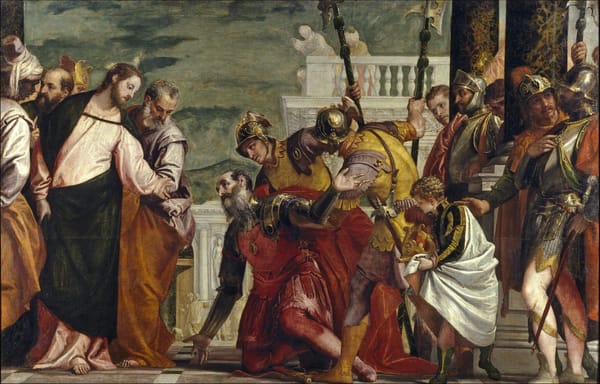
Christ and the Centurion
Gold cross ornament
Christ and the Centurion, Paolo Veronese (1528–1588), c. 1571. Credits

The Third Sunday after Epiphany

THE variation of Easter Sunday necessitates almost every year a different arrangement of the Sundays after the Epiphany from that in which they stand in the Missal. Septuagesima often comes in January and the Feast of the Purification is occasionally later than Quinquagesima Sunday; hence the office of these four last Sundays may have to be transferred to another season of the liturgical cycle. We were obliged then to provide for these changes and simplify them for the Faithful by adopting our present plan. We have inserted here the third and fourth Sundays as usually falling in Christmastide, while the office of the fifth and sixth Sundays will be found in the volumes of Septuagesima and the second after Pentecost, this latter season being the one in which they are most frequently kept.

Mass

The Introit represents the Angels of God adoring him on his entrance into this world, as St Paul* explains this passage of the Psalms. The Church celebrates with David the gladness of Sion, and the joy of the daughters of Juda.

Introit

Adorate Deum omnes Angeli ejus: audivit et lætata est Sion, et exsultaverunt filiæ Judæ. Ps. Dominus regnavit, exsultet terra, lætentur insulæ multæ. ℣. Gloria Patri. Adorate.
Adore God, all ye his Angels: Sion heard and was glad, and the daughters of Juda rejoiced. Ps. The Lord hath reigned, let the earth rejoice, let many islands be glad. ℣. Glory, etc. Adore.

Collect

Omnipotens sempiterne Deus, infirmitatem nostram propitius respice: atque ad protegendum nos, dexteram tuæ majestatis extende. Per Dominum.
O Almighty and Eternal God, mercifully behold our weakness, and stretch forth the right hand of thy majesty to protect us. Through, etc.

Commemoration of the Blessed Virgin Mary

Deus qui salutis æternæ, beatæ Mariæ virginitate fœcunda, humano generi præmia præstitisti; tribue, quæsumus, ut ipsam pro nobis intercederesentiamus, per quam meruimus auctorem vitæ suscipere, Dominum nostrum Jesum Christum Filium tuum.
O God, who by the fruitful Virginity of Blessed Mary hast given to mankind the rewards of eternal salvation, grant, we beseech thee, that we may experience her intercession, by whom we received the Author of life, our Lord Jesus Christ, thy Son.

The third Prayer is one of the following:

Against the persecutors of the Church

Ecclesiæ tuæ, quæsumus, Domine, preces placatus admitte; ut, destructis adversitatibus et erroribus universis, secura tibi serviat libertate.
Mercifully hear, we beseech thee, O Lord, the prayers of thy Church, that all oppositions and errors being removed, she may serve thee with a secure and undisturbed devotion.

For the Pope

Deus omnium fidelium Pastor et Rector, famulum tuum Leonem quem Pastorem Ecclesiæ tuæ præesse voluisti, propitius respice; da ei, quæsumus, verbo et exemplo, quibus præest, proficere; ut ad vitam, una cum grege sibi credito, perveniat sempiternam. Per Dominum.
O God, the Pastor and Governor of all the Faithful, look down in thy mercy on thy servant Leo whom thou hast appointed Pastor over thy Church; and grant, we beseech thee, that both by word and example he may edify all those that are under his charge, and, with the flock intrusted to him, arrive at length at eternal happiness. Through, etc.

Epistle

Lectio Epistolæ beati Pauli Apostoli ad Romanos.
Cap. XII.
Fratres, nolite esse prudentes apud vosmetipsos: nulli malum pro malo reddentes: providentes bona non tantum coram Deo, sed etiam coram omnibus hominibus; si fieri potest, quod ex vobis est, cum omnibus hominibus pacem habentes: non vosmetipsos defendentes, carissimi, sed date locum iræ; scriptum est enim; Mihi vindicta, ego retribuam, dicit Dominus. Sed si esurierit inimicus tuus, ciba ilium; si sitit, potum da illi: hoc enim faciens, carbones ignis congeres super caput ejus. Noli vinci a malo, sed vince in bono malum.
Lesson of the Epistle of St Paul the Apostle to the Romans.
Ch. XII.
Brethren, be not wise in your own conceits. To no man rendering evil for evil. Providing good things not only in the sight of God, but also in the sight of all men. If it be possible, as much as in you, having peace with all men. Not revenging yourselves, my dearly beloved, but give place unto wrath. For it is written: 'Revenge to me, I will repay,' saith the Lord. But 'if thy enemy be hungry, give him to eat: if he thirst, give him to drink: for doing this, thou shalt heap coals of fire upon his head.’ Be not overcome by evil, but overcome evil by good.

This love of our neighbour, recommended to us by the Apostle, is a consequence of that universal brotherhood which our Saviour, by his Birth, brought us from heaven. He came to establish peace between heaven and earth; men, therefore, ought to be at peace one with another. Our Lord bids us not to be overcome by evil, but to overcome evil by good:—and did not he first practise this by coming among us, who were children of wrath, that he might make us children of adoption by his humiliations and his sufferings?

In the Gradual, the holy Church again celebrates the coming of Emmanuel, and invites all nations, and all the kings of the earth, to come and praise his holy name.

Gradual

Timebunt gentes Nomen tuum, Domine, et omnes reges terræ gloriam tuam.℣. Quoniam ædificavit Dominus Sion, et videbitur in majestate sua.Alleluia, alleluia. ℣. Dominus regnavit: exsultet terra, lætentur insulæ multæ. Alleluia.
The Gentiles shall fear thy Name, O Lord, and all the kings of the earth thy glory.℣. For the Lord hath built up Sion, and he shall be seen in his glory.Alleluia, alleluia. ℣. The Lord hath reigned, let the earth rejoice; let many islands be glad. Alleluia.

Gospel

Sequentia sancti Evangelii secundum Matthæum.
Cap. VIII.
In illo tempore, Cum descendisset Jesus de monte, secutæ sunt eum turbæ multæ; et ecce leprosus veniens, adorabat eum dicens: Domine, si vis, potes me mundare. Et extendens Jesus manum, tetigit eum dicens: Volo, mundare. Et confestim mundata est lepra ejus. Et ait illi Jesus: Vide, nemini dixeris; sed vade, ostende te sacerdoti et offer munus, quod præcepit Moyses, in testimonium illis. Cum autem introisset Capharnaum, accessit ad eum centurio, rogans eum et dicens; Domine, puer meus jacet in domo paralyticus, et male torquetur. Et ait illi Jesus: Ego veniam et curabo eum. Et respondens centurio, ait: Domine, non sum dignus ut intres sub tectum meum; sed tantum dic verbo, et sanabitur puer meus. Nam et ego homo sum sub potestate constitutus, habens sub me milites, et dico huic: vade, et vadit; et alii: veni, et venit; et servo meo: fac hoc, et facit. Audiens autem Jesus, miratus est, et sequentibus se dixit: Amen dico vobis, non inveni tantam fidem in Isræl. Dico autem vobis, quod multi ab oriente et occidente venient, et recumbent cum Abraham et Isaac et Jacob in regno cœlorum; filii autem regni ejicientur in tenebras exteriores: ibi erit fletus et stridor dentium. Et dixit Jesus centurioni: Vade, et sicut credidisti, fiat tibi. Et sanatus est puer in illa hora.
Sequel of the holy Gospel according to Matthew.
Ch. VIII.
At that time, when Jesus was come down from the mountain, great multitudes followed him; and behold a leper came and adored him, saying: Lord, if thou wilt, thou canst make me clean. And Jesus stretching forth his hand, touched him, saying: I will, be thou made clean. And forthwith his leprosy was cleansed. And Jesus saith to him: See thou tell no man, but go, show thyself to the priest, and offer the gift which Moses commanded for a testimony unto them. And when he had entered unto Capharnaum, there came to him a centurion, beseeching him, and saying: Lord, my servant lieth at home sick of the palsy, and is grievously tormented. And Jesus saith to him: I will come and heal him. And the centurion making answer, said: Lord, I am not worthy that thou shouldst enter under my roof; but only say the word, and my servant shall be healed. For I also am a man under authority, having under me soldiers; and I say to this, Go, and he goeth, and to another, Come, and he cometh, and to my servant, Do this, and he doeth it. And when Jesus heard this, he marvelled, and said to them that followed him: Amen, I say to you, I have not found so great faith in Israel. And I say unto you, that many shall come from the east and the west, and shall sit down with Abraham, and Isaac, and Jacob, in the kingdom of heaven; but the children of the kingdom shall be cast out into the exterior darkness: there shall be weeping and gnashing of teeth. And Jesus said to the centurion: Go, and as thou hast believed, so be it done to thee. And the servant was healed at the same hour.

The human race was infected with the leprosy of sin: the Son of God touches it by the mystery of the Incarnation, and restores it to health. But he requires that the sick man, now that he is healed, shall go and show himself to the priest, and comply with the ceremonies prescribed by the law; and this, to show that he allows a human priesthood to co-operate in the work of our salvation. The vocation of the Gentiles, of which the Magi were the first-fruits, is again brought before us in the faith of the centurion. A Roman soldier, and millions like him, shall be reputed as true children of Abraham, Isaac and Jacob; while they who are the sons of this Patriarch according to the flesh, shall be cast out from the feast-chamber into the gloom of blindness; and their punishment shall be given as a spectacle to the whole earth.

Let man, then, saved as he has been by the coming of Emmanuel, sing a hymn of praise to the power of God, who has wrought our salvation by the strength of his almighty arm. Man had been sentenced to death; but now that he has God for a Brother, he shall not die: he will live: and could he spend his life better than in praising the works of this God that has saved him?

Offertory

Dextera Domini fecit virtutem, dextera Domini exaltavit me: non moriar, sed vivam, et narrabo opera Domini.
The right hand of the Lord hath wrought strength, the right hand of the Lord hath exalted me. I shall not die, but live, and shall declare the works of the Lord.

Secret

Hæc hostia, Domine, quæsumus, emundet nostra delicta: et sacrificium celebrandum subditorum tibi corpora, mentesque sanctificet. Per Dominum.
May this offering, O Lord, we beseech thee, cleanse away our sins: and sanctify the bodies and souls of thy servants, to prepare them for worthily celebrating this sacrifice. Through, etc.

Commemoration of the Blessed Virgin Mary

Tua, Domine, propitiatione, et beatæ Mariæ semper Virginis intercessione, ad perpetuam atque præsentem hæc oblatio nobis proficiat prosperitatem et pacem.
By thy mercy, O Lord, and by the intercession of blessed Mary ever a Virgin, may this oblation further our present and future prosperity and peace.

Against the persecutors of the Church

Protege, nos, Domine, tuis mysteriis servientes: ut divinis rebus inhærentes, et corpore tibi famulemur et mente.
Protect us, O Lord, while we assist at thy sacred mysteries, that being employed in acts of religion, we may serve thee both in body and mind.

For the Pope

Oblatis, quæsumus, Domine, placare muneribus, et famulum tuum Leonem, quem Pastorem Ecclesiæ tuæ præesse voluisti, assidua protectione guberna. Per Dominum.
Be appeased, O Lord, with the offering we have made, and cease not to protect thy servant Leo, whom thou hast been pleased to appoint Pastor over thy Church. Through, etc.

Preface

℣. Per omnia sæcula sæculorum. ℟. Amen.
℣. Dominus vobiscum. ℟. Et cum spiritu tuo.
℣. Sursum corda. ℟. Habemus ad Dominum.
℣. Gratias agamus Dominum Deo nostro. ℟. Dignum et justum est.
Vere dignum et justum est, æquum et salutare, nos tibi semper et ubique gratias agere, Domine sancte, Pater omnipotens, æterne Deus. Qui cum unigenito Filio tuo et Spiritu Sancto unus es Deus, unus es Dominus: non in unius singularitate Personæ, sed in unius Trinitate substantiæ. Quod enim de tua gloria, revelante, credimus, hoc de Filio tuo, hoc de Spiritu Sancto, sine differentia discretionis sentimus. Ut in confessione veræ, sempiternæque Deitatis, et in Personis proprietas, et in essentia unitas, et in Majestate adoretur æqualitas. Quam laudant Angeli atque Archangeli, Cherubim quoque ac Seraphim; qui non cessant clamare quotidie una voce dicentes, Sanctus, etc.
℣. For ever and ever. ℟. Amen.
℣. The Lord be with you. ℟. And with thy spirit.
℣. Lift up your hearts. ℟. We have them fixed on God.
℣. Let us give thanks to the Lord our God. ℟. It is meet and just.
It is truly meet and just, right and available to salvation, that we should always and in all places give thanks to thee, O holy Lord, Father Almighty, Eternal God. Who together with thy Only Begotten Son and the Holy Ghost art one God and one Lord: not in a singularity of one Person, but in a Trinity of one substance. For what we believe of thy glory, as thou hast revealed, the same we believe of thy Son and of the Holy Ghost, without any difference or distinction. So that in the confession of the true and eternal Deity, we adore a distinction in the Persons, a unity in the essence, and an equality in the Majesty. Whom the Angels and Archangels, the Cherubim also and Seraphim praise, and cease not daily to cry out with one voice, saying, Holy, etc.

After having distributed the Bread of Life, the Church reminds us how the people were in admiration at the words of Jesus. The children of the Church, initiated into all his Mysteries, are at this moment enjoying the effects of that ineffable Word, by means of which the Redeemer has changed the bread into his Body, and the wine into his Blood.

Communion

Mirabantur omnes de his quæ procedebant de ore Dei.
All wondered at the words that came from the mouth of God.

Postcommunion

Quos tantis, Domine, largiris uti mysteriis, quæsumus ut effectibus nos eorum veraciter aptare digneris. Per Dominum.
We beseech thee, O Lord, that we, to whom thou vouchsafest the use of these great mysteries, may be made truly worthy to receive the benefits thereof. Through, etc.

Commemoration of the Blessed Virgin Mary

Hæc nos communio, Domine, purget a crimine; et intercedente beata Virgine Dei Genitrice Maria, cœlestis remedii faciat esse consortes.
May this communion, O Lord, cleanse us from sin, and by the intercession of blessed Mary, the Virgin-Mother of God, make us partakers of thy heavenly remedy.

Against the persecutors of the Church

Quæsumus, Domine Deus noster, ut quos divina tribuis participatione gaudere, humanis non sinas subjacere periculis.
We beseech thee, O Almighty God, not to leave exposed to the dangers of human life, those whom thou hast permitted to partake of these divine mysteries.

For the Pope

Hæc nos, quæsumus, Domine, divini sacramenti perceptio protegat: et famulum tuum Leonem, quem Pastorem Ecclesiæ tuæ præesse voluisti, una cum commisso sibi grege, salvet semper et muniat. Per Dominum.
May the participation of this divine Sacrament protect us, we beseech thee, O Lord; and always procure safety and defence to thy servant Leo, whom thou hast appointed Pastor over thy Church, together with the flock committed to his charge. Through, etc.

Vespers

The Psalms, Antiphons, Capitulum, Hymn, and Versicle are given on pages 89-96.

Antiphon of the Magnificat

Ant. Domine, si vis, potes me mundare: et ait Jesus: Volo, mundare.
Ant. O Lord, if thou wilt, thou canst make me clean. And Jesus saith: I will: be thou cleansed.

Oremus Omnipotens sempiterne Deus, infirmitatem nostram propitius respice: atque ad protegendum nos dexteram tuæ majestatis extende. Per Dominum.
Let us pray O Almighty and Eternal God, mercifully behold our weakness, and stretch forth the right hand of thy majesty to protect us. Through, etc.

* Heb. i 6. ↩︎


January 24: St. Timothy, Bishop and Martyr
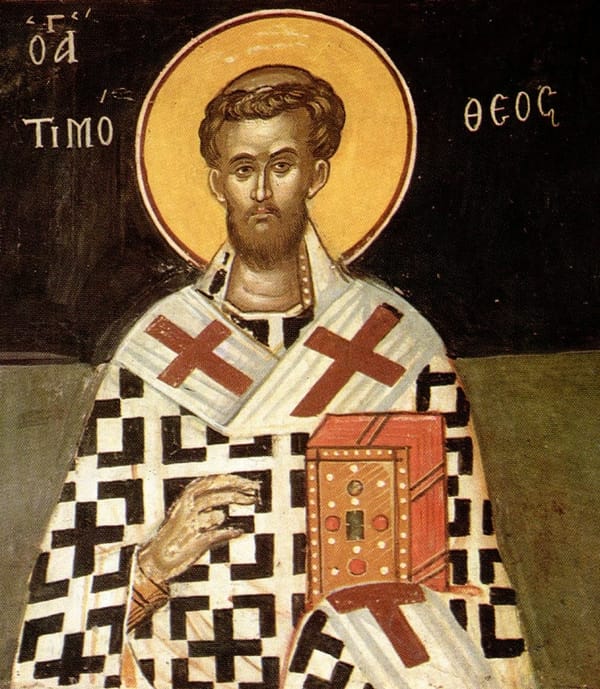
St Timothy as bishop blessing, holding Gospel book, gold halo
Fresco of St Timothy, Stavronikita Monastery, Mount Athos (Commons Agios Timotheos Stavronikita). Credits

BEFORE giving thanks to God for the miraculous Conversion of the Apostle of the Gentiles, the Church assembles us together for the feast of his favourite disciple. Timothy—the indefatigable companion of St Paul—the friend to whom the great Apostle, a few days before shedding his blood for Christ, wrote his last Epistle—comes now to await his master's arrival at the Crib of the Emmanuel. He there meets John the Beloved Disciple, together with whom he bore the anxieties attendant on the government of the Church of Ephesus; Stephen too, and the other martyrs, welcome him, for he also bears a martyr's palm in his hand. He presents to the august Mother of the Divine Babe the respectful homage of the Church of Ephesus, which Mary had sanctified by her presence, and which shares with the Church of Jerusalem the honour of having had her as one of its number, who was not only, like the Apostles, the witness, but moreover, in her quality of Mother of God, the ineffable instrument of the salvation of mankind.

Let us now read, in the Office of the Church, the abridged account of the actions of this zealous disciple of the Apostles.

Timotheus, Lystris in Lycaonia natus ex patre Gentili et matre Judæa, Christianam colebat religionem, cum imca loca venit Paulus Apostolus. Qui fama commotus quæ de Timothei sanctitate percrebuerat, ipsum adhibuit socium suæ peregrinationis: sed propter Judæos, qui se ad Christum converterant, scientes Timothei patrem esse Gentilem, eum circumcidit. Cum igitur ambo Ephesum venissent, ibi ordinatus est Episcopus ab Apostolo, ut eam Ecclesiam gubernaret.
Ad quem Apostolus duas Epistolas scripsit, alteram Laodicea, alteram Roma: quibus in pastoralis officii cura confirmatus, cum sacrificium, quod uni Deo debetur, fieri dæmonum simulacris ferre non posset, populum Ephesinum Dianæ in ejus celebritate immolantem, abilla impietate removere conatus, lapidibus obrutus est; ac pene mortuus a Christianis ereptus, et in montem oppido vicinum delatus, nono kalendas Februarii obdormivit in Domino.
Timothy was born at Lystra in Lycaonia. His father was a Gentile, and his mother a Jewess. When the Apostle Paul came into those parts, Timothy was a follower of the Christian religion. The Apostle had heard much of his holy life, and was thereby induced to take him as the companion of his travels: but on account of the Jews, who had become converts to the faith of Christ, and were aware that the father of Timothy was a Gentile, he administered to him the rite of circumcision. As soon as they arrived at Ephesus, the Apostle ordained him Bishop of that Church.
The Apostle addressed two of his Epistles to him—one from Laodicea, the other from Rome—to instruct him how to discharge his pastoral office. He could not endure to see sacrifice, which is due to God alone, offered to the idols of devils; and finding that the people of Ephesus were offering victims to Diana on her festival, he strove to make them desist from their impious rites. But they, turning upon him, stoned him. The Christians could not deliver him from their hands till he was more dead than alive. They carried him to a mountain not far from the town, and there, on the ninth of the Kalends of February (January 24), he slept in the Lord.

The Greek Church celebrates the memory of St Timothy in her Menæa, from which we extract the following strophes.

Die XXII Januarii

Deisapiens Timothee, torrentem ingressus es deliciarum, et divinitus hausisti gnosim, ferventes imitatus amatores Christi, cujus nunc lætanter adiisti gloriam, contemplans Trinitatem splendidissimam et pacem placidissimam.
Deisapiens Timothee, frequentibus corporis debilitatibus et infirmitatibus corroboratus secundum mentem, erroris potentiam facile dissolvisti, Christi custoditus potestate, et prædicasti sublimiter divinissimum pacis nobis Evangelium.
Mundi fines tua nunc decantant miracula, Thaumaturge immortalis; miraculis etenim te Christus remunerans adornavit, propter ipsum tormenta perpessum, et pro morte tolerata immortali gloria et beatitudine donavit.
Effusa est, omnisancte, abundanter gratia e labiis tuis, et flumina dogmatum scaturire fecit Christi Ecclesiam irrigantia et centuplicem ferentia fructum, o Timothee, Christi præco, divine Apostole.
Mortificans tuæ membra carnis Verbo subjecisti; dans pejoris, beate Timothee, regimen meliori, passionibus dominatus es, et animam alleviasti, Pauli documentis harmonice ordinatus.
Fulgurans quasi sol Paulus te misit quasi radium splendidum terram abundantiori lumine illuminantem lucidissime, Theophantes Timothee, ad directionem nostram et confirmationem.
Currus Dei apparuisti, Timothee, portans divinum nomen, ante impios tyrannos, Deograte, non timens istorum crudelitatem; tu enim invincibilem Salvatoris fortitudinem induisti.
Coronam gloriosam recepisti, Timothee omnibeate, divina mente prædite, Apostole, et diadema regni præcinxisti, et astitisti ante thronum magistri tui, cum Paulo decoratus in æternis tabernaculis, beatissime.
O Timothy! full of godly wisdom! thou didst enter into the torrent of delights, and drink in of the mysterious knowledge, imitating the fervent lovers of Christ, into whose glory thou hast now joyfully gone, contemplating the infinitely resplendent Trinity, and most tranquil peace.
O Timothy! full of godly wisdom! thy frequent weaknesses and ailments of body gave thee strength of spirit; thou didst readily reduce to nought the power of error, for thou wast guarded by the power of Christ, and sublimely didst thou preach to us the most divine Gospel of peace.
The furthermost ends of the earth now sing thy miracles, immortal Thaumaturgus! for Christ rewarding thee, adorned thee with the gift of miracles, because thou didst suffer torments for his sake; and he gave thee, for the death thou didst endure, glory and blessedness everlasting.
Most holy Saint! grace flowed in plenty from thy lips, and made the streams of dogma water the Church of Christ, and yield fruit a hundredfold, O Timothy! thou herald of Christ! thou Apostle of God!
Mortifying thy flesh, thou didst subject it to the Word: and making what is superior govern that which is inferior, O blessed Timothy! thou didst master thy passions and unburden thy soul, and the harmony was established in thee which was taught by blessed Paul.
He, Paul, brilliant as the sun, sent thee forth as a shining ray, that thou mightest most brightly illumine the earth with a rich abundance of light, unto our direction and encouragement, O Timothy, thou revealer of God!
O Timothy I as a chariot of God, thou didst carry his divine name before impious tyrants, fearing not their cruelty, O thou beloved of God! for thou hadst clad thyself with the invincible strength of Jesus.
O most blessed Timothy! O divinely gifted mind! O Apostle! thou hast received a glorious crown; thy brow has been encircled with a heavenly crown; and thou hast stood before the throne of thy Master, beautiful in glory, together with Paul, in the eternal tabernacles, O most blessed one!

In thee, O holy Pontiff! we honour one of the disciples of the Apostles—one of the links which connect us immediately with Christ. Thou appearest to us all illumined by thy intercourse with Paul the great Doctor of the Gentiles. Another of his disciples, Dionysius the Areopagite, made thee the confidant of his sublime contemplations on the Divine Names; but now, bathed in light eternal, thou thyself art contemplating the Sun of Justice, in the beatific vision. Intercede for us, who enjoy but a glimpse of his beauty through the veil of his humiliations, that we may so love him, as to merit to see him one day in his glory. In order to lessen the pressure of the corruptible body, which weigheth down the soul,* thou didst subject thy outward man to so rigorous a penance that St Paul exhorted thee to moderate it: do thou assist us in our endeavours to reduce our flesh to obedience to the spirit. The Church reads without ceasing the counsels, which the Apostle gave to thee, and to all Pastors through thee, for the election and the conduct of the clergy: pray that the Church may be blessed with Bishops, Priests, and Deacons, endowed with all those qualifications which he requires from the dispensers of the mysteries of God. Lastly, we beseech thee, who didst ascend to heaven decked with the aureole of martyrdom, encourage us who are also soldiers of Christ, that we may throw aside our cowardice, and win that kingdom where he welcomes and crowns his elect for all eternity.

* Wisd. ix 15. ↩︎

Previous
January 23 (the Same Day): St. Emerentiana, Virgin and Martyr
Next
January 24: St. Timothy, Bishop and Martyr