lyp.network

Daily reading

Septuagesima

Double · February 1 · Sanctoral

February 1, 2021

From Dom Guéranger’s The Liturgical Year.

A Double leads the weekday.Rubric
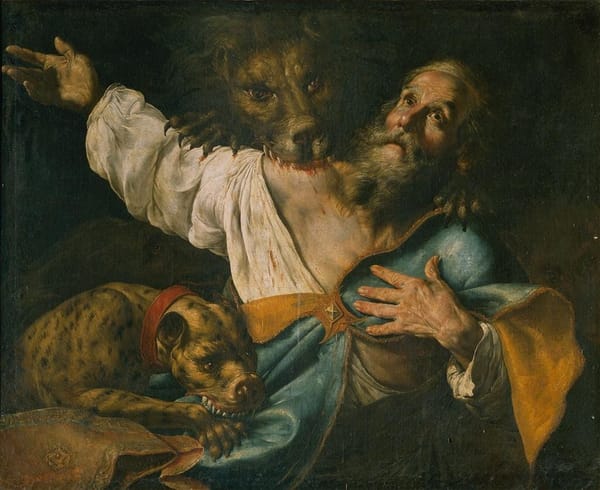
St Ignatius attacked by lions, vested, arm raised
The Martyrdom of Saint Ignatius of Antioch, Possibly Cesare Fracanzano, 17th century. Credits

February 1: St. Ignatius, Bishop and Martyr

TWO days more, and the happy season of Christmas will be over! This is the vigil of its termination, and lo! there comes to gladden us one of the grandest Martyrs of the year—Ignatius surnamed the Theophorus,1 Bishop of Antioch. A venerable tradition tells us that this old man, who so generously confessed the faith before Trajan, was the child whom Jesus took into his arms, and showed to his Disciples as a model of that simplicity which we must all have if we would enter into the kingdom of heaven. Today he appears before us, standing near the Crib in which this same Jesus gives us his own divine lessons of humility and simplicity.

But, in this the Court of our Emmanuel, Ignatius stands near to Peter, the Feast of whose Chair we kept a few days since; for the Prince of the Apostles made him his second successor in his first See of Antioch. From so honoured a position Ignatius derived that courage which made him resist a powerful Emperor even to his face, defy the wild beasts of the amphitheatre, and triumph by a glorious martyrdom. As it were to show the supremacy of the See of Rome, Divine Providence willed that he, with his chains upon him, should go to see Peter,2 and finish his course in the Holy City, and thus mingle his blood with that of the Apostles. Rome would have been imperfect without the glory of Ignatius’ martyrdom, which is the pride of her Coliseum, rich as it is with the blood of so many thousands of martyrs.

His chief characteristic is impetuous love for God. He has but one fear—it is that the prayers of the Romans will stay the lions from devouring him, and his desire of being united to Christ be thus denied him. Let us admire this superhuman fortitude, which shows itself thus suddenly in the pagan world, and let us acknowledge that so ardent a love of God, and so vehement a longing to possess him, could only have come from the accomplishment of the Mysteries of our Redemption, which showed man how much God loved him. The Crib of Bethlehem, even had there never been the Sacrifice of Calvary, would of itself be sufficient to convince us of all this. God comes down from heaven for the sake of his creature, man; he himself becomes Man, nay, a Child, and is laid in a manger! Such miracles of love would have sufficed to save the guilty world; how then shall they not have power to prompt men to give their whole heart to their loving God? And would it be too much if we made a sacrifice of our very lives to repay Jesus for only that much of his love which he showed us by being born among us?

The Church gives us, in the Lessons of today's Office, the brief account of our Saint given by St Jerome in his Book On Ecclesiastical Writers. The holy Doctor has inserted a few sentences from the Martyr's admirable Epistle, written to the Faithful of Rome. We would have gladly offered the whole of this Epistle to our readers, had it not been for want of space. But the passages quoted by St Jerome are some of the finest.

Ignatius, Antiochenæ Ecclesiæ tertius post Petrum Apostolum Episcopus, commovente persecutionem Trajano, damnatus ad bestias, Romam vinctus mittitur. Cumque navigans Smyrnam venisset, ubi Polycarpus, auditor Joannis, Episcopus erat, scripsit unam Epistolam ad Ephesios, alteram ad Magnesianos, tertiam ad Trallenses, quartam ad Romanos: et inde egrediens scripsit ad Philadelphios et ad Smyrnæos, et propriam ad Polycarpum, commendans illi Antiochensem Ecclesiam: in qua et de Evangelio, quod nuper a me translatum est, super persona Christi ponit testimonium.
Dignum autem videtur, quia tanti viri fecimus mentionem, et de epistola ejus, quam ad Romanos scribit, pauca ponere. De Syria usque ad Romam pugno ad bestias in mari et in terra, nocteque dieque ligatus cum decem leopardis, hoc est militibus, qui me custodiunt: quibus et cum benefeceris, pejores fiunt. Iniquitas autem eorum mea doctrina est: sed non idcirco justificatus sum. Utinam fruar bestiis, quæ mihi sunt præparatæ, quas et oro mihi veloces esse ad interitum et ad supplicia, et allici ad comedendum me, ne, sicut et aliorum Martyrum, non audeant corpus attingere. Quod si venire noluerint, ego vim faciam, ego me urgebo, ut devorer. Ignoscite mihi, filioli: quid mihi prosit, ego scio.
Nunc incipio Christi esse discipulus, nihil de his quæ videntur desiderans, ut Je sum Christum inveniam. Ignis, crux, bestiæ, confractio ossium, membrorum divisio, et totius corporis contritio, et tota tormenta diaboli in me veniant: tantum ut Christo fruar. Cumque jam damnatus esset ad bestias, et ardore patiendi rugientes audiret leones, ait: Frumentum Christi sum, dentibus bestiarum molar, ut panis mundus inveniar. Passus est anno undecimo Trajani. Reliquiæ corporis ejus Antiochiæ jacent extra Portam Daphniticam in Cœmeterio.
Ignatius was the third Bishop of the Church of Antioch, St Peter the Apostle being the first. During the persecution under Trajan, he was condemned to be devoured by wild beasts, and was sent in chains to Rome. During this voyage, which was made by sea, he had to stop at Smyrna, where Polycarp, the disciple of St John, was Bishop. From this city, he wrote several Epistles: one to the Ephesians, a second to the Magnesians, a third to the Trallians, a fourth to the Romans. When he had left Smyrna, he addressed an Epistle to the Philadelphians and Smyrneans, and one to Polycarp himself, recommending to him his Church of Antioch. It is in this last-named Letter that he quotes from the Gospel which I have lately translated a passage bearing testimony to the person of our Lord Jesus Christ.
I cannot pass by this mention of so great a man, without citing a few sentences from the Epistle which he wrote to the Romans. ‘ From Syria,' he says, ' even unto Rome, I am fighting with wild beasts, both by sea and land, both night and day, for I am fastened to ten leopards, I mean to the soldiers who have care of me. When I show them a kindness, they grow more brutal. Their injuries are my instruction, but I am not thereby justified. I long for the wild beasts that are prepared for me, which I heartily wish may rush upon me and torture me and devour me, and not be afraid to touch me, as has happened with other Martyrs. Nay, if they refuse to approach me, I will make them come on, I will rush upon them, that so they may devour me. Pardon me, my little children: I know what is for my own welfare.
‘Now do I begin to be a disciple of Christ, and care for nothing in this world, that so I may find Jesus. Let fire, or the cross, or wild beasts, or the breaking of my bones, or the cutting me to pieces, or the shattering of my whole body, yea, all the tortures of the devil—let them all come upon me, only let me enjoy my God.' When he was sentenced to be devoured by wild beasts, and heard the roaring of the lions, his impatience to suffer made him exclaim: ‘I am the wheat of Christ; let me be ground by the teeth of wild beasts, that I may become the pure bread.' He suffered in the eleventh year of Trajan's reign. His Relics are at Antioch, in the Cemetery outside the Daphne Gate.

We find the following stanzas in the Menæa of the Greek Church, for the Feast of St Ignatius.

Theologorum verticis successor vocatus, istorum vestigia prosecutus es, ortus ab Oriente et in Occidente manifestatus, et splendens fulgoribus divinæ prædicationis, ibique, omnisapiens, e mundo quidem secessisti, ad Deum autem elevaris splendore coronatus gratiæ.
Resplendens quasi sol radiis Spiritus Sancti, mundi fines hilariter illuminasti fulgoribus certaminum tuorum, ferventer producens et veraciter scribens pietatis documenta; ideoque factus es alimentum Magistro qui alit omnia, omnibeate, benignitate continua.
Deifer Ignat i, tuum amorem Christum confovens in pectore, pretium accepisti sacrificii Evangelii Christi in perfectionem per sanguinem; ideo frumentum factus immortalis agricolæ, per dentes bestiarum molitus es, et panis jucundus ipsi demonstratus es : deprecare pro nobis, athleta beate.
O quam solida et adamantina tui anima, beatissime Ignati; tu enim ad tuum vere amatorem, inexorabile habens desiderium, dicebas : Non est in me ignis materialis, magis vero aqua viva, in me dicens intus: Veni ad Patrem. Ideo, divino Spiritu inflammatus, bestias irritasti, ad separandum te quam citius a mundo, et immittendum te ad desideratum Christum: ipsum deprecare salvare animas nostras.
Thou wast called to be the successor of the Prince of Theologians whose footsteps thou didst follow; thy rising was in the East, but thou wast manifested in the West, and there, O Ignatius, full of wisdom! thou didst shine with the splendour of thy heavenly preaching. Thou didst, indeed, depart from this world, but thou wast taken up to God, richly crowned with grace.
Resplendent as the sun with the rays of the Holy Ghost, thou didst sweetly illumine the ends of the earth with the brilliancy of thy combat, and the maxims of piety breathed forth so warmly and so truly in thy writings. Thus didst thou, most blessed one! make thyself bread to the Master who, in his ceaseless love, feeds all created things.
O Ignatius! O thou that carriest God! by cherishing Christ, thy Love, in thy breast, thou didst give thy blood for him, thus receiving the perfection of the sacrifice of the Gospel of Christ. Hereby thou wast the wheat of the divine Husbandman; and being ground by the teeth of lions, thou wast made his bread most sweet. O blessed Combatant! pray to him for us.
Most saintly Ignatius I thy soul was firm as adamant; for thou didst say to thy Beloved Jesus, with an insatiable longing: ‘ It is not material fire that burns within me—it is the voice of Him who is the living Water, saying within my breast, 'Come to the Father!' Therefore, being inflamed by the Holy Spirit, thou didst urge on the lions to take thee quickly from this world, and carry thee to Christ, the object of all thy desires. Oh! pray to him that he save our souls.

All thy desires were satisfied, O glorious Martyr! Thou hast died for Jesus—thou art with Jesus. Rome's sons and daughters filled the Coliseum; their savage joy made it tremble with their cheers as they saw thee mangled by the lions. It was the hour thou hadst prayed for; thy sacrifice for him, who had sacrificed himself for thee, is over, and thy soul is buried in his divine embrace! Generous and impetuous lover of Christ! thou wast ambitious to pay thy debt to the Crucified—the debt of suffering. It seemed to thee that thou hadst no right to his kingdom until thou hadst repaid his Passion by some cruel tortures endured for him. O worthy companion of Stephen, Sebastian, Vincent and Agnes I how rich and verdant is the palm thou holdest over the Crib! Canst thou look upon us, weak Christian cowards, and not pity us? Pray for us that we may at least be faithful to our Lord when we are persecuted by the temptations of the world, the flesh and the devil; that we may at least give our hearts to his service, if we are not to be permitted to give our bodies to be tortured for his name. Thou wast chosen, when a little child, as the model of the simplicity which our Saviour was teaching to his Disciples, and this innocence never left thee: ask for us from him, who is the King of Little Children, that one of the graces of the Christmas we have been keeping may be this holy Simplicity of heart.

Successor of Peter in the See of Antioch! pray for the Churches of thy Patriarchate, that they may return to the true Faith and Catholic unity. Intercede for the holy City of Rome, which thou didst water with thy blood, and which is now in possession of thy sacred relics, that were saved from the lions’ jaws. Watch over the maintenance of ecclesiastical discipline and order, of which thou hast left such admirable rules in thy Epistles; and obtain for the Church that all the members of her hierarchy may be united in the bonds of duty and love, that thus she may be beautiful in the strength of her unity and terrible to the enemies of God, as an army set in array.3

  1. I.e., he that carries God, or, he that is carried of God, according as the accent is placed in the Greek word. ↩︎
  2. Gal.i 18. ↩︎
  3. Cant. vi 3. ↩︎

Monday of Septuagesima Week

The serpent said to the woman: 'Why hath God commanded you, that you should not eat of every tree of paradise?'1 Thus opened the conversation, which our mother Eve so rashly consents to hold with God’s enemy. She ought to refuse all intercourse with Satan; she does not; and thereby she imperils the salvation of the whole human race.

Let us recall to mind the events that have happened up to this fatal hour. God, in His omnipotence and love, has created two beings, upon whom He has lavished all the riches of His goodness. He has destined them for immortality; and this undying life is to have everything that can make it perfectly happy. The whole of nature is made subject to them. A countless posterity is to come from them, and love them with all the tenderness of grateful children. Nay, this God of goodness who has created them, deigns to be on terms of intimacy with them; and such is their simple innocence, that this adorable condescension does not seem strange to them. But there is something far beyond all this. He, whom they have hitherto known by favours of an inferior order, prepares for them a happiness which surpasses all they could picture with every effort of thought. They must first go through a trial; and if faithful, they will receive the great gift as a recompense they have merited. And this is the gift: God will give them to know Him in Himself, make them partakers of His own glory, and make their happiness infinite and eternal. Yes, this is what God has done, and is preparing to do for these two beings, who but a while ago were nothing.

In return for all these gratuitous and magnificent gifts, God asks of them but one thing: that they acknowledge His dominion over them. Nothing, surely, can be sweeter to them than to make such a return; nothing could be more just All they are, and all they have, and all the lovely creation around them, has been produced out of nothing by the lavish munificence of this God; they must, then, live for Him, faithful, loving, and grateful. He asks them to give Him one only proof of this fidelity, love, and gratitude: He bids them not to eat of the fruit of one single tree. The only return He asks for all the favours He has bestowed upon them, is the observance of this easy commandment. His sovereign justice will be satisfied by this act of obedience. They ought to accept such terms with hearty readiness, and comply with them with a holy pride, as being not only the tie which will unite them with their God, but the sole means in their power of paying Him what He asks of them.

But there comes another voice, the voice of a creature, and it speaks to the woman: 'Why hath God commanded you, that you should not eat of every tree?’ And Eve dares, and has the heart, to listen to him that asks why her divine Benefactor has put a command upon her! She can bear to hear the justice of God’s will called in question! Instead of protesting against the sacrilegious words, she tamely answers them! Her God is blasphemed, and she is not indignant! How dearly we shall have to pay for this ungrateful indifference, this indiscretion! 'And the woman answered him, saying: Of the fruit of the trees that are in paradise we do eat; but of the fruit of the tree which is in the midst of paradise, God hath commanded us that we should not eat, and that we should not touch it, lest perhaps we die.’2 Thus Eve not only listens to the serpent’s question, she answers him; she converses with the wicked spirit that tempts her. She exposes herself to danger; her fidelity to her Maker is compromised. True, the words she uses show that she has not forgotten His command; but they imply a certain hesitation, which savours of pride and ingratitude.

The spirit of evil finds that he has excited, in this heart, a love of independence; and that, if he can but persuade her that she will not suffer from her disobedience, she is his victim. He, therefore, further addresses her with these blasphemous and lying words: 'No, you shall not die the death; for God knoweth, that in what day soever you shall eat thereof, your eyes shall be opened, and you shall be as gods, knowing good and evil.'3 What he proposes to Eve is open rebellion. He has enkindled within her that perfidious love of self which is man’s worst evil, and which, if it be indulged, breaks the tie between him and his Creator. Thus the blessings God has bestowed, the obligation of gratitude, personal interest, all are to be disregarded and forgotten. Ungrateful man would become a god; he would imitate the rebel angels: he shall fall as they did.

In Dominica Tyrophagi

Adesdum anima mea infelix, actus tuos hodie defle, memoria recolens priorem in Eden nuditatem, propter quam deliciis et perenni gaudio excidisti.
Pro multa pietate atque miserationibus, Conditor creaturæ et factor universorum, me pulvere prius animatum una cum angelis tuis te collaudare præcepisti.
Propter bonitatis divitias, plantas tu, Condi tor et Domine, paradisi delicias in Eden, jubens me speciosis jucundisque minimeque caducis fructibus oblectari.
Hei mihi! anima mea misera, fruendarum Eden voluptatum facultatem a Deo acceperas, vetitumque tibi ne scientise lignum manducares: qua de causa Dei legem violasti?
(Virgo Dei Genitrix, utpote Adami ex genere filia, per gratiam vero Christi Dei Mater, nunc me revoca ex Eden ejectum.)
Serpens dolosus honorem meum quondam mihi invidens, in Evæ auribus dolum insusurravit, unde ego deceptus, hei mihi! e vitæ sede exsulavi.
Manu temere extensa, scientiæ lignum degustavi, quod ne contingerem mihi Deus omnino præscripserat, et cum acerbo doloris sensu divinam gloriam exsul amisi.
Hei mihi! misera anima mea, quomodo dolum non nosti? Quomodo fraudem et inimici invidiam minime sensisti? Sed mente obtonebrata Conditoris tui mandatum neglexisti.
(Spes et protectio mea, O veneranda, quæ sola olim lapsi Adami nuditatem cooperuisti puerperio tuo, rursus, O pura, me incorruptionis veste circumda.)
Come, my poor soul! bewail this day thy deeds. Think within thyself of that sin which made thee naked in Eden, and robbed thee of delight and joy eternal.
Creator of me and of all things! in thy great goodness and mercy, thou, having made me out of dust, and given me a soul, didst command me to unite with the angels in praising thee.
My Maker and Lord! in the riches of thy goodness, thou plantest a paradise of delights in Eden, and biddest me feast on its lovely, sweet, and incorruptible fruits.
Woe is me, O my wretched soul! Thy God permitted thee that thou shouldst enjoy the Eden of delights, if thou wouldst obey him and not eat of the tree of knowledge. Wherefore didst thou violate his law?
(O Virgin-Mother of God! Daughter of Adam by nature, but Mother of Christ by grace! recall me now the exile from Eden.)
The crafty serpent envying me such honour, whispered his guile into Eve’s ear; and I, alas! deceived by her, was banished from the land of life.
Rashly stretching forth my hand, I tasted of the tree of knowledge, which God forbade me even to touch: and then, with keen sense of grief, I, an exile, lost the glory of God.
Alas, miserable man! How came I not to know the snare? How was it that I suspected not the enemy’s craft and envy? My soul was darkened and I set at nought my Creator’s command.
(O most venerable one! my hope and refuge! who by giving birth to thy Jesus, didst cover the nakedness of fallen Adam, clothe me too, O Virgin, with this incorruptible garb!)
  1. Gen. iii. 1. ↩︎
  2. Gen iii. 2, 3. ↩︎
  3. Gen. iii. 4, 5. ↩︎
Previous
Septuagesima Sunday
Next
Monday of Septuagesima Week