Daily reading
Lent
Double · Movable from Easter · Temporal
March 7, 2021
From Dom Guéranger’s The Liturgical Year.

|
The Third Sunday of Lent
The holy Church gave us as the subject of our meditation for the first Sunday of Lent, the temptation which our Lord Jesus Christ deigned to suffer in the desert. Her object was to enlighten us with regard to our own temptations, and teach us how to conquer them. To-day, she wishes to complete her instruction on the power and stratagems of our invisible enemies; and for this she reads to us a passage from the Gospel of St. Luke. During Lent the Christian ought to repair the past and provide for the future; but he can neither understand how it was he fell, nor defend himself against a relapse, unless he have correct ideas as to the nature of the dangers which have hitherto proved fatal, and which are again threatening him. Hence, the ancient liturgists would have us consider it as a proof of the maternal watchfulness of the Church, that she should have again proposed such a subject to us. As we shall find, it is the basis of all to-day’s instructions.
Assuredly we should be the blindest and most unhappy of men if, surrounded as we are by enemies who unceasingly seek to destroy us, and are so superior to us both in power and knowledge, we were seldom or never to think of the existence of these wicked spirits. And yet, such is really the case with innumerable Christians nowadays; for, truths are decayed from among the children of men..1 So common, indeed, is this heedlessness and forgetfulness of truth, which the holy Scriptures put before us in almost every page, that it is no rare thing to meet with persons who ridicule the idea of devils being permitted to be on this earth of ours! They call it a prejudice, a popular superstition of the middle ages! Of course they deny that it is a dogma of faith. When they read the history of the Church or the lives of the saints, they have their own way of explaining whatever is there related on this subject. To hear them talk, one would suppose that they look upon satan as a mere abstract idea to be taken as the personification of evil.
When they would account for the origin of their own or others’ sins, they explain all by the evil inclination of man’s heart, and by the bad use we make of our free will. They never think of what we are taught by Christian doctrine: namely, that we are also instigated to sin by a wicked being, whose power is as great as is the hatred he bears us. And yet they know, they believe with a firm faith, that satan conversed with our first parents, and persuaded them to commit sin, and showed himself to them under the form of a serpent. They believe that this same satan dared to tempt the Incarnate Son of God, and that he carried Him through the air, and set Him first upon a pinnacle of the temple, and then upon a very high mountain. Again, they read in the Gospel, and they believe, that one of the possessed delivered by our Saviour was tormented by a whole legion of devils, who, upon being driven out of the man, went, by Jesus’ permission, into a herd of swine, and the whole herd ran violently into the sea of Genesareth and perished in the waters. These and many other such like facts are believed, by the persons of whom we speak, with all the earnestness of faith; yet, notwithstanding, they treat as a figure of speech, or a fiction, all they hear or read about the existence, the actions, or the craft of these wicked spirits. Are such people Christians, or have they lost their senses? One would scarcely have expected that this species of incredulity could have found its way into an age like this, when sacrilegious consultations of the devil have been, we might almost say, fashionable. Means which were used in the days of paganism have been resorted to for such consultations; and those who employed them seemed to forget, or ignore, that they were committing what God in the old Law punished with death, and what, for many centuries, was considered by all Christian nations as a capital crime.
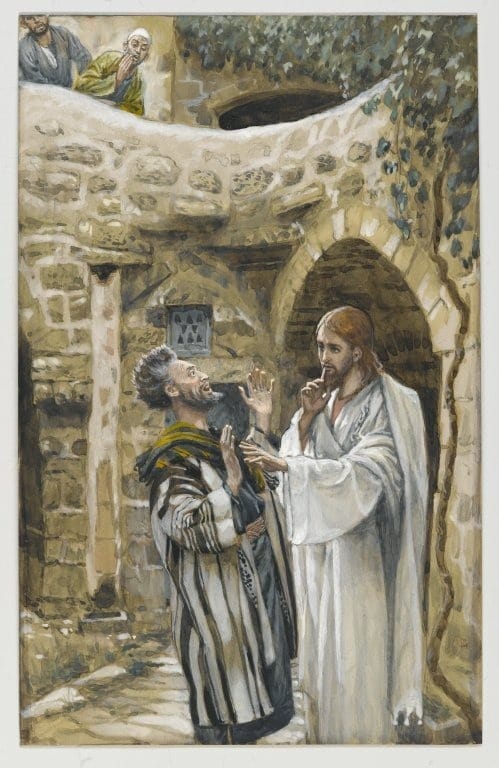
But if there be one season of the year more than another in which the faithful ought to reflect upon what is taught us both by faith and experience as to the existence and workings of the wicked spirits, it is undoubtedly this of Lent, when it is our duty to consider what have been the causes of our past sins, what are the spiritual dangers we have to fear for the future, and what means we should have recourse to for preventing a relapse. Let us, then, hearken to the holy Gospel. Firstly, we are told that the devil had possessed a man, and that the effect produced by this possession was dumbness. Our Saviour cast out the devil, and immediately the dumb man spoke. So that, the being possessed by the devil is not only a fact which testifies to God's impenetrable justice; it is one which may produce physical effects upon them that are thus tried or punished. The casting out of the devil restores the use of speech to him that had been possessed. We say nothing about the obstinate malice of Jesus’enemies, who would have it that His power over the devils came from His being in league with the prince of devils: we would now merely show that the wicked spirits are sometimes permitted to have power over the body, and would refute, by this passage from the Gospel, the rationalism of certain Christians. Let these learn, then, that the power of our spiritual enemies is an awful reality; and let them take heed not to lay themselves open to their worst attacks, by persisting in the disdainful haughtiness of their reason.
Ever since the promulgation of the Gospel, the power of satan over the human body has been restricted by the virtue of the cross, at least in Christian countries; but this power resumes its sway as often as faith and the practice of Christian piety lose their influence. And here we have the origin of all those diabolical practices, which, under certain scientific names, are attempted first in secret, and then are countenanced by being assisted at by well-meaning Christians. Were it not that God and His Church intervene, such practices as these would subvert society. Christians! remember your baptismal vow; you have renounced satan: take care, then, that by a culpable ignorance you are not dragged into apostasy. It is not a phantom that you renounced at the font; he is a real and formidable being, who, as our Lord tells us, was a murderer from the beginning2
But if we ought to dread the power he may be permitted to have over our bodies; if we ought to shun all intercourse with him, and take no share in practices over which he presides, and which are the worship he would have men give him: we ought, also, to fear the influence he is ever striving to exercise over our souls. See what God’s grace has had to do in order to drive him from our soul! During this holy season, the Church is putting within your reach those grand means of victory—fasting, prayer, and almsdeeds. The sweets of peace will soon be yours, and once more you will become God’s temple, for both soul and body will have regained their purity. But be not deceived; your enemy is not slain. He is irritated; penance has driven him from you; but he has sworn to return. Therefore, fear a relapse into mortal sin; and in order to nourish within you this wholesome fear, meditate upon the concluding part of our Gospel.
Our Saviour tells us that when the unclean spirit is gone out of a man, he walketh through places without water. There he writhes under his humiliation; it has added to the tortures of the hell he carries everywhere with him, and to which he fain would give some alleviation by destroying souls that have been redeemed by Christ. We read in the old Testament that sometimes, when the devils have been conquered, they have been forced to flee into some far-off wilderness: for example, the holy Archangel Raphael took the devil, that had killed Sara’s husbands, and bound him in the desert of upper Egypt.3 But the enemy of mankind never despairs of regaining his prey. His hatred is as active now as it was at the very beginning of the world, and he says: ‘I will return into my house, whence I came out.’Nor will he come alone. He is determined to conquer; and therefore, he will, if he think it needed, take with him seven other spirits, even more wicked than himself. What a terrible assault is being prepared for the poor soul, unless she be on the watch, and unless the peace, which God has granted her, be one that is well armed for war! Alas! with many souls the very contrary is the case; and our Saviour describes the situation in which the devil finds them on his return: they are swept and garnished, and that is all! No precautions, no defence, no arms. One would suppose that they were waiting to give the enemy admission. Then satan, to make his repossession sure, comes with a sevenfold force. The attack is made; but there is no resistance, and straightways the wicked spirits entering in, dwell there; so that the last state becometh worse than the first; for before there was but one enemy, and now there are many.
In order that we may understand the full force of the warning conveyed to us by the Church in this Gospel, we must keep before us the great reality that this is the acceptable time. In every part of the world, there are conversions being wrought; millions are being reconciled with God; divine mercy is lavish of pardon to all that seek it. But will all persevere? They that are now being delivered from the power of satan, will they all be free from his yoke when next year’s Lent comes round? A sad experience tells the Church that she may not hope for so grand a result. Many will return to their sins, and that, too, before many weeks are over. And if the justice of God overtake them in that state—what an awful thing it is to say it, yet it is true—some, perhaps many, of these sinners will be eternally lost! Let us, then, be on our guard against a relapse; and in order that we may ensure our perseverance, without which it would have been to little purpose to have been for a few days in God’s grace, let us watch, and pray; let us keep ourselves under arms; let us ever remember that our whole life is to be a warfare. Our soldierlike attitude will disconcert the enemy, and he will try to gain victory elsewhere.
The third Sunday of Lent is called Oculi, from the first word of the Introit. In the primitive Church, it was called Scrutiny Sunday, because it was on this day that they began to examine the catechumens, who were to be admitted to Baptism on Easter night. All the faithful were invited to assemble in the church, in order that they might bear testimony tathe good life and morals of the candidates. At Rome, these examinations, which were called the scrutinies, were made on seven different occasions, on account of the great number of the aspirants to Baptism; but the principal scrutiny was that held on the Wednesday of the fourth week. We will speak of it later on.
The Roman sacramentary of St. Gelasius gives us the form in which the faithful were convoked to these assemblies. It is as follows.
Dearly beloved brethren: you know that the day of scrutiny, when our elect are to receive the holy instruction, is at hand. We invite you, therefore, to be zealous and to assemble on N. (here the day was mentioned) at the hour of Sext; that so we may be able, by the divine aid, to achieve without error the heavenly mystery, whereby is opened the gate of the kingdom of heaven, and the devil is excluded with all his pomps.
The invitation was repeated, if needed, on each of the following Sundays. The scrutiny of this Sunday ended in the admission of a certain number of candidates: their names were written down and put on the diptychs of the altar, that they might be mentioned in the Canon of the Mass. The same also was done with the names of their sponsors.
The Station was, and still is, in the basilica of Saint Laurence outside the walls. The name of this, the most celebrated of the martyrs of Rome, would remind the catechumens that the faith they were about to profess would require them to be ready for many sacrifices.
In the Greek Church this Sunday is celebrated for the solemn adoration of the cross, which precedes the week called Mesonestios or mid-fast.
The catechumen who is now expecting the grace of Baptism, and the penitent who is looking forward to the day of his reconciliation, express, in the Introit, the ardour of their longings. They humbly confess their present misery; but they are full of hope in Him, who is soon to set them free from the snare.
Introit
The great battle with the enemy of mankind is now fiercely raging: the Church beseeches her God to stretch forth His right hand in her defence. Such is the petition she makes in to-day’s Collect.
Collect
The second and third Collects are given on the first Sunday of Lent, page 129.
Epistle
Cap. v.Fratres: Estote imitatores Dei, sicut filii charissimi: et ambulate in dilectione, sicut et Christus dilexit nos, et tradidit semetipsum pro nobis oblationem et hostiam Deo in odorem suavitatis. Fornicatio autem, et omnis immunditia, aut avaritia, nec nominetur in vobis, sicut decet sanctos: aut turpitudo, aut etultiloquium, aut scurrilitas, quæ ad rem non pertinet; sed magis gratiarum actio. Hoc enim ecitote intelligentes, quod omnis fornicator, aut immundus, aut avarus, quod est idolorum servitus, non håbet haereditatem in regno Christi et Dei. Nemo vos seducat inanibus verbis; propter hæc enim venit ira Dei in filios difiidentiæ. Noiite ergo effici participes eorum. Eratis enim aliquando tenebræ; nunc autem lux in Domino. Ut filii lucis ambulate: fructus enim lucis est in omni bonitate. et justitia, et veritate.
Ch. v.Brethren: Be ye followers of God, as most dear children; and walk in love, as Christ also hath loved us, and hath delivered himself for us, an oblation and a sacrifice to God, for an odour of sweetness. But fornication, and all uncleanness, or covetousness, let it not so much as be named among you, as becometh saints; or obscenity, or foolish talking, or scurrility, which is to no purpose: but rather giving of thanks. For know ye this and understand, that no fornicator, or unclean, or covetous person, which ia serving of idols, hath inheritance in the kingdom of Christ and of God. Let no man deceive you with vain words: for because of these tilings cometh the anger of God upon the children of unbelief. Be ye not therefore partakers with them. For you were heretofore darkness, but now light in the Lord. Walk then as children of the light: for the fruit of the light is in all goodness, and justice, and truth.
The apostle, speaking to the faithful of Ephesus, reminds them how they once were darkness; but now, he says, ye are light in the Lord. What joy for our catechumens to think that the same change is to be their happy lot! Up to this time they have spent their lives in all the abominations of paganism; and now they have the pledge of a holy life, for they have been received as candidates for Baptism. Hitherto they have been serving those false gods, whose worship was an encouragement to vice; and now they hear the Church exhorting her children to be followers of God, that is to say, to imitate infinite Holiness. Grace—that divine element which is to enable even them to be perfect as their heavenly Father is perfect4—is about to be bestowed upon them. But they will have to fight hard in order to maintain so elevated a position; and of their old enemies, two, in particular, will strive to re-enslave them: impurity and avarice. The apostle would not have these vices so much as named among them, from this time forward; for they, he says, that commit such sins are idolaters, and by your vocation to Baptism you have abandoned all your idols.
Such are the instructions given by the Church to her future children. Let us apply them to ourselves, for they are also intended for us. We were sanctified almost as soon as we came into the world; have we been faithful to our Baptism? We, heretofore, were light; how comes it that we are now darkness? The beautiful likeness to our heavenly Father, which was once upon us, is perhaps quite gone! But, thanks to divine mercy, we may recover it. Let us do so by again renouncing satan and his idols. Let our repentance and penance restore within us that light, whose fruit consists in all goodness, justice, and truth.
The Gradual expresses the sentiments of a soul that sees herself surrounded by enemies, and begs her God to deliver her.
The Tract is taken from Psalm cxxii., which is a canticle of confidence and humility. The sincere avowal of our misery always draws down the mercy of God upon us.
Gradual
Tract
Gospel
Cap. xi.In illo tempore: Erat Jesus ejiciens dæmonium, et illud erat mutum. Et cum ejecisset dæmonium, locutus est mu tus, et admiratæ sunt turbæ. Quidam autem ex eis dixerunt: In Beelzebub principe dæmoniorum ejicit dæmonia. Et alii tentantes, signum de cælo quærebant ab eo. Ipse autem ut vidit cogitationes eorum, dixit eis: Omne regnum in seipsum divisum desolabitur, et domus supra domum cadet. Si autem et satanas in seipsum divisus est, quomodo stabit regnum ejus? Quia dicitis in Beelzebub me ejicere dæmonia. Si autem ego in Beelzebub ejicio dæmonia, filii vestri in quo ejiciunt? Ideo ipsi judices vestri erunt. Porro si in digito Dei ejicio dæmonia, proiccto pervenit in vos regnum Dei. Cum fortis armatus custodit atrium suum, in pace sunt ea quæ possidet. Si autem fortior eo superveniens vicerit eum, universa arma ejus auferet, in quibus confidebat, et spolia ejus distribuet. Qui non est mecum, contra me est; et qui non colligit mecum, dispergit. Cum immundus spiritus exierit de homine, ambulat per loca inaquosa, quærens requiem: et non inveniens, dicit: Reyertar in domum meam unde exivi. Et cum venerit, invenit eam scopis mundatam et omatam. Tunc vadit et assumit septem alios spiritus secum, nequiores se, et ingressi habitant ibi. Et fiunt novissima hominis illius pejora prioribus. Factum est autem, cum hæc diceret, extollens vocem quædam mulier de turba, dixit illi: Beatus venter qui te portavit, et ubera quæ suxisti. At ille dixit: Quinimo beati qui audiunt verbum Dei, et custodiunt illud.
Ch. xi.At that time: Jesus was casting out a devil, and the same was dumb. And when he had cast out the devil, the dumb spoke, and the multitudes were in admiration at it. But some of them said: He casteth out devils by Beelzebub, the prince of devils. And others tempting, asked of him a sign from heaven. But he, seeing their thoughts, said to them: Every kingdom divided against itself, shall be brought to desolation, and house upon house shall fall. And if satan also be divided against himself, how shall his kingdom stand? because you say, that through Beelzebub I cast out devils. Now if I cast out devils by Beelzebub, by whom do your children cast them out? Therefore they shall be your judges. But if I by the finger of God cast out devils, doubtless the kingdom of God is come upon you. When a strong man armed keepeth his court, those things are in peace which he possesseth. But if a stronger than he come upon him and overcome him, he will take away all his armour wherein he trusted, and will distribute his spoils. He that is not with me is against me; and he that gathereth not with me scattered. When the unclean spirit is gone out of a man, he walketh through places without water, seeking rest; and not finding, he saith: I will return into my house whence I came out. And when he is come, he findeth it swept and garnished. Then he goeth and taketh with him seven other spirits more wicked than himself, and entering in they dwell there; and the last state of that man becomes worse than the first. And it came to pass, as he spoke these things, a certain woman from the crowd, lifting up her voice, said to him: Blessed is the womb that bore thee, and the paps that gave thee suck. But he said: Yea rather, blessed are they who hear the word of God, and keep it.
As soon as Jesus had cast out the devil, the man recovered his speech, for the possession had made him dumb. It is an image of what happens to a sinner, who will not, or dare not, confess his sin. If he confessed it, and asked pardon, he would be delivered from the tyranny which now oppresses him. Alas! how many there are who are kept back, by a dumb devil from making the confession that would save them! The holy season of Lent is advancing; these days of grace are passing away; let us profit by them; and if we ourselves be in the state of grace, let us offer up our earnest prayers for sinners, that they may speak, that is, may accuse themselves in confession and obtain pardon.
Let us also listen, with holy fear, to what our Saviour tells us with regard to our invisible enemies. They are so powerful and crafty, that our resistance would be useless, unless we had God on our side, and His holy angels, who watch over us and join us in the great combat. It is to these unclean and hateful spirits of hell that we delivered ourselves when we sinned: we preferred their tyrannical sway to the sweet and light yoke of our compassionate Redeemer. Now we are set free, or are hoping to be so; let us thank our divine Liberator; but let us take care not to readmit our enemies. Our Saviour warns us of our danger. They will return to the attack; they will endeavour to force their entrance into our soul, after it has been sanctified by the Lamb of the Passover. If we be watchful and faithful, they will be confounded, and leave us: but if we be tepid and careless, if we lose our appreciation of the grace we have received, and forget our obligations to Him who has thus saved us, our defeat is inevitable; and as our Lord says, our last state will be worse than the first.
Would we avoid such a misfortune? Let us meditate upon those other words of our Lord, in to-day’s Gospel: He that is not with Me is against Me. What makes us fall back into the power of satan, and forget our duty to our God, is that we do not frankly declare ourselves for Jesus, when occasions require us to do so. We try to be on both sides, we have recourse to subterfuge, we temporize: this takes away our energy; God no longer gives us the abundant graces we received when we were loyal and generous; our relapse is all but certain. Therefore, let us be boldly and unmistakably with Christ. He that is a soldier of Jesus, should be proud of his title!
The Offertory describes the consolation that a soul, rescued from satan’s grasp, feels in doing the will of her divine Master.
Offertory
In the Secret, the Church expresses her confidence in the Sacrifice she is about to offer to God; it is the Sacrifice of Calvary, which redeemed the whole world.
Secret
The second and third Secrets are given on the first Sunday of Lent, page 136.
Borrowing the words of David, the Church, in her Communion-anthem, describes the happiness of a soul that is united to her God in the Sacrament of love. It is the lot reserved for the catechumens, who have just been received as candidates for Baptism; it is to be also that of the penitents, who shall have washed away their sins in the tears of repentance.
Communion
In the Postcommunion, the Church beseeches her Lord to grant, through the merits of the mystery just partaken of by her children, that sinners may be loosed from the fetters of their sins, and delivered from the danger they have incurred—the danger of eternal perdition.
Postcommunion
The second and third Postcommunions are given on the first Sunday of Lent, page 138.
Vespers
The psalms and antiphons are given on page 99.
Capitulum
For the hymn and versicle, see page 106.
Antiphon of the Magnificat
The Mozarabic breviary offers us this beautiful prayer for the commencement of the third week of Lent.
Prayer (In Dominica III. Quadragesimæ)
March 7: St. Thomas of Aquin, Doctor of the Church
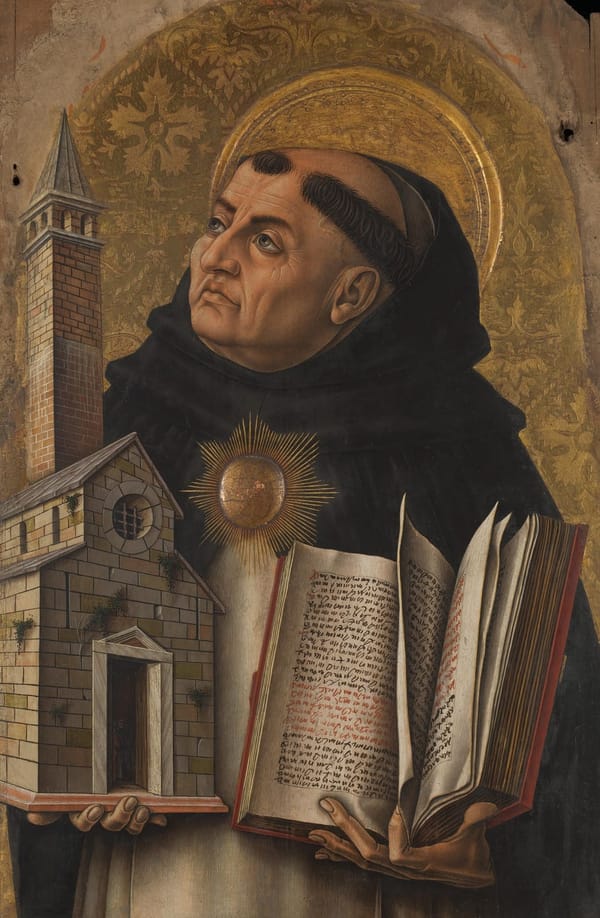 |
The saint we are to honour to-day is one of the sublimest and most lucid interpreters of divine truth. He rose up in the Church many centuries after the apostolic age, nay, long after the four great Latin doctors, Ambrose, Augustine, Jerome, and Gregory. The Church, the ever young and joyful mother, is justly proud of her Thomas, and has honoured him with the splendid title of the angelical doctor, on account of the extraordinary gift of understanding wherewith God had blessed him; just as his contemporary and friend, St. Bonaventure, has been called the seraphic doctor, on account of the wonderful unction which abounds in the writings of this worthy disciple of St. Francis. Thomas of Aquin is an honour to mankind, for perhaps there never existed a man whose intellect surpassed his. He is one of the brightest ornaments of the Church, for not one of her doctors has equalled him in the clearness and precision wherewith he has explained her doctrines. He received the thanks of Christ Himself, for having well written of Him and His mysteries. How welcome ought this feast of such a saint to be to us during this season of the year, when our main study is our return and conversion to God! What greater blessing could we have than to come to the knowledge of God? Has not our ignorance of God, of His claims, and of His perfections, been the greatest misery of our past lives? Here we have a saint whose prayers are most efficacious in procuring for us that knowledge, which is unspotted, and converteth souls, and giveth wisdom to little ones, and gladdeneth the heart, and enlighteneth the eyes.1 Happy we if this spiritual wisdom be granted us! We shall then see the vanity of everything that is not eternal, the righteousness of the divine commandments, the malice of Bin, and the infinite goodness wherewith God treats us when we repent.
Let us learn from the Church the claims of the angelical doctor to our admiration and confidence.
The Dominican Order, of which St. Thomas is one of the greatest ornaments, has inserted the three following hymns in its liturgy of his feast:
Hymn
Laudans turba fidelium,
Errorum pulso nubilo
Per novi solis radium.
Fudit thesauros gratiæ:
Donis pienus ex æthere
Morum et sapientiæ.
Verbi coruscant faculæ,
Scripturæ sacræ Numinis,
Et veritatis regulæ.
Clarus vitæ munditia,
Splendens miris prodigiis,
Dat toti mundo gaudia.
Simulque sancto Flamini,
Qui sancti Thomæ merito
Nos cœli jungat agmini.
and give praise to God,
who has made a new sun to shine in our world,
and disperse the clouds of error.
that Thomas shed his treasures of heavenly light.
Heaven had enriched him
with gifts of virtue and wisdom:
we have derived a brighter knowledge of the Word,
the understanding of the divine Scriptures
and the rules of truth.
the light of his spotless life,
and the splendour of his miracles,
have filled the universe with joy.
and to the Holy Ghost.
And may our God, by the intercession and merits of his saint,
admit us into the choir of the blessed in heaven.
Hymn
Claram ducens originem,
Subit ætatis teneræ
Prædicatorum Ordinem.
Splendens in cœtu nubium,
Plusquam doctores cæteri
Purgans dogma Gentilium.
In lucem pandit abdita,
Dum supra sensus hominum
Obscura facit cognita.
Quadripartite pervius;
Fit Gedeonis gladius,
Tuba, lagena, radius.
Simulque sancto Flamini,
Qui sancti Thomæ merito,
Nos cœli jungat agmini.
Thomas, while in the bloom
of youth, embraced
the Order of Preachers.
brightly does he shine amidst the luminaries of earth,
and, more than any doctor of the Church,
refutes the doctrines of the Gentiles.
and brings to light the hidden gems of truth,
for he teaches us what the mind of man
had else never understood.
like to that four-branched river of paradise.
He made him to be her Gedeon’s sword,
her trumpet, her vase, her torch.
and to the Holy Ghost.
And may our God, by the intercession and merits of his saint,
admit us into the choir of the blessed in heaven.
Hymn
Thomæ felicem exitum,
Qui pervenit ad gaudia
Per Verbi vitæ meritum.
Thecam thesauri gratiæ,
Cum Christus Thomam efficit
Hæredem regni gloriæ.
Et funeris integritas,
Mira fragrans suavitas,
Ægris collata sanitas.
Terræ, ponto, et superis;
Nos juvet suis precibus,
Deo commendet meritis.
Simulque sancto Flamini,
Qui sancti Thomæ merito
Nos cœli jungat agmini.
the happy death of thy Thomas deserves a hymn of praise.
By the merits of him that is the Word of life,
he is now in endless joy.
of grace was welcomed as a guest.
It was there that he received from Christ
the inheritance of eternal glory.
he has loft us his glorious relics
which breathe forth a heavenly fragrance,
and work cures for the suffering sick.
earth, and sea, and heaven, all may give him praise.
May his prayers and merits
intercede for us with God.
and to the Holy Ghost.
And may our God, by the intercession and merits of his saint,
admit us into the choir of the blessed in heaven.
How shall we worthily praise thee, most holy Doctor! How shall we thank thee for what thou hast taught us? The rays of the divine Sun of justice beamed strongly upon thee, and thou hast reflected them upon us. When we picture thee contemplating truth, we think of those words of our Lord: 'Blessed are the clean of heart, for they shall see God.’2 Thy victory over the concupiscence of the flesh merited for thee the highest spiritual delights; and our Redeemer chose thee, because of the purity of thy angelic soul, to compose for His Church the Office whereby she should celebrate the divine Sacrament of His love. Learning did not impair thy humility. Prayer was ever thy guide in thy search after truth; and there was but one reward for which, after all thy labours, thou wast ambitious, the possession of God.
Thy life, alas! was short. The very masterpiece of thy angelical writings was left unfinished. But thou hast not lost thy power of working for the Church. Aid her in her combats against error. She holds thy teachings in the highest estimation, because she feels that none of her saints has ever known so well as thou, the secrets and mysteries of her divine Spouse. Now, perhaps more than in any other age, truths are decayed among the children of men;3 strengthen us in our faith, procure us light. Check the conceit of those shallow self-constituted philosophers, who dare to sit in judgment on the actions and decisions of the Church, and to force their contemptible theories upon a generation that is too ill-instructed to detect their fallacies. The atmosphere around us is gloomy with ignorance; loose principles, and truths spoilt by cowardly compromise, are the fashion of our times; pray for us; bring us back to that bold and simple acceptance of truth, which gives life to the intellect and joy to the heart.
Pray, too, for the grand Order which loves thee so devoutly, and honours thee as one of the most illustrious of its many glorious children. Draw down upon the family of thy patriarch St. Dominic the choicest blessings, for it is one of the most powerful auxiliaries of God’s Church.
We are on the eve of the holy season of Lent, preparing for the great work of earnest conversion of our lives. Thy prayers must gain for us the knowledge both of the God we have offended by our sins, and of the wretched state of a soul that is at enmity with its Maker. Knowing this, we shall hate our sins; we shall desire to purify our souls in the Blood of the spotless Lamb; we shall generously atone for our faults by works of penance
| Previous March 6: Sts. Felicitas and Perpetua, Martyrs | Next March 7: St. Thomas of Aquin, Doctor of the Church |