Daily reading
Semidouble · Movable from Easter · Temporal
March 10, 2021
From Dom Guéranger’s The Liturgical Year.
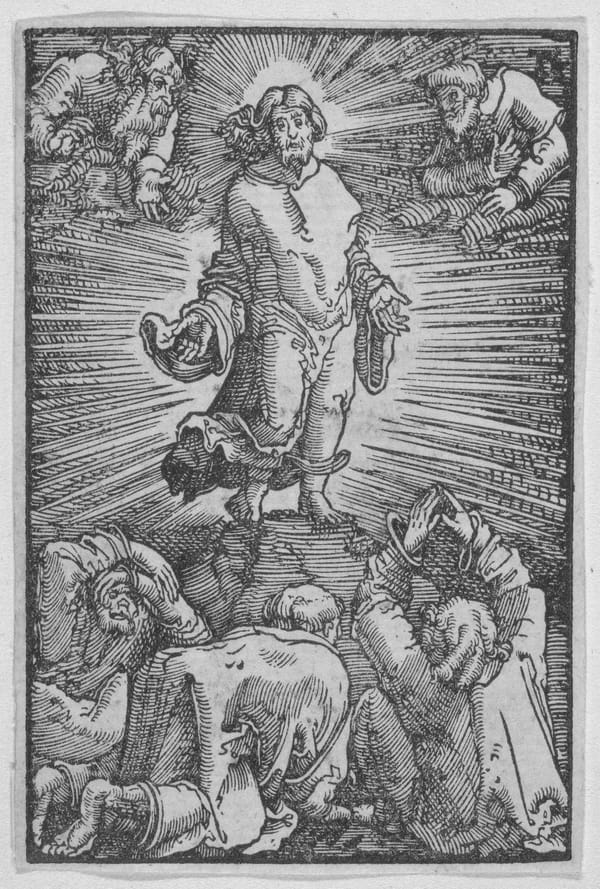
Wednesday of the Third Week of Lent
The Station, at Rome, is in the church oi Saint Xystus on the Appian Road. It now goes under the name of Saint Xystus the Old, in order to distinguish it from another church that is dedicated to the same holy Pope and Martyr.
Collect
Epistle
Cap. xx.Hæc dicit Dominus Deus: Honora patrem tuum, et matrem tuam, ut sis longævus super terram, quam Dominus Deus tuus dabit tibi. Non occides. Non moechaberis. Non furtum facies. Non loqueris contra proximum tuum falsum testimonium. Non concupisces domum proximi tui, nec desiderable uxorem ejus, non servum, non ancillam, non bovem, non asinum, nec omnia quæ illius , sunt. Cunctus autem populus videbat veces, et lampades, et sonitum buccmæ, montem que fumantem et perterriti, ao pa vore concussi steterunt procul, dicentes Moysi: Loquere tu nobis, et audiemus: non loquatur nobis Dominus, ne forte moriamur. Et ait Moyses ad populum: Nolite timere: ut enim probaret vos venit Deus; et ut terror illius esset in vobis, et non peccaretis. Stetitque populus de longe. Moyses autem accessit ad caliginem, in qua erat Deus. Dixit præterea Dominus ad Moysen: Hæc dices filiia Israël: Vos vidistis quod de oælo locutus sim vobis. Non facietis deos argenteos, nec deos aureos facietis vobis. Altare de terra facietis mibi, et offeretis super eo holocausta et pacifica vestra, oves vestras, et boves, in omni loco in quo memoriam fuerit nominis men
Ch. xx.Thus saith the Lord God: Honour thy father and thy mother, that thou mayst be long-lived upon the land which the Lord thy God will give thee. Thou shalt not kill. Thou shalt not commit adultery. Thou shalt not steal. Thou shalt not bear false witness against thy neighbour. Thou shalt not covet thy neighbour’s house, neither shalt thou desire his wife, nor his servant, nor his handmaid, nor his ox, nor his ass, nor any thing that is his. And all the people saw the voices and the flames, and the sound of the trumpet, and the mount smoking: and being terrified and struck with fear, they stood afar off, saying to Moses: Speak thou to us, and we will hear; let not the Lord speak to us, lest we die. And Moses said to the people: Fear not; for God is come to prove you, and that the dread of him might be in you, and you should not sin. And the people stood afar off. But Moses went to the dark cloud wherein God was. And the Lord said to Moses: Thus shalt thou say to the children of Israel: You have seen that I have spoken to you from heaven. You shall not make gods of silver, nor shall you make to yourselves gods of gold. You shall make an altar of earth unto me, and you shall offer upon it your holocausts and peace-offerings, your sheep and oxen, in every place where the memory of my name shall be.
The Church reminds us to-day of the divine commandments which relate to our duties towards our neighbour, beginning with that which enjoins respect to parents. Now that the faithful are intent on the great work of the conversion and amendment of their lives, it is well that they should be reminded that their duties towards their fellow-men are prescribed by God Himself. Hence, it is God whom we offended, when we sinned against our neighbour. God first tells us what He Himself has a right to receive from our hands. He bids us adore and serve Him; He forbids the worship of idols; He enjoins the observance of the Sabbath, and prescribes sacrifices and ceremonies: but, at the same time, He commands us to love our neighbours as ourselves, and assures us that He will be their avenger when we have wronged them, unless we repair the injury. The voice of Jehovah on Sinai is not less commanding when it proclaims what our duties are to our neighbour, than when it tells us our obligations to our Creator. Thus enlightened as to the origin of our duties, we shall have a clearer view of the state of our conscience, and of the atonement required of us by divine justice. But if the old Law, that was written on tablets of stone, thus urges upon us the precept of the love of our neighbour; how much more will the new Law, that was signed with the Blood of Jesus when dying upon the cross for His ungrateful brethren, insist on our observance of fraternal charity! These are the two Laws, on which we shall be judged; let us, therefore, carefully observe what they command on this head, that thus we may prove ourselves to be Christians, according to those words of our Saviour: ‘By this shall all men know that you are My disciples, if you have love one for another.’*
Gospel
Cap. xv.In illo tempore: Accesserunt ad Jesum ab Jerosolymis scribæ et pharisæi, dicentes: Quare discipuli tui transgrediuntur traditionem seniorum? non enim lavant manus su.as cum panem manducant. Ipse autem respondens, ait illis: Quare et vos transgredimini mandatum Dei propter traditionem vestram? Nam Deus dixit: Honora patrem et matrem. Et: Qui maledixerit patri vel matri, morte moriatur. Vos autem dicitis: Quicumque dixerit patri vel matri: Munus quodcumque est ex me tibi proderit: et non honorificabit patrem suum aut matrem suam: et irritum fecistis mandatum Dei, propter traditionem vestram. Hypocritæ, bene prophetavit de vobis Isaias, dicens: Populus hic labiis me honorat: cor autem eorum longe est a me. Sine causa autem colunt me, docentes doctrinas et mandata hominum. Et convocatis ad se turbis, dixit eis: Audite, et intelligite. Non quod iritrat in os, coinquinat hominem: sed quod procedit ex ore, hoc coinquinat hominem. Tune accedentes discipuli ejus, dixerunt ei: Seis quia pharisæi, audito verbo hoc, scandalizati sunt? At lile respondens, ait: Omnis plantatio quam non plantavit Pater meus cælestis, eradicabitur. Sinite illos: cæci sunt, et duces cæcorum. Cæcus autem si cæco ducatum præstet, ambo in foveam cadunt. Respondens autem Petrus, dixit ei: Edissere nobis parabola istam. At ille dixit: Adhuc et vos sine intellectu estis? Non intelligitis quia omne quod in os intrat, in ventrem vadit, et in secessum emittitur? Quæ autem procedunt de ore, de corde exeunt, et ea coinquinant hominem: de corde enim exeunt cogitationes malæ, homicidia, adulteria, fornicationes, furta, falsa testimonia, blasphemiæ. Hæc sunt quæ coinquinant hominem. Non lotis autem manibus manducare, non coinquinat hominem.
Ch. xv.At that time: The scribes and pharisees came from Jerusalem to Jesus, saying: Why do thy disciples transgress the tradition of the ancients? for they wash not their hands when they eat bread. But he answering, said to them: Why do you also transgress the commandment of God for your tradition? For God said: Honour thy father and mother; and: He that shall curse father or mother, let him die the death. But you say: Whosoever shall say to father or mother, The gift whatsoever proceedeth from me, shall profit thee. And he shall not honour his father or his mother; and you have made void the commandment of God for your tradition. Hypocrites, well hath Isaias prophesied of you, saying: This people honoureth me with their lips, but their heart is far from me. And in vain do they worship me, teaching doctrines and commandments of men. And having called together the multitudes unto him, he said to them: Hear ye and understand. Not that which goeth into the mouth defileth a man; but what cometh out of the mouth, this defileth a man. Then came his disciples, and said to him: Dost thou know that the pharisees, when they heard this word, were scandalized? But he answering, said: Every plant which my heavenly Father hath not planted, shall be rooted up. Let them alone; they are blind, and leaders of the blind. And if the blind lead the blind, both fall into the pit. And Peter answering, said to him: Expound to us this parable. But he said: Are you also yet without understanding? Do you not understand that whatsoever entereth into the mouth, goeth into the belly, and is cast out into the privy? But the things which proceed out of the mouth, come forth from the heart, and those things defile a man. For from the heart come forth evil thoughts, murders, adulteries, fornications, thefts, false testimonies, blasphemies. These are the things that defile a man. But to eat with unwashed hands doth not defile a man.
The Law that was given by God to Moses enjoined a great number of exterior practices and ceremonies; and they that were faithful among the Jews, zealously and carefully fulfilled them. Jesus Himself, though He was the divine Law-Giver, most humbly complied with them. But the pharisees had added their own superstitious traditions to these divine laws and ordinances, and made religion consist in the observance of these fanciful inventions. Our Saviour here tells the people not to be imposed upon by such teaching, and instructs them as to what is the real meaning of the external practices of the Law. The pharisees prescribed a great many ablutions or washings to be observed during the course of the day. They would have it, that they who eat without having washed their hands (and indeed the whole body some time during the day), were defiled, and that the food they thus partook of was unclean, because, as they said, they themselves had become defiled by having come near or touched objects which were specified by their whims. According to the Law of God, these objects were perfectly innocent; but according to the law of the pharisees, almost everything was contagious, and the only escape was endless washings! Jesus would have the Jews throw off this humiliating and arbitrary yoke, and reproaches the pharisees for having corrupted and made void the Law of Moses.
He tells them that there is no creature which is intrinsically, and of its own nature, unclean; and that a man’s conscience cannot be defiled by the mere fact of his eating certain kinds of food. Evil thoughts, and evil deeds, these, says our Saviour, are the things that defile a man. Some heretics have interpreted these words as being an implicit condemnation of the exterior practices ordained by the Church, and more especially of abstinence. To such reasöners and teachers we may justly apply what our Saviour said to the pharisees: They are blind and leaders of the blind. From this, that the sins into which a man falls by his use of material things are sins only on account of the malice of the will, which is spiritual, it does not follow that therefore man may, without any sin, make use of material things, when God or His Church forbids their use. God forbade our first parents, under pain of death, to eat the fruit of a certain tree; they ate it, and sin was the result of their eating. Was the fruit unclean of its own nature? No; it was a creature of God as well as the other fruits of Eden; but our first parents sinned by eating it, because their doing so was an act of disobedience. Again, when God gave His Law on Mount Sinai, He forbade the Hebrews to eat the flesh of certain animals; if they ate it, they were guilty of sin, not because this sort of food was intrinsically evil or cursed, but because they that partook of it disobeyed the Lord. The commandments of the Church regarding fasting and abstinence are of a similar nature. It is that we may secure to ourselves the blessing of Christian penance— in other words, it is for our spiritual interest—that the Church bids us abstain and fast at certain times. If we violate her law, it is not the food we take that defiles us, but the resisting a sacred power, which our Saviour, in yesterday's Gospel, told us we are to obey under the heavy penalty which He expressed in those words: He that will not hear the Church, shall be counted as a heathen and publican.
Let us take for to-day one of the solemn supplications offered to God by the Gothic Church of Spain during Lent.
Supplication
(Breviar. Mozarah. Ad Sextam in IV. fer. V. hebdomadœ)
* St. John xiii. 35 ↩︎
March 10: The Forty Martyrs
|
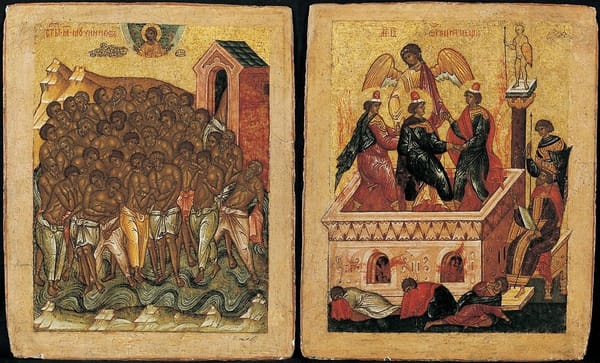
We know the mystery of the number forty. This tenth of March brings it before us. Forty new advocates! Forty encouraging us to enter bravely on our career of penance! On the frozen pool, which was their field of battle, these martyrs reminded one another that Jesus had fasted for forty days, and that they themselves were forty in number! Let us, in our turn, compare their sufferings with the lenten exercises which the Church imposes upon us; and humble ourselves on seeing our cowardice; or, if we begin with fervour, let us remember that the grand thing is to be faithful to the end, and bring to the Easter solemnity the crown of our perseverance. Our forty martyrs patiently endured the cruellest tortures; the fear of God, and their deep-rooted conviction that He had an infinite claim to their fidelity, gave them the victory. How many times we have sinned, and had not such severe temptations as theirs to palliate our fall! How can we sufficiently bless that divine mercy, which spared us, instead of abandoning us as it did that poor apostate, who turned coward and was lost! But, on what condition did God spare us? That we should not spare ourselves, but do penance. He put into our hands the rights of His own justice; justice, then, must be satisfied, and we must exercise it against ourselves. The lives of the saints will be of great help to us in this, for they will teach us how we are to look upon sin, how to avoid it, and how strictly we are bound to do penance for it after having committed it.
The Church, in her liturgy, thus relates to us the martyrdom of the soldiers of Sebaste.
That we may the more worthily celebrate the memory of the forty martyrs, we borrow a few stanzas from the hymn in which the Greek liturgy so enthusiastically sings their praises.
Hymn (Die IX . Martii)
Valiant soldiers of Christ, who meet us, with your mysterious number, at this commencement of our forty days’ fast, receive the homage of our devotion. Your memory is venerated throughout the whole Church, and your glory is great in heaven. Though engaged in the service of an earthly prince, you were the soldiers of the eternal King: to Him were you faithful, and from Him did you receive your crown of eternal glory. We, also, are His soldiers; we are fighting for the kingdom of heaven. Our enemies are many and powerful; but, like you, we can conquer them, if, like you, we use the arms which God has put in our hands. Faith in God’s word, hope in His assistance, humility, and prudence, with these we are sure of victory. Pray for us, O holy martyrs, that we may avoid all compromise with our enemies; for our defeat is certain, if we try to serve two masters. During these forty days, we must put our arms in order, repair our lost strength, and renew our engagements; come to our assistance, and get us a share in your brave spirit. A crown is also prepared for us: it is to be won on easier terms than yours; and yet we shall lose it, unless we keep up within us an esteem for our vocation. How many times, in our past lives, have we forfeited that glorious crown! But God, in His mercy, has offered it to us again, and we are resolved on winning it. Oh, for the glory of our common Lord and Master, make intercession for us.
Our work of preparation is over: we are ready to obey our mother’s call to Lent. During the three past weeks, we have studied the fall of our first parents, and the miseries it brought upon man; the necessity of a Saviour; the justice of God, against which the human race dared to rebel; the terrible chastisement of the deluge, wherewith that revolt was punished; and finally, the covenant made by God, through Abraham, with those who are faithful to Him, and shun the maxims of a perverse and guilty world.
Now we are to see the accomplishment of the great mysteries, whereby the wounds of our fall were healed, the divine justice was disarmed, and God’s grace was poured out upon us, delivering us from the yoke of Satan and the world.
The Man-God, whose sweet presence has been less sensible during this Septuagesima season, is now about to show Himself to us again, but this time it is on His way to Calvary, where He is to be immolated for our redemption. The dolorous Passion, which our sins have imposed upon Him, is about to be brought before us: the greatest of anniversaries will soon be upon us.
Let us be all attention to the mysteries: let us be fervent in the great work of our own purification. Let us walk on courageously in the path of penance, so that each day the burden of our sins may be lightened, and after we have partaken, by heartfelt compassion, of the cup of our Redeemer’s Passion, our lips will be once more permitted to sing the songs of joy, and our hearts will thrill at Easter with the loud burst of the Church’s Alleluia!
| Previous Tuesday of the Third Week of Lent | Next March 10: The Forty Martyrs |