lyp.network

Daily reading

Paschal Time

Double · Movable from Easter · Temporal

May 9, 2021

From Dom Guéranger’s The Liturgical Year.

Gold cross ornament
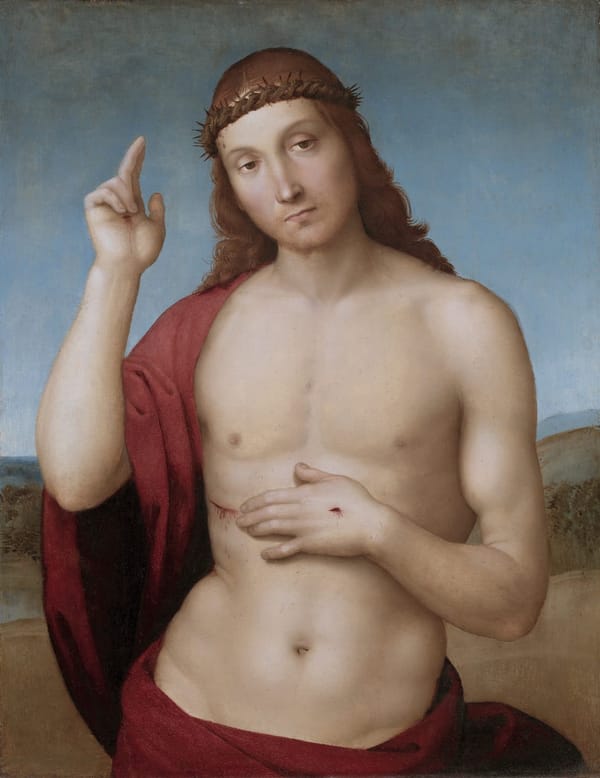
The risen Christ, bare-chested with side wound, raises his right hand in blessing
Gold cross ornament
Christ Blessing (Pax Vobiscum), Raphael (1483–1520), c. 1505. Credits

The Fifth Sunday after Easter

Yet four days, and our risen Jesus, whose company has been so dear and precious to us, will have disappeared from the earth. This fifth Sunday after Easter seems to prepare us for the separation. In a week’s time, we shall begin the long series of Sundays which are to pass before He returns to judge the world. This is a grief to the Christian; for he knows that he will not see his Saviour until after this life, and he feels something of the sorrow the apostles had at the last Supper, when Jesus said to them: ‘Yet a little while, and ye shall not see Me.’1

But, after His Resurrection, what must these privileged men have felt, when they perceived, as we do, that this beloved Master was soon to leave them! They had, so to speak, been living with Jesus glorified; they had experienced the effects of His divine condescension and intimacy; they had received from His lips every instruction they needed for the fulfilment of His will, that is, for founding on earth the Church He had chosen as His spouse. These happy forty days are fast drawing to a close. The apostles will then be deprived of Jesus’ visible presence, even to the end of their lives.

We, too, shall feel something of their sadness, if we have kept ourselves united to our holy mother the Church. From the very first day, when she recommenced, for our sakes, the ecclesiastical year, during which all the mysteries of our redemption, from the birth of our Emmanuel even to His triumphant Ascension into heaven, were to be celebrated,—have not we also been living in company with her Jesus, our Redeemer? And now that He is about to close the sweet intercourse which these seasons and feasts have kept up between Himself and us, are not our feelings very much like those of the apostles?

But there is one creature on earth, whom Jesus is leaving, and whose feelings at the approaching separation we cannot attempt to describe. Never had there been a heart so submissive to the will of her Creator; but, at the same time, there never was any creature so severely tried as she had been. Jesus would have His Mother’s love still increase; He therefore subjects her to the separation from Himself. Moreover, He wishes her to co-operate in the formation of the Church, for He has decreed that the great work shall not be achieved without her. In all this, Jesus shows how tenderly He loves His blessed Mother: He wishes her merit to be so great, that He may justly give her the brightest possible crown, when the day of her own ascension into heaven comes.

The heart of this incomparable Queen is not, indeed, to be again transfixed with a sword of sorrow: it is to be consumed by a love so intense that no language could describe it. Under the sweet, yet wearing, fire of this love, Mary is at length to give way, just as fruit falls from the tree, when its ripeness is complete, and the tree has nothing more to give it. But, during these last hours of Jesus’ presence, what must such a Mother have felt, who has had but forty days to enjoy the sight and the caresses of her glorified and divine Son? It is Mary’s last trial; and when her Jesus tells her of His wish that she should remain in exile, she is ready with her favourite answer: 'Behold the handmaid of the Lord! Be it done to me according to Thy word!’ Her whole life has been spent in doing God’s will; it was this that made her so great in His eyes, and so dear to His Heart. A holy servant of God, who lived in the seventeenth century, and was favoured with the most sublime revelations, tells us that it was left to Mary’s choice, either to accompany her divine Son to heaven, or to remain some years longer upon the earth to assist the infant Church; and that she chose to defer her entrance into eternal bliss, in order to labour, as long as it was God’s good pleasure, in the great work which was so closely connected with the glory of her Son, and so essential to the salvation of us her adopted children.

If this generous devotedness raised the co-operatrix of our salvation to the highest degree of sanctity, by giving completeness to her mission on earth, we may be sure that Jesus’ love for His Mother was increased by the new proof she thus gave Him of her uniformity with every wish of His sacred Heart. He repaid her, as He well knew how to do, for this heroic self-sacrifice, this prompt submission to His designs which destined her to be, here on earth, as the Church calls her, 'Queen of the apostles,’ and a sharer in their labours.

During these His last few hours on earth, our Lord’s affection for His apostles and disciples seemed to be redoubled. For several of them, the separation was to be a long one. The beloved disciple, John, was not to enjoy the company of his divine Master till more than fifty years had elapsed. It was to be thirty before the cross would carry Peter to Him who had entrusted to his keeping the keys of the kingdom of heaven. Magdalene, the fervent Magdalene, would have to wait the same length of time. But no one murmured at the divine appointment: they all felt how just it was, that Jesus, now that He had so fully established the faith of His Resurrection, should enter into His glory.2

On the very day of His Resurrection, our Saviour bade the disciples go into Galilee, for that there He would meet them. As we have already seen, they obeyed the order, and seven among them were favoured by Jesus’ appearing to them on the banks of Lake Genesareth: it is the eighth of the manifestations mentioned in the Gospel. The ninth also took place in Galilee. Our Lord loved Galilee: it gave Him the greater number of His disciples, it was Mary and Joseph’s country, and it was there that He Himself passed so many years of His hidden life. Its people were simpler and better than those of Judea; and this was another attraction. St. Matthew tells us, that the most public of all Jesus’ manifestations, after His Resurrection,—the tenth in reality, and the ninth mentioned by the evangelists,—took place on a hill in this same district.3

According to St. Bonaventure, and the learned and pious Denis the Carthusian, this hill was Mount Thabor, the same that was honoured by the mystery of the transfiguration. Upwards of five hundred of Jesus’ disciples were assembled there, as we learn from St. Paul:4 they were mostly inhabitants of Galilee, had believed in our Lord during His three years of public life, and merited to be witnesses of this new triumph of the Nazarene. Jesus showed Himself to them, and gave them such certitude with regard to His resurrection, that the apostle appeals to their testimony in support of this fundamental mystery of our faith.

Further than this, we know of no other manifestations made by our Saviour after His resurrection. We know that He gave order to His disciples to repair to Jerusalem, where they were to see Him once more before His Ascension. Let us, during these few days, follow the disciples to Jerusalem. Faithless city! how often has Jesus sought to gather together her children, as the hen gathereth her chickens under her wings, and she would not!5 He is about to re-enter her walls; but she is not to know it. He will not shew Himself to her, but only to those that love Him; and after this He will depart in silence, never to return until He comes to judge them that have not known the time of their visitation.

In the Greek Church, the fifth Sunday after Easter is called the Sunday of the man born blind, because her Gospel for the day contains the history of that miracle of our divine Lord. She also calls it Episozomene, which is one of the names given by the Greeks to the mystery of the Ascension, the feast of which is kept with them, as with us, during the course of this week.


Mass

The Introit is taken from Isaias, the sublimest of the prophets. It sweetly invites all the earth to celebrate the victory won by Jesus,—a victory which has purchased our deliverance.

Introit

Vocem jucunditatis annuntiate, et audiatur, alleluia: annuntiate usque ad extremum terræ: liberavit Dominus populum suum. Alleluia, alleluia.
Ps. Jubilate Deo omnis terra: psalmum dicite nomini ejus, date gloriam laudi ejus.℣. Gloria Patri. Vocem jucunditatis.
With the voice of joy make this to be heard, alleluia: publish to the utmost bounds of the earth, that the Lord hath redeemed his people. Alleluia, alleluia.
Ps. Shout with joy to God, all the earth: sing a psalm to his name, give glory to his praise.℣. Glory, &c. With the voice, &c.

In the Collect, holy Church teaches us that our thoughts and actions, to be made deserving of eternal life, stand in need of grace; the former that we may have the inspiration, the latter that we may have the will to do them.

Collect

Deus, a quo bona cuncta procedunt, largire supplicibus tuis: ut cogitemus, te inspirante, quæ recta sunt, et, te gubernante, eadem faciamus. Per Dominum.
O God, from whom all that is good proceeds: grant that thy people, by thy inspiration, may resolve on what is right, and by thy direction, put it in practice. Through, &c.

Of the Blessed Virgin

Concede nos famulostuos, quæsumus Domine Deus, perpetua mentis et corporis sanitate gaudere: et gloriosa beatæ Mariæ semper Virginis intercessione, a præsenti liberari tristitia, et æterna perfrui lætitia.
Grant, O Lord, we beseech thee, that we thy servants may enjoy constant health of body and mind; and by the glorious intercession of blessed Mary, ever a Virgin, be delivered from all present sorrows, and come to that joy which is eternal.

Against the Persecutors of the Church

Ecclesiæ tuæ, quæsumus Domine, preces placatus admitte, ut, destructis adversitatibus et erroribus universis, secura tibi serviat libertate. Per Dominum.
Mercifully hear, we beseech thee, O Lord, the prayers of thy Church: that, all oppositions and errors being removed, she may serve thee with a secure liberty. Through, &c.

For the Pope

Deus omnium fidelium Pastor et rector, famulum tuum Leonem quem Pastorem Ecclesiæ tuæ præesse voluisti, propitius respice: da ei, quæsumus, verbo et exemplo, quibus præest proficere; ut ad vitam una cum grege sibi credito perveniat sempiternam. Per Dominum.
O God, the Pastor and Ruler of all the faithful, look down, in thy mercy, on thy servant Leo, whom thou hast appointed Pastor over thy Church; and grant we beseech thee, that both by word and example, he may edify all those that are under his charge; and, with the flock entrusted to him, arrive at length at eternal happiness. Through, &c.

Epistle

Lectio Epistolæ beati Jacobi Apostoli.
Cap. i.
Charissimi, estote factores verbi, et non auditores tantum, fallentes vosmetipsos. Quia si quis auditor est verbi, et non factor, hic comparabitur viro consideranti vultum nativitatis suæ in speculo: consideravit enim se, et abiit, et statim oblitus est qualis fuerit. Qui autem perspexerit in legem perfectam libertatis, et permanserit in ea, non auditor obliviosus factus, sed factor operis: hic beatus in facto suo erit. Si quis autem putat se religiosum esse, non refrænans linguam suam, sed seducens cor su um, hujus vana est religio. Religio munda, et immaculata apud Deum et Patrem, hæc est: Visitare pupillos et viduas in tribulatione eorum, et immaculatum se custodire ab hoc sæculo.
Lesson of the Epistle of Saint James the Apostle.
Ch. i.
Dearly beloved: Be ye doers of the word, and not hearers only, deceiving your own selves. For if a man be a hearer of the word and not a doer; he shall be compared to a man beholding his own countenance in a glass. For he beheld himself and went his way, and presently forgot what manner of man he was. But he that hath looked into the perfect law of liberty, and hath continued therein, not becoming a forgetful hearer, but a doer of the work: this man shall be blessed in his deed. And if any man think himself to be religious, not bridling his tongue, but deceiving his own heart, this man’s religion is vain. Religion clean and undefiled before God and the Father, is this: to visit the fatherless and widows in their tribulation: and to keep one’s self unspotted from this world.

The holy apostle, whose instructions these are, had received them from our risen Jesus: hence the authoritative tone wherewith he speaks. Our Saviour, as we have already seen, honoured him with a special visit. This proves that he was particularly dear to his divine master, to whom he was related by the tie of consanguinity on his mother’s side, whose name was Mary. This holy woman went on Easter morning to the sepulchre, in company with her sister Salome, and Magdalene. St. James the Less is indeed the apostle of Paschal Time, wherein everything speaks to us of the new life we should lead with our risen Lord. He is the apostle of good works, for it is from him that we have received this fundamental maxim of Christianity, that though faith he the first essential of a Christian, yet without works it is a dead faith, and will not save us.

He also lays great stress on our being attentive to the truths we have been taught, and on our guarding against that culpable forgetfulness, which plays such havoc with thoughtless souls. Many of those who have this year received the grace of the Easter mystery, will not persevere; and the reason is, that they will allow the world to take up all their time and thoughts, whereas they should use the world as though they did not use it.6 Let us never forget, that we must now walk in newness of life, in imitation of our risen Jesus, who dieth now no more.

The two Alleluia-versicles celebrate the glory of the Resurrection; but they also contain an allusion to the approaching Ascension. Jesus was bom eternally from the Father; He came down to us; but now, in a few days, He is to return to his Father.

Alleluia alleluia. ℣. Surrexit Christus, et illuxit nobis, quos redemit sanguine suo. Alleluia.℣. Exivi a Patre, et veni in mundum; iterum relinquo mundum et vado ad Patrem, alleluia.
Alleluia alleluia. ℣. Christ is risen, and hath shone upon us, whom he redeemed with his blood. Alleluia.℣. I came forth from the Father, and I came into the world: I leave the world again, and go to the Father, alleluia.

Gospel

Sequentia sancti Evangelii secundum Joannem.
Cap. xvi.
In illo tempore: Dixit Jesus discipulis suis: Amen, amen dico vobis: si quid petieritis Patrem in nomine meo, dabit vobis. Usque modo non petistis quidquam in nomine meo: petite et accipietis, ut gaudium vestrum sit plenum. Hæc in proverbiislocutus sum vobis. Venit hora cum jam non in proverbiie loquar vobis, sed palam de Patre annuntiabo vobis. In illo die in nomine meo petetis: et non dico vobis quia ego rogabo Patrem de vobis: ipse enim Pater amat vos, quia vos me amastis, et credidistis quia ego a Deo exivi. Exivi a Patre, et veni in mundum: iterum relinquo mundum, et vado ad Patrem. Dicunt ei discipuli ejus: Ecce nunc palam loqueris, et proverbium nullum dicis: nunc scimus quia scis omnia, et non opus est tibi ut quis te interroget: in hoc credimus quia a Deo existi.
Sequel of the holy Gospel according to John.
Ch. xvi.
At that time: Jesus said to his disciples: Amen, amen, I say to you; if you ask the Father anything in my name, he will give it you. Hitherto you have not asked anything in my name. Ask and you shall receive; that your joy may be full. These things I have spoken to you in proverbs. The hour cometh when I will no more speak to you in proverbs, but will show you plainly of the Father. In that day you shall ask in my name: and I say not to you, that I will ask the Father for you. For the Father himself loveth you, because you have loved me, and have believed that I came out from God. I came forth from the Father, and am come into the world: again I leave the world and I go to the Father. His disciples say to him: Behold now thou speakest plainly, and speakest no proverb. Now we know that thou knowest all things, and thou needest not that any man should ask thee. By this we believe that thou camest forth from God.

When, at His last Supper, our Saviour thus warned His apostles of His having soon to leave them, they were far from knowing Him thoroughly. True, they knew that He came forth from God; but their faith was weak, and they soon lost it. Now that they are enjoying His company after His Resurrection, now that they have received such light from His instructions, they know Him better. He no longer speaks to them in proverbs; He teaches them everything they require to know in order to become the teachers of the whole world. It is now they might truly say to Him: We believe that thou camest forth from God! So much the more, then, do they understand what they are going to lose by His leaving them.

Our Lord begins now to reap the fruit of the word He has sown in their hearts: oh! how patiently has He waited for it! If He praised them for their faith, when they were with Him on the night of the last Supper, He may surely do so now that they have seen Him in the splendour of His Resurrection, and have been receiving such teaching from His lips. He said to them, at the last Supper: The Father loveth you, because ye have loved Me; how much more must the Father love them now, when their love for Jesus is so much increased! Let us be consoled by these words. Before Easter our love of Jesus was weak, and we were tepid in His service; but now that we have been enlightened and nourished by His mysteries, we may well hope that the Father loves us, for we love Jesus better than we did before. This dear Redeemer urges us to ask the Father, in His name, for everything we need. Our first want is perseverance in the spirit of Eastertide; let it be our most earnest prayer; let it be our intention now that we are assisting at the holy sacrifice, which is soon to bring Jesus upon our altar.

The Offertory is taken from the Psalms; it is an act of thanksgiving which the Christian, united with his risen Jesus, offers to God for having brought him to the new life, and made him the object of His choicest graces.

Offertory

Benedicite, gentes, Dominum Deum nostrum, et obaudite vocem laudis ejus: qui posuit animam meam ad vitam, et non dedit commoveri pedes meos. Benedictus Dominus, qui non amovit deprecationem meam, et misericordiam suam a me, alleluia.
Bless the Lord our God, ye Gentiles, and make the voice of his praise be heard, who hath set my soul to live, and hath not suffered my feet to be moved. Blessed be the Lord, who hath not turned away my prayer, nor his mercy from me, alleluia.

In the Secret, the Church prays that this our earthly Pasch may introduce us to the feast of heavenly glory. The end of all the mysteries achieved by God in this world is, that we may be sanctified by them, and fitted for the eternal vision and possession of our Creator: it is this that the Church, adopting the style of the sacred Scriptures, calls glory.

Secret

Suscipe, Domine, fidelium preces cum oblationibus hostiarum: ut per hæc piæ devotionis officia, ad cœlestem gloriam transeamus. Per Dominum.
Receive, O Lord, we beseech thee, the prayers of the faithful, together with these oblations; that by these devout celebrations we may be admitted into heavenly glory. Through, &c.

Of the Blessed Virgin

Tua, Domine, propitiatione, et beatæ Mariæ semper Virginia intercessione, ad perpetuam atque præsentem hæc oblatio nobis proficiat prosperitatem et pacem.
By thine own mercy, O Lord, and the intercession of blessed Mary, ever a Virgin, may this oblation procure us peace and happiness, both in this life, and in that which is to come.

Against the Persecutors of the Church.

Protege nos, Domine, tuis mysteriis servientes: ut divinis rebus inhærentes, et corpore tibi famulemur et mente. Per Dominum.
Protect us, O Lord, while we assist at thy sacred mysteries: that being employed in acts of religion, we may serve thee, both in body and mind. Through. &c.

For the Pope

Oblatis, quæsumus Domine, placare muneribus: et famulum tuum Leonem quem pastorem Ecclesiæ tuæ præesse voluisti, assidua protectione guberna. Per Dominum.
Be appeased, O Lord, with the offering we have made: and cease not to protect thy servant Leo, whom thou hast been pleased to appoint Pastor over thy Church. Through, &c.

The Communion-anthem, composed of the words of the royal prophet, is a canticle of gladness, expressive of the ceaseless joy of our Easter.

Communion

Cantate Domino, alleluia: cantate Domino, et benedicite nomen ejus: bene nuntiate de die in diem salutare ejus. Alleluia, alleluia.
Sing to the Lord, alleluia: sing to the Lord, and bless his name: publish aloud, from day to day, that he hath saved us. Alleluia, alleluia.

Holy Church teaches us, in her Postcommunion, how we should pray to God. We must desire the right thing; let us pray to have this desire, and then continue our prayer till the right thing is granted. Grace will then be given us: it will be our own fault if it be unproductive.

Postcommunion

Tribue nobis, Domine, cœlestis mensæ virtute satiatis, et desiderare quærecta sunt, et desiderata percipere. Per Dominum.
Grant, O Lord, by the power of the heavenly nourishment we have received, that we desire what is right, and obtain our desire. Through, &c.

Of the Blessed Virgin

Sumptis, Domine, salutis nostræ subsidiis: da, quæsumus, beatæ Mariæ semper Virginis patrociniis nos ubique protegi, in cujus veneratione hæc tuæ obtulimus majestati.
Having received, O Lord, what is to advance our salvation; grant we may always be protected by the patronage of blessed Mary, ever a Virgin, in whose honour we have offered this sacrifice to thy Majesty.

Against the Persecutors of the Church

Quæsumus, Domine Deus noster, ut quos divina tribuis participatione gaudere, humanis non sinas subjacere periculis. Per Dominum.
We beseech thee, O Lord our God, not to leave exposed to the dangers of human life, those whom thou hast permitted to partake of these divine mysteries. Through, &c.

For the Pope

Hæc nos, quæsumus, Domine, divini sacramenti perceptio protegat: et famulum tuum Leonem quem Pastorem Ecclesiæ tuæ præesse voluisti, una cum commisso sibi grege, salvet semper et muniat. Per Dominum.
May the participation of this divine Sacrament protect us, we beseech thee, O Lord; and always procure safety and defence to thy servant Leo, whom thou hast appointed Pastor over thy Church, together with the flock committed to his charge. Through, &c.


Vespers

Antiphon of the Magnificat

Ant. Petite et accipietis, ut gaudium vestrum sit plenum: ipse enim Pater amat vos, quia vos me amastis, et credidistis, alleluia.
Oremus.
Deus, a quo bona cuncta procedunt; largire supplicibus tuis: ut cogitemus, te inspirante, quæ recta sunt, et te gubernante, eadem faciamus. Per Dominum.
Ant. Ask and ye shall receive, that your joy may be full: for the Father himself loveth you, because ye have loved me, and have believed, alleluia.
Let us Pray.
O God, from whom all that is good proceeds: grant that thy people, by thy inspiration, may resolve on what is right, and by thy direction, put it in practice. Through. &c.

We will close our Sunday with the admonition wherewith the Gothic Church of Spain warned the faithful during Paschal Time. It is a season of joy; and yet we need to be cautious, for our enemy is sure to lay snares for us in the new life we have received.

Missa
(Feria V. post Pascha.)

Habeant, dilectissimi fratres, vota cautelam, festa diligentiam, gaudia disciplinam. Exsultare decet quod resurrexerimus: sed timere convenit ne cadamus. Inter novam vitam veteremque mortem oportet scire quid evasimus, oportet eligere quid amemus. Non enim error, sed contemptus est peccare commonitum. Major post veniam pœna sequitur contumaces: gravius est captivos fieri jam redemptos. Habet ista pietas potestatem, habet potestas ista terrorem, habet terror iste vindictam. Non enim fuisset pius in homine, nisi prius iratus fuisset in dæmone. Confortamur gratia doni, si non corrumpamur lege pec- cati. Ratio parcendi est prævisio corrigendi. Non mutamur indulgentia, si non renovetur offensa. Qui nobis quod peccavimus indulsit, et ne ultra peccaremus admo- nuit. Profuit dementia, si profecit disciplina. Jam qui- dem hominem gratia adopta- vit, sed necdum dæmonem gehenna suscepit. Violentia peccatum perdidit, non naturam. Dimicandi est facultas, non securitas otiandi. Spo- liatus eat adversarius, non extinctus. Gravius necesse est ut frendeat in amissis, quibus præerat dominando subjectis. Accepimus castra per fidem, arma per crucem, signa per carnem, vexilla per sanguinem: restat causa cer- taminis. Qui enim afferre necesaitatem voluit pugnæ, spem voluit probare victoriæ. Præcessit quidem in adoptione donum, sed adhuc restat in conversatione judicium. Hic promissio eat de munere, illic vicissitudo futura est post laborem. Sit itaque ille ante oculos nostros Domini miserantis affec- tua, quod in taxatione nostra non argenti pondus, non auri talentum dedit, non gratiarum fudit ornatum, sed convitio subdidit se pati- buli, sepulchro sustinens carneam injuriam, sepultu- ram. Nihil majus potuit dare, nihil melius. Ut uti- que sit probandum quod diligentius nos sibi servire voluit, qui pretiosius nos redemit. Ergo ut in nobis redemptionis suae beneficia dignetur perficere, constan- ter nos convenit ac perseve- ranter orare.
Dearly beloved brethren: let there be caution in your devotion, watchfulness in your festivity, modesty in your gladness. We should rejoice in that we have risen: but we should fear lest we may fall. We have been rescued from the death of old, and it behoves us to know how evil it was; we have been gifted with the new life, and we must cling to it as worthy of our love. To commit the sin we have been admonished to shun is not an error but contempt. They that have been pardoned and relapsed, deserve the greater punishment; nor is there excuse for them that have been once ransomed if they again become slaves. The mercy of God implies power; and power, fear; and fear, chastisement. He would not have been merciful to man, unless he had first been angry with the devil. He strengthens us with his gratuitous gifts, that we may not be corrupted by our evil inclinations. No one spares another but with a hope of correction. Forgiveness can do no harm, when the offence is not repeated. He that pardoned us our sins, thereby admonished us to sin no more. Mercy has not been lost on us, if our conduct is what it should be. Grace has, indeed, made man the adopted child of God; but the devil is not yet shut up in hell. Sin, not nature, has been defeated. What we have gained is the power of fighting, not the privilege of inaction. Our enemy has been despoiled, not slain. His anger must be greatest against those who were once subject to his tyranny, but now are disenthralled. Faith has given us bulwarks; the cross, armour; the flesh (assumed by Christ) a standard: and his Blood, a banner: the battle then is to be fought. The God who willed us to have the battle, willed us to have the hope of victory. We have already received the gift of adoption; our conduct is to decide what sentence is to be passed upon us in judgment. In this world we have the promise of reward; in the next, our lot will be decided according to our works. Let us, therefore, be mindful of the tender mercy of our Lord, who, as the price of our ransom, gave not sums of silver or gold, nor granted princely favours, but subjected himself to the infamy of the cross, and suffered his Body to be humbled even to being buried in a tomb. He could give nothing greater or better. So that the more it cost him to redeem us, the more diligently should we serve him; and it is this he demands of us. Therefore, in order that the work of his Redemption be perfected in us, it behoves us to pray with constancy and perseverance.
  1. St. John, xvi. 16. ↩︎
  2. St. Luke, xxiv. 26. ↩︎
  3. St. Matth. xxviii. 16. ↩︎
  4. 1 Cor. xv. 6. ↩︎
  5. St. Matth. xxiii. 37. ↩︎
  6. I Cor. vii. 31. ↩︎

May 9: St. Gregory Nazianzen, Bishop, and Doctor of the Church
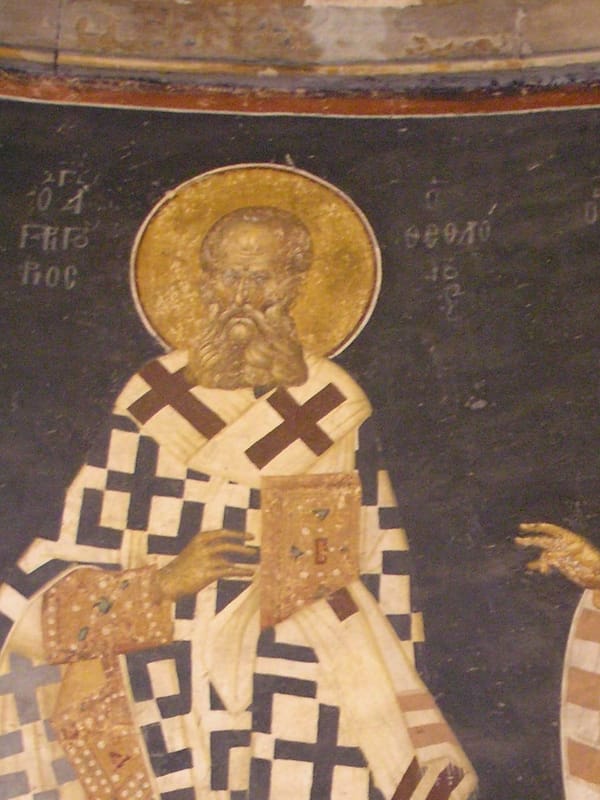
St Gregory Nazianzen balding with pointed beard, gold halo, blessing, holding Gospel; Greek Ο ΘΕΟΛΟΓΟΣ
Chora Church fresco: St Gregory the Theologian (left figure with Basil/Cyril companion). Credits

SIDE by side with Athanasius, another Doctor of the Church comes forward at this glad season to offer to the Risen Jesus the tribute of his learning and eloquence. It is Gregory of Nazianzum, the friend of Basil, the great orator, the admirable poet, whose style combines energy of thought with a remarkable richness and ease of expression; the one of all the Gregories who has merited and received the glorious name of Theologian, on account of the soundness of his teachings, the sublimity of his ideas, and the magnificence of his diction. Holy Church exults at being able to offer us so grand a Saint during Easter Time, for no one has spoken more eloquently than he on the Mystery of the Pasch. Let us listen to the commencement of his second Sermon for Easter; and then judge for ourselves:

I will stand upon my watch, says the admirable Prophet Habacuc.1 I, also on this day, will imitate him; I will stand on the power and knowledge granted me by the favour of the Holy Ghost, that I may consider and know what is to be seen, and what will be told unto me. And I stood and I watched: and lo! a man ascended to the clouds; and he was of exceeding high stature, and his face was the face of an angel, and his garment was dazzling as a flash of lightning. And he lifted up his hand towards the East, and cried out with a loud voice. His voice was as the voice of a trumpet, and around him stood, as it were, a multitude of the heavenly host, and he said: "To-day is salvation given to both the visible and the invisible world. Christ hath risen from the dead: do ye also rise. Christ hath returned to himself: do ye also return. Christ hath freed himself from the tomb: be ye set free from the bonds of sin. The gates of hell are opened, and death is crushed; the old Adam is laid aside, and the new one is created. Oh! if there be a new creature formed in Christ, be ye made new!”

Thus did he speak. Then did the other angels repeat the hymn they first sang when Christ was born on this earth, and appeared to us men: Glory be to God in the highest, and peace on earth to men of good will! I join my voice with them, and speak these things to you: oh! that I could have an angel’s voice, to make myself heard throughout the whole earth!

It is the Pasch of the Lord! the Pasch!—in honour of the Trinity, I say it a third time: the Pasch! This is our Feast of feasts, our Solemnity of solemnities. It is as far above all the rest, not only of those which are human and earthly, but of those even which belong to Christ and are celebrated on his account—yea, it as far surpasses them all as the sun surpasses the stars. Commencing with yesterday, how grand was the day with its torches and lights! . . . But how grander and brighter is all on this morning! Yesterday’s light was but the harbinger of the great Light that was to rise; it was but a foretaste of the joy that was to be given to us. But to-day we are celebrating the Resurrection itself, not merely in hope, but as actually come to pass, and drawing the whole earth to itself.2

This is a sample of the fervour and eloquence wherewith our Saint preached the mysteries of faith. He was a man of retirement and contemplation. The troubles of the world in which he had been compelled to live damped his spirits; the duplicity and wickedness of men fretted his noble heart; and leaving to another the perilous honour of the see of Constantinople, which he had reluctantly accepted a very short time previously, he retired to his dear solitude, there to enjoy his God and the study of holy things. And yet, during the short period of his episcopal government, notwithstanding all the obstacles that stood in his way, he confirmed the faith that had been shaken, and left behind him a light which continued even to the time when St John Chrysostom was chosen to fill the troubled Chair of Byzantium.

The holy Liturgy thus speaks to us of the virtues and actions of this great Saint:

Gregorius, nobilis Cappadox, ex singulari divinarum litterarum scientia Theologi cognomen consecutus, Nazianzi in Cappadocia natus, Athenis in omni disciplinarum genere una cum sancto Basilio eruditus, ad studia sacrarum litterarum se convertit, in quibus se in cœnobio per aliquot annos exercuerunt, illarum sententiam non ex proprio ingenio, sed ex majorum ratione et auctoritate interpretantes. Qui cum doctrina et vitæ sanctitate florerent, vocati ad munus praedicandæ Evangeli cæ veritatis, plurimos Jesu Christo filios pepererunt.
Gregorius igitur aliquando domum reversus, primum Sasimorum Episcopus creatus est, deinde Nazianzenam Ecclesiam administravit. æ Constantinopolim ad eam regendam Ecclesiam accersitus, cum civitatem hæresum purgatane erroribus ad Catholicam fidem reduxisset, quod ei summum omnium amorem conciliare debebat, multorum paravit invidiam. Itaque cum inter Episcopos magna propterea esset facta seditio, sponte cedens Episcopatu, illud Prophetæ dictum usurpa vit: Si propter me commota est ista tempestas, dejicite me in mare, ut vos jactari desinatis. Quare Nazianzum reversus, cum illi Ecclesiæ Eulalium præficiendum curasset, totum se ad contemplationem et scriptionem divinarum rerum contulit.
Scripsit autem multa, et soluta oratione, et versibus, mirabili pietate et eloquenfia: quibus doctorum hominum sanctorumque judicio id assecutus est, ut nihil in illis, nisi ex veræ pietatis et Catholicæ religionis regula reperiatur, nemo quidquam jure vocare possit in dubium. Consubstantialitatis Filii fuit acerrimus propugnator. Ut autem vitæ laude nemo ei præpositus est, sic et orationis gravitate omnes facile superavit. In iis scribendi ac legendi studiis ruri vitam monachi exercens, imperatore Theodosio, ad cœlestem vitam, senio confectus, migravit.
Gregory, a Cappadocian noble, surnamed the Theologian, on account of his extraordinary learning in the sacred sciences, was born at Nazianzum in Cappadocia. He went through a complete course of studies at Athens, together with St Basil, after which he applied himself to the study of the sacred Scriptures. The two friends retired to a monastery, where they spent several years over the Scripture, interpreting it not according to their own views, but by the mind and authority of the earlier Fathers. Owing to their reputation for learning and virtue, they were called to the ministry of preaching the Gospel, and became the spiritual fathers of many souls.
After Gregory had returned home, he was made bishop of Sasima, and afterwards administered the church of Nazianzum. Being called later on to govern the Church of Constantinople, which was infected with heresy, he converted it to the Catholic faith. This success, far from gaining him the love of everyone, excited the envy of a great many and caused a division among the bishops, which led the Saint to resign his see. He said to them in the words of the prophet: ' If this tempest be stirred up on my account, cast me into the sea, that you may cease to be tossed.' Whereupon he returned to Nazianzum; and, having secured the appointment of Eulalius, Bishop of that Church, he devoted his whole time to the contemplation of divine things, and to writing treatises upon them.
He wrote much, both in prose and verse, of an admirable piety and eloquence. In the opinion of learned and holy men, there is nothing to be found in his writings which is not conformable to true piety and Catholic faith, or which anyone could reasonably call in question. He was a vigorous defender of the consubstantiality of the Son of God. No one ever led a more saintly life than he; no one was to be compared to him for eloquence. He led the life of a monk, spending his whole time in solitude, occupied in writing and reading. Having reached a venerable old age, he died during the reign of the emperor Theodosius, and entered into the blessed life of heaven.

The Greek Church, in her Menæa, gives the following magnificent encomium of St Gregory Nazianzen:

Hymn (Die XXV Januarii)

Late resonans organum, modulatam citharam, harmonicam cinyram, et dulcisonam, pontificum principem, magnum Ecclesise Christi præceptorem laudibus celebremus canentes: Salve, divinæ abyssus gratiæ; salve, cœlestium sublimitas cogitationum, Pater pat rum Gregori.
Quibus hymnis et cantibus te celebrabimus, par angelis, in terris non humano more, sed supra vi ven tem? Verbi Dei præconem, vere amicum casta Virginis, apostolorum throni consortem, martyrum et sanctorum gloriosum decus, divinum Trinitatis sempiterna adoratorem, sanctissime archisacerdos.
Pontificum principem, patriarcharum decus, interpreten! dogmatum et cogitationum Christi, mentem sublimissimam, o fideles, in unum congregati, hymnis celebremus spiritualibus, dicen tes: Salve, ions theologiæ, sapientiæ flumen, et origo divina cognitionis. Salve, astrum lucidissimum, quod tuis doctrinis universum illustras mundum. Salve, potens pietatis defensor, et generose impietatis insectator.
Pater Gregori, sapienter pericula et insidias camis effugisti: et super currum quadrijugem virtutum, per medium cœli transcendens, ad pulchritudinem ineffabilem ad volasti, qua repletus et exsultans, nunc animabus nostris obtines pacem et magnani misericordiam.
Verbo Dei aperiens os tuum, sapientiæ Spiritum attraxisti; et plenus gratia, divina resonare fecisti dogmata, ter beate Gregori; et angelicis initiatus potestatibus, trinum et indivisibile lumen prædicasti. Ideo tuis illuminati divinis doctrinis, adoramus Trini ta tem in una Dei tate recognitam, ad obtinendam an imarum nostrarum salutem.
Infiammata lingua tua, Deo inspirate Gregori, verborum versutias hæreticomm cum Domino pugnantium penitus incendisti. Vere apparuisti velut os divinum, in Spiritu loquens magnalia Dei, et scriptis repræsentans nobis eamdem potentiam et substantiam absconditæ et mysticæ Trinitatis. Sicut lumen trisolare terrestrem illuminasti mundum.; et nunc indesinenter intercedis pro animabus nostris.
Salve, flumen Dei, semper aquis gratiæ plenum et omnem laetificans civitatem regis Christi divinis verbis et dogmatibus tuis; voluptatis torrens, mare inexhaustum, fidelis et justus doctrinæ custos, acerrimus Trinitatis propugnator, organum Spiritus Sancti, mens vigilans, harmonica lingua, profunda Scripturamm interpretans mysteria; nunc Ghristum exora ut animabus nostris magnam concedat misericordiam.
Super virtutum montem ascendisti, terrenis rebus renuntians, et totus ab operibus mortuis alienus; et tabulas manu Dei descriptas, dogmata purissima theologiæ tuæ recepisti, cœlestia docens mysteria, sapiens Gregori.
Dei Sapientiam dilexisti, et verborum pulchritudinem amasti, et præ cunctis terræ voluptatibus æstimasti. Ideo corona gratiarum te mirabiliter decoravit Dominus, beatissime, et Theologum sibi segregans delegit.
Ut venerandæ Trinitatis claritate mentem tuam abundanter illuminares, Pater, illam expolivisti, optima virtutum professione immaculatam efficiens, velut novum et antefactum recens speculum. Unde et divinis imaginibus simillimus Deo apparuisti.
Novus Samuel a Deo datus apparuisti, Deo ipsi datus etiam ante conceptionem, beatissime; ornatus prudentia, temperantia, et sanctissima pontificatus stola decoratus, Pater; mediator factus inter Creatorem et creaturam.
Ad sapientiæ craterem venerabile os tuum admovisti, Pater Gregori; et divinum theologiæ flumen inde exhausisti, et fidelibus abundanter distribuisti; hæreseon torrentem pemiciosum, et blasphemiis abundantem reprimens. Spiritus enim Sanctus te velut gubematorem invenit, repellentem et submoventem impiorum audaces impetus, velut violentos flatus ventorum; et Trinitatem in uni tate substantiæ annuntiantem.
Lyram Spiritus Sancti, hæreseon falcem, orthodoxorum voluptatem, alterum super pectus recumbentem discipulum, Verbi contemplatorem, sapientem archipastorem, nos Ecclesiæ oves, theologicis hymnis celebremus, dicentes: Tu es pastor bonus, Gregori, temetipsum tradens pro nobis, sicut magister noster Christus; et nunc cum Paulo gaudens exsultas, et intercedis pro animabus nos tris.
Let us celebrate the praises of the prince of Pontiffs, the great Doctor of the Church of Christ, the loud pealing organ, the well tuned harp, the harmonious and sweet-sounding lute; and let us thus sing: Hail, O abyss of divine grace! Hail, Gregory, Father of fathers, whose spirit soared aloft in heavenly thoughts!
With what hymns and canticles shall we praise thee, who wast as an angel, leading on earth a superhuman life? Thou wast the herald of the Word of God, the friend of the chaste Virgin, companion of the apostolic choir, the glorious ornament of the martyrs and Saints, the fervent adorer of the Eternal Trinity. O most holy and most worthy priest!
O ye faithful! let us, assembled now together, honour, in sacred hymns, the prince of pontiffs, the glory of patriarchs, the interpreter of the dogmas and thoughts of Christ, the most sublime mind; let us thus address him: Hail, fount of theology, river of wisdom, and source of the knowledge of divine things! Hail, most bright star, that enlightenest the whole world by thy doctrine! Hail, powerful defender of piety, and generous opponent of impiety!
Thou, O father Gregory, didst wisely shun the dangers and snares of the flesh: and, ascending through the heavens on a chariot of four virtues, thou didst soar upwards to beauty ineffable. Now thou art replete with it; thou rejoicest in it, and obtainest for us peace and great mercy.
Opening thy mouth to receive the Word of God, thou didst draw in the Spirit of wisdom, and full of grace, sound forth the divine dogmas, O thrice blessed Gregory! Initiated into angelic powers, thou didst preach the triple and undivided Light. Illumined, therefore, by thy sublime teachings, we adore the Trinity, in which we confess one Godhead, that thus we may obtain the salvation of our souls.
Thou, O divinely inspired Gregory, didst, with thy tongue of fire, bum to nought the captious formulas of the heretics that fought against the Lord. Thou didst appear as a man with lips divine, speaking in the Spirit the wondrous works of God, and showing us, in thy writings, the one same power and substance of the hidden and mysterious Trinity. Like a triple sun thou didst enlighten this terrestrial globe; and now thou ceaselessly intercedest for our souls.
Hail, river of God, ever full of the waters of grace, and gladdening the whole city of Christ the King with thy sublime words and teachings! Hail, torrent of delight, exhaustless sea, faithful and just guardian of doctrine, most vigorous defender of the Trinity, organ of the Holy Spirit, mind ever watchful, harmonious tongue explaining the profound mysteries of the Scriptures! Pray now to Christ, that he grant his great mercy unto our souls.
Thou didst ascend the mount of virtues, renouncing all things earthly, and holding no fellowship with dead works. There thou didst receive the tables written with God's own hand, the pure dogmas of thy theology, wherein thou teachest us heavenly mysteries, O most wise Gregory.
Thou didst love the Wisdom of God and the beauty of his words, and prize them above all the pleasures of earth. Therefore, O most blessed one, did the Lord wonderfully adorn thee with a diadem of graces, and choose thee as his own theologian.
That thou mightest brightly enlighten thy mind with the light of the adorable Trinity, thou, O Father, didst polish it, making it spotless by thy perfect profession of every virtue, as a new and freshly formed mirror. The divine reflections fell upon thee, and thou wast an image most like unto God.
Thou wast a second Samuel given by God, yea, given to God before thy conception, O most blessed one! Thou wast adorned with prudence and temperance, and wast beautified with the most holy robe of the pontificate, O Father! as a mediator between the Creator and creature.
Thou puttest thy venerable lips to the cup of Wisdom, O Father Gregory, drawing thence a divine stream of theology, distributing it abundantly to the faithful, and repelling the torrent of heresies, which was laying waste the land and teeming with blasphemy. For in thee the Holy Ghost found a steersman to drive back and quell the bold attacks of the impious, which raged like furious storms of wind; thou didst proclaim the Trinity in Unity of substance.
Let us, the sheep of the Church, celebrate, in sacred hymns the harp of the Holy Spirit, the scythe of heresy, the favourite of the orthodox, the second disciple that leans on Jesus' Breast, the contemplator of the Word, the wise Archpastor; and let us thus address him: Thou, O Gregory, art the good Shepherd, delivering thyself up for us, as did Christ our Master, Now thou art joyously exulting together with Paul, and art interceding for our souls.

We salute thee, O glorious Doctor of the Church, on whom both East and West have conferred the title of Theologian! Illumined by the rays of the glorious Trinity, thou gavest us to share in the light thus imparted to thee—and a brighter was never granted to mortal eye. In thee was verified that saying of our Saviour: Blessed are the clean of heart, for they shall see God.3 The purity of thy soul prepared thee to receive the divine light, and thy inspired pen has transmitted to thy fellow-men something of thine own soul's enraptured knowledge. Obtain for us the gift of faith, which puts the creature in communication with its God; obtain for us the gift of understanding, which makes the creature relish what it believes. The object of all thy labours was to guard the faithful against the seductive wiles of heresy, by putting before them the magnificence of the divine dogmas. Oh! pray for us, that we may avoid the snares of false doctrines, and have our eye ever fixed on the ineffable light of the mysteries of faith; for, as St Peter tells us, it is as a lamp in a dark place, that shineth until the day dawn, and until the day-star arise in our hearts.4

There now seems to be a gleam of hope for the East, that has been, for so many long ages, a prey to error and slavery. Great changes are preparing for the unfortunate Byzantium, and politicians are studying how to profit by the crisis, and make her the prey of their respective Governments. Canst thou forget the city of which thou wast once the pastor, and where thy name is still held in veneration? Oh! help her to throw off the shackles of schism and heresy. Her being a slave to the infidel is the punishment of her having revolted against the Vicar of Christ! this yoke seems about to be broken; pray, O Gregory, that the more dangerous and humiliating one of error and schism may also be broken. A movement of return to the truth has already begun to show itself. Whole provinces are awakening to a knowledge of their misery, and are casting a look of hope towards the common Mother of all Churches, who opens her arms to receive them. Aid this long-desired conversion by thy prayers. Both East and West honour thee as one of the sublimest preachers of divine Truth; obtain by thy powerful intercession that East and West may be once more united in the one fold, and under the one shepherd, before our Risen Jesus returns to our earth to separate the cockle from the good seed, and lead back to heaven the Church, his Spouse and our Mother, out of whose pale there is no salvation.

Help us, during this season, to contemplate the glories of our Risen Lord. Oh! for something of the holy enthusiasm for this Pasch, which inebriated thee with its joys and inspired thee with such glowing eloquence! Jesus, the Conqueror of Death, was the object of thy fervent affections even from thy childhood; and when old age came, thy heart still beat with love for him. Pray for us, that we too may persevere in his service; that his divine mysteries may ever be our grandest joy; that this year’s Pasch may ever abide in our souls; that the renovation it has brought us may be visible throughout our lives; and that it may, each year as it returns, find us attentive and eager to receive its graces, until the eternal Easter comes with its endless joy!

  1. Hab. ii 1. ↩︎
  2. Oratio II in sanctum Pascha. ↩︎
  3. St Matt, v 8. ↩︎
  4. 2 St Pet. i 19. ↩︎
Previous
Saturday of the Fifth Week after Easter
Next
May 9: St. Gregory Nazianzen, Bishop, and Doctor of the Church