Daily reading
After Pentecost
Double · Movable from Easter · Temporal
June 6, 2021
From Dom Guéranger’s The Liturgical Year.

|
Sunday within the Octave of Corpus Christi
The Desired of all nations,1 the Angel of the testament whom Israel longs for,2 has come down from heaven. Wisdom has come among us. Who, asks the prophet, shall go up into heaven to take Wisdom, and bring Him down from the clouds? Who shall pass over the sea, and bring Him from distant lands, Him, the treasure more precious than the purest gold? The fountain of Wisdom has been forsaken by Israel. He has not even been heard of in the land of Chanaan; He has not been seen in Idumea. The children of Agar, the princes of the nations, the philosophers of earthly wisdom, the ingenious inventors, the searchers after science, the hoarders of riches, and makers of strength and beauty which do but cheat the beholder—all these have not known the ways of Wisdom, they have not understood His paths.3 But, lo! the Son promised to David has sat upon His throne of glory; He is the source of Wisdom; the four rivers of paradise have derived all their waters from Him. His thoughts are more vast than the sea, and His counsels more deep than the great ocean.4 He has come to fulfil the mysterious design of the divine and sovereign will, that is, to re-establish all things that are in heaven and on earth,5 by uniting all in Himself. He is truly Mediator, for He is Himself both God and Man; and being also High Priest, He is the bond of that holy religion, which fastens all things on to the Creator, in the unity of one same homage. His Sacrifice is the master-piece of divine Wisdom: it is by that Sacrifice, that, embracing all created beings in the immensity of the love whose impatient ardour has been the subject of our past considerations, He makes the whole world become one sublime holocaust to His Father’s glory. Let us, then, proceed to consider Him in this immolation of His victim; let us reverently watch Him setting forth His table.6 The Eucharist has been instituted for the very purpose of ceaselessly applying, here on earth, the reality of Christ’s Sacrifice. To-day, therefore, we will turn our thoughts to this Sacrifice, as it is in itself; this will enable us the better to understand how it is continued in the Church.
God has a right to His creature’s homage. If earthly kings and lords may claim from their vassals this recognition of their sovereignty, the sovereign dominion of the great and first Being, the first cause and last end of all things, demands it, on an infinitely just title, from beings called forth from nothing by His almighty goodness. And just as, by the rent or service which accompanies it, the homage of vassals implies, together with the avowal of their submission, the real and effective declaration that they hold their property and rights from their liege-lord; so the act whereby the creature, as such, subjects himself to his Creator, should adequately manifest, by and of itself, that he acknowledges Him as the Lord of all things, and as the author of life. Moreover, if, by the infringement of His commands, he has deserved death, and lives only because of the infinite mercy of this his sovereign Lord—then his act of homage or fealty will not be complete, unless it also express an avowal of his guilt, and the justice of the punishment. Such is the true notion of sacrifice, so called because it sets apart from the rest of similar beings, and makes sacred, the offering whereby it is expressed: for spirits purely immaterial, the offering or oblation will be interior and exclusively spiritual; but, as regards man, this oblation must be spiritual, and at the same time material, for, being composed of a soul and a body, he owes homage to his God for both.
Sacrifice may not be offered but to the one true God, for it is the effective acknowledgment of the Creator’s sovereign dominion, and of that glory which belongs to Him, and which He will not make over to another.7 It is essential to religion, be the state that of innocence or of fall; for religion, the queen of moral virtues, whose object is the worship due to God, necessarily demands sacrifice, as its own adequate exercise and expression. This sacrifice offered by unfallen man would have been witnessed in Eden. It would have been one of adoration and thanksgiving; its material portion would have been that garden’s richest fruits, those symbols of the divine fruit, promised by the the tree of life; sin would not have put its own sad stamp on such sacrifice, and blood would not have been required. But man fell; and then sacrifice became the only means of propitiation, and the necessary centre of religion, in this land of exile. Until Luther’s time, all the nations of the earth held and lived up to this truth; and when the so-called reformers excluded sacrifice from religion, they took away its very basis. Nor is the duty of sacrifice limited to man’s earthly existence: the creature when in heaven, and in the state of glory, must still offer sacrifice to his Creator; for he has as great an obligation, when he is in the brightness of the vision, as when he lived amid the shadows of faith, to offer to the God who has crowned him the homage of those gifts received.
It is by sacrifice that God attains the end He had in view by creation, that is, His own glory.8 But in order that this universe might offer a homage in keeping with the magnificence of its Maker, there was needed some one leader or head, who should represent all creation in his one person; and then, using it as his own property, should offer it, in all its integrity, together with himself, to the Lord God. There was something better than this; and it is just what God has done: by giving His own Son, clad in our nature, to be the Head of creation, He obtains an infinite return of glory; for the homage of this inferior nature assumes the dignity of the Person offering it; and the honour thus paid becomes truly worthy of the supreme Majesty. And as a banker knows how to draw golden interest from even the least sum intrusted to his keeping, so our God has, from a world made out of nothing, produced a fruit of infinite worth.
Oh truly marvellous finish to His work of creation! The immense glory rendered to the Father by the Word Incarnate, has brought God and the creature nearer to each other; it tells upon the world, by filling up its hateful depths of misery with grace, grace abundant and rich; and thereby the distance between God and us does not exclude the union for which He first made us. The Sacrifice of the Son of Man becomes the basis and cause of the supernatural order, both in heaven and on earth. Christ was the first and chief object of the decree of creation; and therefore, it was for Him, and upon Him as type, and in harmony with the qualities of the nature which he was, at a given future time, to assume to Himself, that, at the Father’s bidding, there came forth out of nothing the various grades of being, spiritual and material, all of which were intended to form the palace and court of the future God-Man, It was the same, also, in the order of grace: this God-Man, who is to be the most beautiful among the children of men, is, in all truth, the Well-Beloved. The Spirit of love, as a precious and fragrant ointment, will flow from this one Well-Beloved, from this dear Head, upon all His members, yea, and even to the lowest skirt of His garment,9 generously communicating true life, supernatural being, to those whom Christ shall have graciously called to a participation of His own divine substance, in the banquet of love. For the Head will lead on His members; these will unite to His, their own homage, which, being in itself too poor to be offered to God’s infinite Majesty, will—by their incorporation with the Incarnate Word in the act of His Sacrifice—put on the dignity of Christ Himself.
It is on this account, as we have already noticed, and cannot too strongly urge, that one should inveigh against the narrow-minded individualism which is now so much the fashion, of attaching more importance to the practices of private devotion, than to the solemnity of those great acts of the liturgy, which form the very essence of religion. Thus, as we were just saying, it is by the Sacrifice of the God-Man, that the entire creation is consummated in unity, and that true social life is founded upon God. God is one in His Essence; the ineffable harmony of the three divine Persons does but bring out more clearly, by its sublime fecundity, this infinite Unity. The creature, on the contrary, is multiplicity; and the division resulting from Adam’s fall has strongly emphasized this mark of finite and borrowed being. And yet, having come forth from God’s hands, it must return thither, it must, that is, procure His glory; and this it cannot do, save on the condition of that unhappy division being removed, which separates it from both God and its fellow-creatures; its very multiplicity must reproduce, as it tends towards its Maker, an image of the fruitful harmony of the three divine Persons. That they also may be one in Us, as We also are one:10 there is the grand revelation of God’s intentions, when He produced creatures; and the revelation is made to us by the Angel of the great Counsel, who has come upon this earth, that He might carry out the divine plan. Now, what is it that brings all the several elements of the social body into oneness, by bringing them back to their Creator? It is religion. And what is the fundamental act of religion? Sacrifice. Sacrifice is both the means and the scope of this magnificent unification in Christ; its perfect realization will mark the consummation of the eternal kingdom of the Father, who will have become, through His Christ, all in all.11
But this royalty of endless ages, which is to be procured for the Father by Christ’s reign here below,12 has enemies, and they must be subdued. The principalities, and powers, and virtues, of satan’s kingdom are leagued against it. They were jealous of man, the image of God’s own likeness; and that envy made them turn their attacks upon man; they led him to disobedience, and disobedience brought death into the world.13 By man, now become its slave, sin took occasion, by every one of God’s commandments, to insult that God.14 Far from studying how to offer to its Maker the homage due to Him, the human race seemed bent on intensifying the poverty of its original nothingness, by adding to it the baseness of every sort of defilement. So that, before being capable of acceptableness with the Father, the future members of Christ have need of a Sacrifice of propitiation and acquittance. Their Christ will Himself have to live the expiatory life, which comports a sinner; He will have to suffer their sufferings, and die the death.15 Death was the penalty threatened, from the very commencement, as sanction of God’s commandment; it was the severest penalty the transgressor could possibly pay; and yet was not adequate to the offence offered, by the transgression, to the infinite Majesty of God, unless a divine Person, taking upon Himself the terrible responsibility of this infinite debt, were Himself to undergo the punishment, and so restore man to innocence.
Oh! then, let our High Priest come forth; let the divine Head of our human race show Himself! Because He hath loved justice, and hated iniquity, therefore hath God anointed Him with the oil of gladness, above His fellows,16 His brethren. He was Christ by the priesthood destined to be His from the very bosom of His Father, and confirmed by a solemn oath;17 He is Jesus, too, for the sacrifice He is about to offer will save His people from their sin:18 JesusChrist, then, is to be for ever the name of the eternal Priest. What power and what love are there in His Sacrifice! Priest and Victim at one and the same time, He swallows death in order to destroy it, and, by that very act, crushes sin by suffering its penalty in His own innocent Flesh; He satisfies, even to the last farthing, yea, and far beyond it, the justice of His Father; He takes the decree that was against us, nails it to the cross, and blots out the hand-writing; and then, despoiling the principalities and powers of their tyrant sway, He triumphs over them in Himself.19 Our old man was crucified together with Him, that the body of sin might be destroyed; renovated by the Blood of his Redeemer, he can rise, together with Him, from the tomb, and begin a new life.20 ‘Ye are dead,’ says the apostle, ‘and your life is hidden with Christ in God; when Christ shall appear, who is your life, then ye also shall appear with Him in glory.’21 For it is as our Head that Christ suffered; His Sacrifice includes the whole body, of which He is the Head, and He transforms it, by uniting it to Himself, for an eternal holocaust, the sweet fragrance of which is to fill heaven itself.
‘The Word comes forward,’ says St. Ambrose, ‘in the robes of the High Priest, which Moses described;22 He is clad with the world in its magnificence, that He may fill all with the fullness of God. He is the Head which rules the body, and He unites it closely to Himself.’23 Speaking of Himself, He said: ‘And I, if I be lifted up from the earth, will draw all things unto Myself.’24 David had sung all this, in the Psalm, wherein he said: ‘All flesh shall come unto thee.’25 How so? ‘Because,’ answers St. Augustine, ‘He took flesh; and that flesh, which He took, shall draw all flesh. He took its first-fruits, when He took flesh from the Virgin’s womb; the rest, the whole human race, will follow, and will complete the holocaust, of which this same Psalm says, that the vow shall be paid in Jerusalem.’26 For, what is this vow, made by Christ our Head, but the vow which He Himself describes so fully in the next Psalm? I will go into thy house with burntofferings; I will pay thee my vows, which my lips have uttered. And my mouth hath spoken, when I was in trouble: I will offer up to thee holocausts full of marrow, with the incense of rams; I will offer to thee bullocks with goats.27
What is this day, whereon our High Priest was in trouble? It is that of which the apostle speaks, when he tells us that, with a strong cry and tears, He offered up prayers and supplications to His Father, who was able to save Him from death.28 But why does Jesus mention rams and bullocks and goats—those offerings become useless and rejected of God? Did He not Himself say, when He came into our world: 'Sacrifice and oblation Thou wouldst not; but a Body Thou hast fitted unto Me’?29 Yea, truly: and it is this Body of Christ, says St Augustine, which is here shown to us, in this Psalm; He presents His Body, as the offering He vows to His Father; the rams are the leaders of the Church.30 ‘Hear my prayer,’ continues the psalmist, prophesying of our High Priest, ‘O hear my prayer: all flesh shall come unto Thee.’ Princes and people of all nations, children, young men and old, Jews and Gentiles, Greeks, Romans, Barbarians, all are on the cross and are the victim vowed to the Father. It is with all these, and in their name, and for their sake, in the entirety and unity of His Body, that Christ said to His Father: ‘I will go into Thy house with burnt-offerings; send Thy fire, the fire of Thy Spirit, the divine flame of Me, eternal Wisdom; let it burn and wholly burn this Body which I have taken to Myself; let it be a holocaust, that is, let it be all Thine, O Father!’31
Come, then, O ye children of God! bring unto the Lord the offspring of rams.32 The voice of the Lord has been heard in its power; He bids the flame of fire come down upon the mount; the holocaust is already burning, and from Calvary the fire will spread throughout the world. The divine fire pursues its work, each succeeding generation; it absorbs into itself each of the members of the great Victim, that is, each one of the faithful; it devours sin; it burns out the dross of vice; it purifies, even in the dust of the grave, the flesh that has once been sanctified by the touch of Christ, in the sacred Mystery. It is a true fire of heaven; it is the uncreated flame; it destroys nought but evil; it sends, indeed, suffering and death among men, but only that it may deliver them from the wreck and ruin of the fall, and, by expiation, remake the whole human race. The day will come when, this fire of the great Sacrifice having drawn into itself the last member of Christ's mystical body, the very flesh itself of the elect will reappear all spiritual and glorified; and this wonderful transformation of the victim will make it a sacrifice truly worthy of the Lord God, and an assertion, far stronger than was its destruction by death, of the sovereign power and dominion of Him who is the Author of life. Then will the complete body of the Word Incarnate ascend, like purest incense, from the holy mount whereon the Church had fixed her tent here below, and make its way even to the altar of heaven; it will be the eternal aliment of the divine flame, the immense holocaust, in which ‘the city of the redeemed, the people of the saints, will be offered to God as the universal sacrifice by the great High Priest, who offered Himself for us in His Passion, in the form of a servant and slave, that we might be the body of so great a Head.’33
In this universal sacrifice of adoration and thanksgiving, wherein expiation will no longer have part, the very spirits of the angelic hosts will be included; for they, too, are the sacrifice of the Lord, making up, together with ourselves, the one only city of God of which the Psalm sings.34 St. Cyril of Alexandria thus speaks on the angels forming part of the universal sacrifice: 'We have all received of the fullness of Christ, as St. John tells us; for every creature, not only visible but invisible also, receives of Christ; for the Angels and Archangels, and the spirits that are above these, and, finally, the very Cherubim, are sanctified in the Holy Ghost, not otherwise than by Christ alone. So that He (Christ) is the altar, He is the incense, He is the High Priest, just as He is the blood of the cleansing away of sins.’35
Having, therefore, as our great High Priest Jesus the Son of God who by one oblation hath perfected for ever the holy city, let us hold fast the teaching of this glorious faith.36 As the high priest of old went, on the day of atonement, himself alone into the Holy of holies, holding in his hands the blood of propitiation, so our High Priest, Jesus, having purchased eternal redemption for us, has withdrawn Himself, for a time, from our sight.37 Minister of the true sanctuary and tabernacle, set up by God Himself,38 Jesus has entered, by His triumphant Ascension, beyond that veil which still hides God’s sovereign Majesty from our view There, in the sanctuary of heaven, is He celebrating, with unbroken unity, the rite of His Sacrifice; presenting thereby to His Father, in the human nature which He has assumed, and which is now marked with the bright stigmata of His Passion, the august Victim, whose immolation here on earth called for the consummation in heaven. Meanwhile, as heretofore the people of Israel awaited the high priest’s return out of the Holy of holies, so too we Christians here below keep close to our Priest, and are ever at prayer round the altar which is in the outer court. ‘It is the day of atonement,’ says Origen, ‘and it lasts till the setting sun, that is, till the world comes to an end. We stand nigh the door, awaiting our High Priest who is within the Holy of holies, praying, not for the sins of all, but for the sins of them that are awaiting Him.... There were two portions of the holy place, as we are told by Scripture: one was visible and accessible to all the priests; but the other was invisible, and no one might enter into it, save only the high priest; and, while he was there, the rest stood outside. I believe that by this first portion is to be understood the Church wherein we now are, while in the flesh. In this portion priests are ministering at the altar of holocausts which is fed by that fire of which Jesus speaks, saying: “I came to cast fire upon earth, and I will it to be enkindled.” . . . It is there, in that first portion, that the High Priest offers the victim; and it is thence, also, that He goes forth, in order to enter into the inner veil, the second portion, which is heaven itself, and the throne of God. But take notice of the wonderful order of the mysteries: the fire, which He takes with Him into the Holy of holies, He takes from the altar of that first portion; and the incense He takes from that same portion, yea, and the vestments wherewith He is robed He received in that same place.’39
Nor is that all: even after His departure, the fire of the Sacrifice is not extinguished in the outer court; and the Victim of atonement, whose Blood gives Him admission into the most holy sanctuary, continues to burn, and be offered on our outer altar.
Mass
This Sunday within the octave of Corpus Christi is the second after Pentecost. The Introit is taken from Psalm xvii, which sings the praises of God, who protects His people, and delivers them from their enemies. Let us lovingly extol this God, who is our support and our refuge.
Introit
Ps. Diligam te, Domine, virtus mea: Dominus firmamentum meum, et refugium meum, et liberator meus.
Ps. I will love thee, O Lord, my strength: the Lord is my support, my refuge, and my deliverer.
In the Collect, the Church prays that we may have both the love and the fear of God’s holy name. For the fear here spoken of, the fear which children have for their father, does not exclude love; on the contrary it strengthens love, by guarding it against the negligence and oversights into which certain souls are led by a false familiarity.
Collect
Commemoration of Corpus Christi
Epistle
1 Cap. iii.Carissimi, nolite mirari, si odit vos mundus. Nos scimus quoniam translati sumus de morte ad vitam, quoniam diligimus fratres. Qui non diligit, manet in morte: omnis qui odit fratrem suum, homicida est. Et scitis quoniam omnis homicida non habet vitam æternam in semetipso manentem. In hoc cognovimus caritatem Dei, quoniam ille animam suam pro nobis posuit: et nos debemus pro fratribus animas ponere. Qui habuerit substantiam hujus mundi, et viderit fratrem suum necessitatem habere, et clauserit viscera sua ab eo: quomodo caritas Dei manet in eo? Filioli mei, non diligamus verbo, neque lingua, sed opere et veritate.
1 Ch. iii.Dearly beloved, wonder not if the world hate you. We know that we have passed from death to life, because we love the brethren. He that loveth not, abideth in death. Whosoever hateth his brother, is a murderer. And you know that no murderer hath eternal life abiding in himself. In this we have known the charity of God, because he hath laid down his life for us: and we ought to lay down our lives for the brethren. He that hath the substance of this world, and shall see his brother in need, and shut up his bowels from him: how doth the charity of God abide in him? My little children, let us not love in word, nor in tongue, but in deed and in truth.
These impressive words of the beloved disciple could not be addressed to the faithful on a more appropriate occasion than in this joyous octave. God’s love for us is both the model and the motive of that which we owe to our fellow-men; the divine charity is the type of ours. ‘I have given you an example,’ says our Lord, ‘that, as I have done unto you, so ye may also do.’40 If, then, He has gone so far as to lay down His life for us, we also should be ready, if occasion so required, to lay down ours in order to procure our neighbour’s salvation; and still more ready to help him, to the best of our power, when he is in need; we should love, not in wordy or in tongue, but in deed, and in truth.
Now, what else is the divine Memorial, which is shining on us in all its splendour, than an eloquent demonstration of infinite love? A living remembrance, and abiding representation of that death of our Lord, upon which the apostle bases his argument.
Hence it is that our divine Master deferred His promulgation of the law of fraternal love, which He came upon our earth to establish, till He instituted the holy Sacrament, which was to give the strongest support to the observance of that law. No sooner has He effected the august mystery, no sooner has He given Himself to mankind under the sacred Species, than He exclaims: ‘A new commandment I give unto you: that ye love one another, as I have loved you.’41 Truly, the commandment was a new one, considering that the world, to which it was given, had egotism as its leading law. This new commandment was to be the distinctive mark of all Christ’s disciples,42 and, as one of the shrewd observers of the early pagan times says, to consign them to the hatred of the human race,43 which was in open violation of this law of love. It was in answer to the hostile reception given by the world to the new progeny, that is, to the Christians, that St. John thus speaks, in the Epistle of this Sunday: Wonder not, dearly beloved, if the world hate you. We know that we have passed from death to life, because we love our brethren. He that loveth not, abideth in death.
The union of the members with each other, through their divine Head, is the condition on which the existence of the Christian religion is based. The Euoharist is the vigorous nourishment of this union; it is the strong bond of Christ’s mystical body, which thereby maketh increase in charity.44 Charity, therefore, and peace, and concord, are, together with the love of God Himself, the best proof that our reception of holy Communion is not turning to our condemnation, and the most needful of all preparations for our participation in the sacred Mysteries. It is the meaning of that injunction of our Lord: ‘If thou art offering thy gift at the altar, and there thou remember that thy brother hath anything against thee, leave there thine offering before the altar, and go first to be reconciled to thy brother; and then coming, thou shalt offer thy gift.’45
The Gradual, which is taken from the Psalms, gives thanks to God for the protection He has accorded us in the past; and prays for its continuation, seeing that our enemies are as unrelenting as ever.
Gradual
Gospel
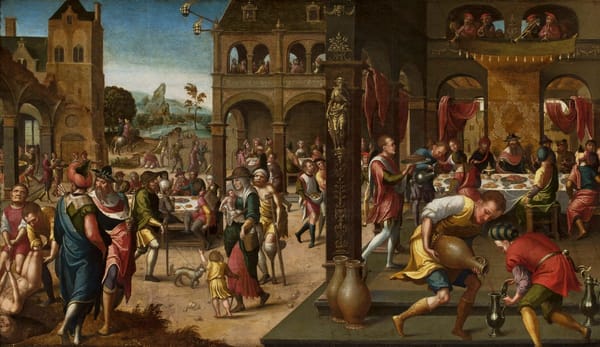
Cap. xiv.In illo tempore: dixit Jesus pharisæis parabolam hanc: Homo quidam fecit cœnam magnam, et vocavit multos. Et misit servum suum hora cœnæ dicere invitatis ut venirent, quia jam parata sunt omnia. Et coeperunt simul omnes excusare. Primus dixit ei: Villam emi, et necesse habeo exire, et videre illam: rogo te, habe me excusatum. Et alter dixit: Juga boum emi quinque, et eo probare illa: rogo te, habe me excusatum. Et alius dixit: Uxorem duxi, et ideo non possum venire. Et reversus servus nuntiavit haec domino suo. Tunc iratus paterfamilias, dixit servo suo: Exi cito in plateas, et vicos civitatis: et pauperes, ac debiles, et caecos, et claudos introduc huc. Et ait servus: Domine, factum est ut imperasti, et adhuc locus est. Et ait dominus servo: Exi in vias et sepes: et compelle intrare, ut impleatur domus mea. Dico autem vobis, quod nemo virorum illorum, qui vocati sunt, gustabit cœnam meam.
Ch. xiv.At that time, Jesus spoke this parable to the pharisees: A certain man made a great supper, and invited many. And he sent his servant, at the hour of supper, to say to them that were invited, that they should come, for now all things are ready. And they began all at once to make excuse. The first said to him: I have bought a farm, and I must needs go out and see it: I pray thee, hold me excused. And another said: I have bought five yoke of oxen, and I go to try them: I pray thee hold me excused. And another said: I have married a wife, and therefore I cannot come. And the servant returning, told these things to his lord. Then the master of the house, being angry, said to his servant: Go out quickly into the streets and lanes of the city; and bring in hither the poor, and the feeble, the blind, and the lame. And the servant said: Lord, it is done as thou hast commanded, and yet there is room. And the lord said to the servant: Go out into the highways, and hedges; and compel them to come in, that my house may be filled. But I say unto you that none of those men that were invited, shall taste of my supper.
The Gospel just read was appointed for this Sunday long before the institution of the Corpus Christi feast, as we learn from Honorius of Autun,46 and Rupert.47 The holy Spirit, who guides the Church in her arrangement of the liturgy, was thus anticipating and completing the instructions suited for the future grand solemnity.
The parable here spoken by Jesus at the table of one of the leading pharisees,48 was again used by Him, when He spoke so strongly in the temple, a few days previous to His Passion and death. And what is this supper, to which many are invited? What is this marriage-feast, but that which eternal Wisdom has been getting ready from the very beginning of the world? Nothing could exceed the magnificence of these preparations; there was a splendid banquethall, built on the top of a mountain,49 and supported by seven pillars50 of mysterious beauty; there were the choicest meats—purest bread, and wine the most delicious—served up to the King’s table. With His own hands, the Wisdom of the Father pressed the rich cluster of Cyprus grapes into the cup;51 He Himself ground down the wheat, that had sprung up, without having been sown, from a soil holy beyond description; He immolated the Victim.52 Israel, the the Father’s chosen people,53 was the fortunate guest invited by the loving kindness of the Master, that is, Wisdom, the Son of the Father, who had sent messengers without end to the children of Jacob. The Wisdom of God had said: ‘I will send unto them prophets and apostles.’54 But this favoured people, this loved one, as the Book of Deuteronomy says, ‘grew fat and kicked,’ that is, it abused the gifts bestowed on it; it seemed to study how to provoke the anger of God its Saviour, by despising His invitations, and going its own way.55 This daughter of Sion, in her adulterous pride, preferred the bill of divorce to the marriage-feast;56 Jerusalem rejected the heavenly messengers, and killed the prophets,57 and crucified the Spouse Himself.
But even so, eternal Wisdom still offers the first place at the supper to the ungrateful children of Abraham, Isaac, and Jacob; He does so because of their saintly fathers. It is to the lost sheep of the house of Israel, that the apostles are first sent.58 ‘What delicate attention!’ may we justly exclaim with St. John Chrysostom. ‘Before His crucifixion, Christ calls the Jews; He does the same after it, He goes on inviting them. Instead of crushing them with a terrible chastisement, as it seemed most just He should do, He invites them to a marriage; He loads them with honours. But they that have slain His prophets, and murdered even Him—these same, invited so pressingly by such a Spouse, urged so lovingly to go to the wedding, and that by the very Victim of their own making—these same, I say, pay no regard to the invitation, and give, as an excuse, their yokes of oxen, and their wives, and their estates!’59 Soon, these priests, these scribes, these hypocrite pharisees, will persecute and slay these apostles also; and the servant of our parable will find none in Jerusalem, whom he can induce to come to the Master’s supper, except the poor, and little, and sickly ones, of the roads and by-lanes, with whom there is no ambition, or avarice, or pleasure, to keep them from the divine banquet.
Then will be realized the vocation of the Gentiles, that great mystery of a new people being substituted for the former one, in the covenant with Jehovah. ‘The marriage of My Son is, indeed, ready,' will God the Father say to His servants; but they that were invited, were not worthy. Go ye therefore: abandon the wicked city that hath not known her time, and My visit; go ye into the high-ways, and hedges, and countries of the Gentiles; and as many as ye shall find, call ye to the marriage!’60
O ye Gentiles, praise the Lord for His mercy!61 You have been invited, without any merits of your own, to a feast that was prepared for another people; take heed, lest you incur the reproach given to the intended guests, who were excluded from the promises made to their fathers. O thou lame one, and blind, that hast been called from the by-path of thy sin and misery, hasten to the holy table! But then, take care, out of respect to Him who calls thee, to put off the rags of thy former life; and quickly put on the wedding-garment! The invitation given thee has made a queen of thy soul; ‘give her, then, the purple robe and diadem, and set her on a throne! Think of the marriage thou art invited to attend, the marriage of God! Oh! the soul that goes to it, should be clad and decked with a garment richer than all the garments of earth!’62
Like the Gradual, the Offertory is an earnest prayer for God’s help; it is His mercy that encourages the soul to make this prayer.
Offertory
In the Secret, the Church prays for the twofold effect of the holy Sacrament, in the transformation of man’s soul: purification from the remnants left by sin, and progress in the works which lead to life everlasting.
Secret
Commemoration of Corpus Christi
During the Communion, holy Church, enriched as she is with heavenly favours, pours forth her gratitude towards Him, who, though the Most High God, is also her Spouse, and loads her with exquisite gifts.
Communion
Let us pray with the Church, in the Postcommunion, that our frequent participation in these sacred Mysteries may not he fruitless in our souls, but may effect with increased assurance the whole work of our salvation.
Postcommunion
Commemoration of Corpus Christi
Vespers
The Vespers for this Sunday within the octave of Corpus Christi, are the same as those of the feast itself (page 273), excepting what follows;
Capitulum (1 St. John iii.)
Antiphon of the Magnificat
Commemoration of the Octave
Deus, qui nobis sub Sacramento mirabili passionis tuæ memoriam reliquisti: tribue, quaesumus, ita nos Corporis et Sanguinis tui sacra mysteria venerari, ut redemptionis tuae fructum in nobis jugiter sentiamus. Qui vivis.
O God, who, under the wonderful Sacrament, hast left us a memorial of thy Passion: grant us, we beseech thee, so to reverence the sacred mysteries of thy Body and Blood, that, in our souls, we may always feel the fruit of thy Redemption. Who livest, &c.
The liturgy given in the Apostolic Constitutions, under the name of St. James, thus continues, after the Trisagion; it is the bishop who is speaking:
Constitutio Jacobi
- Agg. ii. 8. ↩︎
- Malach. iii. 1. ↩︎
- Baruch. iii. 12-38. ↩︎
- Ecclus. xxiv. 34-39. ↩︎
- Eph. i. 10. ↩︎
- Prov. is. 2. ↩︎
- Is. xlviii. 11. ↩︎
- Prov. xvi. 4. ↩︎
- Ps. cxxxii. 2. ↩︎
- St. John xvii. 21, 22. ↩︎
- 1 Cor. xv. 24-28. ↩︎
- Ibid. 24, 25. ↩︎
- Wisd. ii. 23, 34. ↩︎
- Rom. vii. 11. ↩︎
- Gen. ii. 17. ↩︎
- Ps. xliv. 8. ↩︎
- Ps. cix. 4. ↩︎
- St. Matt. i. 21. ↩︎
- Col. ii. 14.15. ↩︎
- Rom. vi. 4-10. ↩︎
- Col. iii. 3. ↩︎
- Exod. xxviii. ↩︎
- De fuga sæculi, xvi. ↩︎
- St. John xii. 32. ↩︎
- Ps. lxiv. 3. ↩︎
- Enarrat. in Ps. lxiv. ↩︎
- Ps. lxv. 13-15. ↩︎
- Heb. v. 7. ↩︎
- Ibid. x. 5, 6. ↩︎
- Enarrat. in Ps. lxv. ↩︎
- St. Aug. passim in Psalmos. ↩︎
- Ps. xxviii. 1. ↩︎
- St. Aug. De civit. Dei, x. 6. ↩︎
- Ibid. 7. and in Ps. lxxxvi. ↩︎
- De adorat. in spir. ct ver., lib. ix. ↩︎
- Heb. iv. 14; x. 14. ↩︎
- Heb. ix. 12, 24. ↩︎
- Ibid. viii. 2. ↩︎
- In Levit. Hom. ix. ↩︎
- St. John xiii. 15. ↩︎
- St. John xiii. 34. ↩︎
- Ibid. 35. ↩︎
- Tacitus, Ann xv. ↩︎
- Eph. iv. 16. ↩︎
- St. Matt. v. 23, 24. ↩︎
- Gemma anim, iv. 45, 46. ↩︎
- De Div. Off. xii. 2. ↩︎
- St. Luke xiv. 1. ↩︎
- Is. ii. 2. ↩︎
- Prov. ix. 1. ↩︎
- Cant. i. 13. ↩︎
- Prov. ix. 2. ↩︎
- Ecelus. xxiv. 13. ↩︎
- St. Luke xi. 49. ↩︎
- Deut. xxxii. 15. ↩︎
- Is. 1. 1. ↩︎
- St. Matt. xxii. 34-37. ↩︎
- Ibid. x. 6; Acts xiii. 46. ↩︎
- Freely from Hom. 69, in Matt. ↩︎
- St. Matt. xxii. 8-14; St. Luke xix. 44. ↩︎
- Rom. xv. 9. ↩︎
- From St. John Chrys. ubi supra. ↩︎
June 6: St. Norbert, Bishop and Confessor
 |
THE helpful influence of the Holy Ghost is more and more multiplied along the Church's path. It seems as though he would show us to-day how the divine power of his action is not crippled by lapse of years: for here we have, twelve centuries after his first coming among us, miracles of grace and conversion quite as brilliant as those that marked his glorious descent upon earth.
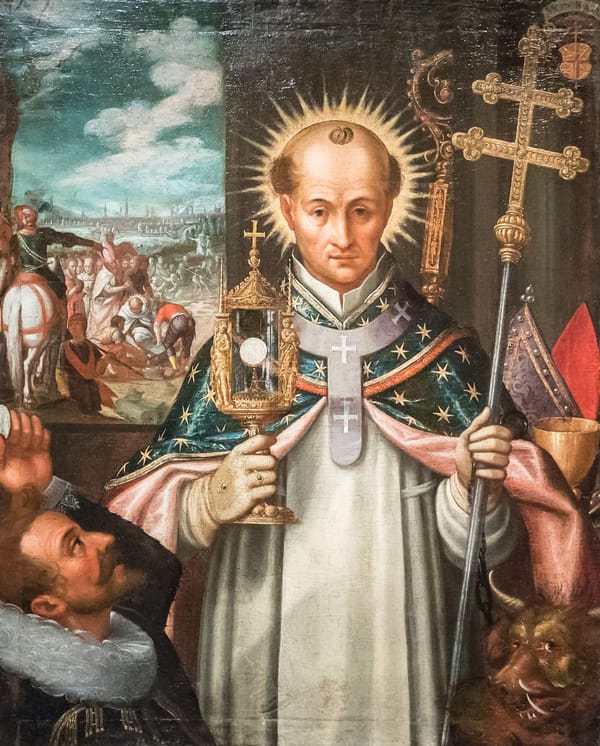
Norbert, in whose veins flowed the blood of emperors and kings, was, from the very breast of his mother Hedwige, supernaturally invited to a nobility loftier still: yet did he devote to the unreserved enjoyment of pleasure three-and-thirty years of a life that was to number but fifty in all. The Holy Ghost at length hastened to the conquest. There burst a sudden storm, a thunderbolt falls right in front of the prodigal, throwing him to the ground and making a frightful chasm between him and the point whither, a moment ago, he was hastening in pursuit of new vanities, that needs must fail, as all others had done, to fill the hopeless void in his heart. Then, in the very depths of his soul resounds a voice, such as Saul once heard on his way to Damascus: ‘Norbert, whither goest thou?' Like another Paul he replies: ‘Lord, what wilt thou have me to do?' He is answered: ‘Depart from evil and do good; seek after peace and pursue it.' Twenty years later, Norbert is in heaven, seated amidst pontiffs, upon a glorious throne, and all radiant with that special brilliancy that distinguishes the founders of the great religious Orders, when they have reached the eternal home.
Deep are the traces left by him on earth of his few years of penitential life. Germany and France receive his preaching; Antwerp is delivered from a shameful heresy; Magdeburg is rescued, by her archbishop, from the irregularities that were sullying the house of God: such are his works; and though these alone would have sufficed to a long life of holiness, yet they are not the only claims, nor the most brilliant, which Norbert has to the Church's gratitude. Before being called, against his will, to the honours of the episcopate, this once gay courtier made choice of an uninhabitable solitude amidst the forests of the diocese of Laon where he devoted himself to prayer and to the maceration of his flesh. The renown of this holy penitent gained rapidly; and Prémontré soon beheld her swampy marshes invaded by a vast multitude, formed of the fairest names of the nobility, pressing thither to learn the science of salvation from the lips of the saintly anchorite. There, too, did our Lady show to him, in vision, the white habit wherewith his disciples were to be clothed; and St Augustine, in like manner, delivered to him his own rule. Thus was founded the most illustrious branch of the Order of Canons Regular. They add to the obligation of solemnizing the Divine Office the austerities of an uninterrupted penance; and devote themselves, moreover, to the service of souls, by preaching and the administration of parishes.
In the foregoing century, the episcopacy and papacy had been raised by the monks above the danger of feudal servitude; and Norbert was now raised up to give the needed completion to their work. Although, in principle, the monastic life excludes no sort of labour useful to the Church, the monks could not (however numerous they might be) quit their cloisters in order to undertake charge of souls. Yet great were the wants of the lambs of the flock at that time; for many unworthy pastors of secondary order, slaves to simony and immorality, still continued to lead astray the simple laity. The religious life was alone capable of raising the priesthood from such degradation, whether on the pinnacles of the hierarchy, or amongst the lowest degrees of sacred Orders. Norbert was the man chosen by God to effect, in part at least, this immense work; and the importance of his mission explains the sublime prodigality wherewith the Holy Ghost multiplied vocations to his standard. The number and rapidity of foundations permitted succour to be promptly and everywhere afforded. Even into the far east did the light of Prémontré reach, almost at its first dawn. In the eighteenth century, notwithstanding the devastations of the Turks and the ravages of the pretended Reformation, the Order, divided into twenty-eight provinces, still contained, in almost every one of its houses, as many as from fifty to one hundred and twenty canons, and the parishes that continued under their care might be counted by thousands.
Nuns, whose holy life and prayers are the ornament and aid of the Church militant, occupied from the very beginning the place deservedly their due in this numerous family. In the time of the founder, or soon after his death, there were more than a thousand of them at Prémontré alone. Such an incredible number gives us an idea of the prodigious propagation of the Order from its very origin. Norbert moreover extended his charity to persons who, like Thibault Count of Champagne, would gladly have followed him into the desert, but who were retained by God’s will in the world; he thus made a prelude to those pious associations, which we shall see St Francis and St Dominic organizing in the thirteenth century, under the name of Third Orders.
The liturgy thus condenses the life of this great servant of God:
Thou didst indeed know how to redeem the time,1 as was fitting in those evil days, wherein thou thyself, O Norbert, led away by the example of the senseless crowd, hadst for so long frustrated the designs of God's love. Those years, at first refused by thee to the true Master of the world, were at length returned unto him, multiplied a hundredfold, through those countless sons and daughters thou didst train up in sanctity. Even thy personal works, in but twenty years' space, filled the whole earth. Schism crushed; heresy confounded to the greater glory of the most holy Sacrament which it had already dared to attack; the rights of the Church intrepidly defended against worldly princes and unjust retentions; the priesthood restored to its primitive purity; the Christian life established on its true basis, of prayer and penance; such and so many victories achieved in so few years, are due to the generosity which prevented thee from looking back for one moment, once the Holy Ghost had touched thy heart. Do thou make all understand that it is never too late to begin to serve God. Were it even, as in thy case, the evening of life, what yet remains of time would suffice to make us saints, if we would but generously give that little fully to heaven.2
Faith and patience were thy cherished virtues; make them flourish once more in this sad world, which boasts of its disbelief, and with jibe and jeer hurries onward to the abyss of hell. Forget not, dear apostle, now that thou art in heaven, the countries thou didst formerly evangelize; we implore this of thee, in spite of their forgetfulness and deliberate return to the deceits of the devil.
Holy Pontiff, Magdeburg has lost her ancient faith, and with it the precious relics of thy body, which she no longer deserved to possess: Prague is now the favoured place of thy repose. But, whilst blessing this hospitable city, pray still for the ungrateful one that has cast aside her double treasure. O thou founder of Prémontré, smile once more on France, which derives from thee one of her fairest glories. Obtain of God that, for the salvation of these calamitous times, thine Order may recover something of its former splendour. Bless, few as they are, those sons and daughters of thine who, in spite of the hostility of the 'powers that be,' seek to shed once more their beneficent influence on France. May England benefit also by their return to her midst, and may their fruits be multiplied in every direction. Maintain thine own spirit among them; may they find in interior peace the secret of triumph over Satan and his crew; may the full magnificence of the divine worship solemnly carried out be ever to their souls as the dearly loved mount, whence, Moses-like, they may declare the will of the Lord to the new Israel, the Christian people.
| Previous June 5: St. Boniface, Apostle of Germany, Bishop and Martyr | Next June 6: St. Norbert, Bishop and Confessor |