Daily reading
After Pentecost
Double · Movable from Easter · Temporal
June 13, 2021
From Dom Guéranger’s The Liturgical Year.

|
The Third Sunday after Pentecost
The faithful soul has now witnessed in the holy liturgy the close of the mysteries of our redemption. The Holy Ghost has come down to support her during this second portion of her career, by forming and developing within her the fullness of the Christian life as taught by her divine Saviour when on earth. He begins by teaching her how to pray. Prayer, said our Lord, must be continual: we ought always to pray, and not to faint.1 We know not what we should pray for as we ought; but the holy Spirit helpeth our infirmity, and Himself asketh for us with unspeakable groanings.2
In the Introit and the whole Mass for this Sunday, we are taught that prayer must have, amongst its other requisite qualities, that of humble repentance for our past sins, and of confidence in God’s infinite mercy.
This is the Third Sunday after Pentecost; it is the first that has no rubrical connexion with the great feasts we have been solemnizing; it is a Sunday with all the simplicity of the Office of the Time.
Introit
Ps. Ad te, Domine, levavi animam meam: Deus meus, in te confido, non erubescam.
Gloria Patri. Respice.
Ps. To thee, O Lord, have I lifted up my soul: in thee, O my God, I place my trust, let me not be ashamed.
Glory, etc. Look thou.
Collect
Second Collect
The third Collect is left to the priest’s own choice.
Epistle
I. Cap. v.Carissimi, humiliamini sub potenti manu Dei, ut vos exaltet in tempore visitationis: omnem sollicitudinem vestram projicientes in eum, quoniam ipsi cura est de vobis. Sobrii estote, et vigilate: quia adversarius vester diabolus tanquam leo rugiens circuit, quærens quem devoret: cui resistite fortes in fide; scientes eamdem passionem ei, quæ in mundo est, vestræ fraternitati fieri. Deus autem omnis gratiae, qui vocavit nos in aeternam suam gloriam in Christo Jesu, modicum passos ipse perficiet, confirmabit, solidabitque. Ipsi gloria, et imperium in saecula sæculorum. Amen.
I. Ch. v.Dearly beloved: be ye humbled under the mighty hand of God, that he may exalt you in the time of visitation. Casting all your care upon him, for he hath care of you. Be sober and watch: because your adversary the devil, as a roaring lion, goeth about, seeking whom he may devour: whom resist ye, strong in faith; knowing that the same affliction befalls your brethren who are in the world. But the God of all grace, who hath called us unto his eternal glory in Christ Jesus, after you have suffered a little, will himself perfect you, and confirm you, and establish you. To him be glory and empire for ever and ever. Amen.
The miseries of this present life are the test to which God puts His soldiers; He passes judgment upon them, and classifies them, according to the degree of courage they have shown. Therefore is it, that we all have our share of suffering. The combat has commenced. God is looking on, watching how each of us comports himself. The day is not far off, when the Judge will pass sentence on the merits of each combatant, and award to each one the recompense he has won. Combat now; peace and rest and a crown, then. Happy they who, during these days of probation, have recognized the mighty hand of God in all the trials they have had, and have humbled themselves under its pressure, lovingly and confidingly! Against such Christians, who have been strong in faith, the roaring lion has not been able to prevail. They were sober, they were watchful, during this their pilgrimage. They were fully convinced of this, that every one has to suffer in the present life; they therefore never sighed and moaned, as though they were the only sufferers; they did not assume the attitude of victims, and call it resignation; but they took each trial as it came, and, without talking to every one about it, they quietly and joyously united it with the sufferings of Christ. O true Christians! you will be joyous for all eternity, when there will be made the manifestation of that eternal glory in Christ Jesus, which He will pass on to you, that you may share it with Him for ever!
The Gradual keeps up the same strain: it encourages the faithful soul to confidence. Let her cast all her care upon her heavenly Father; has He not always graciously heard her in all her troubles and necessities? As to enemies, let her cast away the thought; God will think of that, and, if it so please Him, will avenge the soul they persecuted.
Gradual
Gospel
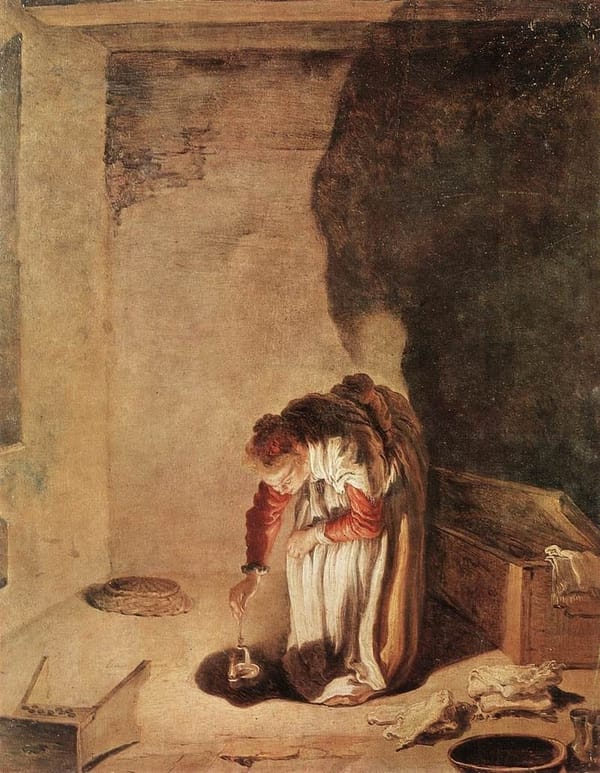
Cap. xv.In illo tempore, erant appropinquantes ad Jesum publicani et peccatores, ut audirent illum. Et murmurabant pharisæi, et scribae, dicentes: Quia hic peccatores recipit, et manducat cum illis. Et ait ad illos parabolam istam, dicens: Quis ex vobis homo, qui habet centum oves: et si perdiderit unum ex illis, nonne dimittit nonaginta novem in deserto, et vadit ad illam, quae perierat, donec inveniat eam? Et cum invenerit eam, imponit in humeros suos gaudens: et veniens domum, convocat amicos, et vicinos, dicens illis: Congratulamini mihi quia inveni ovem meam quae perierat! Dico vobis quod ita gaudium erit in coelo super uno peccatore poenitentiam agente, quam super nonaginta novem justis, qui non indigent poenitentia. Aut quae mulier habens drachmas decem, si perdiderit drachmam unam, nonne accendit lucernam, et everrit domum, et quaerit diligenter donec inveniat? Et cum invenerit, convocat amicas et vicinas, dicens: Congratulamini mihi quia inveni drachmam, quam perdideram? Ita dico vobis, gaudium erit coram angelis Dei super uno peccatore pœnitentiam agente.
Ch. xv.At that time: the publicans and sinners drew near unto him to hear him. And the pharisees and scribes murmured, saying: This man receiveth sinners and eateth with them. And he spoke to them this parable, saying: What man of you that hath a hundred sheep, and if he shall lose one of them, doth he not leave the ninety-nine in the desert, and go after that which was lost until he find it? And when he hath found it, lay it upon his shoulders rejoicing: and coming home call together his friends and neighbours, saying to them: Rejoice with me, because I have found my sheep that was lost? I say to you, that even so there shall be joy in heaven upon one sinner that doth penance, more than upon ninety-nine just who need not penance. Or what woman having ten groats: if she lose one groat, doth not light a candle, and sweep the house, and seek diligently until she find it? And when she hath found it, call together her friends and neighbours, saying: Rejoice with me, because I have found the groat which I had lost? So I say to you there shall be joy before the angels of God upon one sinner doing penance.
The parable of the sheep that is carried back to the fold on the shepherd’s shoulders was a favourite one with the early Christians; and they made representations of it at almost every turn. The same is put before us in to-day’s Gospel, that our confidence may be strengthened in God’s infinite mercy. It reminds us, in its own beautiful way, of our Lord Jesus; whom we contemplated, a few weeks back, ascending triumphantly into heaven, carrying thither, in His arms, the lost human family, which He had won back from satan and death and sin. For, as St. Ambrose says, ‘who is the Shepherd of our parable? It is Christ, who carries thee, poor man, in His own Body, and has taken all thy sins upon Himself. The sheep is one, not by number, but by its kind. Rich Shepherd this, of whose flock all we human beings form but the hundredth part! for He has the Angels, and Archangels, and Dominations, and Powers, and Thrones, and all the rest; all those other countless flocks, whom He has left yonder up the mountain, that He might run after the one sheep He had lost.’3
But it is from St. Gregory the Great that the Church, in her Matins of this Sunday, took the commentary on this Gospel. And in the sequel of his homily, the holy doctor gives us the explanation of the parable of the woman and the ten groats. ‘He,’ says St. Gregory, ‘that is signified by the shepherd is also meant by the woman. Jesus is God; He is the Wisdom of God. And because good coin must bear the image of the king upon it, therefore was it that the woman lost her groat, when man, who had been created after God’s image, strayed from that image by committing sin. But the woman lights a lamp; the Wisdom of God hath appeared in human flesh. A lamp is a light which burns in a vessel of clay; and Light in a vessel of clay, is the Divinity in our flesh. It is of the vessel of His Body, that this Wisdom says: My strength is dried up like a potsherd.4 For, just as day is made hard by the fire, so His strength was dried up like a potsherd, because it has strengthened unto the glory of His resurrection, in the crucible of sufferings, the Flesh which He (Wisdom) had assumed . . . . Having found the groat she had lost, the woman calleth together her friends and neighbours, saying: Rejoice until me! because I have found the groat which I had lost. Who are these friends and neighbours, if not the heavenly spirits, who are so near to divine Wisdom by the favours they enjoy of the ceaseless vision? But we must not, meanwhile, neglect to examine why this woman, who represents divine Wisdom, is described as having ten groats, one of which she loses, then looks for, and again finds. We must know, then, that God made both angels and men, that they might know Him; and that having made both immortal, He made both to the image of God. The woman, then, had ten groats, because there are nine orders of angels, and man, who is to fill up the number of the elect, is the tenth groat; he waslost by his sin, but was found again, because eternal Wisdom restored him, by lighting the lamp, that is, by assuming his flesh, and through that working wonderful works, which led to his recovery.’5
The Offertory is an outpouring of gratitude and love for the God who dwelleth in Sion; He does not abandon them that seek Him; He does not forget the poor man's prayer.
Offertory
Secret
Second Secret
The third Secret is left to the priest’s own choice.
The Preface is that appointed for all Sundays during the year, page 45; unless a feast is being kept which has a proper one assigned to it.
The Communion-anthem recalls to our minds, and with much appropriateness, the merciful teaching of to-day’s Gospel, now that eternal Wisdom has regained full possession of the lost groat, by means of the sacred Banquet, which He Himself had given to the repentant prodigal.
Communion
Postcommunion
Second Postcommunion
The third Postcommunion is left to the priest’s own choice.
Vespers
The psalms, capitulum, hymn, and vesicle, as above, pages 71-79.
Antiphon of the Magnificat
June 13: St. Anthony of Padua, Confessor
 |
REJOICE thee, happy Padua, rich in thy priceless treasure!1 Anthony, in bequeathing thee his body, has done more for thy glory than the heroes who founded thee on so favoured a site, or the doctors who have illustrated thy famous university!
The days of Charlemagne were past and gone: yet the work of Leo III still lived on, despite a thousand difficulties. The enemy, now at large, had sown cockle in the field of the divine householder; heresy was springing up here and there, whilst vice was growing apace in every direction. In many an heroic combat, the Popes, aided by the monastic Order, had succeeded in casting disorder out of the sanctuary itself: still the people, too long scandalized by venal pastors, were fast slipping away from the Church. Who could rally them once more? Who wrest from Satan a reconquest of the world? At this trying moment the Spirit of Pentecost, ever living, ever present in holy Church, raised up the sons of St Dominic and of St Francis. The brave soldiers of this new militia, organized to meet fresh necessities, threw themselves into the field, pursuing heresy into its most secret lurking-holes, and thundering against vice in every shape and wheresoever found. In town or in country, they were everywhere to be seen confounding false teachers by the strong argument of miracle as well as of doctrine; mixing with the people, whom the sight of their heroic detachment easily won over to repentance. Crowds flocked to be enrolled in the Third Orders instituted by these two holy founders, to afford a secure refuge for the Christian life in the midst of the world.
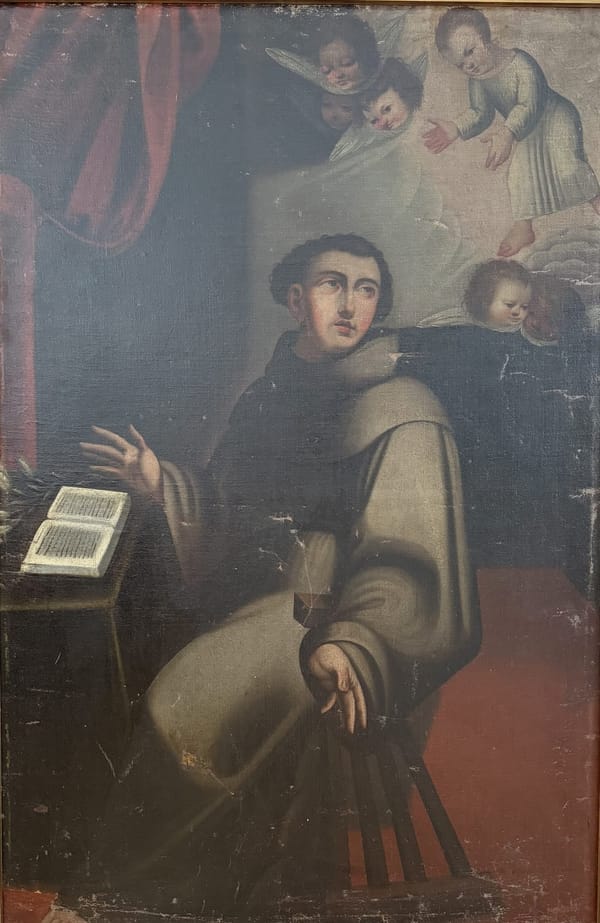
The best known and most popular of all the sons of St Francis is Anthony, whom we are celebrating this day. His life was short; at the age of thirty-five he took his flight to heaven. But a span so limited allowed, nevertheless, of a considerable portion of time being directed by our Lord to preparing this chosen servant for his destined ministry. The all-important thing in God's esteem, where there is question of fitting apostolic men to become instruments of salvation to a greater number of souls, is not the length of time which they may devote to exterior works, but rather the degree of personal sanctification attained by them, and the thoroughness of their self-abandonment to the ways of divine Providence. As to Antony, it may almost be said that, up to the last day of his life, eternal Wisdom seemed to take pleasure in disconcerting all his thoughts and plans. Out of his twenty years of religious life, he passed ten amongst the Canons Regular, whither the divine call had invited him at the age of fifteen, in the full bloom of his innocence; and there, wholly captivated by the splendour of the liturgy, occupied in the sweet study of the Holy Scriptures and of the fathers, blissfully lost in the silence of the cloister, his seraphic soul was ever being wafted to sublime heights, where (so it seemed) he was always to remain, held and hidden in the secret of God's face. Suddenly, behold! the divine Spirit urges him to seek the martyr's crown: and presently he is seen emerging from his beloved monastery, and following the Friars Minor to distant shores, where already some of their number had won the glorious palm. Not this, however, but the martyrdom of love, was to be his. Falling sick and reduced to impotence before his zeal could effect anything on the African soil, he was recalled by obedience to Spain, but was cast by a tempest on the Italian coast.
It happened that St Francis was just then convoking his entire family, for the third time, in general chapter. Anthony, unknown, lost in this vast assembly, beheld at its close each of the friars in turn receive his appointed destination, whereas to him not a thought was given. What a sight! The scion of the illustrious family de Bouillon and of the kings of the Asturias completely overlooked in the throng of holy poverty’s sons! At the moment of departure the Father Minister of the Bologna province, remarking the isolated condition of the young religious whom no one had received in charge, admitted him, out of charity, into his company. Accordingly, having reached the hermitage of Monte Paolo, Anthony was deputed to help in the kitchen and in sweeping the house, being supposed quite unfitted for anything else. Meanwhile, the Augustinian Canons, on the contrary, were bitterly lamenting the loss of one whose remarkable learning and sanctity, far more even than his nobility, had, up to this, been the glory of their Order.
The hour at last came, chosen by Providence, to manifest Anthony to the world; and immediately, as was said of Christ himself, the whole world went after him.2 Around the pulpits where this humble friar preached there were wrought endless prodigies in the order of nature and of grace. At Rome he earned the surname of ‘ark of the covenant'; in France, that of 'hammer of heretics.' It would be impossible for us here to follow him throughout his luminous course; suffice it to say that France, as well as Italy, owes much to his zealous ministry.
St Francis had yearned to be himself the bearer of the gospel of peace throughout the fair realm of France, then sorely ravaged by heresy; but in his stead, he sent thither Anthony, his well-beloved son, and, as it were, his living portrait. What St Dominic had been in the first crusade against the Albigenses, Anthony was in the second. At Toulouse was wrought that wondrous miracle of the famished mule turning aside from the proffered grain in order to prostrate in homage before the sacred Host. From the province of Berry, his burning word was heard thundering in various distant provinces; whilst heaven lavished delicious favours on his soul, ever childlike amidst the marvellous victories achieved by him, and the intoxicating applause of an admiring crowd. Under the very eyes of his host, at a lonely house in Limousin, the Infant Jesus came to him radiant in beauty; and throwing himself into his arms, covered him with sweetest caresses, pressing the humble friar to lavish the like on him. One feast of the Assumption Anthony was sad, because a phrase then to be found in the Office seemed to throw a shade of discredit on the fact of Mary’s body being assumed into heaven together with her soul. Presently, the Mother of God herself came to console her devoted servant, in his lowly cell, assuring him of the truth of the doctrine of her glorious Assumption; and so left him, ravished with the sweet charms of her countenance and the melodious sound of her voice. Suddenly, as he was preaching at Montpellier, in a church of that city thronged with people, Anthony remembered that he had been appointed to chant the Alleluia at the conventual Mass in his own convent, and he had quite forgotten to get his place supplied. Deeply pained at this involuntary omission, he bent his head upon his breast: whilst standing thus motionless and silent in the pulpit, as though asleep, his brethren saw him enter their choir, sing his verse, and depart; at once his audience beheld him recover his animation, and continue his sermon with the same eloquence as before. In this same town of Montpellier another well-known incident occurred. When engaged in teaching a course of theology to his brethren, his commentary on the Psalms disappeared; but the thief was presently constrained, even by the fiend himself, to bring back the volume, the loss whereof had caused our saint so much regret. Such is commonly thought to be the origin of the popular devotion, whereby a special power of recovering lost things is ascribed to St Anthony. However this may be, it is certain that, from the very outset, this devotion rests on the testimony of startling miracles of this kind; and in our own day constantly repeated favours of a similar nature still confirm the same.
The following is the abridgement of this beautiful life, as given in the liturgy.
Want of space obliges us to be very meagre in the number we give of liturgical pieces; but we cannot omit here the miraculous Responsory, as it is called, the composition whereof is attributed to St Bonaventure. It continues still to justify its name, in favour of those who recite it in the hour of need. In the Franciscan breviary it is the eighth responsory of the office of St Antony of Padua. At a very early date, this, together with the nine Tuesdays in our Saint's honour, became a very popular devotion and was fraught with immense fruits of grace.
The Miraculous Responsory
O glorious Anthony, the simplicity of thine innocent soul made thee a docile instrument in the hand of the Spirit of love. The Seraphic Doctor, St Bonaventure, hymning thy praises, takes for his first theme thy childlike spirit, and for his second thy wisdom which flowed therefrom. Wise indeed wast thou, O Anthony, for, from thy tenderest years, thou wast in earnest pursuit of divine Wisdom; and wishing to have her alone for thy portion, thou didst hasten to shelter thy love in some cloister, to hide thee in the secret of God’s face, the better to enjoy her chaste delights. Silence and obscurity in her sweet company was thine heart's one ambition; and even here below her hands were pleased to adorn thee with incomparable splendour. She walked before thee; and blithely didst thou follow, for her own sake alone, without suspecting how all other good things were to become thine in her company.3 Happy a childlike spirit such as thine, to which are ever reserved the more lavish favours of eternal Wisdom!
'But,' exclaims thy sainted panegyrist, 'who is really a child nowadays? Humble littleness is no more; therefore love is no more. Naught is to be seen now but valleys bulging into hills, and hills swelling into mountains. What saith Holy Writ? “When they were lifted up, thou hast cast them down.”4 To such towering vaunters, God saith again: "Behold I have made thee a small child ”; but exceedingly contemptible among the nations5 such infancy is. Wherefore will ye keep to this childishness, O men, making your days an endless series of inconstancy, boisterous and vain effort at garnering wretched chaff? Other is that infancy which is declared to be the greatest in the land of true greatness.6 Such was thine, O Anthony! and thereby wast thou wholly yielded up to Wisdom's sacred influence.’7 In return for thy loving submission to God our Father in heaven, the populace obeyed thee, and fiercest tyrants trembled at thy voice.8 Heresy alone dared once to disobey thee, dared to refuse to hearken to thy word: thereupon, the very fishes of the sea took up thy defence; for they came swimming in shoals, before the eyes of the whole city, to listen to thy preaching which heretics had scorned. Alas! error, having long ago recovered from the vigorous blows dealt by thee, is yet more emboldened in these days, claiming even sole right to speak. The offspring of Manes, whom, under the name of Albigenses, thou didst so successfully combat, would now, under the new appellation of freemasonry, have all France at its beck; thy native Portugal beholds the same monster stalking in broad daylight almost up to the very altar; and the whole world is being intoxicated by its poison. O thou who dost daily fly to the aid of thy devoted clients in their private necessities, thou whose power is the same in heaven as heretofore upon earth, succour the Church, aid God's people, have pity upon society, now more universally and deeply menaced than ever. O thou ark of the covenant, bring back our generation, so terribly devoid of love and faith, to the serious study of sacred letters, wherein is so energizing a power. O thou hammer of heretics, strike once more such blows as will make hell tremble and the heavenly powers thrill with joy.
| Previous June 12 (the Same Day): St. Basilides and Companions, Martyrs | Next June 13: St. Anthony of Padua, Confessor |