Daily reading
Semidouble · Movable from Easter · Temporal
March 10, 2022
From Dom Guéranger’s The Liturgical Year.
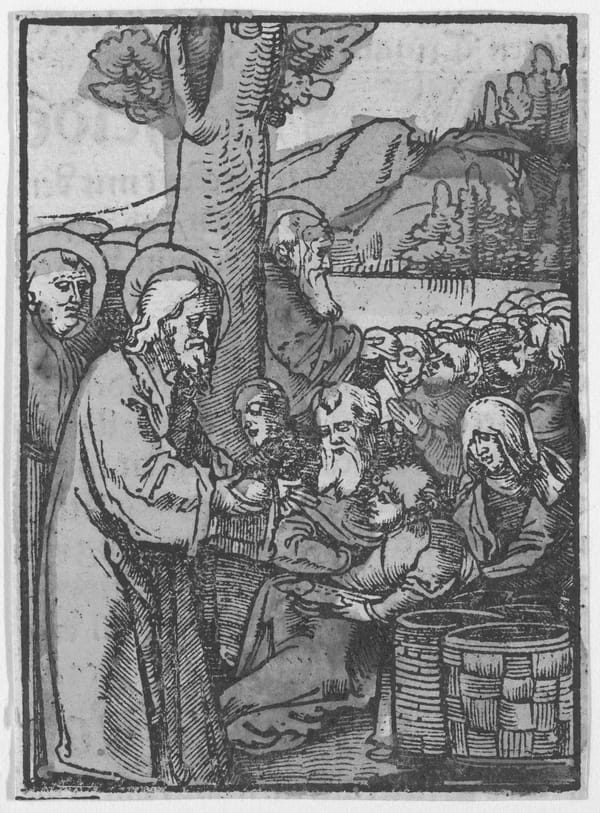
Thursday of the First Week of Lent
To-day’s Station is in the church of St. Laurence in Paneperna, one of those which the piety of the faithful of Rome has built in honour of this the most celebrated of the martyrs of the holy city.
Collect
Epistle
Cap. xviii.In diebus illis: Factus est eermo Domini ad me, dicens: Quid est quod inter os parabolam vertitis in proverbium istud in terra Israël, dicentes: Patres comederunt uvam acerbam, et dentes filiorum obstupescunt? Vivo ego, dicit Dominus Deus, si erit ultra vobis parabola hæc in proverbium in Israël. Ecce omnes animæ mese sunt; ut anima patris, ita et anima filii mea est: anima quæ peccaverit, ipsa morietur. Et vir, si fuerit justus, et fecerit judicium et justitiam, in montibus non comederit, et oculos suos non leva verit ad idola domus Israël: et uxorem proximi sui non violaverit, et ad mulierem menstruatam non accesserit: et hominem non contrista verit: pignus debitori reddiderit: per vim nihil rapuerit: panem suum esurienti dederit, et nudum operuerit vestimento: ad usuram non commodaverit, et amplius non acceperit: ab iniquitate averterit ma· num suam, et judicium verum fecerit inter virum et virum: in præceptis meis ambulaverit, et judicia mea custodierit, ut faciat veritatem: hic justus est, vita vivet, ait Dominus omnipotens.
Ch. xviii.In those days: The word of the Lord came to me, saying: What is the meaning that you use among you this parable as a proverb in the land of Israel, saying: The fathers have eaten sour grapes, and the teeth of the children are set on edge? As I live, saith the Lord God, this parable shall be no more to you a proverb in Israel. Behold all souls are mine; as the soul of the father, so also the soul of the son is mine; the soul that sinneth, the same shall die. And if a man be just, and do judgment and justice, and hath not eaten upon the mountains, nor lifted up his eyes to the idols of the house of Israel, and hath not defiled his neighbour’s wife, nor come near to a men etruous woman; and hath not wronged any man, but hath restored the pledge to the debtor, hath taken nothing away by violence, hath given his bread to the hungry, and hath covered the naked with a garment, hath not lent upon usury, nor taken any increase, hath withdrawn his hand from iniquity, and hath executed true judgment between man and man, hath walked in my commandments, and kept my judgments, to do truth; he is just, he shall surely live, saith the Lord God.
These words of the prophet declare to us the wonderful mercy of God towards the Gentiles, who are preparing to pass from darkness to light by the grace of holy Baptism. The Jews had a favourite proverb: The fathers have eaten sour grapes, and the teeth of the children are set on edge: but God assures us, even in the old Testament, that sins are personal, that is, they belong to him who commits them, and to no one else; so that the son of a wicked father, if he walk in the path of righteousness, shall find mercy and salvation. The apostles and their disciples preached the Gospel to the Gentiles, and the Gentiles were obedient to the call; they were the children of idolaters, and yet they were seen flocking to the font of regeneration, abjuring the evil ways of their fathers, and becoming the objects of God’s love. The same happened in the conversion of the barbarians of the west; it is happening now in our own times among infidel nations; and many will be the catechumens who, at the coming Easter, will receive the sacrament of Baptism.
God frequently visits children with temporal punishments, because of the sins of their parents; it is a providence, which acts as a check upon men, deterring them from evil out of fear of bringing misery upon their families. But in the moral order, each individual is treated according to his own merits or demerits; and as God does not impute to a virtuous son the iniquities of the father, so neither do the virtues of the father cover the son’s iniquity. Philip the Fair was the grandson of St. Louis; and Wulfere, the wicked king of Mercia, was father of the two saints, Wulfhad and Ruffin. Similar contrasts are often found in families, for, as the Scripture says,’God hath left man in the hand of his own counsel…. Before man is life and death, good and evil; that which he shall choose, shall be given unto him.’1 And yet, such is the mercy of the Lord our God, that, if a man have made a bad choice, but afterwards cast away from himself the evil, and turn to what is good, he shall surely live, and his repentance shall restore to him what he had forfeited.
Gospel
Cap. XV.In illo tempore: egressus Jesus, secessit in partes Tyri et Sidonis. Et ecce mulier Chananæa a finibus illis egressa clamavit, dicens ei: Miserere mei, Domine, fill David: filia mea male a dæmonio vexatur. Qui non respondit ei verbum. Et accedentes discipuli ejus rogabant eum, dicentes: Dimitte eam, quia clamat post nos. Ipse autem responded, ait: Non sum missus nisi ad oves quæ perierunt domus Israël. At ilia venit, et adoravit eum, dicens: Domine, adjuva me. Qui responded, ait: Non est bonum sumere panem filiorum et mittere canibus. At ilia dixit: Etiam, Domine; nam et catelli edunt de micis quæ cadunt de mensa dominorum suorum. Tunc respondens Jesus, ait illi: O mulier, magna est tides tua: fiat tibi sicut vis. Et sanata est filia ejus ex illa hora.
Ch. XV.At that time: Jesus went from thence, and retired into the coasts of Tyre and Sidon. And behold a woman of Canaan who came out of those coasts, crying out, said to him: Have mercy on me, O Lord, thou Son of David: my daughter is grievously troubled by a devil. Who answered her not a word. And his disciples came and besought him, saying: Send her away, for she crieth after us. And he answering, said: I was not sent but to the sheep that are lost of the house of Israel. But she came, and adored him, saying: Lord, help me. Who answering said: It is not good to take the bread of the children, and to cast it to the dogs. But she said: Yea, Lord; for the whelps also eat of the crumbs that fall from the table of their masters. Then Jesus answering, said to her: O woman, great is thy faith: be it done to thee as thou wilt. And her daughter was cured from that hour.
Jesus is in admiration at the woman’s faith: He praises her for it; He would have us imitate her. And yet she was a Gentile; probably, she had been an idolatress; but maternal love induces her to come to Jesus, and throw herself at His feet. She obtains from Him her daughter’s cure, and, undoubtedly, her own conversion. It is an illustration of the consoling promise we have just been hearing from the prophet Ezechiel: there are chosen souls in every race, even in that cursed one of Canaan. Our Lord treats this woman with apparent harshness, although He intends to grant her what she asks: He would have her faith gain strength by being tried, and thus deserve to be rewarded. Let us pray, during these days of mercy, with persevering confidence. The daughter of this Canaanite woman was troubled by a devil, that is, her body was possessed by an evil spirit. How many are there, everywhere in the Church, whose souls are a prey to satan, by being in the state of mortal sin! Are they conscious of their misery? Do they beg of our Lord to have mercy on them, and deliver them? And if, at first, He defer their pardon, do they humble themselves like this woman of our Gospel, who confesses that she quite deserves this contempt wherewith Jesus seems to treat her? Lost sheep of the house of Israel! make good use of this holy season, when your good Shepherd is so nigh unto you. Before forty days have elapsed, He will be put to death, and the people that shall deny Him shall not be His.2 Before forty days are over, we shall be celebrating the anniversary of this great sacrifice; and the sinner that shall not be converted from the error of his ways, and shall not have come to Jesus, as did this humble woman of Canaan, will deserve to be for ever rejected. Let us, then, be earnest in the great work of our conversion, and fit ourselves for pardon. Such is the generosity of our heavenly Father, that if we desire, with all the sincerity of our soul, to be once more His faithful children, He will give us more than the crumbs which fall from His table; He will give us Jesus, the Bread of life; and oh, what a pledge of reconciliation is that!
Let us read this admirable preface, taken from the Mozarabic missal. It shows us how Jesus is the Bread of life, which supports us during our fast. It will not be the less acceptable, because it is almost word for word a repetition of one already given from the Ambrosian rite.
Preface (Illatio. Dominica III. Quadragesimæ)
March 10: The Forty Martyrs
|
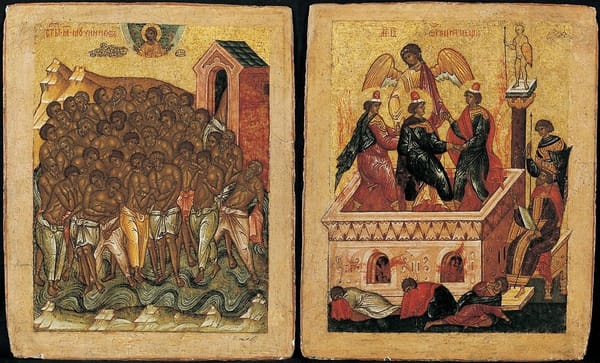
We know the mystery of the number forty. This tenth of March brings it before us. Forty new advocates! Forty encouraging us to enter bravely on our career of penance! On the frozen pool, which was their field of battle, these martyrs reminded one another that Jesus had fasted for forty days, and that they themselves were forty in number! Let us, in our turn, compare their sufferings with the lenten exercises which the Church imposes upon us; and humble ourselves on seeing our cowardice; or, if we begin with fervour, let us remember that the grand thing is to be faithful to the end, and bring to the Easter solemnity the crown of our perseverance. Our forty martyrs patiently endured the cruellest tortures; the fear of God, and their deep-rooted conviction that He had an infinite claim to their fidelity, gave them the victory. How many times we have sinned, and had not such severe temptations as theirs to palliate our fall! How can we sufficiently bless that divine mercy, which spared us, instead of abandoning us as it did that poor apostate, who turned coward and was lost! But, on what condition did God spare us? That we should not spare ourselves, but do penance. He put into our hands the rights of His own justice; justice, then, must be satisfied, and we must exercise it against ourselves. The lives of the saints will be of great help to us in this, for they will teach us how we are to look upon sin, how to avoid it, and how strictly we are bound to do penance for it after having committed it.
The Church, in her liturgy, thus relates to us the martyrdom of the soldiers of Sebaste.
That we may the more worthily celebrate the memory of the forty martyrs, we borrow a few stanzas from the hymn in which the Greek liturgy so enthusiastically sings their praises.
Hymn (Die IX . Martii)
Valiant soldiers of Christ, who meet us, with your mysterious number, at this commencement of our forty days’ fast, receive the homage of our devotion. Your memory is venerated throughout the whole Church, and your glory is great in heaven. Though engaged in the service of an earthly prince, you were the soldiers of the eternal King: to Him were you faithful, and from Him did you receive your crown of eternal glory. We, also, are His soldiers; we are fighting for the kingdom of heaven. Our enemies are many and powerful; but, like you, we can conquer them, if, like you, we use the arms which God has put in our hands. Faith in God’s word, hope in His assistance, humility, and prudence, with these we are sure of victory. Pray for us, O holy martyrs, that we may avoid all compromise with our enemies; for our defeat is certain, if we try to serve two masters. During these forty days, we must put our arms in order, repair our lost strength, and renew our engagements; come to our assistance, and get us a share in your brave spirit. A crown is also prepared for us: it is to be won on easier terms than yours; and yet we shall lose it, unless we keep up within us an esteem for our vocation. How many times, in our past lives, have we forfeited that glorious crown! But God, in His mercy, has offered it to us again, and we are resolved on winning it. Oh, for the glory of our common Lord and Master, make intercession for us.
Our work of preparation is over: we are ready to obey our mother’s call to Lent. During the three past weeks, we have studied the fall of our first parents, and the miseries it brought upon man; the necessity of a Saviour; the justice of God, against which the human race dared to rebel; the terrible chastisement of the deluge, wherewith that revolt was punished; and finally, the covenant made by God, through Abraham, with those who are faithful to Him, and shun the maxims of a perverse and guilty world.
Now we are to see the accomplishment of the great mysteries, whereby the wounds of our fall were healed, the divine justice was disarmed, and God’s grace was poured out upon us, delivering us from the yoke of Satan and the world.
The Man-God, whose sweet presence has been less sensible during this Septuagesima season, is now about to show Himself to us again, but this time it is on His way to Calvary, where He is to be immolated for our redemption. The dolorous Passion, which our sins have imposed upon Him, is about to be brought before us: the greatest of anniversaries will soon be upon us.
Let us be all attention to the mysteries: let us be fervent in the great work of our own purification. Let us walk on courageously in the path of penance, so that each day the burden of our sins may be lightened, and after we have partaken, by heartfelt compassion, of the cup of our Redeemer’s Passion, our lips will be once more permitted to sing the songs of joy, and our hearts will thrill at Easter with the loud burst of the Church’s Alleluia!
| Previous Wednesday in Ember Week of Lent | Next March 10: The Forty Martyrs |