Daily reading
Semidouble · Movable from Easter · Temporal
March 28, 2022
From Dom Guéranger’s The Liturgical Year.
Monday of the Fourth Week of Lent
The Station is in the venerable church of the Four Crowned (brothers); their names are, Severus, Severianus, Carpophorus, and Victorious; they suffered martyrdom under the persecution of Diocletian. Their bodies, as also the head of the great martyr St. Sebastian, are among the relics of this church.
Collect
Præsta, quæsumus, omnipotens Deus: ut observations sacras annua devotione recolentes, et corpore tibi placeamua et mente. Per Christum Dominum nostrum. Amen.
Grant, we beseech thee, O almighty God, that we, who annually celebrate this holy fast, may be well pleasing to thee, both in body and mind. Through Christ our Lord. Amen.
Epistle
3. Cap. iii.
St. Paul explained to us, in yesterday’s Epistle, the antagonism that there is between the Synagogue and the Church; he showed us how Sara’s son, who was the father’s favourite, was persecuted by the son of Agar. The two women, who appear before Solomon, are another figure of the same truth. The child whom they both claim is the Gentile people, which has been brought to the knowledge of the true God. The Synagogue, typified by the woman who has caused death to her child, has misled the people confided to her care; and now unjustly claims one that does not belong to her. And whereas it is not from any motherly affection, but only from pride, that she puts forward such a claim, it matters little to her what becomes of the child, provided only he be not given to the true mother, the Church. Solomon, the king of peace, who is one of the Scriptural types of Christ, adjudges the child to her that has given him birth, and nourished him; and the pretensions of the false mother are rejected. Let us, then, love our mother, the holy Church, the bride of Jesus. It is she that has made us children of God by Baptism. She has fed us with the Bread of life; she has given us the holy Spirit; and, when we had the misfortune to relapse into death by sin, she, by the divine power given to her, has restored us to life. A filial love for the Church is the sign of the elect; obedience to her commandments is the mark of a soul in which God has set His kingdom.
Gospel
Cap. ii.In illo tempore: Prope erat Pascha Judaeorum, et ascendit Jesus Jerosolymam: et invenit in templo vendentes boves, et oves, et columbas, et nummularios sedentes. Et cum fecisset quasi flagellum de funiculis, omnes ejecit de templo, oves quoque, et boves, et nummulariorum effudit aes, et mensas subvertit. Et his, qui columbas vendebant, dixit: Auferte ista hine, et nolite facere domum Patris mei, domum negotiationis. Recordati sunt vero discipuli ejus quia scriptum est: Zelus domus tuae comedit me. Responderunt ergo Judæi, et dixerunt ei: Quod signum ostendis nobis quia hæc facis? Respondit Jesus, et dixit eis: Solvite templum hoc, et in tribus diebus excitabo illud. Dixerunt ergo Judæi: Quadraginta et sex annis ædificatum est templum hoc, et tu in tribus diebus excitabis illud? Ille autem dicebat de templo corporis sui. Cum ergo resurrexisset a mortuis, recordati sunt discipuli ejus, quia hoc dicebat, et crediderunt Scripturæ, et sermoni quem dixit Jesus. Cum autem esset Jerosolymis in Pascha in die festo, multi crediderunt in nomine ejus, videntes signa ejus, quæ faciebat. Ipse autem Jesus non credebat semetipsum eis, eo quod ipse nosset omnes, et quia opus ei non erat ut quis testimonium perhiberet de homine, ipse enim sciebat quid esset in homine.
Ch. ii.At that time the Pasch of the Jews was at hand, and Jesus went up to Jerusalem And he found in the temple them that sold oxen, and sheep, and doves, and the changers of money sitting. And when he had made as it were a scourge of little cords, he drove them all out of the temple, the sheep also and the oxen; and the money of the changers he poured out, and the tables he overthrew. And to them that sold doves he said: Take these things hence, and make not the house of my Father a house of traffic. And his disciples remembered that it was written: The zeal of thy house hath eaten me up. The Jews therefore answered, and said to him: What sign dost thou shew unto us, seeing thou dost these things? Jesus answered and said to them: Destroy this temple, and in three days I will raise it up. The Jews then said: Six and forty years was this temple in building, and wilt thou raise it up in three days? But he spoke of the temple of his body. When therefore he was risen again fromthe dead, hic disciples remembered that he had said this, and they believed the Scripture, and the word that Jesus had said. Now when he was at Jerusalem, at the Pasch, upon the festival day, many believed in his name, seeing his signs which he did. But Jesus did not trust himself to them, for that he knew all men, and because he needed not that any should give testimony of man, for he knew what was in man.
We read in the Gospel of the first Tuesday of Lent, that Jesus drove from the temple them that were making it a place of traffic. He twice showed this zeal for His Father’s house. The passage we have just read from St. John refers to the first time. Both occasions are brought before us during this season of Lent, because this conduct of our Saviour shows us with what severity He will treat a soul that harbours sin within her. Our souls are the temple of God, created and sanctified by God to the end that He might dwell there. He would have nothing to be in them, which is unworthy of their destination. This is the season for self-examination; and if we have found that any passions are profaning the sanctuary of out souls, let us dismiss them; let us beseech our Lord to drive them out by the scourge of His justice, for we, perhaps, might be too lenient with these sacrilegious intruders. The day of pardon is close at hand; let us make ourselves worthy to receive it. There is an expression in our Gospel which deserves a special notice. The evangelist is speaking of those Jews who were more sincere than the rest, and believed in Jesus, because of the miracles He wrought; he says: Jesus did not trust Himself to them, because He knew all men. So that there may be persons who believe in and acknowledge Jesus, yet whose hearts are not changed! Oh the hardness of man’s heart! Oh cruel anxiety for God’s priests! Sinners and worldlings are now crowding round the confessional; they have faith, and they confess their sins: and the Church has no confidence in their repentance! She knows that, a very short time after the feast of Easter, they will have relapsed into the same state in which they were on the day when she marked their foreheads with ashes. These souls are divided between God and the world; and she trembles as she thinks on the danger they are about to incur by receiving holy Communion without the preparation of a true conversion. Yet, on the other hand, she remembers how it is written that the bruised reed is not to be broken, nor the smoking flax to be extinguished.* Let us pray for these souls, whose state is so full of doubt and danger. Let us, also, pray for the priests of the Church, that they may receive from God abundant rays of that light, whereby Jesus knew what was in man.
Let us pray for the conversion of sinners, using the beautiful Preface given us by the Roman pontifical, and formerly recited during the reconciliation of the public penitents.
Preface
* Is. xlii. 3. ↩︎
March 28: St. John Capistran, Confessor
|
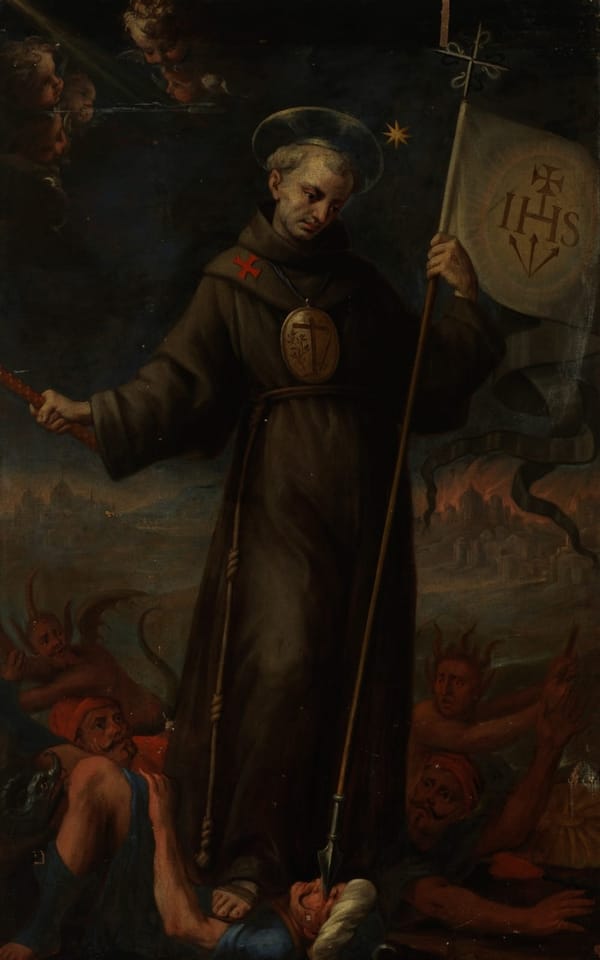
The nearer the Church approaches to the end of her earthly existence, the more she seems to love to enrich her cycle with feasts that recall the glorious past. Indeed, one of the objects of the sacred Liturgy is to keep before our minds all that God has done for us. ‘Remember the days of old: think upon every generation,’1 said God to His people in the alliance of Sinai. It was a law in Jacob that the fathers should hand on these traditions to their children, who were in their turn to transmit them to their descendants.2 The Church has taken the place of the ancient Israel and her annals speak, even more than those of the Jewish people, of the manifestations of divine power. The children of the new Sion have more right than the sons and daughters of Juda to say, as they look back on the past: ‘Thou art thyself my king and my God, who commandest the saving of Jacob.’
At the time when the defeat of the Iconoclasts was being completed in the East, a new and most terrible war was beginning in which the West was to fight for the sake of civilization and for the cause of the Incarnate Word of God. Like a sudden torrent, Islam overwhelmed Eastern Europe, reaching even to Gaul, and for a thousand years it disputed, foot by foot, with Christ and His Chutch, the land occupied by the Latin races. The glorious Crusades of the twelfth and thirteenth centuries, which attacked this power in its very centre, only succeeded in paralyzing it for the time being. In Spain the struggle continued until the triumph of the Cross was complete, but in other parts of Europe Christian princes forgot the traditions of Charlemagne and St. Louis, grew weary of the holy war, and gave themselves up to the pursuit of their private ambition, so that the Crescent was able once more to defy the Christian powers and renew its plan of universal conquest.
In 1453 Byzantium, the capital of the Eastern empire, fell before the Turkish janissaries, and three years later Mahomet II. invested Belgrade on the very outskirts of the Western empire. It might have been expected that all Europe would hasten to the aid of the besieged fortress, for if this last dyke were to fall, Hungary, Austria and Italy would be overwhelmed and the peoples of the North and West would share the fate of the East, that life in death, that irremediable sterility of soil and intelligence which still holds captive the once brilliant Greece. But this imminent danger only resulted in deepening the breach in Christian unity, and the Christian nations were at the mercy of a few thousand infidels. Only the Papacy was true to itself in the midst of all this egoism and perfidy. Truly Catholic in its thoughts, its labours, its sufferings, as in its joys and triumphs, it took up the common cause which had been basely betrayed by kings and princes. The powerful were deaf to the Pope’s appeals, but he turned to the humble and, trusting more in prayer to the God of armies than in military tactics, he sought for the deliverers of Christendom among the poor.
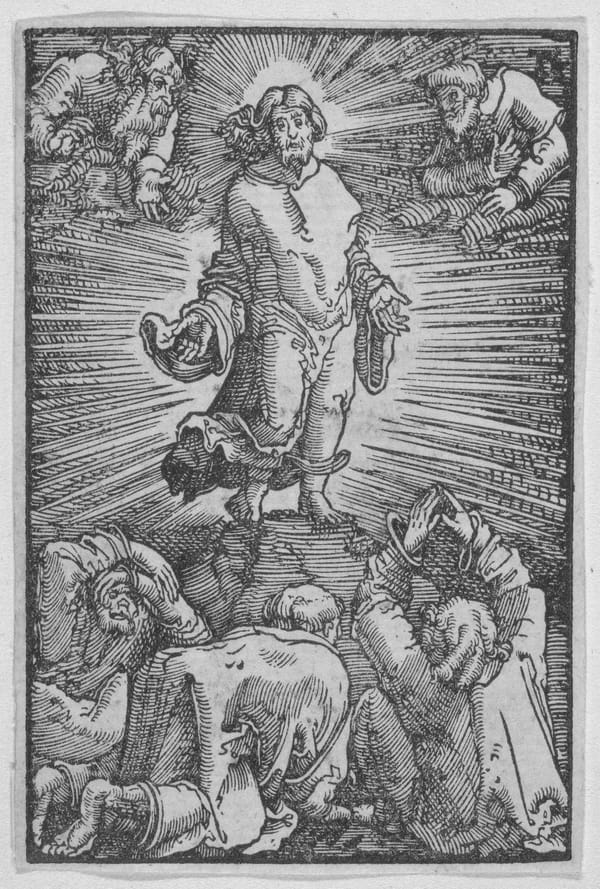
It was then that John Capistran, the saint of to-day, attained the consummation of his glory and his sanctity. At the head of a few poor men of good-will, unknown peasants gathered together by the Franciscan Friars, this ‘poor man of Christ’ undertook to defeat the strongest and best organized army of the century. On July 14, 1456, he broke through the Ottoman lines with John Hunyades, the only one of the Hungarian nobles who would accompany him, and revictualled Belgrade; and on July 22, feeling that he could no longer endure the defensive, he threw himself, to the stupefaction of Hunyades, on the enemy entrenchments. His troops were armed only with flails and pitchforks, and their only strategy was the name of Jesus. John had inherited this victorious battle-cry from his master, Bernardine of Siena. The Psalmist said: ‘Some trust in chariots and some in horses: but we will call upon the name of the Lord our God.’3 This name, so holy and so terrible, proved once more the salvation of the people. At the end of that memorable day twenty-four thousand Turks lay dead on the field of battle; three hundred cannon and all the spoils of the infidels were in the hands of the Christians, and Mahomet II. was seeking a distant hiding-place for his shame. The news of this victory, so like that of Gedeon,4 reached Rome on August 6, and Pope Callistus III. decreed that henceforth the Universal Church should keep a solemn commemoration of the Transfiguration of Our Lord on that day, for it was with the soldiers of the Cross as with the heroes of Israel,5 ‘they got not the possession of the land by their own sword: neither did their own arm save them, but thy right hand and thy arm and the light of thy countenance because thou wast pleased with them,’ as with Thy beloved Son on Mount Thabor.6
Let us read the life of St. John Capistran as related in the Liturgy:
‘The Lord is with thee, O most valiant of men. Go in this thy strength and thou shalt deliver Israel out of the hand of Madian. Know that I have sent thee.’7 Thus did the angel of the Lord salute Gedeon when he chose him from among the least of his people8 to fulfil a high destiny. Thus do we in our turn salute thee, O glorious son of St. Francis of Assisi, and we beseech thee to be our constant aid. The enemy whom thou didst defeat on the field of battle is no longer an imminent peril for the West, but there is a greater danger, as Moses said to his people after their deliverance from Egypt: ‘Take heed and beware lest at any time thou forget the Lord thy God . . . lest after thou hast eaten and art filled, hast built goodly houses . . . and shalt have herds of oxen and flocks of sheep and plenty of gold and of silver, and of all things; thy heart be lifted up and thou remember not the Lord who brought thee out of the house of bondage.’9 If the Turk had conquered in that struggle of which thou wert the hero, what would have become of the civilization of which we are so proud? Since thy day the Church has had once more to champion the cause of Society, which the heads of the nations no longer seem to understand. May the need of giving expression to the gratitude which is due to her preserve her children from the forgetfulness which is the great evil of the present generation. We thank God for the feast of to-day; it is a perpetual memorial of His goodness and of the noble deeds of His saints. Help us to conquer in that warfare which is being incessantly carried on within our own souls against the world, the flesh, and the devil. May the name of Jesus put our enemies to flight, may His Cross be our standard and lead us through the death of self-love to the triumph of the Resurrection.
| Previous March 27: St. John Damascene, Confessor and Doctor of the Church | Next March 28: St. John Capistran, Confessor |