lyp.network

Daily reading

Paschal Time

Double of the II Class · Movable from Easter · Temporal

May 1, 2022

From Dom Guéranger’s The Liturgical Year.

Gold cross ornament
The Good Shepherd
Gold cross ornament
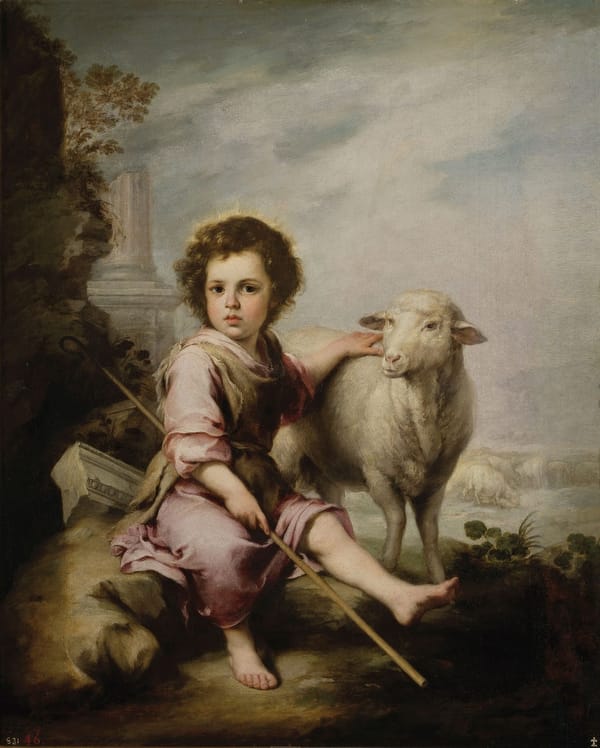
The Good Shepherd, Bartolomé Esteban Murillo (1617–1682), c. 1660. Credits

Second Sunday after Easter

℣. In resurrectione tua, Christe, alleluia.℟. Cœli et terra lætentur, alleluia.
℣. In thy resurrection, O Christ, alleluia.℟. Let heaven and earth rejoice, alleluia.

THIS Sunday goes under the name of Good Shepherd Sunday, because in the Mass there is read the Gospel of St John, wherein our Lord calls himself by this name. How very appropriate is this passage of this Gospel to the present season, when our divine Master began his work of establishing and consolidating the Church, by giving it the pastor, or shepherd, who was to govern it to the end of time!

In accordance with the eternal decree, the Man-God, on the fortieth day after his Resurrection, is to withdraw his visible presence from the world. He is not to be again seen upon the earth till the last day, when he will come again to judge the living and the dead. And yet he could never abandon mankind, for which he offered himself on the Cross, and delivered from death and hell by rising triumphantly from the grave. He will continue to be its Head after his Ascension into heaven: but what shall we have on earth to supply his place? We shall have the Church. It is to the Church that he will leave all his own authority to rule us; it is into the hands of the Church that he will entrust all the truths he has taught; it is the Church that he will make the dispenser of all those means of salvation which he has destined for the world.

This Church is a society, unto which all mankind is invited. It is composed of two classes of members; the governing and the governed; the teaching and the taught; the sanctifying and the sanctified. This society is the Spouse of Christ; it is by her that he produces his elect. She is the one only Mother of the elect; out of her bosom there is no salvation.

But how is this society to subsist? how is it to persevere through the long ages of time, even to the last day? who is to give it unity and adhesion of its parts? what is to be the visible link between its members—the palpable sign of its being the true Spouse of Christ, in the event of other societies rising up and disputing her titles? If Jesus himself could have remained with us we should have had nothing to fear, for where he is, there also are truth and life; but, as he says, he is going, and we may not as yet follow him. Give ear, then, and learn what is the primary quality of the true Spouse of Christ.

Jesus was one day, previous to his Passion, in the country of Cesarea Philippi; his Apostles were standing around him, and he began questioning them about what they thought of him. One of them, Simon the son of John or Jonas, and brother to Andrew, answered in the name of all, and said: Thou art Christ, the Son of the living God!1 Jesus expressed his pleasure at receiving Simon’s testimony, which was not the result of any human knowledge, but the expression of a divine revelation there and then granted to him; and he immediately told this Apostle that from that time forward he was to be, not Simon, but Peter (which means a rock). Christ had been spoken of by the prophets under the name of a Rock, or Stone;2 by thus solemnly conferring upon his disciple a title so characteristically that of the Messias, Jesus would give us to understand that Simon was to have something in common with himself which the other Apostles were not to have. After saying to him: ‘Thou art Peter (that is, thou art the rock), he added:' And upon this rock I will build my Church.’3

Let us weigh the force of these words of the Son of God: I will build my Church. He has, then, a project in view—he intends to build a Church. It is not now that he will build it, but at some future period; but one thing we already know as a certainty—it is that this Church will be built on Peter. Peter will be its foundation; and whosoever is not on that foundation will not belong to the Church. Let us again give ear to the text: And the gates of hell shall not prevail against my Church. In scriptural language gates signify powers: the Church of Christ, therefore, is to be proof against all the efforts of hell. And why? Because the foundation which Jesus is to give to it shall be one that no power can shake. The Son of God continues: And I will give to thee the keys of the kingdom of heaven. In the language of the Jews, keys signify the power of governing; and in the Gospel Parables the kingdom of heaven is the Church built by Christ. By saying to Peter (which is henceforth to be Simon’s name), I will give to thee the keys of the kingdom of heaven, Jesus implied this: ‘I will make thee the King of my Church, of which thou art to be the foundation!’ Nothing could be clearer. But let us remember that all these magnificent promises regard the future.4

That future has now become the present. We are now come to the last days of Jesus’ visible presence here below. The time is come for him to make good his promise, and found the kingdom of God—that Church which he was to build upon the earth. The Apostles, in obedience to the order sent them by the angels, are come into Galilee. Our Lord appears to them on the shore of the lake of Tiberias: after providing them with a mysterious repast, and whilst they are all attentive to his words, he suddenly addresses himself to Peter: Simon, son of John, lovest thou me?5 Observe, he does not call him Peter; he, as it were, goes back to the day when he said to him: Simon, son of Jonas, thou art Peter; he would have his disciples note the connection between the promise and its actual fulfilment. Peter, with his usual eagerness, answers his Master’s question: Yea, Lord, thou knowest that I love thee. Jesus resumes, with a tone of authority: Feed my lambs! Then repeating the question, he says: Simon, son of John, lovest thou me? Peter is surprised at his Master’s urging such an inquiry; still he answers with the same simplicity as before: Yea, Lord, thou knowest that I love thee: and as soon as he has given answer, Jesus repeats the words of investiture: Feed my lambs!

The disciples respectfully listen to this dialogue; they see plainly that, here again. Peter is made an object of Jesus’ partiality, and is receiving something which they themselves are not to receive. They remember what happened at Cesarea Philippi and how. ever since that day, Peter has been treated by their Master with especial honour. And yet there is another privilege or office to be added to this of feeding the lambs. A third time, then, Jesus says to Peter: Simon, son of John, lovest thou me? This is too much for the Apostle. These three questionings of his love bring to his mind the three denials he had so sinfully made to the servant girl of Caiphas. He feels the allusion to his recent infidelity; and this third time, his answer implies a prayer for forgiveness; his reply bespeaks humility rather than assurance: Lord! says he, thou knowest all things! Thou knowest that I love thee! Then, making Peter’s authority complete, Jesus pronounces these imposing words: Feed my sheep!6

Here, then, we have Peter made shepherd by him who says of himself: I am the good Shepherd. Firstly, our Lord gives his Apostle, twice over, the care of his lambs; this does not make him the complete shepherd: but when he bids him feed his sheep too, the whole flock is subjected to his authority. Now, therefore, let the Church show herself, let her take her stand, let her spread herself through the length and breadth of the nations; Simon, the son of John, is proclaimed its visible head. Is the Church a building? he is the foundation-stone, the Petra, the rock. Is she a kingdom? he holds the keys, that is, the sceptre. Is she a fold? he is the shepherd.

Yes, this Church, which Jesus is now organizing, which is to be proclaimed to the world on the day of Pentecost, is to be a fold. The Word, the Second Person of the blessed Trinity, is come down from heaven, that he may gather together in one the children of God that were dispersed;7 and the time is at hand when there shall he but one fold and one shepherd.8 O Jesus! our divine Shepherd! we bless thee, we give thee thanks. It is by thee that the Church thou art now founding subsists and lives through every age, congregating and saving all that put themselves under her guidance. Her authority, her strength, her unity, all come from thee, her infinitely powerful and merciful shepherd! We likewise bless and thank thee that thou hast secured this authority, this strength, this unity, by giving us Peter as thy Vicar, Peter our shepherd in and by thee, Peter to whom all, both sheep and lambs, owe obedience, Peter in whom thou, our divine Head, wilt be for ever visible, even to the end of the world!

In the Greek Church, the second Sunday after Easter, which we call Good Shepherd Sunday, goes under the appellation of the Sunday of the holy Myrophorœ, that is Perfume-Bearers. The Office celebrates the devotion of the holy women who brought their perfumes to the sepulchre, that they might embalm the Body of Christ. Joseph of Arimathea is also commemorated in the Greek Liturgy of this week.

The Roman Church reads the Acts of the Apostles in her Matins, from last Monday to the third Sunday after Easter exclusively.


Mass

The Introit takes a tone of triumph. It celebrates in the words of the Royal Psalmist the mercy of the Lord, which by the foundation of the Church has filled the whole earth. The heavens (by which, in the mysterious language of the Scripture, is frequently meant the Apostles), were firmly established by the Word of the Lord, when Jesus (the Word) gave them Peter as their shepherd and their rock.

Introit

Misericordia Domini plena est terra, alleluia: Verbo Domini cœli firmati sunt. Alleluia, alleluia.
Ps. Exsultate justi in Domino: rectos decet collaudatio.℣. Gloria Patri.
Misericordia.
The earth is full of the mercy of the Lord, alleluia: by the Word of the Lord the heavens were firmly established. Alleluia, alleluia.
Ps. Rejoice in the Lord, O ye just! Praise becometh the upright.℣. Glory, etc.
The earth, etc.

In the Collect, the Church asks the grace of holy Joy for her children: it is the spirit of Eastertide. Surely, it is a duty to rejoice at our having been saved from death by our Jesus' Resurrection! Moreover, these Paschal joys are a preparation for those of eternity.

Collect

Deus, qui in Filii tui humilitate jacentem mundum erexisti; fidelibus tuis perpetuam concede laetitiam; ut quos perpetuae mortis eripuisti casibus, gaudiis facias perfrui sempiternis. Per eumdem Dominum.
O God, who, by the humiliation of thy Son, hast raised up the fallen world: grant to thy people perpetual joy: that they whom thou hast delivered from the danger of everlasting death, may attain to eternal bliss. Through the same, etc.

To this are added two of the following Collects: 

Of the Blessed Virgin

Concede nos famulos tuos, quæsumus, Domine Deus, perpetua mentis et corporis sanitate gaudere: et gloriosa beatæ Mariae semper Virginis intercessions, a praesenti liberari tristitia et aeterna perfrui lætitia.
Grant, O Lord, we beseech thee, that we thy servants may enjoy constant health of body and mind; and by the glorious intercession of blessed Mary, ever a Virgin, be delivered from all present sorrow, and come to that joy which is eternal.

Against the Persecutors of the Church

Ecclesiae tuæ, quæsumus Domine, preces placatus admitte: ut destructis adversitatibus et erroribus universis, secura tibi serviat libertate. Per Dominum.
Mercifully hear, we beseech thee, O Lord, the prayers of thy Church: that, all oppositions and errors being removed, she may serve thee with a secure liberty. Through, etc.

For The Pope

Deus omnium fidelium pastor et rector, famulum tuum Leonem quem pastorem Ecclesiae tuæ præesse voluisti, propitius respice: da ei, quæsumus, verbo et exemplo, quibus præest, proficere; ut ad vitam, una cum grege sibi credito, perveniat sempiternam. Per Dominum.
O God, the pastor and ruler of all the faithful, look down in thy mercy on thy servant Leo, whom thou hast appointed pastor over thy Church; and grant, we beseech thee, that both by word and example, he may edify all those that are under his charge; and, with the flock entrusted to him, arrive at length at eternal happiness. Through, etc.

Epistle

Lectio Epistolæ beati Petri Apostoli.
1 Cap. ii.
Charissimi, Christus passus est pro nobis, vobis relinquens exemplum, ut sequamini vestigia ejus. Qui peccatum non fecit, nec inventus est dolus in ore ejus: qui quum malediceretur, non maledicebat, quum pateretur, non comminabatur: tradebat autem judicanti se injuste: qui peccata nostra ipse pertulit in corpore suo super lignum: ut peccatis mortui, justitiae vivamus: cujus livore sanati estis. Eratis enim sicut oves errantes, sed conversi estis nunc ad pastorem et episcopum animarum vestrarum.
Lesson of the Epistle of Saint Peter the Apostle.
1 Ch. ii.
Dearly beloved: Christ also suffered, leaving you an example, that you should walk in his steps. Who did no sin, neither was guile found in his mouth. Who, when he was reviled, did not revile; when he suffered, he threatened not: but delivered himself to him that judged him unjustly: who his own self bore our sins in his body upon the tree: that we being dead to sins, should live to justice: by whose stripes you were healed. For you were as sheep going astray; but you are now converted to the shepherd and bishop of your souls.

It is the prince of the Apostles, the visible shepherd of the universal Church, who addresses these words to us. Observe how he ends by turning our thoughts to the invisible shepherd, whose Vicar he is; and how carefully he avoids any allusion to himself. So, also, when assisting his disciple Mark to write his Gospel, he would not allow him to relate the history of Christ's having made him the shepherd of the whole flock; whereas, he insisted on his telling every circumstance of his thrice denying Jesus to be his Master. See, too. how feelingly the Apostle here speaks of his Saviour—of the sufferings he endured, of his patience, of his devotedness for those poor straying sheep of whom he was to form his fold! These words will one day be verified in Peter himself. The hour will come when, like his Master, he will be fastened to a cross, and patiently endure every insult and cruelty. Jesus told him that it was to be so. After entrusting him with the care of the sheep and lambs, our Lord told him that when he should have grown old, he would stretch forth his hands upon a cross, and suffer violence from men.9 This is to happen not merely to Peter, but to a considerable number of his successors, who are one with himself, and whom future generations are to see continually persecuted, exiled, imprisoned, and put to death. Let us also follow Jesus' steps, by cheerfully suffering for justice’ sake: we owe it to him who from all eternity, being equal in glory to God the Father, deigned to come down to our earth that he might be the shepherd and bishop of our souls.

The first Alleluia Versicle commemorates the repast at Emmaus: in a few moments we also shall know Jesus in the breaking of the Bread of Life.

The second proclaims, in Jesus’ own words, the dignity and qualities of a shepherd, his love for his sheep, and the eagerness wherewith his sheep recognize him as their Master.

Alleluia, alleluia.℣. Cognoverunt discipuli Dominum Jesum in fractione panis.
Alleluia.℣. Ego sum Pastor bonus; et cognosco oves meas, et cognoscunt me meæ, alleluia.
Alleluia, alleluia.℣. The disciples knew the Lord Jesus in the breaking of bread.
Alleluia.℣. I am the good Shepherd, and I know my sheep, and my sheep know me, alleluia.

Gospel

Sequentia sancti Evangelii secundum Joannem.
Cap. x.
In illo tempore: Dixit Jesus Pharisæis: Ego sum Pastor bonus. Bonus pastor animam suam dat pro ovibus suis. Mercenarius autem et qui non est pastor, cujus non sunt oves propriae, videt lupum venientem, et dimittit oves, et fugit: et lupus rapit et dispergit oves: mercenarius autem fugit, quia mercenarius est, et non pertinet ad eum de ovibus. Ego sum Pastor bonus: et cognosco oves meas, et cognoscunt me meae. Sicut novit me Pater, et ego agnosco Patrem: et animam meam pono pro ovibus meus. Et alias oves habeo, quæ non sunt ex hoc ovili: et illas oportet me adducere, et vocem meam audient, et fiet unum ovile, et unus pastor.
Sequel of the Holy Gospel according to John.
Ch. x.
At that time: Jesus said to the Pharisees: I am the good Shepherd. The good shepherd giveth his life for his sheep. But the hireling, and he that is not the shepherd, whose own the sheep are not, seeth the wolf coming, and leaveth the sheep, and flieth, and the wolf catcheth, and scattereth the sheep: and the hireling flieth, because he is a hireling: and he hath no care for the sheep. I am the good Shepherd: and I know mine, and mine know me. As the Father knoweth me, and I know the Father: and I lay down my life for my sheep. And other sheep I have, that are not of this fold: them also I must bring, and they shall hear my voice, and there shall be one fold, and one shepherd.

Divine Shepherd of our souls! how great is thy love for thy sheep! Thou givest even thy life to save them. The fury of wolves does not make thee flee from us; thou becomest their prey, that we may escape. Thou didst die in our stead, because thou wast our Shepherd. We are not surprised at thy requiring from Peter a greater love than thou didst require from his brother Apostles: thou didst will to make him their and our shepherd. Peter answered thee without hesitation, that he loved thee; and thou didst confer upon him thine own name, together with the reality of thine office, in order that he might supply thy place after thy departure from this world. Be thou blessed, O divine Shepherd! for thy having thus provided for the necessities of thy fold, which could not be one, were it to have many shepherds without one supreme shepherd. In obedience to thy command, we bow down before Peter, with love and submission; we respectfully kiss his sacred feet; for it is by him that we are united to thee; it is by him that we are thy sheep. Preserve us, O Jesus, in the fold of Peter, which is thine. Keep far from us the hireling who usurps the place and rights of the shepherd. He has intruded himself, or been intruded by violence, into the fold, and would have us take him as the master; but he knows not the sheep, and the sheep do not know him. Led, not by zeal, but by avarice and ambition, he flieth at the approach of danger. He that governs through worldly motives is not a man to lay down his life for others. The schismatic pastor loves himself; he does not love thy sheep; how could he give his life for them? Protect us, O Jesus, from this hireling! He would separate us from thee, by separating us from Peter, whom thou hast appointed thy Vicar; and we are determined to recognize no other. Anathema to him who would command as in thy name, and yet not be sent by Peter! Such a pastor could be but an impostor; he would not rest on the foundation; he would not have the keys of the kingdom of heaven; to follow him would be our ruin. Grant, then, Good Shepherd, Jesus! that we may ever keep close to thee and to Peter; that as he rests upon thee, we may rest upon him; and thus we may defy every tempest, for thou, dear Lord, hast said: A wise man built his house upon a rock; and the rain fell, and the floods came, and the winds blew, and they beat upon that house, and it fell not; for it was founded on a rock.10

The Offertory is an aspiration to God. taken from the royal Prophet.

Offertory

Deus, Deus meus, ad te de luce vigilo: et in nomine tuo levabo manus meas, alleluia.
O God, my God! to thee do I watch at break of day: and in thy name I will lift up my hands, alleluia.

In the Secret, the Church prays that the divine energy of the Mystery, about to be consummated on the Altar may produce within us the effect for which we long—death to sin. and resurrection to grace.

Secret

Benedictionem nobis, Domine, conferat salutarem sacra semper oblatio: ut quod agit mysterio, virtute perficiat. Per Dominum.
May this holy oblation, O Lord, draw down upon us thy saving blessing; and always produce in us the effect of what is represented in these sacred mysteries. Through, etc.

To this the priest adds two of the following Secrets.

Of the Blessed Virgin

Tua, Domine, propitiatione, et beatæ Mariæ semper Virginis intercessione, ad perpetuam atque præsentem hæc oblatio nobis proficiat prosperitatem et pacem.
By thine own mercy, O Lord, and the intercession of blessed Mary, ever a Virgin, may this oblation procure us peace and happiness, both in this life, and in that which is to come.

Against The Persecutors Of The Church

Protege nos, Domine, tuis mysteriis servientes: ut divinis rebus inhaerentes, et corpore tibi famulemur et mente. Per Dominum.
Protect us, O Lord, while we assist at thy sacred mysteries: that being employed in acts of religion, we may serve thee both in body and mind. Through, etc.

For the Pope

Oblatis, quæsumus, Domine, placare muneribus: et famulum tuum Leonem quem pastorem Ecclesiæ tuæ præesse voluisti, assidua protectione guberna. Per Dominum.
Be appeased, O Lord, with the offerings we have made: and cease not to protect thy servant Leo, whom thou hast been pleased to appoint pastor over thy Church. Through, etc.

The Communion Anthem speaks to us of the beautiful Mystery of to-day—the Good Shepherd. Let us once more offer our homage to the Son of God, who deigns to assume this endearing character; and let us ever be his devoted sheep. 

Communion

Ego sum Pastor bonus, alleluia: et cognosco oves meas, et cognoscunt me meæ. Alleluia, alleluia.
I am the good Shepherd, alleluia: and I know my sheep, and my sheep know me. Alleluia, alleluia.

Jesus, the Good Shepherd, has given himself, in this divine banquet, to his sheep: holy Church prays, in the Postcommunion, that we may ever be penetrated with sentiments of love for this august Sacrament; we ought to glory in it, as being the food that prepares us for immortality.

Postcommunion

Præsta nobis, quæsumus omnipotens Deus; ut vivificationis tuæ gratiam consequentes, in tuo semper munere gloriemur. Per Dominum.
Grant, we beseech thee, O Almighty God, that, receiving from thee the grace of a new life, we may ever glory in thy gift. Through, etc.

To this the priest adds two of the following Postcommunions.


Of the Blessed Virgin

Sumptis, Domine, salutis nostræ subsidiis: da, quæsumus, beatæ Mariæ semper Virginis patrociniis nos ubique protegi, in cujus veneratione haec tuæ obtulimus majestati.
Having received, O Lord, what is to advance our salvation; grant we may always be protected by the patronage of blessed Mary, ever a Virgin, in whose honour we have offered this sacrifice to thy majesty

Against the Persecutors of the Church

Quæsumus, Domine Deus noster: ut quos divina tribuis participatione gaudere, humanis non sinas subjacere periculis. Per Dominum.
We beseech thee, O Lord our God, not to leave exposed to the dangers of human life those whom thou hast permitted to partake of these divine mysteries. Through, etc.

For the Pope

Hæc nos, quæsumus Domine, divini sacramenti perceptio protegat: et famulum tuum Leonem quem pastorem Ecclesiae tuæ præesse voluisti, una cum commisso sibi grege salvet semper et muniat. Per Dominum.
May the participation of this divine Sacrament protect us, we beseech thee, O Lord; and always procure safety and defence to thy servant Leo, whom thou hast appointed pastor over thy Church, together with the flock committed to his charge. Through, etc.


Vespers


The Psalms, Hymn and Versicle are given on pages 81-90.


Antiphon of the Magnificat

Ego sum Pastor bonus, qui pasco oves meas, et pro ovibus meis pono animam meam, alleluia.

Oremus
.
Deus, qui in Filii tui humilitate jacentem mundum erexisti: fidelibus tuis perpetuam concede laetitiam: ut quos perpetuae mortis eripuisti casibus, gaudiis facias perfrui sempiternis. Per eumdem.
I am the good Shepherd, who feed my sheep, and lay down my life for my sheep, alleluia.
Let us Pray.
O God, who, by the humiliation of thy Son hast raised up the fallen world: grant to thy people perpetual joy: that they whom thou hast delivered from the danger of everlasting death may attain to eternal bliss. Through, etc.

We will close the day with this beautiful preface taken from the Mozarabic Missal. It commemorates the Resurrection.

Illatio
(Feria vi Paschœ)

Dignum et justum est, sanctum et salutare est, nos te gloriosissime Pater Domini nostri Jesu Christi, inenarrabilibus triumphis attollere, completisque erga nos promissorum suorum beneficiis, in quantum se mens parvulorum, te inspirante, repleri senserit, propensius conlaudare. Ut cui plus dimissum est amplius diligat, et potiora jam foedera accumulet qui tanta necdum credenti donavit. Postquam igitur Verbum caro factum est et habitavit in nobis, fecitque prius cuncta quæ docuit, perfectum divinis operibus virum necessariae nobis sibique voluntariae tradidit passioni. Ut quemadmodum mundo huic praedicationis suae claritate effulserat, ne errorum inretitus tenebris fluctuaret, ita etiam infernali carcere mancipatis sua resolvendis descensione succurreret. Neque regnum usque in finem saeculi dilataret. Et spolia quæ quondam praedo attraxerat fraudulentus, ad coelos secum reveheret innocens crucifixus. Et liberaret virtute justitiae quos humilitatis suae redemerat passione. Emisso itaque spiritu, et paternis, ut scriptum est, manibus commendato, hospitium divinitatis immensae quem virginea conceperant atque ediderant viscera, virgo interim sepultura suscepit. Sed mansit illic nihilominus incorruptus, quia non fuerat ex Adam nati seminis corruptione conceptus. Judaeis quoque petentibus, custodes monumento deputantur a Præside, quorum testimonio et fides firmaretur credentium, et confunderetur impietas perfidorum. Quid enim illi obesse potuit humana custodia, cui et dum requiesceret coeleste vigilavit excubium, et cum resurgeret Deus inerat Verbum? Quod immaculatae animae inseparabiliter copulatum adiit, exterruit, subjecit, et domuit, et vinxit cunctas hujus aeris in lacu novissimo potestates. Illic mors hebetata contremuit, seseque peremptam acrius quam stimulaverat sensit. Quæque se humani generis dominam lætitabat, ancillam mox crucis affectam Christo triumphante lugebat. Fracta est confestim virtus saeva carnificum, et ad nihilum redacta est exhausta grassatio cruentorum. Inclinata est harum tenebrarum Christi humilitate superbia, et diabolica malitia divini Agni est simplicitate restincta. Amisit e manibus subito quod se crudelissimus hostis credebat perpetim possessurum, cernens humanum genus per hominem Deum paradiso, unde praevaricatione Adæ eliminatum fuerat, restitutum.
It is meet and just, holy and available to salvation, that, with loudest acclamations of triumph, we should extol thee, O ever-glorious Father of our Lord Jesus Christ! and, now that he has fulfilled all his promises of mercy towards us, should praise thee with all the fervour which the human mind is capable of feeling, aided by thine inspiration. He to whom more has been forgiven should love more; and he who bestowed his gifts upon us when we did not as yet believe, increased the obligations we have to serve him. Therefore, after that the Word had been made Flesh, and had dwelt amongst us, and had practised all that he had taught, he, the perfect Man, perfect by his divine works, gave himself to the Passion, necessary, indeed, for ms, but, on his part, voluntary. He enlightened the world by the brightness of his preaching, lest, being a prey to darkness, it might be tossed to and fro. So, too, he descended into the prison of Limbo, that he might set its captives free; for he would not defer his kingdom to the end of the world: therefore, the victims, dragged down by the crafty enemy, were raised up to heaven by the innocent Crucified. He would set free, by the right of justice, those whom he redeemed by the humility of his Passion. He had given up the ghost, and, as it is written, commended it into his Father's hands, a virgin-tomb received the divine guest that a virgin-womb had conceived and brought forth. Corruption came not nigh to him whilst lying in the grave, because he was conceived without contracting the corruption of Adam's sin. The Jews obtained of Pilate that he would place guards at the Sepulchre, whose testimony was afterwards to confirm the faith of believers, and confound the impiety of the wicked. For what obstacle could human vigilance be to him, who, whilst he lay in the tomb, had angels keeping watch over him; and who, when he rose, rose because he was God, the Word? Yea, the Word, which had been inseparably united to the Soul, was there in the Body also: it terrified, it subjected, it tamed, it tied fast down in deepest hell, all the powers of this air. Then did Death tremble, for its sting was blunted; and its own death was sharper than any it had ever made others feel. It had boasted of being lord of mankind; but, when Christ triumphed, it had to wail itself a slave of the Cross. Straightway was broken the power of the cruel executioners, and the violent rioting of the bloodthirsty was brought to an end. The pride of the spirits of darkness was brought down by the humility of Christ, and the malice of the devil was crushed by the simplicity of the Lamb. The most cruel enemy saw fall from his hands what he thought was his eternal possession; he saw mankind restored, by the Man-God, to the Paradise, whence it had been banished by Adam’s sin.
  1. St Matt. xvi 16. ↩︎
  2. Isa. xxviii 16. ↩︎
  3. St Matt. xvi 18. ↩︎
  4. St Matt. xvi. ↩︎
  5. St John xxi 15. ↩︎
  6. St John xxi 17. ↩︎
  7. St John xi 52. ↩︎
  8. Ibid. x 16. ↩︎
  9. St John xxi 18. ↩︎
  10. St Matt. vii 24, 25. ↩︎

May 11 [May 1]: Sts. Philip and James the Less, Apostles

Gold cross ornament
Saints Philip and James the Less (companion panels)
Gold cross ornament
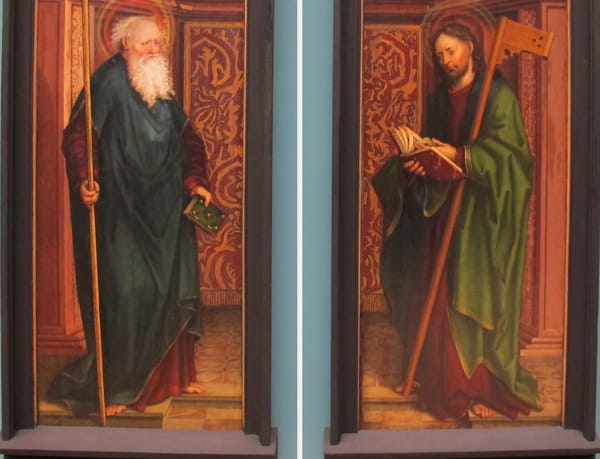
Apostles Philip and James the Less, Martin Schaffner, c. 1520. Photo: Sailko. Credits

[This feast day, previously kept on May 1, was moved to May 11 when the feast of St. Joseph the Worker was established on May 1. The Solemnity of St. Joseph, which was replaced by St. Joseph the Work, was originally celebrated on the Third Sunday after Easter, as it was in the time of Dom Guéranger, whose article on that feast can be found here.-Ed.]

From Dom Guéranger's The Liturgical Year.

TWO of the favoured witnesses of our beloved Jesus' Resurrection come before us on this first day of May. Philip and James are here, bearing testimony to us that their Master is truly risen from the dead, that they have seen him, that they have touched him, that they have conversed with him,1 during these forty days. And, that we may have no doubt as to the truth of their testimony, they hold in their hands the instruments of the martyrdom they underwent for asserting that Jesus, after having suffered death, came to life again and rose from the grave. Philip is leaning upon the cross to which he was fastened, as Jesus had been; James is holding the club wherewith he was struck dead.

Philip preached the Gospel in the two Phrygias, and his martyrdom took place at Hierapolis. He was married when he was called by our Saviour; and we learn from writers of the second century that he had three daughters, remarkable for their great piety, one of whom lived at Ephesus, where she was justly revered as one of the glories of that early Church.

James is better known than Philip. He is called, in the sacred Scripture, Brother of the Lord,2 on account of the close relationship that existed between his own mother and the blessed Mother of Jesus. He claims our veneration during Paschal Time, inasmuch as he was favoured with a special visit from our Risen Lord, as we learn from St Paul.3 There can be no doubt but that he had done something to deserve this mark of Jesus’ predilection. St Jerome and St Epiphanius tell us that our Saviour, when ascending into heaven, recommended to St James’s care the Church of Jerusalem, and that he was accordingly appointed the first bishop of that city. The Christians of Jerusalem, in the fourth century, had possession of the chair on which St James used to sit when he assisted at the assemblies of the faithful. St Epiphanius also tells us that the holy Apostle used to wear a lamina of gold upon his forehead as the badge of his dignity. His garment was a tunic made of linen.

He was held in such high repute for virtue that the people of Jerusalem called him ' The Just and when the time of the siege came, instead of attributing the frightful punishment they then endured to the deicide they or their fathers had .committed, they would have it to be a consequence of the murder of James, who, when dying, prayed for his people. The admirable Epistle he has left us bears testimony to the gentleness and uprightness of his character. He there teaches us, with the eloquence of an inspired writer, that works must accompany our faith if we would be just with that justice which makes us like our Risen Lord.

The bodies of SS Philip and James repose in the Basilica of the Holy Apostles at Rome. These relics are counted as one of the richest treasures of the Holy City, and there is reason to believe that this first of May is the real anniversary of their translation. For a long period the Church of Rome kept special feasts in honour of four only of the Apostles: SS Peter and Paul, St John the Evangelist, and St Andrew (Peter’s brother): the rest were united in the solemnity of June 29, and a vestige of this is still to be found in the office of that day, as we shall see later on. The reception of the bodies of SS Philip and James, which were brought from the East somewhere about the sixth century, gave rise to the institution of to-day's feast; and this led gradually to the insertion into the Calendar of special feasts for the other Apostles and Evangelists.

Let us now read the brief account given of St Philip in the Liturgy.

Philippus Bethsaidæ natus, unus ex duodecim Apostolis, qui primum a Christo Domino vocati sunt: a quo cum accepisset Nathanael, venisse Messiam in Lege promissum, ad Dominum deductus est. Quam vero Christus eum familiariter adhiberet, illud facile declarat, quod Gentiles Salvatorem videre cupientes, ad Philippum accesserunt: et Dominus cum in solitudine hominum multitudinem pascere vellet, sic Philippum affatus est: Unde ememus panes ut manducent hi? Is accepto Spiritu Sancto, cum ei Scythia ad prædicandum Evangelium obtigisset, omnem fere illam gentem ad Christianam fidem convertit. Postremo cum Hierapolim Phrygiæ venisset, pro Christi nomine cruci affixus lapidibusque obrutus est Kalendis Maii. Ejus corpus ibidem a Christianis sepultum, postea Romam delatum, in Basilica duodecim Apostolorum una cum corpore beati Jacobi Apostoli conditum est.
Philip was born in Bethsaida, and was one of the twelve Apostles that were first called by Christ our Lord. It was from Philip that Nathanael learned that the Messias who was promised in the Law had come; and by him also he was led to our Lord. We have a clear proof of the familiarity wherewith Philip was treated by Christ, in the fact that the Gentiles addressed themselves to this Apostle when they wished to see the Saviour. Again when our Lord was about to feed the multitude in the desert, he spoke to Philip, and said: ‘Whence shall we buy bread, that these may eat?' After having received the Holy Ghost, he went into Scythia, which was the country allotted to him, wherein to preach the Gospel; and converted almost the entire people to the Christian faith. Having finally reached Hierapolis in Phrygia, he was crucified there for the name of Christ, and then stoned to death on the Kalends of May (May I). The Christians buried his body in the same place; but it was afterwards taken to Rome, and, together with the body of the Apostle St James, was placed in the Basilica of the Twelve Apostles.

The Breviary then gives the two following Lessons upon St James:

Jacobus frater Domini, cognomento Justus, ab ineunte ætate vinum et siceram non bibit, carne abstinuit, numquam tonsus est, nec unguento, nec balneo usus. Huic uni licebat ingredi in Sancta Sanctorum. Idem lineis vestibus utebatur, cui etiam assiduitas orandi ita callum genibus obduxerat, ut duritie cameli pellem imitaretur. Eum post Christi Ascensionem Apostoli Hierosolymorum Episcopum creaverunt: ad quem etiam Princeps Apostolorum misit qui nuntiaret se e carcere ab Angelo eductum fuisse. Cum autem in Concilio Jerosolymis controversia esset orta de lege et circumcisione, Jacobus Petri sententiam secutus, ad Fratres habuit concionem, in qua vocationem Gentium proba vit: Fratribusque absentibus scribendum esse dixit ne Gentibus jugum Mosaicæ legis imponerent. De quo et loquitur Apostolus ad Galatas: Alium autem Apostolorum vidi neminem, nisi Jacobum fratrem Domini.
Tanta autem erat Jacobi vitæ sanctitas, ut fimbriam vestimenti ejus certatim homines cuperent attingere. Nam is nonaginta sex annos natus, cum triginta annis illi Ecclesiæ sanctissime præfuisset, Christum Dei Filium constantissime prædicans, lapidibus primum appetitur; mox in altissimum Templi locum adductus, inde præcipitatus est. Qui confractis cruribus, jacens semivivus, manus tendebat ad cœlum, Deumque pro illorum salute deprecabatur his verbis: Ignosce eis. Domine, quia nesciunt quid faciunt. Qua in oratione, graviter ejus capite fullonis fuste percusso, animam Deo reddidit, septimo Neronis anno, et juxta Templum, ubi præcipitatus fuerat, sepultus est. Unam scripsit Epistolam, quæ de septem Catholicis est.
James, the brother of our Lord, was called the Just. From his childhood he never drank wine or strong drink; he abstained from flesh meat: he never cut his hair, or used oil to anoint his limbs, or took a bath. He was the only one permitted to enter the Holy of holies. His garments were of linen. So assiduous was he in prayer, that the skin of his knees was as hard as that of a camel. After Christ’s Ascension, the Apostles made him bishop of Jerusalem; and it was to him that the Prince of the Apostles sent the news of his having been delivered out of prison by an angel. A dispute having arisen in the Council of Jerusalem concerning the Mosaic Law and circumcision, James sided with Peter, and in a speech which he made to the brethren, proved the vocation of the Gentiles, and said that the absent brethren were to be told not to impose the yoke of the Mosaic Law upon the Gentiles. It is of him that the Apostle speaks in his Epistle to the Galatians, when he says: Bat other of the Apostles I saw none, saving James, the brother of the Lord.
Such was James's holy life, that people used to strive with each other to touch the hem of his garment. At the age of ninety-six years—of which he had spent thirty governing the Church of Jerusalem in the most saintly manner—as he was one day preaching, with great courage, Christ the Son of God, he was attacked by stones being thrown at him; after which he was taken to the highest part of the Temple, and cast headlong down. His legs were broken by the fall; and as he was lying half dead upon the ground, he raised up his hands towards heaven, and thus prayed for his executioners: ' Forgive them, O Lord! for they know not what they do.’ Whilst thus praying, he received a blow on the head with a fuller’s club, and gave up his soul to his God, in the seventh year of Nero's reign. He was buried near the Temple, from which he had been thrown down. He wrote a Letter, which is one of the seven Catholic Epistles.

The Greek Church celebrates the memory of these two Apostles on distinct days, which are the anniversaries of their martyrdom. The following stanzas are from the hymn in honour of St Philip:

Hymn (Die XIV Novembris)

Magnæ lucis fulgoribus illuminatus, Philippe, ut sidus magnificum resplenduisti, Patrem luminum in Filio quærens invenisti: in lumine enim lumen invenitur; nam ipse est signaculum ejusdem formæ ostendens archetypum. Ilium exora, Apostole, ut salventur qui divino sanguine signati fuerunt.
O admirabile prodigium! Philippus apostolus in medio luporum agnus impavide nunc ambulat; feras fide agnos reddidit; mundum divinitus commutavit. O fidei opera! o admirandæ virtutes! Ejus precibus, salva animas nostras, ut solus misericors.
O admirabile prodigium! puteus aquæ vivæ ex quo hauritur sapientia, omnibus in mundo apparuit apostolus Philippus; ex quo dogmatum rivuli profluunt, ex quo prodigiorum bibimus flumina. O qualia et quam admiranda operatus es miracula, divinorum factor, cujus memoriam cum fide veneramur!
Omnia quæ in terra sunt relinquens, Christum sequutus es, et Spiritus Sancti inspiratione repletus, ab eo ad perditas gentes missus fuisti, ut homines ad lucem cognitionis divinæ converteres, Philippe; et divini desiderii tui agonem per diversa supplicia perficiens, animam tuam Deo reddidisti. Ilium exora, beatissime, ut nobis concedat magnam misericordiam.
Fugator daemonum factus, et velut aster in tenebris degentium apparens Solem ex Virgine lucidum proceden tem ostendisti; et idolorum templa subvertens, Ecclesias ad gloriam Dei nostri collegisti. Ideo te veneramur, et divinam tuam memoriam magnifice celebramus, et unanimi voce tibi clamamus: Apostole Philippe, exora Christum Deum, ut peccatorum remissionem concedat ardenter nobis tuam sanctam memoriam celebrantibus.
Spiritualis nubes abundanti repleta imbre realiter hominibus in terra apparuisti, mystice irrigans velut arva animas nostras; percurrens enim sermone tuo illuminas terminos terræ, et imbres velut pretiosa aromata profundis. Ideo cordibus infidelium Spiritus Sancti odorem inspirans, in eis cœlestes sparsisti thesauros. Apostole Philippe, exora Christum Deum, ut peccatorum remissionem concedat nobis tuam sanctam memoriam ardenti anima celebrantibus.
Illumined with the rays of the great light, O Philip! thou didst shine as a magnificent star. Thou soughtest the Father of lights in his own Son, and didst find him; for the light is found in the Light, for he is the figure of his Father’s substance, reflecting in himself the Father as his archetype. Beseech him, O Apostle, that he would save them that have been signed with his divine Blood!
O wondrous prodigy! The Apostle Philip was as a lamb in the midst of wolves, but he feared them not; he turned them from wild beasts into lambs, by giving them faith; he changed the world by God's power. O admirable workings of faith! O admirable power! Do thou, O Christ, our only Saviour, hear his prayers for us, and save our souls.
O wondrous prodigy! The Apostle Philip was in the world as a well of living water, whence all might draw wisdom. We have received of the teachings *that flowed in streams from this well; we have drunk of its miraculous flowings. O thou doer of heavenly things, whose memory we now devoutly celebrate, what great and astounding miracles didst thou not work!
Leaving all earthly things, thou didst follow Christ, and wast filled with the inspiration of the Holy Ghost. He sent thee to the nations that were lost, that thou, O Philip, mightest convert men to the light of the knowledge of God. Through divers tortures thou didst complete the battle thou hadst so holily desired and give back thy soul to God. Beseech him, O most blessed one! that he grant to us his great mercy.
Thou wast the disperser of demons. Thou wast the star of them that were dwelling in darkness, and didst show them the bright Sun, that came forth from the Virgin. Thou didst overturn the temples of idols and gather Churches together for the glory of our God. Therefore do we venerate thee, and solemnly celebrate thy holy memory, and cry out to thee with one voice: O Apostle Philip! beseech Christ our God, that he grant forgiveness of sins to us who fervently celebrate thy saintly memory.
Thou wast verily given to men upon earth as a spiritual cloud, laden with abundant rain, and watering the mystic land of our souls; for thy word has gone through the world, filling it with light, and pouring out upon it as it were showers of precious fragrance. Breathing, therefore, the fragrance of the Holy Spirit into the hearts of unbelievers, thou didst enrich them with the treasures of heaven. O Apostle Philip! beseech Christ our God that he grant forgiveness of sin to us, who fervently celebrate thy holy memory.

Let us now make a selection from the Menæa in honour of St James, whose memory is so affectionately cherished by the Eastern Churches:

Hymn (Die XXIII Octobris)

Venite, memoriam Fratris Domini veneremur, sancti Deo inspirati; jugum enim accipiens ardenter Christi Evangelii, bonitatis ejus et regni præco effectus est, et ineffabilis œconomia ejus illi commissa fuit. Omnipotens Deus, per ejus orationem concede nobis misericordiam.
Per universos orbis terminos intonuit verborum ejus sonitus, quibus illuminamur ad omnem virtutis divinæ contemplationem, et confidenter ad divinam Trinitatis cognitionemperducimur. Ideo te deprecamur, velut pontifex ad Jesum hominis amatorem intercede, ut salventur animæ nostræ.
Martyrii sanguine tuam sacerdotalem dignitatem decorasti, sanete martyr Apostole; stans enim super pinnacula templi, Deum Verbum præicasti velut omnium creatorem; unde a Judæis præcipitatus cœlorum palatia intrare meruisti; frater Domini Jacobe, Deum Christum exora ut animæ nostræ salventur.
Domine, quamvis Apostoli caput olim in Ugno contritum fuerit, nunc in paradiso super lignum vitæ tuæ elevatur; rebus enim terrenis liberatus, in ætemum gaudens exsultat; ejus orationibus ecclesiis tuam pacem concede.
Omne datum optimum, et omne donum perfectum a Patre luminum mortaiibus descendere sapienter doces, Jacobe; ut illorum participationem donorum accipiant qui te hymnis celebrant, deprecare Deum, Apostole.
Frater Jesu Christi secundum carnem factus, Apostole, sanctam apud ipsum gratiam accepisti; et omnibus divini luminis gratias et cognitionis communicasti, Jacobe, et idolorum errorem radicitus extirpasti; unde mendaces tenebrarum principes te injuste interficiunt prædicantem Salvatoris divinitatem.
Unigenitus Patris Filius, Deus, Verbum, qui apud nos in extremis diebus peregrinatus est, sancte Jacobe, te primum ostendit Hierosolymæ pastorem, et magistrum, et fidelem spiritualium mysteriorum dispensatorem. Ideo te omnes veneramur, Apostole.
Apostolorum chorus elegit te, ut primus in Sion sancta, velut Pontifex Christo benefactori servires; quia ejus generationis frater secundum camem, vestigia ejus fidelis viator comitatus fueras Jacobe.
Ignita divini Spiritus illuminatione resplendens, frater Dei Jacobe, divinæ bonitatis zelator visus es. Ideo stolam venerabiliorem vestimento legalis sacerdotii, ut olim Aaron, accepisti a Domino, qui per misericordiam suam te in fraternitatem adoptaverat. Illum deprecare, ut animas nostras salvare dignetur, gloriose Apostole.
Come, let us venerate the memory of the brother of the Lord, the divinely inspired James! Fervently did he take up the yoke of the Gospel of Christ, whose goodness and kingdom he announced to the world. The ineffable Mystery was entrusted to him. O Almighty God! through his intercession have mercy upon us.
Through all the ends of the earth the sound of his words was heard, whereby we are enlightened to contemplate the wonderful things of God, and are safely brought to the sacred knowledge of the Trinity. Therefore, we beseech thee, O Apostle, intercede for us, as a priest, with Jesus, the lover of mankind, that he would save our souls.
Thou didst add beauty to thy priestly dignity by the blood of martyrdom, O holy Apostle and Martyr! for when, on the pinnacle of the temple, thou didst preach that God, the Word, was the Creator of all things, the Jews cast thee down, and thou didst enter the courts of heaven. O James! brother of the Lord, pray for us to Christ our God, that he save our souls.
The head of thine Apostle, O Lord, was broken by a club; but now in heaven, he is exalted on the tree of thy life, for he is freed from all earthly things, and rejoices in eternal gladness. Through his prayers, grant thy peace to the Churches.
Thou, O James, wisely teachest us that every best gift, and every perfect gift comes down upon mankind from the Father of lights. Beg of him, we beseech thee, that they who celebrate thy memory may partake of those gifts.
Thou wast Jesus' brother according to the flesh, and wast favoured with his holy friendship. Thou didst communicate to all men the grace of the divine light and knowledge, and didst root up the error of idols. Therefore did the false princes of darkness unjustly slay thee, whilst thou wast preaching the divinity of the Saviour.
The Only Begotten Son of the Father, God, the Word, who dwelt among us during this last age, appointed thee, O holy James, as the first pastor of Jerusalem; he willed thee to be her master, and faithful dispenser of the divine mysteries. Therefore do we venerate thee, O Apostle!
The choir of the Apostles chose thee to be the first who, on holy Sion, should minister as priest to their great benefactor Christ; for thou wast his brother according to the flesh, and the faithful companion of his journeys.
Resplendent with the bright light of the Holy Spirit, thou, O James, brother of our God, wast the zealous minister of the divine goodness. Like unto Aaron of old, thou didst therefore receive from the Lord, who, in his mercy, admitted thee into the Brotherhood of his Apostles, a garment more sacred than that of the priesthood of the Law. Beseech him, O glorious Apostle, that he mercifully save our souls!

Holy Apostles! you saw our Risen Jesus in all his glory. He said to you on the evening of that great Sunday: Peace be to you! He appeared to you during the forty days following, that he might make you certain of his Resurrection. Great indeed must have been your joy at seeing once more that dear Master, who had admitted you into the number of his chosen Twelve; and his return made your love of him more than ever fervent. We address ourselves to you as our special patrons during this holy season, and most earnestly do we beseech you to teach us how to know and love the great mystery of our Lord’s Resurrection. May our hearts glow with Paschal joy, and may we never lose the new life that our Jesus has now given unto us.

Thou, O Philip! wast devoted to him, even from the first day of his calling thee. Scarcely hadst thou come to know him as the Messias, than thou didst announce the great tidings to thy friend Nathanael. Jesus treated thee with affectionate familiarity. When about to work the great miracle of the multiplication of the loaves, it was to thee that he addressed himself, and said to thee: Whence shall we buy bread, that these may eat?4 A few days before the Passion of thy divine Master, some of the Gentiles wished to see this great Prophet, of whom they had heard such wonderful things, and it was to thee that they applied. How fervently didst thou not ask him, at the Last Supper, to show thee the Father! Thy soul longed for the divine light; and when the rays of the Holy Ghost had inflamed thy spirit, nothing could daunt thy courage. As a reward of thy labours, Jesus gave thee to share with him the honours of the Cross. O holy Apostle! intercede for us, that we may imitate thy devotedness to Jesus; and that, when he deigns to send us the Cross, we may reverence and love it.

We also honour thy love of Jesus, O thou that art called the brother of the Lord, on whose venerable features was stamped the likeness of our Redeemer. If, like the rest of the Apostles, thou didst abandon him in his Passion, thy repentance was speedy and earnest, for thou wast the first, after Peter, to whom he appeared after his Resurrection. We affectionately congratulate thee, O James, for the honour thus conferred upon thee; do thou, in return, obtain for us that we may taste and see how sweet is our Risen Lord.5 Thy ambition was to give him every possible proof of thy gratitude; and the last testimony thou didst bear, in the faithless city, to the divinity of thy dear Master (when the Jews took thee to the top of the Temple) opened to thee, by martyrdom, the way that was to unite thee to him for eternity. Pray for us, O thou generous Apostle, that we also may confess his holy Name with the firmness which befits his disciples; and that we may ever be brave and loyal in proclaiming his rights as King over all creatures.

O holy Apostles! we beseech you to unite your prayers, and intercede for the Churches of the East, to which you preached the Gospel. Have compassion on Jerusalem, the dupe of schism and heresy; obtain her purification and her liberty; and rid her Holy Places of the sacrileges that have so long polluted them. Lead back the Christians of Asia Minor to union with the fold governed by the one supreme pastor. And lastly, pray for Rome, the city where your bodies repose, awaiting their glorious Resurrection. In return for the long hospitality she has given you, shield her with your protection; and permit not that the city of Peter, your venerable Head, should be deprived of its grandest glory—the presence of the Vicar of Christ.

  1. 1 St John i 1. ↩︎
  2. Gal. i 19, and elsewhere ↩︎
  3. 1 Cor. xv 7. ↩︎
  4. St John vi 5. ↩︎
  5. Ps. xxxiii 9. ↩︎
Previous
Saturday the Second Week after Easter
Next
May 11 [May 1]: Sts. Philip and James the Less, Apostles