lyp.network

Daily reading

December 2 · Sanctoral

December 2, 2022

From Dom Guéranger’s The Liturgical Year.
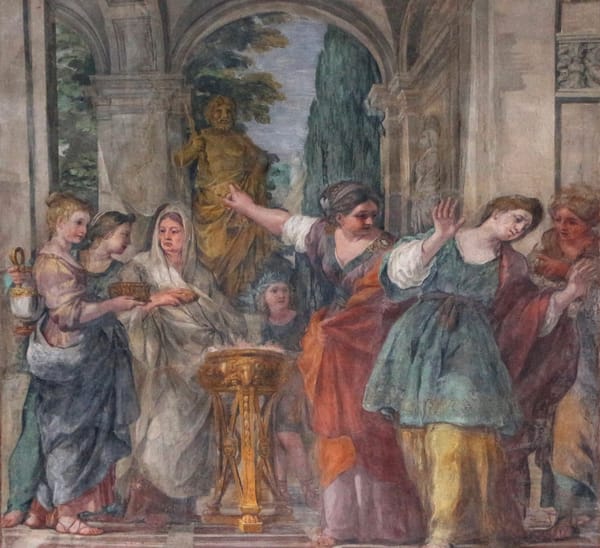
December 2: Saint Bibiana, Virgin and Martyr

Of the saints whose feasts are kept during Advent, five are virgins. The first, St. Bibiana, whom we honour to-day, is a daughter of Rome; the second, St. Barbara, is the glory of the eastern Churches; the third, St. Eulalia of Merida, is one of Spain’s richest treasures; the fourth, St. Lucy, belongs to beautiful Sicily; the fifth, St. Odilia, is claimed by France. These five wise virgins lighted their lamps and watched, waiting for the coming of the Spouse. Such was their constancy and fidelity, that four of them shed their blood for the love of Him, after whom they longed. Let us take courage by this noble example; and since we have not, as the apostle expresses it, as yet resisted unto blood, let us not think it hard if we suffer fatigue and trouble in the holy exercises of this penitential season of Advent: He, for whom we do them all, will soon be with us and repay us. To-day, it is the chaste and courageous Bibiana, who instructs us by her glorious example.

Bibiana, virgo Romana, nobili genere nata, Christiana fide nobilior fuit. Ejus enim pater Flavianus sub Juliano apostata impiissimo tyranno expræfectus, servilibusque notis compunctus, ad Aquas Taurinas deportatus, martyr occubuit. Mater Dafrosa, et filiæ primum conclusæ domi, ut inedia conficerentur; mox relegata mater extra urbem capite plexa est. Mortuis autem piis parentibus, Bibiana cum sorore sua Demetria bonis omnibus spoliatur. Apronianus, urbis prætor, pecuniis inhians, sorores persequitur, quas humana prorsus ope destitutas, Deo mirabiliter, qui dat escam esurientibus, enutriente, quum vivaciores vegetioresque conspexisset, vehementer est admiratus.
Bibiana was a Roman virgin, noble by birth, but more noble by her profession of the Christian faith. For under the most wicked tyrant Julian the apostate, Flavian, her father, was deprived of his dignity of prefect, and being branded with the mark of slavery, he was banished to Aquae Taurinae, and there died a martyr. Her mother, Dafrosa, was first shut up in her own house with her daughters, that she might die by starvation; but shortly afterwards was banished from Rome and beheaded. The virtuous parents thus put to death, Bibiana was deprived of all her possessions, as also was her sister, Demetria. Apronianus, the city prætor, thirsting after their wealth, persecutes the two sisters. They are bereaved of every human help. But God, who gives food to them that are in hunger, wonderfully nourishes them; and the prætor is exceedingly astonished on finding them in better health and strength than before.
Suadet nihilominus Apronianus, ut venerentur deos Gentium; amissas ideo opes, imperatoris gratiam, præclarissimas nuptias consecuturae. Si secus fecerint, minatur carceres, virgas, secures. At illæ neque blanditiis neque minis a recta fide declinantes, paratæ potius mori, quam fœdari moribus ethnicorum, prætoris impietatem constantissime detestantur. Quare Demetria ob oculos Bibianæ repente corruens, obdormivit in Domino: et Bibiana Rufinæ mulieri vaferrimae seducenda traditur: quæ ab incunabulis edocta Christianas leges, et illibatum servare virginitatis florem, seipsa fortior, feminæ superavit insidias, et prætoris astus delusit.
Apronianus, notwithstanding, endeavours to induce them to venerate the gods of the Gentiles. If they consent, he promises them the recovery of all their wealth, the emperor’s favour, and marriage to the noblest in the empire: but should they refuse, he threatens them with prison and scourgings, and the sword. But neither promises nor threats can make them abandon the true faith; they would rather die than be defiled by the idolatrous practices of paganism; and they resolutely resist the impious prætor. Whereupon, Demetria was struck down in the presence of Bibiana, and slept in the Lord. Bibiana was delivered over to a woman by name Rufina, who was most skilled in the art of seduction. But the virgin, taught from her infancy to observe the Christian law, and to preserve with the utmost jealousy the flower of her virginity, rose above nature, defeated all the artifices of the wretched Rufina, and foiled the craft of the prætor.
Nihil autem proficiente Rufina, quæ praeter dolosa verba, illam quotidie verberibus affligebat, ut de sancto proposito dimoveret, spe sua frustratus prætor, accensus ira, quod in Bibiana perdidisset operam, a lictoribus eam denudari, vinctisque manibus columnæ alligari, eamque plumbatis cædi jubet donec efflaret animam. Cujus sacrum corpus objectum canibus biduo jacuit in foro Tauri, illaesum tamen, et divinitus servatum: quod deinde Joannes presbyter sepelivit noctu juxta sepulchrum sororis et matris ad palatium Licinianum, ubi usque in præsens extat ecclesia Deo, sanctæ Bibianæ nomine dicata; quam Urbanus octavus instauravit, sanctarum Bibianæ, Demetriæ et Dafrosæ corporibus in ea repertis, et sub ara maxima collocatis.
Finding, therefore, that Rufina could in no wise shake the virgin’s holy resolution, and that both her wicked words and frequent blows were of no avail; and seeing his hopes disappointed and his labour thrown away; the prætor became violently enraged, and ordered Bibiana to be stripped by the lictors, to be fastened to a pillar with her hands bound, and to be beaten to death with leaded whips. Her sacred body was left for two days in the Bull-Forum, as food for dogs; but received no injury, being divinely preserved. A priest called John then buried it during the night, close to the grave of her sister and mother, near the palace of Licinius, where there stands at this day a church consecrated to God under the title of St. Bibiana. Urban VIII. restored this church, having there discovered the bodies of saints Bibiana, Demetria, and Dafrosa, which he placed under the high altar.

Holy Bibiana, most wise virgin! thou hast gone through the long unbroken watch of this life; and when, suddenly, the Spouse came, thy lamp was bright and richly fed with oil. Now thou art dwelling in the abode of the eternal marriage-feast, where the Beloved feeds among the lilies. Remember us who are still living in the expectation of that same divine Spouse, whose eternal embrace is secured to thee for ever. We are awaiting the birth of the Saviour of the world, which is to be the end of sin and the beginning of justice; we are awaiting the coming of this Saviour into our souls, that He may give them life and union with Himself by love; we are awaiting our Judge, the Judge of the living and the dead. Most wise virgin! intercede for us, by thy fervent prayers, with this our Saviour, our Spouse, and our Judge; pray that each of these three visits may work and perfect in us that divine union, for which we have all been created. Pray also, O faithful virgin, for the Church on earth, which gave thee to the Church in heaven, and which so devoutly watches over thy precious remains. Obtain for her that strict fidelity, which will ever render her worthy of Him, who is her Spouse as He is thine. Though He has enriched her with the most magnificent gifts, and given her confidence by His promises which cannot fail, yet does He wish her to ask, and us to ask for her, the graces which will lead her to the glorious destiny which awaits her.

We will to-day consider the state of nature at this season of the year. The earth is stripped of her wonted verdure, the flowers are gone, the fruits are fallen, the leaves are torn from the trees and scattered by the wind, and every living thing stiffens with the cold. It seems as though the hand of death had touched creation. We see the sun rise after the long night of his absence; and scarcely have we felt his warmth at noon, than he sets again, and leaves us in the chilly darkness. Each day he shortens his visit. Is the world to become sunless, and are men to live out the rest of life in gloom? The old pagans, who witnessed this struggle between light and darkness, and feared the sun was going to leave them, dedicated the twenty-fifth day of December, the winter solstice, to the worship of the sun. After this day their hopes revived on seeing the glorious luminary again mounting up in the sky, and gradually regaining his triumphant position.

We Christians can have no such feelings as these; our light is the true faith, which tells us that there is a Sun to be sought for which never sets, and is never eclipsed. Having Him, we care little for the absence of any other brightness; nay, all other light, without Him, can only lead us astray. O Jesus! Thou true light, that enlightenest every man coming into this world! Thou didst choose, for Thy birth among us, a time of the year which forces us to reflect upon the miserable state of the world when Thou didst come to save it. ‘The evening was coming on, and the day was far spent,’ says St. Bernard: ‘the Sun of justice had all but set, so that exceeding scanty was His light or warmth on earth: for the light of divine knowledge was very faint, and, sin abounding, the heat of charity had grown cold. There was neither angel to visit men, nor prophet to speak to them; both seemed in despair, for the hardness and obstinacy of man had made every effort useless: then I said —they are the words of our Redeemer—then I said, lo! I come!’* O Jesus! O Sun of justice! give us a clear knowledge of what the world is without Thee; what our understanding is without Thy light; and what our heart, without Thy divine heat. Open Thou the eyes of our faith; that whilst seeing with the eyes of the body the gradual decrease of the material light, we may think of that other darkness, which is in the soul that has not Thee. Then, indeed, will the cry which comes from the depths of our misery make its way to Thee, and Thou wilt come on the day Thou hast fixed, dispelling every shadow of darkness by Thy irresistible brightness.

Prayer for the Time of Advent

(The Mozarabic breviary, Wednesday of the second week of Advent, Capitula)

Domine, Jesu Christe, qui assumpto homine, hominum susceptor effectus, in lucem gentium datus es; aperi oculos cordium in te credentium populorum, atque abstrahe misericors de conclusione religatos adhuc vinculis diffidentiæ: et quos in domo carceris detineri conspicis in tenebris ignorantiæ, tuæ, quæsumus, scientiæ irradies splendore.
O Lord Jesus Christ, who having assumed human nature, and becoming the Saviour of the human race, wast given as a light to the nations; open the eyes of the hearts of them that believe in thee, and mercifully set free from their prison them that are bound in the fetters of unbelief; and whom thou seest captives in prison in the darkness of ignorance, enlighten them, we beseech thee, by the splendour of the knowledge of thee.

* First Sermon of Advent. ↩︎


Friday of the First Week of Advent

Regem venturum Dominum, venite, adoremus.De Isaia Propheta.
Cap. vi.
In anno, quo mortuus est rex Ozias, vidi Dominum sedentem super solium excelsum et elevatum: et ea quæ sub ipso erant, replebant templum. Seraphim stabant super illud: sex alæ uni, et sex alæ alteri: duabus velabant faciem ejus, et duabus velabant pedes ejus, et duabus volabant. Et clamabant alter ad alterum, et dicebant: Sanctus, sanctus, sanctus Dominus Deus exercituum: plena est omnis terra gloria ejus.
Come, let us adore the King our Lord, who is to come.From the Prophet Isaias.
Ch. vi.
In the year that king Ozias died, I saw the Lord sitting upon a throne high and elevated: and his train filled the temple. Upon it stood the Seraphim: the one had six wings, and the other had six wings: with two they covered his face, and with two they covered his feet, and with two they flew. And they cried one to another and said: Holy, holy, holy the Lord God of hosts: all the earth is full of his glory.

Such is the glory of the Lord in the highest heavens: who could see it and live? But now, contemplate this same Lord upon our earth, during the days which have dawned upon us. The womb of a Virgin contains Him, whom heaven cannot contain. To angels His beauty is visible, but it dazzles them not; to men, it is not even visible. Not a single voice is heard saying unto Him those words of heaven: Holy, holy, holy is the Lord God of hosts! The angels no longer say of Him: All the earth is full of His glory; for the earth is witness of His abasement, and an abasement so abject and low, that the inhabitants of the earth do not even know it. At first, there was but one who knew the divine secret: the Virgin Mother; after her, Elizabeth was admitted to know that her cousin was Mother of God; and then, after the most painful and humiliating suspicions, the great mystery was revealed by an angel to Joseph. So that only three on earth know that God has come down upon it! Thus humbly did He re-enter the world, after the sin of pride had driven Him out of it. O God of the ancient Covenant, how great Thou art! and who would not tremble before Thee? O God of the new Covenant, how little Thou hast made Thyself! who would not love Thee? Heal my pride, the source of all my sins! teach me to value what Thou didst so much value. By Thy Incarnation Thou dost a second time create the world; and in this second creation, more excellent than the first, Thou workest by silence, and Thy triumph is won by self-annihilation. I wish to humble myself after Thine example, and to profit by the lessons which a God came down so low to give me. Lay low all that is high and lifted up within me, O my Jesus, for this is one of the ends of Thy coming. I abandon myself to Thee as to my sovereign Master! do with me and in me what Thou wilt.

Hymn taken from the Anthology of the Greeks

(December 23)

Antefestalia cantica Christi nativitatis mentis alacritate præcanamus; ham qui Patri et Spiritui est æqualis, per misericordiam commiserans, massam indutus luti nasci debet in Bethlehem civitate; cujus nativitatem ineffabilem pastotes eum angelis hymnificabunt.
In cymbalis resonemus, in canticis alalagmum personemus. Christi manifestatur ostensio, prophetarum finem habuerunt præconia; quem enim inter mortales dixerunt appariturum nascitur in sancta spelunca, et in præsepio reclinatur ut infans.
Bethlehem præparare; Eden, aperire; omnis terra Juda, nunc adornare, lætentur cœli, exsultent homines: in præsepio vita, in spelunca dives, advenit per misericordiæ multitudinem paupertatem Adam restaurare, absque mutatione vel confusione.
Ad te de luce vigilo, qui per misericordiam teipsum pro homine lapso exinanisti sine mutatione, et servi formam ex Virgine tulisti, Verbum Dei, pacem da mihi, Philanthrope.
Stillent ex alto aquam nebulæ: qui nubes posuit descendit ipse adorandus in nebula Virgine, ut luceat ab eo lumen inocciduum his qui antea in tenebris periculisque erant.
O dulcissimum Puerum, quomodo nutriam te? Quomodo te apprehendam, qui omnia nutu tuo tenes? Quomodo te fasciis involvam, qui omnem terram involvis nebula? clamabat sancta Domina.
Sol, fili mi, quomodo recondam te fasciis? Quomodo retinebo te aui omnia contines? Quomodo te sine metu intueri potero, quem non audent contemplari qui multos habent oculos? aiebat Christum tenens nuptinescia.
Bethlehem, adesdum, praepara quæ ad partum pertinent. I, Joseph, inscribere cum Maria; venerandum præsepium, Deiferæ fasciæ; ubi Vita involuta mortis funes disrumpet, alligans immortalitati mortales, Christus Deus noster.
Let us sing, in gladness of heart, the canticles of the pre-vigil of the birth of Christ; for he, who is coequal with the Father and the Spirit, having, in his great compassion for our miseries, clothed himself with the leaven of our clay, is to be born in the city of Bethlehem; and shepherds with angels will hymn his ineffable birth.
Let us play loud on our cymbals, let us shout our songs of victory; Christ is to appear visibly; the predictions of the prophets are fulfilled; he, who they foretold would appear amongst mortals, is to be born in a holy cave, and to lie in a crib a little child.
Get thee ready, O Bethlehem! Eden, open thy gates! Land of Juda, put on thy best! Let the heavens be glad, let men exult! To enrich the poverty of Adam by the abundance of his mercy, Life is in that crib, the rich One is in that cave, yet the divine Nature suffers no change or confusion.
From the dawn of day I watch for thee, who, in mercy for fallen man, didst empty thyself, yet still remaining God, and didst take from a Virgin the form of a servant, O thou Word of God, O Lover of men! I beseech thee, give me peace.
Let the clouds drop down dew from on high. He who puts the clouds in the air, he the adorable God, has descended in a cloud, and that cloud is the Virgin: he has done this, that light everlasting may shine from him on those who heretofore were in darkness and peril.
O most sweet Child, how shall I feed thee? said the blessed Lady. How shall I take thee into my arms, thou that holdest all things in thy power? How shall I wrap thee in swathing bands, that coverest the whole earth with clouds?
My Babe, said the Virgin Mother of Christ, how shall I hide thee, bright Sun, in swaddling clothes? How shall I so imprison thee that holdest all things? Shall I be able to fix my gaze on thee, whom the many-eyed spirits dare not look upon?
Get ready, then, O Bethlehem, all that is needed for the birth. And thou, Joseph, go and be enrolled with Mary. O crib ever venerable! O ye bands that swathe our God, holding in your folds the Life that breaks the bands of death, and ties us mortals to immortality, Christ Jesus our God.

Prayer from the Mozarabic Missal
(In the Mass of the fifth Sunday of Advent)

In proximo quidem est, Domine, dies adventus tui: sed quæsumus ut, antequam venias, expiari mereamur ab omni contagione delicti. Prius dilue, rogamus, in nobis omne quod in illa futura examinatione puniturus es; ut cum justus adveneris judex, non in nobis invenias quod condemnes.
The day of thy coming, O Lord, is near, indeed, at hand; but before thou comest we beseech thee make us worthy to be purified from every contagion of sin. First remove from us, we entreat thee, whatsoever there is in us which thou wouldst have to punish in that future examination; that so, when thou comest as our just Judge, thou mayst find nought in us to condemn.
Previous
Thursday of the First Week of Advent
Next
Friday of the First Week of Advent