Daily reading
Advent
Double · Movable from Advent · Temporal
December 4, 2022
From Dom Guéranger’s The Liturgical Year.

|
The Second Sunday of Advent
The Office of this Sunday is filled, from beginning to end, with the sentiments of hope and joy, with which the soul should be animated at the glad tidings of the speedy coming of Him who is her Saviour and Spouse. The interior coming, that which is effected in the soul, is the almost exclusive object of the Church’s prayers for this day: let us therefore open our hearts, let us prepare our lamps, and await in gladness that cry, which will be heard in the midnight: 'Glory be to God! Peace unto men!'
The Roman Church makes the Station to-day in the basilica of Holy-Cross-in-Jerusalem. It was in this venerable church that Constantine deposited a large piece of the true cross, together with the title which was fastened to it by Pilate’s order, and which proclaimed the kingly character of the Saviour of the world. These precious relics are still kept there; and, thus enriched with such a treasure, the basilica of Holy-Cross-in-Jerusalem is looked upon, in the Roman liturgy, as Jerusalem itself, as is evident from the allusions made in the several Masses of the Stations held in that basilica. In the language of the sacred Scriptures and of the Church, Jerusalem is the image of the faithful soul; and the Office and Mass of this Sunday have been drawn up on this idea, as the one of the day. We regret not to be able here to develop the sublime beauty of this figure; and must proceed at once to the passage, which the Church has selected from the prophet Isaias. There she tells her children how well founded are her hopes in the merciful and peaceful reign of the Messias. But first let us adore this divine Messias:
Cap. xiEt egredietur virga de radice Jesse, et flos de radice ejus ascendet. Et requiescet super eum Spiritus Domini, Spiritus sapientiæ et intellectus, Spiritus consilii et fortitudinis, Spiritus scientiæ et pietatis: et replebit eum Spiritus timoris Domini. Non secundum visionem oculorum judicabit, neque secundum auditum aurium arguet: sed judicabit in justitia pauperes, et arguet in æquitate pro mansuetis terræ. Et percutiet terram virga oris sui, et spiritu labiorum suorum interficiet impium. Et erit justitia cingulum lumborum ejus, et fides cinctorium renum ejus. Habitabit lupus cum agno, et pardus cum hœdo accubabit: vitulus et leo et ovis simul morabuntur, et puer parvulus minabit eos. Vitulus et ursus pascentur: simul requiescent catuli eorum: et leo quasi bos comedet paleas. Et delectabitur infans ab ubere super foramine aspidis: et in caverna reguli, qui ablactatus fuerit, manum suam mittet. Non nocebunt, et non occident in universo monte sancto meo: quia repleta est terra scientia Domini, sicut aquæ maris operientes. In die illa radix Jesse, qui stat in signum populorum, ipsum Gentes deprecabuntur, et erit sopulchrum ejus gloriosum.
Ch. xi.And there shall come forth a branch out of the rod of Jesse, and a flower shall rise up out of his root. And the Spirit of the Lord shall rest upon him, the Spirit of wisdom and of understanding, the Spirit of counsel and of fortitude, the Spirit of knowledge and of godliness: and he shall be filled with the Spirit of the fear of the Lord. He shall not judge according to the sight of the eyes, nor reprove according to the hearing of the ears: but he shall judge the poor with justice, and shall reprove with equity for the meek of the earth. And he shall strike the earth with the rod of his mouth, and with the breath of his lips he shall slay the wicked. And justice shall be the girdle of his loins, and faith the girdle of his reins. The wolf shall dwell with the lamb, and the leopard shall lie down with the kid: the calf and the lion and the sheep shall abide together, and a little child shall lead them. The calf and the bear shall feed: their young ones shall rest together: and the lion shall eat straw like an ox. And the suckling child shall play on the hole of the asp: and the weaned child shall thrust his hand into the den of the basilisk. They shall not hurt, nor shall they kill in all my holy mountain: for the earth is filled with the knowledge of the Lord, as the covering waters of the sea. In that day the root of Jesse, who standeth for an ensign of people, him the Gentiles shall beseech, and his sepulchre shall be glorious.
How much is contained in these magnificent words of the prophet! The branch; the flower that is to come from it; the Spirit which rests on this flower; the seven gifts of this Spirit; peace and confidence established on the earth; and, throughout the world, one brotherhood in the kingdom of the Messias! St. Jerome, whose words are read by the Church in the lessons of the second nocturn of this Sunday, says that the branch which cometh forth from the root of Jesse, is the blessed Virgin Mary, who had contact with no shrub or plant; and that the flower is the Lord Jesus, who says in the Canticle of canticles: 'I am the flower of the field, and the lily of the valley.’ In every age of the Christian Church, this wonderful branch and its divine flower have been objects of enthusiastic veneration. In the middle ages the tree of Jesse, with its prophetic branches, was carved on the cathedral porches, was painted on the windows, was embroidered on the hangings of the sanctuary, and the melodious voice of the priests sang its praises in the beautiful responsory composed by Fulbert of Chartres, and put to music by the devout king Robert.
The devout St. Bernard, commenting upon this responsory in his second Advent homily, says; 'The Virgin’s Son is the flower, a flower white and ruddy, chosen out of thousands; a flower on whom the angels love to look; a flower whose fragrance restores the dead; a flower, as himself assures us, of the field, not of a garden: for the flowers of the field bloom without man’s care, no man has sown their seed, no man has cultivated them. Just so the Virgin’s womb, a meadow verdant in an endless spring, has brought forth a flower, whose beauty will never droop, whose freshness will never fade. O Virgin, branch sublime, to what a height art thou grown! Even up to Him that sitteth on the throne, even to the Lord of majesty. It was sure to be so, for thou castest deep down the roots of humility. O plant of heaven indeed! precious above all, holier than all. O tree of life indeed! alone worthy to bear the fruit of salvation.’
And of the holy Spirit and His gifts, what shall we say? They rest and are poured out on the Messias only to the end that they may flow from Him upon us; He needs them not; but we alone need wisdom and understanding, counsel and fortitude, knowledge and godliness, and fear of the Lord. Let us ask with instance for this divine Spirit, by whose operation Jesus was conceived and born in Mary’s womb, and let us beg of Him to form Jesus within our hearts. But let us not forget to rejoice at those other glorious things which are told us by the prophet, of the happiness, and peace, and delights, which are to be on the holy mountain. The world has been looking so many ages for peace; it is now coming. Sin had caused enmity and division everywhere; grace will bring unity. A little Child will be the pledge of an alliance between all nations. The prophets have foretold it, the sibyl has announced it, and in Rome itself, buried as it is in paganism, the prince of Latin poets has sung the celebrated poem, which, after all, is but the voice of the old tradition: 'The last age foretold by the Cumean Sibyl, is at hand; a new race is being sent down to earth from high heaven. The flock shall no more fear the fierce lions. The serpent shall be no more: the treacherous plant, which yielded poison, shall grow no more.’*
Come then, O Messias, and restore to the world its primitive peace; but remember, we beseech Thee, that it is in the heart of man that harmony has been broken more than elsewhere in Thy creation: cure this heart, enter into possession of this Jerusalem, which Thou lovest, though so unworthy: she has been too long captive in Babylon; lead her out of this strange land. Build up her temple again, and make the glory of this second temple to be greater than that of the first, by having Thee to dwell in it, not in figure, but in the reality of Thy adorable Person. The angel said to Mary: 'The Lord God shall give unto thy Son the throne of David His father; and He shall reign in the house of Jacob for ever; and of His kingdom there shall be no end.’ What can we do, O Jesus, but say with Thy beloved disciple, at the close of his prophecy: 'Amen. Come, Lord Jesus!’
The Mass
The holy sacrifice commences with a song of triumph, addressed to Jerusalem. This song expresses the joy which will fill the heart of man, when he shall hear the voice of his God. It extols the goodness of that divine Shepherd, who looks on each of our souls as a sheep most dear to Him, so dear, indeed, that He will feed it with His own flesh.
The Introit
While the priest is approaching the altar, there to offer up the holy sacrifice, the Church opens her chants by this beautiful one, which so well expresses her confidence as the beloved bride of Jesus. Let us repeat it together with her, and let the heart be in harmony with our voice, for the Saviour comes to each of us in proportion to the earnestness of our longing for Him.
Collect
In the Collect, the priest lays stress on the great preparation we must make for the coming of our Saviour; we must have purity of heart.
The other Collects of the blessed Virgin, against the persecutors of the Church, and for the Pope, are the same as on the first Sunday in Advent, page 128.
Epistle
Cap. xv.Fratres, quæcumque scripta sunt, ad nostram doctrinam scripta sunt: ut per patientiam et consolationem Scripturarum, spem habeamus. Deus autem patientiæ et solatii det vobis idipsum sapere in alterutrum secundum Jesum Christum: ut unanimes uno ore honorificetis Deum, et Patrem Domini nostri Jesu Christi. Propter quod suscipite invicem, sicut et Christus suscepit vos in honorem Dei. Dico enim Christum Jesum ministrum fuisse circumcisionis propter veritatem Dei, ad confirmandas promissiones patrum. Gentes autem super misericordiam honorare Deum, sicut scriptum est: Propterea confitebor tibi in Gentibus Domine, et nomini tuo cantabo. Et iterum dicit: Lætamini Gentes cum plebe ejus. Et iterum: Laudate omnes Gentes Dominum: et magnificate eum omnes populi. Et rursum Isaias ait: Erit radix Jesse; et qui exsurget regere Gentes, in eum Gentes sperabunt. Deus autem spei repleat vos omni gaudio, et pace in credendo: ut abundetis in spe, et virtute Spiritus sancti.
Ch. xv.Brethren, what things soever were written, were written for our learning: that through patience and the comfort of the Scriptures, we might have hope. Now the God of patience and of comfort grant you to be of one mind one towards another, according to Jesus Christ: that with one mind and with one mouth you may glorify God and the Father of our Lord Jesus Christ. Wherefore receive one another as Christ also hath received you unto the honour of God. For I say that Christ Jesus was minister of the circumcision for the truth of God, to confirm the promises made unto the fathers. But that the Gentiles are to glorify God for his mercy, as it is written: Therefore will I confess to thee, O Lord, among the Gentiles, and will sing to thy name. And again he saith: Rejoice ye Gentiles with his people. And again: Praise the Lord all ye Gentiles, and magnify him all ye people. And again Isaias saith: There shall be a root of Jesse, and he that shall rise up to rule the Gentiles, in him the Gentiles shall hope. Now the God of hope fill you with all joy and peace in believing: that you may abound in hope, and in the power of the Holy Ghost.
Here, Christians, is your instruction; be patient, be firm in hope, and you shall delight in the God of peace who is coming to you. But take heed, you must have cordial charity one for the other; it is the mark of the children of God. The prophet tells us that the Messias will make even wolf and lamb dwell together; and now we have the apostle showing us how this same Christ brings Jews and Gentiles into the one same family. Glory to this sovereign King, the powerful offspring of the root of Jesse, who now bids us hope in Him! Listen to the Church, she again tells us that He is about to show Himself in Jerusalem.
Gradual
Gospel
Cap. xi.In illo tempore: Cum audisset Joannes in vinculis opera Christi, mittens duos de discipulis suis, ait illi: Tu es, qui venturus es, an alium exspectamus? Et respondens Jesus ait illis: Euntes renuntiate Joanni quæ audistis, et vidistis. Cæci vident, claudi ambulant, leprosi mundantur, surdi audiunt, mortui resurgunt, pauperes evangelizantur: et beatus est, qui non fuerit scandalizatus in me. Illis autem abeuntibus, cœpit Jesus dicere ad turbas de Joanne: Quid existis in desertum videre? Arundinem vento agitatam? Sed quid existis videre? Hominem mollibus vestitum? Ecce qui mollibus vestiuntur, in domibus regum sunt. Sed quid existis videre? prophetam? Etiam dico vobis, et plus quam prophetam. Hic est enim de quo scriptum est: Ecce ego mitto angelum meum ante faciem tuam, qui præparabit viam tuam ante te.
Ch. xi.At that time: When John had heard in prison the works of Christ, sending two of his disciples, he said to him: Art thou he that art to come, or look we for another? And Jesus making answer, said to them: Go and relate to John what you have heard and seen. The blind see, the lame walk, the lepers are cleansed, the deaf hear, the dead rise again, the poor have the Gospel preached to them s and blessed is he that shall not be scandalized in me. And when they went their way, Jesus began to Bay to the multitude, concerning John: What went you out into the desert to see? A reed shaken with the wind? But what went you out to see? A man clothed in soft garments? Behold they that are clothed in soft garments are in the houses of kings. But what went you out to see? A prophet? Yea, I tell you, and more than a prophet. For this is he of whom it is written: Behold, I send my angel before thy face, who shall prepare thy way before thee.
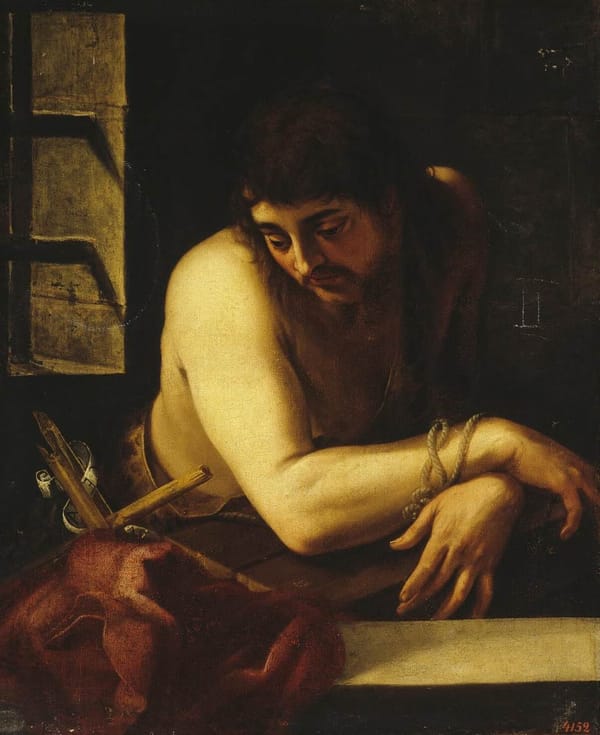
Thou art He that was to come, O Jesus! We look for no other. We were blind, Thou hast enlightened us; we were lame, Thou hast made us walk; the leprosy of sin disfigured us, Thou hast cleansed us; we were deaf to Thy words, Thou hast given us hearing; we were dead in sin, Thou hast given us life again; we were poor and had none to care for us, Thou hast come to us with every aid and consolation. These have been, and will again be, the blessings of Thy visit to our souls, O Jesus! A visit, silent but wonderful in its work; which flesh and blood cannot understand, but which faithful hearts feel is granted them. Come, my Saviour, come to me, Thy condescension, and familiarity with such poverty as mine, shall not scandalize me; Thy workings in the souls of men are proof enough that Thou art God. He alone, that created souls, can heal them.
After the symbol of faith has been chanted, when you see the priest is about to make the offering of the bread and wine, unite with the Church in asking to be filled with life by the divine Guest, who is so soon to be with her.
Offertory
During the offering of the bread and wine, the Church, with her look steadfastly fixed on Him who is to come, keeps to her sweet canticle:
Secret
The other Secrets of the blessed Virgin, against the persecutors of the Church, and for the Pope, are the same as on the first Sunday in Advent, page 132.
Communion
After the Communion of the priest and people, the choir sings these beautiful words of David in praise of the sweetness of the divine Fruit, whom our earth is going to bring forth, and who has just given Himself, by anticipation, to His faithful servants. This earth, which is ours, and which, as the prophet Isaias says, opens and buds forth the Saviour, is the blessed Virgin Mary made fruitful by the dew of heaven.
Postcommunion
In the following prayer the Church explains in what consists that high standing to which she has just invited Jerusalem: love of the things of heaven whence comes her Saviour, and contempt of earthly things which, when loved, separate man from God.
The other Postcommunions of the blessed Virgin, against the persecutors of the Church, and for the Pope, are the same as on the first Sunday in Advent, page 134.
Vespers
5. Ant. Ecce Dominus noster cum virtute veniet, et illuminabit oculos servorum suorum, alleluia.
5. Ant. Behold our Lord will come with power, and will enlighten the eyes of his servants, alleluia.
Chapter
Rom. xv. 4.
The hymn, Creator alme siderum, the verse Rorate and the canticle Magnificat, are given on pages 107 and 109.
Antiphon of the Magnificat
Collect
* Ultima Cumæi venit jam carminis ætas ....
Jam nova progenies cœlo demittitur alto ....
.... Nec magnos metuent armenta leones ....
Occidet et serpens, et fallax herba veneni
Occidet.... (Virgil. Elog. iv.) ↩︎
December 4: Saint Peter Chrysologus, Bishop and Doctor of the Church
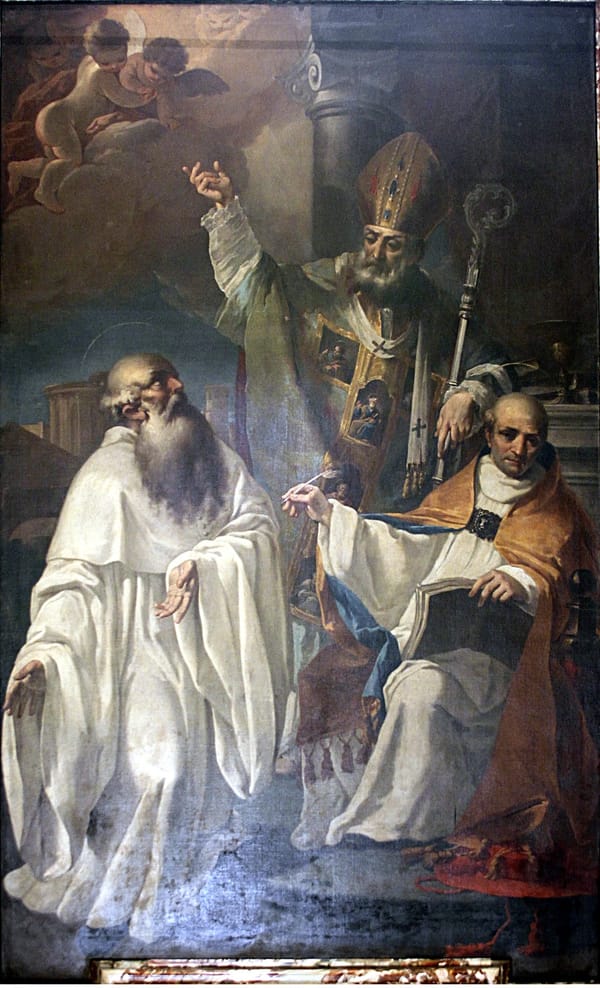 |
The same divine Providence, which would not that the Church should be deprived of the consolation of keeping, during Advent, the feast of some of the apostles, who announced to the Gentiles the coming of the Messias, has also willed that the holy doctors, who defended the true faith against heretics, should be represented in this important season of the Catholic year. Two of them, Saint Ambrose and Saint Peter Chrysologus, shine as two brilliant stars in the firmament of the Church during Advent. It is worthy of note, that both of them were the zealous avengers of that Son of God whom we are preparing to receive. The first was the valiant opponent of the Arians, whose impious doctrine taught that Jesus, the object of our hopes, is merely a creature and not God; the second was the adversary of Eutyches, whose sacrilegious system robs the Incarnation of the Son of God of all its glory, by asserting that, in this mystery, the human nature was absorbed by the Divinity.
It is this second doctor, the holy bishop of Ravenna, that we are to honour to-day. His pastoral eloquence gained for him a great reputation, and a great number of his sermons have been handed down to us. In almost every page we find passages of the most exquisite beauty, though we also occasionally meet with indications of the decay of literature, which began in the fifth century. The mystery of the Incarnation is a frequent subject of the saint’s sermons, and he always speaks upon it with a precision and enthusiasm, which show his learning and piety. His veneration and love towards Mary, the Mother of God, who, in that very age, had triumphed over her enemies by the decree of the Council of Ephesus, inspire him with thoughts and language which are extremely fine. Let us take a passage from the sermon on the Annunciation. ‘God sends to the Virgin an angelic messenger, who, whilst he brings graces, gives her the entrusted pledge, and receives hers. Then does Gabriel return with Mary’s plighted troth. But, before ascending to heaven, there to tell the consent promised him by the Virgin, he delivers to her the gifts due to her virtues. Swiftly does this ambassador fly to the bride, that he may assert God’s claim to her as His own. Gabriel takes her not from Joseph, but he restores her to Christ, to whom she was espoused when she was first formed in the womb.1 Christ, therefore, did but take His own, when He thus made Mary His bride. It is not a separation that He thus produces, but a union with Himself of His own creature by becoming Incarnate in her womb.
‘But let us hearken to the angel’s words. Being come in, he said unto her: Hail, full of grace! the Lord is with thee! These words are not a mere salutation; they convey the heavenly gift. Hail! that is, Take, O Mary, the grace I bring thee; fear not; this is not the work of nature. Full of grace! that is, thou art not in grace as others are; thou art to be filled with it. The Lord is with thee! What means this, but that He is coming to thee not merely to visit thee, but to enter within thee by the new mystery of becoming thy Child? Blessed art thou among women. How fittingly does he add these words! They imply, that they who heretofore were mothers with the curse of Eve upon them, now have the blessed Mary as their joy, and honour, and type: and whereas Eve was by nature the mother of children of death, Mary is by grace the mother of children of life.’2
In the following passage from another sermon, the holy doctor teaches us with what profound veneration we ought to contemplate Mary during these days when God is still residing in her womb. ‘What reverence and awe are shown to that inner chamber of a king, where he sits in all the majesty of his power! Therein no man may enter that is a stranger, or unclean, or unfaithful. The usages of courts require, that when men come to pay their homage, everything must be the best, and fairest, and most loyal. Who would go to the palace-gate in rags? Who would go, that knew he was odious to the prince? So it is with the sanctuary of the divine Spouse. No one is permitted to come nigh, but he that is of God’s family, and is intimate, and has a good conscience, and has a fair name, and leads a holy life. Within the holy place itself God receives but the Virgin, and spotless virginity. Hence learn, O man, to examine thyself: who thou art, and what thou art, and what merits thou hast. Ask thyself, after this, if thou mayst dare to penetrate into the mystery of the birth of thy Lord, or canst be worthy to approach that living sanctuary, wherein reposes the whole majesty of thy King, and thy God.’3 Let us now listen to our holy mother the Church, who thus speaks of our saint:
Holy pontiff, who didst open thy lips and pour out on the assembly of the faithful, in the streams of thy golden eloquence, the knowledge of Jesus, cast an eye of compassion on the Christians throughout the world, who are watching in expectation of that same God-Man, whose two Natures thou didst so courageously confess. Obtain for us grace to receive Him with the sovereign respect which is due to a God who comes down to His creatures, and with the loving confidence which is due to a Brother who comes to offer Himself in sacrifice for His most unworthy brethren. Strengthen our faith, most holy doctor! for the love we stand in need of comes from faith. Destroy the heresies which lay waste the vineyard of our Father; and uproot that frightful pantheism, which is the form under which the heresy thou didst combat is still among us. May the numerous Churches of the East abjure that heresy of Eutyches which reigns so supreme amongst them, and gives them the knowledge of the ineffable mystery of the Incarnation only to blaspheme it. Pray that the children of the Church may show to the judgements of the apostolic See that perfect obedience, to which thou didst so eloquently urge the heresiarch Eutyches, in the epistle thou didst address to him, and which will ever be precious to the world: ‘We exhort thee above all things, most honoured brother, that thou receive with obedience whatsoever has been written by the most blessed Pope of the city of Rome: for, blessed Peter, who lives and presides in his own See, shows the truth of faith to all them that seek it.’ (Letter 25.)
December 4 (the Same Day): Saint Barbara, Virgin and Martyr
|
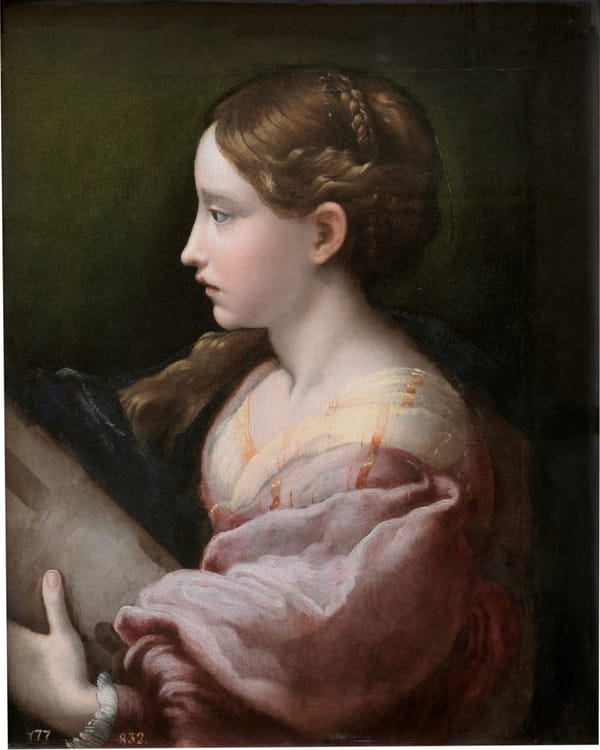
Although, in the Roman liturgy, St. Barbara is merely commemorated in the Office of St. Peter Chrysologus, yet the Church has approved an entire Office for the use of those Churches which honour the memory of this illustrious virgin in a special manner. The legend which follows, although of considerable weight, has not, consequently, the authority of those which are promulgated for the use of the whole Church, in the Roman breviary. Let us not, on this account, be less fervent in honouring this glorious martyr, so celebrated in the east, and whose feast has been for so many ages admitted, with more or less solemnity, into the Roman Church. The acts of her martyrdom, though not of the highest antiquity, contain nothing in them but what redounds to the glory of God and the honour of the saint. We have already shown the liturgical importance which attaches to St. Barbara in this season of Advent. Let us admire the constancy wherewith this virgin waited for her Lord, who came at the appointed hour, and was for her, as the Scripture speaks, a Spouse of blood, because He put the strength of her love of Him to the severest of all tests.
Such is the account of the life and martyrdom of the courageous virgin of Nicomedia. She is invoked in the Church against lightning, on account of the punishment inflicted by divine justice on her execrable father. This same incident of the saint’s history has suggested several Catholic customs: thus her name is sometimes given to the hold of men-of-war where the ammunition is stowed; she is the patroness of artillery men, miners, etc.; and she is invoked by the faithful against the danger of a sudden death.
Of the liturgical pieces, used in our western Churches in honour of St. Barbara, we will content ourselves with the following beautiful antiphon, composed in the days of chivalry.
Antiphon
The Greek Church is profuse in its praises of St. Barbara. We will take from the Menæa a few out of the many strophes which are sung in honour of the holy martyr:
Hymn of the Greek Church
To this the voice of so many Churches we join ours, O faithful virgin! and though we are unworthy, yet do we offer thee our praise and our prayers. Behold! our Lord cometh, and the darkness of the night is upon us; give to our lamp both the light which will guide us, and the oil which will keep in the light. Thou knowest that He who came for love of thee, and with whom thou art now united for all eternity, is coming to visit us too; pray for us that nothing may keep us from receiving Him. May we go towards Him courageously and swiftly as thou didst; and being once with Him, may we never be separated from Him again, for He is the centre where we creatures find our only rest. Pray also, O glorious martyr, that the faith in the blessed Trinity may be ever increasing in this world. May our enemy, satan, be confounded by every tongue confessing the threefold light, and the triumphant cross which sanctifies the waters of Baptism. Remember, O blessed Barbara, thou bride of Jesus, that He has put in thy gentle hands the power not of hurling, but of staying and averting, the thunderbolt. Protect our ships against the fires of heaven and of war. Shield by thy protection the arsenals where are placed the defences of our country. Hear the prayers of them that invoke thee, whether in the fierceness of the storm, or in the dark depths of the earth; and save us all from the awful chastisement of a sudden death.
Let us consider how the various nations on the face of the earth, though differing in customs, and speech, and interests, are all united in the expectation of a Deliverer soon to come. Neither the frightful corruption of morals, nor the long ages which have passed since the promises were given, have been able to efface the tradition, or the hope it inspired. At the very time when the world seems crumbling into dissolution, a strong symptom of vigour is evinced, and from one end of the earth to the other there is heard this cry: The King of the universe is soon to appear; a new empire, holy and everlasting, is to bring all peoples into one. It is thus, O Jesus! that Jacob prophesied on his dying bed, when he said, speaking of Thee: 'He shall be the expectation of nations.’* Men have, indeed, searched after, and found, the way to the lowest degradation; but they could not prevent the fulfilment of this prophecy: and by their expectation of a happier state of things, they themselves fulfil it; and by fulfilling it, are confessing that their misery has no remedy save Thyself. Come, then, O Son of God! and cherish this ray of hope of the ancient world, which renders Thee this its only homage, even whilst falling under the weight of its own wretchedness. The expectation of a Deliverer is the bond of union between the two great divisions of the human race, those who preceded and those who have lived since Thy Nativity. But if the pagan world, from the depth of its vices and errors, could sigh after Thee, O Jesus! what shall we not do, who have inherited what was promised, now that Thou art preparing to come and take possession of our souls? We already know Thee, for Thou hast initiated us into Thy mysteries; we cannot do less, dear Jesus! we are longing for Thee during these days of Advent. When the beautiful day of Thy visit comes, mayst Thou find that Thy love is already in our hearts. Make our expectation more fervid, increase our faith, and come!
A Responsory of Advent
(The Roman breviary, Matins of the first Sunday)
* Gen. xlix. 10. ↩︎
| Previous Saturday of the First Week of Advent | Next December 4: Saint Peter Chrysologus, Bishop and Doctor of the Church |