Daily reading
Advent
Double of the II Class · December 21 · Sanctoral
December 21, 2022
From Dom Guéranger’s The Liturgical Year.
A Double of the II Class leads the weekday.Rubric
December 21: Saint Thomas, Apostle
The Church announces to us, to-day, in her Office of Lauds, these solemn words:
This is the last feast the Church keeps before the great one of the Nativity of her Lord and Spouse. She interrupts the greater ferias in order to pay her tribute of honour to Thomas, the apostle of Christ, whose glorious martyrdom has consecrated this twenty-first day of December, and has procured for the Christian people a powerful patron, who will introduce them to the divine Babe of Bethlehem. To none of the apostles could this day have been so fittingly assigned as to St. Thomas. It was St. Thomas whom we needed; St. Thomas, whose festal patronage would aid us to believe and hope in that God whom we see not, and who comes to us in silence and humility in order to try our faith. St. Thomas was once guilty of doubting, when he ought to have believed, and learnt the necessity of faith only by the sad experience of incredulity: he comes then most appropriately to defend us, by the power of his example and prayers, against the temptations which proud human reason might excite within us. Let us pray to him with confidence. In that heaven of light and vision, where his repentance and love have placed him, he will intercede for us, and gain for us that docility of mind and heart, which will enable us to see and recognize Him, who is the Expected of nations, and who, though the King of the world, will give no other signs of His majesty, than the swaddling-clothes and tears of a Babe. But let us first read the acts of our holy apostle. The Church has deemed it prudent to give us them in an exceedingly abridged form, which contains only the most reliable facts, gathered from authentic sources; and thus she excludes all those details, which have no historic authority.
The Great Antiphon of St. Thomas
Prayer
The following prayer is from the Matins of the Gothic, or Mozarabic, breviary:
The Greek Church celebrates, with her usual solemnity, the feast of St. Thomas; but she keeps it on the sixth of October. We extract the following stanzas from her hymns.
Hymn of St. Thomas
(Taken from the Menæa of the Greeks)
O glorious apostle, Thomas! who didst lead to Christ so many unbelieving nations, hear now the prayers of the faithful, who beseech thee to lead them to that same Jesus, who, in five days, will have shown Himself to His Church. That we may merit to appear in His divine presence, we need, before all other graces, the light which leads to Him. That light is faith; then, pray that we may have faith. Heretofore, our Saviour had compassion on thy weakness, and deigned to remove from thee the doubt of Hishaving risen from the grave; pray to Him for us, that He will mercifully come to our assistance, and make Himself felt by our heart. We ask not, O holy apostle! to see Him with the eyes of our body, but with those of our faith; for He said to thee, when He showed Himself to thee: ‘Blessed are they who have not seen, and have believed!’ Of this happy number we desire to be. We beseech thee, therefore, pray that we may obtain the faith of the heart and will, that so, when we behold the divine Infant wrapped in swaddling-clothes and laid in a manger, we may cry out: ‘My Lord! and my God!’ Pray, O holy apostle, for the nations thou didst evangelize, but which have fallen back again into the shades of death. May the day soon come, when the Sun of justice will once more shine upon them. Bless the efforts of those apostolic men, who have devoted their labours and their very lives to the work of the missions; pray that the days of darkness may be shortened, and that the countries, which were watered by thy blood, may at length see that kingdom of God established amongst them, which thou didst preach to them, and for which we also are in waiting.
December 21 (the Same Day): Fifth Antiphon
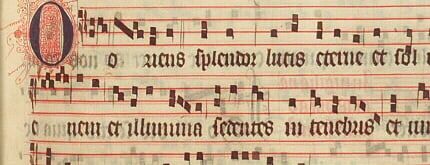
O Jesus, divine Sun! Thou art coming to snatch us from eternal night: blessed for ever be Thy infinite goodness! But Thou puttest our faith to the test, before showing Thyself in all Thy brightness. Thou hidest Thy rays, until the time decreed by Thy heavenly Father comes, in which all Thy beauty will break upon the world. Thou art traversing Judea; Thou art near Jerusalem; the journey of Mary and Joseph is nigh its term. Crowds of men pass or meet Thee on the road, each one hurrying to his native town, there to be enrolled, as the edict commands. Not one of all these suspects that Thou, O divine Orient! art so near him. They see Thy Mother Mary, and they see nothing in her above the rest of women; or if they are impressed by the majesty and incomparable modesty of this august Queen, it is but a vague feeling of surprise at there being such dignity in one so poor as she is; and they soon forget her again. If the Mother is thus an object of indifference to them, it is not to be expected that they will give even so much as a thought to her Child, that is net yet born. And yet this Child is Thyself, O Sun of justice! Oh! increase our faith, but increase, too, our love. If these men loved Thee, O Redeemer of mankind, Thou wouldst give them the grace to feel Thy presence. Their eyes, indeed, would not yet see Thee, but their hearts, at least, would burn within them, they would long for Thy coming, and would hasten it by their prayers and sighs. Dearest Jesus! who thus traversest the world Thou hast created, and who forcest not the homage of Thy creatures, we wish to keep near Thee during the rest of this Thy journey: we kiss the footsteps of her that carries Thee in her womb; we will not leave Thee, until we arrive together with Thee at Bethlehem, that house of bread, where, at last, our eyes will see Thee, O splendour of eternal light, our Lord and our God!
Prayer for the Time of Advent
(The Mozarabic breviary, Monday of the fifth week. Oratio)
Wednesday of the Fourth Week of Advent
Cap. li.Audite me, qui sequimini quod justum est, et quæritis Dominum: attendite ad petram unde excisi estis, et ad cavernam laci, de qua præcisi estis. Attendite ad Abraham patrem vestrum, et ad Saram, quæ peperit vos: quia unum vocavi eum, et benedixi ei, et multiplicavi eum. Consolabitur ergo Dominus Sion, et consolabitur omnes ruinas ejus, et ponet desertum ejus quasi delicias, et solitudinem ejus quasi hortum Domini. Gaudium et lætitia invenietur in ea, gratiarum actio, et vox laudis. Attendite ad me, popule meus, et tribus mea, me audite: quia lex a me exiet, et judicium meum in lucem populorum requiescet. Prope est Justus meus, egressus est Salvator meus, et brachia mea populos judicabunt: me insulæ expectabunt, et brachium meum sustinebunt. Levate in cœlum oculos vestros, et videte sub terra deorsum: quia cœli sicut fumus liquescent, et terra sicut vestimentum atteretur, et habitatores ejus sicut hæc interibunt: salus autem mea in sempiternum erit, et justitia mea non deficiet.
Ch. li.Give ear to me, you that follow that which is just, and you that seek the Lord: look unto the rook whence you are hewn, and to the hole of the pit from which you are dug out. Look unto Abraham your father and to Sara that bore you; for I called him alone, and blessed him, and multiplied him. The Lord therefore will comfort Sion, and will comfort all the ruins thereof, and he will make her desert as a place of pleasure, and her wilderness as the garden of the Lord. Joy ana gladness shall be found therein, thanksgiving and the voice of praise. Hearken unto me, O my people, and give ear to me, O my tribes: for a law shall go forth from me, and my judgement shall rest to be a light of the nations. My just One is near at hand, my Saviour is gone forth, and my arms shall judge the people: the islands shall look for me, and shall patiently wait for my arm. Lift up your eyes to heaven, and look down to the earth beneath: for the heavens shall vanish like smoke, and the earth shall be worn away like a garment, and the inhabitants thereof shall perish in like manner: but my salvation shall be for ever, and my justice shall not fail.
O Jesus, Thou Flower of the field, Thou Lily of the valley, Thy visit is to change our barren parched earth into a garden of delights! We had lost Eden and all its lovely magnificence, by our sins; and lo! Eden is restored to us; Thou art coming, that Thou mayst set it in our hearts. O heavenly plant, tree of life, transplanted from heaven to earth, Thou first takest root in Mary, that fruitful soil; and thence Thou wilt come to us, and we must be to Thee a grateful land, cherishing the divine seed and making it fructify. Let it be so, O divine Husbandman! who didst appear to Magdalene under the form of a gardener. Thou knowest how far are our hearts from being ready for Thy working in them. Move, and break, and water this land; the season is come; our hearts long to be fertile, and to have growing within them that exquisite Flower which makes the beauty of all heaven, and comes down to hide its splendour for a time here below. O Jesus! let our souls be fertile; let them be crowned with the flowers of virtue; let them become flowers growing around Thee, O divine Flower, and forming to the heavenly Father a garden, which He may unite with that which He formed from all eternity. O Flower of heaven, Jesus! Thou art also the Dew, refresh us; Thou art the Sun, warm us; Thou art the fragrant Perfume, impart to us Thy sweetness; Thou art the sovereign Beauty, give us of Thy fair and ruddy bloom, and make us cluster round Thee in eternity, as a crown Thou hast wreathed to Thyself.
Hymn of Preparation for Christmas
(Composed by St. Ambrose. It is in the Ambrosian breviary for first Vespers of Christmas, and in the ancient Roman-French breviaries)
Ostende partum Virginis;
Miretur omne sæculum,
Talis decet partus Deum.
Sed mystico spiramine,
Verbum Dei factum est caro
Fructusque ventris floruit.
Claustra pudoris permanent,
Vexilla virtutum micant,
Versatur in templo Deus.
Pudoris aula regia,
Geminæ gigas substantiae,
Alacris ut currat viam.
Regressus ejus ad Patrem;
Excursus usque ad inferos,
Recursus ad sedem Dei.
Carnis trophæo cingere;
Infirma nostri corporis
Virtute firmans porpeti.
Lumenque nox spirat novum,
Quod nulla nox interpolet,
Fideque jugi luceat.
Qui natus es de Virgine,
Cum Patre et sancto Spiritu,
In sempiterna sæcula.
reveal to us the Virgin’s delivery:
let all ages be in admiration:
for what other birth would have been worthy of God?
but of the Holy Ghost,
was the Word of God made flesh,
and the fruit of the womb ripened.
and yet the Mother is still a Virgin.
It is the banner of omnipotence which here shines;
God has come into his temple.
as from his bride-chamber,
that he may exultingly run the way,
as a giant, who is both God and Man.
he returns to the Father;
he descends into hell;
he ascends to the throne of God.
gird thee with the trophy of the flesh;
strengthening the weaknesses of our flesh
by thy unfailing power.
and the night breathes forth a new light,
the light of faith;
let no night interrupt it, let its brightness be incessant.
who wast born of the Virgin!
and to the Father and the Holy Ghost,
for everlasting ages.
Prayer from the Mozarabic Missal
(Second Sunday of Advent)
| Previous Tuesday of the Fourth Week of Advent | Next December 21 (the Same Day): Fifth Antiphon |