Daily reading
Epiphanytide
Semidouble · Temporal
January 22, 2023
From Dom Guéranger’s The Liturgical Year.

|
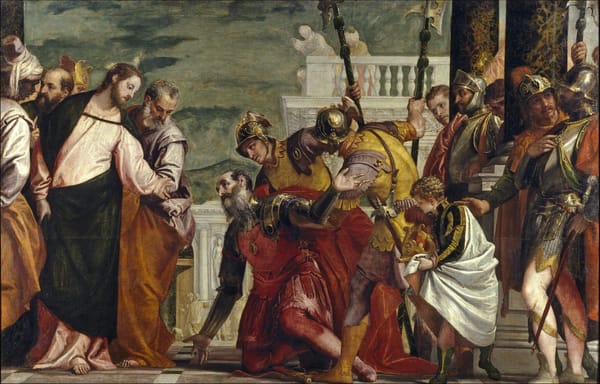
The Third Sunday after Epiphany
THE variation of Easter Sunday necessitates almost every year a different arrangement of the Sundays after the Epiphany from that in which they stand in the Missal. Septuagesima often comes in January and the Feast of the Purification is occasionally later than Quinquagesima Sunday; hence the office of these four last Sundays may have to be transferred to another season of the liturgical cycle. We were obliged then to provide for these changes and simplify them for the Faithful by adopting our present plan. We have inserted here the third and fourth Sundays as usually falling in Christmastide, while the office of the fifth and sixth Sundays will be found in the volumes of Septuagesima and the second after Pentecost, this latter season being the one in which they are most frequently kept.
Mass
The Introit represents the Angels of God adoring him on his entrance into this world, as St Paul* explains this passage of the Psalms. The Church celebrates with David the gladness of Sion, and the joy of the daughters of Juda.
Introit
Collect
Commemoration of the Blessed Virgin Mary
The third Prayer is one of the following:
Against the persecutors of the Church
For the Pope
Epistle
Cap. XII.Fratres, nolite esse prudentes apud vosmetipsos: nulli malum pro malo reddentes: providentes bona non tantum coram Deo, sed etiam coram omnibus hominibus; si fieri potest, quod ex vobis est, cum omnibus hominibus pacem habentes: non vosmetipsos defendentes, carissimi, sed date locum iræ; scriptum est enim; Mihi vindicta, ego retribuam, dicit Dominus. Sed si esurierit inimicus tuus, ciba ilium; si sitit, potum da illi: hoc enim faciens, carbones ignis congeres super caput ejus. Noli vinci a malo, sed vince in bono malum.
Ch. XII.Brethren, be not wise in your own conceits. To no man rendering evil for evil. Providing good things not only in the sight of God, but also in the sight of all men. If it be possible, as much as in you, having peace with all men. Not revenging yourselves, my dearly beloved, but give place unto wrath. For it is written: 'Revenge to me, I will repay,' saith the Lord. But 'if thy enemy be hungry, give him to eat: if he thirst, give him to drink: for doing this, thou shalt heap coals of fire upon his head.’ Be not overcome by evil, but overcome evil by good.
This love of our neighbour, recommended to us by the Apostle, is a consequence of that universal brotherhood which our Saviour, by his Birth, brought us from heaven. He came to establish peace between heaven and earth; men, therefore, ought to be at peace one with another. Our Lord bids us not to be overcome by evil, but to overcome evil by good:—and did not he first practise this by coming among us, who were children of wrath, that he might make us children of adoption by his humiliations and his sufferings?
In the Gradual, the holy Church again celebrates the coming of Emmanuel, and invites all nations, and all the kings of the earth, to come and praise his holy name.
Gradual
Gospel
Cap. VIII.In illo tempore, Cum descendisset Jesus de monte, secutæ sunt eum turbæ multæ; et ecce leprosus veniens, adorabat eum dicens: Domine, si vis, potes me mundare. Et extendens Jesus manum, tetigit eum dicens: Volo, mundare. Et confestim mundata est lepra ejus. Et ait illi Jesus: Vide, nemini dixeris; sed vade, ostende te sacerdoti et offer munus, quod præcepit Moyses, in testimonium illis. Cum autem introisset Capharnaum, accessit ad eum centurio, rogans eum et dicens; Domine, puer meus jacet in domo paralyticus, et male torquetur. Et ait illi Jesus: Ego veniam et curabo eum. Et respondens centurio, ait: Domine, non sum dignus ut intres sub tectum meum; sed tantum dic verbo, et sanabitur puer meus. Nam et ego homo sum sub potestate constitutus, habens sub me milites, et dico huic: vade, et vadit; et alii: veni, et venit; et servo meo: fac hoc, et facit. Audiens autem Jesus, miratus est, et sequentibus se dixit: Amen dico vobis, non inveni tantam fidem in Isræl. Dico autem vobis, quod multi ab oriente et occidente venient, et recumbent cum Abraham et Isaac et Jacob in regno cœlorum; filii autem regni ejicientur in tenebras exteriores: ibi erit fletus et stridor dentium. Et dixit Jesus centurioni: Vade, et sicut credidisti, fiat tibi. Et sanatus est puer in illa hora.
Ch. VIII.At that time, when Jesus was come down from the mountain, great multitudes followed him; and behold a leper came and adored him, saying: Lord, if thou wilt, thou canst make me clean. And Jesus stretching forth his hand, touched him, saying: I will, be thou made clean. And forthwith his leprosy was cleansed. And Jesus saith to him: See thou tell no man, but go, show thyself to the priest, and offer the gift which Moses commanded for a testimony unto them. And when he had entered unto Capharnaum, there came to him a centurion, beseeching him, and saying: Lord, my servant lieth at home sick of the palsy, and is grievously tormented. And Jesus saith to him: I will come and heal him. And the centurion making answer, said: Lord, I am not worthy that thou shouldst enter under my roof; but only say the word, and my servant shall be healed. For I also am a man under authority, having under me soldiers; and I say to this, Go, and he goeth, and to another, Come, and he cometh, and to my servant, Do this, and he doeth it. And when Jesus heard this, he marvelled, and said to them that followed him: Amen, I say to you, I have not found so great faith in Israel. And I say unto you, that many shall come from the east and the west, and shall sit down with Abraham, and Isaac, and Jacob, in the kingdom of heaven; but the children of the kingdom shall be cast out into the exterior darkness: there shall be weeping and gnashing of teeth. And Jesus said to the centurion: Go, and as thou hast believed, so be it done to thee. And the servant was healed at the same hour.
The human race was infected with the leprosy of sin: the Son of God touches it by the mystery of the Incarnation, and restores it to health. But he requires that the sick man, now that he is healed, shall go and show himself to the priest, and comply with the ceremonies prescribed by the law; and this, to show that he allows a human priesthood to co-operate in the work of our salvation. The vocation of the Gentiles, of which the Magi were the first-fruits, is again brought before us in the faith of the centurion. A Roman soldier, and millions like him, shall be reputed as true children of Abraham, Isaac and Jacob; while they who are the sons of this Patriarch according to the flesh, shall be cast out from the feast-chamber into the gloom of blindness; and their punishment shall be given as a spectacle to the whole earth.
Let man, then, saved as he has been by the coming of Emmanuel, sing a hymn of praise to the power of God, who has wrought our salvation by the strength of his almighty arm. Man had been sentenced to death; but now that he has God for a Brother, he shall not die: he will live: and could he spend his life better than in praising the works of this God that has saved him?
Offertory
Secret
Commemoration of the Blessed Virgin Mary
Against the persecutors of the Church
For the Pope
Preface
℣. Dominus vobiscum. ℟. Et cum spiritu tuo.
℣. Sursum corda. ℟. Habemus ad Dominum.
℣. Gratias agamus Dominum Deo nostro. ℟. Dignum et justum est.
℣. The Lord be with you. ℟. And with thy spirit.
℣. Lift up your hearts. ℟. We have them fixed on God.
℣. Let us give thanks to the Lord our God. ℟. It is meet and just.
After having distributed the Bread of Life, the Church reminds us how the people were in admiration at the words of Jesus. The children of the Church, initiated into all his Mysteries, are at this moment enjoying the effects of that ineffable Word, by means of which the Redeemer has changed the bread into his Body, and the wine into his Blood.
Communion
Postcommunion
Commemoration of the Blessed Virgin Mary
Against the persecutors of the Church
For the Pope
Vespers
The Psalms, Antiphons, Capitulum, Hymn, and Versicle are given on pages 89-96.
Antiphon of the Magnificat
* Heb. i 6. ↩︎
January 22: Sts. Vincent and Anastasius, Martyrs
|
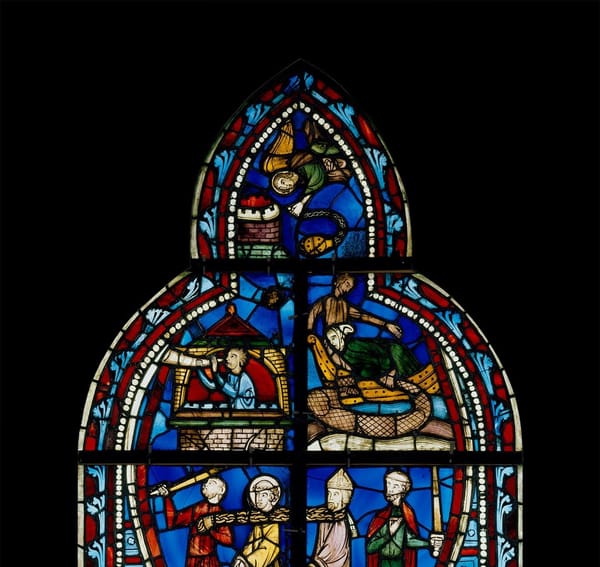
Saint Vincent, Deacon and Martyr
VINCENT, the Victorious, vested in the sacred dalmatic, and holding his palm in his hand, comes, today, to the Crib, and right welcome is he to Stephen, the Crowned, his leader and his brother. Spain is his country. He is a deacon of the glorious Church of Saragossa, and, by the strength and warmth of his faith, he is a type of that land, which is pre-eminently the Catholic Kingdom. But he does not belong to Spain only: like Stephen, and like Laurence, Vincent is the favourite and hero of the whole Church. Stephen, the deacon, preached the divinity of Jesus amidst the shower of stones which were hurled upon him as a blasphemer; Vincent, the deacon, confessed his faith in Jesus upon his red-hot gridiron, as did that other deacon, Laurence. This triumvirate of Martyr-deacons cluster together in the sacred Litany, and when we hear their three grand names, the Crown, the Laurel, and the Conqueror, we hail them as the three bravest Knights of our most dear Lord.
Vincent triumphed over the torture of fire, because the flame of divine love which burned within his soul was keener than that which scorched his body. He was comforted in the most miraculous manner during his great sufferings; but God worked these prodigies not to deprive Vincent of his crown, but to show his own power. The holy deacon had but one thought in the midst of all his pains; he was ambitious to make a return, by the gift of his own life, for that sacrifice whereby his divine Master had died for him and for all men. And now, is it not right and just that so generous a lover of God should be found beside the Crib? How he urges us, every Christmas, to love this Divine Infant! He that hesitated not, when called on to give himself to his Lord, even though it was to cost him such cruel pains—what cowards would he not call us, who can come so many Christmases to Bethlehem, and have nothing to give but cold and divided hearts! His sacrifice was to be burnt alive and tom and cut, and he smiled as he offered it: what are we to say of ourselves, who take years to think before we will give up those childish things which prevent us from ever seriously beginning a new life with our new-born Jesus! Would that the sight of all these Martyrs, in whose company the Church has made us live during these few last days, would touch our hearts, and make them resolute and simple!
There is an ancient Christian tradition, which makes St Vincent the patron of vineyards and labourers in vineyards. This was, no doubt, suggested by the Saint's having held the office of deacon; for the deacon has to pour wine into the chalice during the holy Sacrifice of the Mass, and that wine is to be changed into the Blood of Christ. A few days ago, we assisted at the mystery of the Feast at Cana; Jesus then offered us the sacred cup, the wine of his love: today, again, he offers it to us by the hand of his Martyr Vincent. To make himself worthy of his high office, the holy deacon mingled his own blood, as a generous wine, in the cup that holds the price of the world's salvation. It is thus that we are to understand that expression of St Paul, which says that the Saints fill up in the flesh, by the merit of their sufferings, those things that are wanting, not in their efficacy, but in their fulness, of the sufferings of Christ,1 whose members the Saints are.
We will now give the abridged account of the martyrdom of St Vincent, as it is related in the Lessons of his Feast.
The Gothic Church of Spain, in her Mozarabic Liturgy, is magnificent in her praises of St Vincent. The first and second of the following prayers are taken from the Breviary, the third is from the Missal of that Rite.
Prayer
Prayer
Prayer
We regret being obliged to content ourselves with a few stanzas of the magnificent hymn composed by Prudentius in honour of St Vincent. The Ambrosian Breviary has selected several verses of this long poem for one of its hymns; and these we offer to our readers.
Hymn
Diem triumphalem tuum:
Quo sanguinis merces tibi
Corona Vincenti datur.
Tortore victo et judice,
Evexit ad cœlum dies,
Christoque ovantem reddidit.
Collucis insigni stola,
Quam testis indomabilis
Rivis cruoris laveras.
Minister altails Dei,
Septem ex columnis lacteis.
Martyr triumpho nobili.
Solus bravii duplicis
Palmas tulisti: tu duas
Simul parasti laureas.
Dum deinde post mortem pari
Victor triumpho proteris
Solo latronem corpore.
Per carceralem stipitem,
Per fragmen illud testeum
Quo parta crevit gloria;
Voces precantum supplices,
Nostri reatus efficax
Orator ad thronum Dei.
Ejusque soli Filio,
Cum Spiritu Paraclito,
Nunc et per omne sæculum.
whereon the crown is given to thee,
the Conqueror; and thou didst
purchase it by thy blood.
and restored thee in triumph to Christ,
for thou hadst conquered
thy torturer and thy judge.
thou shinest in thy bright stole,
which thou didst wash in the stream of thy blood,
for thou wast the invincible witness of Christ.
a Minister of God’s altar,
which is surrounded by its seven snow-white pillars;
and by thy noble triumph, thou art a Martyr of Christ.
didst bear away the palms of a double victory,
and wreathe two laurels
for thy brow.
and then, after death,
thou wast conqueror over the tyrant-thief,
and with thy body alone didst gloriously defeat him.
by thy prisonchains;
by the potsherds,
strewed to enhance thy glory,
the humble prayers of thy suppliants,
and make intercession for us sinners
at the throne of God.
and to his Only Son,
and to the Holy Paraclete,
be glory now and for all ages.
Adam of Saint-Victor composed two Sequences in honour of the great Deacon of Saragossa. We consider it a duty to insert them both, for they are very beautiful.
First Sequence
Dies felix, dies grata,
Dies digna gaudio.
Et pugnantem admiremur
Christum in Vincentio.
Sensu, verbo, dignitate,
Clarus et officio.
Sub patris Valerii
Regebat imperio.
Deo vacat: et Levitæ
Verbi dat officium.
Duplex quoque, simplex pectus
Exornat seientia.
Plebem Cæsaraugustanam,
Comitante gratia,
Zelans idolatriam
Præsidis invidia.
Jubet ambos pertrahi Valentiam
Sub catenis.
Nec ætas attenditur ab impio
Sancti senis.
Pressos ferri pondere
Tetro claudit carcere,
Negans victualia.
Nec pro voto potuit,
Quia suos aluit
Christi providentia.
Juniorem reservat supplicio
Præses acerbiori.
Vincentius, conscendit craticulam
Spiritu fortiori.
Christum magis confitetur,
Nec tyrannum reveretur,
In ejus præsentia.
Hæret lingua, tremit manus:
Nec se capit Dacianus
Præ cordis insania.
Et testulis fixus illiditur;
Multa tamen hic luce fruitur.
Ab Angelis visitatus.
Ad superos transit emeritus,
Sicque suo triumphans spiritus
Est Principi præsentatus.
Virum tradi sepulturæ:
Legi simul et naturæ
Vim facit malitia.
Hinc defuncto laus accrescit:
Nam quo vesci consuevit
Reformidat bestia.
Corvus servat illibatum:
Sicque sua sceleratum
Frustratur intentio.
Quod consumi nequit humi,
Vult abscondi sub profundi
Gurgitis silentio.
Nec celari potest mari:
Quem nunc laude singulari
Venerari voto pari
Satagit Ecclesia.
Terra, mari fit insigne.
Nobis, Jesu. da benigne.
Ut cum Sanctis te condigne
Laudemus in patria.
The happy, dear
and joyous day!
and admire in Vincent
the combats of Christ.
and piety and wisdom, and preaching
and dignity and office.
under the command
of his father, Valerius.
so served his God in quiet,
and gives to the Levite the office of the word.
and in his simple soul the
gracefulness of a twofold science;
he instructs the people
of Saragossa in the faith,
the envious tyranny of the governor,
an idolatrous zealot.
and how boldly they taught the faith;
he orders both to be put in chains, and led to Valentia.
what was the flower of Vincent's age,
or the grey locks of the saintly Bishop?
and galled by their iron chains,
he confines them in a dark dungeon,
denying them food and drink.
though not all he would, to give his captives pain;
they are dear to Christ,
and he provides them food.
keeping the young deacon
for a sharper test.
then torn with hooks; and then, with a braver heart,
he mounts the iron bed.
louder than ever he confesses Christ:
and heeds not the tyrant,
who stands looking on.
his tongue is dumb, his hand is palsied,
and himself wild
with a maddened heart.
strewed with sharp potsherds, which will cut him as he stands or sleeps;
but here he enjoys a bright light,
and is visited by Angels.
his victorious and triumphant soul
thus takes its flight to heaven,
and is presented to its Lord.
to the Martyr’s body
the common right of burial,
thus trampling on both law and nature.
but only to increase the Martyr’s praise;
and beasts of prey approach,
but fear to touch the holy corpse.
protects the unburied saint;
and thus is foiled
the wicked tyrant’s scheme.
destroy the holy remains on land,
has them thrown into
the silent grave of the deep sea.
nor will the sea retain them.
And now the Church studies how to honour Vincent
with special praise, and the faithful,
with one accord, join her in her hymns.
is honoured both on sea and land.
O Jesus! mercifully grant
that together with thy Saints we too
may worthily praise thee in our heavenly home.
Second Sequence
Lux preclara, quæ reduxit Levitæ solemnium;
Omnes ergo jocundemur,
Et Vincentem veneremur in Christo Vincentium.
Ex re probat dignum omen sui fore nominis:
Vincens terra, Vincens mari,
Quidquid potest irrogali pœnæ vel formidinis.
Cocci instar et jacinthi,
Cujus lumbi sunt præcincti
Duplici munditia.
Purpuræque palmam quærens,
Stat invictus, dira ferens
Pro Christo supplicia.
Vervex pelle rubricata tegens tabernaculum;
Pio serit in mærore,
Et vitalem ex sudore reportat manipulum.
Dei servus inhumani rapitur prætoria.
Præses sanctum prece tentat,
Nunc exterret, nunc præsentat mundana fastigia.
Dona, preces et terrorem elatæ tyrannidis,
Equuleo admovetur:
Quem plus torquet, plus torquetur spretus tumor præsidis.
Lictor cædens, sal injectus in nudata viscera,
Simul torrent, simul angunt,
Nec athletam lætum frangunt tot pœnarum genera.
Membra scindit et disjungit;
Sed confortat et perungit cœlestis jocunditas:
Illic onus in honorem,
Cæcus carcer in splendorem,
Florum transit in dulcorem testarum asperitas.
Sursum spirat, et canoro
Angelorum septus choro cœlo reddit spiritum:
Feris dato custos datur,
Mari mersus non celatur,
Sed hunc digne veneratur mundus sibi redditum.
Elementa cuncta signis,
Aqua, tellus, ær, ignis, in ejus victoria;
Summe testis veritatis,
Ora Christum, ut peccatis
Nos emundet, et mundatis vera præstet gaudia;
Ut cantemus, claritatis Cohæredes: Alleluia!
the honoured day that brings us the deacon's feast.
Therefore let us all be glad
and venerate our Vincent victorious in Christ.
and he proves that his name was prophetic of his deeds:
vanquishing on land and vanquishing on sea
every insult, pain and fear.
he shines as the hyacinth.
His loins are girt with purity
twice pure.
and he seeks the Martyr's palm,
bearing for Christ, and with unflinching heart,
the pangs of cruel torture.
and the lamb whose fleece is dyed with scarlet to cover the tabernacle.
He sows in holy tears,
and reaps the sheaf of life, earned by the sweat of his blood.
to the blood-stained court of the cruel Dacian,
who tempts the Saint first by entreaty,
then by threat, and then by offers of worldly pomps.
the flower of the world, his gifts, his gentle words, and his threats.
For this, the rack.
But while he tortures more, the more tortured is the tyrant by his slighted pride.
the cutting whips, the salt rubbed deep within his gaping wounds,
burn indeed, and torture,
but conquer not the laughing combatant of Christ,
cut and tear his flesh;
but joy, imparting ease and unction, is sent to him by God.
His chains become his ornament,
his gloomy prison a glittering hall,
and the cruel potsherds soft sweet flowers.
panting to ascend, and surrounded
by a tuneful choir of Angels, his spirit soars to heaven.
His body is thrown to beasts of prey;
a faithful guard protects. It is cast into the sea;
the waves convey it to the shore.
he receives the loving veneration of a world.
Thus did the elements, sea and earth and air and fire, celebrate his victory.
O admirable witness of the truth!
pray for us to Christ, that he cleanse us
from our sins, and bring us purified to the heavenly joys,
to sing with thee, companions in thy bliss, our ceaseless Alleluia.
Hail, Victorious Deacon! How beautiful art thou, with the Chalice of salvation in thy brave hands! It was thine office to offer it at the Altar, in order that the wine it contained might be changed by the sacred words into the Blood of Christ; and, when the Mystery was accomplished, thou hadst to take this same Chalice, and present it to the Faithful, to the end that they who thirsted after their God might drink at the source of eternal life. But on this day thou offerest it thyself to Jesus, and it is full to the brim with thine own blood. Oh! how faithful a Deacon! giving even thy very life in testimony to the Mysteries of which thou wast the dispenser. Three centuries had elapsed since Stephen's sacrifice; sixty years had gone by since the sweet incense of Laurence's martyrdom had ascended to the throne of God; and now it is the last persecution; peace is dawning on the Church; and a third Deacon comes to prove that time had not impaired the Order—it was the Deacon of Saragossa—thyself, dear Saint!
Bright is thy name in the list of Martyrs, O Vincent! and the Church is proud of thy triumph. It was for the Church, after Jesus, that thou didst combat: have pity on us therefore, and signalize this day of thy Feast by showing us the effects of thy protection. Thou art face to face with the King of Ages, whose battle thou didst fight on earth, and thou gazest, with a loving yet dazzled eye, on his eternal beauty. We also, we who are in this valley of tears, possess him and see him, for he calls himself our Emmanuel, God with us. But it is under the form of a weak Babe that he shows himself, for he fears to overpower us with the splendour of his majesty. Pray for us, O holy Martyr Vincent! for at times we tremble at the thought that this sweet Jesus is one day to be our Judge. When we reflect on what thou didst suffer for him, we have scarcely courage to think upon ourselves, for what good works can we show, or who can say of us that we were ever warm in defending the cause of our Divine Master? Oh! that thy Feast might shame us into the earnest, uncalculating simplicity which this sweet Babe of Bethlehem is come to teach us—the simplicity which springs from humility and confidence in God, and which made thee go through all thy martyrdom with such a brave and calm spirit! Pray for us, that we may at length obey God who teaches us by his own example, and accomplish his will, whatever that may ask of us, with the calm cheerfulness of devoted service.
Pray, Vincent, for all Christians, for all are called to fight against the world and their own passions. Jesus will admit none but conquerors to the banquet of eternal glory, where he has promised to drink with us the new wine, in the Kingdom of his Father.2 The wedding garment, which all must have on who enter there, must be washed in the blood of the Lamb: we must all be Martyrs, at least in heart, for we have all to triumph over self, and self is the harshest of tyrants.
Fly to the assistance of the Martyrs who, in distant countries, are dying for the true Faith; obtain for them such courage, that they may be the Vincents of our age. Protect Spain, thy country. Beseech our Emmanuel to send her heroes of thy stamp; that so, the Catholic Kingdom, which has ever been so jealous of purity of Faith, may speedily triumph over the trials which are heavy upon her. Shall the illustrious Church of Saragossa—founded by St James the Apostle, visited by the Blessed Mother of God, and sanctified by the ministry of thy deaconship—shall such a country as this ever grow indifferent about Faith, or suffer the bond of unity to be broken? And since the devotion of the Christian people looks upon thee as the protector of the vine, bless this fruit of the earth, which God has destined for man's use, and which he has deigned to make both the instrument of the deepest of his Mysteries, and the symbol of his love of mankind.
Saint Anastasius, Martyr
On this same 22nd of January, the Church honours the memory of the holy Persian monk Anastasius, who suffered Martyrdom in the year 628. Chosroes, having made himself master of Jerusalem, had carried with him into Persia the wood of the True Cross, which was afterwards recovered by Heraclius. The sight of this Holy Wood excited in the heart of Anastasius, who was then a Pagan, the desire to know the religion of which it is the trophy. He renounced the Persian superstitions in order to become a Christian, and a monk. This, together with the neophyte's zeal, excited the Pagans against him; and after enduring frightful tortures, the soldier of Christ was beheaded. His body was taken to Constantinople, and thence to Rome, where it is still honoured. Two celebrated Churches of Rome, one in the City itself, and the other outside the walls, are dedicated in common to St Vincent and St.Anastasius, because these two great Martyrs suffered on the same day of the year, though in different centuries. This is the motive of the Church in uniting their two feasts into one. Let us pray to this new champion of the Faith, that he intercede for us to the Saviour, whose Cross was so dear to him.
We add the short lesson of St Anastasius. It occurs immediately after those of St Vincent.
Let us now address ourselves to both these holy Martyrs, using the prayer of their feast.
| Previous January 21: St. Agnes, Virgin and Martyr | Next January 22: Sts. Vincent and Anastasius, Martyrs |