Daily reading
Septuagesima
Double · Movable from Easter · Temporal
February 12, 2023
From Dom Guéranger’s The Liturgical Year.

|
Sexagesima Sunday
The Church offers to our consideration, during this week of Sexagesima, the history of Noah and the deluge. Man has not profited by the warnings already given him. God is obliged to punish him once more, and by a terrible chastisement. There is found out of the whole human race one just man; God makes a covenant with him, and with us through him. But, before He draws up this new alliance, He would show that He is the sovereign Master, and that man, and the earth whereon he lives, subsist solely by His power and permission.
As the ground-work of this week’s instructions, we give a short passage from the Book of Genesis: it is read in the Office of this Sunday’s Matins.
Cap. vi.Videns autem Deus quod multa malitia hominum esset in terra, et cuncta cogitatio cordis intenta esset ad malum omni tempore, pœnituit eum quod hominem fecisset in terra. Et tactus dolore cordis intrinsecus: Delebo, inquit, hominem quem creavi, a facie terræ, ab homine usque ad animantia, a reptili usque ad volucres cœli, pœnitet enim me fecisse eos. Noë vero invenit gratiam coram Domino.
Ch. vi.And God seeing that the wickedness of men was great on the earth, and that all the thought of their heart was bent upon evil at all times, it repented him that he had made man on the earth. And being touched inwardly with sorrow of heart, he said: I will destroy man, whom I have created, from the face of the earth, from man even to beasts, from the creeping thing even to the fowls of the air. For it repenteth me that I have made them. But Noah found grace before the Lord.
This awful chastisement of the human race by the deluge was a fresh consequence of sin. This time, however, there was found one just man; and it was through him and his family that the world was restored. Having once more mercifully renewed His covenant with His creatures, God allows the earth to be repeopled, and makes the three sons of Noah become the fathers of the three great families of the human race.
This is the mystery of the Divine Office during the week of Sexagesima. The mystery expressed in to-day’s Mass is of still greater importance, and the former is but a figure of it. The earth is deluged by sin and heresy. But the word of God, the seed of life, is ever producing a new generation: a race of men, who, like Noah, fear God. It is the word of God that produces those happy children, of whom the beloved disciple speaks, saying: ‘They are born not of blood, nor of the will of the flesh, nor of the will of man, but of God.’1 Let us endeavour to be of this family; or, if we are already numbered among its members, let us zealously maintain our glorious position. What we have to do, during these days of Septuagesima, is to escape from the deluge of worldliness, and take shelter in the Ark of salvation; we have to become that good soil, which yields a hundredfold from the heavenly seed. Let us flee from the wrath to come, lest we perish with the enemies of God: let us hunger after that word of God, which converteth and giveth life to souls.2
With the Greeks, this is the seventh day of their week Apocreos, which begins on the Monday after our Septuagesima Sunday. They call this week Apocreos, because they then begin to abstain from flesh-meat, which abstinence is observed till Easter Sunday.
Mass
At Rome the Station is in the basilica of St. Paul outside the walls. It is around the tomb of the Doctor of the Gentiles, the zealous sower of the divine seed, the father by his preaching of so many nations, that the Roman Church assembles her children on this Sunday, whereon she is about to announce to them how God spared the earth on the condition that it should be peopled with true believers and with faithful adorers of His name.
The Introit, which is taken from the Psalms, cries out to our Lord for help. The human race, all but extinct after the deluge, is here represented as beseeching its Creator to bless and increase it. The Church adopts the same prayer, and asks her Saviour to multiply the children of the Word, as He did in former days.
Introit
In the Collect, the Church expresses the confidence she puts in the prayers of the great apostle St. Paul, that zealous sower of the divine seed, who laboured more than the other apostles in preaching the word to the Gentiles.
Collect
Then are added two other Collects, as in the Mass of Septuagesima Sunday, page 120.
The Epistle is that admirable passage from one of St. Paul’s Epistles, in which the great apostle, for the honour and interest of his sacred ministry, is necessitated to write his defence against the calumnies of his enemies. We learn from this his apology what labours the apostles had to go through, in order to sow the word of God in the barren soil of the Gentile world, and make it Christian.
Epistle
2 Cap. xi.Fratres, libenter suffertis insipientes, cura sitis ipsi sapientes. Sustinetis enim si quis vos in servitutem redigit, si quis devorat, si quis accipit, si quis extollitur, si quis in faciem vos cædit. Secundum ignobilitatem dico, quasi nos infirmi fuerimus in hac parte. In quo quis audet (in insipientia dico), audeo et ego. Hebræi sunt, et ego. Israelitse sunt, et ego. Semen Abrahæ sunt, et ego. Ministri Christi sunt (ut minus sapiens dico), plus ego: in laboribus plurimis, in carceribus abundantius, in plagia supra modum, in mortibus frequenter. A Judæis quinquies quadragenas, una minus, accepi. Ter virgis cæsus sum, semel lapidatus sum, ter naufragium feci, nocte et die in profundo maris fui; in itineribus sæpe, periculis fluminum, periculis latronum, periculis ex genere, periculis ex gentibus, periculis in civitate, periculis in solitudine, periculis in mari, periculis in falsis fratribus; in labore et ærumna, in vigiliis multis, in fame et siti, in jejuniis multis, in frigore et nuditate. Præter illa, quæ extrinsecus sunt, instantia mea quotidiana, sollicitudoomnium Ecclesiarum. Quis infirmatur, et ego non infirmor? Quis scandalizatur, et ego non uror? Si gloriari oportet, quæ infirmitatis meæsunt, gloriabor. Deus et Pater Domini nostri Jesu Christi, qui est benedictus in sæcula, scit quod non mentior. Damasci præpositua gentis Aretæ regia, custodiebat civitatem Damascenorum, ut me comprehenderet; et per fenestram in sporta dimissus sum per murum, et sic effugi manus ejus. Si gloriari oportet (non expedit quidem), veniam autem ad visiones et revelationes Domini. Scio hominem in Christo ante annos quatuordecim (sive in corpore nescio, sive extra corpus nescio, Deus scit), raptum hujusmodi usque ad tertium cœlum. Et scio hujusmodi hominem (sive in corpore, sive extra corpus nescio, Deus scit), quoniam raptus est in paradisum, et audivit arcana verba quæ non licet homini loqui. Pro hujusmodi gloriabor; pro me autem nihil gloriabor, nisi in infirmitatibus meis. Nani, et si voluero gloriari, non ero insipiens; veritatem enim dicam: parco autem, ne quis me existimet supra id quod videt in me, aut aliquid audit ex me. Et ne magnitudo revelationum extollat me, datus est mihi stimulus carnis meæ, angelus Satanæ, qui me colaphizet. Propter quod ter Dominum rogavi ut discederet a me: et dixit mihi: Sufficit tibi gratia mea; nam virtus in infirmitate perficitur. Libenter igitur gloriabor in infirmitatibus meis, ut inhabitet in me virtus Christi.
2 Ch. xi.
In the Gradual, the Church beseeches her Lord to give her strength against those who oppose the mission He has entrusted to her, of gaining for Him a new people, adorers of His sovereign Majesty.
Gradual
Whilst the earth is being moved, and is suffering those terrible revolutions which, deluge-like, come first on one nation and then on another, the Church prays for her faithful children, in order that they may be spared, for they are the elect, and the hope of the world. It is thus she prays in the following Tract, which precedes the Gospel of the word.
Tract
Gospel
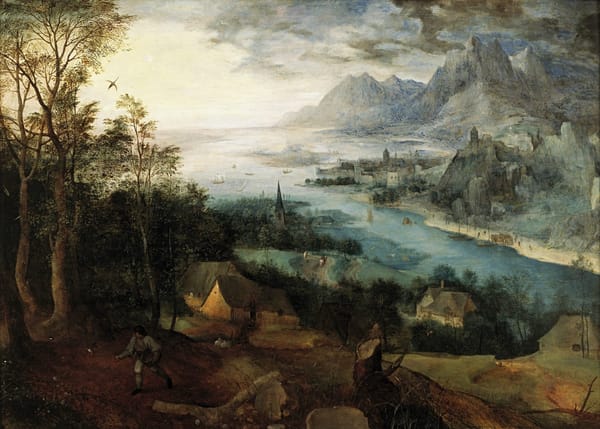
Cap. viii.In illo tempore, cum turba plurima convenirent, et de civitatibus properarent ad Jesum, dixit per similitudinem: Exiit, qui seminat, seminare semen suum: et dum seminat, aliud cecidit secus viam, et conculcatum est, et volucres cœli comederunt illud. Et aliud cecidit supra petram: et natum, aruit; quia non habebat humorem. Et aliud cecidit inter spinas, et simul exortæ spinæ suffocaverunt illud. Et aliud cecidit in terram bonam: et ortum fecit fructum centuplum. Hæc dicens clamabat: Qui habet aures audiendi, audiat. Interrogabant autem eum discipuli ejus, quæ esset hæc parabola. Quibus ipse dixit: Vobis datum est nosse mysterium regni Dei, cæteris autem in parabolis; ut videntes non videant, et audientes non intelligant. Est autem hæc parabola. Semen est verbum Dei. Qui autem secus viam, hi sunt qui audiunt: deinde venit diabolus, et tollit verbum de corde eorum, ne credentes salvi fiant. Nam qui supra petram: qui cum audierint, cum gaudio suscipiunt verbum: et hi radices non habent: quia ad tempus credunt, et in tempore tentationis recedunt. Quod autem in spinas cecidit, hi sunt qui audierunt, et a sollicitudinibus, et divitiis, et voluptatibus vitæ, euntes, suffocantur, et non referunt fructmn. Quod autem in bonam terram: hi sunt, qui in corde bono et optimo audientes verbum retinent, et fructum afferunt in patientia.
Ch. viii.At that time, when a very great multitude was gathered together, and hastened out of the cities to meet Jesus, he spoke by a similitude. The sower went out to sow his seed; and as he sowed, some fell by the wayside, and it was trodden down, and the fowls of the air devoured it. And other some fell upon a rock: and as soon as it was sprung up, it withered away, because it had no moisture. And other some fell among thorns; and the thorns growing up with it, choked it. And other some fell upon good ground, and being sprung up, yielded fruit a hundred fold. Saying these things he cried out: He that hath ears to hear, let him hear. And his disciples asked him what this parable might be. To whom he said: To you it is given to know the mystery of the kingdom of God; but to the rest in parables: that seeing they may not see, and hearing they may not understand. Now the parable is this: The seed is the word of God. And they by the wayside are they that hear; then the devil cometh, and taketh the word out of their heart, lest believing they should be saved. Now they upon the rock are they who, when they hear, receive the word with joy: and these have no roots; for they believe for a while, and in time of temptation fall away. And that which fell among thorns, are they who have heard, and going their way, are choked with the cares and riches and pleasures of this life, and yield no fruit. But that on the good ground, are they, who in a good and very good heart hearing the word, keep it, and bring forth fruit in patience.
St. Gregory the Great justly remarks, that this parable needs no explanation, since eternal Wisdom Himself has told us its meaning. All that we have to do, is to profit by this divine teaching, and become the good soil, wherein the heavenly seed may yield a rich harvest. How often have we, hitherto, allowed it to be trampled on by them that passed by, or to be torn up by the birds of the air! How often has it found our heart like a stone, that could give no moisture, or like a thorn plot, that could but choke! We listened to the word of God; we took pleasure in hearing it; and from this we argued well for ourselves. Nay, we have often received this word with joy and eagerness. Sometimes, even, it took root within us. But, alas! something always came to stop its growth. Henceforth, it must both grow and yield fruit. The seed given to us is of such quality, that the divine Sower has a right to expect a hundred-fold. If the soil, that is, our heart, be good; if we take the trouble to prepare it, by profiting by the means afforded us by the Church; we shall have an abundant harvest to show our Lord on that grand day, when, rising triumphant from His tomb, He will come to share with His faithful people the glory of His Resurrection.
Inspirited by this hope, and full of confidence in Him who has once more thrown this seed into this long ungrateful soil, let us sing with the Church, in her Offertory, these beautiful words of the royal psalmist: they are a prayer for holy resolution and perseverance.
Offertory
Secret
To this are added the other Secrets, as on Septuagesima Sunday, page 127.
The visit, which our Lord makes to us in the Sacrament of His love, is the grand means whereby He gives fertility to our souls. Hence it is that the Church invites us, in the Communion antiphon, to draw nigh to the altar of our God; there, our heart shall regain all the youthful fervour of its best days.
Communion
Postcommunion
Two other Postcommunions are said after this, as on Septuagesima Sunday, page 128.
Vespers
The psalms and antiphons as on page 72.
Capitulum (2 Cor. xi.)
The hymn and versicle, page 79.
Antiphon of the Magnificat
We will end our Sunday by a hymn taken from the ancient breviaries of the Churches of France: it will help us to keep up in our souls the sentiments proper to the season of Septuagesima.
Hymn
Tempus adest sobrium: Quæramus puro corde Dominum.
Hymnis et in confessionibus
Judex complacabitur Dominus.
Non negabit hic veniam, Qui vult ut homo quærat gratiam.
Post jugum servile Pharaonis,
Post catenas diræ Babylonis: Liber homo patriam Quærat cœlestem Hierosolymam.
Fugiamus de hoc exilio: Habitemus cum Dei Filio: Hoc decus est famuli Si sit cohæres sui Domini.
Sis Christe nobis dux hujus vitæ:
Memento quod sumus oves tuæ,
Pro quibus ipse tuam Pastor ponebas morte animam.
Gloria sit Patri et Filio: Sancto simul honor Paraclito:
Sicut erat pariter In principio et nunc et semper. Amen.
February 12: The Seven Holy Founders of the Order of Servites, Confessors
Clouds are gathering over Holy Church. We are reminded on every side of the approach of those days when our Emmanuel will show Himself to us in the pitiable state to which our sins have brought Him. Bethlehem is so soon followed by Calvary. We shall find the Mother of divine grace at the foot of the Cross as we found her at Ephrata. She brought forth her firstborn in joy, but now in tears she is to bring forth those brothers of His whose birth cost her so much. We have shared her joy, and we shall not refuse to weep and suffer with her.
Let us take for our models the saints whom the Church honours to-day. They passed their lives in the contemplation of our Lady’s sorrows, and the Order which they founded has the special mission to spread this devotion. St. Francis of Assisi raised the standard of the Cross anew in a world grown cold. The work of redemption seemed to be taken up afresh, and, as on the great Friday Jesus would not manifest Himself without Mary, the Servites completed the work of the Founder of the Friars Minor. Men regained confidence as they meditated on the Passion of the Son and the Compassion of the Mother.
The two feasts consecrated to the Dolours of our Lady will teach us in due course what place her compassion had in the economy of the Redemption. The Queen of heaven herself showed her predilection for the Order which made itself her apostle, in the striking outpouring of holiness which marked its origin. The simultaneous blooming of seven lilies, gathered on earth to-day by the angels, was a sight new even to heaven. Peter of Verona had a vision of them when they were implanting themselves on Monte Senario; and the future martyr saw the blessed Virgin smile as she gazed on that mountain where countless other flowers sprang up to perfume holy Church. Florence, the city of flowers, had never before given such blooms to God. Hell multiplied its attacks against the noble city, but could not prevail against Mary within its walls. We shall be reminded of these things by the feasts of St. Juliana Falconieri and St. Philip Benizi, which were established before the one we are keeping to-day. Let us unite our gratitude to that which the Church feels for the Religious family of the Servites. The world owes to them the grace of a new development in the knowledge and love of the Mother of God, who became our Mother at the price of unparalleled sufferings.
The lessons read by the Church on this day speak of the merits of our Saints and the favours with which our Lady rewarded their fidelity. February 11, the day first chosen as their common feast, is not the anniversary of the death of any one of them, but the day on which, in the year 1304, after passing through many vicissitudes, their Order obtained the definitive approbation of the Church.
You made the sorrows of Mary your own, and now she shares her eternal joys with you. The vine with its miraculously ripening grapes, which prefigured your fruitfulness in a frozen world, still yields a sweet odour in this land of exile, and the faithful still appreciate its fruit. Philip and Juliana have long been honoured as branches of this blessed vine, and to-day we pay our homage to the sevenfold root from which they sprang. You rejoiced in the obscurity which covered the life upon earth of the Queen of saints herself, but to-day the glory of Mary pierces all clouds, and no shadow can withdraw the servants from the radiance which surrounds the Mistress. May your glory be increased by the favours you bestow upon men! Teach an aged world to seek warmth at the fire whence you draw a love strong enough to triumph over the world and sacrifice self for God.
O Heart of Mary, pierced by the sword of sorrow, furnace of love which throughout all eternity feeds the fires of the very Seraphim, be our model, our refuge, and our consolation until the dawn of that blissful day which is to be the end of our exile in this vale of tears.
| Previous Saturday of Septuagesima Week | Next February 12: The Seven Holy Founders of the Order of Servites, Confessors |