Daily reading
Simple · February 18 · Sanctoral
February 18, 2023
From Dom Guéranger’s The Liturgical Year.
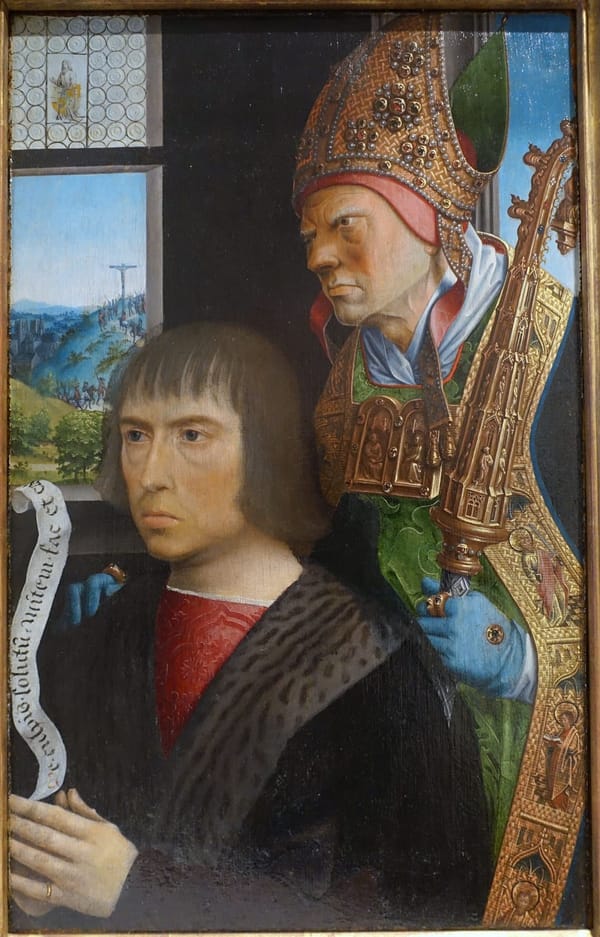
February 18: St. Simeon, Bishop and Martyr
How venerable our saint of to-day, with his hundred and twenty years, and his episcopal dignity, and his martyr-crown! He succeeded the apostle St. James in the see of Jerusalem; he had known Jesus, and had been His disciple; he was related to Jesus, for he was of the house of David; his father was Cleophas, and his mother that Mary, whom the tie of kindred united so closely to the blessed Mother of God that she has been called her sister. What grand titles these of Simeon who comes with all our other martyrs of Septuagesima, to inspirit us to penance! Such a veteran, who had been a contemporary of the Saviour of the world, and was a pastor who could repeat to his flock the very lessons Jesus had given him, could never rejoin his divine Master save by the path of martyrdom, and that martyrdom must be the cross. Like Jesus, then, he dies on a cross; and his death, which happened in the year 106, closes the first period of the Christian era, or, as it is called, the apostolic age. Let us honour this venerable pontiff, whose name awakens within us the recollection of all that is dear to our faith. Let us ask him to extend to us that fatherly love, which nursed the Church of Jerusalem for so many long years. He will bless us from that throne which he won by the cross, and will obtain for us the grace we so much need, the grace of conversion.
The following is the lesson given on St. Simeon:
Receive, most venerable saint, the humble homage of our devotion. What is all human glory compared with thine? Thou wast of the family of Christ; thy teaching was that which His divine lips had given thee; thy charity for men was formed on the model of His sacred Heart; and thy death was the closest representation of His. We may not claim the honour thou hadst, of calling ourselves brothers of the Lord Jesus: but pray for us, that we may be of those of whom He thus speaks: ‘Whosoever shall do the will of My Father that is in heaven, he is My brother, and sister, and mother.’* We have not, like thee, received the doctrine of salvation from the very lips of Jesus; but we have it in all its purity, by means of holy tradition, of which thou art one of the earliest links; oh, obtain for us a docility to this word of God, and pardon for our past disobedience. We have not to be nailed to a cross, as thou wast; but the world is thickly set with trials, to which our Lord Himself gives the name of the cross. These we must bear with patience, if we would have part with Jesus in His glory. Pray for us, O Simeon, that henceforth we may be more faithful; that we may never more become rebels to our duty; and that we may repair the faults we have so often committed by infringing the law of our God.
* St. Matt. xii. 50. ↩︎
Saturday of Sexagesima Week
On the Saturday of the preceding week, which was devoted to the consideration of the fall of our first parents both in its own malice and in its sad consequences upon us, we turned our thoughts towards our blessed Lady, who, though a daughter of Eve, was, by the special mercy of God, preserved from the stain of original sin. Let us end this week with a like act of veneration and love towards this Immaculate Queen of heaven. We, even the most saintly among us, have not only been stained with original sin; we have our actual sins to grieve over and do penance for. This should give us a higher appreciation of her, the one single member of the human family who never committed the slightest sin. Let us turn towards her, and give expression to our feelings.
We, O Mary! have corrupted our way; we have disobeyed our Lord; we have broken His law; we have preferred our own selfish gratifications to the service we owed Him: but thou wast ever filled with His holy love, and there passed not even a shadow of sin upon thy soul, O spotless mirror of justice and holiness! Virgin most faithful! the grace of thy Bon ever triumphed in thy heart. Mystical rose! the fragrance of thy virtues unceasingly ascended to His throne, changing only in its daily increase of sweetness. Tower of ivory! fair beyond measure, without one spot to mar thy purity! House of gold! thou didst ever reflect the precious gifts of the Holy Ghost. Have pity, then, upon us, for we are sinners.
We have obliged our God to repent that He made us: but in thee, dear Mother, He has ever been well pleased. Thou art the good land, wherein His divine seed yielded its thousandfold of fruit: pray for us, that He give fresh fertility to our hearts, and root up from them the thorns, which choke the heavenly plant. We are defiled by sin; may He, through the merits of the tears thou didst shed at the foot of the cross, mercifully cleanse us. If thy divine Son have already pardoned us, there are the consequences of our sins, which still weaken and humble us, like the sores of wounds that have been cured: take us, sweet Mother of our Jesus, under the mantle of thy tender care. We have too little dread of sin; we are so often on the verge of offending our God; oh! obtain for these poor children of thine courage and firmness of resolution, and ambition for holiness of life. Thy intercession must win for us that precious devotedness to God’s honour, which kills self-love, the root of sin. Oh! accursed self-love, which may lead us to hell, who are now perhaps in the grace of thy divine Son!
The deluge, brought on by our sins, is hurrying its vengeance against mankind; and we, O Mary! are resolved to seek our refuge in the Ark of the Church, the safe shelter created for us by thy Jesus. But we presume to pray to thee for our brethren throughout the world. Our God has given thee a power to stay His anger, and to win for guilty mortals an extension of mercy: show this power now, for our world is provoking its Master to destroy it. If the flood-gate of His just indignation burst upon the face of our earth, millions of souls that have been redeemed by the Blood of thy divine Son would be lost eternally. If the sweet dove of peace bring her olive-branch only when that terrible justice is appeased, it would be too late for thy loving heart. Come before the deluge, O beautiful rainbow of our Father’s reconciliation! The love of a Mother, who is the very Queen of mercy, emboldens us to sue for universal mercy. Can the prayer of her, in whose purity and innocence the very God of holiness finds no blemish, be denied? Pray Him, then, to pardon us, and all sinners!
We select a few stanzas from the celebrated ‘Complaint to Mary,’ composed by the monk Euthymius. The Greek Church has inserted it in her liturgy.
Canon
| Previous Friday of Sexagesima Week | Next Saturday of Sexagesima Week |