Daily reading
Lent
Double of the II Class · Movable from Easter · Temporal
February 24, 2023
From Dom Guéranger’s The Liturgical Year.

|
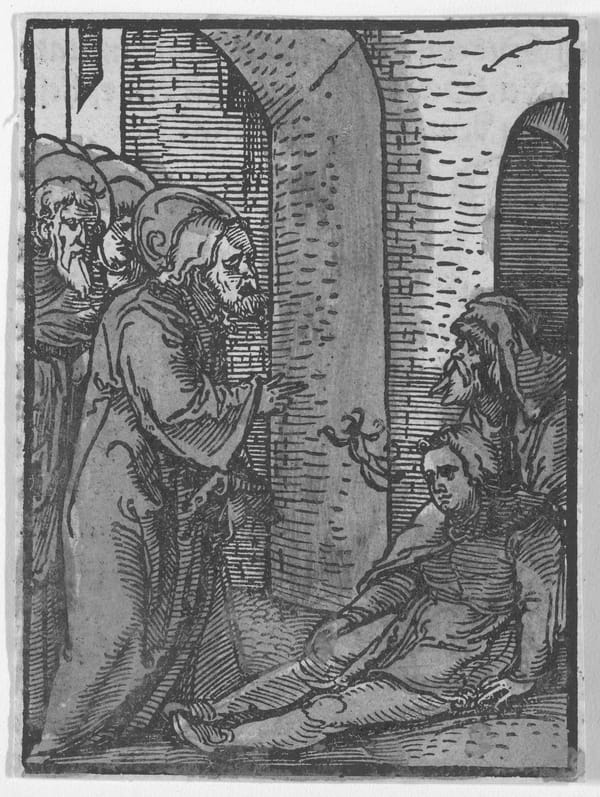
Friday after Ash Wednesday
The station for to-day is in the church of the holy martyrs, St. John and St. Paul.
Collect
Epistle
Cap. lviii.Hæc dicit Dominus Deus: Clama, ne cesses; quasi tuba exalta vocem tuam, et annuntia populo meo scelera eorum, et domui Jacob peccata eorum. Me etenim de die in diem quærunt, et scire vias meas volunt: quasi gens quæ justitiam fecerit, et judicium Dei sui non dereliquerit: rogant me judicia justitiæ: appropinquare Deo volunt. Quare jejunavimus et non aspexisti: humiliavimus animas nostras et nescisti? Ecce in die jejunii vestri invenitur voluntas vestra, et omnes debitores vestros repetitis. Ecce ad lites et contentiones jejunatis, et percutitis pugno impie. Nolite jejunare sicut usque ad hanc diem, ut audiatur in excelso clamor vester. Numquid tale est jejunium, quod elegi, per diem affligere hominem animam suam? numquid contorquere quasi circulum caput suum, et saccum et cinerem sternere? numquid istum vocabis jejunium, et diem acceptabilem Domino? Nonne hoc eat magis jejunium, quod elegi? dissolve colligationes impietatis, solve fasciculos deprimentes, dimitte eos qui confracti sunt liberos, et omne onus disrumpe. Frange esurienti panem tuum, et egenos vagosque induc in domum tuam: cum videris nudum, operi eum, et carnem tuam ne despoxeris. Tunc erumpet quasi mane lumen tuum, et sanitas tua citius orietur, et anteibit faciem tuam justitia tua, et gloria Domini colliget te. Tunc invocabis, et Dominus exaudiet: clamabis, et dicet: Ecce adsum. Quia misericors sum, Dominus Deus tuus.
Ch. lviii.Thus saith the Lord God: Cry, cease not, lift up thy voice like a trumpet, and show my people their wicked doings, and the house of Jacob their sins. For they seek me from day to day, and desire to know my ways, as a nation that hath done justice, and hath not forsaken the judgment of their God; they ask of me the judgments of justice: they are willing to approach to God. Why have we fasted, and thou hast not regarded: why have we humbled our souls, and thou hast not taken notice? Behold, in the day of your fast, your own will is found, and you exact of all your debtors. Behold you fast for debates and strife, and strike with the fist wickedly. Do not fast as you have done until this day, to make your cry to be heard on high. Is this such a fast as I have chosen: for a man to afflict his soul for a day? is this it, to wind his head about like a circle, and to spread sackcloth and ashes? wilt thou call this a fast, and a day acceptable to the Lord? Is not this rather the fast that I have chosen? loose the bands of wickedness, undo the bundles that oppress, let them that are broken go free, and break asunder every burden. Deal thy bread to the hungry, and bring the needy and the harbourless into thy house; when thou shalt see one naked, cover him, and despise not thy own flesh. Then shall thy light break forth as the morning, and thy health shall speedily arise, and thy justice shall go before thy face, and the glory of the Lord shall gather thee up. Then shalt thou call, and the Lord shall hear: thou shalt cry, and he shall say: Here I am; for I the Lord thy God am merciful.
We are told, in this lesson from the prophet Isaias, what are the dispositions which should accompany our fast. It is God Himself who here speaks to us—that God who had Himself commanded His people to fast. He tells us that the fasting from material food is a mere nothing in His eyes, unless they who practise it abstain also from sin. He demands the sacrifice of the body; but it is not acceptable to Him, unless that of the soul goes along with it. The living God can never consent to be treated as were the senseless gods of wood and stone, which the Gentiles adored, and which were incapable of receiving any other than a mere external homage. Let, then, the heretic cease to find fault with the Church for her observance of practices, which he pretends to scorn as being material; it is he that grows material by his system of letting the body have every indulgence. The children of the Church fast, because fasting is recommended in almost every page of both the old and the new Testament, and because Jesus Christ Himself fasted for forty days; but they are fully aware that this practice, which is thus recommended and urged, is then alone meritorious, when it is ennobled and completed by the homage of a heart that is resolved to reform its vicious inclinations. And after all, it would be an injustice, if the body, which has been led into guilt solely through the malice of the soul, were to be made to suffer, and the soul herself be allowed to continue in her sinful course. Hence it is that they whose ill-health prevents them from observing the bodily austerities of Lent, are equally bound to impose on their soul that spiritual fast, which consists in the amendment of their life, in avoiding everything that is sinful, and in the zealous performance of every good work in their power.
Gospel
Cap. v., vi.In illo tempore: Dixit Jesus discipulis suis: Audistis quia dictum est Diliges proximum tuum, et odio habebis inimicum tuum. Ego autem dico vobis: Diligite inimicos vestros, benefacite his qui oderunt vos: et orate pro persequentibus et calumniantibus vos: ut sitis filii Patris vestri, qui in cœlis est, qui solem suum oriri facit super bonos et malos, et pluit super justos et injustos. Si enim diligitis eos qui vos diligunt, quam mercedem habebitis? Nonne et publicani hoc faciunt? Et si salutaveritis fratres vestros tantum: quid amplius facitis? Nonne et ethnici hoc faciunt? Estote ergo vos perfecti, sicut et Pater vester cœlestis perfectus est. Attendite ne justitiam vestram faciatis coram hominibus, ut videamini ab eis: alioquin mercedem non habebitis apud Patrem vestrum qui in cœlis est. Cum ergo facis eleemosynam, noli tuba canere ante te, sicut hypocritæ faciunt in synagogis, et in vicis, ut honorificentur ab hominibus. Amen dico vobis, receperunt mercedem suam. Te autem faciente eleemosynam, nesciat sinistra tua, quid faciat dextera tua: ut sit eleemosyna tua in abscondito, et Pater tuus qui videt in abecondito, reddet tibi.
Ch. v., vi.At that time: Jesus said to his disciples: You have heard that it hath been said: Thou shalt love thy neighbour, and hate thy enemy. But I say to you: love your enemies, do good to them that hate you, and pray for them that persecute and calumniate you; that you may be the children of your Father who is in heaven, who maketh his sun to rise upon the good and bad, and raineth upon the just and the unjust. For if you love them that love you, what reward shall you have? do not even the publicans this? And if you salute your brethren only, what do you do more? do not also the heathens this? Be you therefore perfect, as also your heavenly Father is perfect. Take heed that you do not your justice before men to be seen by them: otherwise you shall not have a reward of your Father who is in heaven. Therefore, when thou dost an almsdeed, sound not a trumpet before thee, as the hypocrites do in the synagogues and in the streets, that they may be honoured by men. Amen, I say to you, they have received their reward. But when thou dost alms, let not thy left hand know what thy right hand doth; that thy alms may be in secret, and thy Father, who seeth in secret, will repay thee.
Almsdeeds is the third of the great penitential works: it is the sister virtue of prayer and fasting. For this reason, the Church puts before us, to-day, the instructions given by our Saviour on the manner in which we ought to do works of mercy. He puts upon us the duty of loving our fellow-men, without distinction of friends or enemies. God, who has created them all, loves them Himself; this is motive enough to make us show mercy to all. If He bears with them even when they are His enemies by sin, and patiently waits for their conversion even to the end of their lives, so that they who are lost are lost through their own fault, what ought not we to do, we who are sinners as they are, and their brethren, and created like them out of nothing? When, therefore, we do an act of kindness or mercy towards those who have God for their Father, we offer Him a most acceptable homage. Charity, the queen of virtues, absolutely requires of us the love of our neighbour, as being part of our love of God; and this charity, at the same time that it is a sacred obligation incumbent upon each member of the family of mankind, is, in the acts it inspires us to do towards each other, a work of penance, because it imposes upon us certain privations, and requires us to overcome every repugnance which nature stirs up within us, when we have to show this charity to certain individuals. And finally, we must in our almsdeeds follow the counsel our blessed Saviour gives us; it is the one He recommended to us, when He bade us fast: we must do it in secret, and shun ostentation. Penance loves humility and silence; it has a dread of being noticed by men; the only one whose applause it seeks, is He who seeth in secret.
February 24: St. Mathias, Apostle
|
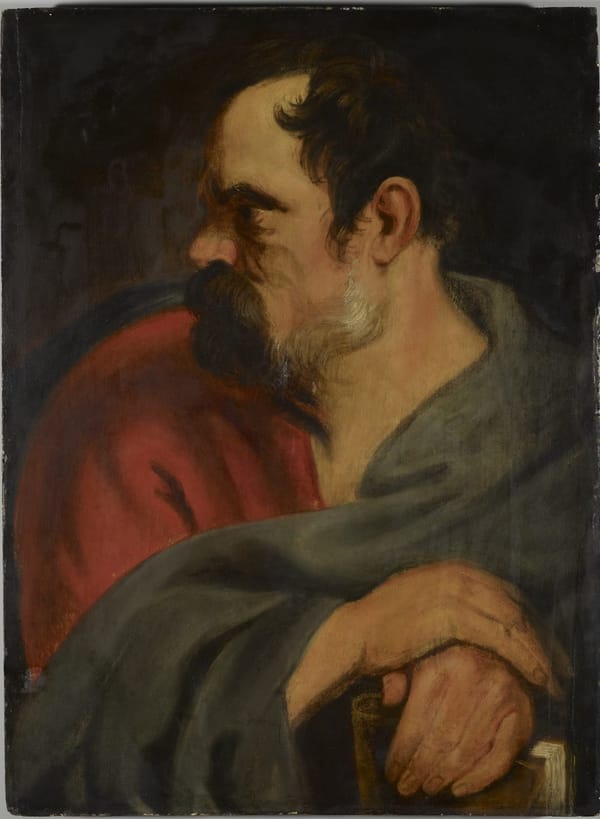
In leap-year, the feast of St Mathias is kept on February 25.
An apostle of Jesus Christ, St. Mathias, is one of the blessed choir which the Church would have us honour during the season of Septuagesima. Mathias was one of the first to follow our Saviour; and he was an eye-witness of all His divine actions up to the very day of the Ascension. He was one of the seventy-two disciples; but our Lord had not conferred upon him the dignity of an apostle. And yet, he was to have this great glory, for it was of him that David spoke, when he prophesied that another should take the bishopric1 left vacant by the apostasy of Judas the traitor. In the interval between Jesus’ Ascension and the descent of the Holy Ghost, the apostolic college had to complete the mystic number fixed by our Lord Himself, so that there might be the twelve on that solemn day, when the Church, filled with the Holy Ghost, was to manifest herself to the Synagogue. The lot fell on Mathias;2 he shared with his brother-apostles the persecution in Jerusalem, and, when the time came for the ambassadors of Christ to separate, he set out for the countries allotted to him. Tradition tells us that these were Cappadocia and the provinces bordering on the Caspian Sea.
The virtues, labours, and sufferings of St. Mathias have not been handed down to us: this explains the lack of proper lessons on his life, such as we have for the feasts of the rest of the apostles. Clement of Alexandria records in his writings several sayings of our holy apostle. One of these is so very appropriate to the spirit of the present season, that we consider it a duty to quote it. 'It behoves us to combat the flesh, and make use of it, without pampering it by unlawful gratifications. As to the soul, we must develop her power by faith and knowledge.’3 How profound is the teaching contained in these few words! Sin has deranged the order which the Creator had established. It gave the outward man such a tendency to grovel in things which degrade him, that the only means left us for the restoration of the image and likeness of God unto which we were created, is the forcible subjection of the body to the spirit. But the spirit itself, that is, the soul, was also impaired by original sin, and her inclinations were made prone to evil; what is to be her protection? Faith and knowledge. Faith humbles her, and then exalts and rewards her; and the reward is knowledge. Here we have a summary of what the Church teaches us during the two seasons of Septuagesima and Lent. Let us thank the holy apostle, on this his feast, for leaving us such a lesson of spiritual wisdom and fortitude. The same traditions, which give us some Blight information regarding the holy life of St. Mathias, tell us that his apostolic labours were rewarded with the palm of martyrdom. Let us celebrate his triumph by the following stanzas, which are taken from the Menææa of the Greeks.
Hymn (Die IX. Augusti)
| Previous February 23: St. Peter Damian, Cardinal and Doctor of the Church | Next February 24: St. Mathias, Apostle |